Box Turtle Bulletin
 News and commentary about the anti-gay lobby
“Now you must raise your children up in a world where that union of man and box turtle is on the same legal footing as man and wife…”
News and commentary about the anti-gay lobbyJuly 21st, 2011
 George Rekers described treating three children in his 1972 doctoral these while a grad student at UCLA. Two of them we’ve already discussed. The first, of course, was Kirk Andrew Murphy, who was just shy of five years old when he began therapy at the Gender Identity Clinic at UCLA’s Neuropsychiatric Institute under the direction of behavioral therapist O. Ivar Lovaas, Rekers’s mentor. It was this 1974 paper by Rekers and Lovaas describing Kirk under the pseudonym of “Kriag” became one of the more widely cited papers in the 1970s, and it launched Rekers’s career.
The second case described in detail in Rekers’s dissertation was that of 8½-year-old “Carl.” His case appeared in the professional literature at the same time as Kirk’s in 1974. His case didn’t achieve the same level of notice as Kirk’s, but because “Carl’s” treatment extended to the home, he case gained some measure of attention in the educational and guidance counseling literature.
Today’s case is the third child that Rekers described in his dissertation, that of seven-year-old “Wayne,” who was probably treated sometime in 1970 or 1971, at about the same time as Kirk. Here is how Rekers described “Wayne”:
Wayne was seven years old, from a black welfare family. His mother was separated from two former husbands. Wayne, his mother and one-year-old sister lived in the maternal grandmother I s home. The grandmother lived with a “boyfriend,” so there was a man in the house. As reported by the mother, Wayne regularly exhibited feminine arm and hand mannerisms, body gestures and gait. He modeled in front of a mirror in a feminine way, and habitually remarked, “I’m cute,” etc. Wayne had a history of secretly playing with his mother’s cosmetics in the bathroom. (His mother frequently found her cosmetics messed up and occasionally caught Wayne in the act of using them.)
Wayne played with dolls, whenever they were available. His peer preference was girls both at school and at his home neighborhood. He avoided play with boys his age. He frequently engaged in “play-acting.” While he exhibited no feminine voice inflection, he would dwell on feminine content in his speech. In the home he played daily with k1tchen articles.
Wayne was overly obsessive about the neatness of his own clothing. He had a number of “nervous” behaviors such as nail-b1ting. He was a chronic bed-wetter. The mother characterized him as unhappy, and reported frequent crying. Mother complains that Wayne demands an excessive amount of her attention, but that he is emotionally aloof.
“Wayne’s” treatment program in the clinic was similar to that of Kirk and “Carl.” But unlike the other two, the treatment didn’t extend into the home with the red chip/blue chip program, nor was it extended into “Wayne’s” school as it was with “Carl.” Rekers wrote, “Wayne could not be treated in the home and school settings because his mother could not cooperate with the investigator …Over several month’s time, the mother became more overtly uncooperative. Therefore we terminated Wayne as a client.” But before “Wayne’s” treatment was terminated, Rekers reported to his doctoral committee that he was able to coerce a change in “Wayne’s” play preferences and mannerisms in the clinic when other adults were around, but those changes didn’t hold up when “Wayne” played alone. In the last two sessions when “Wayne” was observed playing alone, he “played exclusively feminine.”
Since “Wayne” wasn’t one of Rekers’s greater success stories, he missed the kind of fame that “Kraig” and “Carl” achieved in the professional literature. But that didn’t mean that “Wayne” faded into obscurity. In 1975, Rekers published a paper in the Journal of Experimental Child Psychology with data from “Wayne’s” play sessions at UCLA, along with data from Kirk and three others. The purpose of the paper was to demonstrate the methods for recording and assessing “masculine” and “feminine” play behaviors under certain settings, and to show how the presence of other people in the room can affect children’s play behaviors. Since the paper didn’t discuss treatment programs, it was safe to present “Wayne’s” case along with the others.
But in 1978, Rekers would go back and claim success with Wayne after all. In a non-peer reviewed chapter published in the clinical text book Handbook of Treatment of Mental Disorders In Childhood and Adolescence (Englewood Cliffs, NJ: Prentice-Hall, 1978), Rekers described “Wayne’s” treatment much as he did in his dissertation, but with this addition:
Recently, a 3-year follow-up of this boy in his natural environment found predominantly masculine play behavior, and an independent clinical psychological evaluation of the boy and an interview with the mother yielded no evidence for a gender disturbance.
Again, as with all the other claims of follow-ups with Kirk, this claim is a single sentence with description of the evaluation, no details, no test results, and no peer review.
Rekers presented “Wayne’s” case again in 1979, in a paper published in the Journal of Psychology, which is a very low ranked and rarely-cited journal. Here, Rekers presented new information that wasn’t present in his dissertation. “Athletic games,” he wrote, “appeared to present an aversive and threatening situation for him. Consequently, the boys in his neighborhood and at school teased him and called him such names as “sissy” and “queer.” And so while the playroom experiment was underway, Rekers decided to launch a second set of experiments to try to teach “Wayne” athletic skills in order to “build gender-appropriate behaviors.” A token reinforcement system was used to encourage “Wayne’s” participation and improvement, with tokens being exchangeable for candy. Rekers reported that “Wayne” achieved the skill levels established for “sockball” and kickball. The question of how this was supposed to make him straight however remained unanswered.
This 1979 paper made no mention of a three-year follow-up. Instead, there is a cursory mention of one at fifteen months:
At 15-month follow-up, the mother reported that Wayne “looks just like any other boy now.” According to her reports, there has been no reoccurrence of his previous feminine behaviors, and he has developed positive peer relationships both in the neighborhood and at school.
This report description of a follow-up managed to reach to a record-tying pace of two whole sentences. But again, there are no details: no test descriptions, no data, no independent evaluation. All we have is Rekers’s word for it. Nevertheless, he concluded this report by saying, “This study contributes to the accumulating evidence this study contributes to the accumulating evidence that behavioral intervention procedures are effective in treating boyhood gender disturbances.”
“Wayne,” if you think you recognize yourself in these reports, please let us know how you’re doing.
See Also:
“Carl,” age 8½
“Joan,” age 14
“Paul,” age 8
“Wayne,” age 7
And, of course, “Kraig” (Kirk Murphy), age 4
July 21st, 2011
TODAY’S AGENDA:
LCR to File Response to Government Petition To Keep DADT Stay: Pasadena, CA. Last week, the Justice Department belatedly decided that they would continue to uphold the constitutionality of “Don’t Ask, Don’t Tell” after all, even though the discriminatory policy is (supposedly) on its way out the door toward repeal. In response, the Ninth Circuit Court of Appeals, which had already lifted its stay of a lower court ruling declaring DADT unconstitutional, reinstated part of that stay: the military could still refuse to enroll LGBT servicemenbers, but they couldn’t drum anyone out of the service for being gay. The court also demanded that government lawyers work the weekend to meet a Monday deadline to file a brief explaining their position.
On Monday, the government filed its brief, asking the appeals court to reinstate in DADT in its entirety for now, and to delay hearing the case, currently scheduled for September 1, in order to allow an “orderly process for repealing” the law. Log Cabin Republicans, plaintiffs in the thus-far successful lawsuit, has until 5:00 today to file a response. The government will have until the close of business tomorrow to file a counter-argument to LCR. Oral arguments remain set for September 1.
Pride Celebrations This Weekend: Burlington, VT; Detroit, MI (Black Pride); Ft. Wayne, IN; Halifax, NS; Harrisonvillle, VA (PDF) and Tampere, Finland.
If you know of something that belongs on the agenda, please send it here. PLEASE, don’t forget to include the basics: who, what, when, where, and URL (if available).
July 20th, 2011
During today’s Senate Judiciary Committee hearings on repealing the so-called Defense of Marriage Act, Sen. Al Franken (D-MN) eviscerated the testimony of Thomas Minnery, Senior Vice President for Public Policy at Focus on the Family. Minnery was caught red-handed what anti-gay activists reflexively do: they lie about the research:
Franken: Mr Minnery, on page eight of your written testimony, you write, quote “Children living with… their own married, adoptive or biological mothers and fathers were generally healthier and happier, had better access to health care, were less likely to suffer mild or severe emotional problems, did better in school, were protected from physical, emotional, or sexual abuse, and almost never live in poverty compared to children in any other family form.”
You cite a Department of Health and Human Services Study, that I have right here, from December 2010, to support this conclusion. I checked this study out. (Laughter) And I would like to enter it into the record, if I may. And it actually doesn’t say what you said it says. It says that “nuclear families,” not “opposite sex married families” are associated with those positive outcomes. Isn’t it true, Mr Minnery, that a married same-sex couple that has had or adopted kids would fall under the definition of a nuclear family in the study that you cite?
Minnery: I would think that the study, when it cites “nuclear families,” would mean a family headed by a husband and a wife.
Franken: It doesn’t. [Laughter] The study defines a nuclear family as “one or more children living with two parents who are married to one another and are each biological or adoptive parents to all the children in the family.” And I frankly don’t really know how we can trust the rest of your testimony if you are reading studies these ways.
Sen. Patrick Leahy (D-VT) comes in at a photo-finish second in the race for my new favorite Senator:
Leahy: Are those children benefited by saying that in that family, they will not have the same financial benefits that another family, a maried couple of opposite sex would have? Are those children not put at a disadvantaved by denying those same benefits to them, and I’m talking about now a legal marriage under the state laws of the state they live in?
Minnery: No. Without question, those children are certainly better off than having no parents. But…
Leahy: Wait a minute. I don’t understand. They’d be better off if they had no parents?
Minnery: No, they’re certainly better of than if they had no home headed by parents. But same-sex marriage is a whole lot more than that, Senator.
Leahy: But I’m trying to go specifically to the financial. Are they not disadvantaged by not having the same financial benefits that in a…. an opposite sex family would have?
Minnery: Well, as I say, not knowing the details of which families you are speaking off, certainly those families are better off… children are better off with parents in the home. But what I’m saying…
Leahy: But, I’m talking about… Yes or no, it’s not a trick question. I’m just asking. [Laughter] Please. If you have parents legally married under the laws of the state. One set of parents are entitled to certain financial benefits for their children, the other set of parents are denied those same financial benefits for their children. Are not those children, at least in that aspect of finances, are not those children of the second family, are they not at a disadvantage, yes or no?
Minnery: That would be yes, as you asked the question narrowly, Senator.
Leahy: Thank you. I was asking it narrowly. I used to have a career where I had to ask questions all the time.
July 20th, 2011
The new marriage equality law in New York not only changed the ability of gay people to marry, it also introduced a requirement for some of them to do so. (Christian Post)
In the wake of gay marriage soon becoming a legal institution in the state of New York, the Episcopal Bishop of Long Island, has ordered that homosexual priests wed their partners.
Long Island Episcopal Bishop Lawrence Provenzano has put his foot down against gay clergy who residing in homosexual relationships, and has given a nine month deadline for them to either get married or stop living together, according to the News Observer.
“I need to be mindful that the church has always asked people to live in committed monogamous, faithful relationships. I won’t allow heterosexual clergy to live in a rectory or church housing without the benefit of marriage. When one puts it in that context, then you see how it all begins to make sense,” said Provenzano.
Sounds fair to me.
July 20th, 2011
 One of the whiny complaints made by anti-gay activists about New York’s new marriage equality bill is that it is not sensitive to the religious convictions of public employees. The Catholic League’s Bill Donohue (who appears to waging a PR campaign to equal Catholicism with pigheaded bigotry) is all wounded and martyry about it in a commentary today:
Indeed, under New York State law, the onus is on the employer to show that it would cause “undue hardship” if an employee were to exercise his “sincerely held” religious beliefs.
Now it is fatuous to say that it would cause an “undue hardship” in the workplace if clerks, and deputy clerks, who do not have an issue with giving marriage licenses to homosexuals handled these matters for those who do. It cannot be said too strongly: Bullying those who have religious objections is despicable.
There is an obvious hole in New York’s gay marriage law: religious exemptions need to be extended to lay people, not just the clergy.
Well, I’m all for respecting sincerely held religious beliefs. But I’m failing to find one here.
Sure there are people who sincerely believe that I should not marry a person of the same sex. And due to those beliefs, they would not attend my wedding, conduct the vows, offer a blessing, or even congratulate me. And I wouldn’t expect them to.
But while I’m familiar with the Bible and pretty up on how religion is practiced in America, I am unaware of any doctrine of any sect that forbids its followers to hand me a piece of paper . That’s what we’re talking about, issuing a form, typing responses in a database. And there are no doctrinal assessments I know of which assign responsibility or any presumption of participation – not even those of the Catholic Church – from the issuance or filing of forms.
Some Christians read in the verse portion from Habakkuk “woe to him who gives drink to his neighbors, pouring it from the wineskin till they are drunk…” a prohibition on working in a bar or liquor store. Some are even troubled at serving alcoholic beverages as a waitress or grocery clerk. But I’ve never heard even the most conservative of Christians argue that they have some obligation not to hand out the form to request a liquor license.
And it goes without saying that many churches, the Catholic Church in particular, oppose the very existence of medical clinics which offer abortion services. Yet they do not suggest that the County Building Inspector refuse to issue a building license or that the city Clerk refuse to process a Business License. None of this administrative process is considered to be a part of, or the administrators culpable for, the abortions that will be conducted at the site.
There simply are no religious beliefs held by any of these public employees, sincerely or otherwise, which forbid them to administer the paperwork involved with any other businesses, marriages, divorces, or other vital statistics which they find morally objectionable. And if there were, their argument is a bit specious considering that they’ve been violating those beliefs with regularity for years.
Now I have less of a problem with Rosemary Centi, the city clerk in upstate Guilderland, who resigned from her position as marriage officer out of her religious conviction that she should not conduct gay marriages. But she will continue to remain the elected town clerk and issue marriage licenses to all eligible applicants, including gay couples. While I think it a rather peculiar belief that allows you to officiate at marriage between divorcees or people of mixed faith but not gay people, I don’t doubt that her decision is sincere. And I have to respect that Rosemary was able to distinguish between her own personal involvement as officiant and the processing of paperwork.
And I think that this distinction is perfectly obvious to any who think about it.
Why is it that some people would rather quit their jobs than treat gay couples with the same bureaucratic procedure as anyone else standing in line at the clerk’s counter? What is behind the peculiar notion that a public employee can deny civil services to a member of the public if they don’t pass their personal religious test? It certainly isn’t Scripture or doctrine or consistent moral character.
So perhaps Bill Donohue should consider whether he’s doing his church a favor by making this a big deal. His efforts to make Catholics look like victims may result in making them look like something else entirely.
July 20th, 2011
Occasionally Jon Stewart compiles a montage of far-right-wingers using some little phrase to push the party line (death panels, or shoving it down our throats). These phrases are obviously contrived and distributed. They’re usually empty or false. And they sometimes “work” — sort of.
But the tactic isn’t always dishonorable. A good talking point can have a great and lasting impact and still be true. We could use one like that now, when a few New York state Town Clerks are refusing to issue same-sex marriage licenses while our opponents hail them as heroes of religious freedom.
I’ve come up with something. How does it sound?
In New York, you’ve got state employees demanding you pass their personal religious test before they’ll help you. That’s not religious freedom. In fact, it’s the opposite.
It’s quick, to the point, and true. If I were to point out a key phrase, it would be pass their personal religious test, as in:
And if you want to take the conversation further, offer hypotheticals that have nothing to do with gays.
If you like this approach it, take it. Post it. Share it. Pass it on.
July 20th, 2011
A lesbian couple is suing a Vermont hotel owner after the hotel refused to host their wedding reception. Kate Baker and Ming Linsley say that the Wildflower Inn in Lyndonville, VT, abruptly turned them away after learning they are lesbians, an act which violates Vermont’s Fair Housing and Accommodations Act. That law prohibits inn, hotels, motels, and other establishments with five or more rooms from turning away patrons on the basis of race, religion, and sexual orientations, among other reasons. The ACLU, which is handling the lawsuit, claims that at least two other couples have been turned away as well.
July 20th, 2011
Our next case history from the Rekers files involves eight-year-old “Paul,” who was treated at the Gender Identity Clinic at UCLA’s Neuropsychiatric Institute sometime in the early 1970s. As with Kirk Murphy — Rekers’s most famous case history — and with “Carl,” “Paul’s” treatment was paid for by grants from the National Institute of Mental Health. Paul and his two brothers, ages five and nine, had been living with foster parents for four years. Paul’s case (with Kirk and “Carl”) was one of fifteen cases discussed briefly in a 1976 paper comparing “Sex-typed play in feminoid boys versus normal boys and girls,” as the paper’s title put it. Crude measures were created on “percent femininity” scale based on observed play behaviors of boys being treated at UCLA and a control group of students from a nearby elementary school. “Normal” boys scored in the 20% range while “normal” girls scored in the 80% range. “Paul” scored at somewhere below 50%, making him still more “masculine” than “feminine” according to Rekers’s categorizations.
That paper however doesn’t describe much about any of the children individually though. “Paul’s” biographical debut would come a year later in a paper published by Rekers and four other researchers at UCLA, including Alexander Rosen (who was involved with Kirk’s case) and Benson P. Low (who was a co-author of “Carl’s” case, and who would go on to work with Rekers later while at the Fuller Theological Seminary in Pasadena).” The paper, “Assessment of Childhood Gender Behavior Change,” appeared in the January 1977 issue of the Journal of Child Psychology and Psychiatry. By then, Rekers had added an another affiliation to his name: director of Logos Research Institute, a Christian-based research think tank that he founded in the 1970s which would serve as a model for later when he co-founded the Family Research Council. The paper introduced Paul this way:
Paul had a 4-yr history of playing with his foster mother’s jewelry and cosmetics. He often improvised feraale clothing by wrapping towels around his waist to make skirts, or by tying ribbons in his hair to simulate long hair. He repeatedly asked for a girl’s dress to wear, he cross-dressed, and he played with girls’ dolls. He obsessively changed his clothing several times daily to remain clean, and expressed strong avoidance of masculine games that involved “rough-and-tumble” action or getting dirty. In fact, he appeared unable to play masculine-like games proficiently. Paul regularly avoided play with his brothers and boys in the neighborhood, complaining “they call me girly and sissy”. The foster parents observed that Paul’s peers rejected him because he exhibited effeminate gait and arm movements and cross-gender voice inflection. The extent of Paul’s adoption of a female sex-role is reflected in his frequent statements to his foster mother: “I want to be a girl so that I can have a baby”. In addition to the gender disturbance, Paul had a 3-yr history of encopresis and the behavior problems of non-compliance to parental requests and excessive temper tantrums. He was characteristically unhappy and sought to cooperate with professional assistance. Paul complained that all the boys and many of the girls his age would not play with him. He described himself as being shy and lonely and told us that his foster mother brought him to see us in order to help him be happier. He asked us if we could help him be happier, and be like the other boys. He asked questions such as “Why do the boys call me a sissy?” and “Why don’t the boys play with me?” We assured him that we would try our best to help him with these problems.
Rekers and his colleagues, by this point, had sought to distinguish between different degrees of severity of gender-nonconformity. For patients like Kirk, “Joan,” and “Carl,” Rekers felt that they were so severely “disturbed” that he diagnosed them with “cross-gender identification.” Paul’s case, according to Rekers, wasn’t so profound:
The data suggested that the problem was a gender-role disturbance and effeminate behavior rather than a profound childhood cross-gender identification. In the absence of treatment, the boy would be a high risk for transvestism or sexual orientation disturbance, and a moderate-to-low risk for transsexualism.
By the mid-1970s, Rekers had introduced new methods for treatment. During the play-time in the clinic, “Paul” was videotaped through the one-way mirror. After play time was over, “Paul” was shown the video and asked to identify each instance of feminine behavior. If he identified them correctly, he was awarded a penny. This was to get him used to identifying every instance of girlish behavior, some of which he was apparently unaware. After several sessions, the game changed. “Paul” was awarded 25 pennies, but as he played with a therapist he would lose a penny any time he made a feminine gesture or verbal inflection. He was also put on the red chip/blue chip program at home. In addition, he was given athletic training, ensuring that he didn’t throw like a girl while playing ball. After about a year, Rekers, once again, had claimed another success:
At termination of treatment, Paul’s sex-role behaviors had changed markedly. Our clinical observations, which were corroborated by the foster mother and other friends and relatives, indicated that Paul now looked and acted like most other boys his age. He was wearing jeans and T-shirts exclusively and no longer avoided rough-and-tumble games for fear of getting dirty or hurt. He also appeared to be much more comfortable in a male role, and rarely asked his foster mother for girls’ toys and clothing. Our follow-up observations indicated occasional cross-gender behavior, although at a much lower frequency than before treatment. The 2-yr follow-up observation indicated no feminine mannerisms in the home, as indicated by session “F” on Fig. 6. There has been no recurrence in his verbal expressions of wanting to be a girl, and the encopresis has not recurred.
Little additional information is available about “Paul.” It would appear that his follow-ups ended by the time he was eleven years old, which would still be before puberty. If there were any follow-up investigations after that, Rekers never published the results, not even in a cursory two-sentence form that he used in assuring readers that Kirk Murphy was still heterosexual at the age of fifteen. Rekers’s two-sentence follow-up descriptions for Paul ended much earlier for reasons that remain unknown. If “Paul” is still out there, he is probably approaching fifty years old, and very likely unaware that his case has been published in the professional literature. I wonder what a follow-up investigation forty years after the fact would tell us.
See Also:
“Carl,” age 8½
“Joan,” age 14
“Paul,” age 8
“Wayne,” age 7
And, of course, “Kraig” (Kirk Murphy), age 4
July 20th, 2011
TODAY’S AGENDA:
First Ever Senate Hearings On DOMA Repeal: Washington, DC. Sen. Patrick Leahy (D-VT), chairman of the U.S. Senate Judiciary Committee, will convene the Senate’s first-ever hearing on the proposed Respect for Marriage Act, which would repeal the so-called “Defense of Marriage Act.” Scheduled to testify is 77-year-old veteran Ron Wallen, who married Tom Carollo, his partner of 55 years. Carollo died in March, and Wallen is bared from receiving his spouse’s Social Security survivor benefit. Due to the loss of income, he is being forced to sell the home the couple shared in Indo, CA. Anti-gay activists Tom Minnery of the Family “Research” Council Focus On the Family and David Austin R. Nimocks of the Alliance Defense Fund will explain why Wallen should be denied the same benefits every other faithful (and unfaithful) heterosexually married couple enjoy and, as a result, lose his home. The hearings will take place beginning at 9:45 EDT at the Hart Senate Office Building, Room 216. The hearings willl be streamed live according to the committee’s web site.
Pride Celebrations This Weekend: Burlington, VT; Detroit, MI (Black Pride); Ft. Wayne, IN; Halifax, NS; and Tampere, Finland.
TODAY IN HISTORY:
 Rep. Gerry Studds Censured: 1983. On this date in history, the U.S. House of Representatives voted to censure Reps. Gerry Studds (D-MA) and Daniel Crane (R-IL), who admitted to having sexual affairs with pages. Crane admitted to having sex with a 17-year-old female page three years earlier, while Studds acknowledged a relationship with a 17-year-old male page ten years earlier. Both Studds and the page described the relationship as consensual and not intimidating. When Studds returned home to his district following his censure, he was met with standing ovations at his first town meeting. He would continue to be re-elected to Congress until his retirement in 1997, where he fought for AIDS funding, gays in the military, and marriage equality. When Studds died in 2006, his legally married spouse was denied Studd’s pension, which is provided to all other surviving spouses of former members of Congress.
If you know of something that belongs on the agenda, please send it here. PLEASE, don’t forget to include the basics: who, what, when, where, and URL (if available).
July 19th, 2011
From the the website of Ghana radio Joy 99.7, it looks like a full-fledged witch-hunt is imminent:
The Western Region Minister Paul Evans Aidoo has ordered the immediate arrest of all homosexuals in the region.
He has tasked the Bureau of National Investigations and all security agencies to smoke out persons suspected to be engaging in same sex. He also enlisted the services of landlords and tenants to provide reliable information which will lead to the arrest of homosexuals.
His directive follows months of campaigns against the practice of homosexuality in the country. Only yesterday, the Christian Council of Ghana capped months of protestations against the practice of homosexuality with a strongly worded message against the practice and courting Ghanaians not to vote for any politician who believes in the rights of homosexuals.
This is worrying, not only for the human rights disaster this roundup would pose, but it would also represent a huge betrayal for those 8,000 who signed up at an HIV/AIDS workshop funded by the United States Agency for International Development (USAID). According to Ghanaian radio, that report sparked a series of religious demonstrations with the Muslim and Christian communities in the Central and Western regions.
The website of AfricanActivist has background on the story. Homosexuality is currently a misdemeanor in Ghana. Ghana’s president John Evans Atta Mills denies reports that he intends to institute a new anti-gay law, after witnesses claimed that he told one religious gathering that he would ” do something about the homosexuality menace in Ghana.” Last June, Ghanaian vice president John Dramani Mahama told delegates at a high level UN meeting on HIV/AIDS that it was essential to include Ghana’s LGBT community in its strategy to fight HIV/AIDS. He also acknowledged that current attitudes toward gay people make that strategy difficult. With the latest calls for mass arrests and the rising prospect of violence, that strategy is now in serious jeopardy, along with the safety and security of thousands of citizens of the West African nation.
[via Warren Throckmorton]
July 19th, 2011
That’s the punchline to a joke that had Iowa’s The Family Leader’s Bob Vander Plaats laughing and saying, “That’s pretty good! Oh shoot!”
Igor Volsky at ThinkProgress reacts:
Vander Plaats’ reaction is not entirely surprising, since the group has previously compared homosexuality to the cancerous effects of second-hand smoking and links supporters to ex-gay reparative therapy. What’s more telling is the willingness of Republican presidential candidates like Tim Pawlenty and Newt Gingrich to attend the group’s presidential forum and Michele Bachmann’s and Rick Santorum’s eagerness to sign its pledge.
July 19th, 2011
When Kirk Murphy’s sister Maris contacted me last October via this comment, it was the first step on a long road of discovery. Until just a few days earlier, she had no idea that anyone had written about her brother. And while Kirk knew that UCLA researcher Dr. Richard Green had written a book in 1987 which included his treatment, it appears that neither he nor anyone else in his family knew that Rekers written about him — not just that, but had built his career on Kirk’s case history under the pseudonym of “Kraig.”
In one of the epilogues to our original investigation of Kirk Murphy’s treatment by George Rekers, I explored the weakest link in the mental health profession, the point where doctors are entrusted to accurately and truthfully present their case histories in the published literature. The discrepancies between Rekers’s descriptions of “Kraig” and what Kirk was really like as his family remembered him turned out to be pretty wide. Those discrepancies were continuing theme in the conversations that I had with Kirk’s mother, brother and sister.
Rekers wrote several case histories, featuring about a dozen young children in his career. Kirk was Rekers’s most famous and most widely published case history, but he was far from the only one. Today’s case history is that of “Carl”, an eight-year-old boy who Rekers treated at the Gender Identity Clinic at UCLA’s Neuropsychiatric Institute, about the same time as Kirk’s treatment in 1970. “Carl” appeared in Rekers’s 1972 doctoral dissertation alongside “Kraig,” and he first appeared in the professional literature in the summer of 1974, at about the same time as “Kraig’s” case appeared in the Journal of Applied Behavior Analysis. And like Kirk’s treatment, “Carl’s” treatment was paid for by grants to UCLA from the National Institute of Mental Health.
“Carl’s” case was presented in a paper by Rekers, his mentor Dr. O. Ivar Lovaas, and fellow UCLA researcher Benson Low, titled “The Behavioral Treatment of a ‘Transsexual’ Preadolescent Boy,” published in the June 1974 issue of the Journal of Abnormal Child Psychology. Carl was the title’s “transsexual” — the authors put the term in quotes in recognition of the fact that they had no idea whether “Carl” would actually grow up to the transgender, gay or straight. But that wouldn’t stop them from treating him. They introduced “Carl” this way:
Our client, Carl, was referred to us for treatment at the age of 8 years, 8 months. The referring physician had found Carl to be physically normal in terms of currently available methods of biomedical testing. Prior to referral to our clinic, Carl had been evaluated by two separate psychiatric agencies as having a severe cross-gender identity problem. In one clinic, Carl had been treated in family therapy for a period of 8 months in a largely unsuccessful attempt to alleviate his transsexual problem, his low self-esteem, and his major difficulties in peer and family relationships. He came from a broken family in which his mother had had 4 marriages in Carl’s lifetime. Carl had a brother 7 years old and a sister 6 years old, both of whom were without apparent psychiatric difficulties.
Carl reportedly had a “pronounced feminine inflection and content of speech” since the age of four, according to case material they quoted from earlier therapists:
He had several recurring exclamatory feminine remarks, such as “goodness gracious,” and “Oh, dear me.” His feminine gestures were exaggerations of an effeminate swishy gait and arm movements. He would typically sit with his legs crossed very effeminately and his arms folded like a female model. At home, he would frequently use towels after a bath to simulate female garments and long hair. …Not only was Carl labeled by his peers as effeminate, but he referred to himself as a “sissy” and “fag”, and his speech regularly implied that he preferred to be considered a girl.
As we learned when we delved into Kirk’s childhood, Rekers’s descriptions may be as far off the mark with Carl in important respects as they were with Kirk. So some caution is in order.
Carl entered a treatment regimen very similar to Kirk’s — the same playrooms in the clinic, and the same red chip/blue chip program in the home. If Kirk’s case is any guide, it is possible that “Carl’s” younger brother and sister may have also been placed on the chip program. There was one element in “Carl’s” treatment program however that different from Kirk’s. Being eight years old and in school, “Carl’s” treatment program was extended to the classroom with his teacher instructed on implementing a “cost-response contingency.” “Carl” was given ten points at the start of each day, and with each act of effeminacy, the teacher would call out “one point!” and deduct a point from the score. At the end of the school day, Carl received two minutes of free time for each point remaining.
The school program extended over three semesters and three classroom teachers (spring, summer, and fall). “Carl” evidently learned to suppress his feminine behaviors with the first teacher, but every time he entered a new classroom and a new teacher, he would express himself naturally again. As each teacher implemented the point system, “Carl” would suppress his effeminate mannerisms, but the process would start over again at square one with the next classroom and teacher. But after fifteen months, the program was ended, and “Carl’s” treatment was proclaimed a success:
Undoubtedly, treatment produced marked changes in Carl’s behavior and his interest patterns. His mother, school teachers, and neighbors all agreed that he changed in a rather basic or comprehensive way from a feminine to a masculine boy. Perhaps due to his late age at the onset of treatment, however, occasional remnants of certain feminine behaviors have been observed. These feminine behaviors have reappeared, in a diminished strength, on occasions when Carl is extremely anxious, angry, or confronting frustrating circumstances. It is possible that Carl has maintained this discriminative behavior because he had not been specifically taught (in treatment) to behave masculinely in all situations in which he becomes emotionally distressed.
“Carl” wasn’t presented as the unqualified success that “Kraig” was, but Rekers and associates concluded that “his sex-role development may have become normalized.” They continued,
Our treatment results for Carl suggest that we may have isolated an effective treatment for boyhood cross-gender identity problems. … Only followup data will allow us to claim a cure for (or prevention of) the severe adult sexual pathologies of transvestism and transsexualism or some forms of homosexuality. At this time, however, we have facilitated Carl’s current social and emotional adjustment, which should have positive effects on his future adult adjustment, independent of the issue of future sexual orientation.
In 1978, Rekers published this brief update of “Carl’s” case in the Journal of the Florida Medical Association:
Case #4 — Treatment Example: Eight-year-old Carl was treated for his severe cross-gender identity by a comprehensive set of treatment procedures including clinic behavior therapy, token economy behavioral management by parent, consultation with school teachers, athletic training, companionship therapy, family counseling, and counseling of the parent. The detailed treatment procedures, published elsewhere, resulted in a normal gender identity, better emotional and social adjustment, and a reversal from depression to reasonable happiness at the one-year and six-year follow-ups. At age 16 years, Carl is now within normal ranges of sexual identity and emotional development.
“Carl’s” case, like Kirk’s, was widely cited in the professional literature, although his case didn’t quite reach the same level of notoriety as Kirk’s. But there was one particular area where “Carl’s” case found an audience: because “Carl’s” treatment was extended into the schools, his case made occasional appearances in books and journals focused on guidance counseling and school behavioral issues. It’s doubtful that “Carl” or his family knows that his case history has been published, let alone published widely. But as with “Joan” whose case history we presented yesterday, the same questions remain: who was “Carl”? Where is he? And most importantly, how is he?
“Carl,” if you think you recognize yourself in these reports, please let us know how you’re doing.
See Also:
“Carl,” age 8½
“Joan,” age 14
“Paul,” age 8
“Wayne,” age 7
And, of course, “Kraig” (Kirk Murphy), age 4
July 19th, 2011
TODAY’S AGENDA:
Campus Pride’s Camp Pride Begins: Nashville, TN. Campus Pride kicks off its Camp Pride Summer Leadership Camp today at Vanderbilt University in Nashville, Tennessee. The camp will bring together undergraduate LGBT and ally student leaders from colleges and universities all across the United States to share leadership and personal growth experiences, learn strategies and skills for grassroots coalition building, and discuss campus organizing practices and challenges. The camp continues through Sunday, July 24.
ElderServe Luncheon: Louisville, KY. ElderServe, Louisville’s largest non-profit senior services organization, has officially announced a partnership with the Fairness Campaign to provide greater communication and cooperation between the two organizations to serve the metro area’s LGBT senior population. Toward that end, the partnership will hold a noon luncheon today to increase seniors’ knowledge of programs and services available to them, as well as to inform ElderCare of the unique needs of aging LGBT citizens. The luncheon takes place at noon, at the Fairness Campaign office, 2263 Frankfort Avenue. RSVPs to the luncheon are appreciated by calling 502.893.0788 or by e-mailing Laura@Fairness.org.
HISTORY? BIRTHDAYS?
I don’t have anything. How about you? If you know of something, please let us know in the comments.
If you know of something that belongs on the agenda, please send it here. PLEASE, don’t forget to include the basics: who, what, when, where, and URL (if available).
July 18th, 2011
It appears that the National Institutes for Health helped fund the analysis of a survey about how penis size effects gay men. And this has the Traditional Values Coalition nearly sputtering with indignation.
Crazy Lou sent out a press release claiming that
At least $9.4 million for a 10-year study that included a survey of gay men to determine average penis sizes, “…to better understand the real individual-level consequences of living in a penis-centered society.”
Of course that wasn’t true. The funds were apparently but one tiny part of a larger grant and the purpose wasn’t to determine average penis size. Actually the findings included much more, such as: (Fox News)
The study reported, among its findings, that gay men with “below average penises” were more likely to assume a “bottom” sexual position, while those with “above average penises” were more likely to assume a “top” sexual position. Those with average penises identified themselves as “versatile” in the bedroom.
While previous studies have found that for heterosexual men, penis size was significantly related to comfort in a swimsuit, not much study of the penis was focused on gay men. And the researchers figured if anyone knew about penises, it was gay men.
And there was lots of fabulous info: the bigger the penis, the less likely to lie about it; smaller guys wish they were bigger, but no one wishes they were smaller. I have no idea how I missed this study when it ran in the Archives of Sexual Behavior.
But, seriously, there were some findings that are important. Those few (7%) who believed that their penis was “below average” fared significantly worse than other men on three measures of psychosocial adjustment. Also, men with above average penises were significantly more likely than men with average size penises to report having ever been infected with gonorrhea/Chlamydia/urinary tract infection.
All in all, what a great way to start the week. Penis fun facts and pissing off Crazy Lou.
And no. It’s none of your business.
July 18th, 2011
In the wake of George Reker’s “luggage-gate” scandal, the sad case history of his most famous case study, that of four-year-old “Kriag,” once again came to the surface. That started a chain of questions: who was “Kraig,” where was he, and most importantly, how was he? A year later, and as a result of BTB’s original investigation, we now know the tragic answer to those questions.
But Kirk Murphy, the real little boy behind Rekers’s “Kraig” wasn’t Rekers’s only client, not by any means. In a chapter that Rekers contributed to Innovations In Clinical Practice: A Source Book, Volume 16 (1998), Rekers reprised five of those case histories including Kirk’s, with some of those case histories going all the way back to Rekers’s 1972 doctoral dissertation (where Kirk also made his appearance alongside several other children). The same questions apply: who are they, where are they, and most importantly, how are they?
Take for example, fourteen-year-old “Joan”, who Rekers described this way in 1998:
Because of her mother’s two divorces, 14-year-old Joan had experienced very little affection or attention from adult males. When she first appeared in our clinic, she insisted that she had felt like a boy all her life. She bragged that no one could ever get her to wear a dress, and she wore a distinctly masculine shirt, a black leather jacket, faded blue jeans, and cowboy boots. She openly talked about her strong sexual interest in other girls as sexual partners, not as a “homosexual” but as a “male” wanting a girlfriend (Rekers & Mead, 1980).
Joan’s voice inflection was notably artificially low, imitating a man’s gruff voice, and her speech content was stereotypically focused on masculine topics. Her gestures and mannerisms were exaggeratedly masculine, as was her style of walking down the hall. She not only limited most of her social interactions to teenage boys, but she indicated her own cross-gender identification by referring to herself and this male peer group as “we.” She even failed physical education classes at school because she insisted on playing on the boys’ teams and upon using the boys’ locker room, both of which were denied to her by her school.
Joan was quite disgusted by her female pubertal development and tried to hide her breast development by wearing a masculine jacket or an overshirt that concealed her developing breasts. She refused to wear a bra and refused to use feminine hygiene articles. Presenting at our university-affiliated hospital, she requested transplantation of the male genitals of some teenage boy who wanted to be a girl, which was one of many of her repeated requests for sex-reassignment surgery.
Joan insisted that others call her “Paul,” but most of her peers rejected her altogether. Her only associates were a few socially maladjusted teen boys. She frequently suffered severe depressive episodes accompanied by suicidal ideation expressed in terms of wanting to be dead rather than to remain living with a female body.
Based on what we discovered while investigating Kirk Murphy’s childhood, it’s highly possible that Rekers’s description of “Joan” may be accurate in some areas and wildly off-base in others. “Joan” made her first appearance in the literature in 1980, when Rekers and Shasta Mead, a grad student at the University of Florida where Rekers was teaching at the time, published their paper, “Female Sex-Role Deviance: Early Identification and Developmental Intervention” in the Fall 1980 issue of the Journal of Clinical Child Psychology. Their description of “Joan” contains a few more details, including why she wanted to be called “Paul”:
She preferred to be called “Paul” and strongly identified with Paul Stanley, a male rock star with a group called “Kiss”. She frequently crossdressed so that she resembled Paul Stanley, with white shoe polish on her face, a black star on her right eye, and red lipstick on her lips.
The paper uses “Joan” as an example of the difference between ordinary “tomboyism” (which Rekers and Meade thought was more or less innocuous) and what Rekers called “Gender Identity Disturbance,” the same label Rekers applied to Kirk. But unlike Kirk’s case, Rekers would never describe “Joan’s” treatment program in any of his published material, nor has he ever claimed any success in making “Joan” “normal.” What ultimately happened to “Joan,” Rekers doesn’t say and we don’t know. We have no idea whether “Joan” was gay, transgender, or a rebellious teen. But if you’re out there Joan, we would really like to hear from you.
See Also:
“Carl,” age 8½
“Joan,” age 14
“Paul,” age 8
“Wayne,” age 7
And, of course, “Kraig” (Kirk Murphy), age 4
Featured Reports
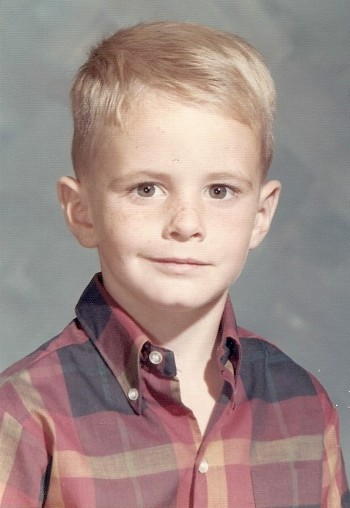 In this original BTB Investigation, we unveil the tragic story of Kirk Murphy, a four-year-old boy who was treated for “cross-gender disturbance” in 1970 by a young grad student by the name of George Rekers. This story is a stark reminder that there are severe and damaging consequences when therapists try to ensure that boys will be boys.
When we first reported on three American anti-gay activists traveling to Kampala for a three-day conference, we had no idea that it would be the first report of a long string of events leading to a proposal to institute the death penalty for LGBT people. But that is exactly what happened. In this report, we review our collection of more than 500 posts to tell the story of one nation’s embrace of hatred toward gay people. This report will be updated continuously as events continue to unfold. Check here for the latest updates.
In 2005, the Southern Poverty Law Center wrote that “[Paul] Cameron’s ‘science’ echoes Nazi Germany.” What the SPLC didn”t know was Cameron doesn’t just “echo” Nazi Germany. He quoted extensively from one of the Final Solution’s architects. This puts his fascination with quarantines, mandatory tattoos, and extermination being a “plausible idea” in a whole new and deeply disturbing light.
On February 10, I attended an all-day “Love Won Out” ex-gay conference in Phoenix, put on by Focus on the Family and Exodus International. In this series of reports, I talk about what I learned there: the people who go to these conferences, the things that they hear, and what this all means for them, their families and for the rest of us.
Prologue: Why I Went To “Love Won Out”
Part 1: What’s Love Got To Do With It?
Part 2: Parents Struggle With “No Exceptions”
Part 3: A Whole New Dialect
Part 4: It Depends On How The Meaning of the Word "Change" Changes
Part 5: A Candid Explanation For "Change"
 At last, the truth can now be told.
Using the same research methods employed by most anti-gay political pressure groups, we examine the statistics and the case studies that dispel many of the myths about heterosexuality. Download your copy today!
And don‘t miss our companion report, How To Write An Anti-Gay Tract In Fifteen Easy Steps.
 Anti-gay activists often charge that gay men and women pose a threat to children. In this report, we explore the supposed connection between homosexuality and child sexual abuse, the conclusions reached by the most knowledgeable professionals in the field, and how anti-gay activists continue to ignore their findings. This has tremendous consequences, not just for gay men and women, but more importantly for the safety of all our children.
Anti-gay activists often cite the “Dutch Study” to claim that gay unions last only about 1½ years and that the these men have an average of eight additional partners per year outside of their steady relationship. In this report, we will take you step by step into the study to see whether the claims are true.
Tony Perkins’ Family Research Council submitted an Amicus Brief to the Maryland Court of Appeals as that court prepared to consider the issue of gay marriage. We examine just one small section of that brief to reveal the junk science and fraudulent claims of the Family “Research” Council.
 The FBI’s annual Hate Crime Statistics aren’t as complete as they ought to be, and their report for 2004 was no exception. In fact, their most recent report has quite a few glaring holes. Holes big enough for Daniel Fetty to fall through.
“Google” is a trademark of Google Inc.
© Box Turtle Bulletin. All Rights Reserved.
 Posts
Posts  Posts via daily email: