Box Turtle Bulletin
 News and commentary about the anti-gay lobby
“Now you must raise your children up in a world where that union of man and box turtle is on the same legal footing as man and wife…”
News and commentary about the anti-gay lobbyPosts Tagged As: Daily Agenda
August 4th, 2012
TODAY’S AGENDA:
Pride Celebrations This Weekend: Amsterdam, Netherlands; Belfast, UK; Cork, Ireland; Hamburg, Germany; Hanoi, Vietnam; Leeds, UK; Liverpool, UK; Salem, OR; Stockholm, Sweden; Swindon, UK; and Vancouver, BC.
Other Events This Weekend: Divers/Cité Montréal, QC; Summer Diversity Weekend, Eureka Springs, AK; Zia Regional Rodeo, Santa Fe, NM.
TODAY IN HISTORY:
New York TV Station Airs “Introduction to the Problem of Homosexuality”: 1956. The pioneering WRCA-TV (now WNBC) aired an award-winning weekly panel discussion program called “The Open Mind”. The program, hosted by Richard Heffner, was not only well ahead of its time when it first went on the air in May 1956, it is still acclaimed today today as a syndicated program — still hosted by Heffner — for American Public Television. On August 4, 1956, Heffner hosted the first televised discussion on the East Coast on homosexuality. And fortunately, the Daughters of Bilitis’s magazine The Ladder featured a review of the program by Sten Russell (real name: Stella Rush). If it weren’t for her review, it might be difficult to reconstruct the discussions that took place that night.
According to Russell, the program featured attorney Florence Kelley, psychologist R.W. Laidlaw, and a clergyman by the name of Dr. August Swift. The program started on a relatively non-condemning note, although it wouldn’t take long for the prevailing prejudices about gay people to take root. When Heffner asked the panel whether homosexuality harmed society and should be punished by law, it was the clergyman who re-cast the question as to whether the law should concern itself with people who were not harming society. Kelley, the attorney, jumped in to counter that the law certainly should apply “when children were involved” — reflecting the common view that gays were child molesters — unless, she added, it was found that “homosexual offenders” could be treated. Laidlaw, the psychologist, said that of course they could be treated, to which Kelly retorted, “Yeah, anything can be treated… but how successfully?” Russell’s account indicated that the program continued along those lines:
The moderator asked if the homosexual could accept himself if society didn’t accept him. The conclusion was that it was very difficult, indeed. The moderator asked if there were cultural factors in the present making for more homosexuality. Miss Kelley asked if homosexuality were [sic] growing or just being more talked about. She cited Kinsey’s books as examples. The moderator said that the matter of national “security” had focussed attention on this problem. He mentioned blackmail potential as part of the “security problem”.
Laidlaw said that a homosexual was not necessarily neurotic or psychotic, but that he was more likely to be in certain ways, due mainly to the pressures of public opinion which caused him to have to hide and cover up his actions and desires. Dean Swift was concerned as to the shock children experienced when approached by adult males. Laidlaw said that that depended on the predisposition of the child. Miss Kelley said that she was not worried about the “predisposition of the child,” but that the American Law Institute wished to protect any child from the traumatic shock of any sexual attack.
Despite the obvious prejudices, the program was (for 1956) relatively evenhanded and balanced — as balanced as a program like this could be where people were talking about another group of people who weren’t in the room. But even without the presence of a genuine gay person on the panel, the program proved controversial; New York’s Francis Cardinal Spellman threatened to have NBC affiliate WRCA’s broadcasting license revoked.
California’s Prop 8 Declared Unconstitutional: 2010. It’s hard to believe that only two years have passed since Federal Judge Walker Vaughn’s decision declaring California’s Proposition 8 unconstitutional. We’ve been following the case so closely that it now seems like a lifetime ago. Judge Walker’s findings were far-reaching, saying that Prop 8 could not withstand any level of scrutiny under the Constitution’s Equal Protection Clause. The case then went to the Ninth Circuit Court of Appeals, which narrowed Judge Walker’s ruling considerably, holding that the key thing that made Prop 8 unconsitutional was that it took away a right from just one group of people who already enjoyed that right. According to the three judge Appeals panel, ” Withdrawing from a disfavored group the right to obtain a designation with significant societal consequences is different from declining to extend that designation in the first place, regardless of whether the right was withdrawn after a week, a year, or a decade. The action of changing something suggests a more deliberate purpose than does the inaction of leaving it as it is.” On Tuesday, Prop 8’s supporters announced that they had filed an appeal before the U.S. Supreme Court.
If you know of something that belongs on the agenda, please send it here. PLEASE, don’t forget to include the basics: who, what, when, where, and URL (if available).
August 3rd, 2012
TODAY’S AGENDA:
Pride Celebrations This Weekend: Amsterdam, Netherlands; Belfast, UK; Cork, Ireland; Hamburg, Germany; Hanoi, Vietnam; Leeds, UK; Liverpool, UK; Salem, OR; Stockholm, Sweden; Swindon, UK; and Vancouver, BC.
Other Events This Weekend: Divers/Cité Montréal, QC; Summer Diversity Weekend, Eureka Springs, AK; Zia Regional Rodeo, Santa Fe, NM.
TODAY IN HISTORY:
A Murder in Miami Reveals Homosexual Presence: 1954. It’s funny what it took in 1954 for a major metropolitan area to discover that there were gay people in their midst. I say it’s funny, but it can only be funny today, nearly sixty years later; it was certainly no laughing matter then. It was in the early morning hours of August 3 when a young couple looking for a secluded spot along North Miami’s “lover’s lane” found the body of William T. Simpson, a 27-year-old Eastern Airlines flight attendant, lying in the middle of the roadway in a pool of blood. He had been shot on his right side, his head had severe lacerations and his right index finger had apparently been pierced by something. About 500 yards away, police found his 1950 cream-colored convertible, with the front seat spattered with blood and a .22 caliber shell on the floor. It appeared that after the assailant fled, Simpson was able to get out of the car and stagger to the road before collapsing and bleeding to death.

Miami News, August 9, 1954
Five days later, police formally charged two young men, Charles W. Lawrence, 19, and Lewis Richard Killen, 20, with first degree murder. The two men didn’t just confess to the murder, they bragged about it. It turns out that they had been rolling gay men in the area for several weeks. Lawrence would hitchhike and allow himself to be “picked up” by an unsuspecting mark, and Killen would follow in a green Chevy. They would then rob the victim after he pulled over to a secluded spot. Lawrence carried a gun, and it was he who pulled the trigger. One former high school buddy recalled that Lawrence “had an intense hatred of homosexuals.”
In the ensuing investigation, police appeared surprised and alarmed that there were so many gay men in the area. It shouldn’t have been much of a surprise. Local papers had been reporting that Miami’s sheriff deputies and Miami Beach’s police department had conducted several bar and beach raids since the previous November, arresting gay men and charging them with “vagrancy.” When a young girl was murdered in July, police responded, illogically, with five nights of gay bar raids to “make things hot for sex perverts in Miami.” On July 18, the Miami Herald published a letter to the editor proposing a final solution to the problem: “Just execute them all.” But on the same day that Lawrence and Killen were charged, the Miami News‘s front page headline looked as though detectives had stumbled upon an entirely new discovery: “Pervert Colony Uncovered In Simpson Slaying Probe”. They obviously had a hard time understanding what local gays were telling them.
A colony of some 500 male homosexuals, congregated mostly in the near-downtown northeast section and ruled by a “queen,” was uncovered in the investigation of the murder of an Eastern Air Lines steward…. Peace Justice Edwin Lee Mason said today, “I certainly learned a lot during this investigation I never knew before.
“I not only was surprised at the number of homosexuals turned up in the murder investigation but I was amazed to find out that there were distinct classes, not only based on age groups, but also on the ages of the persons with whom they liked to consort and groups based on types of perversion.”
…”We learned — among other things — that Simpson was bisexual. We also learned that there was a nominal head of the colony — a queen.”
Investigators, following a line of thought that possibly the murder might have been for succession of the title, and that Simpson may have been the “ruler” of what the investigators then believed to be a quite small group of homosexuals in Miami asked one man, who made no secret of his leanings:
“Was Simpson the ‘queen?’
“No,” came the response. “The queen is –” Here the man named a person quite prominent in the community.
“How many of you are there,” an investigator said he asked. “Twenty –Forty?”
“Oh, more than that.”
“A hundred?”
“Make it closer to five hundred,” came the staggering reply.
Dade County’s population was around 700,000 in 1954. For such a large city, five hundred was still enough to throw Miami’s newspapers in an immediate uproar. On August 13, the News began a three-part series on homosexuality, with the first installment calling it “A Disease ‘Worse Than Alcohol’.” The following day, the News reported on “How L.A. Handles Its 150,000 Perverts”. “This thing is like cancer,” Los Angeles police chief Thad F. Brown told the News. “It keeps getting bigger and bigger each year. We process about 150 homosexuals a month who are caught in the act.” The paper pointed to a solution. “The police in Los Angeles have a policy of harassment,” the paper reported. As Brown explained, “We keep a constant check on bars and restaurants where they hang out. We try to get the licenses of the places catering to them.” In the third installment of the series, the News warned about “Great Civilizations Plagued by Deviates” — Greece, Rome, and Miami:
Police of several communities have watched with growing concern the gathering spots frequented by perverts and two departments have started all-out war against homosexuals. Miami Beach Police Chief Romeo Shepard says he will continue to harass homosexuals in Miami Beach. “I simply want them to get out of town,” said Shepard.
Sheriff Tom Kelly, who staged a big raid on homosexual gathering spots last Saturday, made a similar statement. “I will keep on harassing the homosexuals until they understand they’re not wanted in Dade County,” said Kelly.
The Miami police department has shown a reluctance to bother perverts. “If I ran all of the homosexuals out of town, members of some of the best families would lead the parade,” Police Chief Walter Headley once said.
A local attorney, E.F.P. Brigham, proposed legislation to deal with the problem:
If a sexual deviate is accused of molesting a child or any person for that matter, and manages to beat the charge in court, the state will still have the right to order a mental examination for the offender.
If the person is found to be a sexual psychopath (and that does not necessarily mean insane) the state will then have the right to institute civil action to put that person in an asylum for the rest of his or her life or until such time as a cure can be effected.
Miami was in a full-blown panic over the presence of gays in their midsts, a panic which would soon reach the statehouse in Tallahassee where it would rage well into the next decade. House speaker Ted David called for stronger criminal penalties for “confirmed sexual deviants… to meet the needs of Florida’s big cities.” Miami’s mayor, Abe Aronovitz, would make anti-gay campaigns a centerpiece of his administration. And what about Killen and Lawrence, the two men who were charged with first degree murder? After claiming that they killed Simpson because he made sexual advances toward Lawrence, they were convicted of manslaughter in November and sentenced to twenty years in prison.
Michael Hardwick Arrested: 1982. It all started in July, when Michael Hardwick threw a beer bottle into a trash can outside of an Atlanta gay bar. A police officer cited him for public drinking. He went the courthouse, payed the $50 fine, and thought nothing more of it. For some reason, his payment wasn’t recorded correctly, and when his court date came and went, a warrant was issued for his arrest. On August 3, a police officer went to Hardwick’s apparent to serve the warrant. The police officer entered the apartment (accounts differ on how he got in), and discovered Hardwick and another man engaged in oral sex, which Georgia defined as “sodomy” under the law. The officer announced that they two were under arrest. Hardwick shot back, “What are you doing in my bedroom?”
The arrest was humiliating for the two men. Hardwick recalled that the police officer brought them to the police station, he loudly made sure everyone there knew that he had arrested them for “cocksucking,” and that they should be able to find plenty of what they were looking for in Atlanta’s city jails. Hardwick posted bail within the hour, but was detained for twelve hours near other criminals who had been told why he was there. Hardwick had never fought for gay rights before, but that moment changed him. “I realized that if there was anything I could do, even if it was just laying the foundation to change this horrendous law, that I would feel pretty bad about myself if I just walked away from it.”
After the local district attorney decided not to press charges, Hardwick decided to sue Georgia’s Attorney General Michael Bowers in federal court to overturn the state’s sodomy law. The ACLU agreed to take the case on Hardwick’s behalf. The case ultimately made it to the Supreme Court which, in a surprising move, the Court upheld Georgia’s sodomy law. Surprising because the Court had built a solid case history upholding the rights to privacy for heterosexuals to engage in private, non-procreative, non-marital sexual behavior in the privacy of their bedrooms under exactly the same terms as Hardwick’s case. But for gay people, that same right to privacy simply vanished. It wouldn’t be until 2003, when the Supreme Court would finally admit that Bowers v. Hardwick “was not correct when it was decided, and it is not correct today,” that sodomy laws were overturned nationwide in Lawrence v. Texas.
[Source: Joyce Murdoch & Deb Price, Courting Justice: Gay Men And Lesbians V. The Supreme Court
If you know of something that belongs on the agenda, please send it here. Don’t forget to include the basics: who, what, when, where, and URL (if available).
And feel free to consider this your open thread for the day. What’s happening in your world?
August 2nd, 2012
TODAY’S AGENDA:
Pride Celebrations This Weekend: Amsterdam, Netherlands; Belfast, UK; Cork, Ireland; Hamburg, Germany; Hanoi, Vietnam; Leeds, UK; Liverpool, UK; Salem, OR; Stockholm, Sweden; Swindon, UK; and Vancouver, BC.
Other Events This Weekend: Divers/Cité Montréal, QC; Summer Diversity Weekend, Eureka Springs, AK; Zia Regional Rodeo, Santa Fe, NM.

Doubted prostate massages would cure homosexuality.
TODAY IN HISTORY:
Should homosexuals be treated?: 1913. The very word “homosexuality” had only entered the English language two decades earlier, but already medical and mental health professionals were debating the merits of trying to treat gay people. Among them was Columbia University’s Abraham A. Brill, who, as the English translator of Sigmund Freud’s writings, had singlehandedly introduced Americans to Freud’s teachings and became known as the father of American psychoanalysis. The August 2, 1913 edition of the Journal of the American Medical Association published Brill’s talk at the AMA’s convention in Minneapolis in June, where he discussed how his encounters with homosexuals shaped his understanding of them:
Of the abnormal sexual manifestations that one encounters none, perhaps, is so enigmatical and to the average person so abhorrent as homosexuality. I have discussed this subject with many broad-minded, intelligent professional men and laymen and have been surprised to hear how utterly disgusted they become at the very mention of the name and how little they understand the whole problem. Yet I must confess that only a few years ago I entertained similar feelings and opinions regarding this subject. I can well recall my first scientific encounter with the problem. Ten years ago, when I met a homosexual who was a patient in the Central Islip State Hospital. Since then I have devoted a great deal of time to the study of this complicated phenomenon, and it is therefore no wonder that my ideas have undergone a marked change. Tout comprendre c’est tout pardonner, I have met and studied a large number of homosexuals and have been convinced that a great injustice is done to a large class of human beings, most of whom are far from being the degenerates they are commonly believed to be.
Part of the injustice, Brill concluded, lay in the fact that physicians were offering quack advice on treating homosexuality:
…I can never comprehend why physicians invariably resort to bladder washing and rectal massage when they are consulted by homosexuals, unless it be to kill the homosexual cells in the prostateso that their place may be taken by heterosexual cells, as one physician expressed himself when one of my patients asked him how massage of the prostate would cure his inversion. It is an unfortunate fact that such ridiculous ideas are often heard in the discussion of psychosexual disturbances. Only a few months ago a patient told me that he was told by two physicians that his hope for a cure lay in castration.
Castration may cure (in its way) homosexuality — and all other sexuality with it — but of course it should be no surprise that prostate massages had little curative effect. Brill added, “Investigators agree that homosexuality is no sign of mental or physical degeneration,” and he agreed with those views. Nevertheless, he described three cases in which he claimed to have “cured” homosexuals after only six to ten months of psychoanalysis. In the discussion that followed, Dr. D’Orsay Hecht of Chicago noted the incongruity:
I was also impressed with the effort of Dr. Brill to correct homosexuality by decrying it. But if in the eye of the specialist homosexuality is but a contravention, socially speaking, and if it has just as much right to a hearing from the point of view of a sexual act as has heterosexuality, I really cannot see why the homosexual should care to be delivered from his homosexuality, except that he feels disgraced by it. Then again, a large number of homosexuals are in no way abhorrent of themselves in respect to their natures; they seem to be perfectly happy and perfectly well adjusted, probably in a restricted sense, and these patients probably are not worth while treating as Dr. Brill treats them. If we accept homosexuality as a condition which has as much right to exist as heterosexuality, why should we address ourselves to the duty of treating it?
Reagan Bans AIDS Discrimination: 1988. Acting on a recommendation from a 13-member AIDS Commission, President Ronald Reagan ordered a ban on discrimination against federal workers with AIDS. His actions, however drew sharp criticism for not acting on many of the other wide-ranging changes recommended by his own commission, which urged federal legislation to protect HIV-positive workers. The President instead urged “businesses, unions and schools to examine and consider adopting” similar policies. Vice President George Bush, who was running for president, had already endorsed the commission’s recommendations which included spending an additional #3.1 billion to combat the disease. Dr. Frank Lilly, the commission’s only openly gay member, criticized Reagan’s limited action. “We’ve got a blueprint for a national policy on AIDS,” he said. “It’s a piece of whole cloth. You can’t pick and choose your own menu from it.”

More fully American in Paris.
TODAY’S BIRTHDAY:
James Baldwin: 1924. He was born to poverty in Harlem, the son of a pentecostal preacher and a mother with, as he put it, “the exasperating and mysterious habit of having babies.” As he grew older, his father groomed him for the family business of saving souls, but when Baldwin turned seventeen, he left the business and his home and journeyed to an entirely different world in the Village. He began writing book reviews for the New York Times, focusing on books about “the Negro problem, which the color of my skin made me automatically an expert.” Some of his essays led to a few fellowships which allowed him to leave New York for France, where he stayed for the next six years and would spend the better part of his life. While in Europe, Baldwin learned two surprising things: 1) that he was never before more thoroughly an American as he was the moment he landed on French soil, and 2) “I was forced to admit something I had always hidden from myself, which the American Negro has had to hide from himself as the price of his public progress; that I hated and feared white people.” And from working through those two issues, he came to a profound realization:”I imagine that one of the reasons people cling to their hates so stubbornly is because they sense, once hate is gone, that they will be forced to deal with pain.” He also worked through his ambivalence of what it was to be an American. “I love America more than any other country in the world, and, exactly for this reason, I insist on the right to criticize her perpetually.”
Baldwin’s first novel, 1953’s semi-autobiographical Go Tell It on the Mountain


Of course, Giovanni’s Room broke a second barrier; the two main protagonists were gay lovers. And yet the themes were similar to those confronted in Baldwin’s two earlier works. Just as Baldwin had to escape New York so he could work out the alienation he felt for the land that he loved, the American “David” in Giovanni’s Room had also found himself in Paris, torn between the expectations of marriage to his fiancé and the love that he felt for his Italian lover. Other novels — 1962’s Another Country


…To ask whether or not homosexuality is natural is really like asking whether or not it was natural for Socrates to swallow hemlock, whether or not it was natural for for St. Paul to suffer for the Gospel, whether or not it was natural for the Germans to send upwards of six million people to an extremely twentieth-century death. It does not seem to me that nature helps us very much when we need illumination in human affairs. I am certainly convinced that it is one of the greatest impulses of mankind to arrive at something higher than a antural state. How to be natural does not seem to me to be a problem — quite the contrary. The greatest problem is how to be — in the best sense of that kaleidoscopic word — a man.
If you know of something that belongs on the agenda, please send it here. Don’t forget to include the basics: who, what, when, where, and URL (if available).
And feel free to consider this your open thread for the day. What’s happening in your world?
August 1st, 2012
TODAY’S AGENDA:
National Lesbian and Gay Journalists Association Convention: Las Vegas. The NLGJA’s annual convention begins today with a different format from previous years. Instead of being just an NLGJA convention, it will be the UNITY convention being jointly held with the Asian American Journalists Association (AAJA), National Association of Hispanic Journalists (NAHJ), and the Native American Journalists Association (NAJA). The convention begins today at the Mandalay Bay Resort and Convention Center and continues through Saturday.
Pride Celebrations This Weekend: Amsterdam, Netherlands; Belfast, UK; Cork, Ireland; Hamburg, Germany; Liverpool, UK; Salem, OR; Stockholm, Sweden; Swindon, UK; and Vancouver, BC.Hanoi, Vietnam; Leeds, UK;
Other Events This Weekend: Divers/Cité Montréal, QC; Summer Diversity Weekend, Eureka Springs, AK; Zia Regional Rodeo, Santa Fe, NM.
TODAY IN HISTORY:
Rep. Jim Kolbe Comes Out: 1996. On July 12, 342 Congressional representatives rushed to pass the so-called Defense of Marriage Act into law. The three openly gay representatives, Steve Gunderson (R-WI), Barney Frank (D-MA), and Gerry Studds (D-MA) spoke passionately against the bill, making their status as gay men relevant to the debate. Reps. Jim Kolbe (R-AZ) and Mark Foley (R-FL), who were closeted, quietly voted for the bill. Almost immediately after the vote, San Fransisco activist Michael Petrelis began an email campaign to urge other activists, journalists and publications to reveal their secrets. The Advocate had a policy against outing public officials, but since they were following up prior reports and rumors from other media, they felt that if those reports could be independently verified through three different sources, the next step would be to approach the lawmakers and ask if they were gay. “They were verified, and The Advocate contacted Rep. Jim Kolbe of Arizona and Rep. Mark Foley of Florida, both Republicans, to ask them to explain their votes in favor of DOMA as well as to talk about their sexual orientation.” The Advocate continued:
Both men objected to the latter line of questioning. “Even members of Congress should be allowed to have personal lives,” Kolbe, 54, said in a telephone interview. “The issue of my sexuality has nothing to do with the votes I cast in Congress or my work for the constituents of Arizona’s fifth congressional district.” Upon reflection, however, Kolbe decided to come out soon after talking to The Advocate, saying the magazine’s questioning of him was a chief factor. Foley, in written answers to The Advocate‘s questions, stated his belief that “a lawmaker’s sexual orientation is…irrelevant.”
Kolbe decided to beat The Advocate to the punch (Foley wouldn’t come out until 2006, when he resigned after sexually suggestive Instant Messages between him and a 16-year-old page). On August 1, Kolbe revealed that he was indeed gay. ”That I am a gay person has never affected the way that I legislate,” he said in a statement. ”The fact that I am gay has never, nor will it ever, change my commitment to represent all the people of Arizona’s Fifth District,” which includes Tucson and the southeastern corner of the state. Rep. Franks came to Kolbe’s defense. ”In general, Kolbe has voted against bigotry and discrimination,” he said, ”so his overall record is intellectually honest on this issue.” Petrellis reacted positively to the outing as well. “I think it’s a terrific development that we now have an equal number of openly gay G.O.P. members of Congress.”
Kolbe was reelected to his seat in 1998, and in 2000, he became the first openly gay person to address the Republican National Convention. His speech about free trade and he didn’t come within ten miles of addressing gay rights, but the Texas delegation protested by bowing their heads, purportedly in prayer. (Ohio anti-gay activist Phil Burress called for Kolbe’s arrest on sodomy charges.) Meanwhile, Kolbe continued to defend his vote for DOMA on states rights grounds. “My vote on the Defense of Marriage Act was cast because of my view that states should be allowed to make that decision, about whether or not they would recognize gay marriages,” he said. “Certainly, I believe that states should have the right, as Vermont did, to provide for protections for such unions.” He voted against the Federal Marriage Amendment in 2004 and 2006. By the time he was wrapping up his congressional service in 2006, Kolbe telling local audiences in Tucson that “in a few years,” same-sex marriage would be normal and uncontroversial. He retired in 2007.
TODAY’S BIRTHDAYS:
 Lionel Bart: 1930. His professional songwriting career began in the 1950s when he began churning out pop hits for several British singers. But he is best known as the author for the book, music and lyrics for the smash 1960 London musical Oliver!, based on the famous Charles Dickens novel. When the show opened on Broadway two years later, it earned him a Tony for Best Original Score. In 1963, he wrote the theme song for the the James Bond film From Russia With Love. Bart’s style — and lifestyle — came to epitomize early 1960s Britain, palling around with Noel Coward, Brian Epstein, Judy Garland, Shirley Bassey, and even Princess Margaret, who called him a “silly bugger” for the way he squandered his finances.
Bart continued writing for the West End, scoring respectable successes with Blitz! (1962) and Maggie May (1964), but Twang! (1965) was a horrible flop, and La Strada (1960) closed on Broadway after only one performance. By then, he has broke and in serious decline due to alcoholism and LSD. By 1972, he was bankrupt and slid further into drinking and depression. By the early 1990s, he quit drinking and began attending Alcoholics Anonymous, but between his diabetes and nearly-destroyed liver, his health was permanently damaged. He died in 1999 after a long battle with cancer.
 Yves Saint Laurent: 1936. One of the greatest names in fashion got his start at another storied fashion house, Christian Dior. In 1957, Dior was so impressed with Saint Laurent’s designs for the firm that Dior named Saint Laurent to succeed him as designer. When Dior died suddenly later that year, Saint Laurent became the head designer at the House of Dior at the age of 21. Saint Laurent’s 1958 collection is credited for saving the firm, but by 1960 his relationship with Marcel Boussac, the firm’s owner, soured. In 1958 and 1959, Boussac reportedly pressured the French government not to draft Saint Laurent into the army to fight in the Algerian War of Independence, but after the critically panned 1960 season, Saint Laurent suddenly found himself conscripted and undergoing combat training.
This would be Saint Laurent’s low point. Hazed by fellow soldiers and fired by Dior, he lasted only 20 days in the military before he was sent to a military hospital due to stress. While there, he was placed under sedation and given psychoactive drugs and electroconvulsive therapy. Years later, he would point to this period as the genesis for his later problems with drinking and drug addictions.
After he was released later that year Saint Laurnet and his partner, Pierre Bergé, founded their own fashion house under Saint Laurent’s name. Throughout the 1960s and 1970s, Saint Laurent would set several fashion trends: safari jackets, tall thigh-high boots, and the Le Smoking tuxedo suit for women. He was also the first major French designer to come out with a full ready-to-wear line, and he was the first designer to use non-caucasian models on his runway works. His personal life also indulged in several 1960s and 1970s trends, partying at Regine’s and Studio 54, drinking and snorting cocaine. He nevertheless maintained a hectic schedule of designing two full haute couture and ready-to-wear lines each year. Because of his drug use he could barely walk down the runway at the end of some of his shows. After 1987, he began turning his design work over to his assistants. He retired completely in 2002 and died in 2008 of brain cancer in Paris.
If you know of something that belongs on the agenda, please send it here. Don’t forget to include the basics: who, what, when, where, and URL (if available).
And feel free to consider this your open thread for the day. What’s happening in your world?
July 31st, 2012
 TODAY IN HISTORY:
First Gay Rights Protest at the Pentagon: 1965. That year marked several important milestones in the history of organized gay protest. In April, gay rights advocates held the first ever pickets in front of the White House demanding equal treatment in federal employment and other areas of discrimination. During the year, those pickets would expand to the U.S. Civil Service Commission, Philadelphia’s Independence Hall, and, on this date in history, the Pentagon. Participants in that picket line included gay rights pioneers Frank Kameny, Barbara Gittings (whose birthday is also today; see below), Jack Nichols and eight others. Another 46 years would pass before the military ban on gays serving openly would finally be out the door. The ban officially ended last year on September 20. The New York Public Library has a small online digital gallery of that first Pentagon protest.

Henry Willson (left) with Rock Hudson.
TODAY’S BIRTHDAYS:
Henry Willson: 1911. The future Hollywood agent was born for show business; his father was vice president of the Columbia Phonograph Company and president of Columbia Gramophone Manufacturing Co. Alarmed at his son’s interest in tab dance, he sent Henry to a boarding school in Asheville, North Carolina where he thought rough sports, rock climbing and backpacking would straighten his son out. Needless to day, it didn’t. In 1933, Henry moved to Hollywood and became a talent scout for Hollywood mogul David O. Selznick, discovering Lana Turner (although not at a drug store counter, as legend had it), Joan Fontaine and Natalie Wood.
But his real claim to fame was his uncanny knack for finding (and often, allegedly, bedding) the hottest beefcake stars of the 1950s. His “Adonis factory” transformed Robert Moseley into Guy Madison, Francis Cuthbert into Rory Calhoun, Merle Johnson into Troy Donahue, Arthur Kelm into Tab Hunter, Robert Wagner into, well, Robert Wagner, and most famously, Roy Fitzgerald into Rock Hudson. That minor detail about some of them lacking discernable talent proved to be of little hinderance to breaking into show business. Willson pesonally coached his charges in how to act, how to behave, and how to butch it up if they were lacking in that particular area. He staged “dates” for his gay stars when needed, and he even talked Hudson into a three year marriage to his secretary when rumors began to become a little too active.
While most of his male clients were heterosexual, the disproportionate number of gay male leads in his stable led many to assume that all of his clients were gay. And as Willson’s own homosexualit was public knowledge, many of his clients, gay and straight, began distancing themselves from him as he became addicted to drugs and alcohol, and also as he became increasingly paranoid and fat. His influenced waned through the 1960s, and by 1974 he became a ward of the Motion Picture and Television Country House and Hospital, where he died of cirrhosis of the liver. With nothing left of his estate, he was buried in an unmarked grave in North Hollywood. In 2005, Willson became the subject of Robert Hofler’s endlessly entertaining biography, The Man Who Invented Rock Hudson: The Pretty Boys and Dirty Deals of Henry Willson
Barbara Gittings: 1932. Her friend and fellow gay rights activist Jack Nichols once heralded Barbara as “the Grand Mother of Lesbian and Gay Liberation.” That’s not much of exaggeration when one considers what she had accomplished for the LGBT community. Her quest for equality and dignity began when she flunked out of her freshman year at Northwestern University because she spent too much time in the library trying to understand what it meant to be a lesbian. Her mission since then was to tear down what she called “the shroud of invisibility” that facilitated the ongoing criminal persecution of homosexuality as well as its being regarded as a mental illness. She organized the New York chapter of the Daughters of Billitis in 1958, and she gained a national platform within the gay and lesbian community as the editor of the pioneering lesbian journal The Ladder in the mid-1960s.

No Limits: Barbara Gittings picketing the White House, 1965.
In 1963, she met Frank Kameny, the pioneering gay rights activist based in Washington, D.C. He was, as she described him, “the first gay person I met who took firm, uncompromising positions about homosexuality and homosexuals’ right to be considered fully on a par with heterosexuals.” Together, they formed a collaboration that would transform the gay rights movement from one of timidity and defensiveness to bold action and determined demands for equality. Those actions included the first ever gay rights protests in front of the White House, Philadelphia’s Independence Hall, and the Pentagon, all beginning in 1965. The move was audacious — the Daughters of Bilitis officially opposed picketing at the time, and they would force her removal as editor of The Ladder in 1966 over the issue — but Gittings pressed forward, convinced that invisibility would fall only when gays and lesbians themselves took the steps to boldly step out of the shadows.

Barbara Gittings, Frank Kameny, and John E. Fryer as “Dr. H. Anonymous” at the 1972 APA panel on homosexuality.
The pair’s greatest accomplishment came in the campaign to remove homosexuality from the American Psychiatric Association’s list of mental disorders. In 1971 Kameny and Gittings organized an exhibit at the APA convention in Washington, D.C.. While there, they attended a panel discussion on homosexuality, and were outraged to discover that there were no gay psychiatrists on the panel. Kameny grabbed the microphone and demanded that the APA hear from gays themselves. The following year they were invited to participate in a panel discussion entitled “Psychiatry, Friend or Foe to Homosexuals? A Dialogue.” Gittings convinced Dr. John E. Dryer, a gay psychiatrist to take part. But he would do so only on the condition that his participation remain anonymous, and that he could wear a disguise and use microphone to alter his voice. “Dr. H. Anonymous’s” participation created a sensation at the convention as he described how he was forced to be closeted while practicing psychiatry. Gittings, in turn, read aloud letters from other gay psychiatrists who refused to participate out of fear of professional ostracism. The following year, homosexuality was removed from the APA’s list of mental disorders, and Gittings celebrated by being photographed with newspaper headlines, “Twenty Million Homosexuals Gain Instant Cure.”
 In the 1970s, Gittings’ passion returned to where she first tried to find information about what it means to be a lesbian, the library. She helped to found the American Library Association’s Gay Task Force. That’s where she got the idea for a gay kissing booth at the ALA’s 1971 convention in Dallas. “We needed to get an audience,” she remembered. “So we decided… let’s show gay love live. We were offering free—mind you, free—same-sex kisses and hugs. Let me tell you, the aisles were mobbed, but no one came into the booth to get a free hug. So we hugged and kissed each other. It was shown twice on the evening news, once again in the morning. It put us on the map.” She continued, “You know that kissing booth wasn’t only a public stunt. It gave the message that gay people should not be held to double standards of privacy. We should be able to show our affections.”
She died in 2007 after a long battle with breast cancer. She is survived by Kay Tobin Lahusen, a fellow gay rights advocate and her partner of 46 years. You can see a personal remembrance of Barbara Gittings by one of her colleagues, Jack Nichols, here.
If you know of something that belongs on the agenda, please send it here. Don’t forget to include the basics: who, what, when, where, and URL (if available).
And feel free to consider this your open thread for the day. What’s happening in your world?
July 30th, 2012
THIS MONTH IN HISTORY:
A Plea From An Invert: 1919. Through the early part of the twentieth century, American medical and psychological writers began taking an increasing interest in homosexuality (or “sexual inversion,” “contrary sexual feeling,” “perverted sexual instinct,” or any number of other terms which they had yet to settle on). It was rare, however, to hear from “inverts” themselves. The July 1919 issue of the Journal of Urology and Sexology carried one interesting letter to the editor that gives some indication of the frustration that many felt due to the severe societal disapproval that was prevalent a the time:
A PLEA FROM AN INVERT
To the Editor:
A plea to be heard before it is too late — will you not listen and perhaps advise me? If you only knew how I need help!
I am a misfit. I am a young man who has never cared for any women. Am I to blame because God has given me a feminine nature? Why should I be shunned by all people, loathed by them!
I am clean and refined, am well educated in the fine arts and have high ideals concerning all things. And yet men who are covered with filthy sores from evil living, who have never had a decent thought or ideal in their lives, sneer at me. I am an outcast; I am lower than the lowest!
What few who are kind to me are women who have praised me for my high ideal concerning life.
Because the custom is not that two men shall marry, is it so wrong? If I love and respect a friend and he loves me, is it not as pure a marriage as between a man and woman; and far more equal?
I wish I had a friend to go and live with, to work out our ideals, and to grow in every way. Yet this has made me accursed among men; I am damned to a living hell!
Must I — who have denied myself almost too much, to become worthy of the highest friendship — must I forever walk alone?
Is there aught but beauty in the love of Marius and Cornelius in “Marius the Epicurian” by Walter Pater? Is Marius to be considered vile, because he had that “feminine refinement” that made him idealize life, that led him finally to the Christian faith and martyrdom?
I am alone and tired. Is it not a sad thing that I and many other young men who are worthy of much, should have but one hope — that Death shall come soon!
I need advice. If some young man among your readers might write to me! Do you not think we would save each other?
You must not believe me physically or mentally deficient — though I am near to suicide I
–Homo.
If you know of something that belongs on the agenda, please send it here. Don’t forget to include the basics: who, what, when, where, and URL (if available).
And feel free to consider this your open thread for the day. What’s happening in your world?
July 29th, 2012
TODAY’S AGENDA (Ours):
Pride Celebrations This Weekend: Bourneymouth, UK; Braunschweig, Germany; Detroit, MI (Black Pride); Halifax, NS; Pittsburgh, PA (Black Pride); Raleigh-Durham, NC (Black Pride); and Stuttgard, Germany.
Other Events This Weekend: RodeoFest, Belleville, MI; POUTfest Film Festival, Cork, Ireland; HomoClimbtastic Rock Climbing Convention, Fayeteville, WV; Newfest LGBT Film Festival, New York, NY; and Up Your Alley, San Francisco, CA.
TODAY’S BIRTHDAY:
 Tim Gunn: 1953. He was on the faculty of Parson The New School for Design, and he served as the fashion design chair until 2007 before moving to Liz Claiborne to work as their chief creative officer. But you know him from the Bravo reality series Project Runway, which just started its tenth season two weeks ago. He is an animal rights spokesperson, having opposed the use of fur in fashion. He also made an “It Gets Better” video, motivated by his own suicide attempt when he was seventeen. He is generally a private person, not given to opening his life to public scrutiny. But last year he wrote a short essay, Shaken, Not Stirred
If you know of something that belongs on the agenda, please send it here. Don’t forget to include the basics: who, what, when, where, and URL (if available).
And feel free to consider this your open thread for the day. What’s happening in your world?
July 28th, 2012
TODAY’S AGENDA (Ours):
Pride Celebrations This Weekend: Bourneymouth, UK; Braunschweig, Germany; Detroit, MI (Black Pride); Ft. Wayne, IN; Halifax, NS; Harrisburg, PA; Norwich, UK; Nottingham, UK; Plymouth, UK; Pittsburgh, PA (Black Pride); Raleigh-Durham, NC (Black Pride); Reno, NV; and Stuttgard, Germany.
Other Events This Weekend: RodeoFest, Belleville, MI; POUTfest Film Festival, Cork, Ireland; HomoClimbtastic Rock Climbing Convention, Fayeteville, WV; Newfest LGBT Film Festival, New York, NY; and Up Your Alley, San Francisco, CA.
TODAY IN HISTORY:
Illinois Rescinds Sodomy Law: 1961. On this date in history, the state of Illinois led the nation in becoming the first state in the land to enact a repeal of it’s law criminalizing homosexuality. The repeal was part of a very large omnibus legal overhaul of the state’s criminal code, and much of that overhaul was based on the American Law Institute’s Model Penal Code, which in 1956 recommended the elimination of anti-sodomy laws and other prohibitions against consensual sexual activity between consenting adults. Because the Model Penal Code also touched on a plethora of other criminal statues, it’s likely that most Illinois lawmakers didn’t realize that they were repealing their anti-sodomy law by adopting the Code. Nevertheless, the code was adopted, and the anti-sodimy law’s repeal became effective on January 1, 1962.
For the next decade, Illinois would remain the only state in the union to legalize consensual adult same-sex relationships. In 1971, Connecticut finally rescinded its sodomy law, followed by Colorado and Oregon (1972), Hawaii and North Dakota (1973), Ohio (1974), New Hampshire and New Mexico (1975). The big year was 1976, when California, Indiana, Maine, Washington and West Virginia stopped criminalizing homosexuality. By the time Lawrence v. Texas struck down all sodomy laws nationwide in 2003, thirty-six states, the District of Columbia and Puerto Rico had eliminated their anti-homosexuality laws, either by legislative action or by state court decisions. But it all began exactly fifty years ago today with that first step in the Land of Lincoln — and, come to think of it, the land of LaBarbera, too. He must be so proud.

England, Wales Rescinds Gross Indecency Law: 1967. On July 28, 1967, Queen Elizabeth II gave her Royal Assent to the Sexual Offenses Bill, which marked a significant overhaul of Britain’s laws regulating sexual practices between consenting adults. The Royal Assent was the last act in a long, tortuous path toward finally getting rid of the Gross Indecency statute that had ensnared so many victims like the famous playwright Oscar Wilde and WWII code-breaker and computer pioneer Alan Turing. The law penalized male homosexuality with up to two years in prison; consensual sexual acts between lesbians was not illegal, largely because the phenomenon was unknown when the Gross Indecency statute was last amended in the nineteenth century..
On July 4, Parliament voted 99-14 to approve the Sexual Offenses Bill in a free non-party vote by a tiny percentage of the more than 600-member chamber. The vote took place after an acrimonious eight-hour all-night debate. Home Secretary Roy Jenkins took pains to reassure members that “this is not a vote of confidence in, or congratulations for, homosexuality.” Supporters said that the bill would eliminate one of the most frequent causes of espionage: blackmail of gay diplomats and other officials.
But Labor member Peter Mahon summed up the feelings of those who opposed repeal. “It is by no means unnatural to have a feeling of absolute revulsion against a bill of this kind. Without any lack of charity I say without equivocation it was a bad bill to begin with, it is a bad bill now and will be a bad bill until the end of time. It will be a bad bill throughout eternity because homosexual acts are a perversion of natural function.” Conservative member Rear-Admiral Morgan Giles warned darkly that “decent and reasonable” people of Britain would react violently when they realized what Parliament had done. “It will only encourage our enemies and those who disparage us, and it can only dismay our friends,” he declared. Another Torry MP, Sir Cyril Osborne, said that many peple were tired of democracy being made safe for “pimps, prostitutes, spivs and pansies — and now for queers.”
The law then went to the House of Lords, which gave its approval to the measure on July 21. Lord Aaran, the Conservative Whip and longtime supporter of repeal, quoted Oscar Wilde in closing the debate. “We shall win in the end, but the road will be long and red with monstrous martyrdoms.” Lord Aaran subsequent statement then reflected the ambiguity most politicians felt who supported the bill: “I ask one thing. I ask those who have, as it were, been in bondage for whom the prison doors are now opened to show their thanks by comporting themselves quietly and with dignity. This is no occasion for jubilation and certainly not for celebrations. Homosexuals must continue to remember that while there may be nothing bad in being homosexual, there is certainly nothing good.”
(In a related note, Wikipedia has this anecdote about Lord Aaran: “Arran was the sponsor in the House of Lords of Leo Abse’s 1967 private member’s bill which decriminalised homosexuality between two consenting adult males. He also sponsored a bill for the protection of badgers. He was once asked why the badger bill had not received enough support to pass whereas decriminalising homosexuality had. ‘Not many badgers in the House of Lords,’ he replied.”)
If you know of something that belongs on the agenda, please send it here. Don’t forget to include the basics: who, what, when, where, and URL (if available).
And feel free to consider this your open thread for the day. What’s happening in your world?
July 27th, 2012
TODAY’S AGENDA (Ours):
Pride Celebrations This Weekend: Bourneymouth, UK; Braunschweig, Germany; Detroit, MI (Black Pride); Ft. Wayne, IN; Halifax, NS; Harrisburg, PA; Norwich, UK; Nottingham, UK; Plymouth, UK; Pittsburgh, PA (Black Pride); Raleigh-Durham, NC (Black Pride); Reno, NV; and Stuttgard, Germany.
Other Events This Weekend: RodeoFest, Belleville, MI; POUTfest Film Festival, Cork, Ireland; HomoClimbtastic Rock Climbing Convention, Fayeteville, WV; Newfest LGBT Film Festival, New York, NY; and Up Your Alley, San Francisco, CA.

Radclyffe Hall
TODAY IN HISTORY”
“The Well of Loneliness” Published: 1927. The book was so controversial that three publishers turned it down. When it was finally published in England, it appeared in a plain, discreet black cover. It wasn’t particularly racy; the only sexual description consisted of the phrase, “and that night, they were not divided.” By today’s standards, the book may seem tame. But in 1927 Radclyffe Hall’s novel caused a sensation in Britain. The publisher sent review copies only to a few select newspapers and magazines who he thought could handle the lesbian-themed content. But he misjudged one of those editors. James Douglas, editor of the Sunday Express responded by mounting a massive campaign against the novel. He wrote “I would rather give a healthy boy or a healthy girl a phial of prussic acid than this novel.”
Despite most of the British press’s defending the novel, the publisher soon landed in court on obscenity charges. Several authors came to his defense — E.M. Forster, Virginia Woolf, and James Melville among them — but the judge declared the novel obscene. It wasn’t the story line he found objectionable; it was the novel’s plea for tolerance and acceptance that would “deprave and corrupt those whose minds are open to such immoral influences.” The ban and the massive newspaper campaign against the book, of course, only served to increase the public’s curiosity and demand for the book. Wherever there’s a demand, there’s a supply, and in the case of The Well, that supply was met by a publisher in France who shipped copies surreptitiously to newsstands throughout Britain. That had the effect of lowering British officials’ enthusiasm for banning other lesbian-themed novels that followed. A Home Office memo observed, “It is notorious that the prosecution of the Well Of Loneliness resulted in infinitely greater publicity about lesbianism than if there had been no prosecution.” It wouldn’t be until 1949 when The Well could be published in Britain again, not because any laws had changed, but because the Home Office simply decided to look the other way. It has remained in continuous publication since then.
Surprisingly, the book’s appearance in the U.S. generated a different reaction. Sure, there were attempts to ban it in the U.S. Customs Court and in New York City, where police seized 865 copies from its American publisher’s offices, but both attempts came to naught. The ensuing publicity from the trials raised demand for the book. Despite it’s high price of $5 (about twice the cost of an average hardback novel), The Well would go through six printings and sell over 100,00 copies by the time it was cleared by the courts. As in Britain, The Well of Loneliness
TODAY’S BIRTHDAY:
 Troy Perry: 1940. By the time he was fifteen years old, he was already a Baptist preacher and a self-described “religious fanatic.” He married in 1959 and fathered two sons, but he was not faithful to his wife. He had a few gay dalliances on the side. When the elders at the church he was pastoring found out, they forced him to resign and he moved his family to Southern California and began preaching for the Church of God of Prophecy. While there, his wife found a copy of Donald Webster Cory’s groundbreaking The Homosexual In America hidden in a mattress. That led to an immediate divorce and an end to his preaching career. After a stint in the army beginning in 1965, Perry felt called to offer a place for gay people to worship freely. He placed an ad in The Advocate announcing a worship service designed for gays in Los Angeles. and twelve people turned up on that first Sunday in October 1968. That would be the genesis for the Metropolitan Community Church, the only Christian denomination founded specifically to address the spiritual needs of LGBT people. MCC now has 250 congregations in 23 countries around the world.
If you know of something that belongs on the agenda, please send it here. Don’t forget to include the basics: who, what, when, where, and URL (if available).
And feel free to consider this your open thread for the day. What’s happening in your world?
July 26th, 2012
TODAY’S AGENDA (Ours):
Pride Celebrations This Weekend: Bourneymouth, UK; Braunschweig, Germany; Detroit, MI (Black Pride); Ft. Wayne, IN; Halifax, NS; Harrisburg, PA; Norwich, UK; Nottingham, UK; Plymouth, UK; Pittsburgh, PA (Black Pride); Raleigh-Durham, NC (Black Pride); Reno, NV; and Stuttgard, Germany.
Other Events This Weekend: RodeoFest, Belleville, MI; POUTfest Film Festival, Cork, Ireland; HomoClimbtastic Rock Climbing Convention, Fayeteville, WV; and Up Your Alley, San Francisco, CA.
TODAY’S AGENDA (Theirs):
NOM’s Ruth Institute Conference: San Diego, CA. The Ruth Institute, a project of the National Organization for Marriage, will conduct a conference this weekend in San Diego’s Skyline Church. Under the unwieldy title of “It Takes A Family To Raise a Village,” the conference will bring together what NOM calls “emerging leaders” to learn at the knee of some of the nation’s most virulent anti-gay extremists. The most prominent speaker at that conference will be Dr. Robert Gagnon, who argues that “homosexual practice is a more serious violation of Scripture’s sexual norms than even incest, adultery, plural marriage, and divorce.” Gagnon is quickly emerging as the Paul Cameron of the new millennium, and he is rapidly becoming the hero of the most extreme elements of the anti-gay industry. This sinister gathering begins today and continues through Sunday.
THIS MONTH IN HISTORY:
Homosexuality and Lesbianism Treated with Metrazol: 1940. The professional literature before 1980 festers with countless torturous descriptions of psychiatry’s barbarous attempts at “curing” homosexuality. Many accounts deal with the application of painful electric shock delivered via electrodes attached to sensitive regions of the body (See, for example, Jan 18, Mar 15, Jun 3). But the imagination for new methods of torture didn’t end there. Dr. Newdigate M. Owensby, who practiced at Atlanta’s famed Medical Arts Building, published a brief paper in the July 1940 edition of the prestigious Journal of Nervous and Mental Disease describing his own unique experiments to cure homosexuality. He worked on “the assumption that homosexuality and lesbianism are symptoms of an under developed schizophrenia,” and this led him to try something new: injecting subjects with Metrazol, to produce an epileptic-type grand mal seizure. Other psychiatrists had been experimenting with Metrazol-induced seizures for schizophrenia since 1934, and their logic went like this: since epilepsy (which was considered a mental illness) and schizophrenia very rarely existed in the same individual, maybe inducing an artificial seizure might rid one of schizophrenia. Owensby extended his theory further believing that Metrazol seizures might “liberate this previous fixation of the libido and the psychosexual energy becomes free once more to flow through regular physiological channels.” Who knows where he got that idea. To give you an idea of what this seizure was like, here is a brief film clip (unrelated to Owensby’s report) of an unidentified patient undergoing Metrazol treatment:
Ownesby provided six case studies of his experiments:
Case I.-A white male of 19 years had been arrested and sentenced to prison because of moral turpitude (homosexuality). He was paroled for treatment and promised a pardon if his perversion was corrected. The family history was not enlightening. Homosexual experiences began during his fourteenth year and continued thereafter. Feminine mannerisms were evident. Metrazol was administered until fifteen shocks were produced. All homosexual desires had disappeared after the ninth shock, but treatment was continued until all feminine mannerisms had been removed. Normal sex relations were established and eighteen months later there had been no return of homosexual tendencies. He was granted a pardon.
Case 2.-A white male aged thirty-four years. Had been a homosexual since his fifteenth year. He was frank enough to admit that the only reason for seeking treatment was fear of exposure and subsequent disgrace. All homosexual desires disappeared after seven grand mal attacks were induced by metrazol. He was married four months later. At the expiration of ten months he stated there had been no recurrence of homosexual desires or practices.
Case 3.-A white male aged forty-four years. Had been a homosexual since early youth. Most of his past life had been spent in penal institutions because of the opportunities to indulge his perversion. He seemed proud of the fact that he was a “man-woman”. Was constantly inebriated when out of prison. Metrazol was administered until ten grand mal attacks had occurred. He appeared to be regenerated after the ninth seizure. His common law wife states that, with the exception of an occasional overindulgence in alcohol, he has been a normal, hard working man for the past six months.
Case 4–A white male aged twenty-five years. Has been a homosexual since his fifteenth year. His mother was a neurotic. A sister had a manic depressive attack. A brother was an alcoholic. The patient was seclusive and spent most of his free time in his room. Would take an occasional trip to another city in order to satiate his homosexual desires. Was reluctant to discuss his perversion. Six grand mal attacks were induced by metrazol. Normal sex relations became established shortly thereafter and at the expiration of three months the patient claimed to be sexually healthy.
Case 5.-A white male aged twenty-six years. Married. Had indulged in active homosexuality since his seventeenth year. Appeared to be an ambulatory schizophrenic. His marriage had been arranged by a doting mother. Had never been self supporting. An obvious personality change followed the sixth induced grand mal attack. Whereas he had formerly been indifferent to his family and friends, he began to show interest and affection for them. He secured a position after returning home and became self supporting. Six months after receiving the metrazol treatment, he reported that he had continued to be free from all homosexual desires.
Case 6.-A white female aged twenty-four years. Name and address given were admittedly fictitious. Said to have been a lesbian since puberty. Promiscuous. Preferred the active role. Inclined to boast of her conquests. Inebriate for past four years. Ten grand mal seizures were induced by metrazol. Became infatuated with an intern after the treatment had been discontinued and frequently complained of nocturnal emissions. Remained institutionalized for six weeks after the last treatment and appeared to be healthy in every way. No subsequent reports.
The report’s weak findings are obvious: no measures of sexual orientation before or after, no long-term follow-up, widespread evidence of involuntary or coerced participation — not to mention a deeply flawed belief in the nature of homosexuality itself. What’s more, it’s easy to imagine that anyone being subjected to this kind of torture would say or do anything to make it stop. In fact, the use of Metrazol-induced seizures was finally halted when it was found to be both ineffective and terrifying to patients. The seizures themselves were sometimes so severe that it wasn’t entirely unusual for a patient to fracture their spine. It was later discovered that repeated treatments could, in some cases, lead to lasting brain damage. Needless to say, there is no evidence whatsoever that this treatment had any kind of effect in changing anyone’s sexual orientation. Indeed, in June 1949, Dr. George N. Thompson, writing for the same journal, would conclude that Metrazol shock therapy was ineffective in “curing” homosexuality.
But the National Association for the Research and Treatment of Homosexuality (NARTH) didn’t bother to read that memo. When they issued their so-called “Journal” in 2009 with a report which supposedly documents successful efforts to change sexual orientation, they included Owensby’s 1940 paper as a success story. Under the heading of “pharmacological interventions,” they write simply, “Owensby (1940) reported that six patients ceased all homosexual behavior after taking the drug Metrazol (pentetrazol).” They not only neglected to mention what Metrazol was all about — it wasn’t just some pill prescribed to patients — they also forgot to point out that the FDA revoked its approval of the drug in 1982.
If you know of something that belongs on the agenda, please send it here. Don’t forget to include the basics: who, what, when, where, and URL (if available).
And feel free to consider this your open thread for the day. What’s happening in your world?
July 25th, 2012
TODAY’S AGENDA:
Pride Celebrations This Weekend: Bourneymouth, UK; Braunschweig, Germany; Detroit, MI (Black Pride); Ft. Wayne, IN; Halifax, NS; Harrisburg, PA; Norwich, UK; Nottingham, UK; Plymouth, UK; Pittsburgh, PA (Black Pride); Raleigh-Durham, NC (Black Pride); Reno, NV; and Stuttgard, Germany.
Other Events This Weekend: RodeoFest, Belleville, MI; POUTfest Film Festival, Cork, Ireland; and Up Your Alley, San Francisco, CA.
TODAY IN HISTORY:
 Dr. Barry’s Death Reveals a Lifelong Secret: 1865. Before Britain’s Inspector General of Military Hospitals, Dr. James Barry, died, he left strict instructions that no one was to change him out of the clothes in which he died. But the charwoman sent to prepare his corpse had no room for such nonsense. And so when she pulled his nightshirt up to wash his boody, she screamed, “The devil! It’s a woman!”
Dr Barry, while alive, was known as a fierce and demanding doctor, and in the process became one of the most highly respected and feared surgeons in Victorian England, feared for his combative temper and fierce determination. He famously got in a bitter argument with Florence Nightingale, who called him a “brute” and “the most hardened creature I ever met throughout the Army.” As Inspector General, he fought for better food, hygiene, sanitation and proper medical care for soldiers and for prisoners. His reforms undoubtedly saved thousands of lives. He became the top-ranking doctor in the British Army, where despite his argumentative personality, was also reputed to have an very good bedside manner. Many who knew him also remarked on his high, soft voice and his diminutive stature — he stood barely five feet tall on special stacked-soled shoes. His black manservant, who joined Barry’s employment in South Africa and would remain with him for the next fifty years, was entrusted with the task of laying out six small towels every morning that Barry used to conceal his curves and broaden his shoulders.
Despite the charwoman’s discovery upon his death, his secret remained tightly held and he was buried under the only name he had gone by since his early twenties. It wouldn’t be until the 1950s when his British Army records were unsealed that it was revealed that Barry had been born in Ireland as Margaret Buckley to a forward thinking family who were staunch supporters of women’s rights. Margaret became James Barry shortly after beginning training to become a doctor. But since women were not admitted to universities at the time, the only way Barry could continue his education and career was to do so as a man. And in every respect, he remained a man in what was very much a man’s world until the day he died.
Barry’s life and career is the subject of Rachel Holmes’s 2007 book, The Secret Life of Dr James Barry: Victorian England’s Most Eminent Surgeon
 Rock Hudson’s AIDS Diagnosis Confirmed: 1985. The rumors had been swirling for some time, coming to a head when Rock Hudson was admitted into Paris’s Pasteur Institute for what was clearly a very serious illness. He had appeared a few days earlier on Doris Day’s television talk show appearing gaunt, and his speech was nearly incoherent. His admission to Pasteur only increased speculation that Hudson was suffering from AIDS, since the world-famous Institute was a leading research and treatment center for the disease. But the official line remained that Hudson was battling liver cancer until this date in 1985, when his publicist revealed that Hudson had been diagnosed with AIDS the year before. Of Hudson’s stay at the Paris hospital, the spokesperson said, “He’s lucid. He’s talking, He’s joking… He’s feeling much better and in quite good spirits.” But his publicist remained circumspect about Hudson’s sexuality, saying only, “He doesn’t have any idea now how he contracted AIDS. … Nobody around him has AIDS.”
That would change a few weeks later when, apparently with Hudson’s blessing, close friends Angie Dickinson, Robert Stack and Mamie Van Doren acknowledged Hudson’s sexuality in a supportive article in People magazine. Messages of support flowed in from Morgan Fairchild, Joan Rivers, and, of course Elizabeth Taylor. Hudson’s death less than three months later provoked another wave of sympathy and galvanized much of Hollywood, with Elizabeth Taylor’s prodding, to undertake the task of reducing the stigma surrounding HIV/AIDS.
TODAY’S BIRTHDAYS:
 J. Warren Kerrigan: 1879. While little-known today, Kerrigan had been a very popular silent film star, appearing in films for Essanay, Biograph, and later Universal. He typically played a leading role, as a modern, well-dressed man-about town. He nearly killed his career over a glib remark about his refusal to enlist in World War I. He managed to salvage his reputation in 1923 with the lead role in The Covered Wagon. That success opened the doors to five more hit films in the next year, and with that his financial security was assured. He retired from filmmaking and lived with his devoted partner of forty years until Kerrigan died in 1947 at the age of 67.
If you know of something that belongs on the agenda, please send it here. Don’t forget to include the basics: who, what, when, where, and URL (if available).
And feel free to consider this your open thread for the day. What’s happening in your world?
July 24th, 2012

Kitty Lambert and Cheryle Rudd were married at midnight at Niagara Falls.
TODAY IN HISTORY:
New Yorkers Get Married: 2011. Shortly after the stroke of midnight, Niagara Falls mayor Paul Dyster pronounced Kitty Lambert and Cheryle Rudd spouses for life as the world-famous falls in the background were lit in rainbow hues.
At about the same time, Albany Mayor Jerry Jennings presided over the wedding of Dale Getto and Barb Lavin in the Common Council’s chambers. And with that, New Yorkers began to celebrate the arrival of marriage equality in the Empire State. On this date, New York became the most populous state in the union providing marriage equality for all of its citizens.

Dale Getto and Barb Laven married in Albany shortly after midnight.
When New York City officials announced that they would open their doors on Sunday for the first day of marriage equality, they worried that high demand would overload city clerk’s offices throughout the city. To manage the demand, they had established a lottery for 764 slots. But on Thursday before the big day, officials announced that they would be able to issue licenses for all 823 couples who applied for the slots. New York law provides for a 24-hour waiting period after obtaining a license before they can marry, but judges from around the state volunteered to be available at registrars offices to offer that exemption.
TODAY’S BIRTHDAYS:
 Gus Van Sant: 1952. Born in Louisville, Kentucky, Van Sant’s traveling salesman father moved the family around through much of his childhood. One thing remained constant though, and it was the young Van Sant’s interest in painting and Super-8 filmmaking. He enrolled at the Rhode Island School of Design to study painting, but he switched to cinema after being introduced to avant-garde films. Since avant-garde films were never much of a money-maker, Van Sant became familiar with some of the more derelict areas along Hollywood Boulevard, and 1985’s Mala Noche


His 1993 flop, Even Cowgirls Get the Blues


Kirk, at the age of 4 years and 6 months, just a few months before entering treatment at UCLA's Feminine Boy Project (Photo courtesy of the family)
Kirk Andrew Murphy: 1965. For nearly four decades, Kirk was known only as “Kraig,” but under that pseudonym he was well known among behavioral therapists who were trying to prevent homosexuality and transgender identities in very young children. The seeds for “Kraig’s” fame were planted in the summer of 1970, when Kirk’s mother saw a television program featuring famed sexologist Dr. Richard Green describing a new federally-funded treatment program at UCLA’s Neuropsychiatric Institute. She listened to his spiel about the dangers of effeminate boys growing up to become homosexual, and she worried that her own young son was headed for trouble. So a month before his fifth birthday, she him to UCLA where Kirk came under the care of a young grad student by the name of George Rekers. Ten months later, five-year-old Kirk was declared to be rid of his “severe gender identity disturbance,” and Kirk’s case would help Rekers earn his Ph.D. in 1972.
Two years later, Rekers published his case report of “Kyle” in the Journal of Applied Behavioral Analysis, where he described “Kyle’s” treatment and the astounding “success.” This was the first time anyone had reported curing a young child’s budding homosexuality or transgenderism — no one was ever quite sure what it was they though they saw in Kirk — and that paper became one of the more widely-cited papers in the late 1970s. Kirk’s case launched Rekers’s career, first as an acclaimed or controversial young psychologist (depending on one’s point of view at the time), and later as a significant anti-gay activist when he co-founded the Family Research Council in 1983. Throughout Rekers’s career he would write at least twenty papers describing Kirk’s case as an example of the power of his treatment program to prevent homosexuality and transgender identity in very young children. The most recent publication touting “Kraig’s” supposedly successful cure appeared in a 2009 book promoted by the National Association for Research and Therapy of Homosexuality (NARTH), where Rekers served on its Scientific Advisory Committee. Of course, all of that was before Rekers was discovered returning from a European vacation in the company of a male escort in 2010.
But it wouldn’t be until last year when the truth would finally emerge. Our award winning original BTB investigation revealed that Kirk’s therapy was highly abusive; that contrary to Rekers’s persistent reports, Kirk was not straight; that Kirk struggled all his life with the shame that his treatment at UCLA had been instilled in him; and that his struggle finally ended with his suicide in December of 2003. If Kirk were alive today, he would be 47 years old. His is still deeply missed by his mother, brother, sister and friends.
If you know of something that belongs on the agenda, please send it here. Don’t forget to include the basics: who, what, when, where, and URL (if available).
And feel free to consider this your open thread for the day. What’s happening in your world?
July 23rd, 2012
TODAY’S AGENDA:
 Vito Documentary Television Premiere: HBO. The press release lays out the background:
On June 27, 1969, a police raid on the Stonewall Inn, a New York City gay bar, took a surprising turn when patrons decided it was time to fight back. As a riot erupted in Greenwich Village, a new era in the gay rights movement was born. Among the crowd that day was 23-year-old film student Vito Russo. In the aftermath of the infamous rebellion, a raid on an after-hours bar he frequented ended with a young gay man impaling himself on a fence while trying to escape the police. This is when Vito found his voice as a gay activist and critic of homosexual representation in the media. Over the next 20 years, until his death from AIDS in 1990, Vito Russo was one of the most outspoken and inspiring activists in the LGBT community’s fight for equal rights.
Russo would go on to become active in ACT-UP, found GLAAD, and write The Celluloid Closet: Homosexuality in the Movies

TODAY’S BIRTHDAYS:
 Charlotte Saunders Cushman: 1816. The American stage actress began her career as an opera singer at the age of thirteen, following the death of her father. She had learned to sing from a friend of her father, who was also a foreman at a Boston piano factory, and she is said to have possessed a remarkable contralto range. But when her singing voice suddenly failed due to strain, she switched gears and became a noted drama actress, with a particular flair for Shakespeare. She and her sister, Susan Webb Cushman, became famous for playing Romeo and Juliet together, with Charlotte playing the role of Romeo to Susan’s Juliet.
In 1848 while in Europe, Charlotte met journalist and sometime actress Matilda Hays, and they began a ten year affair, during which they became known for dressing alike. Charlotte retired from the stage in 1852, and the couple moved to Rome, where they immersed themselves an expatriate community consisting mainly of lesbian artists. Hays and Cushman split in 1857, and Cushman became involved with the sculptor Emma Stebens. She returned to the U.S. for a tour, and before returning to Italy in 1861 she was offered a farewell performance of the title role of Hamlet in Washington, D.C., the first of at least seven different so-called farewell performances over the next seven years. Her final final performance on the stage wouldn’t be until May of 1875 at Boston’s Globe Theater, nine months before she died at the age of 59 of pneumonia.
If you know of something that belongs on the agenda, please send it here. Don’t forget to include the basics: who, what, when, where, and URL (if available).
And feel free to consider this your open thread for the day. What’s happening in your world?
July 22nd, 2012
TODAY’S AGENDA:
 XIX International AIDS Conference: Washington, D.C. For the first time since 1990, the United States will play host to the biennial International AIDS Conference, which is the largest regular conference on HIV and AIDS. The conference theme this year is “Turning the Tide Together,” in recognition that:
The HIV epidemic has reached a defining moment. By acting decisively on recent scientific advances in HIV treatment and biomedical prevention, the momentum for a cure, and the continuing evidence of the ability to scale-up key interventions in the most-needed settings, we now have the potential to end the HIV epidemic.
Advocacy groups, service organizations, International NGO’, researchers, healthcare givers and many more will be gathering together to share key research findings, best practices, and identify knowledge gaps to help determine avenues for further research. The conference is expected to attract between 20,000 and 25,000 delegates from nearly 200 countries. The main venue will be the Walter E. Washington Convention Center, with several organizations planning various other related events throughout the D.C. metro era. The conference will continue through Friday, July 27.
 AIDS Quilt Display: Washington, D.C. As delegates gather for the XIX International AIDS Conference, the Names Project will display sections of the AIDS Memorial Quilt this week on the National Mall and at more than fifty other locations throughout the Washington, D.C. area, beginning yesterday and continuing through Wednesday, July 25. A total of 35,200 panels — 8,800 different panels per day — will be displayed on the National Mall between 8th to 14th Streets, east of the Washington Monument. If you are looking for a specific panel, the Names Project has an AIDS Quilt Touch mobile web app to help locate it for you.
Keep the Promise March and Rally: Washington, D.C. In conjunction with the XIX International AIDS Conference, there will be a march and rally of thousands of AIDS advocates this afternoon prior to the conference opening. Rally speakers include Archbishop Desmond Tutu, Dr. Cornel West, Tavis Smiley, Wyclef Jean, Rev. Al Sharpton, and Ambassador Andrew Young. The march begins at 2:00 at the Washington Monument and will go up 15th Street to Pennsylvania Avenue, then continue Southeast to the U.S. District Court building near the U.S. Capitol.
Pride Celebrations This Weekend: Charlotte, NC (Black Pride); Colorado Springs, CO; Frankfurt, Germany; Hull, UK; Kitsap, WA; Portland, OR (Latino Pride); Rochester, MN; San Diego, CA; and Tampere, Finland.
Other Events This Weekend: Sand Blast Weekend, Asbury Park, NJ; Outfest Film Festival, Los Angeles, CA; QFest Film Festival, Philadelphia, PA.

TODAY’S BIRTHDAYS:
Emily Saliers: 1963. A singer-songwriter and one half of Indigo Girls, she plays the guitar, banjo, mandolin, ukulele and the Greek bouzouki. She met her Indigo Girls partner, Amy Ray, when they were in elementary school together in Decatur, Georgia. Both Girls are lesbian, although Saliers jokes that she prefers “gay” because “lesbian has three syllables.” In 2004, Saliers co-wrote a book with her father, retired theology professor Don Saliers, titled A Song to Sing, A Life to Live: Reflections on Music as Spiritual Practice

Rufus Wainwright: 1973. His mother was the late Kate McGarrigle, and his father is Loudon Wainwright III. With genes like that, it’s no wonder Rufus won a 1989 Genie Award for Best Original Song when he was only fourteen sixteen years old. Rolling Stone named his eponymous debut album as one of the best albums of the year and named him the Best New Artist of 1998. When he was younger, he said that he wasn’t much of a marriage equality supporter. But now that he and his partner, Jörn Weisbrodt, became parents earlier this year, all that has changed. They are engaged to be married in August in Montauk, New York. His seventh studio album, Out of the Game
If you know of something that belongs on the agenda, please send it here. Don’t forget to include the basics: who, what, when, where, and URL (if available).
And feel free to consider this your open thread for the day. What’s happening in your world?
July 21st, 2012

Peterson Toscano (R) with Glen Retief
TODAY’S AGENDA:
Peterson Toscano Gets Married: Sunbury, PA. Gurls, he’s off the market! Ex-gay survivor and gender-queer activist (did I say that right?) and personal friend Peterson Toscano will have a very big day today. He will marry Glen Retief, author of The Jack Bank: A Memoir of a South African Childhood
Pride Celebrations This Weekend: Charlotte, NC (Black Pride); Colorado Springs, CO; Frankfurt, Germany; Hull, UK; Kitsap, WA; Newcastle-Upon-Tyne, UK; Portland, OR (Latino Pride); Rochester, MN; San Diego, CA; Tampere, Finland; York, UK
Other Events This Weekend: Sand Blast Weekend, Asbury Park, NJ; Outfest Film Festival, Los Angeles, CA; QFest Film Festival, Philadelphia, PA.
If you know of something that belongs on the agenda, please send it here. Don’t forget to include the basics: who, what, when, where, and URL (if available).
And feel free to consider this your open thread for the day. What’s happening in your world?
Featured Reports
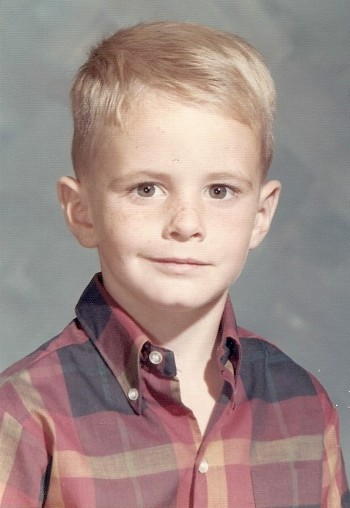 In this original BTB Investigation, we unveil the tragic story of Kirk Murphy, a four-year-old boy who was treated for “cross-gender disturbance” in 1970 by a young grad student by the name of George Rekers. This story is a stark reminder that there are severe and damaging consequences when therapists try to ensure that boys will be boys.
When we first reported on three American anti-gay activists traveling to Kampala for a three-day conference, we had no idea that it would be the first report of a long string of events leading to a proposal to institute the death penalty for LGBT people. But that is exactly what happened. In this report, we review our collection of more than 500 posts to tell the story of one nation’s embrace of hatred toward gay people. This report will be updated continuously as events continue to unfold. Check here for the latest updates.
In 2005, the Southern Poverty Law Center wrote that “[Paul] Cameron’s ‘science’ echoes Nazi Germany.” What the SPLC didn”t know was Cameron doesn’t just “echo” Nazi Germany. He quoted extensively from one of the Final Solution’s architects. This puts his fascination with quarantines, mandatory tattoos, and extermination being a “plausible idea” in a whole new and deeply disturbing light.
On February 10, I attended an all-day “Love Won Out” ex-gay conference in Phoenix, put on by Focus on the Family and Exodus International. In this series of reports, I talk about what I learned there: the people who go to these conferences, the things that they hear, and what this all means for them, their families and for the rest of us.
Prologue: Why I Went To “Love Won Out”
Part 1: What’s Love Got To Do With It?
Part 2: Parents Struggle With “No Exceptions”
Part 3: A Whole New Dialect
Part 4: It Depends On How The Meaning of the Word "Change" Changes
Part 5: A Candid Explanation For "Change"
 At last, the truth can now be told.
Using the same research methods employed by most anti-gay political pressure groups, we examine the statistics and the case studies that dispel many of the myths about heterosexuality. Download your copy today!
And don‘t miss our companion report, How To Write An Anti-Gay Tract In Fifteen Easy Steps.
 Anti-gay activists often charge that gay men and women pose a threat to children. In this report, we explore the supposed connection between homosexuality and child sexual abuse, the conclusions reached by the most knowledgeable professionals in the field, and how anti-gay activists continue to ignore their findings. This has tremendous consequences, not just for gay men and women, but more importantly for the safety of all our children.
Anti-gay activists often cite the “Dutch Study” to claim that gay unions last only about 1½ years and that the these men have an average of eight additional partners per year outside of their steady relationship. In this report, we will take you step by step into the study to see whether the claims are true.
Tony Perkins’ Family Research Council submitted an Amicus Brief to the Maryland Court of Appeals as that court prepared to consider the issue of gay marriage. We examine just one small section of that brief to reveal the junk science and fraudulent claims of the Family “Research” Council.
 The FBI’s annual Hate Crime Statistics aren’t as complete as they ought to be, and their report for 2004 was no exception. In fact, their most recent report has quite a few glaring holes. Holes big enough for Daniel Fetty to fall through.
“Google” is a trademark of Google Inc.
© Box Turtle Bulletin. All Rights Reserved.
 Posts
Posts  Posts via daily email: