Box Turtle Bulletin
 News and commentary about the anti-gay lobby
“Now you must raise your children up in a world where that union of man and box turtle is on the same legal footing as man and wife…”
News and commentary about the anti-gay lobbyMarch 12th, 2014

photo: Global Post
As more countries consider the anti-LGBT legislation passed by the Russian Duma in June of 2013, the U.S. State Department and anti-gay U.S.-based evangelical Christian movements are heading towards an unavoidable clash.
LGL, the National LGBT Rights Organization, reports that (NATO member) Lithuania is now considering laws based on the Russian Duma’s anti-LGBT legislation from June 2013:
The bill was proposed by MP Petras Gražulis in reaction to the upcoming Baltic Pride 2013 March for Equality. MP hasstated that the rationale for the amendment arose from the “current weaknesses of Lithuanian legal system, when promotion of the harmonious, traditional family values is often estimated as unfounded and illegal discrimination against sexual minorities for their sexual orientation”. According to the proponent of the amendment, “the faulty practice appears when the fight against discrimination on the grounds of sexual orientation is being used as a shield. As a consequence, traditional family values are being discriminated, which are appreciated by the people who value heterosexual sexual relations”.
Jim Burroway recently reported that Ukraine is considering similar legislation. The news from Lithuania is brand new so it’s difficult as yet to see where the proposals have come from and if there is a link to U.S.-based anti-gay Christian groups. In Ukraine, however, the link seems clear. The WCF leader Don Feder is in Ukraine this very week; WCF will also be holding a values summit in Russia in fall of 2014.
U.S.-based World Congress of Families’ Don Feder is in Ukraine “to defend the natural family” & fight the gay agenda https://t.co/E6SWQrRXHk
— randy r. potts (@randyrpotts) March 11, 2014
When asked about this summit recently the WCF stated that “Putin doesn’t threaten our national security, Obama does.” Jeff Sharlet in his 2011 book C Street tied anti-gay U.S.-based Christian groups to a burgeoning evangelical movement in Ukraine; presumably, the WCF is working with this same movement, helping push the new anti-LGBT laws now under consideration.
It seems this is going to be a big problem for the U.S. State Department which it has, so far, been able to ignore. Hillary Clinton set a new tone on gay rights, explicitly stating that the U.S. will support LGBT people and announcing a “global initiative to promote LGBT rights as human rights.” At the same time, groups like WCF and individuals like Scott Lively are actively undermining this initiative, and openly supporting Putin over Obama.
Your move, John Kerry.
March 12th, 2014
Uganda’s opposition-leaning weekly Observer reports that former Vice President Specioza Wandira-Kazibwe has called for repeal of the Anti-Homosexuality Act, saying that the law would have a negative impact on public health and Uganda’s international reputation:
Kazibwe, a special envoy of the UN Secretary General for HIV/Aids in Africa, said in a Monday statement that she had told President Museveni that the criminalization of homosexuality only serves to fuel stigma and discrimination against lesbian, gay, bisexual and transgender (LGBT) persons and risks undermining the national Aids response, which is otherwise making significant progress.
She wrote: “I am in full solidarity with the LGBT community and I will continue to defend their rights in Uganda and across Africa. Rest assured of my unwavering support and action for the realization of the rights for every human being, which has been my struggle since childhood.
I will not reverse my path. I will continue to engage with the government of Uganda and civil society organizations on this important matter, and I continue to urge the Government of Uganda to revise or repeal the Anti-Homosexuality Act at the earliest opportunity.”
Wandira-Kazibwe was training as a surgeon before turning to public health policy and serving as Vice President from 1994 to 2003.
March 12th, 2014
TODAY’S AGENDA:
Events This Weekend: Scandinavian Ski Pride, Hemsedal, Norway; Elevation Mammoth Gay Ski Week, Mammoth Lakes, CA; Carnival Maspalomas, Maspalomas, Gran Canaria.
TODAY’S AGENDA is brought to you by:

From The Voice (Southern California edition), January 15, 1982, page 11.
The name pretty much says it all. You can read Jack Fritscher’s memories of the Brothel Hotel here.
TODAY IN HISTORY:
Nine Plead Guilty To “Gross Indecency” In Ann Arbor, MI: 1960. The city of Ann Arbor, Michigan is sometimes called the Berkeley of the Midwest for its reputation for progressive politics. In 1974, Ann Arbor voters elected the nation’s first openly lesbian candidate to its city council (See Apr 1). But in 1960, things weren’t so comfortable for gay people. Earlier in the year, Ann Arbor and University of Michigan police had embarked on a series of raids around campus which netted at least 34 arrests, and they were scheduled to appear in court on March 12. The arrests were generally involving homosexuality in some respects, including “acts of gross indecency and attempting to procure between males.”
On March 12, attorneys for nine of the men asked for jury trials, whereupon Judge James R. Breakey, Jr., announced that if the defendants insisted on wasting his “valuable time” and the jury found them guilty, he would sentence them to six months in Southern Michigan Prison in Jackson, and add increased fines for good measure. But if the defendants change their plea to guilty and “throw themselves on the mercy of the court,” they would be sentenced to thirty days in jail, a $250 fine plus court costs, and five years’ probation. All nine took the bargain and changed their pleas to guilty.
[Source: “Michigan Campus Purge Felt with Added Fury.” Mattachine Review 6, no. 5 (May 1960): 10.]
New York Times Magazine’s “Homosexuality On Campus”: 1978. In February of 1978, the U.S. Supreme Court, in declining to review a lower court ruling, let stand a decision requiring the University of Missouri to recognize a gay student group as an official campus organization. That ruling became the backdrop for journalists Grace and Fred Hechinger’s profile on the state of homosexuality on the nation’s campuses for the New York Times Magazine. The Hechingers traveled to six campuses — Yale, Stanford, U.C. Berkeley, Northwestern, Missouri, and Hood College (a small women’s college in Frederick, Maryland) — to explore the extent to which attitudes had changed on campus toward gay people, and the growing visibility of gays themselves. There were inevitable conflicts, but the journalists focused less on overt displays of homophobia and concentrated instead on the interpersonal challenges:
For many members of the homosexual minority, being homosexual is still almost as much a disadvantage as it was 30 years ago. As freshmen, they enter into a peer culture that, for the first time, is free of most parental and general adult restraints. A new world of experimentation opens up. The homosexuals — many of them for the first time confronting, or perhaps merely suspecting, their homosexuality — are thrown into a world in which they must function without feeling fully part of it. It is a world dominated by powerful traditional and communal mores and symbols. All around them, heterosexual preoccupations with dating and mating are at a peak. Sex looms large among student concerns and conversation. The basic difference in interest is bound to erect a barrier between homosexual and heterosexual roommates….
An editor of an undergraduate daily admitted that he felt a certain sickness about homosexuals,” but on the political level I’m supportive.” As a junior he had picked a homosexual roommate from a choice of two. The heterosexual candidate was addicted to loud music; the homosexual one had a lot of books, was interested in history. “On a conscious level,” the editor, now a senior, said, “there was no problem. But still I didn’t get to be good pals with him. His life outside school was different from mine. There was a gap. I feel like the white liberal kid talking about a black roommate.”
But most of the article focused on gay students themselves, mainly on issues surrounding how and whether to come out on campus and with their families. Some campuses had responded with group programs to aide in navigating the complex waters:
At Northwestern, James E. Avery, the university’s young and articulate chaplain, arranged for us to meet with a group of homosexual students and Samuel Todes, the associate professor of philosophy, who is one of the rare species of homosexual faculty members willing to “come out.” Professor Todes reported that every Wednesday evening a discussion group is held, attended by some 40 students, most of whom are in the process of “coming out.” The discussion group, said Professor Todes, “is a small breathing hole in what is still a pretty airtight closet.”
…At Standord, we joined The Bridge, a peer-counseling group, in an informal afternoon discussion. Sitting in a circle, cross-legged on pillows, the group of young men and women looked like any other college rap session. Although we had been told that at least half of those present were homosexual, it would have been impossible to tag them, confirming our observation that on campuses, as elsewhere, only a small number of homosexuals matched popular stereotypes.
In sharing the emotional strain of many of their follow students, these young people underscored the tough side effects of coming out, even the tentative declarations to a few friends. One heterosexual student described her reaction when a member of the group had told her he was homosexual. “What was I supposed to say? You can’t just reply, ‘That’s interesting, what else is new?’ ”
…”Coming out,” said Dave, a peer counselor as well as a leader in the Gay People’s Union, “is a very liberating experience, but you have to be awfully sure of yourself to handle negative attitudes.”

TODAY’S BIRTHDAY:
Edward Albee: 1928. The playwright best known for The Zoo Story (1958), The Sandbox (1959), Who’s Afraid of Virginia Woolf? (1962), Albee was adopted just a few weeks after he was born by a wealthy theatrical management family involved with the Keith-Albee vaudeville circuit in New York. His parents gave him all of the advantages of wealth, but he never felt close to them. He figured out he was gay when he was twelve and away at boarding school. He never really came out to his parents — “There were many things they never discussed with me – that being one of them – but I didn’t feel close enough to them to impose on them to discuss anything, not that I felt I needed any discussion about it.”
Friends and collaborators describe him as crusty and curmudgeonly. Writers, when writing about him, find it impossible to resist titling their efforts, “Who’s Afraid of Edward Albee?” His reaction to being labelled a “gay writer” illustrates this trait. When he was given the Pioneer Award at the 2011 Lambda Literary Awards, he said, “A writer who happens to be gay or lesbian must be able to transcend self. I am not a gay writer. I am a writer who happens to be gay. Any definition which limits us is deplorable.” Many artists in attendance took offense at that remark, but Albee stuck to his guns, explaining to NPR “Who goes around talking about abstract expressionist painters and making a definition or a distinction between those of them that were straight and those of them who were or are gay? Nobody does it. People only do it with writers and I find that so ridiculous.” But that doesn’t mean he’s a fan of assimilation:
Why do all gay people wish to vanish into this society? Is it self-protection? I don’t know. I just don’t want us to be forced to think that we must imitate other people and behave the way they do in order to become invisible.
I had a 35-year relationship. Were we married? Yeah, I guess we were. We certainly felt that we were. We certainly treated each other like we were married to each other. Did we ever feel the need to get a marriage license? No, of course not. We knew we were married to each other. All this legality that people seem so involved with nowadays, it troubles me just a little bit. I understand all the problems to come with wills and families denying access to the loved one and all of that, but come on, do we really want to be exactly like straight people?
Albee has received three Pulitzer Prizes, for A Delicate Balance (1967), Seascape (1975), and Three Tall Women (1994). The Pulitzer’s drama jury selected Who’s Afraid of Virginia Woolf for the 1963 prize, but the jury was overruled by the advisory committee which decided not to give a drama award for that year. Who’s Afraid of Virginia Woolf did get a Tony for best play that year, as did 2002’s The Goat, or Who Is Sylvia? In 2005, Albee was honored with a special Tony for lifetime achievement.
If you know of something that belongs on the agenda, please send it here. Don’t forget to include the basics: who, what, when, where, and URL (if available).
And feel free to consider this your open thread for the day. What’s happening in your world?
March 11th, 2014
 In January, the Ninth Circuit Court of Appeals ruled on a HIV drug pricing dispute between GlaxoSmithKline and Abbott Laboratories. Part of the dispute was over whether a potential juror could be excused because he was gay. Although Abbott insists that they excused him for other reasons, the Ninth Circuit found otherwise and ruled that just as one cannot exclude racial minorities or women from the jury pool, gay people also could not be excluded.
But the more important portion of their ruling had to do with why a gay man could not be excluded. For the first time at the Appeals Court level, it was determined that discrimination based on sexual orientation is subject to heightened scrutiny. This was a game changer.
Although courts have increasing held that gay people are entitled to equality in marriage and other matters, they’ve done so on ‘reasonable basis’ determinations, the lowest level of consideration. It is generally agreed that if laws that segregate by orientation are held to heightened scrutiny, few if any can survive.
In fact, so certain is this conclusion that the Democratic Attorney General and Republican Governor of Nevada decided that they would not even defend their state’s anti-gay marriage ban, citing the Ninth Circuit’s ruling.
However, all of this is subject to the US Supreme Court upholding or striking down the Ninth Circuit’s standard of scrutiny. If they were to hear Abbott Lab’s appeal (or that of AbbVie, the spin-off that is now the legal party in the dispute), they could strike down this decision and deal a rather heavy blow to the community.
But they won’t.
Because they are not going to hear the appeal.
Because Abbott Labs has decided that some things are more important than winning in court. (BuzzFeed)
An AbbVie spokesman, Dirk van Eeden confirmed that the company would not be pursuing further appeals in the case.
“AbbVie recognizes that the implications of the Court’s findings extend far beyond the underlying case. For that reason, we chose not to appeal,” van Eeden told BuzzFeed.
This is a potentially multi-million dollar decision. Frankly, I’m a bit stunned.
They may still appeal another section of the ruling. And perhaps they figured they’d lose anyway so why put out the cost of appeal. Or maybe they didn’t want to alienate customers.
But on the face of it, AbbVie chose to behave like a good citizen and neighbor. And because of that decision, I believe that probably before the end of the summer all area covered by the Ninth Circuit – Alaska, Arizona, California, Hawaii, Idaho, Montana, Nevada, Oregon, Washington, and possible Guam and the Mariana Islands – will have marriage equality.
March 11th, 2014

Bishop Martin McLee
The United Methodist Church has been split for decades over the issue of where gay people fit within the body of faith. Many churches, even districts, have made loud gestures of inclusion and advocated for equality. But the UMC is a global, rather than national, denomination and representatives from Asia and Africa have allied with conservatives in the US to block advancement and inclusion. And so gay members remain banned from the clergy and officiating at same-sex marriages is forbidden.
Consequently, there is a growing sense of frustration by many of the UMC laity and clergy and an increasing likelihood of schism. This has been exacerbated by the ferocious and punitive responses by conservative Methodists who, holding the advantage of votes from foreign delegates, have arrogantly imposed their values on the majority of American Methodists.
The latest example was in November when a church trial in Pennsylvania convicted Frank Schaefer of violating the Methodist Book of Discipline by officiating at his son’s wedding. Those leading the charge were vile in their attack and succeeded in having Schaefer de-credentialed.
In response, Minerva Carcaño, UMC Bishop of Los Angeles, invited Schaefer to Southern California to work out of her office and to minister, though in a somewhat lesser capacity.
But while Schaefer’s trial caught the attention of the church and the public, it promised to pale in comparison to the scheduled trial of another Methodist minister accused of breaking the church’s doctrine by officiating at his son’s wedding. Schaefer was somewhat obscure, but Rev. Dr. Thomas W. Ogletree is not. (Yale)
Professor Ogletree has served as dean of Yale Divinity School (1990–96) and the Theological School at Drew University (1981–90). He was director of graduate studies in religion at Vanderbilt University (1978–81). He is the author of five books… He was also one of the principal drafters of the current United Methodist Disciplinary statement on doctrinal standards. Under the auspices of a Guggenheim Fellowship and a Cross-Disciplinary Fellowship from the Society for Values in Higher Education, he pursued postdoctoral studies at the Free University in West Berlin, and at the Center for Advanced Studies at the Sorbonne in Paris. He is a life member of Clare Hall at Cambridge University.
Defrocking a pastor of a rural Pennsylvania church is one thing. But seeking to expel the former dean of Yale Divinity School from your denomination commands global news coverage, and not in a way that makes your church look more Christian.
And so, with less than a week before trial, the bishop responsible for Ogletree’s trial made a dramatic decision. (NYTimes)
Bishop McLee, who oversees about 460 churches in lower New York State and Connecticut, agreed to drop all charges against Dr. Ogletree; in exchange, he asked only that Dr. Ogletree participate in a dialogue about the church and its stance on matters of sexuality. Promoting dialogue, the bishop said, could be a model for other United Methodist bishops to follow.
“While many insist on the trial procedure for many reasons, I offer that trials are not the way forward,” Bishop McLee said in a statement attached to the resolution of Dr. Ogletree’s case. “Church trials result in harmful polarization and continue the harm brought upon our gay and lesbian brothers and sisters.”
McLee said that he would not prosecute cases in his district in which UMC ministers violated the Book of Discipline by officiating at same sex weddings, effectively giving permission to begin UMC gay marriages in New York.
It is too soon to know whether other bishops follow McLee’s lead, but I think it likely. And the consequence will be either to disunite the Methodists, or to result in an uneasy alliance under which each bishop or church can follow their conscience and the conservatives will fade into the corners. But irrespective of the eventual consequence to the denomination, to gay and lesbian Methodists this is an exciting and joyous moment.
March 11th, 2014
Too often, the news coming from the South tends to have a shared and consistent theme, and not a pleasant one. It can leave the impression that there are no places or people in the South that do not approach gay issues without hostility and animus.
That, of course, isn’t true. Polls show that many Southerners are supporters and allies. It’s just that they are less visible.
So it is important to note some of the positive things that can provide some balance and perspective. And one such thing is the action taken last week by the city counsel of Oxford, Mississippi, home of the University of Mississippi (“Ole Miss”).
From the Oxford, Mississippi, city press release
Tonight Oxford, Mississippi unanimously passed a resolution recognizing the dignity and worth of all city residents – including those who are lesbian, gay, bisexual and transgender (LGBT). Oxford joins two other Mississippi cities – Starkville and Hattiesburg – which both passed similar resolutions earlier this year.
Also important to remember is that these things don’t happen on their own. And, in this instance, we have some back-story on how the resolution came to be.
One of BTB’s readers and regular commenters, TampaZeke, is an Oxford native and has family that is connected to the city government. With their support, and that of an alumni sports group, they reached out to the city to request the resolution and to point out that it would be good for the city’s image to take this stance.
The resolution doesn’t have much in the way of teeth. It’s basically a confirmation that gay people are part of the city and valued.
But often that is the most important step. Once you recognize the value and worth of a person, it’s much harder to justify discrimination or tolerate bigotry.
So thank you, TampaZeke, for your work on this project. And thank you, Oxford, for reminding us that even in the heart of the Deep South, there are those who recognize the dignity and worth of our community.
March 11th, 2014

Petition to the Constitutional Court (click to download/PDF: 219KB/11 pages).
Uganda’s Daily Monitor reports:
A coalition of fifty civil society organisations on Human rights today filed a petition in the constitutional court challenging the legality of Law on Homosexuality.
The activists argue that the Anti Homosexuality Act violates Ugandans’ Constitutionally guaranteed right to: privacy, to be free from discrimination, dignity, to be free from cruel, inhuman and degrading treatment, to the freedoms of expression, thought, assembly and association; to the presumption of innocence, and to the right to civic participation.
In a statement issued by the Coalition Members, the petitioners said that the Act represents an effort by the Executive and Parliament to scapegoat an unpopular minority for political gain.
There are ten named petitioners, including LGBT rights activists Dr. Paul Semugoma (longtime BTB readers may know him as the formerly the anonymous blogger GayUganda), Freedom and Roam Uganda founder Jacqueline Kasha Nabagesera, transgender rights activist Julian Pepe Onziema, and Sexual Minorities Uganda executive director Frank Mugisha. The petition was also signed by Joe Oloka-Onyango, a Professor of Law and Director of the Makerere University Human Rights and Peace Centre in Kampala; Andrew Mwenda, a journalist and founder of the Ugandan news magazine Independent; and M.P. Fox Odoi-Oywelowo. Rounding out the named petitioners are the Human Rights Awareness and Promotion Forum (HRAPF) and the Centre for Health, Human Rights and Development (CEHURD).
The petition states that the Anti-Homosexuality Act was passed by parliament without a proper quorum as required by Uganda’s Constitution and that it violates the Constitutions guarantees of equality and privacy. The petition also argies that “in criminalising touching by persons of the same sex, creates an offence that is overly broad and is in contravention of the principle of legality” under the Constitution. The petition then goes on to each clause of the Anti-Homosexuality Act and describes the articles of the Constitution the clause violates.
It would appear that the law itself is not yet officially in effect. The final step to make a law official is for it to be “gazetted,” or published in the official Uganda Gazette. This is a common formality in a number of British Commonwealth nations, but Daily Monitor notes that the Anti-Homosexuality Act has not yet undergone that step. The petition asks the court to “permanently stay() the gazetting of the Anti-Homosexuality Act.”
The petition is also calling on the court to issue an order barring media from publishing photos, names, addresses and occupations of people thought to be gay. Since President Yoweri Museveni signed the Anti-Homosexuality Act on February 24, tabloids like Red Pepper, Hello and others have been waging mass vigilante campaigns on their front pages and publishing other stories designed to incite hatred and violence. There have been reports on blogs and social media that LGBT people are receiving eviction notices from their landlords.
March 11th, 2014
TODAY’S AGENDA is brought to you by:

From ONE magazine, April 1957, page 2.
It was virtually impossible to find books on homosexuality in the 1950s. These just weren’t the kind of books one would have found at the book shop on Main Street. And if the local library had them, they would have likely been kept locked away and only the stern school-marmish librarian had the key. A few unconventional bookstores, like this one catering to the Greenwich Village arts crowd, found that they could fill the void and augment their business by advertising in alternative newspapers and magazines like ONE. I can’t find any information about the Village Theater Center Bookshop, except to note that it was located two blocks down from where the seminal Stonewall Rebellion would take place just twelve years later.

Dr. Ignatz Leo Nascher (1863-1944)
THIS MONTH IN HISTORY:
95 YEARS AGO: “Some Queer Folk” in Greenwich Village: 1919. Esthesiomania was defined as “a form of insanity marked by perverted moral feeling and by purposeless eccentricities.” If you’ve never heard the term, you can be forgiven. The Austrian-born New York physician Ignatz Leo Nascher was something of a wordsmith, having coined the word “geriatrics” to describe the particular branch of medicine he pioneered. He didn’t coin “Esthesiomania” though, but he apparently thought it was a handy word when he began his article in the March 1919 edition of the American Journal of Urology and Sexology with this definition and a complaint that while the condition was “quite prevalent little has been written about it, many textbooks omitting it altogether.” A lot of people were eccentric — “the artist, the poet, the novelist, the composer” — but some took those eccentricities a bit farther than he considered healthy. Admitting that there was no set demarcation between eccentrics and esthesiomaniacs, he felt that a “close number of the erratic, unconventional class called bohemians, in the Latin quarter of New York City” might help to provide an illustration. The Latin Quarter, which then was also known as Greenwich Village, was home to
…many men and women presenting marked peculiarities and eccentricities, departures from the customs, styles or ethics of the day, yet they possessed an idealistic sense of morality. Others possessed an inherent sense of justice but they cannot adapt themselves to the restrictions upon behavior imposed by society. Some deliberately adopt eccentricities in a spirit of bravado, others in a spirit of egotism to attract attention and secure notoriety, some for a commercial or mercenary purpose. It was possible in some cases to determine an aberrant, perverted moral feeling and trace from this the obvious eccentricities.

Polly’s Restaurant (Click to enlarge)
Nascher recognized that there was a very relative quality to morality: “We must remember that what is considered moral in one place or at one time may be considered unmoral in another place or at another time, that the styles, customs and ethics of one community or in one stratum of society will be looked upon as queer and abnormal in another community or in another stratum of society.” By way of example, he pointed out that wearing sandals, common attire in the neighborhood, was highly unorthodox but healthier than “the high-heeled, narrow-pointed shoe.” In this case, one convention was merely sacrificed for another ideal, with no real moral lines crossed. Nascher also recognized that some of the eccentricities for which the Village was known were little more than affectations by poseurs:
Many of the so-called bohemians are merely shamboes, sham bohemians, who imitate and exaggerate the eccentricities of well known characters to attract attention to themselves. They are egotists, extravagant in their eccentricities, loud in talk, radical in their expressed views but shallow and weak when pinned down to discussion. They are readily swayed by argument or threat, are not inherently vicious or immoral, but, like the high-grade moron, they lack a sense of responsibility and obligation to society. They are studiously negligent in their appearance, talk art, music, literature apparently erudite to the uninformed but banal to the person familiar with the subject. They fit up their rooms in a bizarre fashion and make a display of them as they do of themselves to secure notoriety. Their whole life is a sham.
It is hardly necessary to speak of those who deliberately affect eccentricities in dress and surroundings for commercial purposes, to attract visitors to their shops. Most of them lead at home quiet, regular, conventional lives. Others affect eccentricities in dress and conduct in a spirit of bravado, women especially adopting them to show that they are “emancipated” and can do anything a man can do. Greenwich village has received an unenviable reputation through its exploitation for commercial purposes, by a few tradespeople who play upon the morbid curiosity of sightseers.
No, those aren’t the ethesiomaniacs he wanted to study. The subjects Nascher sought were the “true bohemians” who “do not advertise the fact that they are bohemians, nor do they deliberately violate the dictates of society. They ignore them as though unconscious of any social restrictions.” They were often artists, writers, musicians or actors:
They lack ambition and if they seek fame at all, it is only as an aid in securing a livelihood or for a momentary gratification. They are usually improvident, unpractical, indolent and lack the sense of responsibility and obligation. Wanderlust, procrastination and a lack of neatness and order are common failings and the pursuit of pleasure is a more important factor in their lives than their future welfare. While most of the men belong to the intellectual class and many are college graduates, and many of the women are college or convent bred, the belief in palmistry, phrenology, clairvoyance, astrology, fortune telling by cards and other methods, is very prevalent and they readily adopt peculiar cults and fads especially such as have something of the mystic or mysterious about them.
The lack of the sense of responsibility and obligation extends to their social relations. There is a spirit of good fellowship not found in conventional society and entirely different from the spirit of friendship. At social gatherings there is no thought of sex differences, women smoking, drinking and often paying their own bills, taking part in discussions and unabashed if the conversation takes a turn which would exclude them in conventional gatherings. There is no deep or lasting affection in this good fellowship and the “hail fellow, well met” feeling disappear at the parting. There are seldom deep, lasting friendships except in the “pal” relations between couples of opposite sex. In some of these cases there is true platonic love, couples sometimes living together as though they were of the same sex. In other cases marital relations are maintained without civil or religious bonds, in some the relations are frankly those of man and mistress, and sometimes couples live together as pals and occasional sex mates. but each retains absolute independence. I have reason to believe that in some of the “pal” relations, between individuals of the same sex as well as between individuals of opposite sex, the couples are perverts.
…I found in the village a number of sex perverts, male and female, including sadists and masochists, and a few inverts, masculine women with female perverts as mates and effeminate men with male perverts as mates.
All in all, it looks as though very little has changed in the Village after nearly a century.
[Source: I.L. Nascher. “Esthesiomania: A study of some queer folk of New York’s Latin Quarter.” American Journal of Urology and Sexology 15, 3 (March 1919): 121-132. Available online via Google Books here.]
The Delivery of “Safe” Electric Shock for Psychological Treatments: 1935. Two years earlier in April 1933, the New York Branch of the American Psychological Association decided to form the Committee on the Use of Electric Shock in Psychological Experimentation. The committee was formed to “exchange views regarding some of the difficulties involved in electrical stimulation,” namely the delivery of powerful electric shock in aversion therapy as part of the popular new therapeutic craze known as Behavioral Therapy. The electric shock had to be powerful enough to serve as a negative reinforcement against undesired thoughts, feelings or behaviors, but not so strong that it would prove lethal. That was not a small issue in the 1930s. Electrical executions had been by then well on their way to replacing the hangman’s noose and the firing squad as more “humane” ways of imposing the death penalty on criminals. To avoid the same fate for psychiatric patients, research was needed to invent “safer” devices and institute safety standards so that clinicians could begin shocking their patients into conformity.
In a paper published in the March 1935 edition of Psychological Bulletin, New York University’s Louis William Max came to the rescue with a nine page thesis, describing his research into the problem. He had experimented with three types of protective devises: fuses, mechanical relays, and vacuum tube-based devices:
The ideal protective device must meet three requirements: (1) it must operate smoothly and unfailingly at the pre-determined cut-off current; (2) this operation must be sufficiently rapid, since the duration factor is an important one in lethal shock; and (3) the cut-off action must never occur below the prearranged maximum, as this would interfere with experimentation. Since the quantitative evidence thus far available is of a more or less anecdotal nature, and the physiologically safe limits both as to time and intensity have not yet been satisfactorily determined, we recommend as provisional maxima 12 m.a. and 8 sigma (½ cycle of 60 cycle A.C), these values being subject to subsequent increase when justified by further experimentation. This means that an adequate safety device must eliminate all currents above 12 m.a., and that this elimination must take place within 8 sigma after the onset of the stimulus. The 8 sigma limit is but a small fraction of the threshold shock-duration reported by Duchosal as producing ventricular fibrillation in the animal heart, and thus affords a good margin of safety; as ½ cycle A.C. it also provides a convenient electrical parameter for specifying and checking the speed of A.C. protective devices.
While his study of the three types of devices was still ongoing, his investigation into the use of fuses and mechanical relays didn’t appear promising. Instead, he recommended a “vacuum-tube protective device for A.C. shock with adjustable cut-off,” complete with crude hand-drawn schematics. He had been using a version of his device using D.C. electric shocks on human subjects for the previous two years, but D.C. shocks were unsatisfying; A.C. was what delivered the best jolt (electric chairs, for this reason, used A.C., not D.C.):

Schematic diagram of Louis William Max’s device for inducing a powerful electric shock. (Click to enlarge.)
Of the vacuum-tube devices investigated, the one which best meets our requirements is that of Fig. 2. As regards expense, a complete stimulator circuit built around this device would cost less than present electrostimulators. Its chief disadvantage is that its underlying circuit is more complicated than a fuse or relay circuit would be. But the manipulative adjustments required are rather simple, and could easily be made even by a non-electrically minded experimenter, by following a set of operating instructions.
…Regardless of which protective device proves most adequate, the design of shock apparatus needs improvement. All live and exposed connections with which an operator may come in contact or which may be short-circuited by an accidentally dropped screwdriver or metal pencil should be eliminated. Experimenters, for example, have reported unpleasant shocks from exposed studs and tap switches…
Even the most ideal of protective devices cannot substitute for the exercise of care in the use of shock apparatus. For the operator’s protection, it is recommended that only one hand be employed in the manipulation of the controls in present high-voltage apparatus. In locating the shocking electrodes on the subject, avoid all contralateral leads {i.e., from one side of the body to the other), or ipselateral leads above and below the heart (such as right hand to right foot). Where possible, electrodes should be firmly fastened to the subject, especially when intense shocks are contemplated, as the subject’s “startle” responses may dislodge an electrode and throw it into contact with a body part to be avoided. The subject might well be insulated from the ground, by means of a rubber mat or glass casters, particularly where the floor is of cement or composition. Finally, every experimenter using shock apparatus on human subjects should learn the Shaefer method of resuscitation.
Six months later, Max would present a paper before the 43rd annual meeting of the American Psychological Association, Ann Arbor, Michigan (See Sep 6) describing the use of his new invention in an attempt at “breaking up” a “homosexual neurosis in a young man.”
[Source: Louis W. Max. “Protective devices and precautions against lethal shock” Psychological Bulletin 32, no. 3 (March 1935): 203-211.]

TODAY’S BIRTHDAY:
David LaChapelle: 1963. When the kid from Connecticut move to New York City and started hanging out at Studio 54, he met Andy Warhol who hired the aspiring young photographer to work for Interview magazine. He would go on become a fashion photographer for Vanity Fair, Rolling Stone. GQ, Vogue, and Photo. He depicted David Duchovney in Lycra bondage pants, Chris Rock in a Blaxploitation fantasy, Kanye West as an African-American Jesus, Michael Jackson as an archangel, Jason Priestly as Elvis, Eminem naked, Elizabeth Taylor in a shocking pink turban, Lady Gaga as, well, Lady Gaga, and Dolly Parton’s breasts as a mountainous backdrop for Dollywood. His 1995 photo of the “kissing sailors” ad for Diesel was one of the first public ads showing a gay couple kissing. It was extremely controversial, landing in the glossy mags fresh off of the debate over Don’t Ask, Don’t Tell. He also branched out into videos, working for Elton John, Moby, Enrique Iglesias, Macy Gray, Amy Winehouse, and many others. In 2004, he produced a documentary about the South Central L.A. dance style know as “krumping.”
LaChapelle’s color-saturated, provocative and surreal images have been in high demand in the fashion and music world, both for his photography and his videos, and the workaholic put in grinding hours getting each painstaking detail just right. It took him fourteen years, he says, before he finally learned how to say no. That came when Madonna was haranguing him about a video the two were planning. LaChapelle had enough, pulled the cell phone away from his ear, and snapped it shut. That’s right. He hung up on Madonna. He’s still working, but at his own pace and on his own terms. He no longer feels he has to say yes to everyone, which now leaves artists scrambling for substitutes when he turns them down. In 2011, LaChapelle accused Rihanna of copying his imagery for her video “S&M.” The two settled out of court just as the case was about to go to trial.

John Barrowman: 1967. You’ve heard of bilingual. This Scottish-born actor is bidialectic, having learned to speak naturally with a non-descript American accent after his family moved to Illinois in 1975. Barrowman quickly picked up his Americanish after he was getting picked on by other kids in school because of his Scottish accent, although he still speaks with his brogue when talking to his parents. The accent isn’t the only thing Barrowman picked up while in Joliet. At the urging of his high school music and English teachers, he discovered a love of performing and won several parts in several musical productions.
After graduating from high school in 1985, he moved to San Diego to study performing arts, which opened the opportunity for him to move back to Britain in 1989 to study Shakespeare. That’s when he landed his first West End role as Billy Crocker in Cole Porter’s Anything Goes. For the next decade, he appeared in other West End productions: Matador, Phantom of the Opera, Hair, Rope (where he met his future husband, Scott Gill), Miss Saigon, Sunset Boulevard, Godspell, and Beauty and the Beast, just to name a few.
He broke into television in 1993 with the BBC’s children’s program Live & Kicking, and he became a regular presenter and guest for several other programs and prime-time soap operas. He was considered for the role of Will in Will & Grace, but was rejected for being “too straight.” Ironically, the role went to the straight Eric McCormack. Barrowman’s big television breakthrough would come with his role as Captain Jack Harkness in Doctor Who and its spin-off, Torchwood.
Barrowman and Gill entered a civil partnership in 2006, and married in the state of California in 2013, and they’ve been active in educating against homophobia in school. The couple shuttle between their homes in London and Cardiff.
If you know of something that belongs on the agenda, please send it here. Don’t forget to include the basics: who, what, when, where, and URL (if available).
And feel free to consider this your open thread for the day. What’s happening in your world?
March 10th, 2014
Pew research has conducted another poll on marriage equality. You may have heard the headline that now 54% of the US population now supports equality; but here are two graphs that make it clear as to why the picture is much more positive than just “four percent more than half”.


March 10th, 2014
From AdAge
March 10th, 2014
The Dorchester Conference, which claims to the nation’s oldest political conference, was established in Oregon in 1965 by Sen. Bob Packwood as a meeting of liberal Republicans in the state. Over the years, it has caught the attention of national political figures and eventually came to be a conclave of the more conservative Oregon Republicans.
However, this year the most conservative GOP Oregonians felt the need to be ever more exclusive and moved out of the big tent to a pup tent to put on a competing rally to rant about abortion and “religious freedom”. (Oregonian)
Rolf Glerum, a longtime Republican activist from Portland who has long warred with social conservatives, said he was happy to see the social conservatives split off.
“Holding this Dorchester without these malcontents is like going deer hunting without an accordion,” he said. “In other words, who cares.”
So this weekend the not-completely-crazy Oregon GOP leaders met to rail against Obamacare (which had a rather disastrous roll out in the state) and to allow candidates to appeal for support. And to endorse marriage equality. (KGW)
The conference celebrated 50 years this weekend and resulted in the first-ever endorsement of marriage equality after a 233 to 162 vote in favor of opposing Oregon’s ban.
“The freedom to marry is consistent with the Republican values of freedom, commitment and personal responsibility,” said Dan Occhipinti, a Portland attorney and Freedom Oregon leader. “If you can pay taxes and fight for your country, you should be able to marry the person you love.”
Reversing the ban will be on the Oregon ballot this year (unless the matter is reversed in court) and having the strong endorsement of moderate Republicans will be a significant advantage in the state.
March 10th, 2014
Longtime BTB readers will recognize much of what Mother Jones’ Mariah Blake covers, but the value of this article is in pulling together Lively’s career over the past decade into one place for a much wider audience.
Lively, a 56-year-old Massachusetts native, specializes in stirring up anti-gay feeling around the globe. In Uganda, which he first visited in 2002, he has cultivated ties to influential politicians and religious leaders at the forefront of the nation’s anti-gay crusade. Just before the first draft of Uganda’s anti-gay bill began circulating in April 2009, Lively traveled to Kampala and gave lengthy presentations to members of Uganda’s parliament and cabinet, which laid out the argument that the nation’s president and lawmakers would later use to justify Uganda’s draconian anti-gay crackdown—namely that Western agitators were trying to unravel Uganda’s social fabric by spreading “the disease” of homosexuality to children. “They’re looking for other people to be able to prey upon,” Lively said, according to video footage. “When they see a child that’s from a broken home it’s like they have a flashing neon sign over their head.
Lively is not the only US evangelical who has fanned the flames of anti-gay sentiment in Uganda. As they lose ground at home, where public opinion and law are rapidly shifting in favor of gay equality, religious conservatives have increasingly turned their attention to Africa. And Uganda, with its large Christian population, has been particularly fertile ground for their crusade. Journalist (a past Mother Jones contributor) Jeff Sharlet has reported at length on the Family, a politically connected US-based ministry, which promotes hard-line social policies in the East African nation.
But, according to Ugandan gay-rights activists, Lively has played an unparalleled role in fostering the climate of hate that gave rise to Uganda’s anti-gay law. “The bill is essentially his creation,” says Frank Mugisha, director of Sexual Minorities Uganda, a coalition of gay-rights organizations. Mugisha’s group has filed a first-of-its-kind lawsuit in US federal court, accusing Lively of international crimes against humanity on the grounds that he and his Ugandan allies allegedly conspired to deprive gay Ugandans of basic human rights.
The piece also includes additional video from Lively’s 2009 conference in Kampala.
March 10th, 2014
TODAY’S AGENDA is brought to you by:

From The Advocate, January 8, 1981, page 30.
I don’t have any information on this cruise bar/disco except that until very recently, the building housed a Hamburger Mary’s.

Gen. George Washington’s General Orders for March 14, 1776, available online at the Library of Congress’s American Memory Project.
TODAY IN HISTORY:
Court-Martial of Lt. Frederick Gotthold Enslin: 1778. Gen. George Washington’s general orders for March 14, 1776 at Valley Forge, PA., included the following description of a court martial that occurred on the 10th:
At a General Court Martial whereof Colo Tupper was President (10th March 1778) Lieutt. Enslin of Colo. Malcom’s Regiment tried for attempting to commit sodomy, with John Monhort a soldier; Secondly For Perjury in swearing to false Accounts, found guilty of the charges exhibited against him being breaches of 5th. Article 18th. Section of the Articles of War and do sentence him to be dismiss’d the service with Infamy. His Excellency the Commander in Chief approves the sentence and with Abhorrence and Detestation of such Infamous Crimes orders Lieutt. Enslin to be drummed out of Camp tomorrow morning [March 15] by all the Drummers and Fifers in the Army never to return; the Drummer and Fifers to attend on the Grand Parade at Guard mounting for that Purpose.
This case began in late February with the court-martial of Ensign Anthony Maxwell, who was charged with “propagating a scandalous report prejudicial to the character of Lieut. Enslin.” Maxwell, who had accused Enslin of “attempted sodomy with a private,” was acquitted. Whatever he said, the court-martial found that it wasn’t “prejudicial to the Character of Lieutt. Enslin further than the strict lien of his duty required.” If Maxwell didn’t slander Enslin as the court found, then that evidently meant that Enslin was guilty. Enslin was quickly court-martialed, and is believed to be the first person to be forced out of the forerunner of the U.S. Army on charges of homosexual behavior.
[Source: General George Washington, March 14, 1776, General Orders. Library of Congress’s American Memory Project. Available online here.]
Mattachine Official Appears On New York Television; Follow-up Program on Lesbians Cancelled: 1958. It had been about a year and a half since WRCA featured a panel discussion on homosexuality (see Aug 4), but that program didn’t include any real-live gay people. This time, when WABD decided to host a discussion of homosexuality on it’s lunchtime public affairs program Showcase, the producer contacted Tony Segura, the New York chapter president of the Mattachine Society, about coming onto the program. Segura agreed, on the condition that his name wasn’t mentioned and he could wear a hood while on the air. Those precautions were important: homosexuality was a felony in New York, with punishment of up to twenty years in prison. The program dealt mainly with dispelling some of the stereotypes about gay people, a task that was undoubtedly made more difficult by Segura’s relative invisibility.
Even so, the program proved highly contentious among the higher-ups at WABD. The next day, Showcase was scheduled to host another panel discussion, this time about lesbians, with a member of the New York chapter of the Daughters of Bilitis. But fifteen minutes before airtime, word came down that the topic was cancelled and the guests were to talk about something else — anything else. Because one of the guests, Helen King, had written a book about handwriting analysis, that would be the safe topic of the day, but not before the host for the day, Fannie Hurst, announced that “after the high plateau reached yesterday, the station feels we are a little premature.” The guests quickly exhausted the impromptu topic, and the program ended early as Hurst apologized once more for the fact that the program had “undergone severe censorship,” and expressed the hope that “fear of living” would in time be replaced with enlightenment and human understanding. She closed with a “hail but not farewell.”
[Sources: Philip Jason. “Mattachine Official Participates on New York Television on Homosexual Subject.” The Mattachine Review: 4, no 4 (April 1958): 24-25.
Lorrie Talbot. “A Daughter Watches TV.” The Ladder 2, no. 6 (March 1958): 10-11.
Edward Alwood. Straight News: Gays, Lesbians and the News Media

TODAY’S BIRTHDAY:
Jack Baker: 1942. Jack first met Michael McConnell in 1966, at a barn party on Halloween night in Norman, Oklahoma. Jack was a field engineer for a firm in Oklahoma City, and McConnell was studying at the University of Oklahoma, working on his Masters degree in Library Science. They dated for a while until Jack got a better paying job at Tinker Air Force Base in Oklahoma City, a job that he quickly lost for being gay. On March 10, 1967, on Jack’s twenty-fifth birthday — he formally proposed to Michael, and Michael accepted on one condition: that someday, somehow, they would figure out a way to be legally married, and that they would never accept second-class citizenship. That lifelong commitment they made to each other set Baker and McConnell on an audacious path as the pre-eminent pioneers in the marriage equality movement.
In 1969, Baker decided to go into law, and was quickly accepted by the University of Minnesota’s law school. He moved to Minneapolis in September, and McConnell joined him six months later after completing his job assignment in Kansas. Baker was determined to start a gay group as soon as he got to UM, only to discover that one already existed: FREE (Fight Repression of Erotic Expression) had formed earlier that summer, just a few months before the Stonewall rebellion. Baker threw himself into FREE’s work and became its first president. His first major accomplishment came in 1970, when he pushed the University of Minnesota to become the first campus in the country to adopt an anti-discrimination policy for companies that recruited graduates on campus.
Later that same year, Baker and McConnell made the first step in fulfilling the promise they made to each other when they went to the County Clerk’s office and applied for a marriage license (see May 18). They were denied, and in the resulting outcry McConnell lost his library job at the University of Minnesota. The couple sued in state court, but lost. They then appealed the decision all the way up to the Minnesota Supreme Court, which ruled in Baker v. Nelson that state law prohibits same-sex marriage. They then appealed to the U.S. Supreme Court, which refused to take the case “for want of a substantial federal question.” That would become the official legal position across the country for more than three decades.
But Baker and McConnell were undeterred. In August of 1971, McConnell legally adopted Baker. That same month, Baker and McConnell moved to Blue Earth County and applied for another marriage license. That license was granted following the mandatory waiting period, and when the couple was married by a Methodist Minister, they became the first lawfully-wedded same-sex couple in the U.S. Getting the state and federal governments to recognize their marriage was quite another matter. Federal courts rejected McConnell’s attempt to claim Baker’s veterans benefits. The IRS refused to accept their 1973 joint tax return.
 Meanwhile, Baker found more avenues for activism. In 1971, he ran for the UM Student Body President as a fully, openly gay man — one of his campaign posters had him posing in white high-heeled shoes. His election made history and made national news, with Walter Cronkite himself informing viewers, “In Minneapolis, an admitted homosexual, Jack Baker, has been elected president of the University of Minnesota Student Association.” He made history again the following year when he became the first president to successfully run for re-election in the University’s 121-year history.
Meanwhile, Baker and McConnell’s improbable marriage remained intact: no state or federal court ever ordered their marriage invalidated or annulled, and no attorney general issued an opinion holding that their marriage was invalid. They have continued to live together as a married couple, regardless of whether anyone else would recognize it or not. Which explains why when marriage equality finally arrived in Minnesota in 2013, Baker and McConnell were not among the thousands descending on county clerks offices requesting marriage licenses. They are still together today, both retired and living quietly in Minneapolis.
If you know of something that belongs on the agenda, please send it here. Don’t forget to include the basics: who, what, when, where, and URL (if available).
And feel free to consider this your open thread for the day. What’s happening in your world?
March 9th, 2014
TODAY’S AGENDA:
Events This Weekend: Winter Pride, East London, UK; Lake Tahoe Winterfest, Lake Tahoe, NV; SWING Gay Ski Week, Lenzerheide, Switzerland; Winter Party, Miami, FL; Out In the Desert LGBT Film Festival, Tucson, AZ.
TODAY’S AGENDA is brought to you by:

From the Los Angeles Advocate, October, 1968, page 22
Just about every gay bar in L.A. was subject to some kind of police harassment or another. The Los Angeles Advocate reported, in the same issue in which this ad appeared, on a visit paid to the Tonky Honker on September 17, just a few days after the new owners took over. Police shut down the bar’s pool table because they didn’t have a license for it, despite the owners having gotten the OK from the police commission. One of the bar’s customers went into the men’s room, followed by one of the officers posing as a customer. The customer immediately came back out and sat at the bar. The officers left, but not before trying to “pick up” the customer. A few minutes, the officers returned and arrested the customer for “lewd conduct,” claiming that the customer “groped” the one in the men’s room. “Why the police officer didn’t arrest the man when he committed the alleged act isn’t clear,” the Advocate wrote. “This may come out in the trial.” I don’t have any further information on the outcome. The Advocate, in the same issue, also included a two-page article, “If You’re Arrested: Some Do’s & Dont’s,” along with another small piece, “If You Witness A Raid.”
TODAY IN HISTORY:
40 YEARS AGO: LA Police Beat Howard Efland to Death During Hotel Raid: 1969. The Dover Hotel was a five-story brick building in downtown Los Angeles where men checked in, removed their clothing, and laid on their beds with the doors open waiting for others to walk by. It was, not surprisingly, the scene of a number of raids by LAPD’s vice squad. During the latest raid, Howard Efland, a male nurse and one of the hotel’s customers, was beaten and kicked outside the hotel, in front of witnesses, by LA vice officers Lemuel Chauncey and Richard Halligan as they arrested them. “Help me! My God, someone help me!” witnesses heard him scream, as the two officers beat the unarmed, unresisting Efland to death. Efland died of massive internal injuries after the officers kicked him, did knee drops on his stomach, and stomped on him. At first, the LAPD told Efland’s parents that their son had simply died of a heart attack. That lie was betrayed, of course, by the condition of Efland’s body. The coroner then ruled Efland’s death an “excusable homicide,” claiming that he had resisted his arrest. No one was ever held accountable for his murder.

TODAY’s BIRTHDAYS:
Will Geer: 1902-1978. He was Grampa Walton on screen, and a social activist off. He had been a member of the Communist Party in 1934, where he met Harry Hay (see Apr 7) who would go on to co-found the Mattachine Foundation (which later became the Mattachine Society) in 1950. Geer and Hay briefly became lovers while working on union organizing in Los Angeles and San Francisco. But they soon parted ways when Geer married his wife, actress and fellow political activist Herta Ware. Geer went on to work with folk singers Burle Ives and Woodie Guthrie in advocating for migrant farm workers and organized labor. He also found time to do some acting, mostly on the stage, often Shakespeare. Between 1948 and 1951, he was also in more than a dozen movies, but he was soon blacklisted for refusing to testify before the House Committee on Un-American Activities.
With the blacklist in force, Geer fell back on his training as a botanist (he had a master’s degree from the University of Chicago) and founded the Theatricum Botanicum in Topanga Canyon near Santa Monica, California, with his wife. They would divorce in 1954, but they remained very close friends thereafter. Together, they turned Theatricum Botanicum into an artists colony, with an outdoor summer theater and Woody Guthrie living in a small shack.
By the late 1950s, Geer was back on Broadway, and in 1964 he was nominated for a Tony for his role in the musical 110 in the Shade. His career in film resumed in 1963 with a minor part in Advise and Consent, and in 1967 he played the prosecutor in the film adaptation of Truman Capote’s In Cold Blood. When he died after completing the sixth season of The Waltons in 1978, his remains were cremated and his ashes buried at his beloved Theatricum Botanicum, which continues to host performances and youth acting workshops.

Samuel Barber: 1910-1981. He was apparently a very precocious child. In a very anxious letter at the tender age of nine, he came out to his mother — as a composer:
Dear Mother: I have written this to tell you my worrying secret. Now don’t cry when you read it because it is neither yours nor my fault. I suppose I will have to tell it now without any nonsense. To begin with I was not meant to be an athlet [sic]. I was meant to be a composer, and will be I’m sure. I’ll ask you one more thing .—Don’t ask me to try to forget this unpleasant thing and go play football.—Please—Sometimes I’ve been worrying about this so much that it makes me mad (not very).
He wrote his first musical at seven, tried his first opera at 10, became an organist at 12, and began studying piano, voice and composition at the Curtis Institute in Philadelphia at 14. That’s where he met his lover, partner and musical collaborator Gian Carlo “Johnny” Menotti, and they would remain together for the next forty years. By Barber’s twenties, his compositions were commissioned or debuted by Vladimir Horowitz, Leontyne Price, Arturo Toscanini, among others. He won the Pulitzer Prize for music for his 1957 opera Vanessa, and for his 1962 Concerto for Piano and Orchestra. But his 1966 opera Antony and Cleopatra was a dud, and he spent his remaining years in isolation and depression, while Menotti, a successful composer in his own right, indulged in dalliances with a string of much younger men. Barber died in 1981, Menotti in 2007, and it is Barber’s work that is better remembered.
If you know of something that belongs on the agenda, please send it here. Don’t forget to include the basics: who, what, when, where, and URL (if available).
And feel free to consider this your open thread for the day. What’s happening in your world?
March 8th, 2014
TODAY’S AGENDA:
Events This Weekend: Winter Pride, East London, UK; Lake Tahoe Winterfest, Lake Tahoe, NV; SWING Gay Ski Week, Lenzerheide, Switzerland; Carnival Maspalomas, Maspalomas, Gran Canaria; Winter Party, Miami, FL; Out In the Desert LGBT Film Festival, Tucson, AZ.
TODAY’S AGENDA is brought to you by:

From The Advocate, January 11, 1979, page 51.
So here’s a poignant observation. When I tried to google “Last Call gay bar New York,” all I got was postings about gay bar closures all over the city, with many of them lamenting the demise of gay culture.
TODAY IN HISTORY:
First Post-WWII Gay Organization Formed: 1948. The Veterans Benevolent Association had been meeting in New York City since 1945, serving as a social club for 75-100 regular members. Four honorably discharged veterans founded the group, and the VBA became an important resource for those who needed assistance with a nasty employer or with legal problems. On March 9, the New York State Department issued a Certificate of Incorporation, which described the group this way:
To unite socially and fraternally, all veterans and their friends, of good and moral character, over the age of twenty years. To foster, create, promote, and maintain the spirit of social, fraternal, and benevolent feeling among the members and all those connected by any means and ties. To enhance the mutual welfare of its members. To promote and advance good fellowship, mutuality, and friendship, and to promote the best idealism and interests of its members. To advance the social and economic interests of its members; to provide suitable places for meeting of members and the establishment of facilities for social, fraternal, benevolent, and economic activities and functions.
Of course missing from that description is any reference to homosexuality.
As time went on, a split developed within the group between those who wanted the VBA to become more politically active and others who wanted the group to remain a social organization. The conflicts grew until the group was finally disbanded in 1954.

From Wicce, “a lesbian/feminist newspaper”, Summer, 1974. (Source)
Philadelphia Police Raid Rusty’s Bar: 1968. Philadelphia Police Commissioner Frank Rizzo had developed a fearsome reputation in the city’s African-American community, anti-war demonstrators, radicals, hippies, students, and anyone else who ran afoul of his law-and-order regimen. He is reported to have said about one group of demonstrators, “When I’m finished with them, I’ll make Attila the Hun look like a fag.” In 1968, Philly police turned their attention not to fags, but dykes, with a raid on Barone’s Variety Room, a popular downtown lesbian bar that everyone knew simply as Rusty’s, after the bar’s tough, take-no-prisoners manager, Rusty Parisi. When police descended on the bar, they unplugged the jukebox, turned on the house lights, and, as gay rights advocate Ada Bello recalled, “the small posse of trench coat clad figures slowly moved form table to table.”
According to the Philadelphia Inquirer, “It was alleged (in graphic language) that several women had been making love on the floor, that others were drunk and disorderly, and that some had resisted arrest.” Byrna Aronson was there, and she didn’t see the police when they arrived. “I leaned down to kiss my girlfriend on the cheek, and Captain Clarence Ferguson, in a pork-pie hat, tapped me on the shoulder and said, ‘You’re under arrest.’ and I said, ‘What for?’ He said, ‘Sodomy.’ I just started to laugh. Police arrested a dozen women, including Aronson, charged them with disorderly conduct, held them overnight, and brought them before a magistrate in the morning, when all charges were dropped.
Bello, who was a member of the local chapter of the Daughters of Bilitis that had formed a year earlier, remembered that raid on Rusty’s as an important turning point for the group. “The Philadelphia police made a very valuable contribution. Maybe it was the mood prevailing in the country at that time. Maybe it was because there is such a thing as the last straw. But out of that incident… our group got the first clear sense of direction. Some of the women came to us and demanded action. …. Several women joined that chapter, among them Byrna Aronson.”
The challenge before the DOB was, as one member put it, “were we really going to try and change the world or were we going to talk among ourselves about how the world ought to change?” The DOB’s bylaws were clear: all protests had to be approved by the national board. But as Bello said, “It was difficult to get authorization from the administration of DOB. We couldn’t find the president — remember, this was before cell phones and e-mail — and we felt that it was hampering our ability to react.” In the end, local DOB leaders decided they were more interested in action than social gatherings. “So we thought, ‘why not start another organization — one whose middle name is Action!'”
In August of that year, the local DOB chapter voted to dissolve and regroup as the Homophile Action League (HAL) as an organization of both lesbians and gay men. Pioneering gay rights activist Barbara Gittings (see Jul 31), who two years earlier been relieved of her duties as editor of the DOB’s newsletter The Ladder over her participation at a pro-gay picket at Independence Hall (see Jul 4), also joined HAL. “There hadn’t been any really concerted effort on the political scene until HAL was organized and began to attract some men.” The DOB had been open only to women, but Philadelphia’s lesbian leaders felt that it was time to make common cause with gay men. With HAL, local gay rights activists found the freedom they needed to respond to local provocations.
The disbanding of the local DOB chapter was an important milestone in the eventual downfall of the Daughters of Bilitis as a national organization. That year, national DOB president Shirley Willer (see Sep 27) tried to reform and decentralize the DOB in response to the Philadelphia action, and she wound up resigning in disgust when her efforts failed. The national organization finally disbanded in 1970.
New York Police Raid the Snake Pit: 1970. It may come as a surprise to those who are not of a certain age, but raids on gay bars by the New York police department didn’t end with the Stonewall uprising in the summer of 1969. In fact, raids continued, virtually uninterrupted. At about 5:00 a.m. of March 8, 1970, New York police descended on the Snake Pit, an after-hours unlicensed bar in Greenwich Village. Deputy Inspector Seymore Pine showed up with a fleet of police wagons, and without bothering to sort out the owners from the clientele, arrested all 167 customers and took them to the station house, an act which violated police policy. One patron, Diego Vinales, panicked. An immigrant from Argentina who was in the country illegally, he feared what would happen to him in the police station and tried to escape by jumping out a second story window. He landed on a fence below, its 14-inch spikes piercing his leg and pelvis. He was not only critically wounded, but was also charged with disorderly conduct and resisting arrest. As paramedics attended to Vinales, a cop told a fireman, “You don’t have to hurry, he’s dead, and if he’s not, he’s not going to live long,” sparking a false rumor that Vinales had died.
Following on that rumor, the Gay Activist Alliance immediately organized a protest for later that night. A pamphlet publicizing the protest read, “Any way you look at it, Diego Vinales was pushed. We are all being pushed. A march on the Sixth Precinct will take place tonight, March 8, at 9pm, gathering at Sheridan Square. Anyone who calls himself a human being, who has the guts to stand up to this horror, join us. A silent vigil will occur immediately following the demonstration.” Nearly 500 people showed up for the protest. After Rep. Edward Koch accused New York City Police Commissioner Howard Leary of green-lighting the resumption of raids and illegal illegal arrests on the gay community, Leary resigned and Pine was reassigned to Flatbush in Brooklyn. And the gay community, which had already witnessed a burst of organizing activity since the Stonewall uprising nine months earlier, became even more politically and socially active, setting the stage for a very successful Christopher Street commemoration later that Summer for the first anniversary of Stonewall.
If you know of something that belongs on the agenda, please send it here. Don’t forget to include the basics: who, what, when, where, and URL (if available).
And feel free to consider this your open thread for the day. What’s happening in your world?
Featured Reports
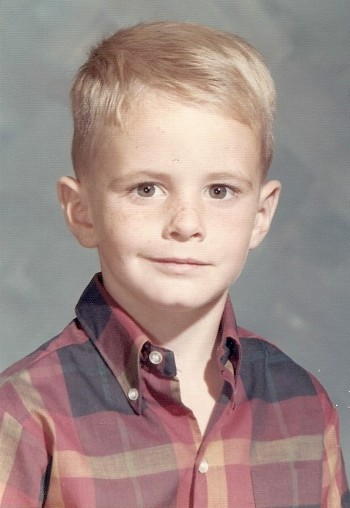 In this original BTB Investigation, we unveil the tragic story of Kirk Murphy, a four-year-old boy who was treated for “cross-gender disturbance” in 1970 by a young grad student by the name of George Rekers. This story is a stark reminder that there are severe and damaging consequences when therapists try to ensure that boys will be boys.
When we first reported on three American anti-gay activists traveling to Kampala for a three-day conference, we had no idea that it would be the first report of a long string of events leading to a proposal to institute the death penalty for LGBT people. But that is exactly what happened. In this report, we review our collection of more than 500 posts to tell the story of one nation’s embrace of hatred toward gay people. This report will be updated continuously as events continue to unfold. Check here for the latest updates.
In 2005, the Southern Poverty Law Center wrote that “[Paul] Cameron’s ‘science’ echoes Nazi Germany.” What the SPLC didn”t know was Cameron doesn’t just “echo” Nazi Germany. He quoted extensively from one of the Final Solution’s architects. This puts his fascination with quarantines, mandatory tattoos, and extermination being a “plausible idea” in a whole new and deeply disturbing light.
On February 10, I attended an all-day “Love Won Out” ex-gay conference in Phoenix, put on by Focus on the Family and Exodus International. In this series of reports, I talk about what I learned there: the people who go to these conferences, the things that they hear, and what this all means for them, their families and for the rest of us.
Prologue: Why I Went To “Love Won Out”
Part 1: What’s Love Got To Do With It?
Part 2: Parents Struggle With “No Exceptions”
Part 3: A Whole New Dialect
Part 4: It Depends On How The Meaning of the Word "Change" Changes
Part 5: A Candid Explanation For "Change"
 At last, the truth can now be told.
Using the same research methods employed by most anti-gay political pressure groups, we examine the statistics and the case studies that dispel many of the myths about heterosexuality. Download your copy today!
And don‘t miss our companion report, How To Write An Anti-Gay Tract In Fifteen Easy Steps.
 Anti-gay activists often charge that gay men and women pose a threat to children. In this report, we explore the supposed connection between homosexuality and child sexual abuse, the conclusions reached by the most knowledgeable professionals in the field, and how anti-gay activists continue to ignore their findings. This has tremendous consequences, not just for gay men and women, but more importantly for the safety of all our children.
Anti-gay activists often cite the “Dutch Study” to claim that gay unions last only about 1½ years and that the these men have an average of eight additional partners per year outside of their steady relationship. In this report, we will take you step by step into the study to see whether the claims are true.
Tony Perkins’ Family Research Council submitted an Amicus Brief to the Maryland Court of Appeals as that court prepared to consider the issue of gay marriage. We examine just one small section of that brief to reveal the junk science and fraudulent claims of the Family “Research” Council.
 The FBI’s annual Hate Crime Statistics aren’t as complete as they ought to be, and their report for 2004 was no exception. In fact, their most recent report has quite a few glaring holes. Holes big enough for Daniel Fetty to fall through.
“Google” is a trademark of Google Inc.
© Box Turtle Bulletin. All Rights Reserved.

 Posts
Posts  Posts via daily email: