Box Turtle Bulletin
 News and commentary about the anti-gay lobby
“Now you must raise your children up in a world where that union of man and box turtle is on the same legal footing as man and wife…”
News and commentary about the anti-gay lobbyJuly 19th, 2006
Glenn T. Stanton, senior analyst and Director of Global Insight for Cultural and Family Renewal at Focus on the Family, offered some thoughts on same-sex marriage in a book review on Christianity Today’s web site. In his review of The Meaning of Marriage: Family, State, Market and Morals (Robert P. George, Jean Bethke Elshtain, eds.), Mr Stanton discusses one of the chapters:
Don Browning and Elizabeth Marquardt, self-described religious and political liberals, assert that “same-sex marriage is unjust in many ways and that liberals should be cautious about endorsing it.”
Unjust? Yes, by changing the focus from the needs of children and the larger society to the desires of adults. They warn that civil marriage for homosexuals would change marriage from being concerned about raising a community’s next generation to being concerned about close, personal adult relationships.
After which he adds his own thoughts:
We are moving from this natural, universal model to a greater embrace of what I call “disembodied procreation” in same-sex unions, where sperm and egg meet only in a Petri dish and foreplay is a legal contract.
This has become a growing argument among opponents of same-sex marriage, that gays and lesbians who want to marry are elevating their own desires above the needs of children, especially since, on their own, they cannot have children biologically as a gay and lesbian couple.
Yet gays and lesbian couples become parents through many different means; most of them are the result of a previous heterosexual marriage. The American Academy of Pediatrics note that according to the 2000 census:
— Same-gender couples are raising children in at least 96% of all US counties.
— Nearly one quarter of all same-gender couples are raising children.
— Nationwide, 34.3% of lesbian couples are raising children, and 22.3% of gay male couples are raising children (compared with 45.6% of married heterosexual and 43.1% of unmarried heterosexual couples raising children).
…
— Six percent of same-gender couples are raising children who have been adopted compared with 5.1% of heterosexual married couples and 2.6% of unmarried heterosexual couples.
— Eight percent of same-gender parents are raising children with special health care needs, compared with 8.3% of heterosexual unmarried parents and 5.8% of heterosexual married parents.
— Of same-gender partners raising children, 41.1% have been together for 5 years or longer, whereas 19.9% of heterosexual unmarried couples have stayed together for that duration. …
It is difficult to determine exactly how many children are being raised by a gay or lesbian parent or parents because of many of the same factors that impact the determination of the number of same-gender couples. Estimates range between 1 and 10 million. The majority of these children were born in the context of a heterosexual relationship.
These statistics are instructive. They point out that the impulse to marriage and to raise children is a distinctly selfless impulse. Not only are gay men and lesbians more likely to adopt children who don’t have homes, they are more likely to adopt hard-to-place children than heterosexual couples overall. Gay parents don’t blithely choose to raise children as if they were deciding to take in a homeless puppy — nobody adopts hard-to-place children on a lark. Instead, these couples have demonstrated a selfless willingness to do the hard work and make the commitments necessary to take on the arduous task of raising a child who needs a family. You can bet that these couples are very much “concerned about raising a community’s next generation.”
But what’s more, the impulse to marriage is also a distinctly conservative impulse. Even though these couples are not bound together by a marriage license, they are much more likely to stay together than heterosexual couples who are not bound together by a marriage license. And we know that marriage is a stabilizing influence in a family. Think of how much more stable these gay- and lesbian-led families would be if they were supported by the same civil protections, rights, and responsibilities afforded to and expected of heterosexual couples.
Mr. Stanton’s arguments willfully ignore the simple fact that gays and lesbians have always been parents and they will always be parents. There is nothing in history that says otherwise, nor is there anything in the future that will ever change that reality. And as much as we like to talk about the importance of marriage to gay and lesbian couples, we cannot ignore how vital it is for their children, the vast majority of whom, unlike those of Mr. Stanton’s imagination, were not conceived by the “disembodied procreation” of a petri dish. And because marriage is vital to these children, it is, in the end, a tremendous benefit to society overall — especially the society that our community’s next generation will inhabit.
July 15th, 2006
An update to an earlier post The Advocate Gets It Wrong
A tip from a reader (Thanks Jeffery!) led me to this article from London-based Pink News, which breathlessly exclaims:
Up to 20 per cent of gay men have tried crystal meth
Research published today by City University, London has found that up to twenty ten [sic] per cent of gay men in London have tried the clubbing drug crystal methamphetamine (crystal meth). Of these men, most use it only infrequently.
Wrong! Wrong! Wrong! And what’s with the “twenty ten per cent”? Did the article originally read “ten per cent” and someone decide it needed punching up?
I expect this from Paul Cameron, Melissa Fryrear and others like them. (And I fully expect the anti-gay press to pick up on this very soon.) But when I set out to counter the misrepresentation of research by anti-gay activists, I certainly didn’t expect to see the same thing coming from the gay press. I am pulling out what little remains of my hair here.
So, where does the 20% figure come from? It comes from an even smaller sample from that same study’s convenience samples we talked about before — gay men who attend selected gyms in central London. I’m not familiar with the gym scene in central London, but these researchers appear to conclude that the gym scene is closely related to the club scene. I don’t know about the gym venues surveyed to know if this connection is real.
But for the sake of argument, let’s just assume that the connection is there. If so, it still doesn’t mean that this sub-sample of a sub-sample is representative of gay men in London overall. To say that one in five London Men have used meth, even infrequently, blasts right through credulity and proceeds straight to ludicrous.
And how do we know this? Other London-area researchers have looked into exactly this issue. They compared survey responses from a national probability sample (The National Survey of Sexual Attitudes and Lifestyles, or Natsal) and a “community sample” from London drawn from gay bars, clubs, saunas and STD clinics (The Gay Men’s Sexual Health Survey, or GMSHS). Here is what they found:
These results show that the Natsal London men recruited by a probability sample were less likely to report STIs [STI in UK=STD in North America – ed.], GUM clinic attendance [GUM=Genitourinary Medicine, the British term for STD clinics – ed], or HIV testing than GMSHS men recruited from gay venues…
It is important to consider the appropriate sampling frame for a particular set of research questions. … Our findings suggest that focusing on a community sample of MSM [Men who have sex with men – ed.] is likely to result in an overestimate in the prevalence of sexual risk behaviour and sexual health outcomes with respect to all MSMs in Britain.
— Ref: Dodds, Julie P.; Mercer, Catherine H.; Mercey, Danielle E.; Copas, Andrew J.; Johnson, Anne M. “Men who have sex with men: A comparison of a probability sample survey and a community based study.” Sexually Transmitted Infections 82, no. 1 (February 2006): 86-87. Abstract available here.
Crystal meth is serious business. Because meth users are at least twice as likely to engage in unsafe sex, studies like this one are exceptionally important to understand how we can better target educational and prevention programs. And we can better target these programs when we know where we can find these high-risk groups. Professor Jonathan Elford, one of the authors of the study, noted:
What is clear from the research in the gyms is that crystal meth is a part of the London gay club-drug scene. Health promotion and awareness campaigns around crystal meth must therefore focus on the gay club scene to have maximum impact.
And Will Nutland, Head of Health Promotion at Britain’s Terrence Higgins Trust, added:
This research adds to the growing understanding of crystal meth use among gay men in London and helps to ensure that our educational responses are properly grounded in evidence.
That’s why we do these studies — to provide intelligent responses to a serious problem, not to provide headline writers with sexy headlines.
To learn more about convenience samples, see The Survey Says… What Everyone Should Know About Statistics. You can also see how the Washington Times started an urban myth in What the “Dutch Study” Really Says About Gay Couples.
July 13th, 2006
The ex-gay therapy group “People Can Change” have issued a press release touting a survey they conducted to understand what motivates gay men who undergo sexual reorientation therapy. According to the press release:
According to conventional wisdom, the answer is inevitably “internalized homophobia” or societal pressure.
But a new survey of almost 200 same-sex-attracted men who are pursuing change paints a very different picture: Out of 18 possible motivations listed in the survey, outside pressure was the least frequently cited motivating factor reported by the 189 survey respondents.
The report carries the unwieldy title, “Why Change? Survey of Men With Unwanted Same-Sex Attractions of the Factors Motivating Their Desire to Change” (PDF: 117KB/26 pages). The 189 survey respondents were out of approximately 1,100 registered participants in People Can Change’s online discussion forums. That calculates out to an exceptionally low 17% response rate — one of the lowest response rates I’ve ever seen in a survey.
With such a low response rate, one might ask why so many declined to participate in the first place. Did they look over the questionnaire and decide the questions or responses didn’t really apply to them? Were they put off by it somehow? One might also ask how different the results might have been if that 83% had participated. With such an exceptionally low response rate, it’s very important to ask questions like these.
But that doesn’t appear to bother the folks at People Can Change, since they apparently got what they wanted. The results pretty much echo everything most ex-gay therapists and ministries say about gay men, which makes this survey essentially a marketing survey — to verify their messages are resonating with their clients.
And resonate they do. Why did these men want to change? The top ten answers given were straight out of the ex-gay theorists’ cookbook (respondents could choose more than one answer):
1) Want to heal emotional wounds (91% identified this answer as a motivating factor): “I believe my SSA feelings are as a result of past emotional hurts and bad experiences…”
2) Values (90%): “Homosexuality conflicts with my deeply held values and beliefs.”
3) Expectations of unhappiness (90%): “I believe I can never truly be happy living a gay lifestyle.”
4) Spirituality (87%): “Regardless of what any religion teaches [emphasis mine], I feel God wants me to turn away from homosexuality, and/or I feel more peaceful spiritually when I turn away from homosexuality.”
5) Male friendships (86%): “I want to be able to have “normal’ male friendships.”
6) Conscience (86%): “Living a gay life just feels wrong to me.”
7) Family (85%): “I want to have a wife and children, or I want to hold together an existing marriage and family.”
8) Masculinity (85%): “I want feel more manly, like a regular guy, and for me that is a heterosexual man.”
9) Compulsiveness (85%): “For me, homosexuality is or was addictive, compulsive, obsessive, and/or self-destructive.”
10) Religion (84%): “My religious faith (religious community, faith tradition, scripture) tells me that homosexuality is wrong.”
Other motivational factors included depression or dissatisfaction (84%), wanting increased heterosexual interest (80%), identity (“my homosexual feelings don’t feel like who I really am inside”; 78%), shame (73%), fear of rejection (65%), gay relationships (could not or didn’t believe “I could find a lasting, meaningful relationship with a man”; 56%), fear of disease (56%) and outside pressure (55%).
Now, I don’t know how they can say that this proves that “internalized homophobia” is not a factor. Depending on how you define it, several of these answers could easily be recognized as “a prejudice carried by individuals against homosexual manifestations in themselves and others, [causing] severe discomfort with or disapproval of one’s own sexual orientation.” You know, prejudice that says that homosexuality is the result of an “emotional wound,” or that homosexuality is incompatible with decency and values, or that it is impossible to be gay and, well, gay.
But that’s okay for People Can Change. After all, it means that because they have found a small number of their members willing to echo their organization’s talking points, they don’t have to change their literature. But more importantly, this little marketing survey shows that they can continue to charge $550 per person to attend one of their workshops, with the enticement of moving on to a more advanced workshop for an minimum $200 deposit.
And life-change coaching services. Don’t forget about that.
July 12th, 2006
The Advocate just posted this news item:
Approximately 10% of gay men in London have used the recreational drug methamphetamine, according to a study published in the online edition of the journal Addiction.
Well, er, no. It’s bad enough when anti-gay extremists get research wrong to portray gays as drug-fueled sex fiends. We don’t need our own media outlets feeding the myths.
It appears that neither The Advocate nor Sirius OutQ (which originated the story) read the abstract to that article very closely:
Participants HIV-positive gay men attending the HIV treatment clinic in 2002–03 (n = 388); HIV-negative gay men attending the HIV testing/sexual health clinics in 2002–03 (n = 266); gay men using the gyms between January and March 2003 (n = 445), 2004 (n = 653) and 2005 (n = 494).
Conclusion Among gay men in London surveyed in clinics, approximately one in 10 reported using crystal meth in the previous 12 months (HIV-positive men 12.6%; HIV-negative men 8.3%).
That’s right. The 10% statistic came from men surveyed at HIV/STD clinics. So what does that prove? Only that 10% of gay men surveyed in HIV/STD clinics used crystal meth. That’s it. Nothing else. It is not generalizable to gay men across London or anywhere else. It applies only to gay men at HIV/STD clinics. In London. Crystal meth usage may be different elsewhere.
This study is based on what’s called a convenience sample — an easy-to-access group of people recruited to test a particular hypothesis. This is a perfectly legitimate means of studying simple correlations. But it is by no means a general population survey, and the authors did not intend for it to be cited as such.
This is not to say that men who take the responsible step of getting tested should fall under the suspicion of being drug users. But the only thing this study can possibly demonstrate is that when targeting intervention programs for crystal meth users among the gay population in London, one place to look might be in HIV/STD clinics. But even there, only one in ten are likely to be users. (I’ll have to get the article’s full text from the library to know the nature of the “gyms.”)
Anti-gay extremists often misrepresent research to claim that a given survey represents everyone regardless of how the survey was put together. And when they turn to studies based on STD clinics, they obtain some pretty out-of-whack statistics (which is why STD population-based studies are especially popular with that crowd.) But when the media does it (and especially our own) it is downright irresponsible and outrageous.
Ten percent would be a large chuck of gay men using crystal meth. One in ten — look around and consider that possibility. This would be big news. But to use this study to say that 10% of all London gay men are meth users is simply wrong, not to mention slanderous to the men of London. Give us — and especially our gay friends in London — a break.
UPDATE: To learn about other research which proves this study cannot be extrapolated to the general male population in London, see our response to an even more eggregious misrepresentation of this study in Pink News Gets It Even More Wrong.
To learn more about convenience samples, see The Survey Says… What Everyone Should Know About Statistics. You can also see how the Washington Times started an urban myth in What the “Dutch Study” Really Says About Gay Couples.
July 12th, 2006
It’s not unusual for a son or daughter to be disowned by his or her familiy after disclosing their sexual orientation. But it’s almost unprecedented among royalty — because royalty almost never “comes out.” There’s typically far too much at stake to allow such a bold step, but that may be changing.
Prince Manvendra Singh Gohil, who is from one of India’s richest royal families that ruled the former Rajpipla principality in the western state of Gujarat, was disowned by his family after he publicly announced that he is gay. While princely kingdoms were abolished when India declared its independence, many royal families continue to enjoy tremendous wealth and influence.
Prince Manvendra responded, “I will not stake my claim to the property. I have found a family in the (gay) community and am happy working for the community. … As an activist, I thought it right to come out of the closet first. Otherwise, it would have been living a lie.”
Prince Manvendra runs Lakshya Trust, an organization working with Indian gays with HIV/AIDS. That work is complicated by the fact that homosexuality is banned in India, where it is punishable by up to ten years in prison.
July 11th, 2006
Those are the words that led to a bashing.
They are also the beginning of a defense of some sort for the four who were arrested for beat up singer Kevin Aviance in New York on June 10. Aviance bumped into one of the three on the street and said, “Calm, down, sweetie,” which apparently was just too threatening to someone’s sense of manhood:
“I did not hit the guy because he was gay,” Johnson said in his statement. “I just did not want my friend to think … I was a p—y.”
So of course, the only option was for the three to beat Kevin senseless, breaking his jaw and several bones.
This defense is starting to look like a variation on the the so-called “gay panic” defense, which has been used successfully by defendants in a number of horrific cases. In February 2005, Josh Cottrell escaped the death penalty when a Hardin County, Kentucky jury convicted him of manslaughter for killing Richie Phillips, stuffing his body into a suitcase and dumping it into a nearby lake. To win that reduced conviction, Cottrell’s attorney told the jury:
If a man tries to force you to have deviant sexual intercourse, you have the right to use deadly force to protect yourself. … Does putting that body in the suitcase make that kid a murderer? A robber? No, it doesn’t. He has admitted that was the wrong thing to do, but he was acting in survival mode.
However, there was no evidence that Richie Phillips tried to “force” sexual intercourse. At most, there was a mere suggestion. But that was enough, apparently in the minds of a jury, to warrant a reduction in the charge.
The “gay panic” defense has been successfully used to avoid more serious penalties in cases ranging from the Matthew Shephard’s brutal beating and murder (the defendants avoided the death penalty) to the murder of male-to-female transgender Chanelle Pickett by William Palmer (she was beaten and “throttled” for eight minutes and died; he was acquitted of manslaughter and murder, convicted only of assault and battery).
Kevin Aviance was severely beaten — the wire just came off his broken jaw and he will soon be able to eat solid foods — but there is no murder here, luckily. One might argue that the stakes here aren’t quite as high. But if the defendants have their way, merely being called “sweetie” would be a justifiable defense. This sort of defense, when used successfully, opens the doors for all LGBT to be attacked for the smallest provocations — or even the mere allegation of one — and that endangers everyone whether they are gay or not.
July 8th, 2006
The bogus “research” of discredited psychologist Paul Cameron has been enormously influential in the U.S. for some twenty-five years. But it’s easy to overlook the high esteem with which he is held by those overseas are also willing to leverage his shoddy and disreputable work to bolster their anti-gay agenda.
The Sydney Star Observer reports that his dubious research has shown up in a report submitted by the Australian Christian Lobby to the New South Wales Adoption Act Review, which is considering the issue of adoption by gay and lesbian parents. Citing Cameron, the submission (PDF: 144KB/11 pages) claims that:
…a major American study arrived at these conclusions:
“children of homosexuals will;
— be more frequently subject to parental instability (of residence and sexual partners);
— have poor peer and adult relationships.
— Be more apt to become homosexual;
— be unstable (have emotional problems and difficulty forming lasting bonds) with reduced interest in natality, and;
— be sexually precosious and promiscuous.”
It’s quite a stretch of the imagination to claim that anything Paul Cameron writes consitutes “a major American study” — certainly not when considering his many run-ins with American professional societies and his own well-documented aversion to the truth When apprised of Cameron’s history, a spokesperson for the Australian Christian Lobby said he was unaware of Cameron’s history and promised to look into it.
As well he should. The Australian Christian Lobby certainly would be the first to have egg on their faces because of this, and unfortunately they probably won’t be the last. Despite the mission of prominent Christian organizations to uphold The Truth, they are too often eager to turn to one who has absolutely no regard for it.
July 6th, 2006
 Pawelski, James G.; Perrin, Ellen C.; Foy, Jane M., et al. “Effects of marriage, civil union, and domestic partnership laws on the health and well-being of children.”Pediatrics 118, no. 1 (July 2006): 349-364. Free full text available at http://pediatrics.aappublications.org/cgi/content/full/118/1/349.
The Board of Directors of the American Academy of Pediatrics (AAP) commissioned a study last year on the challenges same-sex couples and their children face as a result of a public policy that excludes them from civil marriage and (in most states) second-parent adoption rights. That study appears in this month’s edition of the journal Pediatrics. It has also been made available for free to the general public via the journal’s web site. This report is highly readable, and provides an excellent rundown on all the reasons why marriage and civil unions are crucially important to the children of gays and lesbians.
Pediatricians have a very rich professional perspective on the importance of marriage in the family, and specifically, the special issues facing gays and lesbians. The authors note:
Because many pediatricians are fortunate to care for 2 or more generations of a family, we are likely to encounter and remain involved with our patients, regardless of sexual orientation, as they mature and mark the milestones of establishing a committed partnership with another adult, deciding to raise a family, and entrusting the health and well-being of their own children to us.
Data from the 2000 census shows that the highest concentration of same-sex couples raising children is found in the South, where 36% of lesbian couples and 24% of gay couples are raising children. The second highest percentage is in the Midwest. These regions represent the bedrock of what we often consider to be “family values,” where the data clearly shows gays and lesbians are living examples of those values despite the obstacles.
The State of the Union
The report begins with an excellent overview of the state of marriage, civil union, and domestic partnership laws across all fifty states and the District of Columbia, including descriptions of the strengths and weaknesses of the various definitions of civil union and domestic partnership that exists in many localities. Also included is a overview of the famous list of 1,136 federal provisions identified by the Government Accountability Office related to the rights, protections, benefits and obligations related to marriage.
The authors also note the obstacles to adoption and foster parenting placed against gays and lesbians. Coparent or second-parent adoptions are recognized only in nine states (California, Connecticut, D.C., Illinois, Indiana, Massachusetts, New Jersey, New York, Pennsylvania, and Vermont; and the District of Columbia). Most children raised in same-sex households were originally born into a heterosexual relationship, before one or both parents came out of the closet. This means that later, when that parent enters into a relationship with a same-sex partner, that parent is the only one recognized as the child’s legal parent. The partner often has no parental rights available whatsoever.
When coupled with barriers to marriage rights, this situation places very serious and sometimes dangerous barriers between the non-biological parent and the child. For example:
These are just a few of the many barriers that stand between parents and children in same-sex families. Others include ongoing acts of discrimination and hate crimes which serve to cast a pall on the atmosphere surrounding the child as he or she grows up in the world.
The article concludes with a rundown on the usual studies on the psychological well-being of the children of gay and lesbian parents, and summarizes the position statements of several organizations. Overall, it is an excellent, easy-to-read source for information on the the importance of marriage for the well-being of children.
The authors conclude:
Gays and lesbian people have been raising children for may years and will continue to do so in the future; the issue is whether these children will be raised by parents who have the rights, benefits, and protections of civil marriage. …
Conscientious and nurturing adults, whether they are men or women, heterosexual or homosexual, can be excellent parents. The rights, benefits, and protections of civil marriage can further strengthen these families.
Conservatives Are Right: Marriage Protects Children
Opponents to marriage equality for gays and lesbians often invoke the positive, supportive role marriage plays in families and children. The Heritage Foundation produced The Positive Effects of MArriage: A Book of Charts, which demonstrates the many ways in which marriage benefits are crucial to children’s well-being. So all of this begs the question: If marriage provides so many vital protections for children, how can conservatives continue to deny these very protections for the children of gay and lesbian couples? Are these children somehow less deserving?
Social conservatives are correct when they say that marriage protects children. It is time we offered all children that measure of protection.
July 1st, 2006
 Bernard Baran, at age nineteen, was one of the first to be convicted of child sexual abuse in a wave of convictions during the day-care hysteria of the 1980’s. He was released on bail Friday after twenty-one years in prison. His conviction was overturned and he was granted a new trial earlier last week. While free, Bernard will be tracked by GPS, is not allowed to leave the state, and is prohibited unsupervised contact with anyone under the age of sixteen.
While he’s free for now, he could be returned within months. Berkshire District Attorney David F. Capeless is appealing the ruling that overturned Bernard’s conviction, and vows to go forward with a new trial should the appeal be upheld. Bernard’s attorney, on the other hand, is confident:
Baran’s trial was one of several prosecutions surrounding sexual abuse at day-care centers. Since that time, many of the methods used to build those cases have been discredited and the convictions overturned.
Harvey Silverglate, a member of Baran’s defense team, said the country was gripped in a “national sex panic” in the 1980s that led to dozens of inappropriate convictions. As an openly gay man who worked with children, Baran was a likely target. Absent the hysteria, Silverglate said, Baran would never have been convicted.
“If there is a new trial, you will see the curtain pulled back on how these cases happened in the 1980s. The curtain will be pulled back as to why this man spent 20 of his best years in prison for a crime that never happened,” Silverglate said. “I suspect the district attorney will not really want to retry this case.”
See also:
Justice For Bernard
June 30th, 2006
This is an important red-state development. In a 7-0 decision, the Arkansas Supreme Court struck down that state’s policy against allowing gays and lesbians to become foster parents, saying:
There is no correlation between the health, welfare and safety of foster children and the blanket exclusion of any individual who is a homosexual or who resides in a household with a homosexual.
The court further noted that the Child Welfare Agency Review Board, which established the policy, was motivated “not to promote the health, safety and welfare of foster children but rather [was] based upon the board’s views of morality and its bias against homosexuals.”
Among the many charges that were raised in lower court arguments by supporters of the ban were of supposedly higher rates of pedophilia among homosexuals. But the lower court judge was able to see through that smokescreen and rejected the “expert” testimony of Dr. George Rekers, who is famous for misrepresenting social science research of child sexual abuse to try to draw a link between homosexuality and pedophilia. Hopefully, this decision will become another nail in that coffin.
You can learn more about the supposed link between homosexuality and child sexual abuse in our report, Testing the Premise: Are Gays A Threat To Our Children?
Update: Arkansas governor Mike Huckabee wants the legislature to re-impose the ban. With gubernatorial elections looming in the fall, you can count on a long hot Ozark summer.
June 24th, 2006
“I don’t know how much longer I can hold on for. I have spent fifteen years of my life locked away for something I never did and after a while you start to lose all hope.” — Bernard F. Baran, Jr., March 3, 1999
Twenty years ago, Americans were alarmed by the shocking allegations of child sexual abuse in the McMartin preschool case near Los Angeles. Soon other cases followed — the Little Rascals day care center in Edenton, North Carolina, the Fells Acres day care center in Malden, Massachusetts — all these and more sent the country on a wild witch-hunt — literally, as stories of satanic ritual abuse and sacrifice were accepted with incredible gullibility by the press. Today, most (but not all) of these allegations have been debunked and the accused set free, but only after their lives were forever ruined.
But there is one case that is still with us today, one case of a terrible miscarriage of justice that cries out for attention.
 Bernard Baran’s case is remarkably similar to the other cases: A teenager working at a public pre-school in Pittsfield, Massachusetts was accused of molesting five 3-, 4-, and 5-year-old children. Experts were brought in and, using suggestive and leading interrogation techniques, extracted “testimony” from some very young and impressionable children. During the subsequent trial, evidence was withheld from the defense attorney while a general atmosphere of hysteria spread throughout the community and the state.
But two things are remarkably different about Bernard’s case, and I don’t think it’s a coincidence that these two distinguishing marks appear together. First, where most of the other cases have been dismissed or overturned and the falsely accused were eventually allowed to go free, Bernard (who goes by the nickname, “Bee”) is still serving three life sentences. And second, Bernard was openly gay. Being a gay teenager is never easy, but few have carried a burden like Bernard’s — especially in a climate that assumes that all homosexuals are child-abusing perverts.
When one of the parents learned that Bernard was gay, she complained to the Early Childhood Development Center where Bernard worked, saying she didn’t want “a queer” working with her child. When school officials refused to fire Bernard, the child’s father called police on October 5, 1984, alleging that his son had been sexually abused by Bernard. In the hysterical frenzy that followed, four more accusations were made.
Bernard and his mother were from a working-class background and they didn’t know how to go about finding a proper lawyer. They had very little money for a defense attorney, so Bernard’s original lawyer, who was inexperienced and took the case for only $500, barely reviewed the evidence. During the trial there were no eyewitnesses, forensic evidence was practically nonexistent, and the children’s testimony was elicited only after extremely heavy prompting and leading questions by the prosecution. The first child’s parents who started it all were heavy drug users, and the father was known to be exceptionally abusive.
On top of all that, with Bernard being openly gay, he was an extremely easy target. The district attorney said in his closing arguments that being gay was the same as being a child molester, and he compared Bernard to “a chocoholic in a candy store.” After only one day of defense testimony and three-and-a-half hours of jury deliberation, nineteen-year-old Bernard Baran was convicted and given three life sentences on January 30, 1985. It was over as quickly as that.
Bernard has been in prison for the past twenty years. I don’t have to tell you what it’s like to be gay and a convicted child molester in a maximum security prison.
His case languished for years, but there was a small cadre of friends and family who refused to give up. In 1999 lawyer John Swomley took the case with the sponsorship of the National Center for Reason and Justice. Since there was little documentation available, he had to rebuild the case from scratch. He finally was able to file an appeal in June 2004. A year later, Worcester Superior Court Judge Francis R. Fecteau agreed to take the motion under advisement. And another year after that, the judge finally ordered a new trial last Tuesday, and set Bernard’s bail at $50,000.
Right now, Bernard’s supporters are working on raising the bail money. But even if he is released, he will have to wear a GPS tracker wherever he goes, he will be required to check in with a parole officer once a week, and he will not be premitted to leave the state of Massachusetts. Because, after all, the state of Massachusetts still considers him a dangerous sex offender.
 The state promises to appeal the judge’s decision. If it stands, then prosecutors may decide to hold a new trial or drop the case. So far, they indicate that they will press forward with the case. Bernard is not out of the woods yet, so right now he needs your support. His defense fund has been exhausted and desperately needs your donations. And you can spread the word about this important opportunity to correct a terrible miscarriage of justice.
For more information about Bernard’s case:
For too long, gay men have carried the burden of being automatically associated with child molesters. A few have paid a terrible price for this burden. Bernard’s fight is ours as well.
See also:
Bernard Baran Released From Prison
June 23rd, 2006
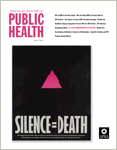 Stall, Ronald D.; Mills, Thomas C. Editorial: “A Quarter Century of AIDS.” American Journal of Public Health 96, no. 6 (June 2006): 959-961.
This month’s edition of the American Journal of Public Health is dedicated to the twenty-fifth anniversary of the CDC’s first report of AIDS. In one of the lead editorials, Drs. Ronald Stall and Thomas Mills provide a brisk overview of the public response to the epidemic, and emphasize the special difficulties that come with combating a heavily stigmatized disease.
Noting that AIDS struck first and the hardest at the most marginalized groups in society — gay men, drug users, foreigners, racial minorities and others of lower socioeconomic status — AIDS has been a disease of denial at the individual, group and national level. When the disease is seen as affecting “those people” it’s easier to deny some of the realities of what it actually takes to combat the epidemic:
Because so many controversial issues directly shape the AIDS epidemic, governments will continue to be tempted to respond by funding unproven programs that convey the impression of restoring traditional cultural values rather than fielding scientifically proven prevention approaches that directly target issues of sexual safety or drug use.
Citing six major meta-analysis studies, the authors contend that we have definitive proof that AIDS prevention programs which directly target safe sexual practices and drug use yield significantly positive results. The difficulty is in finding ways to put these programs into practice given the cultural and political climate today.
The twenty-fifth anniversary of the first report of AIDS offers an important moment to reflect on our response to this epidemic. Drs. Stall and Mills contend that because future historians will know that we weren’t ignorant of the dangers of the disease or how it is transmitted, “we cannot escape responsibility for our failure to use effective, scientifically proven strategies to control the AIDS epidemic.”
They will probably be impressed with the rapid progress made in scientific understandings of the pathogenesis and treatment of AIDS, yet appalled by the instances when the ancient curses of racism and homophobia prevented us from fully responding to AIDS epidemics unfolding in our midst, as is the case now with African American MSM [men who have sex with men].
…They will also likely regard as tragic those instances when we allowed scarce resources to be used to support ideologically driven “prevention” that only served a particular political agenda.
We can avoid the harsh judgment of future historians, but that’s probably poor motivation for implementing the programs that we know will be effective in preventing the spread of AIDS. Instead, we should be motivated because we see those who are vulnerable as our neighbors, not as “those people.” Until we recognize the humanity of all those who are vulnerable and at risk, prevention measures will continue to be driven by ideology and not science — or compassion.
You can further explore the role that anti-gay prejudice has played in the AIDS epidemic in our special report Opportunistic Infections.
June 20th, 2006
Wayne Besen, founder of Truth Wins Out, has been closely following some recent statements coming from Melissa Fryrear of Focus in the Family, who has misrepresented research twice in as many days.
Yesterday, Wayne reported on Melissa Fryrear’s claims that a recent Canadian study on youth suicide links “pro-gay advocates” with a higher number of suicide attempts by gay and lesbian youths. In her press release, she says:
“Regrettably, they think they have to embrace homosexuality because pro-gay advocates told them that they were born gay,” she said. “And that is absolutely not true.”
Unfortunately for Ms. Fryrear, Wayne asked the researcher, Dr. Elizabeth Saewyc about Ms. Fryrear’s statement, and this is what he learned:
When contacted about Focus on the Family’s claims, Saewyc, the study’s principal investigator, said she was “disturbed” by what “seems to be an attempt to make their opinions more credible by linking them to scientific research — even though the research doesn’t support those beliefs.” She said Focus on the Family draws conclusions well beyond the study results by claiming that lesbians are suicidal because they are “embracing homosexuality,” as well as other inaccuracies in their article.
“Population surveys cannot determine cause and effect,” Saewyc explained, “they can only suggest possible links. Even so, other researchers have not found these sorts of links, and neither have we.”
The Canadian Press has since picked up the story. When they asked Dr. Saewyc for a comment, she responded:
“The research has been hijacked for somebody’s political purposes or ideological purposes and that’s worrisome.”
In fact, said Saewyc, American studies have noted that gay teenagers are at the highest risk of suicide before they come out of the closet. After that, they do quite well unless they’re harassed.
“If they’re trying to kill themselves because they’re embracing homosexuality, one would logically conclude they should all be suicidal,” said Saewyc.
The Canadian Press then asked Ms. Fryrear to respond, and that’s when she chose to misrepresent psychological research for a second time:
Some clinical studies, including one by Dr. Robert Spitzer, have linked contemplating suicide to unwanted attractions to the same sex, she said.
Now, I’ve read Dr. Spitzer’s study, and can assure you it says no such thing. But for good measure, Wayne asked Dr. Spitzer directly, who responded:
“Unfortunately Focus on the Family has once again reported findings of my study out of context to support their fight against gay rights,” said Dr. Robert Spitzer, a professor of psychiatry at Columbia University. …
“Although a third of the subjects in my study reported having had serious thoughts of suicide related to their homosexuality, not one of them blamed the gay rights movement’s advocating a ‘born-gay’ theory of homosexuality as the cause of their suicidal thinking,” said Spitzer.
Dr. James Dobson’s Focus on the Family often seeks the moral high ground when exploring issues concerning the family and the broader culture. Unfortunately, his “Gender Issues Analyst” needs to brush up on the ethics of misquoting legitimate scientific research. Otherwise, it’s just another False Witness in the service of bigotry.
June 19th, 2006
The conservative Christian web sites Agape Press and LifeSite are reporting that Jacob Parker, the son of Massachusetts anti-gay activist David Parker was beaten up by a group of eight to ten kids in the playground of his Lexington elementary school.
David Parker, if you remember, was arrested last year for refusing to leave the school after a meeting with the principal in which he demanded to be notified when any topic touching on sexual orientation (including same-sex marriage, which is legal in Massachusetts) is brought up in class. He is now suing the school system.
According to the Agape Press, David Parker’s son was attacked on May 17th, on the two-year anniversary of gay marriage in Massachusetts. Mr. Parker claims that other parents put their kids up to beating up his son because they are upset with his opposition to homosexuality. He also complains of a double standard in how his son’s case is being handled:
If the assault against his son had been perpetrated on a child of homosexual parents, “lessons teaching tolerance and diversity or homosexual behavior normalization would be forced upon the young children,” he contends.
But the local newspaper, the Lexington Minuteman reports a very different story. Paul Ash, the Superintendent of Schools, doesn’t know anything about what happened, but he’s going to look into it. Meanwhile he notes that if a student were assaulted, it would “trigger a whole series of actions,” including notifying parents, staff, the school psychologist, the Department of Social Services, and the police.
But the Lexington police department says it doesn’t have a complaint on file and there’s no ongoing investigation. Why?
Neil Tassel, the Parker’s legal counsel, spoke for the Parker family saying that had hoped to keep the incident private. Due to the age of the students involved, they had opted not to go to the police.
So if there is a double standard, it’s of Mr. Parker’s doing by not allowing the authorities to address the problem — according to what his attorney is telling the local press.
David Parker has the prerogative to decide whether or not he should avail himself of the services of the local police department to protect his son. But his actions certainly raise some interesting questions concerning his motives for going public now. Is issuing a press release on a very prominent web site the best way to “keep the incident private?” And how strange is it to complain of a double standard when he short-circuits the very process that he complains would be performed if it had been the son of a gay parent that was beaten?
Maybe it’s just more convenient to manufacture a double standard.
Update: The Lexington Public Schools issued a press release. The fight, it turns out, was over who got to sit where in the cafeteria. What’s more, the Parkers didn’t complain when they were told about the actions the school took in response to the fight, and “following the incident the boys were observed arm in arm at school and subsequently the child who was hit went to the house of the child who hit him for a play date.”
June 15th, 2006
This article appeared on the National Review’s web site today. Eve Tushnet reports on the June 10th “Love Won Out” conference, a gathering of evangelical ex-gay ministries, held in Washington D.C. These ministries are an important part of social conservatives’ ongoing efforts to oppose gay rights in the public square, especially in the areas of same-sex marriage, adoption, and anti-discrimination measures.
By framing homosexuality as a behavioral “choice” that can be changed with patience, persistence and prayer, these ministries seek to redefine the public’s understanding of homosexuality as an unchosen orientation. If homosexuality is chosen (goes the thinking) then there is no need to protect gay rights based on this chosen behavior. Many in the ex-gay movement even take this argument to its most extreme conclusion — that there’s no such thing as being gay.
So these “ex-gay” groups play an important role for social conservatives. However, Eve Tushnet observes:
What they (the ex-gay ministries) aren’t is what many conservative evangelicals seem to want them to be: the ultimate answer to the gay-rights movement. The groups’ problems are deeply embedded in their self-understanding.
What’s the problem? These ministries publicly proclaim that “change is possible” without the inconvenience of explaining what “change” means. It is assumed that through various therapeutic practices, a change in sexual orientation will take place. But when pressed, many ex-gay practitioners will admit that this isn’t realistic. According to Mike Haley of Focus on the Family:
“We don’t want people to believe that change means you have to be married and have to have kids,” he said, and then added, “The opposite of homosexuality isn’t heterosexuality, the opposite of homosexuality is holiness. We’re not trying to create people from homosexual to heterosexual.”
This message however is largely missing from the conference, and it’s also conspicuously absent from the slick brochures and billboards put up by Exodus International and other ex-gay ministries. The public face that these ministries provide is that they are offering therapeutic services for those who wish to change their sexual orientation. But on closer inspection, it becomes very clear that these ministries really aren’t offering a cure, but conversion. The same-sex sexual attractions remain. It is up to the individual to “resist temptation,” and when he or she fails (and most of them do), it becomes both a failure in faith and a failure in character. This sense of failing can be devastating, leading some to suicide and others to refusing to have anything more to do with Christianity.
Rita Price of the Columbus Dispatch reported similar findings among members of an ex-gay group in Ohio. One group member, speaking on the difficulty of trying to “change” commented that “This is my being. This is who I am. It’s like telling a black person to stop being black.”
So what does “change” mean? Is it a change in sexual attraction, or just a change in behavior? Ms. Price notes that for some participants, a change in behavior is enough. But for most, the internal schizm that must occur for sustainanble behavioral change is simply too much to handle.
Featured Reports
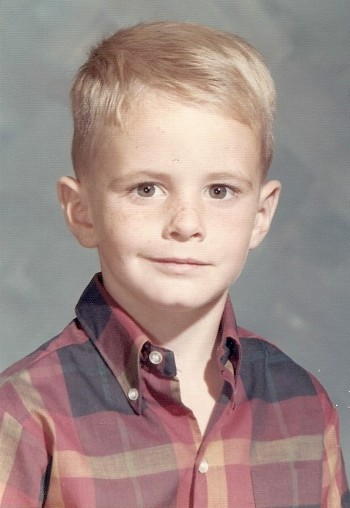 In this original BTB Investigation, we unveil the tragic story of Kirk Murphy, a four-year-old boy who was treated for “cross-gender disturbance” in 1970 by a young grad student by the name of George Rekers. This story is a stark reminder that there are severe and damaging consequences when therapists try to ensure that boys will be boys.
When we first reported on three American anti-gay activists traveling to Kampala for a three-day conference, we had no idea that it would be the first report of a long string of events leading to a proposal to institute the death penalty for LGBT people. But that is exactly what happened. In this report, we review our collection of more than 500 posts to tell the story of one nation’s embrace of hatred toward gay people. This report will be updated continuously as events continue to unfold. Check here for the latest updates.
In 2005, the Southern Poverty Law Center wrote that “[Paul] Cameron’s ‘science’ echoes Nazi Germany.” What the SPLC didn”t know was Cameron doesn’t just “echo” Nazi Germany. He quoted extensively from one of the Final Solution’s architects. This puts his fascination with quarantines, mandatory tattoos, and extermination being a “plausible idea” in a whole new and deeply disturbing light.
On February 10, I attended an all-day “Love Won Out” ex-gay conference in Phoenix, put on by Focus on the Family and Exodus International. In this series of reports, I talk about what I learned there: the people who go to these conferences, the things that they hear, and what this all means for them, their families and for the rest of us.
Prologue: Why I Went To “Love Won Out”
Part 1: What’s Love Got To Do With It?
Part 2: Parents Struggle With “No Exceptions”
Part 3: A Whole New Dialect
Part 4: It Depends On How The Meaning of the Word "Change" Changes
Part 5: A Candid Explanation For "Change"
 At last, the truth can now be told.
Using the same research methods employed by most anti-gay political pressure groups, we examine the statistics and the case studies that dispel many of the myths about heterosexuality. Download your copy today!
And don‘t miss our companion report, How To Write An Anti-Gay Tract In Fifteen Easy Steps.
 Anti-gay activists often charge that gay men and women pose a threat to children. In this report, we explore the supposed connection between homosexuality and child sexual abuse, the conclusions reached by the most knowledgeable professionals in the field, and how anti-gay activists continue to ignore their findings. This has tremendous consequences, not just for gay men and women, but more importantly for the safety of all our children.
Anti-gay activists often cite the “Dutch Study” to claim that gay unions last only about 1½ years and that the these men have an average of eight additional partners per year outside of their steady relationship. In this report, we will take you step by step into the study to see whether the claims are true.
Tony Perkins’ Family Research Council submitted an Amicus Brief to the Maryland Court of Appeals as that court prepared to consider the issue of gay marriage. We examine just one small section of that brief to reveal the junk science and fraudulent claims of the Family “Research” Council.
 The FBI’s annual Hate Crime Statistics aren’t as complete as they ought to be, and their report for 2004 was no exception. In fact, their most recent report has quite a few glaring holes. Holes big enough for Daniel Fetty to fall through.
“Google” is a trademark of Google Inc.
© Box Turtle Bulletin. All Rights Reserved.
 Posts
Posts  Posts via daily email: