Box Turtle Bulletin
 News and commentary about the anti-gay lobby
“Now you must raise your children up in a world where that union of man and box turtle is on the same legal footing as man and wife…”
News and commentary about the anti-gay lobbyJune 13th, 2006
About three weeks ago, I received an E-mail from Anna Carlsson. Anna went by the pseudonym “Greta” (she’s Swedish) in Abigail Garner’s book, Families like Mine: Children of Gay Parents Tell It Like It Is. Paul Cameron used one of her quotes for his article “Children of Homosexuals and Transsexuals More Apt To Be Homosexuals.” But in this crude propaganda piece, Dr. Cameron took Anna’s words out of context and twisted their meaning far beyond anything that she ever intended to say. Not that this is anything unusual for Paul Cameron.
But what’s unusual this time is that Anna decided to do something about it. After all, it was her words he was using, and she was entitled to tell her side of the story. So now we get to hear from Anna herself — in her own words — as she sets the record straight, in Greta Speaks!
UPDATE: Anna Carlsson will walk with FFLAG in Europride this year, to be held in London on July 1. She is interested in contacting other people with LGBT parents, especially in Europe. Her E-mail address is available at the beginning of Greta Speaks!.
June 9th, 2006
 Aveline, David. “‘Did I have blinders on or what?’: Restrospective sense making by parents of gay sons recalling their son’s earlier years.” Journal of Family Issues 27, no. 6 (June 2006): 777-802. Abstract available online at http://jfi.sagepub.com/cgi/content/abstract/27/6/777.
We live in a society that operates under what’s called a “heterosexual presumption” — in other words, we tend to assume that someone is straight unless we notice something to suggest otherwise (or unless that person comes right out and tells us). But since many gay people don’t exhibit traits that are stereotypically “gay” — and many others try to pass as straight — learning that someone in fact is actually gay can be quite a shock. Only then do we try to remember clues that we might have missed in the past to try to understand how we might have missed it. David Aveline examines this phenomenon in the June 2006 issue of the Journal of Family Issues.
Dr. Aveline interviewed eighty parents of gay sons. He approached PFLAG, a gay-affirming group of parents, as well as groups that were not gay-affirming such as PFOX (Parents and Friends of Ex-Gays) and other organizations associated with Exodus International. He did this because he wanted to gather information from a wider range of parents since most previous research relied too heavily on gay-affirming parents. Unfortunately, he was only able to get two parents from the “disaffirming” groups. (One facilitator of an ex-gay ministry said that parents in his group were typically ashamed and reluctant to talk to a stranger.) PFLAG parents, on the other hand, were so supportive he had to turn some away. For this reason, this study cannot be generalized to the overall population of parents of gay sons.
Out of this sample, 27.5% said they never suspected their sons were gay, although they were able to remember events which, in retrospect, “should have” clued them in. 62.5% said they not only suspected their sons were gay, but were able to give the child’s age when their suspicions first occurred. The remaining 10% had suspicions, but couldn’t pinpoint a time when they first suspected.
Parents’ stories fell into three broad categories:
Some parents didn’t recall a particular event, saying only that their children were “different” from other boys. Only a few said they associated this “difference” with homosexuality at the time. Most said that they now took this “difference” to be a clue only in hindsight. Some parents noticed when their sons weren’t interested in sports (although this wasn’t true for all sons). Some noticed when their sons chose girls as playmates instead of other boys, while a couple of parents noticed when their sons expressed particular interests in other boys:
“But he just talked about this boy as a girl would talk about a boyfriend or something. And that’s when I just knew. There was just such excitement, you know. He was kind of giddy with this friend person, you know.”
“And I didn’t tell you this. He did tell me when he was in the fifth or sixth grade. He said to me, “Why do I think guys are cute and not girls?” And I said, “Well, I guess if they’re cute, they’re cute. You’re cute, so maybe you think they’re cute.” And I just… It just kind of went right over my head.”
Dr. Aveline however noted that very little of the reported “evidence” actually involved early homosexual expression. These two stories are notable exceptions.
Some parents thought their boys developed “too close” a relationship with girls, while others felt that their relationships with girls weren’t “close enough.” When their boys later reached their teenage years, some dated girls while others didn’t. Parents whose boys dated took it as confirmation that their sons weren’t gay after all. But parents whose boys didn’t date either suspected their sons were gay, or explained it away by citing a lack of time or money, being a late bloomer, or shyness.
Dr. Aveline concluded that although parents reported noticing atypical gender behavior, they often didn’t interpret it in terms of homosexuality. As mentioned at the start, we tend to assume someone is heterosexual unless we have very specific proof otherwise. One parents echoed this, saying “No one of my generation ever imagined that their child would be gay.” But when parents are confronted with proof that their sons are gay, they are then are left with the task of making sense of this new information. That’s when they turn to past events and begin a process of “second-level interpretation,” where they replace the original interpretation with a new one.
Gender roles continue to play an important part of how we interpret homosexuality, despite the blurring of gender roles in society. As women continue to take on a greater range of gender roles, behaviors that were previously considered “masculine” are now accepted for men and women. The same is true for behaviors that are traditionally “feminine.” Parents are increasingly open to these less rigid gender roles, which explains how parents can discount atypical gender behavior in their sons before learning of theirs sons’ homosexuality.
But when parents are confronted with the newly discovered fact that their sons are gay, they tend to revert to more rigid ideas of “typical” gender behavior and seek out past clues based on those ideas. Whether these confirmations are legitimate or not is another matter. Ironically, most of these parents were perfectly able to accept their sons’ atypical gender roles before learning that they were gay. Only afterwards are these evidences taken as clues that their sons were somehow different.
But in fact, their sons are no different than before. What has changed is how parents look at their sons’ childhood activities and behaviors. Unfortunately, Dr. Aveline doesn’t explore whether this change in interpretation affects how these parents see their sons today. This would be an interesting avenue for future research.
Because these participants, by and large, were accepting of their sons’ homosexuality, it’s a shame Dr. Aveline couldn’t get better participation from Exodus or PFOX parents. It would be interesting to understand how parents who don’t approve or accept their sons’ homosexuality interpret past events.
June 5th, 2006
AIDS is twenty-five years old today.
It was on June 5, 1981 that the CDC first reported a puzzling new disease that we would come to know as AIDS. The intervening twenty-five years has been searing experience for the gay community. Discovering that one had AIDS was to receive an automatic death sentence, and over those twenty-five years an estimated half a million Americans died in the worst epidemic of modern times.
As deadly as AIDS was before the advent of Highly Active Anti-Retroviral Therapy (HAART), the Age of AIDS was not the Age of Death. Instead, it is the age of struggle and determination, of coming together and caring for one another, and ultimately of triumph. Today, modern medicine means that for most people, AIDS is not the automatic death sentence it once was. With HAART, most of the estimated one million Americans who harbor the HIV virus live normal lives. But HAART is not a cure. For that, there is still more struggle and determination to go.
But more than anything else, the Age of AIDS is the Age of Family. “Family” has a very strong resonance in the gay community — in a way that few outside of the community know about. When someone wants to ask whether someone is gay or not, the question most often asked is “Is she family?”
That’s not a mere euphemism. “Family” is an honorific that the gay community has earned through twenty-five years of hard work and determination. As those with AIDS were cast out of their own homes and natural families, they turned to those who stepped in and filled the rightful role of family in their lives. The gay community has reinvented the family, not in imitation of what others think a family should look like, but in response to the life-and-death need for all of us to be “our brother’s keeper.”
Jonathan Rauch, writing in Sunday’s New York Times, offers this very experience to explain why marriage is so important to the gay community:
But there was also an epidemic of care giving. Lovers, friends and AIDS “buddies” were spooning food, emptying bedpans, holding wracked bodies through the night. They were assuming the burdens of marriage at its hardest. They were also showing that no relative, government program or charity is as dependable or consoling as a dedicated partner.
Yet gay partners were strangers to each other in the law’s eyes. They were ineligible for spousal health insurance that they desperately needed; they were often barred from hospital rooms, locked out of homes they had shared for years, even shut out of the country if they were foreign citizens. Their love went unmentioned at funerals; their bequests were challenged and ignored. Heterosexual couples solved all those problems with a $30 marriage license. Gay couples couldn’t solve them at any price.
The Age of AIDS has awakened a sense of family for all of us, and with that the determination to protect our family with all the power we can muster.
This twenty-fifth anniversary is a day for remembering those who have died. It is also a day for celebrating those who have survived. And it is a day to remember that the struggle isn’t over. AIDS entered our consciousness twenty-five years ago, and so did the stigma that went along with it. You can read about the role this stigma has played in this epidemic in our latest report, Opportunistic Infections.
June 2nd, 2006
Monday, June 5th will be the 25th anniversary of the first CDC Report of what would later become known as AIDS. Since then, it is estimated that some half a million Americans died of AIDS. Today, more than 415,000 people in the U.S. are living with AIDS, and according to some estimates more than a million are HIV-positive.
PBS’s Frontline aired a very informative two-part documentary Tuesday and Wednesday of this week entitled “The Age of AIDS.”
In an act with impeccable timing, President George W. Bush will commemorate the anniversary on Monday with a quiet ceremony in which he will announce his support for the proposed constitutional amendment to prohibit gay couples from marrying.
May 25th, 2006
Paul Cameron and Abigail Garner appeared in this afternoon’s Michelangelo Signorile Show on SiriusQ Satellite Radio. For those of you who don’t know, SiriusQ is the designated LGBT radio channel on the Sirius system. Paul Cameron was there to tout his manuscript Children of Homosexuals and Transsexuals More Apt To Be Homosexual which appeared in the Journal of Biosocial Science and was based largely on Abigail Garner’s book, Families Like Mine: Children of Gay Parents Tell It Like It Is. These interviews were bound to be very interesting.
Paul Cameron was first up, and during his interview he made a startling statement. He said that he read in Abigail Garner’s book that she claimed it was made up of a “fairly representative” sample of gay vs. straight adult children of LGBT parents because these kids came to her through the grapevine. He also said that he had no idea what Abigail Garner’s “sexual preference.”
Poor Paul. I have to wonder what’s happening with his memory these days. He remembers reading in Abigail’s book that her sample was “fairly representative.” But during the same interview, he said that he doesn’t remember submitting his manuscript to the journal Pediatrics, he doesn’t remember being censured by the Nebraska Psychological Association and the American Sociological Association, and he doesn’t remember what Abigail “enjoys doing in her bedroom.”
Okay. I’ll have to give him that last one. I don’t know what she enjoys doing in her bedroom either. I also don’t have a clue as to what her “sexual preference” might be. But when Abigail appeared on the program after Paul Cameron’s interview was over, she reminded us what anybody who really read her book would have known: she is heterosexual, and nowhere in her book did she ever make the claim that her sample was the least bit representative.
I wonder if the JBS editors are paying attention to any of this?
May 24th, 2006
Abigail Garner writes in her website today:
Many of the emails I receive regarding the publishing scandal by Cambridge University Press ask me why I won’t simply alert the editors of the Journal of Biosocial Science. Surely, your emails tell me, after hearing the truth from me, the Journal will be left with no choice but to correct their error.
I already contacted them. I wrote an email in February before the article ran. No response.
I wrote again two weeks ago. I have heard nothing; not even the standard “we’re looking in it” reply that some bloggers have reported they received from JBS.
Since Paul Cameron’s article Children of Homosexuals and Transsexuals More Apt To Be Homosexual appeared in the Journal of Biosocial Science, I’ve been asked the same question, and I guess my experience is only marginally better than Abigail’s. Since January 15th I’ve written five letters to the journal’s editors and management, and just today I sent a sixth letter to the editors, management and members of the editorial board. Of the previous five messages I’ve only received two responses, both of which were along the lines of “we’re looking into it; we’ll keep you informed; thanks for writing.” But of course, they haven’t kept me informed of anything.
I guess I can understand JBS’s ignoring me. I don’t like it, but I can understand it. I’m not a principal in this fight and they don’t know me from Adam. I’m neither a social scientist, a JBS author or reviewer, nor has any of my work been misused. Abigail on the other hand has seen her wonderful and very important book (Families Like Mine: Children of Gay Parents Tell It Like It Is) twisted into something barely recognizable at the hands of Paul Cameron — with JBS providing the platform. It’s unfathomable to me why the editors would ignore her warnings about Cameron’s misusing her work. It leaves me scratching my head and wondering what were they thinking?
Abigail has decided to respond to the journal’s silence by treating her letters as open letters on her website. I think it’s a good move on her part. Now the editors cannot claim they didn’t know what they were dealing with in deciding to go ahead and publishing Dr. Cameron’s manuscript.
As for me, I’ll wait a reasonable time before posting mine. I hope my latest missive to members of the editorial board sparks a dialog toward a solution which restores the reputation and integrity of the Journal of Biosocial Science. But if that doesn’t happen, then the record needs to reflect that I and many others did all we could to warn them of the fallout from their decision to publish Dr. Cameron’s pale imitation of “research.”
I should add that I’m really not threatening to make my emails public. Far from it. If it were a threat, it would be a pretty impotent one. But the journal has a great opportunity to set the record straight. They also have a tremendous responsibility to do so. But if they are unwilling, I believe that it is important to document the events that lead up to this fiasco. For the sake of integrity and honesty (something that seems to be in short supply lately), transparency is very important in getting the whole story out there.
The journal’s website brags that “its reputation for high quality and outstanding scholarship has made it into one of the leading journals in the area of biosocial science.” Without question, that reputation has now been seriously damaged. I urge the editors and the editorial board of the Journal of Biosocial Science to join Abigail, me, and many others in restoring the pursuit of scholarship to its best and loftiest goal: The pursuit of knowledge for the benefit of everyone.
May 15th, 2006
Dale Carpenter’s op-ed from the May 11, 2006 Bay Area Reporter has been posted at the Independent Gay Forum in response to the Institute for Marriage and Public Policy’s report which suggests that gays aren’t really much interested in marriage. According to that report:
The highest estimate to date of the proportion of gays and lesbians who have married in any jurisdiction where it is available is 16.7% (Massachusetts). More typically, our survey of marriage statistics from various countries that legally recognize same-sex unions suggests that today between 1% and 5% of gays and lesbians have entered into a same-sex marriage.
Dale has some very interesting thoughts on this, beginning with the idea that if so few gays marry when given the option, then it’s very difficult to see exactly what kind of harm they would pose to the institution.
But assuming the report is true (and as far as I am able to discern, there aren’t any seriously glaring weaknesses that would suggest otherwise), the question that springs to mind is why are so few gays marrying? Dale suggests five reasons:
Whatever the reasons, it appears that this much is true: despite the accusations leveled against gays and lesbians, they really do take marriage very seriously. Having been denied it for all their lives, they are much less likely to rush into marriage for all of the same superficial reasons that a small number of heterosexual couples do. (Britney Speers provides the best over-used example.) I suspect that, as Dale points out, the prospect of marrying someone “’til death do us part” is a very daunting prospect for those who until now never considered marriage would ever be a possibility for themselves.
In my view, the low marriage rate is a positive development. I suspect it will be the younger generation who will be more inclined to consider the possibilities of settling down and getting married. When there’s no one around saying it can’t be done, they will be free to imagine themselves marrying “when they grow up,” just like everyone else
May 13th, 2006
When I wrote to the editors of the Journal of Biosocial Science last January, I warned them that should they go ahead with the publication of Paul Cameron’s paper, “Children of homosexuals and transsexuals more apt to be homosexual,” they would, in effect, give him carte blanche to hijack their journal’s reputation in the promotion of anti-gay bigotry. I also pointed out the very unscientific underpinnings of his supposedly “scientific” research, which was based not on a representative sample, or even a random convenience sample, but on three books he purchased on Amazon.com. His “samples” were mostly based on literary and illustrative merits. (You can read my critique of his article in Paul Cameron Conquers Cambridge.) Unfortunately, my comments fell on deaf ears.
We well know his penchant for misrepresenting the works of others. But in flogging his latest effort, he’s really outdone himself. He now misrepresents his own article.
According to his press release:
“Most people think homosexual parents create an environment that stimulates homosexual desires in their children. We expect children to be confused when a father decides to pretend he’s a woman and demand that his family participate in his charade.”
I’ve read these books. There are very few, if any, examples of gay fathers “pretending he’s a woman.” These books collectively mentioned ten transgenders out of the seventy-seven that he used for his “sample,” but if that’s the basis for what he’s talking about, then he’s using an extremely tiny sample. Sexual orientation and sexual identity are two completely different things. These books aren’t about men “pretending” to be women. They”re about men and women who, for the most part, have decided to stop pretending they’re something that they are not.
Just a little later in his press release, he says:
They say foster care and adoption by homosexuals is absolutely harmless — there is no correlation between children adopting homosexual tastes and the sexual proclivities of their parents. Examination of three published reports by pro-gay investigators shows the falsity of these claims.
Well now he’s completely barking up the wrong tree. I can find no examples of adoptive or foster children in his “sample.” It is made up by the biological children of gay and transgender men and women. And if there were a biological underpinning to homosexuality and gender expression (and the research, while supportive of that idea, it is not conclusive), then why wouldn’t these biological traits be passed down to at least some of the children? Not only does Dr. Cameron refuse to consider this (nor does he even try to disprove it), but since his article doesn’t examine children who were adopted or fostered by gay parents, there’s no basis for what he’s saying. His article does not support the idea that gay parents adopting or fostering children makes them gay.
In other words, he’s misrepresenting his own paper, which in turn misrepresents the work of the three authors whose books he bought on Amazon.com.
He went even further when he appeared on the Thom Hartmann Show on the Air America radio network last Monday. There, he described these three authors as “pro-homosexual investigators” conducting “studies” using “data,” even though his own paper acknowledged that this was not the case (although he went on the compare their books to legitimate studies anyway in an attempt to inflate their “scientific” merit).
Abigail Garner, the author of Families Like Mine, one of the three books Dr. Cameron bought from Amazon.com, caught his act on Air America and did an excellent fisking of that interview. And throughout that interview, the good names of the Journal of Biosocial Science and Cambridge University Press were repeated, loudly and clearly.
As Dr. Cameron goes on the offensive with this, it’s high time the editors of the Journal of Biosocial Science made their positions clear: do they support Dr. Cameron’s “findings” as legitimate? Or do they concede the mistake they made in publishing the article in the first place? So far, despite repeated attempts to reach them, I have received nothing but a deafening silence.
This time he recruited Cambridge University Press for his efforts.
April 15th, 2006
 The May 2006 edition of the Journal of Biosocial Science includes an article by Paul Cameron, entitled “Children of homosexuals and transsexuals more apt to be homosexual.” It should come as no surprise to those who have been following his career that this article carries all of his traditional hallmarks: a hostile premise, a weak methodology, deliberate mischaracterization of the works of others, unproven conclusions, and a flagrant bias throughout. What’s very disturbing is that Cambridge University Press has been made complicit in the cause of anti-gay extremism.
I learned last January that that JBS had accepted his article for publication in a forthcoming issue. So I wrote to the editors, explaining the many problems with Dr. Cameron’s history anti-gay extremism. After all, they’re British, and most of them are anthropologists — maybe they don’t know about his history. I even sent electronic copies of recent articles about him from the Boston Globe and the Wall Street Journal so they wouldn’t have to take my word for it. I contacted other authors whose work was misused in Dr. Cameron’s article, and some of them wrote to the editors as well. My only response came from Caroline Gallimore, associate editor, on January 16, 2006:
Thank you for comments on the forthcoming article by Paul Cameron. These are being considered by the Editor and we will get back to you soon.
I guess perhaps I was a bit naïve. I had hoped that at the end of the day, reason and sanity would prevail among these learned academics. But that single, two-sentence e-mail turned out to be the last (and only) response I received from them.
It is unconscionable that the editors went forward with this article. Nevertheless, Dr. Cameron has now had his say; it’s time for a rebuttal. You can read my point-by-point analysis in Paul Cameron Conquers Cambridge.
April 3rd, 2006
We also have seen evidence that homosexual couples prey on young males and have, in some instances, adopted them in order to have unfretted [sic] access to subject them to a life of molestation and sexual abuse.
— Tenn. State Rep. Debra Maggart (R-Hendersonville)
 Rep. Maggart made these comments in an e-mail to Sara Dykstra, a master’s student in special education at Vanderbilt University. Ms. Dykstra had written to members of the Tennessee House Committee on Children and Family Affairs after hearing about legislation the committee was considering which would ban gay couples from foster parenting and adoption.
The Tennessee legislature is busy considering at least six different bills which would affect gay and lesbian parents in such areas as adoption, foster parenting, visitation rights, and custody. And it appears that such preoccupation invites a lot of misinformation and bigotry into the process.
Wherever anti-gay extremists gather, you can safely bet your paycheck that someone will soon level the charge that gays are obsessed with molesting children. Unfortunately, this charge isn’t unusual where unpopular minorities are concerned. Some observers have compared this to the “blood libel” that had historically been leveled against Jews (the myth that Jews kidnap Christian babies for blood sacrifices). But Rep. Maggart takes this particular libel against gays and lesbians to a whole new level of depravity.
Extensive research on child sexual abuse has shown, time and time again, that this charge simply is not true. And the outrageous thing about it, many of the anti-gay “experts” know full well it’s not true — they’ve read these studies themselves. But they deliberately distort these findings in their so-called “research” to keep their libel fresh with the “Authority of Science.” You can learn more about how they do this — and what the experts really have to say about child sexual abuse — in Testing The Premise: Are Gays A Threat To Our Children?
March 13th, 2006
When I started this project more than two years ago, I had no idea how long it would take to gather all the information, sort through it all, dissect all the implications and shades of meaning, and put it all down in a (hopefully) cogent and useful way. Along the way, I have undergone a crash course in the social sciences, and I have a newfound respect for all those who do this on a daily basis.
I have also undergone a crash course on propaganda techniques, where I’ve gained a deeper appreciation for the skills of those who misuse legitimate social science research to further their aims. From this education, I have made a firm commitment to be extremely careful to avoid these tactics in everything I do.
The thing that most surprised (and dismayed) me was learning how many of those whom we expect to proclaim the truth are willing to distort it so badly. Dr. Cameron isn’t unique in this, but he is certainly a pioneer. Unfortunately, there are many, many others, and I hope to get to them as time unfolds. But this led me to ponder: how can so many make the proclamation of God’s Word their life’s work while ignoring one of His sacred commandments, “You shall not bear false witness against your neighbor.”
The twelve-part series,Point By Point: A Look At Paul Cameron’s Medical Consequences of What Homosexuals Do, is very lengthy. I don’t expect many will read it all in one sitting. Instead, it is intended to be a resource for those who encounter this influential pamphlet and others like it.
But I do strongly recommend that you read the conclusion in Part 12: “Genuine Compassion” and a False Witness. There I discuss the implications of bearing false witness against our neighbors. Anyone who cares about following God’s commandments should consider these points carefully, not only for heaven’s sake, but for our nation’s sake as well.
February 27th, 2006
I’ve been furiously updating A Look At Paul Cameron’s Medical Consequences of What Homosexuals Do over the past two weeks. I’ve now added three new sections (parts 7, 8 and 9) for your reading pleasure. The final installments should be ready in another couple of weeks.
Meanwhile, Focus on the Family’s Dr. James Dobson has made a move that has many of his fellow conservatives scratching their heads. On a recent radio broadcast, he endorsed Colorado Senate Bill 166, the reciprocal beneficiaries bill authored by Sen. Shawn Mitchell (R-Broomfield) which would pretty much grant any adult couple living together several important rights which are now difficult to obtain.
Such rights would include decision-making powers over shared property, health care, funerals and organ donations. The couples could be any two adults who live together: two elderly sisters, a parent caring for a disabled adult child, or anyone else who might need these benefits to take care of a friend or loved one. Including gay couples.
This led Paul Cameron to launch a blistering attack on his fellow conservative, which Dr. Dobson brushed off by describing Paul Cameron as someone who “calls himself a researcher” in a recent radio broadcast.
Dr. Dobson isn’t the only conservative to dispute Dr. Cameron’s research credentials. He’s just the latest. And while many conservatives find themselves using some of his “research” in their pronouncements against gays and lesbians, most are loathe to cite him directly by name, including Dr. Dobson.
February 13th, 2006
Dr. Paul Cameron, founder of the Family Research Institute, is one of the most influential researchers of the anti-gay movement. His statistics often show up in many pronouncements and writings of those who oppose equal rights for gays and lesbians, including such important figures as Coral Ridge Ministries pastor Dr. James Kennedy, the Traditional Values Coalition’s Rev. Lou Shelton, and former Secretary of Education William Bennett.
Dr. Cameron has gained most of his credibility by publishing dozens of articles in professional journals over the past two decades outlining what he considers to be the dangers of homosexual activity. But his research methods have come under fire from other social science professionals who claim that he routinely misrepresents the findings of their work. These allegations led to his being dropped from the American Psychological Association in 1983, as well as condemnations from the Nebraska Psychological Association (where he resided at the time) in 1984, and the American Sociological Association in 1985 (“Dr. Paul Cameron has consistently misinterpreted and misrepresented sociological research on sexuality, homosexuality, and lesbianism.”) and again in 1986 (“The American Sociological Association officially and publicly states that Paul Cameron is not a sociologist, and condemns his consistent misrepresentation of sociological research.”)
Despite all this, Dr. Cameron remains very influential among many who oppose equality for gays and lesbians. In 1985, he served as a consultant to California congressman William Dannemeyer shortly after advocating a quarantine of all homosexuals (presumably gay men in particular, since he was serving as an AIDS advisor). In 1992 he was a paid consultant to Colorado’s Attorney General Gale Norton (who is now President Bush’s Secretary of the Interior) as she defended a constitutional amendment to prohibit civil rights laws based on sexual orientation (She lost). And just last year, his claim that children in foster homes with same-sex parents are 11 times as likely to be sexually abused as those with heterosexual parents went unchallenged during a debate on CCN.
While much of his influence comes from the articles he writes for the pay-to-publish professional journal Psychological Reports, he also writes and distributes brochures and newsletters for a lay audience as well. One of his most influential pamphlets, Medical Consequences of What Homosexuals Do, provides a very typical example of what he writes and how he misuses legitimate social science research to back up his claims. While the pamphlet is written for the average lay audience, the thirty-three footnotes give it a scholarly tone. They also give us an opportunity to verify each of his more than 130 claims, including:
It’s not enough to simply say that his statistics are wrong, as so many of his opponents do. If he’s wrong, the burden of proof rests with those who disagree with him. That’s why, in what will become a twelve-part series, I methodically examine his each and every one of his claims, and in the process I reveal exactly how he misrepresents legitimate social science research to support his statistics. The first six parts of Point By Point: A Look At Paul Cameron’s Medical Consequences of What Homosexuals Do are now available, with the rest appearing in the next several weeks.
This represents the most comprehensive analysis of Paul Cameron’s work outside of the professional social science community. And all I had to do was to look at his footnotes.
January 30th, 2006
Progress is slow here on this website, but then worthwhile progress is always slower than we’d like it to be. There are several new projects in the works, including a major examination of one of the most famous antigay tracts of the past few decades by one of most-quoted researchers. A sneak preview should be available in the next few weeks.
Meanwhile same-sex marriage continues to make the news in the U.S. Just last fall, Texas votors approved a ban against same-sex marriage in a lopsided vote during an off-year election. Just recently, the Virginia legislature voted to put a proposed constitutional ammendment before the votors in 2006. Several other states, including Arizona and Pennsylvania, are poised to take up the question as well. Meanwhile, efforts continue in Massachusetts to roll back gay marriage there.
Thirteen states voted to ban same-sex marriage in 2004, a year that saw significanltly hightened levels of antigay rhetoric. Some gay advocates predicted a backlash against gays and lesbians in the form of increased hate crimes, a prediction that was largely dismissed by opponents to marriage equality. Last fall the FBI released it’s Hate Crime Statistics for 2004 which showed somewhat mixed results nationwide. But in the states that voted to ban same-sex marriage that year, hate crimes against gays and lesbians rose significantly from the year before, strongly bucking the national trend. The FBI’s statistics bear out what we all instictively know: words have consequences, and sometimes those consequences are very serious indeed.
You can learn more about it in When Words Have Consequences: Hate Crimes and the Same Sex Marriage Debate.
November 16th, 2005
Have you noticed that when it comes to talking about gays and lesbians, nobody is short of an opinion backed by a “well-known fact”? But how do you know if these facts can be trusted? Where do they come from?
Welcome to the debut of Box Turtle Bulletin. This web site is intended to offer the best, in-depth analysis of what is being said and written about the gay community. This web site is not just for gays and lesbians, but for anyone who wants to get to the bottom of the “facts” that are being tossed around. Whoever you are and wherever you stand, this web site is for you.
What’s Deal With The Box Turtle?
The idea of Box Turtle Bulletin came from a line from a 2004 speech that was attributed to John Cornyn (R-Tex) at the Heritage Foundation:
“It does not affect your daily life very much if your neighbor marries a box turtle. But that does not mean it is right… Now you must raise your children up in a world where that union of man and box turtle is on the same legal footing as man and wife.”
And that got me thinking: What did the Box Turtle do to deserve all of this? As far as I could tell, all that box turtles ever wanted was simply to be left alone. Which is all that most gays and lesbians ever wanted as well: to be left alone and to be free to live their lives just like anybody else.
Those thoughts led straight to this web site. To see where we go from here, read About Us: The Tale of the Box Turtle. And while you’re at it, be sure to look over our Mission and Principles.
What’s Next?
This isn’t a blog. It probably won’t be updated daily. But I hope to provide frequent updates based on what’s happening in the news, the latest research on issues of importance to gay men and women, the world of politics, and any other interesting information as it comes along. And from time to time, I hope to provide more in-depth analysis on specific issues of interest to gay men and women and their families.
This web site is a work in progress. As time goes on, new features may be added, and old plans and ideas may be scrapped. Much of what happens here depends upon the time and resources of those who participate, and right now that is just me. But if you are an author or researcher who would like to help out, your contributions will be deeply appreciated.
A Favor
I have only one favor to ask. This thing is just getting started, so please be sure to pass along this web site to anyone who may be interested. If you have a web site, a link to this site will be greatly appreciated. If you find this information useful, please drop me a line. If you have a burning topic that needs to be presented, please share your thoughts. But most importantly, spread the word.
So have a look around and get informed. What you do next is entirely up to you.
Featured Reports
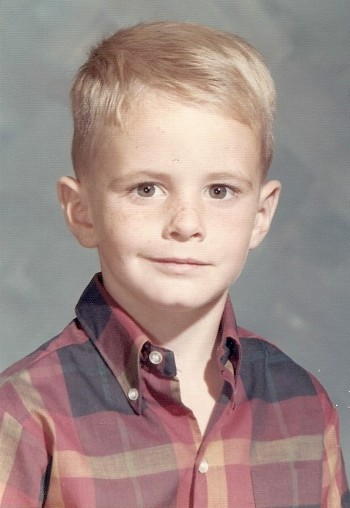 In this original BTB Investigation, we unveil the tragic story of Kirk Murphy, a four-year-old boy who was treated for “cross-gender disturbance” in 1970 by a young grad student by the name of George Rekers. This story is a stark reminder that there are severe and damaging consequences when therapists try to ensure that boys will be boys.
When we first reported on three American anti-gay activists traveling to Kampala for a three-day conference, we had no idea that it would be the first report of a long string of events leading to a proposal to institute the death penalty for LGBT people. But that is exactly what happened. In this report, we review our collection of more than 500 posts to tell the story of one nation’s embrace of hatred toward gay people. This report will be updated continuously as events continue to unfold. Check here for the latest updates.
In 2005, the Southern Poverty Law Center wrote that “[Paul] Cameron’s ‘science’ echoes Nazi Germany.” What the SPLC didn”t know was Cameron doesn’t just “echo” Nazi Germany. He quoted extensively from one of the Final Solution’s architects. This puts his fascination with quarantines, mandatory tattoos, and extermination being a “plausible idea” in a whole new and deeply disturbing light.
On February 10, I attended an all-day “Love Won Out” ex-gay conference in Phoenix, put on by Focus on the Family and Exodus International. In this series of reports, I talk about what I learned there: the people who go to these conferences, the things that they hear, and what this all means for them, their families and for the rest of us.
Prologue: Why I Went To “Love Won Out”
Part 1: What’s Love Got To Do With It?
Part 2: Parents Struggle With “No Exceptions”
Part 3: A Whole New Dialect
Part 4: It Depends On How The Meaning of the Word "Change" Changes
Part 5: A Candid Explanation For "Change"
 At last, the truth can now be told.
Using the same research methods employed by most anti-gay political pressure groups, we examine the statistics and the case studies that dispel many of the myths about heterosexuality. Download your copy today!
And don‘t miss our companion report, How To Write An Anti-Gay Tract In Fifteen Easy Steps.
 Anti-gay activists often charge that gay men and women pose a threat to children. In this report, we explore the supposed connection between homosexuality and child sexual abuse, the conclusions reached by the most knowledgeable professionals in the field, and how anti-gay activists continue to ignore their findings. This has tremendous consequences, not just for gay men and women, but more importantly for the safety of all our children.
Anti-gay activists often cite the “Dutch Study” to claim that gay unions last only about 1½ years and that the these men have an average of eight additional partners per year outside of their steady relationship. In this report, we will take you step by step into the study to see whether the claims are true.
Tony Perkins’ Family Research Council submitted an Amicus Brief to the Maryland Court of Appeals as that court prepared to consider the issue of gay marriage. We examine just one small section of that brief to reveal the junk science and fraudulent claims of the Family “Research” Council.
 The FBI’s annual Hate Crime Statistics aren’t as complete as they ought to be, and their report for 2004 was no exception. In fact, their most recent report has quite a few glaring holes. Holes big enough for Daniel Fetty to fall through.
“Google” is a trademark of Google Inc.
© Box Turtle Bulletin. All Rights Reserved.
 Posts
Posts  Posts via daily email: