Box Turtle Bulletin
 News and commentary about the anti-gay lobby
“Now you must raise your children up in a world where that union of man and box turtle is on the same legal footing as man and wife…”
News and commentary about the anti-gay lobbyPosts Tagged As: Daily Agenda
June 18th, 2013
TODAY IN HISTORY:
Daytime Soap Introduces First Gay Teen Character: 1992. The daytime dramas known as soap operas had been a staple of radio, and then television, for some sixty years, but by the 1990s, the genre was looking increasingly tired and outdated thanks to the popularity of daytime talk shows like Jerry Springer, Sally Jesse Rafael and Rikki Lake. With the soaps now competing with real-life drama (or at least a facsimile thereof) from these sensationalistic talk shows, producers understood that they needed to bring their story lines to the 1990s or loose whatever audience they still had.
ABC’s One Life to Live, which had been on the air since 1968 with a story line tackling women’s issues and race, seemed the obvious candidate to run a new story line exploring homophobia and the difficulties of being a gay teen. Billy Douglas (played by Ryan Phillippe), a newcomer to the town of Lianview, was reluctant to tell anyone about his homosexuality, especially his parents. He did, however, confide in the town’s compassionate pastor, Rev. Andrew Carpenter. But a scheming woman who Carpenter scorned (there’s always at least one in a soap opera) began circulating rumors around town that the pastor had been molesting Billy. In a dramatic scene, the entire town, led by Billy’s parents, confronted Carpenter and demanded that he resign, the pastor delivered a riveting sermon against the evils of prejudice and homophobia. This led Billy to take a public stand in support of Carpenter — and to come out to his parents.
In 2010, Phillippe talked about what it was like to play a gay teen in 1992:
Me and the guy who played my boyfriend might’ve held hands once or twice, but that was it. The age of those characters had something to do it, but things also weren’t as liberal in 1992. Still, I felt lucky to play the first gay teenager on television — not just daytime but television, period. What was so amazing about that for me was the response I got through fan letters that my mother and I would read together. Kids who’d never seen themselves represented on TV or in movies would write to say what a huge support they found it to be. One kid said he’d considered suicide before seeing a character like him being accepted. I also heard from a father, a mechanic, who hadn’t spoken to his son since he came out. When our show came on in his shop, it gave him some insight and understanding as to who his son was, so it opened up communication between them. As much as you can write off how silly the entertainment industry can be, it can affect change and make people see things differently. That’s beautiful.
Phillippe’s character left Lianview to attend Yale later that summer, and Phillippe left One Life to Live for good in 1993. ABC announced One Life to Live’s cancellation in late 2011, with the last episode airing on January 13, 2012.

Agnes Goodsir (top), Girl With Cigarette, 1925 (bottom)
TODAY’S BIRTHDAY:
Agnes Goodsir: 1864. An Australia-born painter, Agness Goodsir joined a mass exodus of artists from down under seeking the artistic stimulation and freedom that had blossomed in Paris in the early 20th century. That’s where Goodsir studied at the Académie Delécluse, the Académie Julian and then the Académie Colarossi.
Her constant companion was Rachel Dunn, who was depicted in several of her paintings, including Morning Tea (1925), Girl with Cigarette (1925), The Letter (1926) and The Chinese Skirt (1933). She was best known for her portraits including, reportedly, one of Mussolini. When she died in 1939, she left her remaining paintings to Rachel Dunn, who sent about forty to Agnes’s family in Australia and others to Australian galleries. The Agnes Goodsir memorial scholarship at the Bendigo Art Gallery, where her work first appeared, is named in her memory.
If you know of something that belongs on the agenda, please send it here. Don’t forget to include the basics: who, what, when, where, and URL (if available).
And feel free to consider this your open thread for the day. What’s happening in your world?
June 17th, 2013

TODAY IN HISTORY:
45 YEARS AGO: Premiere of Documentary of Drag Queen Competition: 1968. The documentary The Queen makes its premiere in a theater in New York City. The film, shot almost entirely with hand-held cameras, is a primitive pre-Stonewall prequel to Paris is Burning, and follows the behind-the-scenes preparations for the Miss All-America Camp Beauty Pageant – a national drag queen competition in New York City. The conversations recorded in the dressing rooms about draft boards, sexual and gender identity, sex reassignment surgery, and being a drag queen captures a very specific time in LGBT history. If you are ever lucky enough to see it, keep a very sharp eye out whenever the camera pans to the audience. You might just get a quick glimpse of Andy Warhol in his trademark platinum wig. The VHS release has long been out of print, but portions from the documentary have been posted on YouTube.
http://www.youtube.com/watch?v=snELB8J9R58

Londoners cheer Liberace’s libel victory, 1959.
Liberace Wins Libel Case: 1959. Liberace — his real name was Wladziu Valentino Liberace, but like Cher and Madonna he was known by a single name on stage — had become a piano-playing sensation in the U.S. in the 1950s. He started as a classical pianist, but he quickly added schmaltz and elements of Las Vegas showmanship (extravagant costumes, massive diamond rings, and his signature candelabra) to his repertoire of classics, show tunes, film scores and popular songs, all of which took his performances in a decidedly unclassical direction. His curly black hair, long eyelashes and bright smile made him a sex symbol for an odd collection of somewhat nerdy teenage girls, their middle-aged mothers and even their grandmothers — and for not a few gay men who understood what they were seeing. His flamboyance attracted questions about his sexuality, but those questions didn’t do much to dent the popularity of his his hit television series and packed concert halls.
But in 1956, a Daily Mirror columnist who went by the pen name Cassandra (real name: William Connor) wrote a scathing article the day after Liberace’s arrival in London for a live BBC broadcast and a European tour. If everyone else was willing to go along with Liberace’s persona of being sweet, sensitive, sensational and straight, Connor had no intention of playing along:
He is the summit of sex – the pinnacle of masculine, feminine, and neuter. Everything that he, she and it can ever want. I spoke to sad but kindly men on this newspaper who have met every celebrity coming from America for the past 30 years. They say that this deadly, winking, sniggering, snuggling, chromium-plated, scent-impregnated, luminous, quivering, giggling, fruit-flavored, mincing, ice-covered heap of mother love has had the biggest reception and impact on London since Charlie Chaplin arrived at the same station, Waterloo, on September 12, 1921.
Liberace replied with at telegram: “What you said hurt me very much. I cried all the way to the bank.” But he also decided to sue for libel. The case finally reached a London courtroom in 1959. On June 6, Liberace took the stand and denied that he was gay. He also denied that he was even a sex symbol. “I consider sex appeal as something possessed by Marilyn Monroe and Brigitte Bardot. I certainly do not put myself in their class,” he said, prompting laughter in the court room. When Connor took the stand, he denied trying to imply that Liberace was gay, although he found it difficult to square that claim with his word choices for his column. The most damning phrase, according to news accounts of the day, was his use of “fruit-flavored.” Apparently that was not the phrase to be tossed around at just anyone.
With no proof of actual homosexual activity on Liberace’s part — there were no former lovers to testify, no police arrests to report — the jury returned a verdict of guilty against Connor and the Daily Mirror, and awarded damages of $22,400. But today of course we know what was true all along: that he was actually gay even though he never came out of the closet during his lifetime. His estate and many of his remaining fans continued to deny for many years the numerous reports that when he died in 1987, it was AIDS that killed him.

Carl Van Vechten, self-portrait, 1934.
TODAY’S BIRTHDAY:
Carl Van Vechten: 1880. A writer and a photographer, Carl Van Vechten was fascinated with African-American culture and became a patron on the Harlem Renaissance. In 1926, he published his controversial 1926 novel Nigger Heaven, which portrayed the intellectuals, political activists, workers, and others who inhabited the “great black walled city” of Harlem. The book by a white author split Harlem down the middle: Langston Hughes was among the book’s fans and defenders (Hughes even wrote new poems to replace the songs used in the book’s first printing), while W. E. B. Du Bois and Alain Locke condemned it as an “affront to the hospitality of black folks.”
The question of whether a white man could truly know the Black experience lies at the very heart of the controversy surrounding Van Vechten’s life. Some of Van Vechten’s affinity for African-Americans can be traced to his wealthy family while growing up in Cedar Rapids, Iowa. His father endowed a school for African-Americna children, and he instructed his sons to always address the family’s employees with “Mr.” and “Mrs.”, regardless of their race. After graduating from the University of Chicago, he moved to New York to become the music and dance critic for The New York Times. In 1913, he took a year-long trip to Europe where he met Gertrude Stein and helped to get her work published.
In the 1920s, he began publishing novels himself, many of which containing sly and witty references to homosexuality. His 1923 novel, The Blind Bow-Boy includes a character he called “the Duke of Middlebottom,” whose stationery sported the slogan, “A thing of beauty is a boy forever.” It was about this time that Van Vechten emerged as a notable advocate for Black culture, writing articles in Vanity Fair celebrating the music of the Harleem Renaissance — the blues, jazz and spirituals which he said were the only authentic American musical forms. He also promoted writers of “the New Negro movement”: Alain Locke, Langston Hughes, Wallace Thurman, among others. In the 1930, Van Vechten took up photography and became known for his portraits of some of the leading artists of the day, including Langston Hughes, Marian Anderson, Pearl Baily, Josephine Baker, Marlon Brando, Truman Capote, Ella Fitzgerald, Billie Holiday, Lena Horne, Mahalia Jackson — the list is nearly endless.
Although Van Vechten had married the Russian-born actress Fania Marinoff in 1914, Van Vechten was gay. This was evident when his papers were unsealed twenty-five years after his death in 1964:
As the 25-year mark drew near, scholars assumed they were about to unveil Van Vechten’s diaries. “They said, ‘Of course, this is going to be exciting, and let’s open those journals and have a party,’ and the curator said, ‘Well, I don’t think so…’ It was a good instinct.” The few people who did attend the 1989 opening, including Willis, were shocked by what they found: 18 scrapbooks of graphic homoeroticism, full of mischief and devoid of explanation.
…Van Vechten collected newspaper clippings chronicling Harlem drag balls, early sex-change operations (“GI Who Turned Woman is a Happy Beauty”), court cases for “morals charges,” and abuse incidents. He assembled more restrained, if still theatrical, black and white photographs of male nudes, both Caucasian and African American, which most scholars think are mostly or entirely the work of Van Vechten. Nothing escaped him: Photos of ambiguously homoerotic Greek vases, labeled in childishly rounded handwriting, nestled against newspaper cutouts of male wrestlers locked in combat.
Emily Bernard’s 2012 biography, Carl Van Vechten and the Harlem Renaissance: A Portrait in Black and White
If you know of something that belongs on the agenda, please send it here. Don’t forget to include the basics: who, what, when, where, and URL (if available).
And feel free to consider this your open thread for the day. What’s happening in your world?
June 16th, 2013

Dad and me
Today is Father’s Day. I pull this picture out and post it every Father’s day. It’s my favorite picture of the two of us, partly because it’s a great picture but also because it is one of the very few that I have of Dad and me. Like many fathers of his generation, Dad was always the one behind the camera, not in front of it. Mom almost never picked up the camera. And so while I have many wonderful memories of Dad (he died when I was in college), we actually have very few pictures of him. We have whole albums of vacation pictures where one would think he was never with us. But of course it’s impossible to think of those vacations without him. Here’s wishing a Happy Father’s Day to all of the Dads out there.
TODAY’S AGENDA:
Pride Celebrations Today: Baltimore, MD; Bisbee, AZ; Butte, MT; Denver, CO; Kalamazoo, MI; Luleå, Sweden; Memphis, TN (Black Pride); Pittsburgh, PA; Portland, OR; Saskatoon, SK; Sitges, Spain; Strasbourg, France; Syracuse, NY; Thunder Bay, ON; Toulouse, France; Venice, Italy; Vienna, Austria; Warsaw, Poland.
AIDS Walks Today: London, UK.
Other Events Today: Lesbian and Gay Stadtfest, Berlin, Germany; Seoul LGBT Film Festival, Seoul, South Korea; Out In the Vineyard Gay Wine Weekend: Sonoma, CA; Tel Aviv LGBT International Film Festival, Tel Aviv, Israel; Bush Garden Gay Days, Williamsburg, VA.

TODAY IN HISTORY:
Philadelphia’s Packer Street-Gloucester City Bridge Named for Walt Whitman: 1954. Walt Whitman spent his last nineteen years in Camden, New Jersey, just across the Delaware River from Philadelphia. More than sixty years later, the Delaware River Port Authority’s Special Committee on Bridge Names voted unanimously to name a suspension bridge, then under construction connecting nearby Gloucester City, New Jersey to Philadelphia’s Packer Avenue, for Camden’s adopted hometown hero in advance of the centenary of the first publication of Leaves of Grass.
The announcement was made, the Centenary was celebrated in 1956, and the bridge’s construction continued with its opening slated for the spring of 1957. That should have been the end of the matter.
And it would have been, until Father Edward Lucitt, director of the Holy Name Union of the Diocese of Camden, Monsignor Joseph McIntyre, and seven other Holy Name Society leaders in Southern New Jersey wrote to complain that “Whitman himself had neither the noble stature or quality of accomplishment that merits this tremendous honor, and his life and works are personally objectionable to us.”
That letter, from December 16, 1956, was motivated by a series of articles in the Camden diocesan weekly newspapers by Rev. James Ryan, who denounced Whitman as a third-rate poet and a scandal to decency. Other Catholic publications picked up on the controversy and went through Whitman’s published work with a fine tooth comb. They criticized a line in Section 32 of “Song of Myself” where Whitman praises the irreligiosity of animals (“They do not make me sick discussing their duty to God”), and especially, of course, “As I Lay With My Head in Your Lap Camerado.” In January 1957, the Committee received 467 copies of a mimeographed form letter, signed by clerics, nuns and lay people from across Philadelphia and southern New Jersey, which mixed moralizing with then-common red-baiting rhetoric:
Gentlemen:
We oppose the naming of the new $90,000,000 bridge as a memorial to Walt Whitman for the following reasons:
(1) He is not great enough to deserve this honor. In what way has he inspired or influenced American democracy for good?
(2) He boasted of his immoralities and published immorality as a personal experience.
(3) He held Christianity in contempt, and affirmed himself as the new savior of mankind.
(4) He attempted to teach rebellion against the natural law of God, and the right order establisehd by the tortured experience of the centuries.
(5) His political philosophy, dusted off the scrap heap during the depression, as the Voice of the Common Man, has proved alien to Jeffersonian Democracy, and he is now the Poet Laureate of the World Communist Revolution.
Because the naming of the Bridge in his honor would raise him to the status of a national hero, give aid and comfort to the enemies of our established order of morality and democracy, make the teaching of religious concepts difficult, and bring the common stamp of morality in our heritage into contempt, we ask you to drop Whitman’s name from the Bridge.
Not all Catholics were on board with the anti-Whitman campaign. An editorial in The Ave Maria, published at Notre Dame , warned against the foolishness of wasting the moral weight of Catholic opinion on “less important matters” when there were other things to worry about (such as the showing of “obscene movies” and “legislation authorizing the distribution of birth control literature.”) The New York Times picked up on the story, which led to a counter-campaign by those who either supported honoring Whitman or resented Catholic interference in public affairs. For at least one letter writer, Whitman’s sexuality was not an issue. “Michael Angelo was a homosexual,” he wrote to the committee. “Why don’t they destroy the Sistine chapel?” Another letter to The New York Post expanded on that theme:
(They) “want to take Whitman’s name off that bridge because he may have been abnormal sexually. If they succeed, their next job is to remove Michaelangelo’s statues from the Vatican, tear down St. Peter’s Basilica and throw out all copies of Leonordo’s Last Supper. Da Vinci was actually arrested on a charge of perversion and Michaelangelo’s sonnets suggest far more than any of Whitman’s poems.”
In the end, there appears to have been little desire among River Authority officials to consider changing the name. By the time the Walt Whitman Bridge opened to traffic on May on May 16, 1957, the controversy was over and mostly forgotten. Ten years later when the New Jersey Turnpike Authority renamed one of its service areas for Whitman, no one objected. Today, the Walt Whitman Bridge is a part of Interstate 76, which is known locally in the Philladelphia area as the Schuylkill Expressway.
[Source: Joann P. Krieg. “Democracy in Action: Naming the Bridge for Walt Whitman.” Walt Whitman Quarterly Review 12, no. 2 (Fall 1994), 108-114. Available online here.
“Dal McIntire” (Don Slater) “Tangents.” ONE Magazine 4, no. 3 (March 1956):7.]

40 YEARS AGO: Rocky Horror Show: 1973. The stage musical The Rocky Horror Show premiered in London at the Royal Court’s Theatre Upstairs, a tiny 63-seat venue set aside as a project space for new works. Starring Tim Curry as Dr. Frank-N-Furter — a “sweet transvestite from Transsexual, Transylvania” — the musical (set in Ohio!) follows the adventures of young lovers Brad Majors and Janet Weiss who came to the doctor’s castle to call a cab because their car has a flat tire. The production features lots of catchy songs (“Time Warp” and “Science Fiction, Double Feature”), risqué sexuality and of course, lots of makeup. The show was an instant hit, and the cast was signed for a soundtrack album right after the show’s second night. By the time the show closed seven years and four venues later, it has gone through 2,960 performances and picked up several added songs along the way.
The Rocky Horror Show opened on Broadway on March 10, 1975, but critics panned it and the show closed just three weeks later. That same year, the play was adapted for the film and retitled The Rocky Horror Picture Show. It becomes a must-see cult classic that has kept art houses in business for the next 37 years. Because it is still officially in limited release, The Rocky Horror Picture Show is the longest-running theatrical release in film history.

15 YEARS AGO: Sen. Lott Likens Gay People to Alcoholics, Sex Addicts, Kleptomaniacs: 1998. Senate Majority Leader Trent Lott (R-MS) appeared on Armstrong Williams’s program to talk about abortion, disciplining children (he said he used a belt on his occasionally) and his childhood (growing up in Mississippi in the 1950s and early 1960s was a “good time in America.” And he also spoke on the controversial subject of same-sex marriage, two years after the passage of the Defense of Marriage Act. Williams asked Lott what he thought about homosexuality. Lott replied, “You still love that person and you should not try to mistreat them or treat them as outcasts. You should try to show them a way to deal with that.” He said his own father had had a problem with alcoholism, adding, ”Others have a sex addiction or are kleptomaniacs. There are all kinds of problems and addictions and difficulties and experiences of this kind that are wrong. But you should try to work with that person to learn to control that problem..”
President Bill Clinton’s press secretary Michael D. McCurry blasted Lott’s statement, saying it showed how difficult it was getting things done “when you’re dealing with people who are so backward in their thinking. For over 25 years, it’s been quite clear that sexual orientation is not an affliction, it’s not a disease, it is something that is part of defining one’s sexuality.'” Sen. Paul Wellstone (D-MN) seized on Lott’s remarks to demand that Clintoni’s nomination of openly gay James Hormel as ambassador to Luxembourg to be brought to the Senate floor, a move that had been blocked by Lott. House Majority Leader Dick Armey (R-TX) came to Lott’s defense, adding “I abide by the Bible… I do not quarrel with the Bible on the subject.” The controversy eventually blew over and Lott kept his job as Senate Republican leader until 2002, when at a party honoring the 100th birthday of Sen. Strom Thurmond (S-SC) who had run for President as a segregationist Dixiecrat candidate in 1948, Lott said that if Thurmond had won, “we wouldn’t have had all these problems over the years.” Those remarks led to his resignation.

Phyllis Lyon (right, 83) and Del Martin (left, 87)
5 YEARS AGO: Longtime Gay Activists Become First Same-Sex Couple to Marry in California: 2008. Phillis Lyon and Del Martin of San Francisco had been together for fifty-five years when they were finally married at city hall. Their wedding capped a lifetime of advocacy for gay equality. In 1955, they and six other women founded the Daughters of Bilitis, the first major lesbian organization in the United States. Phyllis edited the DOB’s newsletter The Ladder beginning in 1956, and Del edited The Ladder from 1960 to 1962. They also took turns as head of the Daughters until 1964, when they helped found the Council on Religion and the Homosexual. Phyllis was also the first open lesbian to serve on the board of the National Organization for Women in 1973. Meanwhile, Del was heavily involved in getting the American Psychiatric Association to remove homosexuality from its list of mental disorders.
The California Supreme Court ruled on May 15, 2008, that the state’s ban on same-sex marriage was unconstitutional under the state constitution, and issued a temporary stay to give the state time to implement the necessary changes in its forms and procedures. That stay expired at 5:00 p.m. on June 16. San Francisco mayor Gavin Newsom selected Phyllis and Del for the honor of being the first same-sex couple in California to marry in a ceremony began at precisely 5:01 p.m.
Phyllis and Del enjoyed two months of wedded bliss until Del passed away in August of that year.

TODAY’S BIRTHDAY:
Lou Sullivan: 1951. The pioneering trangender activist had begun identifying as a “female transvestite” in 1973. Two years later, he moved to San Francisco and began identifiying as a female-to-male transgender — and as a gay man. This didn’t sit well with the so-called gender specialists of the day, who saw sexual orientation and gender identity as, more or less, the same thing — gay men really “wanted to be women,” just like male-to-female transgenders, with only the degree of that “want” distinguishing the two. The idea that someone born female who identifies as a male but who also is attracted to other men — that just blew their minds, with many saying it just wasn’t possible.
So when Sullivan sought surgery, he was consistently denied it because he was gay. He was able to obtain hormones from doctors who were not associated with gender clinics, and he began lobbying the Harry Benjamin International Gender Dysphoria Association (now known as WPATH, World Professional Association for Transgender Health), to recognize that, despite what the “experts” said, he really did exist. Sullivan wrote the first guidebook for FtM people, and he spent the rest of his life as an advocate and an educator as among the first to argue that there was a clear distinction to be made between sexual orientation and gender identity. His efforts eventually paid off, and in 1986 he was able to undergo genital reconstructive surgery. Later that year, he was diagnosed with AIDS, which exposed him to yet another kind of stigma. Just before he died in 1991, he wrote, “”I took a certain pleasure in informing the gender clinic that even though their program told me that I could not live like a gay man, it looks like I’m going to die like one.” The Lou Sullivan Society continues to serve the FTM community in the San Francisco Bay area.
If you know of something that belongs on the agenda, please send it here. Don’t forget to include the basics: who, what, when, where, and URL (if available).
And feel free to consider this your open thread for the day. What’s happening in your world?
June 15th, 2013
TODAY’S AGENDA:
Pride Celebrations This Weekend: Anchorage, AK; Baltimore, MD; Baton Rouge, LA; Bisbee, AZ; Boise, ID; Butte, MT; Chemnitz, Germany; Denver, CO; Edinburgh, UK; Erie, PA; Flagstaff, AZ; Iowa City, IA; Kalamazoo, MI; Lancaster, PA; Ljubljana, Slovenia; Louisville, KY; Luleå, Sweden; Lyon, France; Memphis, TN (Black Pride); Münster, Germany; Nantes, France; Nashville, TN; Oldenburg, Germany; Pittsburgh, PA; Portland, OR; Portland, ME; Providence, RI; Rome, Italy; Sacramento, CA; Saskatoon, SK; Sitges, Spain; Spencer, IN; Strasbourg, France; Syracuse, NY; Thessaloniki, Greece; Thunder Bay, ON; Toulouse, France; Venice, Italy; Vienna, Austria; Warsaw, Poland; Zagreb, Croatia.
AIDS Walks This Weekend: London, UK.
Other Events This Weekend: Lesbian and Gay Stadtfest, Berlin, Germany; Seoul LGBT Film Festival, Seoul, South Korea; Out In the Vineyard Gay Wine Weekend: Sonoma, CA; Tel Aviv LGBT International Film Festival, Tel Aviv, Israel; Bush Garden Gay Days, Williamsburg, VA.

TODAY’S BIRTHDAY:
40 YEARS AGO: Neil Patrick Harris: 1973. His Doogie Howser days are long over, and since then NPH has been able to cross two important acting barriers. A former child actor, he was able to successfully navigate the difficulties of becoming an adult actor in Broadway, film, and television. And he has also navigated the difficult transition from assumed-straight actor to a highly visible gay one, with partner David Burtka and twin children who were born in 2010. And as a very visible gay actor, he still manages to play straight roles on film and television. And to add just one more difficult accomplishment to his resume, last weekend he singlehandedly made the Tony Awards watchable again. As always, he made that look easy also.
If you know of something that belongs on the agenda, please send it here. Don’t forget to include the basics: who, what, when, where, and URL (if available).
And feel free to consider this your open thread for the day. What’s happening in your world?
June 14th, 2013
 TODAY’S AGENDA:
“God Loves Uganda” Documentary Screening: Sheffield, UK. The film documentary God Loves Uganda tells the story that longtime BTB readers know very well: “the role of the American evangelical movement in Uganda, where American missionaries have been credited with both creating schools and hospitals and promoting dangerous religious bigotry. The film follows evangelical leaders in America and Uganda along with politicians and missionaries as they attempt the task of eliminating “sexual sin” and converting Ugandans to fundamentalist Christianity.” I’m very honored to have been able to provide some very small technical assistance to the film makers (as you can see in the film’s credits). Director/Producer Roger Ross Williams had a very personal motivation to tell this particular story:
I grew up in the black church. My father was a religious leader in the community and my sister is a pastor. I went to church every Sunday and sang in the choir. But for all that the church gave me, for all that it represented belonging, love and community, it also shut its doors to me as a gay person. That experience left me with the lifelong desire to explore the power of religion to transform lives or destroy them. Tt desire took a new form when I visited Africa to make my film Music by Prudence. I was struck by how intensely religious and socially conservative Africans were. There was literally a church on every corner. People were praying in the fields. It was like the American evangelical Christianity I had known – but magnified by Africa’s intensity.
David Courier of the Sundance Film Festival said God Loves Uganda “may be the most terrifying film of the year.” It will screen tonight and tomorrow night at the Sheffield Documentary Film Festival. Tickets and information is available here. More screenings are scheduled in the next two weeks in Washington, D.C.; Silver Spring, MD; Provincetown, MA; and Brooklyn and Tonawanda, NY.
 “Call Me Kuchu” Screening: New York, NY. “Kuchu” is the word LGBT Ugandans use to call themselves, although some think it is derogatory. Sort of like “queer” elsewhere. And as with “queer,” “kuchu” is an all-encompassing term which embraces all of the Ls, Gs, Bs, Ts, and everything in between. Hence the title of the documentary which will open in US theaters today in New York. Call Me Kuchu “explores a community that is at once persecuted and consoled by the Christian faith, and examines the astounding courage and determination required not only to battle an oppressive government, but also to maintain religious conviction in the face of the contradicting rhetoric of a powerful national church.”
The film follows veteran LGBT advocate David Kato as he works to prevent Uganda’s proposed Anti-Homosexuality Bill from becoming law. The film shows his own struggles against a vicious public vigilante campaign marking him for death, and a rare legal victory for gay Ugandans against that campaign — just three weeks before Kato’s brutal murder in his home. Call Me Kuchu opens today at the Quad Theaters, with showings at 7:20 and 9:30, with additional screenings through next week. The film will also open in Los Angeles on June 21 at Laemmle Music Hall. Additional showings are scheduled this month for Seoul, South Korea; Zaragosa, Spain; Cambridge, UK; and Montevideo, Uruguay. Check here for more details.
Pride Celebrations This Weekend: Anchorage, AK; Baltimore, MD; Baton Rouge, LA; Bisbee, AZ; Boise, ID; Butte, MT; Chemnitz, Germany; Denver, CO; Edinburgh, UK; Erie, PA; Flagstaff, AZ; Iowa City, IA; Kalamazoo, MI; Lancaster, PA; Ljubljana, Slovenia; Louisville, KY; Luleå, Sweden; Lyon, France; Memphis, TN (Black Pride); Münster, Germany; Nantes, France; Nashville, TN; Oldenburg, Germany; Pittsburgh, PA; Portland, OR; Portland, ME; Providence, RI; Rome, Italy; Sacramento, CA; Saskatoon, SK; Sitges, Spain; Spencer, IN; Strasbourg, France; Syracuse, NY; Thessaloniki, Greece; Thunder Bay, ON; Toulouse, France; Venice, Italy; Vienna, Austria; Warsaw, Poland; Zagreb, Croatia.
AIDS Walks This Weekend: London, UK.
Other Events This Weekend: Lesbian and Gay Stadtfest, Berlin, Germany; Seoul LGBT Film Festival, Seoul, South Korea; Out In the Vineyard Gay Wine Weekend: Sonoma, CA; Tel Aviv LGBT International Film Festival, Tel Aviv, Israel; Bush Garden Gay Days, Williamsburg, VA.

TODAY’S BIRTHDAY:
Boy George: 1961. George O’Dowd’s first stage name was Lieutenant Lush when he performed with Bow Wow Wow. That tenure was short lived: he was booed off the stage. He then joined up with drummer (and regular boyfriend) Jon Moss (previously of The Damned and Adam and the Ants), bassist Mikey Craig and guitarist/keyboardist Roy Hay. They called their group In Praise of Lemmings and then Sex Gang Children. When they finally realized that they had a androgynous Irish singer, a black bassist, a Jewish drummer and an English keyboardist, they decided to call themselves Culture Club, with Boy George as the frontman. Their debut album Kissing to be Clever was released in 1982, and their single “Do You Really Want To Hurt Me?” became an international hit. “Time (Clock of Heart)” and “I’ll Tumble 4 Ya,” gave them the distinction of being the first group since the Beatles to have three Top 10 hits in the U.S. from a debut album. Their next album Colour By Numbers, did almost as well, with “Church of the Poison Mind” and “Miss Me Blind” hitting the Top Ten in the U.S. and “Karma Chameleon” holding the #1 spot for three weeks (and for six weeks in the U.K.).
By the late 1980s, Boy George left Culture Club behind when his relationship with Moss soured and he began descending into a nasty heroin addiction. After rehab, he had a few modest hits as a solo artist, including the title song from the movie The Crying Game in 1992. He wrote the musical score for the London musical Taboo, which was based on his life. It earned him a Tony Award for Best Musical Score. But his troubles continued to follow him. In 2005, he was arrested in New York for cocaine possession and filing a false burglary report. The drug charge was dropped and he pleaded guilty to the false report. He was sentenced to five days of community service, fined $1,000 and ordered into drug rehab. In 2008, he was arrested and charged with assault and false imprisonment. He was convicted and sentenced to fifteen months imprisonment. He was released after four months and was placed under home detention. His latest album, Ordinary Alien, was released in 2010 after a more than ten year hiatus.
If you know of something that belongs on the agenda, please send it here. Don’t forget to include the basics: who, what, when, where, and URL (if available).
And feel free to consider this your open thread for the day. What’s happening in your world?
June 13th, 2013
TODAY’S AGENDA:
New Jersey Assembly Committee Hearing on Proposed Conversion Therapy Ban: Trenton, NJ. The New Jersey Assembly’s Women and Children Committee will hear testimony on A3371, which would prohibit licensed therapists in the sate of New Jersey from providing therapies intended to change sexual orientation to minors. The hearing will take place today at 10:00 a.m. in Committee Room 16 in the State House Annex in Trenton.
White House Pride Reception: Washington, D.C. The White House will hold what has turned out to be an annual event lately, a June Pride reception for LGBT advocates, leaders and invited community members. White House officials are being tight-lipped about what President Barack Obama will say, but LGBT leaders have made it clear what they want to hear: an announcement that Obama will sign an Executive Order barring federal contractors from discriminating against LGBT workers. Whether they will get that is anybody’s guess. The reception will take place this afternoon at 5:00 p.m. EDT, and will be webcast live via the White House website.
Pride Celebrations This Weekend: Anchorage, AK; Baltimore, MD; Baton Rouge, LA; Bisbee, AZ; Boise, ID; Butte, MT; Chemnitz, Germany; Denver, CO; Edinburgh, UK; Erie, PA; Flagstaff, AZ; Iowa City, IA; Kalamazoo, MI; Lancaster, PA; Ljubljana, Slovenia; Louisville, KY; Luleå, Sweden; Lyon, France; Memphis, TN (Black Pride); Münster, Germany; Nantes, France; Nashville, TN; Oldenburg, Germany; Pittsburgh, PA; Portland, OR; Portland, ME; Providence, RI; Rome, Italy; Sacramento, CA; Saskatoon, SK; Sitges, Spain; Spencer, IN; Strasbourg, France; Syracuse, NY; Thessaloniki, Greece; Thunder Bay, ON; Toulouse, France; Venice, Italy; Vienna, Austria; Warsaw, Poland; Zagreb, Croatia.
AIDS Walks This Weekend: London, UK.
Other Events This Weekend: Lesbian and Gay Stadtfest, Berlin, Germany; Seoul LGBT Film Festival, Seoul, South Korea; Out In the Vineyard Gay Wine Weekend: Sonoma, CA; Tel Aviv LGBT International Film Festival, Tel Aviv, Israel; Bush Garden Gay Days, Williamsburg, VA.
TODAY IN HISTORY:
Delaware Police Announce “Morals” Roundup: 1961. A state investigation in a “morals case” ended with the arrest of fifteen men, aged sixteen to twenty-seven years. As The Matachine Review commented, the sixteen-year-old “unfortunately gives authorities a valid reason to conduct the investigations,” although it is unclear from the Wilmington Evening Journal’s article of June 13 whether that was the focus of the investigation or merely something police discovered sometime after it began. The investigation started on April 6 when police officers in Newark arrested Vance H. Middleton, 37, who “admitted participating in immoral acts.” Police went to his home and “seized a mass of obscene pictures and literature and photographic equipment and original photographs. It was through these photographs that the identity of many of those in the investigation was established.” Through a kind of a snowballing operation in which each contact was interrogated in order to obtain the names of other contacts, police surmised that “The Newark parties drew persons from throughout Delaware, Elkton, Philadelphia and New York” and that “most of the immoral activity centered in the Newark-Brookside area of week-ends.” One man, James M.F. Short, 31, of Newark and Wilmington, was charged with “63 morals charges by state police” and was being “held for psychiatric treatment on the Newark charges.”
A reader sent a copy of the Wilmington Evening Journal’s article to The Mattachine Review, and added the following details.
Police pressure is terrible throughout the state, they are pressuring homosexuals that are picked up to name and identify all their acquaintances. They even go to the places where they are employed, call them off the job and not even permit them to inform their employers they are leaving. They then are held as long as the police desire to hold them and generally cost the respective employee his job (which the police clearly envision because of their actions). When they are picked up, they are taken to the station for interrogation, subjected to a contingent of police officials’ questioning, and their actions and conversation filmed and tape recorded for the entirety of their stay. Their legal rights are denied on a wholesale basis, and none of them as yet has taken any action against the police.
Of course, in some towns down state, attorneys will not even defend a prospective client against the police even on charges other than homosexuality. (Proof of that statement In the Delaware State News, Dover, Delaware)
Short, one of the defendants in the case, attempt,ed to implicate a State Trooper, so, of course, the numerous charges placed against him clearly indicate how the police plan to handle him.
[Sources: “15 Arrests in Morals Case End State’s Investigation.” Wilmington (DE) Evening Journal (June 13, 1961). As reprinted in the The Mattachine Review 7. no. 7 (June 1961): 27-28.]
Letter to the editor. The Mattachine Review 7. no. 7 (June 1961): 27.
Harold Call. “Calling Shots.” The Mattachine Review 7. no. 7 (June 1961): 4-5.]
LGBT Leaders Welcomed to White House With Rubber Gloves: 1995. Relations between the LGBT community and the Clinton Administration were at a low point in 1995. Instead of repealing the ban against gays in the military, the Clinton Administration negotiated “Don’t Ask, Don’t Tell” with conservative Democrats and Republicans. Instead of filing a Justice Department brief with the Supreme Court to weigh in on a lawsuit challenging Colorado’s Amendment 2 which would have banned civil rights protections for gay people, Attorney General Janet Reno sat on her hands. But with the White House beginning to cast an eye toward the 1996 elections, they realized that they needed to do something to try to placate a seriously pissed off constituency.
So on June 14, the Clinton Administration invited 40 gay leaders, including state senators and representatives, city council members, judges and other elected officials from around the country, to a special White House meeting. The meeting’s purpose was to announce that Marsha Scott, a deputy assistant to President Clinton, was being named as White House liason officer for gay and lesbian issues. They were also there to learn about a new 30-member presidential advisory council on HIV/AIDS. But before the meeting even got started, things got off on the wrong foot with the sight that greeted the LGBT leaders when they showed: Secret Service agents had put on rubber gloves before granting them access to the White House. The activists were furious when agents told them they were wearing the gloves to protect themselves from HIV. “For that to even happen at the White House shows they haven’t a clue about AIDS,” said Act Up spokesman Steve Michael. “It just shows where they’re at.”
What was supposed to be a grand kiss-and-make-up session quickly turned into yet another embarrasment for the Administration. Secret Service director Eljay Brown issued a statement saying that he regretted “the unfortunate actions” taken by his agents. “It is not the policy of the Secret Service to wear gloves merely based on known sexual preference.” The Treasury Department, which had jurisdiction over the Secret Service, was asked to investigate. White House press secretary Mike McCurry said, “It’s safe to say the chief of staff (Leon Panetta) and others were distressed by that and believe it to be an error of judgment.”

TODAY’S BIRTHDAY:
Paul Lynde: 1926. He studied drama at Northwestern University in Evanston, Illinois with fellow students Cloris Leachman, Charlotte Rae, Patricia Neal, Jeffrey Hunter and Claude Akins. Imagine what that class must have been like. After graduating in 1948, he moved to New York and became a stand-up comic and a Broadway actor. In 1960, he appeared in Broadway’s Bye Bye Birdie, as well as in its film adaptation in 1963. But most of his work was in television, where he appeared in numerous sitcoms (he was Uncle Arthur in Bewitched) and lent his voice to animated cartoons. He is probably best known as the “center square” for the game show Hollywood Squares, with host Peter Marshall, where Lynde became famous for his one-liners and double entendres. They say his sexual orientation was an open secret in Hollywood. It’s hard to imagine any secret being more open than his. Especially considering Hollywood Squares answers like these:
Peter Marshall: In the Wizard of Oz, the lion wanted courage and the tin man wanted a heart. What did the scarecrow want?
Paul Lynde: He wanted the tin man to notice him.
Peter Marshall: What do you call a man who gives you diamonds and pearls?
Paul Lynde: I’d call him “darling”!
Peter Marshall: Paul, in what famous book will you read about a talking ass who wonders why it’s being beaten?
Paul Lynde: I read it, “The Joy of Sex.”
Peter Marshall: Paul, why do Hell’s Angels wear leather?
Paul Lynde: Because chiffon wrinkles too easily.
Peter Marshall: According to legend, who looks better, a pixie or a fairy?
Paul Lynde (in deeper voice): Well, looks aren’t everything! (laughter) Well, I guess I would say…I would have to go with the fairy. (more laughter)
If you know of something that belongs on the agenda, please send it here. Don’t forget to include the basics: who, what, when, where, and URL (if available).
And feel free to consider this your open thread for the day. What’s happening in your world?
June 12th, 2013
TODAY’S AGENDA:
Pride Celebrations This Weekend: Anchorage, AK; Baltimore, MD; Baton Rouge, LA; Bisbee, AZ; Boise, ID; Butte, MT; Chemnitz, Germany; Denver, CO; Edinburgh, UK; Erie, PA; Flagstaff, AZ; Iowa City, IA; Kalamazoo, MI; Lancaster, PA; Ljubljana, Slovenia; Louisville, KY; Luleå, Sweden; Lyon, France; Memphis, TN (Black Pride); Münster, Germany; Nantes, France; Nashville, TN; Oldenburg, Germany; Pittsburgh, PA; Portland, OR; Portland, ME; Providence, RI; Rome, Italy; Sacramento, CA; Saskatoon, SK; Sitges, Spain; Spencer, IN; Strasbourg, France; Syracuse, NY; Thessaloniki, Greece; Thunder Bay, ON; Toulouse, France; Venice, Italy; Vienna, Austria; Warsaw, Poland; Zagreb, Croatia.
AIDS Walks This Weekend: London, UK.
Other Events This Weekend: Lesbian and Gay Stadtfest, Berlin, Germany; Out In the Vineyard Gay Wine Weekend: Sonoma, CA; Tel Aviv LGBT International Film Festival, Tel Aviv, Israel; Bush Garden Gay Days, Williamsburg, VA.

TODAY IN HISTORY:
Loving v. Virginia: 1967. Mildred Jeter and Richard Loving were an unusual couple. They had long crossed the racial barrier as friends in rural Central Point, Virginia: she was Black and Native American, he was white. But friendship turned to dating, and when Mildred became pregnant at the age of 18 in 1958, they decided to go to Washington, D.C. to elope. When they returned home, a group of police officers invaded their house late at night hoping to catch them in the act of having sex (which would have been a crime because of their racial differences). Mildred pointed to the marriage license that they had hung on the wall, hoping that it would protect them. Little did she know, but that license was proof that they had committed another crime. Virginia’s Racial Integrity Act of 1924 prohibited any “colored” person with so much as one drop of African American or Indian blood from marrying a white person. Miscegenation was a felony, punishable by a prison sentence of between one and five years. The couple pleaded guilty on January 6, 1959, and they were sentenced to one year, with the sentence suspended for 25 years on the condition that they left Virginia.
The Lovings moved to D.C., and in 1963 the ACLU began a series of motions and lawsuits alleging that Virginia’s Racial Integrity Act violated the Fourteenth Amendment of the U.S. Constitution. Those lawsuits eventually made their way all the way up to the U.S. Supreme Court. On June 12, 1967, the Supreme Court struck down Virginia’s anti-miscegenation law, along with similar laws in fifteen other states. In the unanimous ruling, the Court held that “Marriage is one of the ‘basic civil rights of man,’ fundamental to our very existence and survival.” Despite this ruling, anti-miscegenation laws remained on the books for several years to come, despite their being unenforceable. In 2000, Alabama voters approved a ballot initiative to repeal its anti-miscegenation law, although even then more than half a million — 40% — voted to keep it.
Mildred and Richard were never political people. After the Supreme Court victory, the couple returned to Virginia and raised three children. Richard died in 1975 at the age of 41 when their car was struck by a drunk driver. Mildred lost her right eye in the accident. She passed away in 2008 of pneumonia at the age of 68. But a year before she died, she issued a statement on the 40th anniversary of Loving v. Virginia, in which she saw the fight for the freedom to marry as unfinished business:
My generation was bitterly divided over something that should have been so clear and right. The majority believed that what the judge said, that it was God’s plan to keep people apart, and that government should discriminate against people in love. But I have lived long enough now to see big changes. The older generation’s fears and prejudices have given way, and today’s young people realize that if someone loves someone, they have a right to marry.
Surrounded as I am now by wonderful children and grandchildren, not a day goes by that I don’t think of Richard and our love, our right to marry, and how much it meant to me to have that freedom to marry the person precious to me, even if others thought he was the ‘wrong kind of person’ for me to marry. I believe all Americans, no matter their race, no matter their sex, no matter their sexual orientation, should have that same freedom to marry. Government has no business imposing some people’s religious beliefs over others. Especially if it denies people’s civil rights.
I am still not a political person, but I am proud that Richard’s and my name is on a court case that can help reinforce the love, the commitment, the fairness, and the family that so many people, black or white, young or old, gay or straight, seek in life. I support the freedom to marry for all. That’s what Loving, and loving, are all about.

TODAY’S BIRTHDAY:
Jim Nabors: 1930. The Sylacauga, Alabama, learned to sing at his high school and church, and didn’t get into acting until he attended the University of Alabama. After graduating, he eventually landed his first job in television: cutting film for a television station in Chattanooga. He eventually decided to move to Los Angeles because of his asthma, where he began singing and acting in a local Santa Monica cabaret. That’s where he developed a character similar to the one we would later come to know as Gomer Pyle: a naive, golly-gee southern bumpkin with a high-pitched voice and thick accent would would launch into a nearly operatic baritone when singing. That’s where Andy Griffith discovered him, and signed to play a gas station attendant on The Andy Griffith Show. Nabor’s character was so popular that he soon ended up with his own spin-off, Gomer Pyle, U.S.M.C, which ran for five seasons from 1964 to 1969.
Nabors was among a handful of actors who were openly gay among friends and co-workers, but who were never put publicly. “I haven’t ever made a public spectacle of it. Well, I’ve known since I was a child, so, come on. It’s not that kind of a thing. I’ve never made a huge secret of it at all,” Nabors said recently. What made Nabors so unusual is that he never bothered to play the game of “dating” women for publicity’s sake. There was one rumor going around that Nabors had “married” Rock Hudson in the early 1970’s, sparked by a joke invitation that went out among friends which said that Hudson wold take the last name of Nabor’s character and become “Rock Pyle.” When fan magazines found the invitation, they turned the joke into a story, causing embarrassment for both men. It’s also the only time I know of when Nabors gave the standard 1960s response to why he wasn’t married. “I love kids,” he said. “But I’ve been so busy with my career that I really haven’t given marriage much thought.”
After CBS decided to re-vamp its lineup and cancel all of its “cornball” programs (which constituted almost all of the network’s comedic lineup by 1969), Nabors briefly hosted his own variety show and made several guest appearances on other programs, including a few children’s television programs. But by the mid-1970s, he was pretty much done with TV, and move to Hawaii, where he and his longtime partner and now husband, Stan Cadwallader, have made their home.
If you know of something that belongs on the agenda, please send it here. Don’t forget to include the basics: who, what, when, where, and URL (if available).
And feel free to consider this your open thread for the day. What’s happening in your world?
June 11th, 2013
TODAY IN HISTORY:
Life Magazine Opposes Decriminalization: 1965. A year before, Life magazine published a groundbreaking essay on “Homosexuality in America,” (see Jun 26), which was notable for being one of the earliest relatively balanced portrayals of gay life in California. Gay rights advocates had hoped that the article might portend more positive press for gay issues, at least in the pages of Life, but that hope proved short-lived. In 1965, there was a proposal before the New York legislature to repeal that state’s sodomy law, which banned “deviant sexual intercourse” between unmarried persons. If passed, New York would have become only the second state, after Illinois, to decriminalize consensual sexual behavior between gay adults (see Jul 28). Life, in an unsigned, self-contradictory and illogical editorial in its June 11, 1965 edition, opposed the proposal:
As readers of LIFE’s survey of homosexuality in America will remember, the “gay world” (actually a sad world) is coming increasingly above ground in many big cities and is lobbying for more sympathetic treatment. Homosexuality is frequently curable, but jail is the last place to expect a cure, and the laws restricting it are notoriously ineffective. Enforcement is either nonexistent or unjust and repugnant because of its peep-hole and entrapment methods. …
But the legislative debates have produced some robustious arguments on the other side. In Albany one legislator, who favored lifting the sanctions against adultery but not against homosexuality, explained that “after all, there are more of us than there are of them.”
There are more cogent arguments for retaining the laws against homosexuality. Its practice can and does break up families; and protection of the family is a legitimate area for legislation. Repeal would imply an indifference that society cannot afford. Until it finds a better way of discouraging the practice, a statute at least expresses society’s disapproval.
The proposal failed to make it into law, and New York’s sodomy law would remain on the books until 1980 when the New York Court of Appeals struck it down as unconstitutional.
[Source: “The law and the homosexual problem.” Life 58, no. 23. (June 11, 1965): 4.]

TODAY’S BIRTHDAY:
Wilma Burgess: 1939. Before Chely Wright came out, there was k.d. lang. But before k.d. lang — before everyone, in fact — there was Wilma Burgess. The difference with Burgess however was that she never really came out. She was always out, throughout her career. She enjoyed recording romantic ballads, but in a break from most “girl singers,” she avoided recording gender-specific songs whenever she could. A southerner from Orlando, Wilma wasn’t much interested in country music when she first began singing professionally. But when she attended an Eddie Arnold concert, she was struck by the emotional honesty of Arnold’s music. She made her way to Nashville in 1962 where she cut her first single. “Confuses” didn’t really go anywhere, but it got her a contract for Decca Records.
After a several singles, she landed pay dirt in 1965 with “Baby,” which peaked at #7 on the country music charts. That same year, she purchased Patsy Cline’s old home in Nashville. In 1966 she recorded two more notable hits, “Don’t Touch Me” and “Misty Blue,” which became her signature song. That song was eventually covered by the man who inspired her to perform country music, Eddie Arnold. She had several more Top Forty country hits, but by the mid-1970s she decided to retire from the music business. She then opened the Hitching Post, Nashville’s first lesbian bar, where she regularly performed. She died suddenly in 2003 of a massive heart attack.
If you know of something that belongs on the agenda, please send it here. Don’t forget to include the basics: who, what, when, where, and URL (if available).
And feel free to consider this your open thread for the day. What’s happening in your world?
June 10th, 2013
TODAY IN HISTORY:
TEN YEARS AGO: Ontario Court of Appeal Strikes Down Canada’s Ban on Same-Sex Marriage: 2003. Nearly a year earlier, on July 22, 2002, the Ontario Superior Court issued a 3-0 ruling in the case of Halpern et al. v. Canada, finding that restricting marriage to opposite-sex couples violated the equality provisions of the Charter of Rights. While also finding that current statutes didn’t prohibit same-sex marriage, the court stayed its ruling for two years to give the federal government time to pass legislation implementing same-sex marriage. The plaintiffs appealed the decision, requesting that the decision take effect immediately. On June 10, 2003, the Court of Appeals for Ontario agreed, and struck down the lower court’s stay. The next day, the Attorney General of Ontario announced that he would comply with the ruling.
While the Ontario Appeals Court ruled on Canadian law, its jurisdiction was limited to Ontario, making the province the first jurisdiction in North America to provide same-sex marriage. (Massachusetts wouldn’t begin marrying until almost a year later: see May 17.) On February 24, the provincial legislature enacted Bill 171, (“An Act to amend various statutes in respect of spousal relationships”) which cleaned up several Ontario laws to bring them into accord with the court rulings. Meanwhile, other provincial courts began issuing similar rulings — British Columbia in 2003; Quebec, Yukon Territory, Manitoba, Nova Scotia, Saskatchewan, and Newfoundland and Labrador in 2004; and New Brunswick in 2005. By the time Parliament enacted marriage equality nationwide in July of 2005, only Alberta, Prince Edward Island, Nunavut and Northwest Territories had yet to act on marriage equality.

Judy Garland’s legendary 1961 Carnegie Hall concert.
TODAY’S BIRTHDAYS:
Judy Garland: 1922. A straight friend of mine, shortly after I came out to him, asked me to explain “the Judy Garland thing.” What was I to say? The Rainbow reference seemed obvious to me — Somewhere Over the Rainbow, the rainbow flag — but that didn’t explain why she meant so much to so many generations of gay men. (I would later learn that the rainbow flag was meant to symbolize diversity, not Judy Garland. Silly me.) I then turned to the song’s lyrics, but it turns out they are incredibly simple — almost a throw-away. So it’s not the song itself either. Instead, I think the explanation begins with how she sang about her yearning to find a land of happiness somewhere over there, where “the dreams that you dare to dream really do come true.” And if birds can fly overt there, “why then, oh why can’t I?”
Why can’t I? — that’s the plaintive refrain that every LGBT person has uttered at some of the most painful moments of their lives, at least for those who spent any significant time in the closet. Judy’s life also had its painful moments, including a marriage to the barely-closeted gay director Vincente Minnelli, a nervous breakdown, morphine addiction, alcohol problems, you name it. But her Carnegie Hall comeback concert in 1961 was called by many “the greatest night in show business history.” The resulting two-record recording, Judy At Carnegie Hall,
That and those ruby shoes.

85 YEARS AGO: Maurice Sendak: 1928. He was known for more than a dozen books he wrote and illustrated himself, most famously his 1963 best-seller Where the Wild Things Are


Sendak remained publicly closeted most of his life, despite a fifty year enduring relationship with his partner, psychoanalyst Dr. Eugene Glynn. Sandak wasn’t even out to his parents, Polish Jewish immigrants whose relatives died in the Holocaust. “All I wanted was to be straight so my parents could be happy,” he once said. “They never, never, never knew.” Glynn died in May 2007, and Sendak came out in a 2008 interview, saying that the idea of a gay man writing children books would have hurt his career when he was in his 20s and 30s. But when Sendak died in 2012 at the age of 83, he was hailed by The New York Times as “the most important children’s book artist of the 20th century.” Another picture book, My Brother’s Book

Dustin Lance Black: 1974. Growing up in a Mormon family, Black’s early childhood included fears of going straight to hell. “I had my first crushes on a boy neighbor when I was like six, seven. I knew what was going on, I knew I liked him, but what Texas did and what the culture of growing up Mormon, growing up military [reinforced], was, the very second thought I had, ‘I really like that boy, and it’s not just as a friend,’ the very second thought was, ‘I’m sick, I’m wrong, I’m going to hell. And if I ever admit it, I’ll be hurt, and I’ll be brought down.'” No wonder he became withdrawn, intensely shy, and had thoughts of suicide. “I was a pretty dark kid, because I had an acute awareness of my sexuality, and was absolutely convinced that I was wrong.”
That darkness lifted when he went off to college, coming out during his senior year and graduating with honors from UCLA’s School of Theater, Film and Television. Much of his career as a screenwriter, director, and producer has touched on LGBT themes. In 2000, he wrote and directed the gay romance films The Journey of Jared Price

“It was tough. It was clearly, in my mind, a gay movie. I wasn’t so interested in the politics, I wasn’t so interested in Dan White; I was interested in this man who, to me at least, was a father figure to his people — to people who lost their fathers, their parents and their families because of their sexuality. Here was this father figure, and it was something I craved!”
Milk was a critical and commercial success, and Black won the Oscar for Best Original Screenplay in 2009.
Black has turned his writing skills to other topics as well. He leveraged his Mormon background as one of the screenwriters (and the only Mormon writer) for HBO’s Big Love, and he wrote the sceenplay for 2011’s J. Edgar. In 2010, Black narrated the documentary 8: The Mormon Proposition, which portrays the heavy investment made by the LDS church in California’s Proposition 8. In 2011, Black wrote the play 8, which is based on the actual transcripts in the Perry v. Schwarzenegger trial (now Hollingsworth v. Perry), the federal court challenge against Prop 8, which was declared unconstitutional at the trial court level and also by the Ninth District Court of Appeals and is now awaiting a final decision by the U.S. Supreme Court. Black wrote the play after a federal court blocked the release of the trial’s video recordings. Black is a founding board member for the American Foundation for Equal Rights, which brought the suit against Prop 8.
If you know of something that belongs on the agenda, please send it here. Don’t forget to include the basics: who, what, when, where, and URL (if available).
And feel free to consider this your open thread for the day. What’s happening in your world?
June 9th, 2013
TODAY’S AGENDA:
Pride Celebrations This Weekend: Albany, NY; Anchorage, AK; Birmingham, AL; Blackpool, UK; Boston, MA; Des Moines, IA; Detroit, MI; Edmonton, AB; El Paso, TX; Indianapolis, IN; Innsbruck, Austria; Key West, FL; Los Angeles, CA; Ljubljana, Slovenia; Milwaukee, WI; Oxford, UK; Philadelphia, PA; Söderhamn, Sweden; Washington, DC; Zurich, Switzerland.
Other Celebrations This Weekend: Sierra Stampede, Rio Linda, CA; Tel Aviv LGBT International Film Festival, Tel Aviv, Israel.

An “undesirable” discharge from the Navy, 1948 (click to enlarge).
TODAY IN HISTORY:
Newsweek on “Homosexuals in Uniform”: 1947. “Although Army regulations strictly forbade the drafting of homosexuals, scores of these inverts managed to slip through induction centers during the second world war. Between 3,000 and 4,000 were discharged for this abnormality; others were released as neuropsychiatric cases. Last week, with most of the records on homosexuals tabulated, Army medical officers, for the first time, summed up their strange story.”
That strange story, in retrospect, was that gay people came from all walks of life. But in 1947, neither the Army nor Newsweek in its June 9, 1947 story could wrap their heads around that fact. Gays on average were found to be intelligent, not particularly feminine, and “as a whole, these men were law-abiding and hard working. In spite of nervous, unstable and often hysterical temperaments they performed admirably as workers. Many tried to be good soldiers.” If gay soldiers were “nervous,” that undoubtedly came from the consequences of being found out. “Once this abnormality was detected, the man was usually evacuated by the unit doctors to a general hospital where he received psychiatric treatment while a military board decided whether or not he was reclaimable. A good number begged to be cured, but doctors usually doubted their sincerity, and recommended discharge.”
But being discharged was far from the end to these soldiers’ problems. During the first half of the war, they were brought up on court-martial, punished and dishonorably discharged. But by 1943, courts-martial were overwhelmed by the rising caseload, so the Army decided to let them go with an administrative “blue” discharge — neither honorable or dishonorable, and so named for the color of paper they were printed on. The suspiciously vague nature of blue discharges made it very difficult when these soldiers hit the job market. In an economy where nearly everyone served and the vast majority could report honorable discharges to their prospective employers, these blue discharges stood out. The Veterans Administration also routinely denied benefits to blue discharge holders, despite the law’s explicit language stating that only dishonorable discharges were grounds for denial of benefits. As of July 1, 1947, the situation was about to get worse: “Instead of leaving the service with the vague and protective ‘blue’ discharge, the homosexuals who had not been guilty of a definite office would receive an ‘undesirable’ discharge.”

Saint Elizabeth’s Hospital, Washington, D.C.
65 YEARS AGO: Congress Allows Indefinite Confinement of “Sexual Psychopaths” in Washington, D.C.: 1948. The nation’s capital had experienced explosive growth through the New Deal and World War II. And in the relatively short time period, the sleepy Southern town became a major bustling East Coast city, with all of the attendant problems and anxieties which comes with rapid urban growth. Among those anxieties were worries over a declining moral environment in the growing city. In response, Congress passed and the President Harry Truman signed Public Law 615 on June 9, 1948 which provided for the indefinite interment and treatment for “sexual psychopaths” in the District. (Before D.C. was given Home Rule with an elected mayor and council in 1973, the district was ruled directly by Congress and administered by a three-person appointed commission.) The Miller Act, as it was popularly known, defined a “sexual psychopath” as a:
“person, not insane, who by a course of repeated misconduct in sexual matters has evidenced such lack of power to control his sexual impulses as to be dangerous to other persons because he is likely to attack or otherwise inflict injury, loss, pain, or other evil on the objects of desire.”
The act specifically excluded rape or assault with intent to rape. Those charges were handled as normal criminal complaints. But according to this new law, the U.S. Attorney was empowered to initiate proceedings against anyone else — even if they hadn’t been charged with a crime — to have them committed to St. Elizabeth’s Hospital until the superintendent “finds that he has sufficiently recovered so as not to be dangerous to other person.” The act refers to the individual as “the patient”, not the accused or the defendant. It was the sole prerogative of the U.S. Attorney, after reviewing “information… from any source” to decide whether to initiate proceedings. And those proceedings were civil proceedings, not a criminal one with constitutional guarantees against self-incrimination that a criminal procedure would guarantee. Instead, the accused “patient” was required to submit to an examination by two psychiatrists and was required to answer their questions which became part of the official record.
The law’s wording suggested the aim was to keep dangerous people off the streets, but the vague definition of “sexual psychopath” left the door open to all sorts of abuse. U.S. Attorney Sidney Sachs, who helped draft the legislation, recalled in 1964 as a guest speaker at a conference of the East Coast Homophile Organizations (ECHO) — this was long after he left the Justice Department for a position in private practice — that the law was an open invitation to abuse:
“Though it’s not right,” Mr. Sachs admitted, the courts generally take the path of least resistance when the mental condition of someone accused of sex crime “comes into question”: they commit him to Washington’s mental hospital. There the overworked psychiatrists “write brief reports” on the person. And when his trial comes up, it’s “just perfectly understandable then” that the doctors’ judgment is chiefly relied on.
A women in the audience challenged the merit of the Miller Act by pointing out — and Mr. Sachs had to agree — that condemnation to psychiatric incarceration is potentially worse than jail because the person could languish in a mental hospital forever. Then a man bluntly asked the prime question: “Would I, as a habitual practicing homosexual, be called a sexual psychopath?” “I think that you would be,” Mr. Sachs replied. Yet, he reminded us, “everything that’s on the books that is oppressive to homosexuals is not carried out to the letter.”
According to a paper read at a meeting of the American Psychiatric Association in 1950, the law’s reach did, in fact, extended to “habitual practicing homosexuals” in consensual relationships. Dr. Francis Tartaglino of St. Elizabeth reported that as of March 1, 1950, twenty-four patients had been admitted to the hospital’s maximum security ward under this new law, “including 2 non-coercive homosexuals and 1 aggressive sodomist.”
[Sources: Bernard A. Cruvant, Milton Meltzer, Francis J. Tartaglino. “An institutional program for committed sex deviants.” American Journal of Psychiatry 107, no. 3 (September 1950): 190-194.
Lily Hansen, Barbara Gittings. “East Coast Homophile Organizations — Report ’64. Part Two: Highlights of ECHO.” The Ladder 9, no. 4 (January 1965): 10-11.]

TODAY’S BIRTHDAY:
Cole Porter: 1891. American songwriters could match the sophistication, wit, and discreet naughtiness of Let’s Do It (1928), You Do Something To Me (1929), Love for Sale (1930), Anything Goes (1934), Let’s Misbehave (1937), Well Did You Evah! (1939) or Too Darn Hot (1948). That barely scratches the surface of Porter’s musical output. He was born to a wealthy family in Peru, Indiana, and after graduating from an exclusive prep school, he studied law, first at Yale (where he wrote two of Yale’s football fight songs that are still played today), then at Harvard for his graduate studies. But after finally deciding that he was more interested in music, he left Harvard Law and enrolled in Harvard’s music program. In 1917, he moved to Paris to lend his hand at the war effort, and where his luxury Paris apartment became the scene of lavish parties.
That was where he met Linda Thomas, a rich Kentucky divorced socialite who was eight years his senior. She was reportedly aware of Porters homosexuality — his affair with Ballet Russes star Borish Koncho in 1925 wasn’t much of a secret — but they both found marriage mutually advantageous. For Porter, a wife like Linda afforded a respectable heterosexual front, and for Linda, Porter’s success and growing fame only enhanced her social position. And besides, he was genuinely kind to her, which was very unlike her abusive first husband.
In 1928, Porter returned to Broadway, where he found considerable success and offers from Hollywood. The Porters moved there in 1935, but Linda didn’t appreciate Cole’s increasingly open dalliances with other men. She moved back to their home in Paris, and Porter became about as openly closeted as any other Hollywood A-gay. A severe horse riding accident in 1937, which left Porter with a permanently-crippling leg injury, brought the Porters back together, but they reconciled with an apparently renewed understanding. Linda was more than just a beard to Porter: by all accounts they were very close, at least in a spiritual or emotional sense. Yet throughout their marriage, Porter also had significant relationships with several men, including Boston socialite Howard Sturges, architect Ed Tauch (who inspired “Easy to Love”), choreographer Nelson Barclift (who inspired “You’d Be So Nice To Come Home To”), actor Robert Bray, and longtime companion Ray Kelly, to whose children Porter left half of his royalties when he died in 1964. (Linda preceded him in death ten years earlier.) Porter’s life was significantly de-gayed in the 2004 biopic De-Lovely: The Cole Porter Story

If you know of something that belongs on the agenda, please send it here. Don’t forget to include the basics: who, what, when, where, and URL (if available).
And feel free to consider this your open thread for the day. What’s happening in your world?
June 8th, 2013
TODAY’S AGENDA:
Pride Celebrations This Weekend: Albany, NY; Anchorage, AK; Athens, Greece; Birmingham, AL; Blackpool, UK; Boston, MA; Brooklyn, NY; Des Moines, IA; Detroit, MI; Edmonton, AB; El Paso, TX; Indianapolis, IN; Innsbruck, Austria; Karlsruge, Germany; Key West, FL; Long Island (Huntington), NY; Los Angeles, CA; Ljubljana, Slovenia; Milwaukee, WI; Oxford, UK; Philadelphia, PA; Shanghai China; Söderhamn, Sweden; Split, Croatia; Spokane, WA; Turin, Italy; Washington, DC; Zurich, Switzerland.
Other Celebrations This Weekend: Razzle Dazzle Dallas, Dallas, TX; Connecticut Gay and Lesbian Film Festival, Hartford, CT; Sierra Stampede, Rio Linda, CA; AIDS Lifecycle, San Francisco to Los Angeles, CA (Sponsor BTB’s Rob Tisinai here!); Tel Aviv LGBT International Film Festival, Tel Aviv, Israel.

Gov. Reubin Askew
TODAY IN HISTORY:
Florida Bans Gay Marriage and Adoption: 1977. Florida’s gay community took a triple whammy today. On the very day after Miami voters overwhelmingly sided with Anita Bryant to rescind that county’s anti-discrimination ordinance, Governor Reuben Askew (D) signed into law two anti-gay measures. The first one banned same-sex marriage and the second one banned gay adults from adopting. State Sen. Curtis Peterson, (D-Eaton Park) sponsored the measures, and said that the new laws tell homosexuals, “We are tired of you and wish you would go back in the closet.” He continued, “The problem in Florida is that homosexuals are surfacing to such an extent that they are infringing on average, normal people who have a few rights, too.” The bills sailed through the legislature with little opposition and became effective immediately upon Askew’s signing.
In 2008, Florida voters made same-sex marriage even more illegaler when they passed Amendment 2. In 2010, a Florida appeals court upheld a lower court ruling that found the adoption ban unconstitutional.

First Gay Days at Disney World: 1991. It started as a very modest idea: a time for about 3,000 gays and lesbians in central Florida to enjoy a day at Orlando’s top attraction — and to become more visible. “Twenty years ago, there were hardly any visible portrayals of our community other than the pride parades,” Chris Alexander-Manley, president of Gay Days Inc., told Time in 2010. He was also one of the volunteers who helped organize the first event in 1991. He said, that the media tended to show “the drag queens and the extremes, the leather people, but that’s only a small part of the overall community.” To increase their visibility, gay attendees wore read shirts in the park. And it was that very visibility which caught the attention of anti-gay activists. The Southern Baptist Convention launched a boycott of all things Disney, despite the fact that Disney never sanctioned the event. Disney always instructed their employees to treat the first Saturday of June just like any other Saturday, which put the SBC in an odd position of, I guess, demanding that Disney ban red shirts or something.
Gay Days at Disney World has grown from that modest 3,000 assemblage to an estimated 150,000 participants in recent years. And with that growth the nature of the event has changed somewhat. There are still family events taking place catering to LGBT families, but they occur alongside pool parties, dance raves and other circuit party-style activities of a more specifically adult orientation. But within the confines of the park itself, it’s all about Mickey Mouse and Magic Mountain and getting the kids in line for the spinning teacups. And despite ongoing grumbling from social conservatives — Disney typically issues refunds to families offended by the sight of red shirts — Gay Days continues to appeal to the kids in all of us.

TODAY’S BIRTHDAYS:
Peter Jepson-Young: 1957. The Vancouver, BC doctor was known to millions across Canada simply as Dr. Peter, host of a regular segment on the CBC’s news broadcast called The Dr. Peter Diaries. That platform made Dr. Peter the country’s best-known educator for AIDS and HIV awareness. Dr. Peter’s approach was uniquely personal: he documented, on his own program, his experiences both as a doctor and as a person with AIDS. He began the segment in 1990, after he was unable to continue his medical practice because of his deteriorating health. His 111 episodes, which continued until a few weeks before he died in November 1992. He brought a sense of humor to his weekly video diaries, and his frank discussion of the disease helped to break down stereotypes and stigma surrounding the disease. Shortly before he died, Dr. Peter established the Dr. Peter AIDS Foundation to provide care for people with HIV/AIDS.
In 1993, the CBC and HBO jointly produced a 45-minute documentary, The Broadcast Tapes of Dr. Peter, which consisted of excerpts from his video diary. It was nominated for an Academy Award for Best Documentary Feature. Today, all 111 episodes are available on the CBC’s website.

Mary Bonauto: 1961. If you’re in a state where you’re allowed to marry, or if you’re in a state where you can get civilunionized, or even if you’re in a state where they just thinking about letting you get married or civilly united, then you have Mary Bonauto to thank. The civil rights attorney, lauded as “our Thurgood Marshal,” has been working with the Gay & Lesbian Advocates & Defenders (GLAD) since 1990, playing key roles in methodically building the legal foundation through a series of court cases which eventually opened the doors, at least part way, to marriage equality for same-sex couples. As Roberta Kaplan told The New York Times in March 2013, “No gay person in this country would be married without Mary Bonauto.”
Bonauto began her work at GLAD by litigating several employment discrimination, custody and free speech cases throughout New England. Seven years later, she was co-counselor for three Vermont couples seeking a marriage license. The goal was full marriage, but at that time it was still difficult to make a legal case. Instead, Baker v. Vermont compelled the Vermont legislature to enact the nation’s first civil union law in 2000. The following year, Bonauto took another crack at marriage as lead counsel for Goodridge v. Department of Public Health. That led to the landmark 2003 decision by the Massachusetts Supreme Judicial Court which led the Bay State to become the first in the nation in marriage equality. She was also co-counsel in the Connecticut court case which prompted that state legislature to enact a civil union law.
Bonauto now has her sights set on the Section 3 of the Defense of Marriage Act as lead counsel for Gill v. Office of Personnel Management, one of five federal cases challenging DOMA’s constitutionality. In the Gill case, the Federal District Court held that DOMA violates the U.S. Constitution’s Equal Protection clause, and the First Circuit Court of Appeals upheld that decision. The case is now pending at the U.S. Supreme Court, which heard oral arguments for a different DOMA challenge in March and is expected to issue its ruling sometime this month.
Bonauto is currently GLAD’s Civil Rights Project Director. She lives in Portland, Maine with her wife and their twin daughters.
If you know of something that belongs on the agenda, please send it here. Don’t forget to include the basics: who, what, when, where, and URL (if available).
And feel free to consider this your open thread for the day. What’s happening in your world?
June 7th, 2013
TODAY’S AGENDA:
Pride Celebrations This Weekend: Albany, NY; Anchorage, AK; Athens, Greece; Birmingham, AL; Blackpool, UK; Boston, MA; Brooklyn, NY; Des Moines, IA; Detroit, MI; Edmonton, AB; El Paso, TX; Indianapolis, IN; Innsbruck, Austria; Karlsruge, Germany; Key West, FL; Long Island (Huntington), NY; Los Angeles, CA; Ljubljana, Slovenia; Milwaukee, WI; Oxford, UK; Philadelphia, PA; Shanghai China; Söderhamn, Sweden; Split, Croatia; Spokane, WA; Tel Aviv, Israel (Today only); Turin, Italy; Washington, DC; Zurich, Switzerland.
Other Celebrations This Weekend: Razzle Dazzle Dallas, Dallas, TX; Connecticut Gay and Lesbian Film Festival, Hartford, CT; Sierra Stampede, Rio Linda, CA; AIDS Lifecycle, San Francisco to Los Angeles, CA (Sponsor BTB’s Rob Tisinai here!); Tel Aviv LGBT International Film Festival, Tel Aviv, Israel.

TODAY IN HISTORY:
Miami Voters Rescind Gay Rights Ordinance: 1977. The Dade County Commission approved an ordinance in January of 1977 that would outlaw discrimination against gay people in employment, housing and public services. Miami joined about 40 other communities around the nation had similar anti-discrimination laws in effect.
Reaction from local Christian conservatives was swift. Former beauty queen and Florida Orage Juice spokeswoman Anita Bryant learned about the ordinance when it was denounced from the pulpit at Northwest Baptist Church. She sprang into action, creating a group called “Save Our Children” to overturn the ordinance at the ballot box. Fearmongering about “access to children” would be the group’s main focus. “When the law requires you to let an admitted homosexual teach your children and serve as a role model for them, it’s time to stop being so tolerant,” Bryant said. Her mean-spiritedness reportedly cost her a planned syndicated television series when producers backed away from the controversial singer. This gave her a chance to reveal her persecution complex. Declaring that “the blacklisting of Anita Bryant has begun,” she claimed that in losing that job, “it destroys the dream that I have had since I was a child.” Gay rights leader and local businessman Bob Kunst relished the irony. “She wants to cause gays to lose their jobs and she complains because she has lost a job. The lady is a hypocrite.”
As acrimonious as the campaign was, the final vote wasn’t even close. When the day of the special election came around, the final tally was 202,319 to just 89,562. Dade County voted overwhelmingly to jump onto Anita Bryant’s bandwagon. Bryant responded, “The laws of God and the cultural values of man have been vindicated,” and announced that she would take her campaign to other cities across America.
If you know of something that belongs on the agenda, please send it here. Don’t forget to include the basics: who, what, when, where, and URL (if available).
And feel free to consider this your open thread for the day. What’s happening in your world?
June 6th, 2013
TODAY’S AGENDA:
Pride Celebrations This Weekend: Albany, NY; Anchorage, AK; Athens, Greece; Birmingham, AL; Blackpool, UK; Boston, MA; Brooklyn, NY; Des Moines, IA; Detroit, MI; Edmonton, AB; El Paso, TX; Indianapolis, IN; Innsbruck, Austria; Karlsruge, Germany; Key West, FL; Long Island (Huntington), NY; Los Angeles, CA; Ljubljana, Slovenia; Milwaukee, WI; Oxford, UK; Philadelphia, PA; Shanghai China; Söderhamn, Sweden; Split, Croatia; Spokane, WA; Tel Aviv, Israel (Friday only); Turin, Italy; Washington, DC; Zurich, Switzerland.
Other Celebrations This Weekend: Razzle Dazzle Dallas, Dallas, TX; Connecticut Gay and Lesbian Film Festival, Hartford, CT; Sierra Stampede, Rio Linda, CA; AIDS Lifecycle, San Francisco to Los Angeles, CA (Sponsor BTB’s Rob Tisinai here!); Tel Aviv LGBT International Film Festival, Tel Aviv, Israel.

TODAY’S BIRTHDAYS:
Thomas Mann: 1875. The German author, social critic and 1929 Nobel Prize winner mined the rich material of his own life and family for many of his novels, including the Buddenbrooks, The Magic Mountain, and A Death in Venice, the latter of which is credited with introducing homosexual themes in the general culture. Mann married in 1905 and had six children, but when his diaries were unsealed in 1975, they revealed his struggles with his sexuality. Mann’s political views began on the conservative end of the spectrum, having supported the Kaiser Wilhelm II. But after the Great War, he became increasingly liberal, and his staunch support of democratic principles led naturally to his strident denunciations of Nazi policies. When Hitler came to power in 1933, the Manns were vacationing in Switzerland and they never returned. Mann settled in Southern California and recorded several anti-Nazi speeches which were broadcast during World War II by the BBC into Germany. After the war, he returned to Switzerland, where he died in 1955 of atherosclerosis.

Harvey Fierstein: 1952. He’s most famous as the actor and playwright of the Tony Award-winning Torch Song Trilogy, the story of a drag-performer’s search for true love and family. He also wrote the book for La Cage aux Folles which garnered him another Tony Award. He won a Tony for his role as Edna Turnblad in the Broadway version of John Water’s Hairspray. Film credits include his role in the film version of Torch Song Trilogy and Woody Allen’s Bullets over Broadway. He also appeared is Mrs. Doubtfire‘s makeup artist brother. His acting debut was in 1971, when he appeared in Andy Warhol’s only play Pork.
If you know of something that belongs on the agenda, please send it here. Don’t forget to include the basics: who, what, when, where, and URL (if available).
And feel free to consider this your open thread for the day. What’s happening in your world?
June 5th, 2013
TODAY’S AGENDA:
Pride Celebrations This Weekend: Albany, NY; Anchorage, AK; Athens, Greece; Birmingham, AL; Blackpool, UK; Boston, MA; Brooklyn, NY; Des Moines, IA; Detroit, MI; Edmonton, AB; El Paso, TX; Indianapolis, IN; Innsbruck, Austria; Karlsruge, Germany; Key West, FL; Long Island (Huntington), NY; Los Angeles, CA; Ljubljana, Slovenia; Milwaukee, WI; Oxford, UK; Philadelphia, PA; Shanghai China; Söderhamn, Sweden; Split, Croatia; Spokane, WA; Turin, Italy; Washington, DC; Zurich, Switzerland.
Other Celebrations This Weekend: Razzle Dazzle Dallas, Dallas, TX; Connecticut Gay and Lesbian Film Festival, Hartford, CT; Sierra Stampede, Rio Linda, CA; AIDS Lifecycle, San Francisco to Los Angeles, CA (Sponsor BTB’s Rob Tisinai here!); Tel Aviv LGBT International Film Festival, Tel Aviv, Israel.

TODAY IN HISTORY:
Pneumocystis Pneumonia — Los Angeles: 1981. The Centers for Disease Control and Prevention published this notice in the June 5, 1981 edition of the Morbidity and Mortality Weekly Report. This report would be the first clinical description of a new disease which we would later know as AIDS.
Pneumocystis Pneumonia — Los Angeles
In the period October 1980-May 1981, 5 young men, all active homosexuals, were treated for biopsy-confirmed Pneumocystis carinii pneumonia at 3 different hospitals in Los Angeles, California. Two of the patients died. All 5 patients had laboratory-confirmed previous or current cytomegalovirus (CMV) infection and candidal mucosal infection. Case reports of these patients follow.Patient 1: A previously healthy 33-year-old man developed P. carinii pneumonia and oral mucosal candidiasis in March 1981 after a 2-month history of fever associated with elevated liver enzymes, leukopenia, and CMV viruria. The serum complement-fixation CMV titer in October 1980 was 256; in may 1981 it was 32.* The patient’s condition deteriorated despite courses of treatment with trimethoprim-sulfamethoxazole (TMP/SMX), pentamidine, and acyclovir. He died May 3, and postmortem examination showed residual P. carinii and CMV pneumonia, but no evidence of neoplasia.
Patient 2: A previously healthy 30-year-old man developed p. carinii pneumonia in April 1981 after a 5-month history of fever each day and of elevated liver-function tests, CMV viruria, and documented seroconversion to CMV, i.e., an acute-phase titer of 16 and a convalescent-phase titer of 28* in anticomplement immunofluorescence tests. Other features of his illness included leukopenia and mucosal candidiasis. His pneumonia responded to a course of intravenous TMP/.SMX, but, as of the latest reports, he continues to have a fever each day.
Patient 3: A 30-year-old man was well until January 1981 when he developed esophageal and oral candidiasis that responded to Amphotericin B treatment. He was hospitalized in February 1981 for P. carinii pneumonia that responded to TMP/SMX. His esophageal candidiasis recurred after the pneumonia was diagnosed, and he was again given Amphotericin B. The CMV complement-fixation titer in March 1981 was 8. Material from an esophageal biopsy was positive for CMV.
Patient 4: A 29-year-old man developed P. carinii pneumonia in February 1981. He had had Hodgkins disease 3 years earlier, but had been successfully treated with radiation therapy alone. He did not improve after being given intravenous TMP/SMX and corticosteroids and died in March. Postmortem examination showed no evidence of Hodgkins disease, but P. carinii and CMV were found in lung tissue.
Patient 5: A previously healthy 36-year-old man with clinically diagnosed CMV infection in September 1980 was seen in April 1981 because of a 4-month history of fever, dyspnea, and cough. On admission he was found to have P. carinii pneumonia, oral candidiasis, and CMV retinitis. A complement-fixation CMV titer in April 1981 was 128. The patient has been treated with 2 short courses of TMP/SMX that have been limited because of a sulfa-induced neutropenia. He is being treated for candidiasis with topical nystatin.
The diagnosis of Pneumocystis pneumonia was confirmed for all 5 patients antemortem by closed or open lung biopsy. The patients did not know each other and had no known common contacts or knowledge of sexual partners who had had similar illnesses. Two of the 5 reported having frequent homosexual contacts with various partners. All 5 reported using inhalant drugs, and 1 reported parenteral drug abuse. Three patients had profoundly depressed in vitro proliferative responses to mitogens and antigens. Lymphocyte studies were not performed on the other 2 patients.
Reported by MS Gottlieb, MD, HM Schanker, MD, PT Fan, MD, A Saxon, MD, JD Weisman, DO, Div of Clinical Immunology-Allergy; Dept of Medicine, UCLA School of Medicine; I Pozalski, MD, Cedars-Mt. Siani Hospital, Los Angeles; Field services Div, Epidemiology Program Office, CDC.
Editorial Note: Pneumocystis pneumonia in the United States is almost exclusively limited to severely immunosuppressed patients (1). The occurrence of pneumocystosis in these 5 previously healthy individuals without a clinically apparent underlying immunodeficiency is unusual. The fact that these patients were all homosexuals suggests an association between some aspect of a homosexual lifestyle or disease acquired through sexual contact and Pneumocystis pneumonia in this population. All 5 patients described in this report had laboratory-confirmed CMV disease or virus shedding within 5 months of the diagnosis of Pneumocystis pneumonia. CMV infection has been shown to induce transient abnormalities of in vitro cellular-immune function in otherwise healthy human hosts (2,3). Although all 3 patients tested had abnormal cellular-immune function, no definitive conclusion regarding the role of CMV infection in these 5 cases can be reached because of the lack of published data on cellular-immune function in healthy homosexual males with and without CMV antibody. In 1 report, 7 (3.6%) of 194 patients with pneumocystosis also had CMV infection’ 40 (21%) of the same group had at least 1 other major concurrent infection (1). A high prevalence of CMV infections among homosexual males was recently reported: 179 (94%) had CMV viruria; rates for 101 controls of similar age who were reported to be exclusively heterosexual were 54% for seropositivity and zero fro viruria (4). In another study of 64 males, 4 (6.3%) had positive tests for CMV in semen, but none had CMV recovered from urine. Two of the 4 reported recent homosexual contacts. These findings suggest not only that virus shedding may be more readily detected in seminal fluid than urine, but also that seminal fluid may be an important vehicle of CMV transmission (5).
All the above observations suggest the possibility of a cellular-immune dysfunction related to a common exposure that predisposes individuals to opportunistic infections such as pneumocystosis and candidiasis. Although the role of CMV infection in the pathogenesis of pneumocystosis remains unknown, the possibility of P. carinii infection must be carefully considered in a differential diagnosis for previously healthy homosexual males with dyspnea and pneumonia.
References
- Walzer PD, Perl DP, Krogstad DJ, Rawson G, Schultz MG. Pneumocystis carinii pneumonia in the United States. Epidemiologic, diagnostic, and clinical features. Ann Intern Med 1974;80:83-93.
- Rinaldo CR, Jr, Black PH, Hirsh MS. Interaction of cytomegalovirus with leukocytes from patients with mononucleosis due to cytomegalovirus. J Infect Dis 1977;136:667-78.
- Rinaldo CR, Jr, Carney WP, Richter BS, Black PH, Hirsh MS. Mechanisms of immunosuppression in cytomegaloviral mononucleosis. J Infect Dis 1980;141:488-95.
- Drew WL, Mintz L, Miner RC, Sands M, Ketterer B. Prevalence of cytomegalovirus infection in homosexual men. J Infect Dis 1981;143:188-92.
- Lang DJ, Kummer JF. Cytomegalovirus in semen: observations in selected populations,. J Infect Dis 1975; 132:472-3.
House Speaker Tom Foley (D-WA)
Republicans Conduct Whisper Campaign Against House Speaker: 1989. Just as Rep. Tom Foley (D-WA) was about to take the gavel from recently-disgraced former Speaker Jim Wright (D-TX), the Republican National Committee’s communications director Mark Goodin began circulating a memo among state party chairmen and GOP Congressmen titled “Tom Foley: Out of the Liberal Closet.” The memo compared Foley’s voting record with that of Rep. Barney Frank’s (D-MA), who had come out of the gay closet only two years earlier (see May 29). GOP Chairman Lee Atwater, who had made his reputation smearing reputations left and right, stood by Goodin’s memo, caling it “no big deal” and “factually accurate,” and professed astonishment that anyone could interpret the memo as a slur. The memo didn’t come right out and accuse Foley of being gay (labelling someone as gay in 1989 would be taken as an accusation rather than a mere description), but the subtext was unmistakable. And while Atwater was protesting the memo’s innocence, other Republicans cheered the memo and sought more personal assaults on Democratic leaders.

GOP Chairman Lee Atwater
Republican minority Whip Newt Gingrich (R-GA) even spent several days calling dozens of reporters trying to get the rumor into print. one of those reporters, Lars-Erik Nelson of the New York Daily News, finally went public on June 5, saying that one of Gingrich’s top aides called him saying The Washington Post was going to run the story, saying “we hear it’s little boys.” The Post confirmed that they had been contacted but refused to run it. When Rep. Frank learned of the memo, he blasted GOP leaders for circulating it and threatened to expose closeted Republicans.
Soon, other Republicans began disassociating themselves from the memo, including President George Bush, whose White House Chief John Sununu told reporters that both he and Bush had reprimanded Atwater. “The President was very upset,” Sununu said. “I was upset. It went too far. It was wrong. The innuendo was wrong. It’s wrong not because it damages our relationship with the Democrats. It’s wrong because it’s wrong. It’s a terrible thing to happen at this time. It was not appropriate or fair.” Sen. Bob Dole (R-KS) called the memorandum “garbage” and House Minority Leader robert Michel (R-IL) also denounced it.
Goodin took the fall, resigning on the same day that Bush rebuked Atwater. Atwater also tried to remove his fingerprints. “I think it was bad taste and bad judgment,” Atwater said. “I told Mark that. I play hardball politics, but I don’t cross the line. This memo crossed the line.” With Goodin’s departure, Bush stood behind the GOP chairman. “Lee Atwater is doing a great job,” he said during a meeting with state party chairmen a week later. Dole quickly fell in line: “The president has spoken and Lee Atwater is staying.”
Atwater didn’t stay GOP chairman for long. The following year, he was diagnosed with an aggressive form of brain cancer, and died a year later in 1991. During that interval, he converted to Catholicism and personally apologized to many of the politicians who he had personally attacked over the years. One of those receiving an apology was Tom Turnipseed, who Atwater mercilessly attacked during a 1980 Congressional campaign in South Carolina. Atwatter planted a story that Turnipseed “has had psychotic treatment.” When Turnipseed’s campaign demanded an apology, Atwater said he wouldn’t respond to someone who had “got hooked up to jumper cables.” A decade later as Atwater was confronting his own mortality, he wrote to Turnipseed. “It is very important to me that I let you know that out of everything that has happened in my career, one of the low points remains the so-called ‘jumper cable’ episode,” he wrote. “My illness has taught me something about the nature of humanity, love, brotherhood and relationships that I never understood, and probably never would have. So, from that standpoint, there is some truth and good in everything.”

TODAY’S BIRTHDAYS:
130 YEARS AGO: John Maynard Keynes: 1883. The British economist has had a profound influence on macroeconomics and government economic policy. His ideas now carry his name — Keynesian economics — which argued that free markets didn’t always provide the best solutions in times of economic turmoil. He argued that counter cyclic spending during economic downturns could provide vital demand to keep businesses and industries afloat in times of lower employment levels. He advocated economic stimulus policies to keep people employed. “With men and plants unemployed, it is ridiculous to say that we cannot afford these new developments,” he wrote in 1928 of the need for spending on public works. “It is precisely with these plants and these men that we shall afford them.”
Keynes’s economic policies weren’t the only thing revolutionary about him in the early twentieth century. He was also very open about his sexuality. Between 1901 and 1915, he kept separate diaries where he tabulated his sexual encounters in a kind of a code that has baffled historians and biographers since then. He was a member of the Bloomsbury Group, a group of English writers, artists and philosophers which included E.M. Forster, Virginia Woolf, Lytton Stratchy, and the artist Duncan Grant, who is said to have been Keynes’s great love. Stratchy was also a lover, but he must have gotten a glimpse at Keynes’s diary: Stratchy was put off by Keynes’s manner of “treat[ing] his love affairs statistically.” Keynes eventually married the Russian ballerina Lydia Lopokova, and their marriage did appear to have been a satisfactory one.

115 YEARS AGO: Federico GarcÃa Lorca: 1898. Born in a small town to the west of Granada, GarcÃa Lorca abandoned law studies at the University of Grenada to pursue literature and theater. When he staged his first play, El Maleficio de la Mariposa (The Butterfly’s Evil Spell, 1920, about an impossible love between a cockroach and a butterfly), it was laughed off the stage, which encouraged GarcÃa Lorca to instead turn his energies to poetry and fiction. His poetry collections included Impresiones y Paisajes (Impressions and Landscapes, 1918), Libro de Poemas (Book of Poems, 1921), Canciones (Songs, 1927) and Romancero Gitano (Gypsy Ballads, 1928). GarcÃa Lorca became a fixture in Spain’s avant-guarde as a member of Generación del 27, an influential group of authors and poets who came of age between 1923 and 1927. Others influenced by GarcÃa Lorca (and who, in turn, influenced him) included the surreal painters Salvador Dali and Óscar DomÃnguez, and filmmaker Luis Buñuel.
In 1929, GarcÃa Lorca tarveled to New York to study English at Columbia Iniversity, but he spent his time writing instead of studying. The result was another poetry collection, Poeta en Nueva York (A poet in New York), was published posthumously in 1942). Influenced by the Wall Street crash of 1929 which GarcÃa Lorca had witnessed while there, Poeta en Nueva York condemned materialistic values and explored alienation, isolation, and the oppression of the African-American community he encountered there. When he returned to Spain in 1930, his iconoclastic art and left-leaning politics found instant favor in the newly-established Spanish Republic. He was appointed director of a university student theatre company and was paid by the Ministry of Education to bring modern performances to remote rural areas free of charge. “The theatre is a school of weeping and of laughter,” he wrote, “a free forum, where men can question norms that are outmoded or mistaken and explain with living example the eternal norms of the human heart.”
When civil war broke out in 1936 between the Republic and rebellious Nationalists led by General Francisco Franco, GarcÃa Lorca’s habit of “questioning norms” may have marked him as the Nationalists’ enemy, although contemporaries note that he maintained friendships on both sides of the battle lines. GarcÃa Lorca’s sexual orientation, also, wouldn’t help matters. On August 18, 1936, his brother-in-law, mayor Manuel Fernández-Montesinos, was shot, and GarcÃa Lorca was arrested that same afternoon. Controversy still surrounds the details of GarcÃa Lorca death — who shot him and why — but it is believed that he was shot with three others outside of Granada on August 19. One executioner is reputed to have said, “I fired two bullets into his ass for being a queer.” A year later, an article appeared in a Nationalist newspaper lionizing GarcÃa Lorca, calling him “the finest poet of Imperial Spain,” but Franco placed a general ban on his work until 1953 when a censored Obras Completas (Complete Works) was published.

Suze Orman: 1951. She started out with a B.A. in social work and worked as a waitress in Berkeley before becoming a financial adviser for Merril Lynch. In 1983, she moved to Prudential Bache Securities, where she became vice-president of investments. Four years later, she quit to found her own financial firm. Not bad for someone without an MBA. In 2007, she began appearing on television. After she gave away a million copies of her e-book, Women and Money,following an appearance on Oprah, she began hosting her own financial advice program, The Suze Orman Show, which airs on weekends on CNBC. She is also a regular columnist for Oprah Winfrey’s O magazine, and she continues to appear occasionally on Oprah’s OWN network. In 2010, Orman married Kathy Travis, a co-producer of on The Suze Orman Show.

Chad Allen: 1974. I didn’t know this: one of Chad’s early major roles was on the television series St. Elsewhere, where he played the autistic son of Dr. Westphall from 1983, to 1988. He also appeared in Our House and Dr. Quinn, Medicine Woman. In 1996, he was outed by the supermarket tabloid The Globe, which published photos of him kissing another man in a hot tub. When he was cast to play the role of real-life Christian missionary Nate Saint in the 2006 docudrama End of the Spear, conservative Christians were outraged over an openly gay man in the role. The real Steve Saint, Nate’s son, however put aside his own reservations. After seeing the film, he felt that God was pleased with Chad playing his father. End of the Spear became one of the few independently released Christian movies to draw more than a million dollars in its first three weekends of release. In 2007, he took on Christian themes again when he starred in Save Me, about a drug-addicted man who entered an ex-gay program. In 2011, he co-produced and appeared in Hollywood to Dollywood, a documentary about twin brothers who travel across country in an RV named “Joline” to meet their idol, Dolly Parton.
If you know of something that belongs on the agenda, please send it here. Don’t forget to include the basics: who, what, when, where, and URL (if available).
And feel free to consider this your open thread for the day. What’s happening in your world?
June 4th, 2013
TODAY’S AGENDA:
House of Lords Continue Marriage Equality Debate: London, UK. The British House of Lords will hold its second day of debate on a marriage equality bill which passed in Commons two weeks ago. The Lords spent much of yesterday debating Ex-chief constable Lord Geoffrey Dear’s amendment’s amendment which would wreck the bill altogether and prevent it from reaching a second reading. Dear actually had the audacity to justify his amendment with a bit of concern trolling:
He said: “I fear the Bill, should it become law, could well create such opposition to homosexuals in general that the climate of tolerance and acceptance in this country, that we have all championed and supported and seen flourish over the years, could well be set back by decades.”
…But Lord Black of Brentwood, a gay Tory peer and executive director of the Telegraph Media Group, hit back at Lord Dear in a powerful speech. “This is 2013,” he said. “Gay people don’t want to be tolerated in this society. They want to be equal in this society.”
The vote on the amendment is expected to take place at around 5:00 p.m. London time, and peers are calling it to close to call. Peers are also warning that if the bill is rejected by the Lords, then it will precipitate a constitutional crisis after the bill enjoyed such strong cross-party support in Commons.
Multiple Hate Groups To Protest At HRC Headquarters: Washington, D.C. Peter LaBarbera (Americans for Truth about Homosexuality), Linda Harvey (Mission America) and Diane Gramley (American Family Association of Pennsylvania) — all three of who head SPLC-identified anti-gay hate groups — will be joined by Liberty University’s Matt Barber and Eric Holmberg of the Apologetics Group for a press conference in front of the headquarters of the Human Rights Campaign. Their press release states:
“Why are so many cities proudly celebrating a harmful sexual preference that undermines health, undermines families, and leads children astray?” asks Linda Harvey, talk show host and founder of Mission America. “The Human Rights Campaign is simply wrong to continue its business of selling this lifestyle to America. There’s nothing here to be proud of, but instead, this organization should be very ashamed.”
Peter LaBarbera, President of the Americans for Truth About Homosexuality, explained: “On Tuesday morning we will gather in front of the world’s most powerful homosexual lobby group, Human Rights Campaign, in Washington, D.C., during so-called ‘Gay Pride Month’ (June) to proclaim the politically incorrect truth: that proud homosexuality is against God; against Nature; very unhealthy; and a serious threat to children and religious freedom. Thankfully, it is also changeable — as proved by the existence of countless thousands of happy former ‘gay’ men and ex-lesbians.
“Our bottom line is that homosexuality is nothing to be proud of. In fact, practicing homosexual behavior, a destructive sin, is something to be ashamed of. Out-and-proud homosexualism — far from being a ‘human right’ — is actually a human wrong.”
The news conference will take place today at 11:00 a.m. in front of the HRC building at 1640 Rhode Island Ave. NW in Washington, D.C.
THIS MONTH IN HISTORY:
95 YEARS AGO: Inverts Of Social Value: 1918. Since the late 1880s, American medical and mental health professionals had been struggling with the question of what to do with those who fell outside of conventional gender roles and sexual expressions. For centuries, such people were considered criminals and were severely punished, often with their lives. In the nineteenth century, a new science of sexology had emerged which characterized the experience that today we would consider gay or transgender as “constitutional” rather than transgressive. The truly liberal-minded reformers of the era called for scrapping criminal codes against these “intermediate” types, but what to do next was a matter of debate. But as Dr. E.S. Shepherd, writing for the June 1918 issue of the American Journal of Urology and Sexology, that debate wasn’t always a high-minded one:
THIS paper had its origin in a remark by the editor that perverts should be given a dose of HCN [Hydrochloric Cyanide – JB]. One is frequently tempted to agree with that prescription, but it might be well to first make sure that such wholesale elimination would not remove a number of valuable citizens. When this was suggested to the editor he advised that I sketch for the Journal a few intermediates who were of social value. Such a sketch presents insuperable difficulties. Out of the prevailing ignorance there arises a serious prejudice which maintains that intermediacy and perversity are synonymous. To call a man an intermediate is, in the popular conception of the word, equivalent to calling him a fellatrist and the mere accusation of such iniquity will ruin any man, even though he can prove his innocence, and show that the accusation was made with intent to kill him. We are never really able to b!lieve that the accused was innocent, partly I fear, because we hope he was guilty. …
One is therefore compelled to cling to quite general statements. As is well known, our unsatisfied sexuality motivates that particularly cruel and malignant persecution which we mete out to those suspected of sexual trespasses and this persecution is intensified manyfold where the trespass involves what we have designated as perversity. Possibly our own repressed perversities find relief in such outbursts, just as vice-crusading serves similarly for the normal sex: hunger. At any rate one can not tell the truth as frankly as one might desire without involving many innocent people in a most unjust persecution. Physicians, for the most part, see only the lower classes of intermediates — those neurotics who are both perverse and mentally inferior or the spiritually feebleminded who call for treatment of one disease or another. Hence arises a distorted perspective which ignores those buoyantly healthy intermediates who frequently do not know that they are different trom other men and who often are not so, judged by the physician’s standards. The doctor thus falls into the vulgar error of supposing that a mixed psyche (the fundamental criterion of intermediacy) is synonymous with fellatio, sodomy, and the various sadistic-masochistic methods of detumescence. This supposition is true in about the same degree as the assumption that all normal men have sexual relations, or desire them, with all of their female acquaintances — some do, some don’t, more or less, according to the individual and the circumstances.
What’s fascinating about this paper is that Shepherd named the very problem that stood in the way of studying LGBT people for the next half decade: that almost all studies would be of LGBT people who sought (or were compelled to seek) psychological treatment. Since doctors only saw LGBT people who were disturbed, the medical and mental health professions concluded that all LGBT people were disturbed. “The problem,” he wrote,” is greatly obscured by the fact that most intermediates pass unrecognized even by their most intimate friends, since any hint of intermediacy involves under the prevailing ignorance the accusation of perversity which means ruin.”
Shephard’s paper was light years ahead of its time in the way he not only laid bare the question of what was “normal,” but questioned why “intermediates” didn’t pass muster under that definition.
It can not be too soon realized that intermediates are, in common with others, human beings and subject to the same environmental forces either elevating or degrading. Furthermore, there are all degrees of intermediacy both psychic and physical. There are, for example, fellatrists who, in intellectual acumen, spiritual elevation, or altruism and artistic creativeness, are wonderfully endowed. That they are not recognized as such is merely a question of our social conventions and the correlated defensive measures. On the other hand we have the male prostitute of the streets and beaches whose grossness is in no way better or worse than that of the pimp or rogue. In between lie all degrees of physical ‘normality’ combined with an intermediate psyche and the reverse. The point to keep in mind is that we have all degrees from the spiritually-gifted intermediates or pseudo-normals, grading down to the grossest natures. Nor should it be forgotten that many a libidinous male who boasts his ‘normality’ is spiritually mere sewage.
[Source: E.S. Shepherd. “Contribution to the study of intermediacy.” American Journal of Urology and Sexology 14, no. 6 (June 1918): 241-252. Available online via Google Books here.]
If you know of something that belongs on the agenda, please send it here. Don’t forget to include the basics: who, what, when, where, and URL (if available).
And feel free to consider this your open thread for the day. What’s happening in your world?
Featured Reports
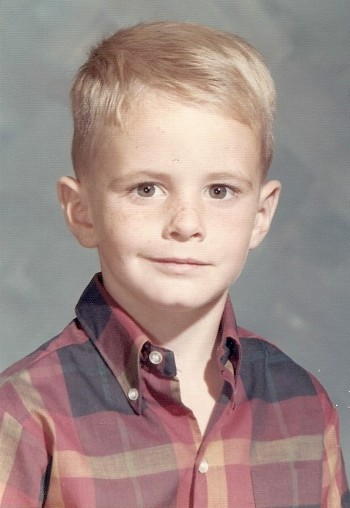 In this original BTB Investigation, we unveil the tragic story of Kirk Murphy, a four-year-old boy who was treated for “cross-gender disturbance” in 1970 by a young grad student by the name of George Rekers. This story is a stark reminder that there are severe and damaging consequences when therapists try to ensure that boys will be boys.
When we first reported on three American anti-gay activists traveling to Kampala for a three-day conference, we had no idea that it would be the first report of a long string of events leading to a proposal to institute the death penalty for LGBT people. But that is exactly what happened. In this report, we review our collection of more than 500 posts to tell the story of one nation’s embrace of hatred toward gay people. This report will be updated continuously as events continue to unfold. Check here for the latest updates.
In 2005, the Southern Poverty Law Center wrote that “[Paul] Cameron’s ‘science’ echoes Nazi Germany.” What the SPLC didn”t know was Cameron doesn’t just “echo” Nazi Germany. He quoted extensively from one of the Final Solution’s architects. This puts his fascination with quarantines, mandatory tattoos, and extermination being a “plausible idea” in a whole new and deeply disturbing light.
On February 10, I attended an all-day “Love Won Out” ex-gay conference in Phoenix, put on by Focus on the Family and Exodus International. In this series of reports, I talk about what I learned there: the people who go to these conferences, the things that they hear, and what this all means for them, their families and for the rest of us.
Prologue: Why I Went To “Love Won Out”
Part 1: What’s Love Got To Do With It?
Part 2: Parents Struggle With “No Exceptions”
Part 3: A Whole New Dialect
Part 4: It Depends On How The Meaning of the Word "Change" Changes
Part 5: A Candid Explanation For "Change"
 At last, the truth can now be told.
Using the same research methods employed by most anti-gay political pressure groups, we examine the statistics and the case studies that dispel many of the myths about heterosexuality. Download your copy today!
And don‘t miss our companion report, How To Write An Anti-Gay Tract In Fifteen Easy Steps.
 Anti-gay activists often charge that gay men and women pose a threat to children. In this report, we explore the supposed connection between homosexuality and child sexual abuse, the conclusions reached by the most knowledgeable professionals in the field, and how anti-gay activists continue to ignore their findings. This has tremendous consequences, not just for gay men and women, but more importantly for the safety of all our children.
Anti-gay activists often cite the “Dutch Study” to claim that gay unions last only about 1½ years and that the these men have an average of eight additional partners per year outside of their steady relationship. In this report, we will take you step by step into the study to see whether the claims are true.
Tony Perkins’ Family Research Council submitted an Amicus Brief to the Maryland Court of Appeals as that court prepared to consider the issue of gay marriage. We examine just one small section of that brief to reveal the junk science and fraudulent claims of the Family “Research” Council.
 The FBI’s annual Hate Crime Statistics aren’t as complete as they ought to be, and their report for 2004 was no exception. In fact, their most recent report has quite a few glaring holes. Holes big enough for Daniel Fetty to fall through.
“Google” is a trademark of Google Inc.
© Box Turtle Bulletin. All Rights Reserved.

 Posts
Posts  Posts via daily email: