Box Turtle Bulletin
 News and commentary about the anti-gay lobby
“Now you must raise your children up in a world where that union of man and box turtle is on the same legal footing as man and wife…”
News and commentary about the anti-gay lobbyNovember 25th, 2013
TODAY IN HISTORY:
15 YEARS AGO: Judge Rules Utah Teacher’s Rights Were Violated: 1998. Wendy Weaver, who taught psychology and physical education at the high school in Spanish Fork, Utah, became embroiled in controversy when her ex-husband, Gary Weaver, told the district in 1997 that she was a lesbian. Rumors quickly began to swirl around Spanish Fork High School, and that summer students began asking her if she was gay. She answered truthfully, and a few of the girls dropped out of the girl’s volleyball team that she was coaching. On July 14, the school district removed her as volleyball coach and banned her mentioning her “lifestyle” or partner to students, parents or staff. If she mentioned a word about her sexuality to anyone, she would be fired. A letter to that effect was placed in her employee record.
When word got out, an overflow crowd showed up to denounce Weaver at a Nebo Board of Education meeting on November 14, 1997, where parents demanding the right to pull their children out of any class she taught. A group of parents formed Nebo Citizens for Moral and Legal Values and presented a petition signed by 2,700 parents demanding her removal. After Weaver filed suit in Federal Court alleging that her First Amendment Rights were being violated, the parents group filed a suit of their own demanding the revocation of Weaver’s teaching certification.
It all came to a head on November 25, 1998 when U.S. District Judge Bruce Jenkins issued a sweeping 25-page ruling finding that Weaver’s constitutional rights of free speech and equal protection were violated. The judge ordered the school district to remove its threat to fire her from their files, restore her to the girl’s volleyball coaching job, and to pay her the $1,5000 stipend that she would have been entitled to as coach. He found the limits on Weaver’s speech to be overly broad. “Indeed,” wrote Judge Jenkins, ” these restrictions limit Ms. Weaver’s ability to speak on her sexuality outside of the school, as, for example, when meeting a parent of a student in the supermarket, or when speaking at dinner with a friend who may be a staff member at the school, or even when speaking with her own children, who are students in the school district.” All of this was a gross violation of Weaver’s constitutional rights. “Simple as it may sound, as a matter of fairness and evenhandedness, homosexuals should not be sanctioned or restricted for (speech) where heterosexuals are not likewise sanctioned or restricted.”
If you know of something that belongs on the Agenda, please send it here. Don’t forget to include the basics: who, what, when, where, and URL (if available).
As always, please consider this your open thread for the day.
November 24th, 2013
TODAY’S AGENDA:
Events This Weekend: Side-By-Side LGBT Film Festival, St. Petersburg, Russia.
TODAY IN HISTORY:
55 YEARS AGO: Berkeley’s KPFA Broadcasts Two-Hour Program on Homosexuality: 1958. On a Monday before Thanksgiving, several people gathered at Pacifica Radio’s studios at KPFA in Berkeley, California, for what appears to have been the first broadcast discussion on homosexuality in the Bay area. The broadcast consisted of two separate panel discussions in two consecutive hours, which represented quite an investment of airtime for the non-profit, noncommercial station.
Participants for first hour of the historic broadcast were Mattachine president Hal Call (see Sep 20); Dr. Blanche Baker, a bay area psychologist and straight ally who wrote a regular column for ONE magazine; and Leah Gailey, a mother whose son was gay. The first hour’s topic was “The Role of the Homosexual as an Individual and as a Member of Society.” Del Martin’s (see May 5) summary of the broadcast for the Daughters of Bilitis’ magazine The Ladder the following January indicates the kinds of the questions that ordinary people had about gay people:
…According to Dr. Blanche Baker, San Francisco psychiatrist, there is much controversy on the subject, “even in the medical profession.” There are those who feel it is a neurotic problem and others who call it glandular, or even a hereditary problem.
“For myself, from many years of work, I consider the homosexual first of all a human being,” she stated. “I believe in individual adjustment of each particular case. Factors leading to homosexuality lie deep in the individual nature. It is a psychological problem in which early childhood has its effect. All people have a certain amount of maleness and femaleness in their constitution, and child experiences tend to throw us to one side of the scale or the other.”
FIRST REACTION OF SHOCK
When questioned by Elsa Knight Thompson, moderator, Mrs. Leah Gailey, housewife and mother, replied, “My first reaction was a universal one — shock. There was ostracism to face for me and my son. It was clearly — shock. But basically I loved my son, so I decided I would try to understand. Fear is based on the unknown, and much fear disappears as one learns to understand.“There is much literature on the layman level for anyone to read,” she pointed out. “It is just a matter of understanding and accepting.”
Mr. Call declared that the problem of homosexuality is very often closer to all of us than many realize — a member of the family, a neighbor, a co-worker, a friend.
“Approximately every tenth adult may be predominantly homosexual in orientation,” he stated. “This covers the entire strata of society, every intellectual and economic Ieve1.”
Mr. Call said that there had not necessarily been an increase in homosexuality in recent years, as some have supposed, but rather a greater awareness of the subject.
HOSTILITY — CAUSE OR EFFECT?
Moderator Thompson posed the problem of “hostility” in the homosexual. Does it stem from the individual because of his fear of being “different”? Or is it a result of society’s attitude?Mr. Call said that the homosexual adopts attitudes as result of the society in which he lives. He may effect certain mannerisms of hostility toward society because of its attitudes and also because of his inability to accept himself.
According to Mrs. Gailey, the homosexual’s hostility is based on fear from society and guilt from self. The homosexual has both problems to face, she said.
Dr. Baker pointed out that in her field she works on self acceptance so that the individual can relax and be more comfortable in the world he lives in.
When asked if her clients wished to rid themselves of their homosexuality or if they sought acceptance, Dr. Baker said, “Most of those who come to me want to get rid of this approach to life. If the heterosexual component potential is large enough to function with, fine. But many cases just don’t have the potential.”
ARE HOMOSEXUALS GIFTED PEOPLE?
Dr. Baker said she had no statistics on the subject, that she herself worked with small numbers of people, “But the ones who come to me are artists — versatile, gifted people, not just bread, meat and potatoes people.”Mr. Call did not consider this a just evaluation. He said that homosexuals are no more gifted or talented than any other group, but that perhaps the homosexual has more opportunity to develop creative and artistic talents since he doesn’t have the economic pressure of providing for a wife and family.
Elsa Knight Thompson suggested that, as in the case of any other minority group, there is more concentration to excel in order to counteract criticism.
“This is true job-wise,” Mrs. Gailey declared. “Because of his fear of detection, the homosexual puts forth an utmost effort to do his best.”
HOMOSEXUAL COUPLES
On consideration of the short duration of most homosexual relationships, Dr. Baker asserted, “The friction between homosexual couples is due to the hate in themselves and an unhappy adjustment to life. The over-emphasis on a sexual level would keep them from adjusting on other levels.”Mr. Call pointed out that there were many lasting homosexual relationships that are not known or recognized, and Dr. Baker admitted, “We are all too conscious of those who do not get along together and don’t know about those who do.”
The second hour was given over to the professionals: Dr. Karl Bowman, a at the University of California School of Medicine in San Francisco; Dr. Frank Beach Jr., anthropologist and professor of psychology at the UC Berkeley; Morris Lowenthal, a San Francisco attorney who worked on a number of gay rights cases on behalf of local bars targeted by the state alcohol control board; and Dr. David Wilson, attorney and psychiatrist of the UC Berkeley’s School of Criminology.
You might say that Bowman, like Baker and Lowenthal (and Beach, as you will see), was something of an ally for the Bay area gay community, having given several talks for local Mattachine and DoB meetings in the bay area. He opened the second hour with brief discussion of the state’s anti-gay laws which “largely traced back to ancient Hebrew laws.” He added, ” it is my contention,” Dr. Bowman added, “it is time to re-examine our laws in the light of present knowledge and recommend modifications.” Del Martin picks of the narrative from there:
Dr. Frank Beach Jr. …recounted the varying degrees of homosexual behavior: the latent individual who has tendencies but who manifests no overt behavior, the individual who has one or two experiences in his life time, those who find satisfaction in both homosexual and heterosexual behavior, and those with exclusive homosexual experience.
Dr. Bowman pointed out that in the armed forces mere diagnosis of latent homosexuality makes an individual unsuitable and subject to an undesirable discharge which interferes seriously with the individual’s ability to secure a position. Some one who has never violated any law and who has never had a homosexual experience thus becomes a victim, he said.
Relative to the problem of who is a homosexual, Morris Lowenthal, San Francisco attorney, spoke of the 1955 law passed by the California state legislature that any bar or restaurant becoming a “resort for sexual perverts” may have its license revoked. The problem of the proprietor is two-fold, he said, since the 1951 California Supreme Court decision in the Stoumen vs. Reilly case upheld the civil right of the homosexual to meet and eat or drink in any public bar or restaurant, while the new law in direct conflict prohibits the use of these premises as a gathering place for homosexuals. Mr. Lowenthal also posed the issue as to how the bartender or owner can determine the homosexual tendencies of his patrons.
The subject then moved to the question of what “causes” homosexuality. Beach and Bowman argued that homosexuality may be hereditary, although Bowman also believed that ” physical condition and psychological conditioning” played a role. It’s interesting that those arguments were as lively then as they are now, with the underlying assumption that if homosexuality was biological in origin, then laws forbidding it were profoundly unjust:
“The crux of the matter,” asserted Dr. David Wilson, attorney and psychiatrist of the University of California School of Criminology at Berkeley, “is the law making something a crime. Society passes a law because it feels threatened, but it doesn’t work and in no way affects the amount of homosexuality. If the law doesn’t work, it should be reappraised and handled in a realistic manner.
“The propensity is there or it could not develop. We can not change basic individual factors. Unless we know why, we can’t pass laws to curb the incidence of homosexuality.”
Mr. Lowenthal advanced the theory that homosexuals have been discouraged in cultures when an increase in population was needed for survival and encouraged when it was necessary to curb the population.
“Naive assumption!” Dr. Wilson interjected. “Homosexuals are not going to be the productive members of society in any case.”
Dr. Beach also rejected the idea, “Human beings don’t behave this rationally.” Prohibitions appear in many societies, he added.
Dr. Bowman considered the population theory a rationalization. “Cultures that allow homosexuality freely have in many cases had a higher increase in population than those who have not.”
“Rejection of the homosexual is purely on an emotional basis and tied up with our general repressive attitude toward all sex behavior,” he added.
VAGUE AND AMBIGUOUS LAWS
In our criminal laws, many of which are not enforced, it was pointed out by Attorney Lowenthal that no reference is made to homosexuals specifically. Vague and ambiguous laws are used and abused against the homosexual resulting in his subjection to blackmail.Dr. Bowman pointed out that the California law reads, “Anyone guilty of the infamous crime against nature…” The use of such wording has led to long controversies, he stated.
Dr. Beach took exception to the “crime against nature.” The capacity for homosexual activity is inherent in nature — in man’s biological constitution — and there is therefore nothing “unnatural” in homosexual activity, he said.
“It would appear then that the law is vague, open to loose interpretation and capable of injustice to the individual where invoked against him, bearing no fruit from the social standpoint,” Elsa Knight Thompson, the moderator, put in.
“Laws to prevent crimes of Violence and violation of children would satisfy my requirements of a fair law,” Dr. Wilson asserted. “Homosexuality is a medical and social problem, not a legal one.”
Mr. Lowenthal declared that a strange situation existed where it has been granted by the California Appellate Court that the homosexual is no menace to society and has no particular propensity toward crime, yet at the level of police and certain legislators he is declared a menace and attempts are made to whittle away the civil rights of the individual.
“The mere existence of a law can be a threat to an individual even though it may not be enforced or can be overturned at a higher court level,” Dr. Wilson said. However, he did not hold out much hope for immediate action. The legislators won’t change the law until they understand more. It will take a great deal of time and education, of which this program is a step.
The KPFA broadcast was an enormous shot in the arm for the gay movement. Tapes of the broadcast were circulated and played at gay conferences and meetings, and the Mattachine Review reprinted the broadcast transcripts in July and August of 1960. The program was rebroadcast a month later on KPFA, and Los Angeles’s KPFB and New York’s WBAI picked it up for 1959. KPFA also published a printed transcript as a booklet.
You can listed to the program’s first hour via the Internet Archive here.
[Sources: Del Martin. “Two-Hour Broadcast on Homophile Problem.” The Ladder 3, no. 4 (January 1959): 7-14.
“The Homosexual In Society.” Mattachine Review 6, no. 7 (July 1960): 12-28.
“The Homosexual In Society (Part II).” Mattachine Review 6, no. 8 (August 1960): 9-25.]

First Gay Bookstore In the U.S. Opens: 1967. Craig Rodwell had been a longtime resident of Greenwich Village, and was among the more controversial figures in during the early, much more timid period of the New York Mattachine Society. In 1964, he formed the Mattachine Young Adults, in an attempt to gain greater visibility for gay people, and he helped to organize the nation’s first gay rights picket at the U.S. Army’s Whitehall Induction Center, in protest over the army’s failure to keep gay men’s draft records confidential (see Sep 19). In 1966, Rodwell joined three other activists to stage a “sip-in” to challenge a New York Liquor Authority regulation against serving customers who were “disorderly,” a term that was invariably used against anyone who was gay (see Apr 21).
But perhaps his most important contribution to the gay community came in 1967, when he opened the doors to the Oscar Wilde Memorial Bookshop at 291 Mercer Street near Washington Park. It has been described as “the first legal business (i.e. not a bar) opened explicitly for gay people.” Despite the severely limited quantity of materials on homosexuality, Rodwell decided to focus his offerings on literature by gay and lesbian authors. Selections were slim at first, reportedly “three copies apiece of the 25 most positive books about homosexual behavior he could find.” He refused to sell pornography, in an attempt to avoid negative publicity. It didn’t work. A New York Post columnist compared it to see-through dresses and topless flicks. That decision also wasn’t particularly popular with his male gay customers. Consequently, money was tight, with Rodwell putting in 70-hour work weeks as the store’s sole employee for its first eighteen months.
Three months after founding Oscar Wilde, he founded a bookshop-based youth group, Homophile Youth Movement in Neighborhoods (HYMN) which published the New York Hymnal, a monthly newsletter that called for ending Mafia ownership of gay bars and police harassment of bar patrons.
 In 1973, Rodwell moved the Oscar Wilde to 15 Christopher St, just a block away from the Stonewall Inn. At some point, Rodwell relented on the pornography ban. Bills had to be paid, but the operation always remained a struggling, hand-to-mouth existence. But for the next four decades, Oscar Wilde became a more than a bookstore; it was also something of a community center for its LGBT patrons.
When Rodwell developed stomach cancer in 1993, he sold the store to one of his managers, Bill Offenbaker, who ran it until 1996, when Larry Lingle took it over. The store was never much of a money maker, and in 2003, Lingle announced that he would have to close the doors. At the last minute, the owner of Washington, D.C.’s Lambda Rising bookstore took it over and saved it from closure. Three years later, manager Kim Brinster took over, but with the down economy and the pressure that all booksellers were experiencing with Amazon.com and box box chain bookstores, the store couldn’t survive, even with its drastically bel0w-market rent. The Oscar Wilde Memorial Bookshop closed for good in on March 29, 2009.
[Additional source: Martha E. Stone. “After Many a Season Dies the Oscar Wilde.” The Gay and Lesbian Review Worldwide 16, no. 4 (July-August 2009): 9.]
If you know of something that belongs on the Agenda, please send it here. Don’t forget to include the basics: who, what, when, where, and URL (if available).
As always, please consider this your open thread for the day.
November 23rd, 2013
TODAY’S AGENDA:
Events This Weekend: Side-By-Side LGBT Film Festival, St. Petersburg, Russia.
TODAY IN HISTORY:
15 YEARS AGO: Georgia Supreme Court Strikes Down State Sodomy Law: 1998. It took twelve years for the Georgia Supreme Court to do what the U.S. Supreme Court refused to do. In 1986, the U.S. Supreme Court upheld Georgia’s sodomy law as constitutional in Bowers v. Hardwick (see Jun 30), a ruling that deeply disappointed the gay community and set back the quest to get rid of the nation’s sodomy laws by nearly two decades. But in 1998, the Georgia Supreme Court struck down that state’s law, the very law that was in question in Bowers, as a violation to the right to privacy under Georgia’s constitution.
Unlike the 1986 case which involved a gay man who was in a consensual sexual relationship with another man, this case involved a heterosexual man who was accused of performing non-consensual oral sex on his niece. The jury acquitted him of the non-consensual portion of the charge due to lack of evidence, but convicted him of sodomy since Georgia, like many states, defined sodomy to include oral sex. But unlike many states, Georgia made it a crime regardless of whether it was heterosexual or homosexual. On appeal, the defense held that the statute was unconstitutional, but the state was confident. After all, the law had already been validated by the U.S. Supreme Court.
But the Georgia Supreme Court saw it differently. “While many believe that acts of sodomy, even those involving consenting adults, are morally reprehensible, this repugnance alone does not create a compelling justification for state regulation of the activity,” the court ruled in its 6-1 decision. Citing a 1905 state ruling, the state Supreme Court found that the defendant had “the right to be let alone,” a right that was more expansive than the right to privacy protected by the U.S. Constitution. “We cannot think of any other activity that reasonable persons would rank as more private and more deserving of protection from governmental interference than consensual, private, adult sexual activity,” Chief Justice Robert Benham wrote in the decision.

TODAY’S BIRTHDAY:
Romain de Tirtoff: 1892-1990. Born Roman Petrovich Tyrtov in St. Petersburg, Russia, and known the world over as Erté (the French pronunciation of his initials), the art deco designer and decorator was the very antithesis of his father, a Russian admiral who insisted that Romain follow in the family tradition and become a naval officer. Romain moved to Paris in 1910, adopted his French pseudonym, and quickly became an illustrator for Harper’s Bazaar, which opened the doors to commissions for theatrical costumes and stage sets. Between 1915 and 1937, Erté’s designs graced more than 200 covers for Harper’s Bazaar, along with other illustrations for Vogue, the Ladies Home Journal, and Cosmopolitan. He also created costumes and fashion designs for the era’s most fashionable celebrities, including Joan Crawford, Lillian Gish, Sarah Bernhardt, Anna Pavlova, and Norma Shearer, and his set designs appeared in a number of Hollywood films. His extravagant designs were also regular fixtures in Radio City Music Hall, the Folies-Bergères, the Paris Opera, George White’s “Scandals” and Irving Berlin’s “Music Box.”

“La rose au pollen de diamantsn” from the 1928 French publication L’Illustration.
Erté’s graceful and elegant designs set the standard for glamor and sophistication for decades to come. His illustrations, designs, jewelry and sculptures became the very definition of the Art Deco movement, and he almost single-handedly revived Art Deco’s popularity in the 1970s and 1980 when he recreated many of his designs for a new generation. Erté was incredibly prolific, and he was never without work. He continued working right up until two weeks before he died, at the age of 97, in 1990. Always energetic, it would appear his death caught him by surprise: he was in the middle of building a new home in Majorca.
If you know of something that belongs on the Agenda, please send it here. Don’t forget to include the basics: who, what, when, where, and URL (if available).
As always, please consider this your open thread for the day.
November 22nd, 2013
 St. Petersburg’s sixth annual Side by Side (Бок о Бок) Film Festival opened yesterday after about a two hour delay due to a bomb hoax. QueerRussia reports:
The grand festival opening scheduled for the evening of November, 21 is disrupted. A call of a bomb threat in the “Warshavsky Express” cinema is delaying the opening ceremony and screening of the first film of the festival. With all guests being evaquated, police began checking up the building.
About 200 guests arrived at the opening. Aggressive opponents of LGBT also gathered near the cinema, but police is holding them back. After checking, the building is still going to host the first screening, Rosbalt reports.
Earlier this day, a regular guest at LGBT events and concurrently the head of the St. Petersburg ” Narodniy Sobor” antigay group Anatoly Artyukh attacked LGBT activist Kirill Kalugin. “I was in a coffee shop at the “Warshavsky Express ” drinking coffee when I was attacked by Artyukh. He snatched a mug from my his hands, trying to pour it over me and to pull the earring out of my ear , grabbed my hands and spitted on me . Now I’m in the 77 police station. Artyukh said I was trying to assult him”, Kirill told Rosbalt.
The film festival began after the police cleared the shopping center. Organizers say they are ” in contact with police chiefs in order to oversee the safety and order at events.” On November 30, Side by Side will feature a special screening of the film Milk, followed by a discussion with director Gus Van Sant, producer Bruce Cohen, and screenwriter Dustin Lance Black.
Just last month, Side by Side won an important court battle when the City Court of St. Petersburg overturned two previous court decisions which found the film festival guilty of failing to register as a “foreign agent.”
November 22nd, 2013

I was just under three years old, so I don’t remember anything about it. I did live in Dallas from 1984 through 1999, and it was very strange. The city is haunted by the assassination to this very day, in ways I don’t even think many longtime Dallasites can see. But one way everyone can see it is when you drove down Elm Street in Dealey Plaza, just about anytime day or night, you will see people standing next to the grassy knoll or on the corner of Elm and Houston, pointing and talking, as though it had just happened moments ago. Fifty years later, that corner is still in some kind of suspended animation.
I do have one other rather bizarre second-hand memory. In 1988, there was a lot of attention being paid to the 25th anniversary of the assassination, and Dallas was still trying to live down its reputation as “the city of hate.” Commemorations and seminars were scheduled all over the city, and there was an ongoing vigorous debate over what to do with the then-vacant Texas Schoolbook Depository. Some wanted to turn it into a museum, others argued heatedly that it should be torn down. The former group won the day.
Another thing: my supervisor in 1988 told me that in 1963, he had just graduated from Lamar University and taken a job as an electrical engineer in May. He said that when someone in his office announced that Kennedy had been shot, a lot of people stood up an cheered. Nice guy though my supervisor was, his politics was only a little to the left of Attila the Hun’s. He didn’t say so, but the way he told the story led me to believe that he had been among those cheering.
What about you? Do you remember?
TODAY’S AGENDA:
Events This Weekend: Side-By-Side LGBT Film Festival, St. Petersburg, Russia.

TODAY IN HISTORY:
German Industrialist Found Dead After Being Outed in the Press: 1902. Friedrich Alfred Krupp had every advantage available to one born to Germay’s most prominent industrialist family. Named for his grandfather who founded the family firm in 1811, and heir to the vast steelmaking, mining, and armaments conglomerate assembled by his father, young Fritz, at the relatively young age of 33, stepped in as head of the Krupp empire when his father died. Under Fritz, the Krupp firm developed nickel steel which would revolutionize battleship armor and cannons, and created a shipbuilding works which would go on to build Germany’s first U-Boat in 1906. Fritz also cultivated a very close working relationship and personal friendship with the Kaiser, Wilhelm II, which proved especially fruitful.
Fritz’s first love though wasn’t business, but oceanography, a hobby he would pursue throughout his life. Because of poor health, he frequently traveled to the Mediterranean where he could indulge his hobby, along with another — young, exotic men. From 1898, he took up a semi-premanent residence on Capri, where he could purue both pleasures, well out of sight of his wife and family. Because the burdens of business required him to spend a considerable amount of time in Berlin, he sent several of his favorites to the Hotel Bristol.
Between his time in Capri and the men he had stashed away in Berlin, stories began to leak out in the Italian press, some of which made their way to the German papers. Krupp’s wife had, by then, been confined to a mental asylum — whether it was due to her distress or to ensure her discression, it’s hard to say. On November 15, the Social Democratic magazine Vorwärts published an article revealing Krupp’s homosexuality, including his fondness for Adolfo Schiano, an 18-year-old barber and amateur musician. Krupp requested an audience with the Kaiser, but on the day they were to meet one week later, Krupp was found dead in his home, apparently of suicide, although the circumstances surrounding his death were never revealed. No autopsy was ever performed, and Krupp’s body was placed in a closed casket. Within days, Krupp’s wife was released from the asylum; her sanity apparently was miraculously restored. In a speech at Krupp’s funeral, the Kaiser denounced the Social Democrats for “lying” about Krupp’s homosexuality. His heirs then launched a libel suit against Vorwärts, but it was quietly dropped a short time later.

Benjamin Britten and Peter Pears
TODAY’S BIRTHDAYS:
100 YEARS AGO: Benjamin Britten. 1913-1976. Fame came early to the English composer with his a cappella choral work, A Boy Was Born when he was just 21, and his 1945 opera Peter Grimes sealed his international reputation. His compositions were both prodigious and varied: working in orchestral, chamber, instrumental, choral and solo vocal. Much of his vocal work was written for tenor Peter Pears, who he met in 1937 and who became his musical inspiration and life partner. In 1939, Britten and Pears went to America, where his friendship with Aaron Copland inspired the development of Britten’s own work, notably his operetta Paul Bunyan.
Britten’s sexuality wasn’t the only thing controversial about him: he was also a pacifist during World War II. On returning to Britain in 1942, he fought a long battle for recongition as a conscientious objector. The resulting publicity led to a drop in commissions and performances in London both during and after the war. It also shaped his work. Many of his operas featured an “outside” character on the fringes of society, many of them at least suggestive of being gay. His 1973 opera, Death in Venice, based on a novel by Thomas Mann, is perhaps the first to feature an openly gay character. By then , Britten found that he was no longer an outsider, but an acclaimed 20th century composer. On July 2, 1976, he was awarded a life peerage as Baron Britten, just a few months before he died. Pears died ten years later, and was buried next to Britten at a churchyard in Aldeburgh.

70 YEARS AGO: Billie Jean King: 1943. Like all tennis greats, she started playing at a young age and won her first Wimbledon doubles title in 1962 at the age if eighteen. That was the first of 20 Wimbledon titles between 1961 and 1979. She also one 13 U.S. titles, four French and two Australian. Throughout her career, she fought for equal prize money for men and women players. When she won the U.S. Open in 1972 but received $15,000 less than the men’s champion, she announced that she would not play the next year if the prize money weren’t made equal. The following year, the U.S. Open became the first major tournament to equalize its prize money for men and women.

Bobby Riggs congratulates Billy Jean King after his defeat.
Her campaign for tennis equality took a particularly public turn in 1973 when Bobby Riggs, a champion mens player from the 1940s, claimed that women’s tennis was so inferior to men’s that even a fifty-five year old like himself could beat the top women’s players. King accepted the challenge, and the Battle of the Sexes was on. Before more than 30,000 spectators at Houston’s Astrodome and a worldwide audience of 50 million people in 27 countries, King beat Rigs 6-4, 6-3, 6-3.
In 1974, King became the first president of the Women’s Tennis Association. In 1983, she retired from singles play, but continued to play doubles sporadically through 1990.
In 1981, King was sued for palimony by a former lover with whom she had had a relationship since 1971. The lawsuit effectively outed King, making her the first prominent professional female athlete to be openly gay. This came about despite her having been married to her husband since 1965. They divorced in 1987. Since then, she has been very involved with the Women’s Sports Foundation and the Elton John AIDS Foundation. In 2012, she was awarded the Presidential Medal of Freedom by President Barrack Obama for her advocacy work for women and the LGBT community.
If you know of something that belongs on the Agenda, please send it here. Don’t forget to include the basics: who, what, when, where, and URL (if available).
As always, please consider this your open thread for the day.
November 21st, 2013

While most protest to the marriage bill was celebrating an exorcism, the Chicago Police cordoned off a space in front of the UIC Forum – where the signing ceremony was being held – for protest, should anyone wish to do so. And look who showed up, our old buddy Peter LaBarbera, the head of Americans For Truth About Homosexuality.
Poor, poor Peter. He looks a bit lonely.
(photo shamelessly stolen from Joe.My.God)
November 21st, 2013

While the marriage bill was being signed, those who oppose equality as being contrary to the procreative purpose of marriage met in Springfield at the Cathedral of the Immaculate Conception to join celibate Bishop Thomas Paprocki for a rather unusual response: an exorcism.
Speaking in a language that has for 1,000 years been spoken only by those who vow not to marry, Paprocki commanded that “every unclean sprit, every power of darkness, every incursion of the infernal enemy, every diabolical legion, cohort and faction” be gone.
But evidence suggests that the command may not have been effective as he himself did not immediately disappear in a puff of purple smoke
November 21st, 2013
 Yesterday Illinois Governor Pat Quinn took pens in hand and signed the state’s marriage equality bill into law. (Trib)
Playing master of ceremonies during an hourlong event, the re-election-seeking Democratic governor slowly signed the bill with 100 pens that quickly became souvenirs. He did so at a desk shipped from Springfield that the administration said President Abraham Lincoln used to write his first inaugural address in 1861 — a speech on the cusp of the Civil War that called on Americans to heed “the better angels of our nature.”
But it was another Lincoln speech that Quinn referenced as he spoke to about 2,300 supporters gathered at the University of Illinois at Chicago.
“In the very beginning of the Gettysburg Address, President Abraham Lincoln of Illinois said that our nation was conceived in liberty. And he said it’s dedicated to the proposition that all men are created equal, and that’s really what we’re celebrating today,” he said. “It’s a triumph of democracy.”
The ceremony also featured Greg Harris, primary sponsor of the bill, and others including Judy Baar Topinka, the only state-wide elected Republican in Illinois.
Quinn’s signature brings the total number of states with legalized same-sex marriage to 16 (plus the District of Columbia) and the total number of people living in an equality state to 115 million, or 38% of the US population.
In addition, three states (Oregon, Nevada, and Colorado) offer Domestic Partnerships with all of the state rights and obligations, but none of the Federal.
The law is slated to go into effect on June 1, 2014. However, Sen. Don Harmon (D – Oak Park) is considering a bill which would make the law effective immediately.
November 21st, 2013
TODAY’S AGENDA:
Events This Weekend: Side-By-Side LGBT Film Festival, St. Petersburg, Russia.
TODAY IN HISTORY:
60 YEARS AGO: Miami Beach Police Raid Beach, Arrest 21: 1953. The Miami News, the city’s afternoon daily, published an oddly influential column titled “Whirligig.” It was a rather tiny feature — typically occupying just a couple of inches of space on the paper’s editorial page. But it’s minuscule physical presence belied its political influence, as the nameless author passed along political gossip and other goings on about town. A good indication of the column’s influence can be illustrated by this small item that appeared on November 19:
Femmics — The new administration in the Miami Beach police department might send an observer over to the 22nd Street public beach to watch the antics of a coterie of youths who make that beach a gathering spot. The girlish attitudes of the boys cause many a gaping mouth among tourists.
Those two small sentences were enough for Miami Beach Police Chief Romeo J. Shepard to swing into action. The next day, the Chief himself personally led a raid on the beach, rounded up twenty-one men and hauled them to the police station for questioning. But while the News’ Whirligig column appears to have prompted the action, it was the paper’s morning rival, The Miami Herald, which capitalized on the raid by plastering its coverage on the front page:
Angered by complaints that the beach at 22nd st. was becoming a “hangout for males with a feminine bent,” Miami Beach Police Chief Romeo J. Shepard made a personal inspect Friday — and then called for the wagon. As a result, 21 perverts were taken to Beach police headquarters and questioned before being released. But Chief Shepard said the raid served notice on “this questionable type of individual” that they’re not wanted on Miami Beach.”
The chief said that he has been “getting lots of complaints” that men with girlish-looking hair-dos and flimsy, Bikini-type tights “have been prancing around the 22nd st. public beach in droves.” The area, he explained, has been acquiring a reputation as a congregating place for males who try to look and act like women.
The chief said that the 21 who were arrested were taken to headquarters and questioned about their employment, but he complained that he had to let them go. “We had no charges we could book them on,” he admitted. “It’s just a question of cleaning up a bad situation and letting undesirables know they’re not wanted here.” Meanwhile, that afternoon’s Miami News, reported that the cleanup would continue. “We’re going to continue to keep a close watch on their actions and I have instructed my men to pick them up every time they get out of line,” they quoted Shepard as saying. The News also made sure their readers knew why the chief acted so swiftly. “The Whirligig item was very timely and it was the basis for the action taken by my department,” the chief acknowledged.
[Sources: “Miami’s Whirligig: News Behind the News.” The Miami News (November 19, 1953): 19-A. Available online via Google News here.
“Police Corral 21 Undesirables.” The Miami News (November 21, 1954): 8-A. Available online via Google News here.
Stephen J. Flynn. “Rounded Up for Quiz: Turn-About Not Fair Play, Say Beach Police.” The Miami Herald. (November 21, 1954): 1-A. As reproduced in Edward Alwood’s Straight News: Gays, Lesbians and the News Media

Michael Sandy
5 YEARS AGO: Michael Sandy’s Killers Sentenced. 2008. On October, 5, 2006, Michael Sandy, 29, was lured to a secluded beach in the New York area by three others who he met in an online chat room. When he arrived, he was pulled from his car and beaten. In trying to escape, he was chased onto a busy freeway where he was struck by an SUV. One of his attackers pulled him to the side of the road and went through his pockets before fleeing. Sandy was taken to the hospital, where he remained on life support for five days without regaining consciousness. His family removed him from life support one day before his 29th birthday.
The four men who were accused of planning the attack were arrested on hate crime charges. The police investigation showed that Sandy had been selected to be robbed because he was gay, believing a gay man would hesitate to resist the attack or report it to the police.
Michael’s death brought to the fore an ongoing debate over the intersection of race and sexuality in regards to community reactions to hate crimes. Los Angeles commentator Jasmyne Cannick noted:
Michael Sandy could have been anyone of us, and yet he was us. He was black. He was a black male and he was a black gay male. If Michael Sandy would have been heterosexual, would that have brought out the Reverend Jesse Jacksons and the Reverend Al Sharptons a black America? Would that have made it okay for the NAACP to get involved and for other black civil right groups to take notice? I’m beginning to think so.
…When Matthew Shepard was murdered, the world stopped. Why? Because whites across this country made that white gay boy’s death an issue for the media, politicians and community groups. Do we care enough to do the same? So again I ask, where’s the outrage?
Gary Timmins, 17, pleaded guilty to attempted robbery with a hate crime enhancement. As part of his plea agreement, he testified against his friends in exchange for a four-year prison sentence. John Fox, 20, who posed as a gay man in the internet chat room, was charged with manslaughter and attempted robbery as hate crimes and was sentenced to between 13 and 21 years in prison. Anthony Fortunato, 21, tried to avoid the hate crime enhancement by claiming he was gay himself. He was convicted of manslaughter as a hate crime and was sentenced to 7 to 21 years. Ilya Shurov, 21, pleaded guilty to manslaughter and attempted robbery as hate crimes and was sentenced to 17½ years. Before sentencing, Michael’s father, Zeke Sandy rose to address the court. “These hate crimes become a cancer; it’s a disease,” he said. “I don’t know why we have to go butcher one another because we don’t like what they are, who they are.”
If you know of something that belongs on the Agenda, please send it here. Don’t forget to include the basics: who, what, when, where, and URL (if available).
As always, please consider this your open thread for the day.
November 20th, 2013

And this time I think they’ll be Nike. (Portland Business Journal)
Nike Inc. has formed a PAC to support marriage equality and seeded it with $280,000 from the company and its executives.
“We are committed to diversity and inclusion and strive to treat our employees equally,” the company said in a statement. “We believe that diversity drives innovation and allows us to attract and retain world class talent. For Oregon businesses to attract and retain the best talent, we need fair and equitable laws that treat all Oregonians equally and prevent discrimination.”
This additional boost of funds shows the seriousness with which Oregon business, activist, and faith alliance have towards overturning Oregon’s constitutional ban on same-sex marriage. Currently Oregon United for Marriage has collected 115,080 signatures of the 116,284 needed to get on the 2014 ballot (though they will need to collect a healthy margin to allow for some invalidations).
Last week the Oregon Episcopal Diocese voted overwhelmingly in favor of marriage equality, joining many ministers and churches from UCC, Methodist, Lutheran, Presbyterian, Jewish and other faith groups.
November 20th, 2013
 TODAY’S AGENDA:
Transgender Day of Remembrance: Everywhere. Today is the day set aside to remember those who have been murdered as a result of transphobia and to bring attention to the brutal violence endured by the transgender community. TDoR began in reaction to the brutal murder of Rita Hester, who was killed on November 28, 1998. Her murder resulted in the creation of the Remembering Our Dead web site and a candlelight vigil in 1999. Observances for the Transgender Day of Remembrance typically consist of the reading of the names of those who have died because of their gender identity, expression, presentation or perception of gender variance. Observances are being held in cities all around the world. Click here to find an observance near you.
 Gov. Quinn To Sign Marriage Equality Bill: Chicago, IL. Some 3,00o people are expected to fill the University of Illinois at Chicago Forum to witness Illinois Gov. Pat Quinn as he signs the same-sex marriage bill into law. Gov. Quinn is so excited about signing the bill that his office has created a special web page to encourage people to turn out for “this momentous celebration.” Of course, not everyone will be celebrating. The Roman Catholic Bishop of Springfield Thomas Paprocki will take the opportunity to offer prayers of “exorcism in reparation for the sin of same-sex marriage.” Last week, Paprocki called same-sex marriage something that “comes from the devil and should be condemned as such.” But according to the Chicago Tribune, “In fact, some Catholics believe the ritual Wednesday could cast off more Catholics than demons. On Tuesday, 14,000 petitioners called on the bishop to cancel the event.” The Sun-Times responded, “Human nature compels us to crane our necks at the car wreck in Springfield. But please, the real action will be in Chicago.”
Gov. Quinn will reportedly respond with some dramatic symbolism of his own. The Sun-Times’ Michael Sneed says that Quinn will sign the marriage equality bill on the very same desk Abraham Lincoln used to pen his first inaugural address — the one in which he called on all Americans to heed “the better angels of our nature.” The ceremony takes place this afternoon at 3:30 p.m. CST. When the law takes effect next June, the Land of Lincoln will become the sixteenth state in the nation, in addition to the District of Columbia and eight Indian tribes, to provide marriage equality for same-sex couples.
Other Events This Weekend: Side-By-Side LGBT Film Festival, St. Petersburg, Russia.
TODAY IN HISTORY:
California Supreme Court Restores Teacher’s Credentials: 1969. In the spring of 1963, Marc S. Morrison, a teacher in Whittier, California, became friends with a fellow teacher, Fred Schneringer, who was in the process of getting a divorce and was experiencing serious financial troubles. Morrison did what he could to help his friend out by providing advice and support. One night, that support extended to what court documents described as “a limited, non-criminal physical relationship which Morrison described as being of a homosexual nature.” It lasted a week, and while the two remained friends, nothing further happened. There was no arrest and no conviction, just whatever that “non-criminal” activity happened to be — the California Supreme Court ruling would only say “It would serve no useful purpose to describe or detail them except to note that they did not fall within the statutory offenses of sodomy or oral copulation.” But for whatever reason, Schneringer reported the incident to the Lowell Joint School District a year later, and that led to Morrison’s resignation in May of 1964.
Nineteen months later, Morrison found himself at State Board of Education hearing fighting to retain his two lifetime teaching diplomas, where he told the board that, aside from a homosexual problem at the age of 13, his contact with Scheringer was the only time he “experienced the slightest homosexual urge or inclination for more than a dozen years.” An investigator backed him up, and assured the board that this was “was the only time that [Morrison] ever engaged in a homosexual act with anyone.” Furthermore, there was no arrest and no evidence that Morrison had engaged in any other misconduct while teaching.
Nevertheless, the Board decided that the lone, solitary incident constituted immoral and unprofessional conduct involving “moral turpitude,” and stripped Morrison of his lifetime teaching diplomas. Morrison went to court, but the Los Angeles Superior Court upheld the Board’s decision, saying Morrison “was unfit for service as a teacher in the California public school system.” Morrison then appealed to the California State Supreme Court, which ruled 4-3 that an individual cannot be denied his teaching credentials unless evidence shows that homosexual behavior affected his fitness as an instructor. The Court criticized the Board for failing to uncover any such evidence:
The board called no medical, psychological, or psychiatric experts to testify as to whether a man who had had a single, isolated, and limited homosexual contact would be likely to repeat such conduct in the future. The board offered no evidence that a man of petitioner’s background was any more likely than the average adult male to engage in any untoward conduct with a student. The board produced no testimony from school officials or others to indicate whether a man such as petitioner might publicly advocate improper conduct. The board did not attempt to invoke the provisions of the Government Code authorizing official notice of matters within the special competence of the board. This lack of evidence is particularly significant because the board failed to show that petitioner’s conduct in any manner affected his performance as a teacher.
The ruling was a narrow one, both in the vote and in the ruling’s reach:
Our conclusion affords no guarantee that petitoner’s life diplomas cannot be revoked. If the Board of Education believes that petitioner is unfit to teach, it can reopen its inquiry into the circumstances surrounding and the implications of the 1963 incident with Mr. Schneringer. The board also has at its disposal ample means to discipline petitioner for future misconduct.
Finally, we do not, of course, hold that homosexuals must be permitted to teach in the public schools of California. As we have explained, the relevant statutes, as well as the applicable principles of constitutional law, require only that the board properly find, pursuant to the precepts set forth in this opinion, that an individual is not fit to teach. Whenever disciplinary action rests upon such grounds and has been confirmed by the judgment of a superior court following an independent review of the evidence, fn. 51 this court will uphold the result.

John Geddes Lawrence and Tyron Garner
15 YEARS AGO: John Geddes Lawrence and Tyron Garner Fined $200: 1998. One of the biggest steps toward gay equality, the end of America’s sodomy laws, began on November 17, 1998 when a 911 operator received a call about “a black male going crazy with a gun” at John Geddes Lawrence’s home in the Houston suburbs. Harris County sheriff’s deputies responded to the call and entered Lawrence’s unlocked apartment. There, they purportedly found Lawrence and Tyron Garner engaging in consensual sex. What they actually found is a matter of debate. Lawrence and Garner weren’t lovers — in fact, that false report had been phoned in by Garner’s actual lover, Robert Eubanks, who suspected Garner and Lawrence were having an affair. One deputy wrote in his report that he saw Garner on the bed “on all fours” on the receiving end of anal sex with Lawrence, and that both were completely naked. Another said that he saw them on the floor, and that Garner wasn’t naked. He wasn’t sure whether he saw them having anal sex or oral sex — two completely different acts which would be very difficult to confuse. “The black guy was giving him head or they was [sic] doing each other from behind. I don’t remember.”
Lawrence and Garner were arrested, held in jail overnight, and charged with violating Section 21.06 of the Texas Penal Code, otherwise known as the Texas “Homosexual Conduct” law, which prohibited engaging “in deviant sexual intercourse with another individual of the same sex.” They both denied having sex that night, but their lawyers, sensing that the case might have the makings of a landmark case, advised them to plead no contest, neither admitting guilt nor protesting innocence. Because they didn’t actually have sex, the lawyers didn’t want to make the case about their innocence. After all, it’s hard to argue that two consenting adults of the same sex have the right to have sexual relations in the privacy of their home when the two adults in question hadn’t actually had sex. And so on November 20, 1998, Lawrence and Garner were convicted of the Class C misdemeanor by a Justice of the Peace in Houston, and were fined $200 each.
And with that, landmark case of Lawrence v. Texas began to make its way through the court system: to the Texas Criminal Court (which rejected the defense’s request to dismiss the charges), a three-judge panel of the Texas 14th Court of Appeals (which ruled the law unconstitutional), and the full nine-judge panel of the 14th Court of Appeals (which reversed the three-judge panel). The appeal then reached the Texas Court of Criminal Appeals, which serves as Texas’s Supreme Court for criminal cases. That court refused to hear the case, which left the lower court’s decision standing. Lawrence vs. Texas was then appealed to the U.S. Supreme Court, which agreed to hear the case. On June 26, 2003, the U.S. Supreme Court, in a 6-3 ruling, struck down the Texas anti-sodomy law, along with similar laws in twelve other states. But it wasn’t until 2011, when Dale Carpenter published Flagrant Conduct: The Story of Lawrence v. Texas, did we learn the ironic fact that the case about two men having sex was almost certainly based on a case in which neither man had ever had sex with the other, before that fateful night or since.
If you know of something that belongs on the Agenda, please send it here. Don’t forget to include the basics: who, what, when, where, and URL (if available).
As always, please consider this your open thread for the day.
November 20th, 2013
 Having been found guilty yesterday of breaking the Methodist Book of Discipline by officiating at his son’s wedding, United Methodist minister Frank Schaefer went back before the jury today to be sentenced. But today Schaefer was defiant and dared them to do their worst. (NY Daily News)
“I have to minister to those who hurt and that’s what I’m doing,” said Schaefer.
The prosecutor, the Rev. Christopher Fisher, invited Schaefer to “repent of your actions” and pledge never again to perform a homosexual union.
“I cannot,” Schaefer replied.
His refusal to submit to the church law infuriated his accusers.
Jon Boger, who filed the initial complaint against Schaefer, was outraged by the pastor’s recalcitrance. The career Naval officer grew up in Zion United Methodist Church of Iona, the church that Schaefer has led for 11 years.
“Frank Schaefer sat here and openly rebuked the United Methodist Church, its policies, standards and doctrines,” Bolger said when called as a rebuttal witness. “He should no longer be in service as a minister of the United Methodist Church, not at Iona, not anywhere else.”
But Schaefer did not back down. He chided the church about hate speech and insisted that it needs to stop treating gays as “second class Christians”. In closing, he put on a rainbow colored stole, a symbol within the church of gay supporters, and said,
I cannot go back to being a silent supporter. I must continue to be in ministry with all people and speak for LGBTQ people. Members of the jury, before you decide my penalty, you need to know I wear his rainbow stole as a visible sign that this is who I am called to be.
After deliberation, the jury sentenced him to a 30 day suspension, a very lenient sentence considering the subject and Schaefer’s refusal to repent and his pledge to take this fight as his mission.
They warned him, however, not to break any rules within 30 days or he’d lose his credentials. This story may be far from over.
November 19th, 2013
 Yesterday the United Methodist Church put Rev. Frank Schaefer on trial. (WaPo)
By the end of the day, the rare jury of 13 Methodist pastors had found Schaefer guilty on two charges: “conducting a ceremony that celebrates same-sex unions” and “disobedience to order and discipline of the Methodist Church.” On Tuesday morning, the jury reconvened to devise Schaefer’s penalty for agreeing in 2006 to marry his son Tim, who earlier had contemplated suicide over his homosexuality.
Schaefer’s punishment will be decided today and could range from a reprimand to expulsion. And the prosecutor is seeking as severe a punishment as possible. (Sun Times)
The Rev. Christopher Fisher, who is serving as the church’s prosecutor, urged the jury in his opening statement to consider whether Schaefer will “repent of and renounce his disobedience to the (Methodist Book of) Discipline,” and promise to obey the denomination’s book of law and doctrine in the future.
…
Fisher told jurors that Schaefer’s disobedience couldn’t go unpunished.“Ministers are not free to reinterpret (their) vows according to personal preference,” said Fisher, whose closing argument condemning homosexuality prompted Schaefer’s supporters to stand in silent protest in the gymnasium that served as a temporary courtroom.
“As a father, I understand the desire to show love and support to my children,” Fisher said. “It’s not always true we can do for our children everything they want us to do. True love draws boundaries.”
This line of attack does call into question the extent to which the denomination is sincere in it’s welcome and pledge of ministry to gay persons. If the crime was breaking a rule, that is one thing; but if the punishment is based on opposition to homosexuality, that is quite another.
And, finally, we now have learned the motivation behind the accuser. The mother of Jon Bolger, the man who filed the claim, was recently removed from her position as choir director.
November 19th, 2013

The Ramrod, about 1978.
TODAY IN HISTORY:
Gay Bar Shooting Spree Kills 2, Injures 6: 1980. Ronald Crumpley, 38, a former Transit Authority policeman and son of a minister, had been seen cruising the streets of New York’s Greenwich Village in his father’s stolen blue Cadillac. Dressed in a dark wool topcoat, printed shirt, a vest and a black fedora sporting a red feather, he fired three shots from an automatic handgun at Sim’s Deli shortly before 11:00 p.m., wounding at least three people and shattering the front plate glass window. Minutes later, he drove to Christopher Street and stopped in front of two gay bars, Ramrod and Sneakers, which were next door to each other. Dann Hedges, 30, was in Sneakers and watched as the horror unfolded. “The man in the Cadillac waited about two or three minutes, drove around the block, returned, stepped out of the car calmly, walked up to the curb and and shot a man standing on the curb waiting for a cab. The man fell to the ground, then he shot another guy who ran around the corner. He started spraying both bars through the plate-glass windows. Then he got back into the car and drove off.” Hedges scribbled the car’s license plate number on a dollar bill and gave it to police.
John Ganrecki, 27, was one of six who were injured. “I heard a noise up front. … It sounded like a string if firecrackers. People were falling on the floor screaming and yelling. My friend, Fred, said ‘Hit the floor! Hit the floor!’ … I was already on the flor, looking at my hand, and it was bleeding. It was like something in Al Capone; there was a row of bullet holes across the glass behind the bar.” Ronald Greenberg, 52, also survived the shooting. “It was a massacre, a bloodbath.”
After Crumpley drove off, he stopped again at 10th and Greenwich and fired eight more shots at another group of men. This time he missed, and as police cars approach he sped away. As many as 15 police cars chased Crumpley to Broadway and West 10th Street, where Crumpley abandoned the car. Officers found him trying to pull himself up underneath a van’s undercarriage.
All told, two were killed. Vernon Koenig, an organist at Greenwich Village’s St. Joseph’s church, died on the operating table at St. Vincent’s Hospital. Jorg Wenz, Ramrod’s 21-year-old doorman, died soon after surgery. Rene Malute, 23, was in intensive care, and five others were admitted in stable condition.
Crumpley was charged with murder, attempted murder, and possession of illegal weapons. Police found four weapons: a .357 Magnu, a .45 caliber automatic pistol, a 9mm automatic pistol, and an Uzi. Crumpley told police that he attacked the bars and the deli bcause he hated homosexuals. “I want to kill them all,” he said. “They’re no good. They ruin everything.” Lt. John Yuknes said, “He had a dislike for homosexuals, a rather intense one I would say, under the circumstances.”

The Ramrod’s doors during the candlelight vigil.
The next day, about a thousand people joined a solemn candlelight procession to mourn those killed in the shooting. Arthur Bennett, one of those marching, told reporters, “Everybody’s been almost waiting for something like this. It’s not because we wanted it to happen but because we feared it. There have been a lot of people down here getting beat up.”
During Crumpley’s trail, the prosecution presented 35 witnesses, and the defense five. At issue was Crumpley’s mental state at the time of the shooting. Prosecutors contended the shootings were “deliberate and conscious.” Crumpley’s psychiatrist testified that Creumpley suffered from paranoia. Crumpley himself took the stand and said gay people were “agents of the devil” who were following him continuously for three years and were trying to convert him. The jury found him not guilty by reason of insanity. He was committed to Kirby Forensic Psychiatric Center on Wards Island. In 2001, a judge turned down Crumpleys’s request to be moved to a less restrictive psychiatric facility.
American Council of Christian Churches Calls AIDS “God’s Wrath”: 1989. Peter Steinfels wrote in the New York Times about a gathering earlier in November of the U.S. Catholic Bishops in Baltimore. Theyhad met to hammer out a document responding to the AIDS crisis. The bishops overwhelmingly decided to reject the theological proposition that AIDS was in any way a punishment from God, a position held by one in four Americans, according to a recent poll.
J. Gordon Melton, director of the Institute for the Study of American Religion in Santa Barbara, had published 68 statements on AIDS from 45 different religious groups in the United States, Canada and Great Britain, and found “a remarkable consensus” across liberal and conservative religious groups recognizing that AIDS was not just a gay problem, “that special ministries should be established to serve AIDS victims, their families and friends, and that the civil rights of homosexuals or of those with the AIDS virus should be protected.” But, The Times learned, that consensus wasn’t unanimous:
The Bible repeatedly describes God as employing all kinds of terrors, natural and human, to punish those who disobey his commands. These biblical accounts naturally governed the reaction of the American Council of Christian Churches, a fundamentalist group that recently expressed dismay at the consensus discovered by Mr. Melton. The council, which claims to represent about two million ”Bible Christians,” promptly went on record upholding the idea that AIDS is God’s wrath visited on homosexuals and drug addicts, although for their ultimate benefit if they turn to Jesus.
If you know of something that belongs on the Agenda, please send it here. Don’t forget to include the basics: who, what, when, where, and URL (if available).
As always, please consider this your open thread for the day.
November 18th, 2013

Gay Puerto Rican boxer Orlando “El Fenómeno” Cruz on Nov. 16 married his boyfriend, José Manuel Colón, in New York’s Central Park.
Featured Reports
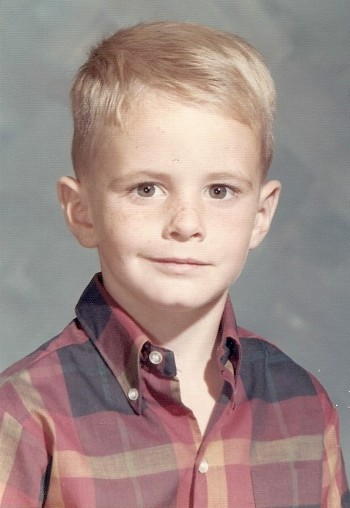 In this original BTB Investigation, we unveil the tragic story of Kirk Murphy, a four-year-old boy who was treated for “cross-gender disturbance” in 1970 by a young grad student by the name of George Rekers. This story is a stark reminder that there are severe and damaging consequences when therapists try to ensure that boys will be boys.
When we first reported on three American anti-gay activists traveling to Kampala for a three-day conference, we had no idea that it would be the first report of a long string of events leading to a proposal to institute the death penalty for LGBT people. But that is exactly what happened. In this report, we review our collection of more than 500 posts to tell the story of one nation’s embrace of hatred toward gay people. This report will be updated continuously as events continue to unfold. Check here for the latest updates.
In 2005, the Southern Poverty Law Center wrote that “[Paul] Cameron’s ‘science’ echoes Nazi Germany.” What the SPLC didn”t know was Cameron doesn’t just “echo” Nazi Germany. He quoted extensively from one of the Final Solution’s architects. This puts his fascination with quarantines, mandatory tattoos, and extermination being a “plausible idea” in a whole new and deeply disturbing light.
On February 10, I attended an all-day “Love Won Out” ex-gay conference in Phoenix, put on by Focus on the Family and Exodus International. In this series of reports, I talk about what I learned there: the people who go to these conferences, the things that they hear, and what this all means for them, their families and for the rest of us.
Prologue: Why I Went To “Love Won Out”
Part 1: What’s Love Got To Do With It?
Part 2: Parents Struggle With “No Exceptions”
Part 3: A Whole New Dialect
Part 4: It Depends On How The Meaning of the Word "Change" Changes
Part 5: A Candid Explanation For "Change"
 At last, the truth can now be told.
Using the same research methods employed by most anti-gay political pressure groups, we examine the statistics and the case studies that dispel many of the myths about heterosexuality. Download your copy today!
And don‘t miss our companion report, How To Write An Anti-Gay Tract In Fifteen Easy Steps.
 Anti-gay activists often charge that gay men and women pose a threat to children. In this report, we explore the supposed connection between homosexuality and child sexual abuse, the conclusions reached by the most knowledgeable professionals in the field, and how anti-gay activists continue to ignore their findings. This has tremendous consequences, not just for gay men and women, but more importantly for the safety of all our children.
Anti-gay activists often cite the “Dutch Study” to claim that gay unions last only about 1½ years and that the these men have an average of eight additional partners per year outside of their steady relationship. In this report, we will take you step by step into the study to see whether the claims are true.
Tony Perkins’ Family Research Council submitted an Amicus Brief to the Maryland Court of Appeals as that court prepared to consider the issue of gay marriage. We examine just one small section of that brief to reveal the junk science and fraudulent claims of the Family “Research” Council.
 The FBI’s annual Hate Crime Statistics aren’t as complete as they ought to be, and their report for 2004 was no exception. In fact, their most recent report has quite a few glaring holes. Holes big enough for Daniel Fetty to fall through.
“Google” is a trademark of Google Inc.
© Box Turtle Bulletin. All Rights Reserved.

 Posts
Posts  Posts via daily email: