Box Turtle Bulletin
 News and commentary about the anti-gay lobby
“Now you must raise your children up in a world where that union of man and box turtle is on the same legal footing as man and wife…”
News and commentary about the anti-gay lobbyAugust 9th, 2013

From AP
Karen Black, who appeared in more than 100 movies and was featured in such counterculture favorites as “Easy Rider,” “Five Easy Pieces” and “Nashville,” has died.
Black’s husband, Stephen Eckelberry, says the actress died Thursday from complications from cancer. She was 74.
Regardless of one’s taste in films, there’s a good chance you’ve seen Black in something. And though she won a couple Golden Globes and was nominated for an Academy Award for Five Easy Pieces, she’s mostly remembered for supporting or ensemble roles. (Well, that and starring in low budget flicks).
My favorite performance was the role of Joanne in 1982’s Come Back to the Five and Dime, Jimmy Dean, Jimmy Dean.
August 9th, 2013
TODAY’S AGENDA:
Pride Celebrations This Weekend: Antwerp, Belgium; Eugene/Springfield OR; Fargo/Moorhead ND/MN; Glasgow, UK; Hampton Roads, VA; Indianapolis IN (Black Pride); Mannheim, Germany; Moscow, ID; Reykjavick, Iceland; Rochester, NY (Black Pride); Santa Ana, CA; Swindon, UK; Wakefield, UK; Windsor, ON.
AIDS Walk This Weekend: Denver, CO.
Other Events This Weekend: World Outgames, Antwerp, Belgium; Rainbow Days At Six Flags Over Georgia, Atlanta, GA; Northalsted Market Days Street Fair, Chicago, IL; Rendezvous LGBT Campout, Medicine Bow National Forest, Wyoming; Toronto Leather Pride, Toronto, ON.
TODAY IN HISTORY:
Provincetown Moves To Get Rid Of Gays: 1952. The following brief AP article appeared in papers nationwide:
Mass. Tourist Resort Acts to Halt Sex Perversion
Provincetown, Mass. — Selectmen of this Cape Cod mecca for summer tourists asked townspeople to support them in an attempt to rid the town of “a large homosexual element.”The Selectmen’s action came after receipt of a letter from a summer visitor who said her two sons have become victims of a group whose meeting places, she said, are on the sand dunes in the daytime and at bars at night. She said she was leaving after 10 summers’ residence here.
There’s no mention of how the visitor’s sons became “victims” (or what they were doing in the bars at night). But at least now you know why there are no homosexuals in Provincetown anymore.
50 YEARS AGO: Frank Kameny Becomes First Openly Gay Man To Speak Before A Congressional Committee: 1963. In yesterday’s episode, Rep. John Dowdy (D-TX) had introduced legislation that singled out the Mattachine Society of Washington, D.C. to strip it of its financial solicitation permit which had been granted by city officials the year before under the Charitable Solicitations Act. Mattachine had qualified for the permit as an educational organization advocate for the end of laws against homosexuality and to advocate for laws to protect gay people from discrimination. The House Subcommittee for the District of Columbia had convened to hear testimony for Dowdy’s proposed legislation, but adjourned due to a quorum call on the House floor just as Mattachine president Frank Kameny was about to speak.
When the subcommittee resumed, Dowdy declared that opposition to the bill that had been expressed the day before left him “shocked and speechless.” He then was joined by other committee members in demanding that Kameny turn over the Mattachine’s list of members, which Kameny refused to do. Dowdy then charged that the Mattachine Society, like the Communist Party, was a secret organization “dedicated to changing laws that were designed for the public good.” Kameny responded the Mattachine Society’s goal was, in fact, to legalize private acts between consenting adults. He also protested that the issue before the subcommittee was not the morality of homosexuality, but the right of the Society to advocate for gay people through “the legal exercise of its freedom of expression.” Dowdy exploded: “What kind of expression are you talking about? Are you taking about sexual expression?” He later added, “Down in my country if you call a man a queer or a fairy, the least you can expect is a black eye.” Kameny replied that even Texas had gay people. Dowdy retorted, “Maybe, but I never heard anyone brag about it.”
Kameny was joined by Monroe Freedman, a lawyer with the Washington, D.C. chapter of the American Civil Liberties Union. The ACLU’s national policy, adopted six years earlier, placed the organization on record as supporting the constitutionality of sodomy laws, a position that it would maintain until 1967. Freedman emphasized that he didn’t necessarily support the Mattachine Society’s goals. “The issue,” he told the committee, “is not whether we agree with the aims of the Mattachine Society, but whether we are going to interfere with their right of free speech. The National Capital Area Civil Liberties Union is not concerned with the success of failure of the Society in presenting its views. It is concerned solely with its freedom of expression.” The committee then pressed Freedman for details of his own personal life and whether he was acting as the group’s lawyer. Seven times during the hearing he denied being a member or acting on behalf of the Society. Dowdy then asked Freedman whether his superiors at George Washington University knew he was defending the Society’s rights before the committee. “No,” Freedman replied after a long pause, “but I’m sure they will be before very much longer.”
Dowdy’s bill passed the House but died in the Senate. Kameny never turned over the Society’s membership list to Congress or anyone else, but he did relish the free publicity the hearings gave to his group, thanks to two days of coverage in Washington newspapers and a favorable editorial in the Washington Post. As for Dowdy, he retired from Congress in 1973 following convictions on conspiracy, bribery and perjury charges.

Eileen Gray, with the Bibendum chair and the E1027 table.
TODAY’S BIRTHDAYS:
135 YEARS AGO: Eileen Gray: 1878. She was born the youngest of five children to an aristocratic family near Enniscorthy in southeastern Ireland. Her father was a painter who encouraged his children’s artistry and independence. Eileen studied painting at the Slade School of Fine Art, and in 1900 she went to the Exposition Universelle in Paris, where she became enthralled with the works of Charles Rennie Mackintosh. She then moved to Paris to continue her studies and became immersed in lacquer design in particular, and in designing furnishings in general.
One of the many projects she collaborated on was the design of a modern home called E-1027. That 1924 project is where her most famous design, the E1027 table, emerged. It was also during this period when she mixed in lesbian company in Paris, while she herself was bisexual. But her life and her work was interrupted by World War II, and when she returned to Paris at war’s end, she led a mostly reclusive life. Much of her work was forgotten until 1968, when a magazine article revived interest in her work. The E1027 table, along with the Bibendum Chair and several other of her designs, went into production once again and became modern furniture classics. She died in Paris in 1976. In 2009, an armchair she designed between 1917 and 1919 was sold at auction for over $28 million, setting an auction record for 20th century decorative art.

55 YEARS AGO: Amanda Bearse: 1958. The director and comedienne is best known for her role as the highly annoying Marcy D’Arcy on Married… with Children, which ran on Fox between 1987 and 1997. She also appeared in a few films, including 1985’s Fright Night and 1995’s Here Come the Munsters. But it was during her time on Married… With Children that she was able to indulge her interest in TV and film directing. She wound up directing more than 30 episodes from 1991 to 1997, and she also directed episodes of more than a dozen other television sit-coms since then.
When she came out publicly in 1993 in an interview for The Advocate for National Coming Out Day, she became the first prime time actress to do so. She described it as a liberating experience. “I know that sounds sort of clichéd, but it really was very liberating. That one thing, that one big secret is out. For a lot of people, it was just a confirmation of what they thought about me. I mean, I look like the girl next door, but I was always kind of off-center.”

Michael Kors: 1959. The American designer of women’s sportswear launched his namesake line at the precocious age of 22 for Bloomingdale’s, Saks Fifth Avenue, Bergdorf Goodman, and other top line department stores. In 1997, he became the creative director for the French fashion house Celine, but left six years later to focus on his own line, a move which has paid off handsomely. He dressed a trove of celebrities, including Jennifer Lopez, Catharine Zeta-Jones, Jennifer Garner, Joan Allen, and Alicia Keys. Michelle Obama wore his black sleeveless dress for her official portrait as First Lady. He added menswear to his collection in 2002.
Kors had been a judge for the Bravo reality television series Project Runway, but he decided to leave after ten seasons. Kors married his partner, Lance LePere, in August 2011 in New York.
If you know of something that belongs on the agenda, please send it here. Don’t forget to include the basics: who, what, when, where, and URL (if available).
And feel free to consider this your open thread for the day. What’s happening in your world?
August 8th, 2013
Fifty years ago, President John F. Kennedy innaugurated the Presidential Medal of Freedom. Today, the White House has announced sixteen new recipients of the nation’s highest civilian honor, with two gay honorees on the list:
Sally Ride (posthumous)
Sally Ride was the first American female astronaut to travel to space. As a role model to generations of young women, she advocated passionately for science education, stood up for racial and gender equality in the classroom, and taught students from every background that there are no limits to what they can accomplish. Dr. Ride also served in several administrations as an advisor on space exploration.Bayard Rustin (posthumous)
Bayard Rustin was an unyielding activist for civil rights, dignity, and equality for all. An advisor to the Reverend Dr. Martin Luther King, Jr., he promoted nonviolent resistance, participated in one of the first Freedom Rides, organized the 1963 March on Washington for Jobs and Freedom, and fought tirelessly for marginalized communities at home and abroad. As an openly gay African American, Mr. Rustin stood at the intersection of several of the fights for equal rights.
When Sally Ride flew aboard a Space Shuttle Challenger flight in 1983, she became the first American woman in space. She flew again on the Challenger a year later and was scheduled for a third mission, but it was cancelled after the Challenger exploded shortly after take-off in 1986. She served on the accident review crew for that flight, and served again in the investigation of the 2003 Columbia accident. When she died last summer, her obituary revealed that she was survived by her partner of 27 years.
This month marks the fiftieth anniversary of Dr. Martin Luther King, Jr.’s famous “I Have a Dream” speech, given on the steps of the Lincoln Memorial. Rustin is credited with teaching King about the principles of nonviolent protest when he met King during the Montgomery bus boycott, techniques Rustin honed during the first Freedom Rides in 1947 (for which Rustin spent 22 days on a chain gang for violating North Carolina’s Jim Crow laws). Rustin’s sexuality was often used against him by enemies of segregation and, later, by more militant members of the Black Power movement. He was forced to resign from King’s organization during the bus boycott, but King turned to Rustin to organize the 1963 March on Washington. In the end, King and other civil rights leaders refused to abandon him and expressed their confidence in Ruston’s abilities.
Other honorees include Chicago Cubs’ Earnie Banks, journalist Ben Bradlee, former President Bill Clinton, Sen. Daniel Inouye (posthumous), Nobel-laureate psychologist Daniel Kahneman, Sen. Richard Lugar, Country singer Loretta Lynn, Nobel-laureate environmental scientist Mario Molina, Cuban-born jazz trumpeter Arturo Sandoval, UNC basketball coach Dean Smith, feminist author Gloria Steinem, civil right leader Cordy Tindell “C.T.” Vivian, Judge Patricia Wald … and Oprah.
August 8th, 2013
Black is white, up is down, Russia’s anti-gay laws are in compliance with “international obligations”:
On Wednesday, the Foreign Ministry’s rights envoy, Konstantin Dolgov said: “As to the criticism of our law banning homosexual propaganda we have to reiterate that this criticism is absolutely invalid and groundless”.
He added: “It is an attempt to accuse us of violating international obligations that do not exist”.
He also said that Russia is a party to a number of international conventions that prohibit discrimination on any grounds, including the UN’s convention on the Rights of the Child.
“This convention aims in part to protect children from harmful information, and we believe that promotion of homosexuality could harm them. Therefore, we are fulfilling our obligations, but our critics attempt to accuse us of violating some obligations that don’t exist. It is a misleading substitution of notions”.
Contrary to assurances from the IOC, Dolgov issued a veiled warning to athletes and visitors to the 2014 Winter Olympics in Sochi:
Mr Dolgov also stressed that all athletes and guests of the Olympic games in Sochi would be treated “with maximum hospitality,” but Moscow was expecting them to respect the Russian legislation, including the notorious ‘gay propaganda’ law.
…He added: “No one is banning a sportsman with a non-traditional sexual orientation from going to Sochi. But if he goes out onto the street and starts to make propaganda, then of course he will be brought to responsibility.”
And what about the athlete who wears a rainbow pin or carries a flag inside the Olympic venues? Well the New York Times yesterday suggested that the IOC and US Olympic Committee will have Russian’s back there.

Banned in Perm
Meanwhile, Russia s scrambling to clamp down on internal criticism of the Sochi Olympics. Marat Guelman was fired as director of the Perm Museum of Contemporary Art and his offices were raided after he backed the controversial “Welcome! Sochi 2014” exhibit by Vasily Slonov. Perm was the site of Perm 36, one of the more infamous gulags under Joseph Stalin. And Human Rights Watch says that Russia is going after those reporting on irregularities surrounding the games’ construction projects :
Human Rights Watch has documented government efforts to intimidate several organizations and individuals who have investigated or spoken out against abuse of migrant workers, the impact of the construction of Olympics venues and infrastructure on the environment and health of residents, and unfair compensation for people forcibly evicted from their homes. Human Rights Watch also documented how authorities harassed and pursued criminal charges against journalists, apparently in retaliation for their legitimate reporting.
“Trying to bully activists and journalists into silence is wrong and only further tarnishes the image of the Olympics,” said Jane Buchanan, associate Europe and Central Asia director at Human Rights Watch. “One of the non-negotiable requirements of hosting the Olympics is to allow press freedom, and the authorities’ attempts to silence critics are in clear violation of that principle.”
August 8th, 2013
TODAY’S AGENDA:
Pride Celebrations This Weekend: Antwerp, Belgium; Eugene/Springfield OR; Fargo/Moorhead ND/MN; Glasgow, UK; Hampton Roads, VA; Indianapolis IN (Black Pride); Mannheim, Germany; Moscow, ID; Reykjavick, Iceland; Rochester, NY (Black Pride); Santa Ana, CA; Swindon, UK; Wakefield, UK; Windsor, ON.
AIDS Walk This Weekend: Denver, CO.
Other Events This Weekend: World Outgames, Antwerp, Belgium; Rainbow Days At Six Flags Over Georgia, Atlanta, GA; Northalsted Market Days Street Fair, Chicago, IL; Rendezvous LGBT Campout, Medicine Bow National Forest, Wyoming; Toronto Leather Pride, Toronto, ON.
TODAY IN HISTORY:
50 YEARS AGO: Congress Holds Hearings on Mattachine Society: 1963. “If these people are a charitable organization promoting homosexuality, I’ve grown up in a wrong age,” Rep. John Dowdy (D-TX) said as the House Subcommittee for the District of Columbia opened hearings on a bill to strip the Mattachine Society of Washington of its fundraising permit. The permit had been award to the group by D.C. officials in August 1962 when the group demonstrated that it qualified for the permit under the Charitable Solicitations Act. Mattachine president Frank Kameny (see May 21)then sent a statement to members of Congress along with excerpts from the Society’s constitution. Noting that gays were barred from federal employment, military service and security-sensitive positions in the private sector, Kameny blasted federal laws as “archaic, unrealistic, and inconsistent with basic American principles. … Policies of repression, persecution, and exclusion will not prove to be workable ones in the case of this minority, any more than they have, throughout history, in the case of other minorities.”
Kameny’s letter ended with an offer to meet with members of Congress. Dowdy, instead, introduced a bill in July which specifically singled out the Mattachine Society for revocation of its permit. A second section of the bill would provide that no solicitation permits could be issued unless the District’s Commissioners determined that the “solicitation which would be authorized by such certificate would benefit or assist in promoting the health, welfare and morals of the District of Columbia.”
During the subcommittee’s hearing on August 8, city officials joined the District Republican Committee in opposing the measure on constitutional grounds. Dowdy was indignant at the opposition. “You contrast that with permitting the solicitation of funds for perversion and morality. Which is more important to the community?” Noting that Congress had passed laws designed to curb the Communist Party, he continued, “As far as I know, all the security risks that have deserted the United States have been homosexuals. Do you place them on a higher plane than communists?” Rep. Basil Whitener (D-NC) joined the fray, asking if the Commissioners “want to repeal the section of the Criminal Code dealing with sodomy.” Mattachine president Frank Kameny was also at the hearing. He was just beginning to read a prepared statement when the hearing was suddenly adjourned due to a quorum call on the House floor.

TODAY’S BIRTHDAY:
Randy Shilts: 1951. The pioneering gay journalist came out relatively early, while still in college at the age of 20, when he ran for student government with the slogan “Come Out for Shilts.” That was in 1971, when coming out was still something of a novelty. It also meant that when he graduated at the top of his class in 1975, he had trouble finding a job. After working freelance, including several articles he wrote for The Advocate which was then a Los Angeles-based monthy newspaper, Shilts was finally hired in 1981 by the San Francisco Chronicle as perhaps the first openly gay reporter in the American mainstream press. The following year, he published The Mayor of Castro Street: The Life and Times of Harvey Milk
When he went to work for the Chronicle, he was given the gay beat. But this quickly proved to be no ordinary ghetto beat, because that very same year a new disease was stalking the gay community. Shilts would wind up devoting much of his career to oncovering the disease and its impact on medicine, politics, society and, specifically, the gay community itself. His second book, And the Band Played On: Politics, People, and the AIDS Epidemic
Shilt’s third book, Conduct Unbecoming: Gays & Lesbians in the U.S. Military

If you know of something that belongs on the agenda, please send it here. Don’t forget to include the basics: who, what, when, where, and URL (if available).
And feel free to consider this your open thread for the day. What’s happening in your world?
August 7th, 2013
The Court has set August 12th as the deadline for the administration to filea brief in support of its suit, and the following Monday August 19th is the date by which the county must file its brief in response.
After briefs are filed, the court says it will schedule arguments on an expedited basis. A court spokesman says a judge will be assigned to the case after the briefs are filed, as well.
August 7th, 2013
Abbygail Wu and Ji-yi Wu both transitioned from male to female last July, but Ji-yi did not report her transition until this year. In the meantime, in October, they married.
In a surprise decision that shocked even the couple themselves, the Taiwanese government has decided not to revoke a marriage between two trans women.
After a marathon meeting with colleagues from justice and welfare ministries and other experts, the Interior Ministry announced today (7 Aug) that the marriage license of Abbygail Wu and Ji-yi Wu should remain valid.
It said the Wus were indeed ‘a man and a woman’ in accordance with civil law when the registration took place. The government respects people’s right to change their gender, it added.
August 7th, 2013
There have been conflicting reports over whether LGBT athletes, officials, and spectators would face harassment or prosecution under Russia’s anti-gay laws by police during the winter games in Sochi. The New York Times reports however that it is the International Olympic Committee which may step in and squelch expressions of support for Russia’s LGBT citizens:
Just as Russia now prohibits “propaganda” in support of “nontraditional” sexual orientation, the Olympic charter prohibits athletes from making political gestures during the Winter and Summer Games.
So it is entirely possible that any bobsledder or skier wearing a pin, patch or T-shirt in support of gay rights could be sent home from Sochi, not by Russian authorities, but by another group that suppresses expression: the International Olympic Committee.
Would the I.O.C. inflict such a public-relations disaster on itself? Perhaps not. But Olympic officials worldwide, including those in the United States, along with NBC and corporate sponsors, have put themselves and athletes in an awkward position by only tepidly opposing the Russian law that bans “homosexual propaganda.”
The Times adds that the US Olympic Committee has been similarly tepid, saying, “While we strongly support equal rights for all, our mission is sustained competitive excellence” and not political advocacy. The Times traces the US committee’s timidity to internal IOC politics as another vote to replace IOC president Jacques Rogge is set to take place next month.
August 7th, 2013
Jay Leno: Something that shocked me about Russia and I’m surprised this is not a huge story. Suddenly, homosexuality is against the law. I mean, this seems like Germany. Let’s round up the Jews, let’s round up the gays, let’s round up the blacks… I mean, it starts with that: you round up people who you don’t like… I mean, why isn’t more of the world outraged at this?
Barack Obama: Well, I’ve been very clear that when it comes to universal rights, when it comes to people’s basic freedoms, whether you are discriminating on the basis of race, religion, gender, or sexual orientation, you are violating the basic morality that I think should transcend every country. And I have no patience for countries that try to treat gays of lesbians or transgender persons in ways that intimidate them or are harmful to them. Now, what’s happening in Russia is not unique. When I travelled to Africa, there were some countries that were doing a lot of good things for their people who we’re working with and helping on development issues, but in some cases have persecuted gays and lesbians. And it makes for some uncomfortable press conferences sometimes. But one of the things I think is very important for me to speak out on is making sure that people are treated fairly and justly because that’s what we stand for and I believe that that’s a precept that’s not unique to America. That’s something that should apply everywhere. [Applause]
Leno: Do you think it will affect the Olympics?
Obama: You know, I think Putin and Russia have a big stake in making sure that the Olympics work, and I think that they understand that for most of the countries that participate in the Olympics, we wouldn’t tolerate gays and lesbians being treated differently. They are athletes. They are there to compete. And if Russia wants to uphold the Olympic spirit, then every judgment should be made on the track or in the swimming pool or the balance beam and people’s sexual orientation shouldn’t have anything to do with it.
That exchange between Leno and Obama took place last night on the Tonight Show. This morning, the White House has announced that Obama is canceling the planned summit with Russian President Vladimir Putin which had been scheduled to take place next Monday ahead of the September G-20 summit in St. Petersburg. While press secretary Jay Carney cited “lack of progress” on a broad range of issues over the last year, the cancelation is seen as a display of White House anger over Russia’s decision to grant Edward Snowden temporary asylum.
Update: A White House official confirmed to John Avarosis that Russia’s anti-gay law was one of many factors leading to the cancellation:
An Obama administration official just confirmed to me that today’s sudden cancellation of President Obama’s anticipated meeting with Russian President Vladimir Putin during next month’s G20 meeting in Russia was in part due to the President’s concerns about the deteriorating gay rights situation in Russia.
The official told me that among the concerns leading to the cancellation of the bilateral meeting with Putin was the worsening human rights situation in Russia, which specifically included the Russian government’s recent crackdown on the gay and trans community.
The Washington Blade confirms the statement.
August 7th, 2013
TODAY’S AGENDA:
Pride Celebrations This Weekend: Antwerp, Belgium; Eugene/Springfield OR; Fargo/Moorhead ND/MN; Glasgow, UK; Hampton Roads, VA; Indianapolis IN (Black Pride); Mannheim, Germany; Moscow, ID; Reykjavick, Iceland; Rochester, NY (Black Pride); Santa Ana, CA; Swindon, UK; Wakefield, UK; Windsor, ON.
AIDS Walk This Weekend: Denver, CO.
Other Events This Weekend: World Outgames, Antwerp, Belgium; Rainbow Days At Six Flags Over Georgia, Atlanta, GA; Northalsted Market Days Street Fair, Chicago, IL; Rendezvous LGBT Campout, Medicine Bow National Forest, Wyoming; Toronto Leather Pride, Toronto, ON.
TODAY IN HISTORY:
45 YEARS AGO: Philadelphia’s Homophile Action League Founded: 1968. Five months had passed since Philadelphia police raided Rusty’s, a bar that was popular with local Lesbians (see Mar 8). The Daughters of Bilites had organized a chapter in the City of Brotherly Love the year before, and chapter members were furious at their treatment during the raid. They were eager to directly confront the city’s political establishment, but the national organization’s rules dictated that the national board had to approve of all activities deemed “political,” especially if they involved protests. Ada Bello recalled, “It was difficult to get authorization from the administration of DOB. We couldn’t find the president — remember, it was before cell phones and email — and we felt that it was hampering our ability to react… And so we thought, ‘Why not start another organization — one whose middle name is Action!'” On August 7, 1968, the Philadelphia DOB chapter voted to dissolve itself and re-form as the Homophile Action League, or HAL. Bello and Carole Friedman announced the organization’s purpose in the first HAL newsletter:
This newly formed group, open to both men and women, has adopted the name “Homophile Action League,” and has as its main purpose “to strive to change society’s legal, social and scientific attitudes toward the homosexual in order to achieve justified recognition of the homosexual as a first class citizen and a first class human being. … “We are not a social group. We do not intend to concentrate our energies on “uplifting” the homosexual community, for such efforts would be sadly misplaced. It is our firm conviction that it is the heterosexual community which is badly in need of uplifting.
Pioneering gay rights advocate Barbara Gittings (see Jul 31), who later joined HAL, recalled that “there hadn’t been any really concerted effort on the political scene until HAL was organized and began to attract some men.” HAL would become the main representative of the gay community to the city’s power brokers until the early 1970s, when it would, in turn, be displaced by the more aggressive Gay Liberation Front.

TODAY’S BIRTHDAY:
85 YEARS AGO: James Randi: 1928. Known as “The Amazing Randi,” the Canadian-born magician turned debunker took up magic while spending thirteen months in a body cast following a bicycle accident. He dropped out of school at 17 to join the carnival circuit and performed as a psychic in Toronto nightclubs. But when he recognized that some of the tricks of the trade were being presented as supernatural, he decided to blow the lid off of the scams.
Among his earlier revelations was in the late 1960s, when he “wrote” a successful astrological column by cutting up other astrological collumns and randomly assigning those predictions to astrological signs and dates. In 1972, Randi seized the skeptics’ spotlight by publicly challenging the claims of Uri Geller, a popular performer of the television talk show circuit, famous for supposeldy bending spoons telepathically. Randi claimed Geller used standard majic tricks to perform his allegedly paranormal feats and demonstrated how Geller performed his stunts. Geller sued Randi for $15 million for defamation, and lost.
Randi founded the Committee for the Scientific Investigation of CLaims of the Paranormal, later renamed the “Committee for Skeptical Inquiry. Over the years, he has tackled psychics, UFOs, faith healers, psychic surgeons, and other charlatains. But in at least one bizzare episode, a believer in psychic phenomenon refused to be pursuaded and tried to turn the tables on Randi. When Randi was demonstrating Geller’s spoon-bending tricks, one audence member shouted, “You’re a fraud because you’re pretending to do these things through trickery, but you’re actually using psychic powers and misleading us by not admitting it.” An atheist, Randi has a special empathy for victims of religious scams and faith healers, and was instrumental in exposing W.V. Grant, Earnest Angley, and Peter Popoff, who Randi exposed live on Johnny Carson’s The Tonight Show in 1986.
Randi became a U.S. citizen in 1987. Since then, he’s recovered from two major bouts with cancer, and in 2010 he came out as gay after seeing the 2008 biopic Milk. During an appearance at an annual skeptics’ convention last July, Randi announced that he and his partner of 27 years were married in Washington D.C. earlier this year.

30 YEARS AGO: Christian Chávez: 1983. Fans of Mexican telenovelas will recognize him as Giovanni Méndez López in the 2004-2006 series Rebelde. The plot centered around a group of high school students at a private boarding school in Mexico City who formed a pop band. Several cast members including Chávez went on to form a real two-time Latin Grammy nominated band known as RBD. In March 2007, a magazine published photos of Chávez getting married to his Canadian boyfriend. He promptly acknowledged his homosexuality, asking his fans for their understanding and acceptance. But in true pop music fashion, Chávez and his husband divorced in 2009 after an apparently stormy two years. Chávez released his latest album Esencial in 2012. A track from that album, “Sacrilegio”, reached the top ten on Mexico’s pop chart.
If you know of something that belongs on the agenda, please send it here. Don’t forget to include the basics: who, what, when, where, and URL (if available).
And feel free to consider this your open thread for the day. What’s happening in your world?
August 6th, 2013
 Suppose that you believe that gay couples should have the rights that come with marriage and are governor of a state that supports marriage equality. But, being a Catholic Republican with presidential aspirations, you know that supporting gay marriage might come at a very high political cost. What do you do?
If you’re Chris Christie, you could support civil unions. You could veto a marriage equality bill while talking up the rights that come with your state’s civil unions bill.
And that worked for a while. In a pro-marriage state with about a 13% advantage for Democrats, Christie remains about 30 points ahead of his Democratic opponent in his campaign for reelection in November.
But the overturn of DOMA3 has raised complications. No longer do civilly united gay couples in New Jersey have the same rights as married gay couples next door in New York. This puts Christie in a contradictory position: claiming to support full equality for same-sex couples, but standing in the way of its implementation.
The most obvious solutions to this dilemma are not particularly politically palatable. If Christie were reverse and support marriage equality and ask for the legislature to forward him another marriage bill, this would not sit well with many who will be voting in the Republican primaries in 2016. And were he to quietly encourage Republican legislators to join with Democrats in overturning his veto, such an act could give the impression that he is a weak governor, unable to keep his own party in check.
So instead, Christie appears to have developed a strategy that could insulate him from the process: losing in court.
In 2006, the Supreme Court of the state of New Jersey ruled that “unequal dispensation of rights and benefits to committed same-sex partners can no longer be tolerated under our State Constitution.” However, they allowed the correction of that unequal dispensation by civil unions rather than marriage. As the federal government recognized neither structure for same sex couples, only state-granted rights were up for consideration and the court accepted ‘separate but equal’ arguments.
Now, after the striking down of Section 3 of the federal Defense of Marriage Act as unconstitutional, the situation has changed. Irrespective of arguments about the inherent inequality of separate institutions, there are now tangible and irrefutable differences between the two; marriages are allowed the benefits and obligations that come with federal recognition, civil unions are not.
And so a lawsuit has been raised, asking the New Jersey Supreme Court to revise their ruling in the light of these changes and to require the state to offer marriage equality. Christie is the defendant. And as best I can tell, he seems determined to lose.
Christie and his legal team have crafted an argument that, while complete legal nonsense, allows him to position himself as a champion of gay couples. He’s declared that the federal government is obligated to recognize civil unions as marriages. And, if it does not do so, plaintiffs should sue the Obama Administration instead of him.
Despite its chutzpah, it’s astoundingly smart. Christie can shift his presented stance from oppressor to advocate, merely by asserting an absurdity. It is he who wants his state’s gay couples to have federal rights, you see, and it’s the Obama Administration that is refusing equality. And it has the added benefit of positioning him to (as I suspect he will) champion the idea of federal civil unions recognition when he makes his presidential run.
Of course, this notion is extremely likely to fail in court. The Obama Administration lacks the authority to treat non-married couples as married, and Congress will not be passing legislation to do so. And, with seven years of history down the road and a marriage support rate in New Jersey of about 60%, the NJ Supreme Court is not going to decide that less equality is acceptable. Nor are they going to buy the wacky notion that “civil union spouses” are already legally entitled to federal recognition.
The most likely outcome is that the NJ Supremes will simply require the state to recognize same-sex marriages and Christie will defer to the will of the court. Voila, the issue disappears in New Jersey and Christie can continue to say that he supported equal treatment through civil unions but defended the traditional definition of marriage.
August 6th, 2013

John Kandray (Left) and Bill Gray (right)
Two weeks ago, the Clerk Bruce Hanes of suburban Philadelphia’s Montgomery County began issuing marriage licenses to same-sex couples. Pennsylvania’s Health Department is suing to halt those marriages. Now the mayor of the Pittsburgh-area suburb of Braddock, Mayor John Fetterman, has joined the fray by marring a same-sex couple who obtained one of those Montgomery County licenses. John Kandray and Bill Gray were married last night after eleven years together:
“I just think it’s time people in Pennsylvania say, Mr. Corbett, you know, tear down this law,” Fetterman said. “DOMA is a fundamentally unjust piece of legislation.”
“We pay the same taxes, we do everything the same, but we don’t have the same rights,” Kandray said.
“It felt like, you know what, let’s stand up for ourselves and do this,” he added.
The ACLU is currently challenging the state’s 1996 law banning same-sex marriage in Federal Court. Pennsylvania does not have a constitutional ban on marriage equality.
August 6th, 2013
 Rodrigo Borda, 39, and Sergio Miranda, 45, became the first gay couple to show up at a registrar’s office in Uruguay to register their marriage after legislation granting marriage equality passed last April.
“We are celebrating it and sharing it because this law establishes that we all have rights. There are no first and second class citizens,” said Miranda.
The men said they will pick a date for their actual wedding later this month.
They won’t be the first same-sex couple to marry though. Another couple received special permission to jump ahead in line because one of them is at a local hospital dying of cancer:
“It was very emotional,” said Luisa Salaberry, the civil registry worker who officiated at the hospital wedding.
She said that the ceremony was intimate and that the government waived the usual 10 days of bureaucracy because the patient’s cancer was so advanced.
“They had been waiting for the law to take effect so that they could get married,” said Salaberry, who did not identify the couple.
August 6th, 2013
TODAY IN HISTORY:
Plymouth Colony Convicts Two Men Of “Lewd Behavior and Unclean Carriage”: 1637. The crime wasn’t sodomy — that required proof of penetration — but it was shocking nevertheless. From the official record:
John Allexander & Thomas Roberts were both examined and found guilty of lewd behavior and unclean carriage one with another, by often spending their seed one upon another, which was proved both by witness & their own confession; the said Allexander [was] found to have been formerly notoriously guilty that way, and seeking to allure others thereunto. The said John Allexander was therefore censured [sentenced] by the Court to be severely whipped, and burnt in the shoulder with a hot iron, and to be perpetually banished [from] the government [territory] of New Plymouth, and if he be at any time found within the same, to be whipped out again by the appointment [order] of the next justice, etc., and so as oft as he shall be found within this government. Which penalty was accordingly inflicted.
Thomas Roberts was censured to be severley whipped, and to return to his master, Mr. Atwood, and serve out his time with him, but to be disabled hereby to enjoy any lands within this government, except he manifest better desert.
[Source: William B. Rubenstein. Lesbians, Gay Men, and the Law (New York: New Press, 1993): 47-53.]
A Case Of Adhesiveness “So Excessive, As To Amount To a Disease”: 1836. Today we recognize phrenology as a pseudoscience, but in the late 1700s the attempt to map various human characteristics to different regions of the brain was notable for two things, specifically: 1) it reflected a growing recognition among scientists that all of those things associated with the mind — thoughts, feelings, and emotions — were actually products of the brain rather than the heart, eyes or the gut; and 2) it reflected a growing understanding that the brain wasn’t just a lump of homogenous gelatinous tissue, but was organized in some kind of a structure with specialized functions taking place in different regions of the brain.
In these ways, phrenology set the stage for the later development of neuroscience and psychiatry. But until then, it also became the basis for some strange and sometimes dangerous beliefs, particularly in the belief that the shape of a person’s skull could reveal that individual’s intelligence and character. In some cases, these beliefs took on racial and nationalistic tones, as the skulls of South Asians and Africans were compared with various European skulls and found to be deficient in the eyes of many phrenologists.
The theories behind phrenology were first articulated by the German physician Franz Joseph Gall, who described the process of reading the shape of an individual’s skull to ascertain that person’s strengths and weaknesses. Gall’s collaborator, Johann Spurzheim carried Gall’s theories to England and Scotland in a series of lectures which were popularized by the Scottish lawyer George Crombe, whose interest in phrenology was based on the desire to understand what made criminals criminal. Crombe founded the Phrenological Society in 1823, which, between its Phrenological Journal and Crombe’s books, Elements of Phrenology (1824), and The Constitution of Man and its Relationship to External Objects (1828), drew attention to the emerging science from both professionals as well as in the popular press.

Robert Macnish’s phrenology chart, from his 1837 book, An Introduction to Phrenology. (Click to enlarge.)
Among those drawn to the new “science” was a young Scottish surgeon, Dr. Robert Macnish. In 1837 he published An Introduction to Phrenology, which was both a paean to the “genius of Gall,” and a vigorous defense of Gall’s controversial theories. Macnish would wind up being a minor figure in phrenology, owing to his early death (unmarried) at the age of 38 that same year. But because Macnish provides us with the earliest description of what we would now recognize as homosexuality in a medical journal in 1836 — and we’ll get to that in a moment — his views on phrenology are particularly relevant. Macnish’s book, much like a catechism, is organized as a series of questions and answers. Here, in laying out the foundation of the theories of Phrenology, he explained how the brain was organized:
There is irresistible evidence to demonstrate that the brain is not a single organ, but in reality a congeries of organs, so intimately blended, however, as to appear one. Each of these is the seat of a particular mental faculty; so that, as the whole mind acts through the medium of the whole brain, so does each faculty of the mind act through the medium of a certain portion of the brain. Thus, there is a part appropriated to the faculty of Tune, another to that of Imitation, and so on through the whole series. The brain, in short, as Dr. Spurzheim observes, “is not a simple unit, but a collection of many peculiar instruments.”
These “instruments” were called “organs” or “faculties.” If a particular organ was especially well-developed, then the area of the skull corresponding to that organ would be enlarged, perhaps as a bulge or a lump. A deficiently developed organ would correspond to a smaller area, perhaps an indentation or a recessed area. By conducting a full “reading” in which precise measurements were made for each of the organs (Macnish listed 35 such organs; some phrenologists listed as many as 95), an individual’s entire intellectual, emotional and moral fitness could be determined.

Detail of Macnish’s phrenology chart, showing the locations of Amativeness (1), Philoprogenitiveness (2), and Adhesiveness (4).
Two particular organs hold special interest to those who would seek to look for evidences of homosexuality in history, since that particular word did not exist back then. To find the first organ of interest, reach back, and place your fingers on your upper neck at the base of your scull. Now move outward toward your ears. Feel those two bumps on either side of your skull? Those constitute the organ of Amativeness, which — and I’ll bet you didn’t know this — is the source of your sex drive. Or as Macnish explained, “the seat of the amative propensity”:
This point is now universally admitted by physiologists, and is supported by so many facts that it can no longer be doubtful. The effects of cerebellar disease in calling the sexual feeling into vehement action, demonstrate conclusively that the latter has its seat in the particular part of brain alluded to. The great purpose served by Amativeness is the continuance of the species.
…(I)t is generally very full in those unfortunate females who walk the streets, and gain a livelihood by prostitution. In what are called “ladies’ men” the organ is small. These individuals feel towards women precisely as they would to one of their own sex. Women intuitively know this, and acquire a kind of easy familiarity with them which they do not attain with men of a warmer complexion.
So already you can see that this is the first organ we would want to pay attention to.
Now, from Amativeness, run your fingers upward and toward the back center of your skull, at roughly a 45 degree angle. Feel where your skull sticks out furthest out the back? That is Philoprogenitiveness. Macnish wrote that its function was “(t)o bestow an ardent attachment to offspring, and children in general; and, according to some phrenologists, to weak and tender animals.” Phrenologists believed that Philoprogenitiveness was generally better developed in women than in men, resulting in what was regarded as the maternal instinct. Now move your fingers upward and outward. You may notice a pair of smaller bulges forming a kind of a corner of your skull. These two bulges collectively are the organ of Adhesiveness, and this is the second organ that we would want to pay close attention to. Macnish explained Adhesiveness this way:
(It) is that portion of the brain with which the feeling of attachment is connected. No faculty, save Destructiveness, is displayed more early than this: it is exhibited even by the infant in the nurse’s arms. When very strong, it gives ardent strength of attachment and warmth of friendship.
Does this faculty constitute love?
Not strictly speaking; for love, in the legitimate sense of the word, is a compound of Amativeness and Adhesiveness. Such is the love which the lover bears to his mistress, and the husband to his young wife. The attachment of a parent to his child, or of a brother to his sister, is not, in reality, love, but strong Adhesiveness—powerfully aided, in the former case, by Philoprogenitiveness.
Is this faculty more energetic in men or women?
Generally in the latter; although in men there are not wanting instances of the most violent attachments, even towards their own sex. Such is represented to have been the case with Pylades and Orestes, and with Damon and Pythias, whose attachment to each other (the result of excessive Adhesiveness) defied even death itself. What beautiful pictures of friendship between men, have been drawn by Homer, by Virgil, and by the sacred writers, in the instances of Achilles and Patroclus, of Nisus and Euryalus, and of Jonathan and David!

Dr. Robert Macnish
If an individual’s Amativeness, Philoprogenitiveness and Adhesiveness were well-developed — and by that I mean if all of those bulges were prominent — then a happy and fulfilling family life was assured. But if, for example, a person’s Amativeness was deficient but his Adhesiveness was prominent, then you might have a situation that Macnish described in the August 6, 1836 edition of the journal The Lancet. As far as I know, it is the earliest description of romantic love between two men to appear in a medical journal in the English language, describing a particular case of adhesiveness “so excessive, as to constitute a disease”:
ADHESIVENESS. — I knew two gentlemen whose attachment to each other was so excessive, as to amount to a disease. When the one visited the other, they slept in the same bed, sat constantly alongside of each other at table, spoke in affectionate whispers, and were, in short, miserable when separated. The strength of their attachment was shown, by the uneasiness, amounting to jealousy, with which the one surveyed any thing approaching to tenderness and kindness, which the other might show to a third party. This violent excitement of adhesiveness continued for some years, but gradually exhausted itself, or at least abated to something like a natural or healthy feeling. Such attachments are, however, much more common among females than among the other sex. — Dr. Macnish.
Macnish wasn’t the only one to associate an overdeveloped Adhesiveness, when accompanied by an underdeveloped Amativeness, with what we would today recognize as homosexuality. Phrenology was immensely popular in the United States through much of the first two-thirds of the nineteenth century and it counted Walt Whitman as one of its devotes. In Democratic Vistas (1871), Whitman spoke of “adhesive love, at least rivaling the amative love.” (Phrenologists, however, didn’t consider Adhesiveness and Amativeness as polar opposites as Whitman did, although they did consider them distinct.) When Whitman published his first edition of Leaves of Grass in 1855, he described phrenologists as “the lawgiver of poets” in his introduction, and he scattered phrenological terms and concepts throughout his poetry, including these lines from “Song of the Open Road”:
Here is adhesiveness, it is not previously fashion’d, it is apropos;
Do you know what it is as you pass to be loved by strangers?
Do you know the talk of those turning eye-balls?
[Sources: George Crombe. Elements of Phrenology 3rd ed. (Edinburgh: John Anderson, Jr., 1828). Available online at Google Books here.
George Crombe. The Constitution of Man and its Relationship to External Objects 7th ed. (Edinburgh: John Anderson, Jr., 1828). Available online at Google Books here.
Robert Macnish. An Introduction to Phrenology 2nd ed. (Glasgow: John Symington & Co., 1837). Available online at Archive.org here.]
 TODAY’S BIRTHDAYS:
85 YEARS AGO: Andy Warhol: 1928.He didn’t invent pop art, but it is more his brand than anyone else’s. He was born to working class Ukrainian immigrants in Pittsburgh, and attended an Eastern Rite Byzantine Catholic Church. Maybe it was the religious icons that filled the church which inspired him to make icons of ordinary things and extraordinary people. Brillo pads and soup cans were more than their mere packages after his treatment, electric chairs became sculptures of transcendent mystery, and Marylin Monroe and Jacqui Onassis became the Madonnas and St. Catherines of the modern era. Even the white-haired wig he wore later in life became an icon of his personality. “I love Los Angeles,” he once said. “I love Hollywood. They’re so beautiful. Everything’s plastic, but I love plastic. I want to be plastic.”
Warhol’s personal life was as scandalous as his films and artwork. In 1968, he was shot by Valerie Solanas, a minor artist working off and on at Wahol’s studio The Factory, and very nearly died. But he would go on to live two more decades, and he remained a devout Catholic, attending Mass nearly daily. When he died after complications from gallbladder surgery, he was buried in Pittsburgh following a traditional Eastern Rite funeral with Yoko Ono making an appearance. His will left virtually his entire estate for the establishment of the Andy Warhol Foundation for the Visual Arts, which is one of the the largest grant-making foundations for visual arts in the U.S.

Angie Zapata: 1989.She died too young at only eighteen when she was savagely beaten to death by Allen Andrade, first with his fists and then with a fire extinguisher to the head. They had met through a social networking site and spent three days together, including one sexual encounter, before Andrade found out that Angie was transgender. In his murder trial, Andrade’s lawyer posed the trans-panic defense, saying that Andrade beat Angie after she smiled at him and said, “I’m all woman”. That, according to Andrade’s lawyer, was a “highly provoking act.” The jury didn’t buy it fortunately, and Andrade was found guilty of first degree murder with hate crime enhancements, and sentenced to life imprisonment without the possibility of parole.
If you know of something that belongs on the agenda, please send it here. Don’t forget to include the basics: who, what, when, where, and URL (if available).
And feel free to consider this your open thread for the day. What’s happening in your world?
August 5th, 2013
 Advance notice was limited somewhat, mostly to unsharable private Facebook pages, but last Saturday, over a hundred people gathered at a beach on Lake Victoria in Entebbe for the nations second gay pride parade and celebration. Last year’s celebration was broken up by police as it was winding down, but as Voice of America reports, the fact that they were able to get together at all gave the community “newfound confidence“:
“That success gave us confidence that we can do it,” [LGBT advocate Kelly] Mukwano said. “We are getting more confident as time goes by.”
Saturday’s march was sheltered in the leafy recesses of a botanical garden about 20 miles from Kampala. But this year, police were informed in advance and the authorities did not intervene. Some revelers felt it was only a matter of time before they are able to march through the streets of the capital.
“Guys, it’s baby steps,” said one marcher. “Today, we are here, miles away from Kampala. Baby steps. Soon we shall be on Kampala Road.”
The fact that police were notified ahead of time and decided not to intervene is especially remarkable. Mukwano told Voice of America that it is one of many signs that the situation in Uganda is improving:
“People are dying in Ethiopia,” Mukwano said. “People are dying elsewhere in the world. In Jamaica, people are being beaten all the time because they are gay. So I think that was over-exaggerating that Uganda is the worst place to be gay.”
One brightly dressed transsexual, who goes by the name Beyondy, says that Saturday’s event just made her feel free.
“Last year, I was one of the people who were beaten up by the police,” Beyondy said. “So today I’m happy that we are free. No one is staring and stopping our marching.”
On the political front, threats from Parliament to pass the Anti-Homosexualty Bill have largely disappeared. The last time its passage appeared imminent, Parliament was in the middle of debating a controversial clause in the proposed Petroleum Bill which granted a presidential appointee exclusive powers to negotiate, approve, and/or revoke lucrative oil exploration and drilling contracts with virtually no oversight from Parliament. That measure squeeked through in a last-minute maneuver in December 2012, which effectively legalized the wholesale theft of the country’s untapped oil wealth. Hovering in the wings, to serve either as a distraction or as a politically necessary unifying vote was the Anti-Homosexuality Bill, which had risen to the top of Parliament’s Order Papers under “Business to Follow.” The only calculus in the decision would be whether the cost of losing millions of Dollars and Euros in foreign aid would outweigh the political necessity of passing the bill.
But the political establishment apparently decided that the costly vote wasn’t needed. In the six months since following passage of the contentious Petroleum Bill, the Anti-Homosexuality Bill slowly drifted down from its number one spot under “Business to Follow,” only to disappear altogether at the end of June, 2013. It still remains a part of official business however, and can be brought back at any time. You can see our clause-by-clause examination of the Anti-Homosexuality Bill beginning here.
BTB reader MatNYC tips us to this report from NPR which covers the Pride celebration and provides background. It also notes the improved climate for LGBT people. The program includes LGBT-advocate who goes by the nickname of “Long John.” He has been featured in several documentaries about the LGBT community in Uganda, including Call Me Kuchu and Current TV’s Missionaries of Hate. He is now running a tour company offering safaris for gay tourists, with the full knowledge of Uganda’s tourism board.
Featured Reports
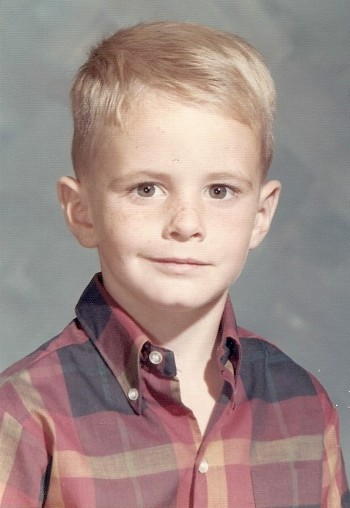 In this original BTB Investigation, we unveil the tragic story of Kirk Murphy, a four-year-old boy who was treated for “cross-gender disturbance” in 1970 by a young grad student by the name of George Rekers. This story is a stark reminder that there are severe and damaging consequences when therapists try to ensure that boys will be boys.
When we first reported on three American anti-gay activists traveling to Kampala for a three-day conference, we had no idea that it would be the first report of a long string of events leading to a proposal to institute the death penalty for LGBT people. But that is exactly what happened. In this report, we review our collection of more than 500 posts to tell the story of one nation’s embrace of hatred toward gay people. This report will be updated continuously as events continue to unfold. Check here for the latest updates.
In 2005, the Southern Poverty Law Center wrote that “[Paul] Cameron’s ‘science’ echoes Nazi Germany.” What the SPLC didn”t know was Cameron doesn’t just “echo” Nazi Germany. He quoted extensively from one of the Final Solution’s architects. This puts his fascination with quarantines, mandatory tattoos, and extermination being a “plausible idea” in a whole new and deeply disturbing light.
On February 10, I attended an all-day “Love Won Out” ex-gay conference in Phoenix, put on by Focus on the Family and Exodus International. In this series of reports, I talk about what I learned there: the people who go to these conferences, the things that they hear, and what this all means for them, their families and for the rest of us.
Prologue: Why I Went To “Love Won Out”
Part 1: What’s Love Got To Do With It?
Part 2: Parents Struggle With “No Exceptions”
Part 3: A Whole New Dialect
Part 4: It Depends On How The Meaning of the Word "Change" Changes
Part 5: A Candid Explanation For "Change"
 At last, the truth can now be told.
Using the same research methods employed by most anti-gay political pressure groups, we examine the statistics and the case studies that dispel many of the myths about heterosexuality. Download your copy today!
And don‘t miss our companion report, How To Write An Anti-Gay Tract In Fifteen Easy Steps.
 Anti-gay activists often charge that gay men and women pose a threat to children. In this report, we explore the supposed connection between homosexuality and child sexual abuse, the conclusions reached by the most knowledgeable professionals in the field, and how anti-gay activists continue to ignore their findings. This has tremendous consequences, not just for gay men and women, but more importantly for the safety of all our children.
Anti-gay activists often cite the “Dutch Study” to claim that gay unions last only about 1½ years and that the these men have an average of eight additional partners per year outside of their steady relationship. In this report, we will take you step by step into the study to see whether the claims are true.
Tony Perkins’ Family Research Council submitted an Amicus Brief to the Maryland Court of Appeals as that court prepared to consider the issue of gay marriage. We examine just one small section of that brief to reveal the junk science and fraudulent claims of the Family “Research” Council.
 The FBI’s annual Hate Crime Statistics aren’t as complete as they ought to be, and their report for 2004 was no exception. In fact, their most recent report has quite a few glaring holes. Holes big enough for Daniel Fetty to fall through.
“Google” is a trademark of Google Inc.
© Box Turtle Bulletin. All Rights Reserved.

 Posts
Posts  Posts via daily email: