Box Turtle Bulletin
 News and commentary about the anti-gay lobby
“Now you must raise your children up in a world where that union of man and box turtle is on the same legal footing as man and wife…”
News and commentary about the anti-gay lobbyMarch 19th, 2013
TODAY IN HISTORY:
Africans Identified As AIDS Risk Group: 1983. As we’ve mentioned before, by the time 1983 came around the panic surrounding the emerging HIV/AIDS crisis had already reached epic proportions, with anti-gay groups and individuals pinning everlasting blame on the gay community. When they had bothered to notice, some would acknowledge that Haitians, drug addicts and hemophiliacs were also at risk for AIDS. But it was the gay community which bore the brunt of the responsibility for the new “plague.”
If ignorance among many Americans was running a fevered pitch, things were very different in Europe, particularly in Belgium and France where doctors had been noticing a strange development for quite some time. For several years, they had been treating wealthy Africans from their former colonies who were suffering from diseases which were remarkably similar to those reported by AIDS patients in America. While AIDS was also showing up in gay communities in Europe, it was these African patients which signaled to European specialists that AIDs was neither a homosexual nor western disease. Finally on March 19, 1983, the rest of the world would learn what they have been noticing with the publication of this brief letter by Dr. Nathan Clumeck of the Université Libre de Bruxelles in the respected journal The Lancet:
Acquired Immune Deficiency Syndrome in Black Africans
SIR,-Acquired immune deficiency syndrome (AIDS) has been described in homosexual or bisexual men, in drug addicts, in haemophiliacs, and in Haitian immigrants. To our knowledge there is no report of AIDS and opportunistic infections in previously healthy Black Africans with no history of homosexuality or drug abuse.
Tables I and II show the clinical and immunological data on five Black patients seen in Brussels and who were from Central Africa (Zaire and Chad). Three of them had been living in Belgium, for between 8 months and 3 years. All were of good socioeconomic status. They presented with prodromes of fever, weight loss, and generalised lymphadenopathy, and extensive investigations did not reveal any neoplasia. Patients A and E died; the three survivors are still ill.
Because the HIV virus had not been discovered yet, there was no test for it. Doctors had to rely on a process of elimination to determine whether the patient really had AIDS:
These patients fulfilled all the criteria of AIDS. Two of them had severe herpes simplex infections and to exclude the possible role of herpes virus in their immune deficiency we did lymphocyte subset analyses in a control group of eight patients with HSV-2 infections. None had OKT4+ deficiency and their OKT4/OKT8 ratios were between 0.99 and 2.52 (mean 1.80), so it is unlikely that HSV-2 alone was responsible for the AIDS in the African patients.
Responses to mitogen stimulation (phytohaemagglutinin, concanavalin A, pokeweed) were well below normal in all cases. In eleven healthy Black Africans reactions to intradermal tuberculin, candida, and streptodornase were >5 mm: all five patients were skin test negative to these antigens.
This preliminary report suggests that Black Africans, immigrants or not, may be another group predisposed to AIDS.
This small letter to the editor would later prove to be an important first indication of the horror that had been stalking the Congo river region for decades. Clumeck and his colleagues would follow up that letter with a larger study a year later published in the New England Journal of Medicine. That study presented detailed data on 23 Africans treated for AIDS as far back as May, 1979. That would be a full two years before the CDC reported on the five gay patients in Los Angeles (See Jun 5). Eighteen of the patients treated in Brussels were from Zaire (now the Democratic Republic of Congo), one from Chad, two from Rwanda, and two from Burundi. By then, ten had died. On further investigation, researchers found that the husband of one patient had died in 1976 in Belgium at the age of 27 from diseases “consistent with AIDS.”
In December 1984, Clumeck and associates published another paper in the Annals of the New York Academy of Sciences expanding their study to 40 patients who had undergone treatment in Belgium. Only two of them were gay male Belgians; the rest were Africans. By then, they had concluded, “It is likely that AIDS is endemic now in Central Africa, and that the cases seen in Belgium represent only the tip of the iceberg.”
[Sources: N. Clumek, F. Mascart-Lemone, J. de Maubeuge, D. Brenez, L. Marcelis. Letter to the editor: “Acquired Immune Deficiency Syndrome in Black Africans.” Lancet 1, no. 8325 (March 19, 1983): 624.
Nathan Clumeck, Jean Sonnet, Henri Taelman, et al. “Acquired immunodeficiency syndrome in African patients.” New England Journal of Medicine 310, no, 8 (February 23, 1984): 492-497.
Nathan Clumeck, Jean Sonnet, Henri Taelman, et al. “Acquired immune deficiency syndrome in Belgium and its relation to Central Africa.” Annals of the New York Academy of Sciences 437 (December 1984): 264-269.]
If you know of something that belongs on the agenda, please send it here. Don’t forget to include the basics: who, what, when, where, and URL (if available).
This your open thread for the day. What’s happening in your world?
March 18th, 2013
From comedian/satirist Andy Borowitz:
Portman Inspires Other Republicans to Stop Speaking to Their Children
March 18th, 2013
Former Secretary of State Hillary Rodham Clinton announced her support for gay marriage Monday, putting her in line with other potential Democratic presidential candidates on a social issue that is rapidly gaining public approval.
Clinton made the announcement in an online video released Monday morning by the gay rights advocacy group Human Rights Campaign. She says in the six-minute video that gays and lesbians are “full and equal citizens and deserve the rights of citizenship.”
“That includes marriage,” she says, adding that she backs gay marriage both “personally and as a matter of policy and law.”
March 18th, 2013
We’ve had some big marriage wins lately in the conservative camp. First that pro-equality Supreme Court brief from a long list of prominent Republicans, then a sitting Republican senator, and now an endorsement from conservative pillar Charles Murray — given at the CPAC conference, no less! That’s just a sampling. The list is long and getting longer. But why? And more to the point, why now?
I think it’s because they know it could be their last chance.
For many of them,it might work like this:
I have no respect for that. Believe what you believe, regardless of the political wind. Realizing your conviction is unpopular is no reason to change it.
But I think something else is going on, too. Imagine you’re a conservative. And you support marriage equality. And you’ve been silent. But now you realize this may be your last chance to say you supported same-sex marriage before it becomes the law of the land.
How mortifying must it be to know you sided with the angels in the great civil rights struggle of our day, but no one will ever believe you?
To know you’re on the right side of moral history, but might be seen for the rest of your life as one of its opponents?
To know you believe in the American ideals of freedom and human dignity, but sat out this historic struggle to turn America into a more perfect union?
How mortifying must it be to know you are right, but your silence now could brand you forever as having been deeply and morally wrong?
We don’t know what the Supreme Court will do. Things could go entirely for us, against us, or any one of a myriad ways in between. But no matter what the decision, we’re ramping up to an historical landmark. And this time, because of the Internet, no one will ever doubt twenty years from now where you stood today. So this may be everyone’s last chance. The message is growing loud and it’s frightening — to Republicans, Democrats, Independents, and the whole gamut of the political spectrum:
There is no more safety in silence. Declare yourself. Declare yourself now, before it’s too late.
March 18th, 2013
Yesterday, House Speaker John Boehner (R-OH) said that, unlike Sen. Rob Portman(R-OH), who announced that he now supports marriage equality after his son came out to him as gay, Boehner said that he “can’t imagine” ever changing his opposition to same-sex marriage:
I believe that marriage is the union of one man and one woman,” Boehner said on ABC News’s “This Week With George Stephanopoulos.” “It’s — it’s what I grew up with. It’s what I believe. It’s what my church teaches me. And — I can’t imagine that position would ever change.”
…”Listen, Rob’s a great friend and a long-time ally. And — I appreciate that he’s decided to change — his views on this. But I believe that marriage is a union of — of a man and a woman, said Boehner.
Sen. John McCain (R-AZ) also spoke on the issue. McCain had opposed the Federal Marriage Amendment, but only because he believed that it would have infringed on states’ rights. He voiced support for California’s Prop 8 and Arizona’s Prop 102 in 2008 as he ran for President. On Friday, McCain told CNN’s Anderson Cooper that he wouldn’t be changing his mind on marriage equality anytime soon:
“I respect anyone else’s decision and we all learn in life and grow and mature. I have changed my position on other issues in my life, but on this one, I had not contemplated changing my position,” he said.
So that brings me to this point: For the life of me, I will never understand, not in a million years, the hectoring and anger from some in the gay community that greeted Portman’s change of position. Look, I’m as dyed-blue big-D Democrat as they come. If I were an Ohio resident, I’d never vote for the man, donate to his campaign, or encourage anyone else to vote for him. I wouldn’t rush out to throw him a parade, but if the Columbus Pride organizing committee wants to make him Grand Marshal, I wouldn’t object.
But that said, any time someone — anyone — who once opposed marriage quality and changes his position, that’s one person less working against us. You’d think the implications of that would be obvious, but since it apparently isn’t I’ll spell it out. All of the legislative and electoral gains have come about because people who actively opposed us stopped doing that, and some of them now support us. Look at Maine: In 2009, voters there shot down marriage quality 53% to 47%. In three short years, six percent of Maine’s voters pulled a Portman; they switched form opposing marriage equality to supporting it, and voters approved it by the same 53% to 47% margin that they voted it down three years before.
Was Portman “selfish” for supporting same-sex marriage only after his son came out to him? Maybe. Probably. But more importantly, who the hell care? Should we poll Maine’s electorate and throw out the “selfish” votes there also? Of course not, because in politics a win is a win. And we win every time someone changes from opposing us to supporting us. Or even, as a half measure, goes from opposing us to not opposing us — that’s a half-win in my book. Portman is now one more vote in a nascent movement to repeal DOMA in Congress if the Supreme Court fails to strike down Section 3. (And besides, there’s also Section 2 that remains unchallenged so far.) Portman may also be an important voice should equality advocates in Ohio launch a ballot challenge to that state’s constitutional amendment banning same-sex marriage, a move that is likely to occur, I think, sometime in the next five years.
Each move on the issue is important. But for those who want to complain and kvetch about Portman’s change, I guess they can always take comfort in knowing that McCain and Boehner won’t let them down.
March 18th, 2013

TODAY IN HISTORY:
William F. Buckley, Jr. Proposes Tattooing “All AIDS Carriers”: 1986. Two op-eds appeared in The New York Times’s editorial page under the heading, “Critical Steps in Combating the AIDS Epidemic.” One was written by Harvard Law professor Alan Dershowitz, and the other by conservative pundit William F. Buckley, Jr. Dershowitz’s column, in keeping with the general hysteria of the day, was not without its alarmist elements. He repeated the belief that “AIDS may, in fact, be transmissible by tears, saliva, bodily fluids and mosquito bites” — a contention that was quickly refuted by those more familiar with the disease. But he also pleaded that “the flow of solid data should not be polluted by personal moralism. … We have a right to know the hard facts about AIDS, unvarnished by moralistic prejudgements.”
That recommendation contrasted sharply with Buckley’s op-ed that appeared on the same page. Buckley acknowledged that many who see homosexuality as morally wrong also saw AIDS as a “special curse of the homosexual, transmitted through anal sex between males.” But that didn’t stop him from trying to claim that those who “tend to disapprove forcefully of homosexuality … (tend) to approach the problem of AIDS empirically.” And how did Buckley “empirically” approach the AIDS crisis?
We face a utilitarian imperative, and the requires absolutely nothing less than the identification of the million-odd people who, the doctors estimate, are carriers.
How?
Well, the military has taken the first concrete step. Two million soldiers will be given the blood test, and those who have AIDS will be discreetly discharged. …The next logical step would be to require of anyone who seeks a marriage license that he present himself not only with a Wassermann test but also an AIDS test.
But if he has AIDS, should he then be free to marry?
Only after the intended spouse is advised that her intended husband has AIDS, and agrees to sterilization. We know already of children born with the disease, transmitted by the mother, who contracted it from the father.
…The next logical enforcer is the insurance company. Blue Cross, for instance, can reasonably require of those who wish to join it a physical examination that requires tests. Almost every American, making his way from infancy to maturity, needs to pass by one or another institutional turnstile. Here the lady will spring out, her right hand on a needle, her left on a computer, to capture a blood specimen.
Is it then proposed …that AIDS carriers should be publicly identified as such?
The evidence is not completely in as to the communicability of the disease. But while much has been said that is reassuring, the moment has not yet come when men and women of science are unanimously agreed that AIDS cannot be casually communicated. Let us be patient on that score, pending any tilt in the evidence: If the news is progressively reassuring, public identification would not be necessary. If it turns in the other direction and AIDS develops among, say, children who have merely roughhoused with other children who suffer from AIDS, then more drastic segregation measures would be called for.
But if the time has not come, and may never come, for public identification, what then of private identification?
Everyone detected with AIDS should be tattooed in the upper forearm, to protect common-needle users, and on the buttocks, to prevent the victimization of other homosexuals.
A year later, Buckley “withdrew” his proposal under the unique kind of protest that only Buckley could muster:
Sixteen months ago, in a thinking-out-loud exchange with Professor Alan Dershowitz, I suggested that perhaps AIDS carriers should be tattooed discreetly, to guard uncontaminated sexual or needle partners from danger. This proposal reminded everyone of Auschwitz, and I have seen, in print, that Mr. Buckley “wants to tattoo all homosexuals.” It is as though anyone who found a use for barbed wire was secretly a concentration-camp fetishist. Never mind: I quickly withdrew the proposal for the simple reasoning that it proved socially intolerable. I have ever since been waiting for a socially tolerable alternative to be proposed…
But in 2005 when the news media would initiate a new round of hysteria over an imaginary AIDS “superbug,” Buckley was there again, suggesting that the tattoo idea be revived:
The objective is to identify the carrier, and to warn his victim. Someone, 20 years ago, suggested a discreet tattoo the site of which would alert the prospective partner to the danger of proceeding as had been planned. But the author of the idea was treated as though he had been schooled in Buchenwald, and the idea was not widely considered, but maybe it is up now for reconsideration.
The so-called “superbug” was a phantom; but Buckley’s Buchenwaldist proposal was, apparently, serious — serious enough for him to raise it again unapologetically 20 years later.

Malcom Forbes on his Harley-Davidson, on the cover of OutWeek, March 18, 1990. (Click to enlarge.)
Michelangelo Sigornile Reports That A Very Wealthy Businessman Was Gay: 1990. Malcolm Forbes was gay. You knew that, right? Playwright George Osterman knew. He had had sex with Forbes a few times, and was one of the very few willing to talk about it under his own name. “To a degree, he was very charming. I did it for the experience, I mean, I was having sex with a millionaire, It was an experience. It was fine,” he said. A host of New York City waiters knew; Forbes seemed to have had a particular thing for waiters. A former employee at Forbes magazine said that half of the staff knew and the other half just didn’t want to know about it. New York’s gossip columnists knew: Newsday’s James Revson, The Daily News’ Billy Norwich, Village Voice’s Michael Musto. Liz Smith, also at The Daily News, undoubtedly knew, though she claimed to be “too square” to be aware of it. Besides, she was still tending to her own closet at the time. Even Elizabeth Taylor knew — even though the New York Times implied in Forbes’s obituary that he had wanted to marry her, only to strike that reference in the paper’s later editions. And because Michelangelo Signorile put all of that in a cover story for OutWeek three weeks after Forbes died of a heart attack, you know it too:
People talked and, in quite a few segments of the gay male community at least, it seamed that everyone knew someone who’d done it with Malcolm Forbes. He was also quite showy, liking to ride around with his “dates” on his motorcycle. It was not uncommon to spot Frobes on Christopher Street taking a break next to his bike with a hot, young, leathered bikemate by his side. He also would show up — often with young men — at such mixed clubs as Love Machine and Celebrity Club at the Tunnel, where the crowed was predominately gay but was never listed as such or considered a gay club per se. This the contradiction of Forbes: While he tried to keep it all very hush-hush, he behaved many times in a sloppy, seemingly deliberate way, yearning to have fun, and testing the limits of living a closeted life.

Michelangelo Signorile
Signorile’s first job out of college was with a public relations firm that specialized in getting their clients mentioned in gossip columns. That’s where he became increasingly aware of the double standard with which gossip columnists — and journalists generally — treated gay people. Every hint of a heterosexual dalliance was given press, but whenever they became aware of a romance involving a gay celebrity, there was nothing but silence — or a manufactured story of a heterosexual romance. As Signorile became involved with ACT UP in 1989, the group’s motto “SILENCE = DEATH” took on a special meaning. As long as gay people were an abstraction to the general public — as long as gay people were those people, relatively nameless and faceless — the unique combination of apathy and hysteria surrounding the disease would continue, all to the detriment to the very people who were falling in ever increasing numbers.
Forbes wasn’t the first celebrity whose homosexuality Signorile reported on. As the features editor of OutWeek, Signorile also wrote a regular column titled “Gossip Watch,” in which he sought to hold New York’s other gossip columnists accountable. Beginning in 1989, he launched a second column called “Peek-A-Boo,” in which he listed the names of some ninety allegedly closeted celebrities. Critics, including many in the gay community, lambasted Signorile for publishing private and “salacious” details, as though being gay itself was somehow salacious. By 1990, the mainstream media began to notice, when Time magazine published “Forcing Gays Out of the Closet,” in which media critic William Henry III coined the word “outing” as a verb, a term that Signorile has always disliked. As he saw it, what he was doing was reporting, and was in no way different from what other journalists were writing about heterosexual celebrities.
As for the Forbes article, Signorile’s portrait was actually somewhat sympathetic. But in the end, Signorile said that setting the record straight, so to speak, was important “for the sake of posterity:
Is our society so overwhelmingly repressive that even individuals as all-powerful as the late Malcolm Forbes feel they absolutely cannot come out of the closet? It would seem so. Much like Congressman Barney Frank before he came out, Forbes was the victim of a virulently homophobic society which he too fed into regularly. He was forced to lead a life of secret pursuits and dark, dirty doings; of exploitation and abuse, His own internalized homophobia far outweighed the commanding authority that any amount of dollars could possibly wield.
And what is the significance of bringing all of this out now?
First, for the sake of posterity the truth must be told. All too often history is distorted. One of the most influential men in America just died, and regardless of how we may or may not see him as a proper public figure, he was gay, And that must be recorded.
Second, it sends a clear message to the public at large that we are everywhere.
Third, perhaps gays and lesbians at all levels of society can learn a great deal from the story of Malcolm Forbes, In researching this piece, in an attempt to try to obtain more information about Forbes and get to people who were close to him, I came upon someone who kneW the family very well and who would have been able to discuss intimate details about the man; not merely about sex, but about the the real inner-workings of Forbes’ mind, It was a person who could perhaps provide an insight into what Forbes thought about such issues as gay rights and AIDS, But, after considerable thought, he decided not to speak to me. Currently living a closeted existence with regard to his own family and business, he said, “My choice in speaking to you is between myself and the greater gay community, And — at this moment — I have to go with myself.”
Ultimately, that was the tragedy of Malcolm Forbes’ entire life, Under the guise, perhaps, of doing the best for “himself,” Forbes initiated a senseless, self-imposed prison sentence which benefited no one.
Despite what had become rather common knowledge — and despite Signorile’s efforts to promote to story to other news organizations, the mainstream press remained silent. Several months later, The New York Times, in an article about the “outing” controversy, refused to mention Forbes’s name, referring to him simply as “a famous businessman who had recently died.”
[Sources: Michelangelo Signorile. “The other side of Malcolm.” Outweek (March 18, 1990): 40-45. Available online here (PDF: 21.3 MB/108 pages).
William Henry III. “Forcing gays out of the closet.” Time (January 29, 1990). Available online with subscription here.]
If you know of something that belongs on the agenda, please send it here. Don’t forget to include the basics: who, what, when, where, and URL (if available).
This your open thread for the day. What’s happening in your world?
March 17th, 2013
TODAY’S AGENDA:
Events This Weekend: European Gay Ski Week, Alpe d’Huez, France; Texas Bear Roundup, Dallas, TX; BFI London Lesbian and Gay film Festival, London, UK; Camp Laurel Foundation Marathon, Los Angeles, CA; Elevation: Mammoth Gay Ski Week, Mammoth Mountain, CA; Texas Tradition Gay Rodeo, Pasadena, TX.

TODAY IN HISTORY:
Florida Legislature Issues Report On Homosexuality: 1964. In 1956, the Florida Legislature established the Legislative Investigations Committee, known popularly as the Johns Committee for its chairman, state senator and former governor Charley Johns. The committee’s broad mandate was, more or less, a continuation of the already-discredited McCarthy hearings from earlier in the decade. In addition to the Red- and homo-baiting its investigative targets, the Johns committee added a third element by trying to paint the NAACP and other anti-segregationist activists as among those “which could constitute violence, or a violation of the laws of the state, or would be inimical to the well being and orderly pursuit of their personal and business activities by the majority of the citizens of this state.” In 1961, the legislature again tasked the committee to investigate “extent of [homosexuals’] infiltration into agencies supported by state funds.” The concern here was with the state’s college campuses. The legislature’s renewed directive came despite the fact that the Johns committee had been searching for homos under the dorm room beds since at least 1958 (see for example Mar 22, Apr 24).
That effort culminated it a report, released in 1964, nicknamed the “purple pamphlet” for its provocative front cover. The report called for “increased research efforts to expose the underlying causes of homosexuality and its possible cures” and defined homosexuality as a problem “of control, and that established procedures and stern penalties will serve both as encouragement to law enforcement officials and as a deterrent to the homosexual hungry for youth.” It included a dictionary of slang terms and included photos that it said were taken from collections of gay people who had undergone various anti-gay investigations over the previous years. The report lamented that “little has been done to reveal the role of the male muscle and physique magazines, the pinup books of homosexuality,” and it called for mandatory psychiatric evaluations of anyone convicted of homosexuality, the creation of outpatient treatment centers, a registry that potential employers could check, and making a second conviction a felony.
The report provoked an immediate outcry, but not for the reasons the committee expected. The State Attorney for Dade County warned the committee not to send any more copies of the report to his area or he would file obscenity charges, declaring that the purple pamphlet was “becoming the object of curiosity in every school in the state and could engender perversion.” Another politician from Daytona Beach criticized the committee for “becoming engaged in the publication of such vile material.” The Miami Herald ran an editorial saying, “It is shocking to see that it bears the Great Seal of Florida and the governor’s office as the return address. We feel that the immediate resignation of every state official who had a hand in it, and the full investigation of possible violations of obscenity laws, are called for.” Rep. Richard Mitchell, then the committee’s chairman, responded with a special news conference and said that the report would not be distributed “indiscriminately.”

TODAY’S BIRTHDAY:
Bayard Rustin: 1912. Many African-Americans are offended whenever some assert that “gays are the new Black.” That controversy isn’t a new one; just try to imagine the blowback when, in a 1986 speech, the venerable civil rights leader and aid to Dr. Martin Luther King, Jr. declared “The new niggers are gays”:
Today, blacks are no longer the litmus paper or the barometer of social change. Blacks are in every segment of society and there are laws that help to protect them from racial discrimination. The new “niggers” are gays. No person who hopes to get politically elected, even in the deep South, not even Governor Wallace, would dare to stand in the schoolhouse door to keep blacks out. Nobody would dare openly and publicly to argue that blacks should not have the right to use public accommodation. Nobody would dare say any number of things about blacks that they are perfectly prepared to say about gay people. It is in this sense that gay people are the new barometer for social change.
Indeed, if you wan to know whether today people believe in democracy, if you want to know whether they are true democrats, if you want to know whether they are human rights activists, the question to ask is, “What about gay people?” Because that is now the litmus paper by which this democracy is to be judged. The barometer for social change is measured by selecting the group which is most mistreated. … The question of social change should be framed with the most vulnerable group in mind: gay people.
Rustin insisted on the connection between civil rights for gay people and civil rights for African-Americans. He had a special authority to assert that connection: openly gay his whole life, he was the main organizer of King’s 1963 March on Washington. By then, he had already devoted nearly two decades to Mahatma Ghandi’s teachings on non-violent resistance and three decades to his pacifist Quaker faith, which led to his imprisonment for refusing to fight in World War II. He is credited with teaching King about the principles of nonviolent protest when he met King during the Montgomery bus boycott, techniques Rustin honed during the first Freedom Rides in 1947 (and for which Rustin spent 22 days on a chain gang for violating North Carolina’s Jim Crow laws). Rustin later helped found the Congress for Racial Equality and the Southern Christian Leadership Conference.
Rustin’s open sexuality was not without its complications. It was often used against him by enemies of segregation and, later, by more militant members of the Black Power movement. He was forced to resign from King’s organization during the bus boycott, but King turned to Rustin to organize the 1963 March on Washington. In the end, King and other civil rights leaders refused to abandon him and expressed their confidence in Ruston’s abilities.
After the passage of the Civil Rights Act in 1964 and the Voting Rights Act of 1965, Rustin became more active directly in the Democratic Party. He also became more involved in the labor movement and the gay rights movement. And through it all, he insisted that all fights for equal rights were connected by a common thread, running from Auschwitz to Montgomery to Stonewall:
There are four burdens, which gays, along with every other despised group, whether it’s blacks follow slavery and reconstruction, or Jews fearful of Germany, must address. The first is recognize one must overcome fear. The second is overcoming self-hate. The third is overcoming self-denial. The fourth is more political. It is to recognize that the job of the gay community is not to deal with extremists who would castigate us or put us on an island and drop an H-bomb on us. The fact of the matter is that there is a small percentage of people in America who understand the true nature of the homosexual community. There is another small percentage who will never understand us. Our job is not to get those people who dislike us to love us. Nor was our aim in the civil rights movement to get prejudiced white people to love us. Our aim was to try to create the kind of America, legislatively, morally, and psychologically, such that even though some whites continued to hate us, they could not openly manifest that hate. That’s our job today: to control the extent to which people can publicly manifest antigay sentiment.

Rudolf Nureyev: 1938. The world-famous dancer was born on the move, on a Trans-Siberian train while his mother was traveling to Vladivostok, where his father was stationed with the Red Army. Despite auditioning and earning a spot with the prestigious Bolshoi, he decided instead to hitch his rising star to the Kirov in Leningrad (now St. Petersburg), where he danced fifteen roles in three years. His early reputation as a rebel meant that the Soviet Union kept Nureyev at home whenever the Kirov traveled abroad. But in 1961, Jirov’s leading male dancer was injured, and Nureyev was chosen to replace him for a European tour.
His performance in Paris created a sensation among audiences and critics. Kirov’s management couldn’t have been happier, except for one thing: they noticed that he had broken the rules about mingling with foreigners. The Kirov and KGB wanted to send him back to the Soviet Union immediately. In one subterfuge, he was told that instead of traveling on to London, he was needed for a special performance at the Kremlin. When that didn’t work, they told him his mother was dying. Convinced (correctly, it turned out) that he was being lied to, he defected at the Le Bourget Airport in Paris.
Already a well-known among ballet aficionados, his dramatic defection made him a household name among those who knew nothing of ballet except for the local Christmas Nutcracker productions in the elementary school gyms. But Nureyev brought a style and verve to ballet that transformed the art. Before Nureyev, male dancers were little more than accessories to the star ballerinas, flinging them around and holding them aloft as on-stage props. Nureyev changed that by putting the male performance — his performance — first.
Ironically, Nureyev found employment difficult in the years immediately following his defection, as top companies were loath to jeopardize their relationships the the Bolshoi and Kirov. Nureyev picked up a low paying position with a middling Paris company. While on tour in Denmark, he met Erik Bruhn, a dancer with the Royal Danish Ballet, who would become his off-and-on lover until Bruhn’s death in 1986. Nureyev’s career eventually included two decades at the Royal Ballet in London, and a stint as director of the Paris Opera Ballet in the 1980s, where he also acted as chief of choreography and dancer until 1989. Nureyev also became famous in the gay community — some would say notorious – for his less artistic appearances in various bathhouses and other cruising venues. By the late 1970’s his health was declining due to what may have been various opportunistic infections brought on by AIDS. He was diagnosed in 1984, but continued dancing, although his capacity was becoming obviously diminished. His last public appearance was on October 8, 1992 for the premiere of a new production of La Bayadère which he choreographed. He entered the hospital for the last time in November, and died two months later at the age of 54.
If you know of something that belongs on the agenda, please send it here. Don’t forget to include the basics: who, what, when, where, and URL (if available).
And feel free to consider this your open thread for the day. What’s happening in your world?
March 16th, 2013
TODAY’S AGENDA:
Events This Weekend: European Gay Ski Week, Alpe d’Huez, France; AIDS Walk South Dallas, Dallas, TX; Texas Bear Roundup, Dallas, TX; BFI London Lesbian and Gay film Festival, London, UK; Camp Laurel Foundation Marathon, Los Angeles, CA; Elevation: Mammoth Gay Ski Week, Mammoth Mountain, CA; Texas Tradition Gay Rodeo, Pasadena, TX.
TODAY IN HISTORY:
U.S. Morals Lowest in History: 1952. The National Association of Evangelicals were holding their tenth annual convention in Chicago when the group’s president, Dr. Frederick C. Fowler, told the gathering that American was at its lowest moral level in its history, despite church membership being an all-time high. He blamed “the moral collapse everywhere evident” on materialistic education:
“What is the reason for immorality in the State Department, where homosexuals were dismissed not for their sin but for security reasons?” he asked. “What is the reason for the corruption in the Internal Revenue and other departments of government, for the admitted cheating in college examinations, and in other forms of immorality in the American scene?”
“It goes back to those so-called ‘brilliant’ educators, centered in John Dewey at Columbia, who questioned and then denied the very existence of God, and ruled out any final authority except their own ridiculous and assumed knowledge.”
[Source: Associated Press. “U.S. morals lowest in history, leader says.” Los Angeles Times (March 17, 1952): 27.]

TODAY’S BIRTHDAY:
Jack Nichols: 1938. The co-founder, with Frank Kameny, of the Washington, D.C., chapter of the Mattachine Society, Nichols was out to his parents since he age of twelve. His mother, described as an Auntie Mame figure, accepted him with aplomb; his father, an agent with the FBI who had divorced his mother after returning from World War II, not so much. His mother’s parents, with whom he and his mother lived in affluent Chevy Chase, Maryland, were similarly accepting: his grandmother allowed him to neck with his male dates in the driveway. By the time he was nineteen, Nichols and his first boyfriend bought a house and lived together openly as a couple.
In 1960, he met Frank Kameny (see May 21), and together they co-founded the Mattachine Society of Washington, D.C. Beginning in 1963, Nichols chaired the Washington Mattachine’s committee on religious concerns, which eventually became the Washington Area Council on Religion and Homosexuality. With Kameny, he led the first gay rights March in front of the White House in April, 1965. Afterword, when Nichol’s presence at the protest drew the attention of J. Edgar Hoover, Nichols’s father, who feared that it would jeopardize his career, threatened to kill him. For obvious reasons, that would mark their final parting.
That same year, Nichols participated in the first of five annual pickets at Philadelphia’s Independence Hall on July 4, and he began to lead the challenge to remove homosexuality from the APA’s list of mental disorders. Nichols was among those who appeared on the 1967 documentary CBS Reports: The Homosexuals (See Mar 7). In 1969, he and his partner, Lige Clarke, moved to New York and founded GAY, reputed to be the first gay weekly newspaper in the US distributed on newsstands. He and Clarke also wrote a column, “The Homosexual Citizen,” for Screw magazine. That column was the first gay-interest column in a non-gay publication. Nichols would later serve as editor for Sexology magazine, the San Francisco Sentinel, and GayToday.com. He also wrote four books: 1974’s Roommates Can’t Always be Lovers: An Intimate Guide to Male-Male Relationships, 1975’s Men’s Liberation: A New Definition of Masculinity, 1996’s The Gay Agenda: Talking Back to the Fundamentalists

If you know of something that belongs on the agenda, please send it here. Don’t forget to include the basics: who, what, when, where, and URL (if available).
And feel free to consider this your open thread for the day. What’s happening in your world?
March 15th, 2013
 We’re quite accustomed to the National Organization for Marriage saying things that are, shall we say, creative in their approach to facts. To put it in religious terms, the like to walk by faith, not by sight.
But today’s response to Sen. Rob Portman (R-Ohio) announcing his support for equality is wacky to the point of clown car, looney toons, bad 70’s Disney annimation, complete wackadoodleness.
A spokesman for the National Organization for Marriage on Friday slammed Sen. Rob Portman, who has announced that he now supports same-sex marriage, reversing his long-held opposition to the issue.
“What Mr. Portman is doing is shrinking the size of the GOP tent,” charged Thomas Peters, a spokesman for the socially conservative NOM, in an interview with POLITICO. “I think it will have huge consequences if he chooses to run again.”
Sure, maybe there on Planet Completelynutso it would shrink the tent to include the majority of people who support equality. Maybe in Delusionville it’s a smart long term plan to side with the elderly and ignore everyone under 40.
But back here in reality, I’m beginning to think that Thomas Peters is in the market for a good tinfoil hat.
March 15th, 2013
In court orders on Friday, justices announced the U.S. Solicitor General will be allowed speaking time for oral arguments in the case, which are scheduled for March 26.
“The motion of the Solicitor General for leave to participate in oral argument as amicus curiae and for divided argument is granted,” the orders states.
March 15th, 2013
The head of an American Indian tribe in Michigan signed a law approving same-sex marriage on Friday, joining at least two other tribes nationwide in doing so, then immediately wed a gay couple who had been together for 30 years but never thought they would see this day come.
Dexter McNamara, chairman of the 4,600-member Little Traverse Bay Bands of Odawa Indians in northern Michigan, wed Tim LaCroix, 53, and Gene Barfield, 60, of Boyne City. After McNamara read the couple’s vows and led the ceremony in English, a member of the tribe followed and conducted a traditional tribal ceremony in their language before dozens of wellwishers.
While the Little Traverse Bay Bands comes third in the list of Indian Nations, it is an important addition.
The impact of the Little Traverse Bay decision was unclear, though Fletcher said he thought it would carry weight with other tribes. Little Traverse Bay Bands was an influential, average-sized tribe that has been, along with some other Michigan tribes, “very much in the forefront of some good progressive tribal governance measures in the last couple decades.”
…
“We’ve been a role model, I think, for the federally recognized tribes of Michigan and it seems like we’re out in front — and not taking anything away from the other federally recognized tribes — but, you know, it seems like we kind of opened the door for other tribes and I think other tribes will follow,” he said.
March 15th, 2013
TODAY’S AGENDA:
Events This Weekend: European Gay Ski Week, Alpe d’Huez, France; AIDS Walk South Dallas, Dallas, TX; Texas Bear Roundup, Dallas, TX; BFI London Lesbian and Gay film Festival, London, UK; Camp Laurel Foundation Marathon, Los Angeles, CA; Elevation: Mammoth Gay Ski Week, Mammoth Mountain, CA; Texas Tradition Gay Rodeo, Pasadena, TX.
THIS MONTH IN HISTORY:
Harper’s Examines New York’s “Middle Class” Homosexuals: 1963. By the early 1960s, reporting on gay people followed a predictable arc: homosexuals were sad and lonely people, desperate for love and acceptance, and incapable of living a fulfilling life. With fulfillment being defined as the achievement of the middle class American Dream: with a home in the suburbs, a car, two kids and a dog, and a lovely June Cleaver waiting at home with a fresh batch of cookies. The classic middle class American Dream was out of reach for gay people, but that didn’t keep Harper’s William J. Helmer from providing a very interesting and well-balanced look at New York’s gay middle class. In New York’s “Middle-class” Homosexuals — were the quotation marks ironic or emphatic? — Helmer’s profile was anything but sensationalistic. For example, here’s his description of a typical gay bar in West Greenwich, with a bar in the front and a dance floor in the back:
Although we went on a Thursday night, the back room was so crowded that many were standing, and the atmosphere was that of a speakeasy: dim lights, loud noise, cigarette smoke, music, and, I was told, a signal to stop dancing in the event of a police raid. My reaction to the unusual sight of men embracing each other on the dance floor was one more of curiosity than aversion, probably because the dancers appeared so casual and others in the room so indifferent. I was far more surprised to see no one who “looked” homosexual. A few were a little too well-groomed or elegant in their behavior, and a few were dressed younger than their age (though all looked to be under thirty), but otherwise the only noticeable difference was that everyone resembled the dashing young men in college sportswear advertisements. At other bars I did see a few obviously effeminate persons, but they were not flamboyant. and I was told that the better class of gay bar usually discourages conspicuous homosexuals in order to avoid police crackdowns.
If it was all about appearances in 1963 America generally, it’s easy to imagine that appearances were similarly important in the gay community. There was, of course, what respectable Americans would consider the “dark underbelly,” but in Helmer’s description, the respectable gay counterpart was equally eager to keep its distance from those unseemly scenes. “The genuine orgy,” he wrote,” is less common and regarded by some as rather jading and degrading, but still ‘okay if you like that sort of thing’.” But as for the parties:
A colorful — but not necessarily sexual — event in the gay world is the “drag party” to which guests may come dressed as women. Unlike genuine transvestitism, however, such masquerading is often done as a titillating joke, the idea being to dress like a ridiculous parody of the female in order to humorously exaggerate one’s “perversion.” The term gay, which often strikes a heterosexual as inappropriate if not ironic becomes meaningful at parties and dancing bars. Any private gathering is an opportunity to relax and “drop the mask” one wears in public, and there is usually an air of conspiracy and intrigue which is not without its appeal. Such conditions tend to promote a spirit of good-fellowship, and everyone tries to outdo each other in being friendly, sociable, and “gay.” Part of this is artificial — the same sort of attempt at jolly behavior that may go on between males and females after a few drinks at a dull cocktail party. But no doubt homosexuals do feel a genuine exuberance in temporarily escaping the sense of rejection implicit in their frequent need to conceal their nature from employer, acquaintances, and family.
But like the rest of society, appearances and neighborhood were important marks to social standing:
Wealth and family background themselves usually are not sources of status within the homosexual community, though their manifestations — possessions, manners, etc. — may be. Since most homosexuals have no dependents and only personal expenses, a modest income will usually provide the obvious luxuries of “sophisticated” city life, reducing the importance of real wealth. Most homosexuals who participate exclusively in gay social life have a relatively low income, so there exists no real moneyed class within the community toward which to aspire. A prominent family background brings little status since few homosexuals can afford to mix their gay life with their straight life.
…In gay society an individual is often typed (not always accurately) according to his neighborhood. The “East Side Snob” is described as an elegant, high-class dandy, or a bland, pseudosophisticated “organization man with a flair,” and both tend to confine themselves to their own more private social circles. The West Sider is thought to be a lower-class, sometimes bizarre person, and the two extremes seem to meet in the Village where stereotypes mix. To some homosexuals, Forty-second Street between Sixth and Eighth Avenues is practically a taboo area because of the hustlers, hoodlums, and generally undesirable types who often congregate there. The West Seventies are said to be a “pansy patch” because of the number of obviously effeminate homosexuals, often Puerto Rican, who live there; and some areas of the Upper East Side are called “fairy flats” because they are supposedly inhabited by “conspicuously elegant types usually walking poodles,” as one informant put it. Brooklyn Heights, just across the East River from Lower Manhattan, is thought of as a kind of homosexual suburbia popular with “young marrieds.”
[Source: William J. Helmer. “New York’s ‘Middle Class’ Homosexuals.” Harper’s Magazine (March 1963): 85-92. Thanks to BTB reader Rob for providing a copy of the Harper’s article.]
If you know of something that belongs on the agenda, please send it here. Don’t forget to include the basics: who, what, when, where, and URL (if available).
And feel free to consider this your open thread for the day. What’s happening in your world?
March 15th, 2013

I knew it had to happen at some point. Some Republican US Senator had to be the first to endorse marriage equality, but I was thinking maybe Sue Collins or Mark Kirk. I certainly wasn’t guessing Ohio’s freshman Senator, Rob Portman.
But then again I didn’t know that Portman has a gay son. (Cleveland.com)
WASHINGTON, D.C. – Republican U.S. Sen. Rob Portman on Thursday announced he has reversed his longtime opposition to same-sex marriage after reconsidering the issue because his 21-year-old son, Will, is gay.
Portman said his son, a junior at Yale University, told him and his wife, Jane, that he’s gay and “it was not a choice, it was who he is and that he had been that way since he could remember.”
“It allowed me to think of this issue from a new perspective, and that’s of a Dad who loves his son a lot and wants him to have the same opportunities that his brother and sister would have — to have a relationship like Jane and I have had for over 26 years,” Portman told reporters in an interview at his office.
This is a bit risky. Ohio Republicans are a different breed from the New Hampshire strain.
But I’m going to hazard a guess that this wont much hurt Portman. It might even help him. Times have changed and even the wing-nuts can accept a father acting out of love for his kid.
(CNN has a fuller story )
UPDATE: Sen. Portman has written an op-ed in the Columbus Dispatch expressing his views on marriage. Some I disagree with (I hope for an expansive court decision on marriage equality), but as an appeal to other conservatives and Republicans, I welcome this step. It’s far stronger to have Portman assert in his own words his support for equality than simply to tell the press.
March 14th, 2013
Hey everybody, I’m working on a little video project, and it’s built around our opposition’s most common themes and cliches. Here’s what I’ve got so far.
What have I missed? I’m not looking for fringe stuff. I need mainstream opposition themes, the ones that they build million-dollar campaigns around, the ones that sway moderate voters. For instance, I just thought of another: “Let the people vote!”
Any others?
March 14th, 2013
The National Organization for Marriage often touts the statistical advantages of marriage. For example, this is from their fact sheet, Why Marriage Matters:
Both men and women who marry live longer, healthier and happier lives. On virtually every measure of health and well-being, married people are better-off than otherwise similar singles, on average.
Which is, to my way of thinking, a good reason to support marriage equality. Unless, I suppose, you don’t want gay people to live longer, healthier, and happier lives.
But I think NOM would counter that these statistics of benefit only apply to heterosexual marriages. And it is the magical, mystical, godly coming together of penis and vagina that in some unknown way (similar to the power of wearing your lucky socks on game day) gives better lives. I get the sense that they really do think there’s something holy and mysterious about heterosexual married sex.
But they would be wrong. The Danes took a look. (LA Times)
Men in same-sex marriages are living longer, according to Danish researchers, but mortality rates among married lesbians have begun to rise after a long period of decline.
The study, published Tuesday in the International Journal of Epidemiology, used Denmark’s civil registry to follow 6.5 million adults from 1982 to 2011. The study is the first of its kind to examine mortality — the risk of death during a specific period of time — and relationship status for an entire nation.
(What do you bet NOM mentions this study… but only the part about married lesbians mortality beginning to increase.)
And it turns out that it isn’t penis in vagina, after all, that results in longer lives.
Researchers found that marriage in and of itself did not ensure low mortality during the period studied. For instance, opposite-sex married couples who lived apart faced a two-fold increase in their mortality rate.
Also, heterosexual men and women saw a steep jump in their mortality rate during the study period if they were married two or more times. The rate increased 27% for women with each successive marriage, and it increased 16% for men.
And so, with their usual logic, social conservatives will continue to insist that gay men and women leave their partners and live celibately. Or marry someone of the opposite sex – even though they know that this is likely to result in some poor soul’s unhappy divorce and remarriage (and increased mortality).
You’re killing me, NOM, you’re killing me!
Featured Reports
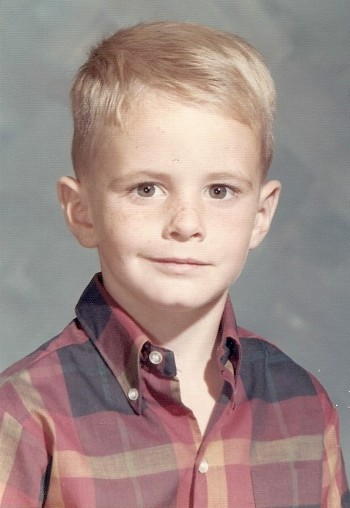 In this original BTB Investigation, we unveil the tragic story of Kirk Murphy, a four-year-old boy who was treated for “cross-gender disturbance” in 1970 by a young grad student by the name of George Rekers. This story is a stark reminder that there are severe and damaging consequences when therapists try to ensure that boys will be boys.
When we first reported on three American anti-gay activists traveling to Kampala for a three-day conference, we had no idea that it would be the first report of a long string of events leading to a proposal to institute the death penalty for LGBT people. But that is exactly what happened. In this report, we review our collection of more than 500 posts to tell the story of one nation’s embrace of hatred toward gay people. This report will be updated continuously as events continue to unfold. Check here for the latest updates.
In 2005, the Southern Poverty Law Center wrote that “[Paul] Cameron’s ‘science’ echoes Nazi Germany.” What the SPLC didn”t know was Cameron doesn’t just “echo” Nazi Germany. He quoted extensively from one of the Final Solution’s architects. This puts his fascination with quarantines, mandatory tattoos, and extermination being a “plausible idea” in a whole new and deeply disturbing light.
On February 10, I attended an all-day “Love Won Out” ex-gay conference in Phoenix, put on by Focus on the Family and Exodus International. In this series of reports, I talk about what I learned there: the people who go to these conferences, the things that they hear, and what this all means for them, their families and for the rest of us.
Prologue: Why I Went To “Love Won Out”
Part 1: What’s Love Got To Do With It?
Part 2: Parents Struggle With “No Exceptions”
Part 3: A Whole New Dialect
Part 4: It Depends On How The Meaning of the Word "Change" Changes
Part 5: A Candid Explanation For "Change"
 At last, the truth can now be told.
Using the same research methods employed by most anti-gay political pressure groups, we examine the statistics and the case studies that dispel many of the myths about heterosexuality. Download your copy today!
And don‘t miss our companion report, How To Write An Anti-Gay Tract In Fifteen Easy Steps.
 Anti-gay activists often charge that gay men and women pose a threat to children. In this report, we explore the supposed connection between homosexuality and child sexual abuse, the conclusions reached by the most knowledgeable professionals in the field, and how anti-gay activists continue to ignore their findings. This has tremendous consequences, not just for gay men and women, but more importantly for the safety of all our children.
Anti-gay activists often cite the “Dutch Study” to claim that gay unions last only about 1½ years and that the these men have an average of eight additional partners per year outside of their steady relationship. In this report, we will take you step by step into the study to see whether the claims are true.
Tony Perkins’ Family Research Council submitted an Amicus Brief to the Maryland Court of Appeals as that court prepared to consider the issue of gay marriage. We examine just one small section of that brief to reveal the junk science and fraudulent claims of the Family “Research” Council.
 The FBI’s annual Hate Crime Statistics aren’t as complete as they ought to be, and their report for 2004 was no exception. In fact, their most recent report has quite a few glaring holes. Holes big enough for Daniel Fetty to fall through.
“Google” is a trademark of Google Inc.
© Box Turtle Bulletin. All Rights Reserved.

 Posts
Posts  Posts via daily email: