Box Turtle Bulletin
 News and commentary about the anti-gay lobby
“Now you must raise your children up in a world where that union of man and box turtle is on the same legal footing as man and wife…”
News and commentary about the anti-gay lobbyDecember 14th, 2012

The Milwaukee Journal, Dec 14, 1954 (Click to enlarge
TODAY IN HISTORY:
Milwaukee Doctor Faced Blackmail: 1954. The Milwaukee Journal reported that Anthony Roy, 26, was charged with attempting to extort $500 from a Milwaukee physician in exchange for not “exposing” him for being gay. He also made similar extortion attempts against a jeweler and an osteopath. These blackmail attempts took place at a time when even rumors that someone was gay might result in the complete ruining of that person’s reputation. In the case of the doctor and osteopath, it might have even resulted in their licenses being revoked. After all, in 1954 they were both legally criminals and (according to the APA) mentally ill. The Journal described how Roy was caught:
Roy was seized in a public toilet at 1905 E. North av. The doctor, co-operating with police, had placed there a fake money package containing a dye powder. Officers said Roy’s hands were stained blue and the package was in his topcoat.
Police said the three professional men received a total of 10 extortion notes. Payment of $500 each was demanded from the physician and the jeweler and $1,000 from the osteopath. None of the intended victims is a homosexual, police said.
CA State Sen. Briggs Urges Appointment of Non-Gay To Succeed Harvey Milk: 1978. San Francisco Mayor Diane Feinstein released a telegram sent to her from California State Sen. John Briggs urging her to fill the vacancy left by San Francisco Supervisor Harvey Milk’s assassination with a “non-homosexual.” Briggs, who was the driving force behind an unsuccessful 1978 ballot measure (see Nov 7) which would have banned gays, lesbians, and anyone who supported them from working in public schools, responded that he was a “little shocked” that Mayor Feinstein made the telegram public. Feinstein, who had been elected mayor to fill the vacancy left by the the Nov. 27 shooting deaths of Milk and Mayor George Moscone, had said that she was considering appointing another gay person to fill Milk’s vacancy. Briggs responded via telegram:
“I am appalled by your apparent desire to use the quota system in appointing supervisor Harvey Milk’s successor ‘as the only moral thing to do.’ Surely merit not sexual preference should be the criterion. Supervisor Milk always insisted to be considered a human being first and a homosexual second. As an attractive alternative, perhaps now is the time to provide fair representation for San Francisco’s Oriental, black or Chicano populations.”
It’s pretty rich that Briggs wanted her to consider gay people “a human being first and a homosexual second,” given that his ballot measure, Proposition 6, would have done precisely the opposite. Feinstein ignored Briggs’s advice, and on January 8, 1979, she appointed Harry G. Britt, a former United Methodist minister and “avowed homosexual,” to fill Milk’s vacancy to represent the Castro district.
Texas Health Department Gives Tentative Approval to AIDS Quarantine: 1985. The Texas Board of Health voted 12-5 to give tentative approval for a rule which would allow “incorrigible” people with AIDS to be declared as a public health threat and be placed under quarantee. Dr. Robert Bernstein, the state health commissioner, said that the proposed rule could be to ensure the “isolation or separation” of those who refused to curtail their sexual activity or drug use. “This does not deal with the average AIDS patient,” he told the press. “This is not aimed at a disease. It is aimed at individuals who have the disease and might be incorrigible in a public health way. Whether we’ll use this, I don’t know.”
Board member Dr. Barry Cunningham, a Round Rock dentist, was more blunt: “We have a moral obligation to protect the people of Texas agaisnt a disease that is 100 percent fatal.”
Bernstein,who had been campaigning for the authority to impose a quarantine on people with AIDS since October, emphasized that the proposed rule would only be used as a “last resort.” Local health officials would have to first get the state commissioner’s approvatal before imposing a quarantine. He justified the proposal by citing a Houston male prostitute with AIDS who had initially refused to stop working. The man later accepted counseling from a local gay advocacy group and admitted himself into a hospital.
Several Texas doctors spoke out against the proposal. Dr. Phillip Anderson, and Austin physician whose practice was about 60% gay, said, “The law is clearly outdated and inappropriate.” Board chairman DR. Ron Anderson of Dallas, who voted against the proposal, said, “It’s not really scientifically what would help us very much.” Others noted that quarantines had historically been imposed on peple with diseases which were spread through casual contact, and that HIV/AIDS is not a casually-spread disease. A hearing was set for public comment for January 13.
If you know of something that belongs on the agenda, please send it here. Don’t forget to include the basics: who, what, when, where, and URL (if available).
And feel free to consider this your open thread for the day. What’s happening in your world?
December 13th, 2012
Perhaps the best profile I’ve seen to date on the plaintiff in the upcoming Supreme Court challenge comes from USAToday:
“People asked,’What could be different? You’ve lived together for over 40 years – what could be different about marriage?'” Windsor said. “And it turned out that marriage could be different.”
December 13th, 2012
John Eastman is all of the following:
And…wait, there was one more. Oh, yeah:
Eastman has a commentary about Prop 8 in USA Today: “Federal government can define marriage too.” I found it pointless and disjointed, but one paragraph leapt out at me, apparently in defense of DOMA:
And if states have the right to define marriage, doesn’t the federal government have that same right? It’s the constitutional duty of our elected officials to decide what burden taxpayers bear in dealing with same-sex couples. Federal laws encourage men and women to marry and have children because society has a profound interest in ensuring that children are born (to continue society) and then raised by their parents to become responsible adults.
That surprised me. Conservative legal scholars are usually federalists who believe in limiting the federal government’s power to what’s enumerated in the Constitution, leaving everything else to the people or to the states. It would be hypocritical, even bizarre, for a federalist to throw all that out the window with a simple, “And if states have the right to define marriage, doesn’t the federal government have that same right?” Because a federalist would answer that with a firm, “No.” Perhaps even a lifting of the chest, an intake of the breath, a scowl on the brow, and a stern, “Absolutely not!”
So I figured, John Eastman must not be a federalist.
I figured wrong. Eastman isn’t just a federalist — he’s an officer of the Federalist Society. And he’s written passionately about limiting the power of the federal government:
[I]t became and remains one of the most fundamental tenets of our constitutional system of government that the sovereign people delegated to the national government only certain, enumerated powers, leaving the residuum of power to be exercised by the state governments or by the people themselves.
This division of sovereign powers between the two great levels of government was not simply a constitutional add-on, by way of the Tenth Amendment. Rather, it is inherent in the doctrine of enumerated powers embodied in the main body of the Constitution itself. Article I of the Constitution provides, for example, that “All legislative Powers herein granted shall be vested in a Congress of the United States.” And the specific enumeration of powers, found principally in Article I, section 8, was likewise limited.
Of course, when he wrote that he was trying to place limits on federal business regulation. But if that’s his principle, then surely he would apply it consistently. He wouldn’t abandon it just so the federal government could actively limit the rights of gay people. He’d never casually argue a non sequitur like, “And if states have the right to define marriage, doesn’t the federal government have that same right?”
But — ha! — I’m just kidding. John Eastman isn’t a principled conservative. He’s just a professional anti-gay at NOM.
December 13th, 2012
Frank Mugisha, Executive Director of Sexual Minorities Uganda was on hand for a press conference call earlier this afternoon sponsored by the Center for Constitutional Rights. During the phone call, Mugusha brought us up to date on the current status of the Anti-Homosexuality Bill:
“It is important to note that Parliament is most likely to close tomorrow, the 14th of December, or the 20th of December. The Speaker has indicated that she might ask for an extension to the 20th. If Parliament closes tomorrow, that means this session will have closed before the antigay bill is debated. And then we’ll wait until January when Parliament reconvenes.”
It’s important to note Frank’s last sentence. Once Parliament goes on Christmas break, then it will simply pick up business from where it left off when it reconvenes in January. This is not the same as what happened in May 2011, when the Eight Parliament expired at the end of its five year term. This current Parliament, the Ninth, will remain in effect until 2016.
I wanted to get this out there because it appears that some confusion is circulating about what it will mean procedurally when Parliament goes on break. For example, The Advocate, whose reporter Sunnivie Brydum was also part of the call, is reporting that the bill may “die a procedural death as early as tomorrow.” But moving from one Parliamentary Session to the next does not interrupt the House’s business, nor does it cause any bills to die. When the Anti-Homosexuality Bill was reintroduced into Parliament in February, it occurred during a meeting of the First Session. Since then, Parliament has gone on a couple of breaks, and it officially started its Second Session last summer with the Anti-Homosexuality Bill remaining in play. So as Frank points out, if Parliament does not take up the Anti-Homosexuality Bill before going on its Christmas break, then we will then have to wait until Parliament reconvenes, probably in January, to see what happens then.
As Frank noted, it is unclear whether Parliament will actually break for Christmas tomorrow as originally announced, or whether Speaker Kadaga or her Deputy will call for Parliament to continue meeting next week. Kadaga is currently in Italy where she is leading a Uganda delegation for — get this! — the World Parliamentary Conference on Human Rights. Frank expressed doubt that the Uganda Parliament would take up the bill before going on break, noting that the Anti-Homosexuality Bill was at the top of Parliament’s list of “Business to follow” beginning November 27 before dropping to number two a week ago and then to number six yesterday.
But what happens if Parliament does decide to move the Anti-Homosexuality Bill up on its agenda, either before its break or after it returns? Frank told the press conference:
“If this legislation comes before Parliament for debate, there is a lot of support from members of Parliament. So definitely, it will be passed, and if this legislation is passed, it is sent over to the President of Uganda to sign. There has been a rumor that the President of Uganda may not sign this legislation, and in that case, I think the President might sign this legislation.
“However, he might ask for this legislation to be reviewed and watered down. Also, if he refused to sign this legislation and it has been rejected, our Parliament can still pass the legislation if a certain percentage of Parliament supports the legislation.”
According to Uganda’s Constitution (PDF: 460KB/192 pages, see pages 68-69), the pathway looks like this:
91. Exercise of legislative powers.
(1) Subject to the provisions of this Constitution, the power of Parliament to make laws shall be exercised through bills passed by Parliament and assented to by the President.
(2) A bill passed by Parliament shall, as soon as possible, be presented to the President for assent.
(3) The President shall, within thirty days after a bill is presented to him or her—
(a) assent to the bill;
(b) return the bill to Parliament with a request that the bill or a particular provision of it be reconsidered by Parliament; or
(c) notify the Speaker in writing that he or she refuses to assent to the bill.
(4) Where a bill has been returned to Parliament under clause (3)(b) of this article, Parliament shall reconsider it and if passed again, it shall be presented for a second time to the President for assent.
(5) Where the President returns the same bill twice under clause (3)(b) of this article and the bill is passed for the third time, with the support of at least two-thirds of all members of Parliament, the Speaker shall cause a copy of the bill to be laid before Parliament, and the bill shall become law without the assent of the President.
(6) Where the President—
(a) refuses to assent to a bill under clause (3)(c) of this article, Parliament may reconsider the bill and if passed, the bill shall be presented to the President for assent;
(b) refuses to assent to a bill which has been reconsidered and passed under paragraph (a) or clause (4) of this article, the Speaker shall, upon the refusal, if the bill was so passed with the support of at least two-thirds of all members of Parliament, cause a copy of the bill to be laid before Parliament, and the bill shall become law without the assent of the President.
(7) Where the President fails to do any of the acts specified in clause (3) of this article within the period prescribed in that clause, the President shall be taken to have assented to the bill and at the expiration of that period, the Speaker shall cause a copy of the bill to be laid before Parliament and the bill shall become law without the assent of the President.
It appears that the President can reject a bill he doesn’t like, but in the end he is ultimatenly subject to an over-ride by a two-thirds vote of Parliament.
If some form of the Anti-Homosexuality Bill does become law, Frank confirmed that SMUG plans to challenge the law in court for numerous violations of the Uganda Constitution.
December 13th, 2012
Scotland has introduced marriage legislation: (GayStarNews)
The Scottish government launched the ‘Marriage and Civil Partnership (Scotland) Bill’, which will introduce marriage equality, yesterday (12 December) alongside a 14-week consultation on its implementation.
The draft legislation will allow same-sex marriage in Scotland and give all religious and belief bodies (for example Humanist) the right to conduct same-sex marriages, if they wish to do so.
The timeline suggests that weddings may begin in about a year.
Following the close of the public consultation on 20 March, the Scottish government will make any changes to the bill that are considered necessary, then introduce the bill for a vote into the Scottish parliament.
It generally takes at least 6 months for a bill to go through parliament, so if the bill is introduced by May or June, it might be passed by around the end of 2013.
Depending on unforeseen changes to the timetable the first same-sex marriages in Scotland should take place in 2014.
In a month jam packed with international (and local) marriage news, this story uniquely appeals to me in an emotional way.
In gradeschool, there was a class – weekly, I believe – on music; kids played recorders and other instruments (poorly, probably) and sang songs. The song I recall as being the most interesting to me was about a bonnie prince fleeing for his life to an island called Skye.
Scotland seemed such a mythical place. The men wore plaid skirts and played bagpipes and there were craggy cliffs and deep lakes and even a sea monster. Where else would a pretty prince sail off into the sky?
In college, a class on immigration and emigration sparked an interest in knowing my family background. Over time I discovered that the romance of the bonnie boat had a reality that played it’s role in the game of chance and genetic continuation that led to me.

Kincaid House – the oldest portions date to 1690.
In 1745 and 1746, the Highland Scots fought their last effort to remove George II, a German Hanoverian, from the throne of England and Scotland and restore the Scottish house of Stuart. The Kincaids were a Lowland family, but near the Highland border and with a long history of political intrigue and loyalty to the Stuarts. So although his father had political connections to King George, Samuel Kincaid and three of his brothers served in the rear guard supporting Charles Stuart (bonnie Prince Charlie) until their capture/surrender in April or May of that year.
Perhaps not surprising, they promptly “escaped” and fled to Glasgow where they boarded the ship where their wives and children were waiting and sailed off to America. And eight generations of Kincaids later, me.
So while I’m no more “Scottish” than I am the ethnic product of any of the other 254 people who contributed their genes eight generations back, I share the surname of that ancestor. And to the extent that any non-American place can be (my roots go far far further back here), Scotland is the land of my ancestors.
December 13th, 2012
Uganda’s WBS Television posted this statement from Prime Minister Amama Mbabazi, who addressed the Anti-Homosexuality Bill which is now before Parliament:
In Uganda, we have had homosexuality for generations. Everybody knows it. You know, various local languages, we have a name for homosexuals, don’t we? We do. That means it has been there. Whoever had the homosexual was.. was killed. But there is a way in our cultures, we handle them to show our displeasure and no-acceptance of homosexual activities — homosexuality and homosexual activities, you should mark the difference between the two. Okay?
We know that in our own Penal Code, we carried this from the British. We amended this law, the Penal Code by Parliament (I’ve forgotten the year). That particular provision was amended. So it is unlawful already. So to the extent that it is unlawful, and the attempt in this bill to repeat what is already unlawful is not something we’ll support, supporting what is already in the bill. Why? Why won’t we support it? Because it’s already covered.
But there are certain aspects which may be new, like promotion of homosexuality, things like that. Those are things, when we come to debate, we’ll [unintelligible]… We set up a committee which has made a report, we go through this…
It’s a puzzling statement. While he doesn’t say so directly, Mbabazi appears to distance himself and the government from the Anti-Homosexuality Bill, while simultaneously referring to perhaps retaining Clause 13 (which bans all advocacy for LGBT rights) or other recommendations which the Legal and Parliamentary Affairs Committee has reportedly made but has refused to make public. Nevertheless, Mbabazi’s statement is notable. He was one of the figures believed to have “blocked” the Anti-Homosexuality Bill when it came up in the previous Parliament, and Ugandan LGBT advocates last week targeted him in a Twitter campaign urging him to speak out against the bill.
As always, we need to look at these latest developments in a broader context. During an unannounced session late last Friday, Parliament passed a contentious Petroleum Bill, which concentrates exclusive power to negotiate exploration and drilling contracts in the hands of the presidentially-appointed Energy Minister and cuts all outside observers out of any oversight role. Parliament has 375 members, and exactly 188 members — just half a member above the magic 187.5 halfway mark for a quorum — just happened to be in the chambers for the fateful vote, which passed easily. Wow! Who would have thought that they would have been able to round up the exact minimum number from among those who just happend to be hanging around the Parliament building late on a Friday afternoon? It wasn’t a unanimous vote — it was 149-39 — but just by showing up to form a quorum, those thirty-nine no votes were, for all practical purposes, yes votes.
President Yoweri Museveni now gained control over the country’s oil. And with word of the maneuver coming out in what we Westerners recognize as a classic Friday afternoon news dump, the country had the weekend to decide that there was no point in protesting any further. Ubiquitous corruption has a way of numbing the senses. And so the Anti-Homosexuality Bill, which had been waiting in the wings in case a diversion was needed, has now been pushed down from the top spot to number 6 under “Business to Follow” on Parliament’s Order Paper for yesterday (DOC: 37KB/2 pages). Today’s Order Paper (DOC: 33KB) shows that Parliament will meet for a Special Sitting for an address by Museveni, undoubtedly to talk about why it is so important for one person to control the country’s entire oil wealth.

Pope Benedict XVI and Speaker Rebecca Kadaga (via the Uganda Parliament web site.)
Meanwhile, Speaker Rebecca Kadaga, who helped engineer the bill’s reintroduction in February and called for its passage before Parliament begins its Christmas breaks on December 15, has suddenly turned up in Vatican City yesterday, where, according to the Parliament web site, she received a special blessing from the Pope while leading a delegation for a World Parliamentary Conference on Human Rights. All of the sudden that Christmas deadline doesn’t seem so important.
Which is just as well, since Museveni has a lot on his plate right now. Back last summer when talk first emerged that the Anti-Homosexuality Bill would be revived, the only thing anyone could see on the horizon was the contentious Petroleum Bill. The Anti-Homosexuality Bill would make a handy wingman, if you will, to divert attention away from the Petroleum Bill, if needed. But other nasty surprises have cropped up since then. In addition to pushing the first and most contentious of two Petroleum Bills through Parliament, Museveni is furiously trying to broker some kind of a truce/cease-fire/peace deal between the Democratic Republic of Congo and the M23 rebels in the eastern part of that country after a United Nations report blasted Uganda and Rwanda for supporting the rebels.
And Museveni is having to contend with foreign aid cuts in response to a massive corruption scandal in the Prime Minister’s office — that would be the very same Prime Minister who issued the statement above. Germany, Britain, Ireland, Norway, Denmark, and Sweden have all announced cuts to direct government-to-government aid to Uganda following revelations that foreign aid funds have wound up in the private bank accounts of several people in the Prime Minister’s office. Uganda, for its part, has acknowledged the scandal (it was a Ugandan auditor which brought it to light). Museveni’s government has taken notice and vowed to refund the stolen funds — with the Ugandan taxpayers footing the bill. Interestingly, when Germany announced its aid cuts, Minister of Economic Cooperation and Development Dirk Niebel specifically cited Uganda’s meddling in the Congo and the Anti-Homosexuality Bill as reasons number two and three respectively (reason number one, of course, was the foreign aid scandal). But a spokesperson for Museveni took pains last week to deny that the Congo mess or the Anti-Homosexuality Bill had anything to do with Germany’s announcement:
It is not true that the suspension is a result of false allegation by the UN group of experts that Uganda supports the M23 rebels in the DRC. Being a member of the UN Security council, The Federal Government of Germany is satisfied with Uganda’s role in the pacification of Eastern DRC, under the mandate of the International Conference of the Great Lakes Region that is currently chaired by President Museveni.
It is equally NOT true that the suspension of Aid is tagged to the current debate in parliament on Homosexuality.
While that’s going on at home, Museveni found time earlier this week to take a trip to Russia where he was “decorate(d) with the highest award order of valour, honour and glory of the Eminent Military and Political leaders of Africa.” Whatever that means. Why he’s really there is anybody’s guess. The last time he went to Russia, he came home with some expensive MiG jet fighters and left it to Parliament to figure out how to pay for the unbudgeted multi-million dollar aircraft. Whatever Museveni’s doing there this time, nobody knows. But he took the opportunity to lambast the West for its “hegemonism and imperialist practices. …Whatever is pushing those actors [in the West]; they are making a big mistake. Cooperating with Africa is the wise thing to do.”
So, this is what we have. Uganda has gotten more of its share of international attention due to scandals, civil wars and the Anti-Homosexuality Bill, and all of that attention has been decidedly negative. And we see that Ugandan officials are visibly striving to put out at least two of those fires in order to get back into the West’s good graces. And with the Anti-Homosexuality Bill dropping to priority six on Parliament’s “Business to Follow” and Prime Minister Mbabazi’s statement at the top of this post, we may be seeing positive movement on the third fire. It turns out that the negative attention internationally has outweighed whatever diversionary value the bill might have had domestically. Speaker Kadaga’s “Christmas gift” to the Ugandan people just might end up being not passing the bill. At least for the time being.
December 13th, 2012
TODAY’S BIRTHDAYS:
 Richard Isay: 1934. The American Psychiatric Association decided in 1973 that homosexuality was not an illness in need of a cure. The American Psychological Association followed suit two years later. But the Anerican Psychoanalytic Association was very slow to get on board. Until 1992 members of that organization continued to treat gay people as though they were ill, and openly gay candidates were barred from enrolling in the group’s training institutes, which is a requirement for certification. That the APsaA waited so long to finally join the modern era is incredible. Who knows how much longer it would have taken for the APsaA to change its ways without the badgering, prodding, and legal threats of Dr. Richard Isay.
A native of Pittsburgh, Isay studied medicine at Haverford College and the University of Rochester, then completed his psychiatry residency at Yale. From there, he completed training for psychoanalysis at the Western New England Psychoanalytic Institute. Early in his own career, he was troubled by his own sexuality and underwent psychoanalysis in a quest for a cure. But after ten years, now with a wife and two sons, he realize that he was no more straight than he was before he started. After meeting the man who would become his life partner, he came out to his wife in 1980. They decided to stay married for another nine year for the sake of the children.
While he remained closeted, he began working with gay patients — not to make them straight, but to help them accept themselves. He also began writing about homosexuality as something normal, and not as an illness or a deficiency in development. In 1989, he published his groundbreaking book, Being Homosexual: Gay Men and Their Development
Finally, after years of trying to prod the APsaA to end its discrimination against gay candidates in its training institutes, Isay met with the American Civil Liberties Union and began laying plans for a lawsuit. That finally got the organization’s attention. In 1991, the the APsaA finally adopted a policy prohibiting its training institutes from discriminating against gay candidates. After that, changes came quickly for the organization. In 1997, the APsaA became the first mental health organization to endorse same-sex marriage, and in 1999 it opposed therapy aimed at changing sexual orientation.
This undoubtedly came as a shock to those psychoanalysis who continued to believe that homosexuality was a disorder. Among mental health professionals who held that view, psychoanalysts made up a disproportionately large group. In 1992, a dissident group of psychoanalysts led by Dr. Charles Socarides founded the ex-gay organization, National Association for Research and Treatment (later changed to Therapy) of Homosexuality (NARTH). “Reparative Therapy,” the particular form of ex-gay therapy challenged by many in NARTH, remains rooted in older psychoanalytic theories, even as mainstream psychoanalysts have adopted insights from biology and psychiatry to form a more comprehensive and nuanced view of how — rather than why — gay people develop.
As for Dr. Isay himself, he continued working as a full professor of psychiatry at Weill Cornell Medical College and as a faculty member of the Columbia University Center for Psychoanalytic Training and Research. He also continued his advocacy for gay people. In his 1997 memoir, Becoming Gay: The Journey to Self-Acceptance

 Allen R. Schindler, Jr.: 1969. When “little Allen” was growing up, his step-father regaled him with stories of surviving the sinking of the battleship USS Arizona in Pearl Harbor. And so when he decided to enlist in the Navy on turning eighteen, it came as no surprise to his mother. He was ecstatic to learn that he would be assigned to the aircraft carrier Midway, but in 1991 he was transferred to the Belleau Wood, a smaller ship with a reputation for poor discipline. On October 27, 1992 while on shore leave in Sasebo, Japan, two drunken shipmates from the Belleau Wood followed Schindler into a public restroom in a park. Airman Charles Vins watched — and occasionally joined in — as Airman Apprentice Terry Helvey kneed Schindler in the arm, punched him repeatedly on the floor, and stomped on him with the heel of his boot. The pathologist described Schindler’s body as the worst case he had ever seen, and compared the damage to that of a “high-speed auto accident or a low-speed aircraft accident.” He also said that it was worse than another case he had seen, that of a man who had been trampled to death by a horse. The pathologist’s report chronicled a litany of lacerations, contusions and abrasions of the forehead, eyes, noes, lips, chin, neck, Adam’s apple, trachea, lungs, liver (which was “like a smushed tomato”) and, tellingly, penis. All but two ribs were broken, and both his lungs and brain had hemorrhaged. The only thing recognizable about Allen’s body was a tattoo on his right arm, of the USS Midway.
The Navy stonewalled the investigation. The murder occurred just as the pre-DADT debate was getting started over allowing gays to serve in the military. The Navy refused to confirm how Schindler died or whether a weapon was involved. At one point, a Navy senior officer leaked the story that Schindler’s murder was the result of a romance with Helvey gone bad. Meanwhile, Schindler’s mother, Dorothy Hajdys, was kept in the dark by Navy officials about what happened to her son or about the investigation. Her journal told the story: “Oct. 30: Heard nothing. Nov. 1: Sill heard nothing.” Meanwhile, the Navy tried Vins without her knowledge and sentenced him to four months in the brig. All the information Dorothy received about her son’s case came from the press. That’s how she learned her son was gay and had been killed by his shipmates in an anti-gay orgy of violence. “If one more reporter calls me with information before you do,” she told the Navy commander in charge of the case, “you haven’t even heard me scream!” Two months after the murder, Navy officials finally admitted that Schindler had been killed in a gay bashing.
The Navy denied that they had received any complaints of harassment. But as the investigation continued, it was slowly revealed that Schindler’s ship, the amphibious assault ship Belleau Wood, was a living nightmare for him. His locker had been glued shut and he was the brunt of frequent comments, like, “There’s a faggot on this ship and he should die.” Schindler requested a separation from the Navy, but his superiors insisted he remain aboard ship until the process was finished. During Helvey’s trial , it was revealed that Helvey told one investigator that he had no remorse for the killing. “I don’t regret it. I’d do it again. … He deserved it.” After confessing to the murder, he wrote in a four page statement, “Homosexuality is disgusting, sick and scary and I hate homosexuals.” When the investigator suggested that he might want to consider expressing remorse, he wrote, “I regret this incident happened and I feel like it could have been averted had homosexuals not been allowed in the military.”
Helvey avoided the death penalty by pleading guilty to “inflicting great bodily harm,” and was sentenced to life in prison. The ship’s captain who had tried to keep the crime quiet was demoted and transferred to Florida. Dorothy, virtually overnight, became a fierce advocate for hate crime protections and for gays being allowed to serve in the military. Helvey is still serving his lifetime sentence. In 1994, two years after the murder, he still had no regrets. He told a reporter:
We were just doing the Navy thing … We were drinking and fighting. It happened so many times, I can’t count them. That’s all we ever did was drink and fight. I was having fun and this dude ended up dying.”
If you know of something that belongs on the agenda, please send it here. Don’t forget to include the basics: who, what, when, where, and URL (if available).
And feel free to consider this your open thread for the day. What’s happening in your world?
December 12th, 2012
It’s rare that I read an article so inaccurate – so horribly insanely pound your head on the wall and eventually just laugh your ass off inaccurate – that it becomes a work of art in its own right. Brad Bannon writing in the US News has such an article.
If it weren’t so earnest, I’d think it was satire. I’ll copy it in its entirety, assuming that it will change (normally I would never quote an entire article; fair use rules don’t generally stretch that far. But as I expect some revisions to be made it is necessary for the competition).
Special bonus points for who can catch the most errors.
Why the Supreme Court Will Rule in Favor of Gay Marriage
The justices read the election returns, or so goes the legal proverb about the Supreme Court. In this case they might have also looked at the Election Day national exit poll which showed that a plurality (49 percent to 46 percent) of voters favored gay marriage. Maine, Washington, and Maryland became the first states where voters legalized gay marriage themselves.Friday, the Supreme Court decided to hear two cases on gay marriage. The first case comes from Ninth U.S. Circuit Court of appeals sitting in San Francisco. This case concerns the constitutionality of Proposition 8, a voter initiative in California that banned gay marriage. The other case is from the Second U.S. Court of Appeals in New York City. This case focuses on the constitutionality of the Defense of Marriage Act, known as DOMA, which became federal law in 1995.
The opponents of Prop 8 believe the law is unconstitutional because the ban treats gay couples unfairly, which is a violation of the Equal Protection clause in the 14th Amendment to the Constitution. The Equal Protection clause states, “Nor shall any state… deny to any person within its jurisdiction the equal protection of the laws.” The defenders of Prop 8 believe that the federal government doesn’t have the constitutional power to interfere with the state ban because the Constitution does not give the feds the power to regulate marriage. Under the 10th Amendment, powers that the federal government doesn’t have are reserved for the states.
Many observers believe that the Court will overrule the Defense of Marriage Act, the federal law that went into effect in 1996. DOMA expressly states that the United States government does not recognize the legality of gay marriage. In the U.S. Second Circuit Court of Appeals, the plaintiff Edith Windsor, a widow legally married to another woman argues that DOMA violates the Equal Protection Clause of the 14th Amendment because the Internal Revenue Service sanctions more favorable tax rules for heterosexual couples than it does for same sex couples. The Justice Department under President Obama feels DOMA is unconstitutional and has declined to defend the law. Former Attorney General John Ashcroft who represents the supporters of DOMA argues that the Supreme Court should be hesitant overruling a law approved by the other two branches of the United States government.
Even though both cases concern gay marriage, the issues for each differ. In the Prop 8 case, nullification of the California law would effectively nullify the state laws in 41 states that ban gay marriages. If the court nullifies DOMA, the ruling would only apply in the states that permit gay marriage and would give the gay married couples in those states the same kind of tax and healthcare benefits under federal law that heterosexual couples enjoy. It would be easier politically for the court to nullify a federal law that is relevant in a few states than it would be to end state laws in 41 states. But the nullification of both the state and federal statutes is the only way to ensure the freedom that all Americans should enjoy without the government poking into their personal lives.
The prospects for giving gay couples equal rights under the law are there. On the Supreme Court, there are obvious blocks of four liberal and four conservative justices. The ninth justice, Anthony Kennedy is the swing vote. Supporters of gay marriage note that in Lawrence v. Texas in 2003, Justice Kennedy ruled to nullify a state law which discriminated against gay couples. If Kennedy and the four liberal justices rule that DOMA is unconstitutional, the court will do what it did in the Lawrence case which is to give gay couples the same rights that heterosexual couples enjoy.
Support for gay marriage will only grow over time. Demography and history suggest that it is just a matter of time until gay Americans can shake off the stigma of second class citizenship.
Thomas Jefferson believed that political equality was an unstoppable force in a democracy. History supports Jefferson’s theory. In 1896, most Americans accepted send class citizenship for blacks as the natural order of things. So did the U.S. Supreme Court which ruled that year that the agency that ran the trolley cars in New Orleans did not violate the equal protection clause when it arrested a black person, Homer Plessy for riding in a car reserved for whites. By 1954, the public turned against segregation and so did the Supreme Court in Brown et al v. the Topeka Kansas Board of Education. In Brown, the court ruled that Linda Brown, a black elementary school student, had the constitutional right to attend the all white school in her neighborhood. The Equal Protection clause in the 14th Amendment didn’t change between 1896 and 1954 but the justices and public attitudes did.
The ruling in Brown paved the way to blacks to start the long journey from second to first class citizenship. It took blacks years for black Americans to enjoy their right to equal protection under the law. Hopefully, Edith Wilson will enjoy her day in the sun like Linda Brown. Conservatives and Republicans can slow the train of freedom but they can’t stop it.
In their book, Millennial Makeover, Morley Winograd and Mike Haas noted that a large majority of adult Americans under 30 years of age were very supportive of gay marriage while seniors strongly opposed the idea. So it’s just a matter of time until gay Americans shake the shackle of second class citizenship.
UPDATE: What do you win? Whoever catches the most errors wins BTB crap!!
 Yes we sell logo crap – or, more exactly, Cafe Press sells fine quality products with a BTB Logo. We don’t push it on you, but it’s there for those who want to proudly show your local coffee klatch, your gym buddies, or your nosy neighbors that you read the musings of Jim and Rob and the gang (you have permission to pretend that you skip right over mine).
So if you win, I will buy you your choice of: a BTB Mousepad, a BTB large mug (I have them, they are great coffee cups), or (drumroll please) a BTB tote bag which is great for trips to the beach or slogging home groceries from environmentally conscious overpriced organic-only co-op neighborhood hippy-chick avocado stands (don’t mock – they make the best guacamole).
One week from today, I’ll announce the winner (which should be pretty damn obvious anyway).
December 12th, 2012

No this is not Ron Howard
The student who questioned Scalia’s extremely offensive legal writing during his Princeton appearance has caught the attention of the politically aware. His student newspaperhas a write up.
In the span of less than a day, Duncan Hosie ’16 — a San Francisco native interested in constitutional law — has attained international recognition for questioning Supreme Court Justice Antonin Scalia about his comparison of laws banning homosexuality to laws banning bestiality and murder.
Hosie seems bright and articulate and likely to have a good long career in the legal profession. (My wacky prediction: the first Republican gay US Senator from the state of California). And he stands with Scalia as notable bookends of a generation that struggled over the extent to which gay citizens could achieve equality in their nation and its regard.
December 12th, 2012
BBC:
Uruguay has moved closer to legalising gay marriage after the lower house of Congress approved a law making all marriages equal.
The measure, which was passed by a wide margin, now goes to the Senate where it is expected to be approved.
It would make Uruguay the second Latin American country after Argentina to allow gay marriages.
Well, maybe it would. The bill goes to the Senate some time next year and will wind its way through the process by the end of 2013. Mexico may or may not rocket-propel its constitutional marriage process and have nation-wide marriage rights sooner.
Or, as History has a whimsical streak, the courts in, say, Paraguay or the legislators in Chile may just unexpectedly – as a matter of simple quiet justice – step ahead of both of them.
December 12th, 2012
Stocking stuffer.
Dear Jim,
Just weeks remain before Public Advocate reaches a critical deadline — before every radical homosexual activist holds a copy of Public Advocate’s financial records in his conniving hands. December 31, 2012 is the deadline for contributions to appear on the IRS 990, the public report that discloses exactly how much money Public Advocate has raised in 2012.
But right now, our figures are falling short of my 2012 objectives. If I’m to meet budget expectations this year, I must raise $56,197 with all checks postmarked before December 31st. If I fail to raise $56,197 by December 31st, I’ll be forced to broadcast our weakness and vulnerability to the Homosexual Lobby.
After the brutal fights this year on the Gay Bill of Special Rights, the Offense of Marriage Act (DOMA), and the Homosexual Classrooms Act, the Homosexual Lobby must not find Public Advocate with little money left to fight next year. But when I turn in my 990 next year, the Homosexual Lobby will know exactly how much money I raised — and how much I still have left to oppose the Homosexual Agenda next year.
And we’ll also know how much he pays himself, how much he spends fundraising, and how very little he spends actually doing the stuff he says he’s doing. But then when he uses public employees to do his fundraising work on taxpayer time, it’s no wonder he’s able to keep his expenses low.
December 12th, 2012
TODAY IN HISTORY:
 Danish Surgeon Dies Of Mysterious Disease: 1977. Dr. Margrethe P. Rask — her friends called her Grethe –was a indomitable woman who was as intense as she was relentless in the care that she gave to her patients in the remote Zairian villages near the Congo River basin. She had worked in Zaire in 1964, and she returned again in 1972, to a primitive rural hospital in northern Zaire delivering much-needed surgery to her patients amid appalling poverty and severe shortages. Everything was in short supply: syringes, antiseptics, even surgical gloves. Supplies were used and re-used until they wore out, and it wasn’t unusual for her to perform emergency surgeries with her bare hands. After putting together a simple jungle hospital in the remote village of Abumombaz and bringing it into operation, she took on a job as head surgeon at the Danish Red Cross Hospital in Kinshasa in 1975.
A fellow doctor and friend, Dr. Ib Bygbjerg, became worried over Gerthe’s weight loss. She was suffering from persistent diarrhea and fatigue since 1974, but given the host of often unknown tropical diseases which were common in northern Zaire, her condition was overlooked at first. But when standard treatments only temporarily alleviated the symptoms without actually restoring her health, Bygbjerg looked further and found that her lymph nodes, the glands that play an essential role on the body’s immune system, were completely out of whack. They had been swollen for nearly two years for no apparent reason.
In July 1977, Grethe took a vacation to South Africa to try to rest up from her constant fatigue, but her condition got worse. She became short of breath and was flown immediately back home to Denmark. Some of Denmark’s best doctors worked frantically to try to figure out what was wrong with her, but the more they looked, the mysteries surrounding her health only deepened. The inside of her mouth was covered with yeast infections, staph infections spread throughout her body, and blood tests showed that her T-cells, which are the main component of a body’s immune system, were completely gone. When that happens, the natural assumption was lymph cancer, but biopsies ruled out that as a cause for her immune system’s collapse. On December 12, her body finally gave out and she died.
An autopsy revealed that her lungs were filled with Pneumocystis carinii, a yeast-like fungus which causes a severe pneumonia. Because it is one of the easiest organisms for an immune system to fight off, it is extremely rare in healthy people. And even in the rare cases where people did catch it, it was usually treatable. It’s one of those diseases that nobody dies from, but Gerthe did. It was just one more conundrum added to a host of mysteries.
Five years later, gay men, Haitians, hemophiliacs, and intravenous drug uses also began to die in very large numbers of the same type of pneumonia that people almost never caught, let alone died from before. This time, Pneumocystis carinii pneumonia became so common its acronym, PCP, entered into the lingo of the gay community along with KS (Kaposi’s sarcoma, a previously rare form of cancer), and AIDS. American epidemiologists were mostly looking at AIDS as an American disease however, and with most of the people coming down with AIDS coming from stigmatized populations, the disease itself was similarly stigmatized. It was, in the popular mind anyway, a “gay plague.” But in 1983, Dr. Bygbjerg recalled his colleague and friend, and had in mined a more likely source for the disease. He published Gerthe’s medical case history in the April 23, 1983 issue of The Lancet and concluded:
“During my stay in Zaire in 1976 I was impressed by the epidemiological and virological flying teams from the USA and Europe who quickly identified Ebola virus. Perhaps such teams should search for another African virus, albeit slow killing, and explore the possible connection between endemic and epidemic AIDS/KS in Africa and America.”
[Sources: Randy Shilts. And the Band Played On: Politics, People, and the AIDS Epidemic
Ib C. Bygbjerg. “AIDS in a Danish surgeon (Zaire, 1976).” Lancet 1, no. 8330 (April 23, 1983): 925.]
TODAY’S BIRTHDAYS:
 José Sarria: 1923. He was a real drag queen, one who had studied opera, could reach high C in his normal voice, and who always sang in his own voice whenever he performed. No lame karaoke for him. He began entertaining at San Francisco’s famed Black Cat in North Beach in 1946, shortly after leaving the Army after serving in World War II, and while he was studying to become a teacher. But an arrest at the men’s room at the St. Francis Hotel by a vice squad officer put the kibosh in his teaching aspirations. Sarria always maintained his innocence, noting that the arresting officer knew him personally. But But they had to make an example of somebody … I was in the wrong place at the wrong time.” Since he was now officially a homosexual — and, therefore, a “queen” — he decided to become “the best goddam queen that ever was!”

José Sarria performing at the Black Cat in the early 1960s. (via the ONE National Gay and Lesbian Archives. Click to enlarge.)
And he was, performing three or four shows a night at the Black Cat, where he was affectionately known as “the Nightingale of Montgomery Street.” He wrote much of his own material for his Black Cat performances, typically popular torch songs and arias. He re-worked Bizet’s Carmen, set in modern-day San Francisco with Carmon cruising in Union Square while dodging the vice squad. And he exhorted his audience to be as “out” as possible, telling them, “United we stand, divided they catch us one by one.” At closing time, he’d lead the crowd with a rousing rendition of “God Save Us Nelly Queens” — sometimes taking the crowd outside during the final verse to sing to the men in the jail across the street who had been arrested in raids earlier that night. When police often tried to harass and arrest drag queens, especially during the city’s famous Halloween parties, for violating an old city ordinance banning cross-dressing with an “intent to deceive,” Sarria had labels printed up for the queens to wear reading “I am a boy,” which prevented many a queen’s arrest.
 With Sarria being the most famous homosexual in all of San Francisco, it would only be natural that he would become involved with LGBT advocacy early on. In 1960, he founded the League for Civil Education as a support group for gay men facing public discrimination, ostracism, and police arrests. In 1961, he became the first openly gay person to run for the city’s Board of Supervisors (see Nov 11). He lost the race, but garnered some 6,000 votes, proving to the political establishment that there was a real gay voting bloc worth noticing. In 1962, he, along with several bar owners and employees, formed the Tavern Guild, the country’s first gay business association. In 1963 as the Black Cat was finally going out of business (see Aug 28), Saria helped to found the Society for Individual Rights, which provided both social outlets and a venue for political organizing.
In 1964, the Tavern Guild crowned Sarria the Queen of the Beaux Arts Ball, which prompted Sarria to state that he was already a queen, so he proclaimed himself, “Her Royal Majesty, Empress of San Francisco, José I, The Widow Norton.” That “Widow Norton” part recalled a 19th century San Francisco eccentric who had declared himself Joshua Norton the First, Emperor of the United States and Protector of Mexico. San Francisco’s newspapers amused themselves by treating Norton with all the deference due an emperor — or at least as San Francisco’s most colorful character. Sarria decided to take that page from history and found the Imperial Court System, both as a outlet for gays to make fun of themselves, and as a network of non-profit charitable organizations.
Sarria’s colorful form of activism preceded the Sisters of Perpetual Indulgence by some fifteen years. In 1995, Sarria and members of his court appeared in To Wong Foo, Thanks for Everything! Julie Newmar, as judges for the film’s opening “Drag Queen of the Year Contest” scene. In 2005, he was honored with the San Francisco LGBT Pride Celebration Committee’s Lifetime Achievement Grand Marshal Award, and the city of San Francisco renamed a section of 16th Street in the Castro to José Sarria Court. In 2007, he finally abdicated the throne of the Imperial Court, turning it over to the Empress Nicole the Great, Queen Mother of the Americas (a.k.a Nicole Murray-Ramirez, a San Diego-based transgender/gay activist). Sarria donated most of his papers and memorabilia, along with some of his costumes, to the GLBT Historical Society in San Francisco. He currently lives a presumably more quiet life in New Mexico.
 Brandon Teena: 1972. Today would be a big milestone for Brandon: he’d be turning forty, if it weren’t for the fact that on December 31, 1993, Marvin Thomas Nissen and John L. Lotter, angry over Brandon’s transgender identity and the fact that he reported them to the sheriff for raping him a week earlier, tracked him down and murdered him.
Much of Brandon’s life was difficult. He began identifying as a male in high school in Lincoln, Nebraska, an identity which his mother rejected. His school was no help either. He was constantly in trouble with his Catholic high school for violating the school’s dress code by dressing as a male. He was expelled three days before graduation. He tried to volunteer for the Army, but he was rejected for identifying as a male. After high school, the pressures mounted. He entered a mental health facility for three days on suicide watch, diagnosed with having a severe “sexual identity crisis,” whatever that was supposed to mean.
Om 1993, he tried to start over anew by moving to Fall City, Nebraska, where he was known only as a man. He began dating Lana Tisdel, but also began associating with Nissen and Lotter, both of whom were ex-cons. In December, he was arrested for forging checks and placed in the female section of the jail. Lana learned that he was transgender when she came to bail him out.
Brandon’s arrest was in the local papers, under his birth name, and that led to that fateful Christmas Eve Party at Nissen’s home, where Nissen and Lotter grabbed him and forced him to drop his pants to prove to Lana that Brandon was a “girl.” They then force Brandon into a car, drove him to a meat-packing plan, and assaulted and raped him. After they returned to Nissen’s home, Brandon escaped through a bathroom window and went to Tisdel’s house. He called the police and went to the emergency room. The sheriff interviewed him about the rape, but seemed more interested in Brandon’s gender than the crime. The sheriff later questioned Nissen and Lotter but declined to arrest them due to lack of evidence when Brandon’s rape kit was lost.
Early in the morning of December 31, Nissen and Lotter went to the home of Lisa Lambert, Brandon’s roommate, and demanded to know where Brandon was. Lambert refused to tell them, but they found Brandon under a blanket on the floor. Nissen and Lotter rounded up all the adults in the house — Brandon, Lisa and Philip DeVine — and shot them in front of Lisa’s 8 month old son. When they saw Brandon twitching, Nissen stabbed him to finish him off.
Nissen and Lotter were arrested later that afternoon. The trial proved to be just about as convoluted as the events leading up to Brandon’s death. Nissen accused Lotter of committing the murders, and in exchange for testifying against Lotter, Nissen was sentenced to life imprisonment — even though Nissen delivered Brandon’s coup ‘de grâce, as it were. Lotter received the death penalty. Nissen later recanted his testimony against Lotter, and Lotter tried to use that to appeal his sentence. But the Nebraska Supreme Court rejected that appeal, saying that because they were both guilty of murder, the specific identities were irrelevant. Lotter remains on death row.
Brandon’s story became the subject of a 1998 documentary The Brandon Teena Story

If you know of something that belongs on the Agenda, please send it here. Don’t forget to include the basics: who, what, when, where, and URL (if available).
As always, please consider this your open thread for the day.
December 11th, 2012
 That’s Saddleback pastor Rick Warren’s tweet last Friday referencing a video he made in 2009. I had hoped that it would presage a larger statement. But a whole weekend has passed and we’re well into a new week, and nothing’s been forthcoming since then. I’m glad that Warren’s on board against the bill again in 2012. Sending out a 102-character tweet was the least he could do. And so he did it.
When all is said and done in this saga, there will be a recounting of the heros and villains and their names will be known for generations to come. Warren’s just a guy selling books and tweeting aphorisms when he could be speaking out forcefully against one of the great human rights crises of our day. He’s no Desmond Tutu, but I’m can’t say he’s in the company of villains either. Bonhoeffers are sadly scarce when they’re needed most; it’s the Chamberlains who are much too common. And that’s Warren’s problem. He is much too common.
December 11th, 2012
Ugandans will wake up tomorrow morning to find an important op-ed in Daily Monitor, that country’s largest independent newspaper, by former South African Archbishop Desmond Tutu calling on Uganda’s Parliament to drop the Anti-Homosexuality Bill. As a respected leader in the struggle against apartheid, Tutu draws parallels between that odious policy and the one that Uganda’s Parliament is poised to impose:
Should the Anti-Homosexuality Bill be voted into law, it will criminalise acts of love between certain categories of people, just as the apartheid government made intimate relations between black and white South Africans a punishable offence.
Members of the apartheid police force charged with the upkeep of “morality” would rush into the bedrooms of suspected offenders to gather evidence, such as warm bed sheets. Those found guilty were arrested, put on trial and punished. What awaits the people of Uganda?
…People have over many centuries devised all kinds of terrible instruments to oppress other people. Usually, they have rationalised their awful actions on the basis of their belief in their own superiority, in their culture, in their spiritual beliefs, in their skin-colour. Thus, they argue, they are justified to hate and bomb and maim the “other”. The Anti-Homosexuality legislation now under consideration in Uganda is just such an instrument.
…To those who claim that homosexuality is not part of our African culture, you are conveniently ignoring the fact that LGBTI Africans have lived peacefully and productively beside us throughout history.
I am proud that in South Africa, when we succeeded in overthrowing apartheid, we put in place a Constitution that prohibited all forms of discrimination, including discrimination on the basis of sexual orientation.
We did this because we understood that the freedom of one depends upon the freedom of all. We call it the spirit of ubuntu: the idea that I cannot be free if you are not also free.
A truly magnificent op-ed from one of the towering defenders of human rights.
December 11th, 2012
In an article in the Guardian about the proposed marriage bill in Britain, I see the inevitable here. Give it a decade and this will be common:
Richard and Mary Smith, an elderly couple wrapped up tightly against the bitter wind, were happy to pause on their way to have coffee to bemoan the state of school discipline, and speak of their fears about crime and poor parenting. But “as far as gay couples living together and getting married, that’s their choice”, Richard said.
Which will be followed by “but those lesbians don’t raise their kids right anymore! They used to be polite, but now they run all over my lawn!”
Featured Reports
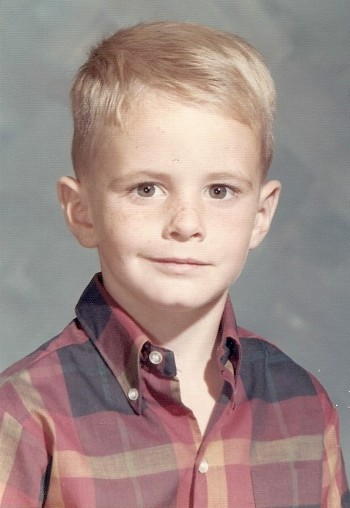 In this original BTB Investigation, we unveil the tragic story of Kirk Murphy, a four-year-old boy who was treated for “cross-gender disturbance” in 1970 by a young grad student by the name of George Rekers. This story is a stark reminder that there are severe and damaging consequences when therapists try to ensure that boys will be boys.
When we first reported on three American anti-gay activists traveling to Kampala for a three-day conference, we had no idea that it would be the first report of a long string of events leading to a proposal to institute the death penalty for LGBT people. But that is exactly what happened. In this report, we review our collection of more than 500 posts to tell the story of one nation’s embrace of hatred toward gay people. This report will be updated continuously as events continue to unfold. Check here for the latest updates.
In 2005, the Southern Poverty Law Center wrote that “[Paul] Cameron’s ‘science’ echoes Nazi Germany.” What the SPLC didn”t know was Cameron doesn’t just “echo” Nazi Germany. He quoted extensively from one of the Final Solution’s architects. This puts his fascination with quarantines, mandatory tattoos, and extermination being a “plausible idea” in a whole new and deeply disturbing light.
On February 10, I attended an all-day “Love Won Out” ex-gay conference in Phoenix, put on by Focus on the Family and Exodus International. In this series of reports, I talk about what I learned there: the people who go to these conferences, the things that they hear, and what this all means for them, their families and for the rest of us.
Prologue: Why I Went To “Love Won Out”
Part 1: What’s Love Got To Do With It?
Part 2: Parents Struggle With “No Exceptions”
Part 3: A Whole New Dialect
Part 4: It Depends On How The Meaning of the Word "Change" Changes
Part 5: A Candid Explanation For "Change"
 At last, the truth can now be told.
Using the same research methods employed by most anti-gay political pressure groups, we examine the statistics and the case studies that dispel many of the myths about heterosexuality. Download your copy today!
And don‘t miss our companion report, How To Write An Anti-Gay Tract In Fifteen Easy Steps.
 Anti-gay activists often charge that gay men and women pose a threat to children. In this report, we explore the supposed connection between homosexuality and child sexual abuse, the conclusions reached by the most knowledgeable professionals in the field, and how anti-gay activists continue to ignore their findings. This has tremendous consequences, not just for gay men and women, but more importantly for the safety of all our children.
Anti-gay activists often cite the “Dutch Study” to claim that gay unions last only about 1½ years and that the these men have an average of eight additional partners per year outside of their steady relationship. In this report, we will take you step by step into the study to see whether the claims are true.
Tony Perkins’ Family Research Council submitted an Amicus Brief to the Maryland Court of Appeals as that court prepared to consider the issue of gay marriage. We examine just one small section of that brief to reveal the junk science and fraudulent claims of the Family “Research” Council.
 The FBI’s annual Hate Crime Statistics aren’t as complete as they ought to be, and their report for 2004 was no exception. In fact, their most recent report has quite a few glaring holes. Holes big enough for Daniel Fetty to fall through.
“Google” is a trademark of Google Inc.
© Box Turtle Bulletin. All Rights Reserved.

 Posts
Posts  Posts via daily email: