Box Turtle Bulletin
 News and commentary about the anti-gay lobby
“Now you must raise your children up in a world where that union of man and box turtle is on the same legal footing as man and wife…”
News and commentary about the anti-gay lobbyPosts for 2009
January 12th, 2009
In an apparent olive branch to the gay community, President-elect Barack Obama’s inaugural committee has announced that the Rt. Rev. Gene Robinson, who became the Episcopal Church’s first openly gay bishop in 2003, will deliver the invocation at the inaugural kickoff at the Lincoln Memorial on Sunday. However, the Obama camp denies that this invitation came about as a response to controversy over Rick Warren’s selection to give the invocation at the inauguration itself:
An Obama source: “Robinson was in the plans before the complaints about Rick Warren. Many skeptics will read this as a direct reaction to the Warren criticism – but it’s just not so.”
This commentary is the opinion of the author and does not necessarily reflect that of other authors at Box Turtle Bulletin.
January 12th, 2009
Well, I’ve said before I had some homework to do this weekend. It turns out that this weekend was jam-packed with unexpected activities, but I did manage to give the NGLTF report (PDF: 420KB/17 pages) a careful read this morning while sipping tea from my family’s heirloom Fiestaware handed down from my great-great grandmother. Yes, I’m a dish queen.
Margin of Error: The Key
Timothy’s Kincaid’s analysis garnered a lot of controversy last week. Many people privately called and emailed to ask if I agreed with it. My only response at the time is that I hadn’t had a chance to look over the NGLTF report or Timothy’s analysis, but I generally trust his judgment. Well, now I have studied the report, and I do think it falls short, but in very different ways than what Timothy found.
My concerns about this report begin with one important paragraph on page 2:
Table 1 displays findings from a poll of California voters conducted by David Binder Research (DBR) between November 6th and 16th, 2008. The survey included 1,066 respondents selected at random from state voter registration lists, including an oversample of 266 African American, Latino, and Asian-American voters. Participants were asked a series of questions about Proposition 8, as well as basic questions about their demographic background, religion, political views, and other characteristics. The sample in the DBR survey was limited to those who reported voting in the November 4 general election, and its margin of error was 3 percentage points (although the margin is greater for analyses of subgroups within the sample).
The DBR survey is the backbone of this study. That three-percent margin of error applies only to the 1,066 respondents overall, not to the smaller sample of 266 African-American, Latino, and Asian-American voters. The authors acknowledge that “the margin is greater for analyses of subgroups within the sample,” but they don’t tell you what those margins are. This is important, because as sample sizes get smaller, the margin of error gets larger.
A simple calculation for the 266 African-American, Latino, and Asian-American voters reveals that this margin of error is actually plus or minus 6 percentage points. That is margin of error for the three groups combined. Nowhere in this report is a breakdown of the three groups revealed. Of the 266 participants in the subgroup, how many were African-American?
Since they don’t tell us, we’re left to guess. If Blacks made up half of that pool, then responses from African-Americans alone are subject to an 8.5% margin of error. Cut that in about half again to separate the church-going from the non-church-going, then you’re up to about a plus or minus 12 percentage point margin of error for the two groups of African-Americans separately. If Blacks only made up a third of that pool, then the margins of error are greater still — about 10.4% and 14.7% respectively. This is huge. How do these large margins of error affect the rest of the report?
Religiosity As An Explanation
To see, let’s move on to this graphic, which illustrates the religiosity of the four ethnic groups using the DBR survey data with the margins of error we just talked about. You’ll have to click on the image to see it clearly:

According to the DBR survey, 57% of African-American voters attend church service weekly, compared to 40% for Asians, 47% for Latinos, and 42% for White. The authors assert that the differences between African-Americans and the rest of the population is statistically significant, which checks out according to the standard measures for statistical significance. Even with this small sample size and large margin of error, the DBR data does successfully demonstrate that African-Americans are more likely to attend weekly religious services than the other groups.
That then leads us to this graphic, based again on the same DBR survey. Again, you’ll have to click on it to see clearly:

The authors say that the differences shown in this graph between ethnic groups are not statistically significant, and they conclude that this shows that religiosity explains the differences in how African-Americans voted relative to everyone else.
Well, at least one part of their statement is absolutely correct. The differences between ethnic groups in the figures referenced in this table are not statistically significant according to all the standard measures of significance — but that’s because the sample sizes are so small.
There is a logical fallacy in saying that just because this data shows no statistically significant difference, that there is no actual difference. That’s not true. All we can say is that this data is incapable of showing a statistically significant difference based on these results and these small sample sizes. It cannot demonstrate that there is no difference in actuality. Remember, we’re dealing with a probable margin of error for the African-American churchgoing sample of somewhere in the neighborhood of plus or minus 12% to 14.7%. With an uncertainty that large, these numbers could be all over the place and still be a statistical tie. Any assessment of actual differences is completely swamped by the margins of error.
If the study consisted of a larger pool of African-American respondents to get a lower the margin of error, we might have been able to converge on a statistically significant difference. Or maybe then we can prove that there really is no difference in how religious African-Americans voted compared to the other groups. But with this data, we cannot tell either way. The Achilles Heel in this study remains the very small sample size for African-Americans and the resulting large margins of error for that sample. I don’t think they are able to make the case that religiosity explains the African-American vote with this data.
The African-American Vote on Prop 8
So how did African-Americans vote? Let’s go to this graphic from the NGLTF report:

The NGLTF study is being used to throw cold water on CNN’s NEP exit poll, which said that 70% of African-Americans supported Prop 8. The middle set of bars are the NEP exit poll, which shows African-Americans voting 70% for Prop 8 (in gray) versus 52% overall voting for Prop 8 (in black). The graphic also shows two surveys taken before the election (The Field Poll of 10/23 and SurveyUSA on 10/30) and two surveys taken after the election (the DBR poll we’ve already mentioned showing 58% of African-Americans supporting Prop 8 versus 51% overall on 11/11, and the SurveyUSA on 11/19). The study authors note:
As shown in Figure 2, two surveys conducted just before Election Day (by Field and SurveyUSA) found insignificant differences in support for Proposition 8 between African Americans and Californians as a whole. Two surveys conducted in the weeks following Election Day found similar results. On average, the difference in support between African Americans and all voters in these four surveys was just two percentage points. The NEP exit poll finding—that black support for Proposition 8 was 18 points higher than Californians as a whole—is most likely an “outlier,” a result that is very different than what concurrent data trends suggest to be the case. [Emphasis mine]
The authors dismiss the NEP exit poll as an outlier, an assessment that I can agree with. Exit polls, by their nature, don’t include margins of error. But since it is likely that the sample size of African-Americans was very small in this exit poll, I can accept that it is probably not an accurate snapshot of how African-Americans voted.
However, the study authors claim that the four remaining surveys show a difference of just two percentage points on average. True enough, in a strictly mathematical sense. But since the last SurveyUSA was the only survey showing African-Americans actually opposing Prop 8 to a remarkable degree compared to everyone else — that difference is a whopping eight percentage points in the other direction — I don’t see how we can regard that as anything but an outlier as well. So, with the three remaining polls, the difference is now back up to five percentage points.
Is this significant? I can’t tell, since again, we don’t know the sample sizes of African-Americans in these polls to judge whether they are robust enough to draw a reasonable conclusion.
The problem of sample sizes and margins of error, in my mind, does lay to rest one of Timothy’s concerns, and that is this:
In their Table 1, they lay out their breakdown of ethnic voting:
Well sorry, but those numbers don’t get us to 52.3% support. One of those ethnic demographics is understated.
Given the likely margins of error involved, I don’t think that this chart is off base entirely. No poll is likely to mimic the 52.3% of the actual vote at the means, but shoving all of these figures around their margins of error will get there quite easily. (I also wonder if maybe there ought to be an “other” category not included in the table.)
Fifty-eight percent as a very rough ballpark figure could be about right for the African-American vote. But given some of the margins of error we tossed around earlier, that figure could be as high as about 67% to 70%, or as low as 49% to 46%. Which means that if we used the DBR survey as the reference survey as the NGLTF study authors did, then none of those surveys which I (or the NGLTF authors) suggested were outliers may be outliers after all. The DBR survey may well validate all of them.
The study authors then replicate a 58% estimate by using data depicted in this figure, which is based on precinct-level voting data from five California counties:

The line drawn through the figure represents a “running-mean smoother” to show the overall trend as the racial mix of precincts moves from 0% to 100% African-American. Unlike Timothy, I’m satisfied with this representation which the authors use to arrive at a 58% figure for African-Americans, although I am keen to learn the algorithm for the smoother. But generally this verifies what many of us suspect: Those who live in diverse settings are more comfortable with diversity. Those who don’t, aren’t.
The reason I’m okay with this is that the authors also ran this same data set through two other independent analyses which led them to report a degree of comfort with an estimate of 58% of African-Americans voting for Prop 8. They do caution however, that “rather than being treated as definitive, these estimates should be considered as helping to corroborate the individual-level findings discussed earlier in this section of the study” — namely, the discussion of the five surveys we discussed earlier.
But in the end, I do believe the authors were successful in demonstrating that the Black vote may be closer to 58% than 70%. The higher figure, technically speaking, still barely remains in the theoretical realm of possibility, but I think we can safely dismiss it. But I would also caution that 58% might not be accurate either.
Can The Scapegoating End?
But if 58% is plausible, does this mean that the scapegoating of African-Americans can come to an end? Of course it does.
But what if the authors instead determined that the figure was closer to 70%? Would that have meant that blaming African-Americans for Prop 8’s passage was legitimate? Ask yourself this and take a hard look at how you answer, because this is critical to where our movement goes next. The answer to this question speaks loudly to our own character as a community.
If all it takes is a survey to give one oppressed minority the justification it needs to blame another oppressed minority for its woes, then we have a lot more work to do before we can credibly address society’s attitudes about fairness and equality. We will have to change our own attitudes first.
We cannot assume that one oppressed minority ought to automatically empathize with another oppressed minority’s oppression. If that were true, Jews and Palestinians would see themselves in each other and peace would break out all over the Middle East. Well that certainly hasn’t happened, has it?
Just to touch the tip of a few icebergs, gays were never enslaved or lynched in mass numbers. Non-Black gays really have no idea what it’s like to have that in their history. On the other hand, heterosexual Blacks were never obliged to undergo cruel “cures,” nor were they ostracized from their own families because of their Blackness. We really don’t know — internally know — the other’s experiences with history, and we can no longer be so naive in assuming that others will naturally see and recognize our experiences with discrimination just because they were discriminated against in a different way for different reasons.
So we must begin the task of reaching out to the African-American community, and more importantly, we need to work to raise the visibility of African-Americans within our own raucous LGBT family. If we want to confront homophobia in the Black community, we must also deal with examples of both overt and underlying racism within our own.
And we need to talk honestly and listen patiently to each other. We need to do this not to “educate” the other, as though we had some sort of special prize that we wish to arrogantly bestow on some poor, unenlightened folks. Instead, we need to do this with the sincere intent of understanding each other and ourselves better.
We need to do this not because a survey says we ought to. We need to do this because it is the right thing to do.
And we need to do this not just because elections are at stake, but because lives are at stake as well.
January 12th, 2009
 A married elementray school teacher in Abington, MA has been arrested and charged with seven counts of statutory rape of a teen. The boy was thirteen years old when he lost his virginity to Christine A. McCallum, 29, a teacher at an Abington elementary school. McCallum plied the boy with alcohol and had her way with him an estimated 300 times. According to the now-sixteen year old teen, this went on for about 18 months, about every other day. The seven counts in the indictments represent specific incidents that police were able to document.
Some of these trysts happened in the teacher’s home as her husband slept upstairs. She also wrote him passionate love letters, some of which are now in police custody. McCallum’s neighbors, of course, who are also probably all heterosexuals themselves since Abington is an overwhelmingly heterosexual community, all claimed they didn’t know what was going on.
You can read more about what heterosexuals really want here, and in our report, “The Heterosexual Agenda: Exposing the Myths.”
[Hat tip: Peter, who read this halfway around the world in Australia.]
January 11th, 2009
The Southern Voice is reporting:
Rev. Al Sharpton is coming to Atlanta to bless the start of a new religious organization that aims to unite gay-friendly churches. Sharpton is the keynote speaker at the Human Rights Ecunemical Service today at 5 p.m. at Tabernacle Baptist Church.
The Alliance of Affirming Faith Based Organizations is the effort of a number of Atlanta ministers, including Pastor Dennis Meredith of Tabernacle Baptist Church and Rev. Dr. Kenneth Samuel of Victory Church in Stone Mountain.
January 11th, 2009
 We have previously discussed how President-Elect Obama’s selection for his inaugural invocation, Rick Warren of Saddleback Church, has sought to meddle in the current internal affairs of the Anglican fellowship in Africa. He has, on the international stage, sided with those who are anti-gay.
Well now it seems that Warren wants to meddle on a local scale.
Last week, the California Supreme Court found that the current leadership and congregation at St. James Parish in Newport Beach could not just walk away from the Episcopal Church and take the buildings and property with them. This left those discontented with the Episcopal denomination without a physical home.
The Episcopal Church is hoping that the physical ownership of the site will remove leverage from the local anti-gay activists and will allow for this congregation to be again a part of the fold.
But it seems that this does not fit with Warren’s agenda. He is encouraging the congregation to stay in discord and is offering the assets of Saddleback to keep the pot bubbling. Christianity Today has extractions from letters written by Warren:
… [The Episcopal Church has] already considered me an adversary after partnering on projects with Kolini, Orumbi, and Nzimbi, and writing the TIME bio on Akinola.
But since last summer… I’ve been on Gene Robinson and other’s attack list for my position on gay marriage. ….[Our] brothers and sisters here at St. James in Newport Beach lost their California State Supreme Court case to keep their property.
We stand in solidarity with them, and with all orthodox, evangelical Anglicans. I offer the campus of Saddleback Church to any Anglican congregation who need a place to meet, or if you want to plant a new congregation in south Orange County.
Rick Warren has, in so many words, declared war on the Episcopal Church.
It is one thing to take an anti-gay position based on one’s theology. It is quite another to encourage schism in another denomination. It is now time for the Episcopal Church to make a formal protest to the President Elect. Rick Warren cannot invoke blessing on a nation if he is seeking to divide a denomination of which he is not even a part.
Further, the ECUSA should be joined by every church body sharing the belief that those who seek discord should not be given a place of prestige. I do not doubt for a moment that Rick Warren will endeavor to bring about splits in the Presbyterian (USA) and United Methodist denominations if he is left unchecked.
January 11th, 2009
Oops! Some of you might have seen a post in this space titled, “The NGLTF Study On Race and Prop 8” It was a first draft of something I am working on for tomorrow morning. I put all my thoughts in this software thingy, left a few open questions for me to go and look into further in my notes, and left to take a shower. When I returned, I found that instead of hitting the “Save” button, I somehow managed to hit “Publish”. My bad. I’m afraid you’ll have to come back tomorrow. Meanwhile, there’s still Timothy’s discussion which is still getting a lot of attention, pro and con.
January 11th, 2009
 Rev. Kenneth W. Chalker, senior pastor of First United Methodist Church in Cleveland, as also weighed in on Rev. C. Jay Matthews’ attempts to overturn Cleveland’s toothless Domestic Partnerships. He says that Matthews and others are confusing religion with faith:
It is not unlike the pastors 150 years ago who proclaimed the Bible’s endorsement of slavery as a legitimate enterprise, argued that there was no valid marriage between slaves, and therefore no reason to recognize loving relationships between slaves or recognize, in a legal way, their children.
It is not unlike a number of leading pastors in Birmingham, Ala., who joined together in 1963 to give biblically endorsed reasons why the Rev. Dr. Martin Luther King Jr. was out of line and moving too fast with his advocacy for civil rights and the elimination of legal segregation based on race and skin color.
It is all the result of confusing religion with faith.
January 11th, 2009
Ever since we learned that Cleveland passed a Domestic Partnership Registry last month — the one which proved extremely controversial among some council members, the one that is still so controversial that Rev. C. Jay Matthews of Mount Sinai Baptist Church is trying to overturn it — we’ve been trying to figure out what that registry provides. According to the Cleveland Plain Dealer’s Connie Schultz, it’s not much at all:
The registry just guarantees that unmarried couples with none of the legal rights of marriage can pay the city a fee to document that they are unmarried couples with none of the legal rights of marriage.
It’s as if Cleveland City Council said, “Look, we know that all committed adult couples should be equal in the eyes of the law, but we just can’t bring ourselves to say that out loud, ‘kay?”
Now, the registry does arm gays and lesbians with a defense, sort of, against greedy relatives, self-righteous clergy and all sorts of official-looking people who think only heterosexuals should have the legal right to marry, no matter how many times it takes them to get it right. To be specific, the registry gives homosexual couples a piece of paper to call their own.
For example, let’s say you’re gay and weeping over the body of your recently deceased partner when her parents show up at the funeral and demand the keys to the house you shared for the last 20 years. If the house was in her name only, I’m afraid you’re still headed for a rental with a futon, but now you can whip out that sheet of domestic registry paper, wave it wildly and shout, “We are too a couple. Says so right here on this document.”
Much better, don’t you think?
This is what the fuss is all about?
January 11th, 2009
We are trying out Gabriel Arana as a possible new contributor to Box Turtle Bulletin. Gabriel is a graduate of linguistics from Cornell University, and he is now pursuing a career in journalism. Some of you may remember him as a former patient of ex-gay therapist Dr. Joseph Nicolosi. While he’s had a personal blog for some time, he’s new to the world of LGBT community blogging. He’s an Arizona native — specifically from Nogales on the U.S./Mexico border — but he now makes his home among the bright lights of New York City. Please welcome Gabriel to the pad. — Jim Burroway.
With the LGBT legal community’s eyes set on fighting for marriage rights, another important issue that reinforces negative attitudes toward gays has gone largely unmentioned: the law concerning defamation and false accusations of homosexuality.
Rulings vary by jurisdiction over whether it is defamatory to out someone falsely, reflecting the fragmented evolution of social and legal attitudes in different areas of the country.
Examples include the case of a Los Angeles judge who awarded Tom Cruise $10 million in a libel suit against a man who claimed Cruise was his lover. Other courts have ruled the opposite, including Boston judge Nancy Gertner, who in 2004 ruled that “a statement implying that an individual is a homosexual is hardly capable of a defamatory meaning.”
The issue here — and its significance for LGBT policy — is perhaps more easily understood by analogy to a schoolyard fight. If a kid calls another kid gay, should the teacher tell him to stop or, believing that there is nothing wrong with being gay and being identified as such, ignore the negative consequences that arise from the teasing?
Some background: According to libel (printed statements) and slander (typically oral statements) law, a plaintiff must prove the following in order to establish defamation:
There are two countervailing positions to consider:
1. Courts should not recognize defamation lawsuits based on the (false) accusation of homosexuality.
This is perhaps the goal — to live in a society in which being gay is a neutral descriptor that has neither a positive nor negative connotation. Defamation lawsuits based on gay accusations enshrine the perception of homosexuality as something bad and further reinforce this belief. Courts are not in a position to define homosexuality as a stain on someone’s reputation.
2. Courts should recognize such lawsuits until the social mores of the society change.
No one wants to wait for social norms to change, but the standard for harm is subjective: whether or not calling someone gay “[hurts] the reputation” of a person depends on how the community feels about homosexuality. The function of the Court is not to determine whether a certain attribute is desirable or not, but merely establish that being labeled as such leads to diminished reputation/harm. Dismissing such suits leaves plaintiffs who have lost their jobs or suffered other damages with no recourse.
Of course the question of whether people who actually are gay should be outed or not (e.g. as in the case of gay politicians like Mark Foley who pass anti-gay legislation) is not a defamation issue — the one surefire defense against defamation is that the published information is true.
In any scenario, the solution to this problem from a policy standpoint involves changing public opinion, a task taken up by a good number of activist organizations. The more thorny issue is what the strategy among legal advocates should be. This may or may not be a case in which the law must trail — and not lead — social progress.
January 10th, 2009
Incoming White House Press Secretary Robert Gibbs is featured in a second YouTube post addressing questions submitted by ordinary citizens via President-Elect Barack Obama’s change.gov web site. After five other questions about the economy, “No Child Left Behind,” transportation, sound science, and health care, Gibbs came to this question at the 4:16 mark:
Thaddeus from Lansing, Michigan asks, “Is the new administration going to get rid of the ‘don’t ask, don’t tell’ policy?” Thaddeus, you don’t hear a politician give a one-word answer much, but it’s ‘Yes’.”
Of course, saying ‘yes’ and giving an indication of a timetable or priority is two different things. We’ll see.
January 10th, 2009
From the AP:
The Episcopal Diocese of Colorado is ending its so-called “period of restraint” on ordaining gay priests.
Bishop Robert O’Neill ordained Mary Catherine Volland to the priesthood during a ceremony at St. John’s Cathedral on Saturday.
January 10th, 2009
Gainesville, Florida, has an ordinance allowing transgender persons to select whichever bathroom they find most appropriate. The haters and the fools have come up with a campaign to overturn this ordinance and to require transgendered persons to… well, I’m not sure exactly.
This is the television ad they are running:
http://www.youtube.com/watch?v=10vo0jaGjscTransgender persons – like any group – are too complex to make many absolute statements. But I’m willing to say with absolute confidence that there is not a single solitary male-to-female transgender out there that lurks around in public looking like this guy. And there isn’t a police force on the planet (much less Gainesville) that wouldn’t arrest this dude.
Ironically, however, this appearance would not be out of the question for a female-to-male transgender. And I just wonder just which bathroom the Citizens for Good Public Policy would want him to use.
Of course, their effort have nothing to do with where a T-girl pees. It’s just a cover for an anti-gay, anti-trans agenda.
The proposed amendment, if approved by the voters of Gainesville, will require the city’s civil rights categories (contained in the Code of Ordinances) to match the State of Florida’s civil rights categories. This action will remove two current categories—sexual orientation and gender identity disorder—as well as nullify current laws, such as the Gender Identity Ordinance, that specifically pertain to these categories.
The Good Citizens just want to have the right to discriminate.
January 9th, 2009
 Rev. Kenneth L. Samuel, Senior Pastor of Victory For the World United Church of Christ in Stone Mountain, GA., has written a stirring op-ed in the Daily Voice, supporting the protests against Rick Warren as Obama’s choice to give the Inaugural invocation, as well as Warren’s invitation to speak at the Dr. Martin Luther King, Jr. celebration at Atlanta’s Ebenezer Baptist Church in January. Dr. Samuel writes:
While expressing some disagreement with Rev. Warren’s views about gay people, most [civil rights] leaders have generally defended his invitations to participate in these events based upon the conviction that both Barack Obama and Martin Luther King, Jr. stand for reaching out to persons of divergent views and bringing them together in dialogue.
While there is great value in such a conviction, the fact is that Rick Warren has not been invited into a dialogue at either occasion. He has been invited to invoke God’s presence on behalf of the nation at one occasion and to speak in tribute to the life and legacy of Martin Luther King, Jr. at the other.
To be sure, if Reverend Warren had been invited into a dialogue about marriage equality, he most likely would have declined…
I am certain that gay rights groups and their allies would certainly prefer to be joining hands and hearts with the Obama administration and the King Center in the quest to re-vitalize the American economy, improve public education, save Social Security, provide universal health care, protect the environment and end the war in Iraq.
Instead, we must now deal with the sting of having been again slapped in the face by fellow fire fighters before we can even focus on putting out the fire which threatens to engulf everyone’s house. These ‘minor’ insults are actually ‘major’ distractions that we should no longer allow. Lest we continue to be derailed from the common aim of “liberty and justice for all”, the protests must proceed.
[Hat tip: HRC Backstory]
January 9th, 2009
 Last month, we learned that Cleveland was about to offer a Domestic Partnership registry. Now we learn that opponents are determined to derail the measure.
Rev. C. Jay Matthews of Mount Sinai Baptist Church failed in his first attempt to gather 11,000 signatures by Wednesday to force a citywide vote on the measure. He’s now focusing efforts on what is called an ordinance by initiative. It requires 5,000 signatures to submit legislation to city council for a vote. If the City Council doesn’t pass it, it goes to the voters. Matthews hopes to be able to submit the legislation by April.
This commentary is the opinion of the author and does not necessarily reflect that of other authors at Box Turtle Bulletin.
January 9th, 2009
When I first looked at CNN’s exit polling data on November 5th for Prop 8, my first reaction was pretty simple — and I quote, “We have done a very poor job in reaching out to the African-American community.” That was on seeing the exit poll which said that African-Americans voted for Prop 8 by a 70%-30% margin. Leave aside whether this figure is accurate or not, it was emblematic to me of a plain and undeniable fact, one that Andrew Sullivan recently backed up with other polling data — that “African-Americans are more opposed to gay equality than any other ethnic group.” And we failed yet again in reaching out to make a dent in that dynamic.
But to my dismay, that wasn’t the larger reaction. Instead, people pounced on those numbers and said, “Ah-hah! That’s why we lost!” The polling numbers became a sort of get-out-of-jail free card for many of us who fought to defeat these marriage amendments in California, Arizona and Florida. We get to wash our hands and say, “If it hadn’t been for those people, we would have won!”
The problem, of course, is that we know the dangers of blaming a minority group for someone else’s troubles. Graveyards around the world are filled with the results of that kind of scapegoating. And yet, that is what this morbid debate has devolved into. One side says it is the African-American community’s fault that Prop 8 passed. The other side says no it isn’t; the exit polling data is flawed.
Well thankfully, the NGLTF came to the rescue with a study which lets that besieged minority off the hook. Which is good as far as that beleaguered minority is concerned, because now everyone’s rushing to embrace it with a palpable sense of relief. See? It wasn’t their fault after all! Whew! Well okay then, let’s talk about something else…
But then, all of the sudden, this humble little web site stirred the pot again, and we’ve gotten an awful lot of attention around the blogosphere lately because Timothy Kincaid looked at the study and saw some things he felt didn’t add up. And now the grand debate is back on: are African-Americans to blame or aren’t they? And there’s an added twist this time: What’s the deal with Timothy not letting them off the hook? (For an answer there, I encourage everyone to re-read Timothy’s last five paragraphs — they deserve a post of their own.)
Let me say that I have not looked at NGLTF’s study, nor have I looked into Timothy’s analysis of it. That means I have some homework to do this weekend. I generally trust Timothy’s judgment and his analytical skills. But beyond that, I won’t comment on this particular study until I get a chance to look at it myself.
But I think we all can agree — in fact, I think it is indisputable — that there is a very large divide between the gay community and the African-American community. That the problem of homophobia is higher in the black community than it is among Latinos and Whites. (And that homophobia isn’t exactly a small thing among Latinos and Whites either.) I don’t think anyone who has been paying attention can dispute any of this.
We don’t need studies or polls to define the problem. All they do is throw quantitative numbers at it, and allow us to operate under the delusion that if we can only somehow change the numbers, the problem will somehow go away. NGLTF changed the numbers — or at least they gave us a study with numbers we’d much rather see. Okay, maybe the Black vote didn’t lose the election for us, I don’t know. But somehow I don’t think the problem of Black homophobia is any better. Yet it appears that too many of us like NGLTF’s numbers so much better that we’d rather pretend the problem just went away so we could go on whistling happily in the dark.
Or worse, we can conclude — as the No on 8 campaign did before the election — that the number of voters among African-Americans were small and not worth engaging after all. Even though Black leaders were at the ready to speak out against Prop 8.
So let me say this loud and clear: It is not the African-American community’s fault that Prop 8 passed. And I do agree with at least one point in the NGLTF’s press release: To say that African-Americans caused Prop 8 to pass is a myth. It is an evil, pernicious, odious myth.
It is axiomatic in politics that the glory of winning a race goes to the winning campaign. The corollary then is that the blame for losing a race goes to the losing campaign. And as one who served as chair for a grass-roots effort to defeat Prop 102 in Arizona, I bear the blame for what happened here as well. In fact, I’ll cop to a huge failure right now: I cannot even claim that many of my best friends are Black with a clear conscience. I suspect more of us White LGBT people share that failure than we care to admit.
If we aren’t willing to admit to our own failures, then we’re just doomed to more failures in the future. And our failure in not asking specifically for Black votes — using Black voices, Black media, Black leaders, Black entertainers, Black opinion makers — while addressing Black concerns and misconceptions, well that was a whopper. The black vote may or may not have ensured Prop 8’s passage. But our failure by not asking directly for the Black vote meant that we got precisely the result what we asked for.
That is clearly our fault, and we need to own it if we want anything to ever change in the future. In fact, we need to regard the entire failure of Prop 8, Prop 102 and Amendment 2 as though they were our fault. That is the only way we can generate the sense of urgency it will take to change how we deal with propositions like this in the future. Because after thirty some defeats, we clearly need to do something different, and we need to do it urgently.
So what do we do now? Do we continue to engage in the false debate over who’s to blame for Prop 8’s passage? Does anyone really think that such a debate gets us anywhere? Or do we instead roll up our sleeves and try to find opportunities to actually talk to Black people — including leaders and opinion makers — to listen to their concerns, address them, stand up with them, and show by example that we’re all in this together? That when one of us is diminished, we all are diminished?
Or do we continue to diminish someone else? Because right now, that’s the path we’re on. And that does nobody any good, especially Black LGBT people who are caught in the middle of all of this with all too tragic consequences.
So, who’s really to blame for Prop 8’s passage?
I am!
And I am committed to making the hard changes required to keep it from happening again. I am committed to changing what hasn’t worked before.
As long as there is anyone else we can blame, we will have an excuse to sit back and do nothing differently. And if we do nothing differently, then we will have no right to expect a different result.
Who else has the guts to join me?
Featured Reports
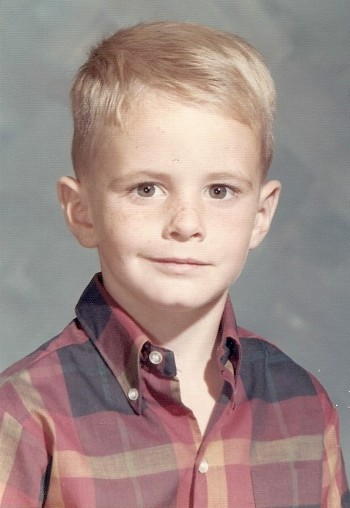 In this original BTB Investigation, we unveil the tragic story of Kirk Murphy, a four-year-old boy who was treated for “cross-gender disturbance” in 1970 by a young grad student by the name of George Rekers. This story is a stark reminder that there are severe and damaging consequences when therapists try to ensure that boys will be boys.
When we first reported on three American anti-gay activists traveling to Kampala for a three-day conference, we had no idea that it would be the first report of a long string of events leading to a proposal to institute the death penalty for LGBT people. But that is exactly what happened. In this report, we review our collection of more than 500 posts to tell the story of one nation’s embrace of hatred toward gay people. This report will be updated continuously as events continue to unfold. Check here for the latest updates.
In 2005, the Southern Poverty Law Center wrote that “[Paul] Cameron’s ‘science’ echoes Nazi Germany.” What the SPLC didn”t know was Cameron doesn’t just “echo” Nazi Germany. He quoted extensively from one of the Final Solution’s architects. This puts his fascination with quarantines, mandatory tattoos, and extermination being a “plausible idea” in a whole new and deeply disturbing light.
On February 10, I attended an all-day “Love Won Out” ex-gay conference in Phoenix, put on by Focus on the Family and Exodus International. In this series of reports, I talk about what I learned there: the people who go to these conferences, the things that they hear, and what this all means for them, their families and for the rest of us.
Prologue: Why I Went To “Love Won Out”
Part 1: What’s Love Got To Do With It?
Part 2: Parents Struggle With “No Exceptions”
Part 3: A Whole New Dialect
Part 4: It Depends On How The Meaning of the Word "Change" Changes
Part 5: A Candid Explanation For "Change"
 At last, the truth can now be told.
Using the same research methods employed by most anti-gay political pressure groups, we examine the statistics and the case studies that dispel many of the myths about heterosexuality. Download your copy today!
And don‘t miss our companion report, How To Write An Anti-Gay Tract In Fifteen Easy Steps.
 Anti-gay activists often charge that gay men and women pose a threat to children. In this report, we explore the supposed connection between homosexuality and child sexual abuse, the conclusions reached by the most knowledgeable professionals in the field, and how anti-gay activists continue to ignore their findings. This has tremendous consequences, not just for gay men and women, but more importantly for the safety of all our children.
Anti-gay activists often cite the “Dutch Study” to claim that gay unions last only about 1½ years and that the these men have an average of eight additional partners per year outside of their steady relationship. In this report, we will take you step by step into the study to see whether the claims are true.
Tony Perkins’ Family Research Council submitted an Amicus Brief to the Maryland Court of Appeals as that court prepared to consider the issue of gay marriage. We examine just one small section of that brief to reveal the junk science and fraudulent claims of the Family “Research” Council.
 The FBI’s annual Hate Crime Statistics aren’t as complete as they ought to be, and their report for 2004 was no exception. In fact, their most recent report has quite a few glaring holes. Holes big enough for Daniel Fetty to fall through.
“Google” is a trademark of Google Inc.
© Box Turtle Bulletin. All Rights Reserved.

 Posts
Posts  Posts via daily email: