Box Turtle Bulletin
 News and commentary about the anti-gay lobby
“Now you must raise your children up in a world where that union of man and box turtle is on the same legal footing as man and wife…”
News and commentary about the anti-gay lobbyDecember 30th, 2012
TODAY’S BIRTHDAY:
 Beauford Delaney: 1901. His mother had been born into slavery and never learned to read or write. Because of her experiences, and in keeping with the family’s hard-fought position of respectability in Knoxville where his father was a Methodist minister, the values of dignity, education and a keen awareness of injustices were paramount in the Delaney household. Beauford and his younger brother, Joseph, developed an interest in art at an early age, when they drew copies of pictures they saw on Sunday school cards and the family Bible. As a teenager, Beauford got a job at a local sign company, where his work was noticed by Lloyd Branson, Knoxville’s best known artist. Delaney became Branson’s apprentice and, with Branson’s backing, moved to Boston to study art in 1924. His escape from the Jim Crow south opened up a huge world, where he learned the essentials of painting techniques, was first exposed to the black activist politics, and experienced his first intimate encounter with another young man.

Beauford Delaney, “Can Fire In The Park”, 1946
By 1929, Beauford used up Boston and moved to Harlem, which coincided with the great artistic and political flowering known as the Harlem Renaissance. Despite being penniless during the early crushing years of the Great Depression, Delaney found an affinity with the “multiple of people of all races [who] spend every night of their lives in parks and cafes.” As he wrote in his journal, their courage inspired him to believe that “somehow, someway there was something I could manage if only with some stronger force of will I could find the courage to surmount the terror and fear of this immense city and accept everything insofar as possible with some calm and determination.”
That calm and determination became the subject of some of his greatest works. Delaney eventually found work here and there — as a bellhop, telephone operator, doorman, janitor — while also finding, slowly, an audience for his paintings. He rubbed shoulders Georgia O’Keefe and Henry Miller, and became close friends with author James Baldwin (see Aug 2), and yet he remained an isolated individual, presenting carefully crafted faces to the people he encountered depending on where he was. To his neighbors in Greenwich Village, where his studio was, he was part of a larger gay (and mostly white) circle of friends; in Harlem, he kept his other life hidden. The decidedly macho world of modernist and impressionist art in New York undoubtedly added to his isolation. Those who knew him saw an introverted and private person, one who had apparently never formed any lasting romantic relationships.

Beauford Delaney, “Nativity Scene,” 1961.
In 1953, Delaney moved to Paris where he found a greater sense of freedom in an already well-established expatriate community of ex-patriate African-American artists. His paintings shifted from the figurative images of his New York period to more of an abstract impressionist exploration of color and light. But by 1961, his mental and physical health began to deteriorate, problems which were compounded by continuing poverty, hunger, and heavy drinking. Baldwin remembered, “He has been starving and working all of his life – in Tennessee, in Boston, in New York, and now in Paris. He has been menaced more than any other man I know by his social circumstances and also by all the emotional and psychological stratagems he has been forced to use to survive; and, more than any other man I know, he has transcended both the inner and outer darkness.”
Delaney returned briefly to the U.S. in 1969 to visit family, but he was dogged by paranoia and hallucinations. He returned to Paris in 1970 and tried to resume working, but it became increasingly clear to his friends that he was no longer capable of living independently. In 1975, he was hospitalized, then committed to St. Anne’s Hospital for the Insane. He died there in 1979, and was buried in an unmarked grave.
Denaley’s work was mostly forgotten through much of the 1970s and 1980s, despite his influence on fellow artists. In 1986, Baldwin wrote that Delaney was “the first living proof, for me, that a black man could be an artist. In a warmer time, a less blasphemous place, he would have been recognised as my Master and I as his Pupil. He became, for me, an example of courage and integrity, humility and passion. An absolute integrity: I saw him shaken many times and I lived to see him broken but I never saw him bow.”
Latest Posts
Featured Reports
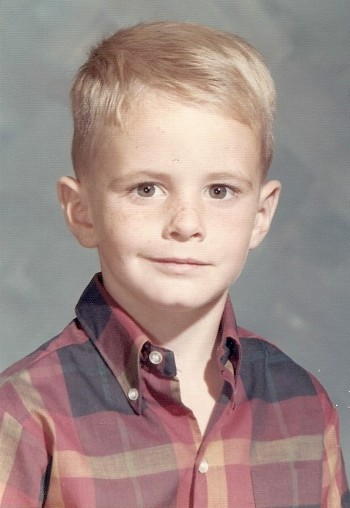 In this original BTB Investigation, we unveil the tragic story of Kirk Murphy, a four-year-old boy who was treated for “cross-gender disturbance” in 1970 by a young grad student by the name of George Rekers. This story is a stark reminder that there are severe and damaging consequences when therapists try to ensure that boys will be boys.
When we first reported on three American anti-gay activists traveling to Kampala for a three-day conference, we had no idea that it would be the first report of a long string of events leading to a proposal to institute the death penalty for LGBT people. But that is exactly what happened. In this report, we review our collection of more than 500 posts to tell the story of one nation’s embrace of hatred toward gay people. This report will be updated continuously as events continue to unfold. Check here for the latest updates.
In 2005, the Southern Poverty Law Center wrote that “[Paul] Cameron’s ‘science’ echoes Nazi Germany.” What the SPLC didn”t know was Cameron doesn’t just “echo” Nazi Germany. He quoted extensively from one of the Final Solution’s architects. This puts his fascination with quarantines, mandatory tattoos, and extermination being a “plausible idea” in a whole new and deeply disturbing light.
On February 10, I attended an all-day “Love Won Out” ex-gay conference in Phoenix, put on by Focus on the Family and Exodus International. In this series of reports, I talk about what I learned there: the people who go to these conferences, the things that they hear, and what this all means for them, their families and for the rest of us.
Prologue: Why I Went To “Love Won Out”
Part 1: What’s Love Got To Do With It?
Part 2: Parents Struggle With “No Exceptions”
Part 3: A Whole New Dialect
Part 4: It Depends On How The Meaning of the Word "Change" Changes
Part 5: A Candid Explanation For "Change"
 At last, the truth can now be told.
Using the same research methods employed by most anti-gay political pressure groups, we examine the statistics and the case studies that dispel many of the myths about heterosexuality. Download your copy today!
And don‘t miss our companion report, How To Write An Anti-Gay Tract In Fifteen Easy Steps.
 Anti-gay activists often charge that gay men and women pose a threat to children. In this report, we explore the supposed connection between homosexuality and child sexual abuse, the conclusions reached by the most knowledgeable professionals in the field, and how anti-gay activists continue to ignore their findings. This has tremendous consequences, not just for gay men and women, but more importantly for the safety of all our children.
Anti-gay activists often cite the “Dutch Study” to claim that gay unions last only about 1½ years and that the these men have an average of eight additional partners per year outside of their steady relationship. In this report, we will take you step by step into the study to see whether the claims are true.
Tony Perkins’ Family Research Council submitted an Amicus Brief to the Maryland Court of Appeals as that court prepared to consider the issue of gay marriage. We examine just one small section of that brief to reveal the junk science and fraudulent claims of the Family “Research” Council.
 The FBI’s annual Hate Crime Statistics aren’t as complete as they ought to be, and their report for 2004 was no exception. In fact, their most recent report has quite a few glaring holes. Holes big enough for Daniel Fetty to fall through.
“Google” is a trademark of Google Inc.
© Box Turtle Bulletin. All Rights Reserved.
 Posts
Posts  Posts via daily email:
Manheart
December 30th, 2012
What a beautiful tribute to such an interesting person. May he rest in peace.
iDavid
December 30th, 2012
Truly a beautiful tribute to a man I did not know, but do know of his ups and downs called the human condition. Of this I’ve had the same. Within this I know him well.
Leave A Comment