Box Turtle Bulletin
 News and commentary about the anti-gay lobby
“Now you must raise your children up in a world where that union of man and box turtle is on the same legal footing as man and wife…”
News and commentary about the anti-gay lobbyPosts Tagged As: Exodus International
January 12th, 2015

From 2002 to 2013, Randy Thomas was the Executive Vice President of Exodus International, an umbrella organization for various ex-gay ministries across the nation. And for much of that time, Randy was committed to anti-gay political activism.
But towards the beginning of this decade, the leaders in a number of ex-gay ministries began to question some of the presumptions that held them together.
Some came to realize that while the identity and perspective of their members could be shifted, orientation (what they called same-sex attraction) seemed not to change. After a number of high-profile “lapses” and even more quiet resignations, it became apparent that even leadership was subject to the seeming rigidity of the direction of desire.
And familiarity with pro-family politicians and advocacy groups was disillusioning. It quickly became apparent that these groups were not truly supportive of those who were “struggling with their same-sex attractions”, but were simply bigots dressed up in religiosity. They were happy to use these ex-gays in their anti-gay advocacy, but they certainly didn’t consider them to be equals.
But what presented the greatest challenges, I believe, were the developing relationships with a number of gay people. They discovered that there was a broad spectrum of ‘homosexual activists’, and that many of them seemed little like the stereotypes that were depicted within the bubble of conservative Christianity. They found those who were devout Christians, who did not seek to ‘destroy decency’, and who spoke strongly in favor of equality using the language of faith.
And, undoubtedly, after the 2009 Conference on Homosexuality in Kampala, Uganda, in which an Exodus board member participated and which led to the proposal of the death penalty for some gay Ugandans, the leadership at Exodus was shocked. This ultimate consequence of their message was not at all what they intended.
It’s hard to know exactly what all contributed to the decision, but by 2013, the Exodus leadership had had enough. In June, Exodus announced that it was closing shop.
Shortly after, in July, Randy Thomas wrote an apology to the gay community. He owned the hurt he had caused along with his silence about the actions of others.
Over the past two years, I’ve seen Randy seeking greater truth about himself. He hasn’t rejected his faith, but in questioning how he had allowed himself to behave in ways that were not Christlike, he also has questioned some presumptions and attitudes that had once seemed integral. In the process he has found, I believe, a greater acceptance of both others and himself.
And perhaps it is this acceptance and quest for honesty that has brought Randy to the position of seeing himself in a way that perhaps he never has before: a devout, sincere, and faith-filled gay man.
Four or five times, in offline social settings, over the past five months I was asked if I was gay. Each time I answered, without hesitation, “I am bi-sexual with a propensity toward dudes.” That brought smiles each time and I was told that if I was bi, gay, … whatever, they wanted me to know they accepted me. But, this is the first time in my life where I felt there were inconsistencies between what was happening in some circles as opposed to others. I started seeing the potential of a fragmented life developing and I *never* want that. There is nothing more tortured than feeling like you can’t be consistently you wherever you are. These recent offline disclosures were leading to an issue of conscience for me. As I was thinking through and writing this post it became clear that it is most accurate to say that I am gay with a bisexual propensity that I can’t adequately describe :).
As for the future, Randy is more open to possibility than he has been in a long time.
Could I see myself with a man? Yes. Could I see myself with a woman? Yes. Could I see myself being celibate for the rest of my life? Yes. Today has its own troubles and I am not worrying about tomorrow. I rest in God’s grace and trust Him to be the Good Shepherd He has proven, over and over, to be.
I am very happy for Randy. In addition to his personal introspection and spiritual maturity, he has also taken on a number of personal goals, exploring his art and getting in a healthier physical state.
I hope that wherever he finds himself and with whom, that this exploration of integrity and growing comfort never ceases.
August 29th, 2013

Probably the last time you’ll see this logo.
The Exodus International web site is now offline. The web site now redirects to a new one for Speak. Love., the new organization with the awkward punctuation that is rising up to take its place.
Exodus president Alan Chambers announced its closure last June during the organizations final annual conference in Irvine, California. There’s a lot involved with winding down an organization. Finances to finalize, bank accounts to close, equipment and furnishing to sell off, records to pack, final statements filed, and so on. It doesn’t happen at the blink of an eye. But last week, vice President Randy Thomas was officially laid off. I don’t know when the final, official last date will be, but I’m guessing it’ll be any day now.
When Chambers announced Exodus’s closure on the first day of the conference, he also announced that he would be starting a new organization, which went under the tentative name of Reduce Fear. The conference’s second day was taken up with various topics which gave a hint of what that new direction might be, which included a number of remarkable discussions that would never have been allowed at a prior Exodus conference. This included one family’s story about doing everything that the old Exodus had taught them to do, only to see it lead to their son’s suicide.
August 27th, 2013
Alan Chambers sat down with RELEVANT Magazine’s Eddie Kaufholz to talk about where Exodus went wrong. I think there are some very important nuggets here, particularly where he describes Exodus’s embrace of the “change is possible” message as being the only one that was acceptable to the church:
But it was the thing we found the most support in from the church. We’re a group of people who were ostracized and marginalized, mostly people from the church, who were looking for who were looking for support and affirmation and encouragement. And the support and the affirmation and the encouragement and the promotion that we got from the church was, “Change is possible. You run with that message and we’ll support you.”
It’s neat and it’s tidy so we ran with it. That’s not to say it wasn’t true in our lives. But the reason it didn’t work is because they promoted my story as the story. We promoted marriage and heterosexuality and “wholeness” and “change,” ambiguously, as the message of Exodus and the message of Jesus for gay people.
July 23rd, 2013
Randy Thomas, Exodus International’s former vice president, has posted an apology to the gay community on his personal blog, covering three specific areas in which he has been active during his two decades as part of Exodus and its member ministries. I only want to post a few excerpts here, but would encourage you to read the whole thing. The first part covers his work in public policy:
I participated in the hurtful echo chamber of condemnation. I gave lip service to the gay community, but really did not exemplify compassion for them. I placed the battle over policy above my concern for real people. I sometimes valued the shoulder pats I was given by religious leaders more than Jesus’ commandment to love and serve. That was wrong and I’m disappointed in myself. Please forgive me.
I directly empowered people to co-opt my testimony and use it against the gay community. There were a few times I almost worked up the nerve to confront them, only to hear them invoke my name at an opportune moment. “Of course I love gay people,” they would say. “Just look at my good friend Randy…” It was very selfish of me to back down in these situations. I apologize.
The second part deals with how he dealth with some of the problems he observed at Exodus:
In 1992, I was part of an Exodus affiliated ministry in Texas that believed being in relationship with Jesus alone was our goal. I never felt pressured to change my same sex orientation. I saw my life greatly improved by having the freedom to question my sexuality and identity. I assumed this was what happened at every Exodus group, and I ended up idealizing the entire ministry based on my singular experiences in Texas. However, after joining the Exodus staff, I was confronted with the reality that some methods used by some of our local ministries ended up bringing hurt and pain to the very people they were trying to comfort.
There are many good people in the broader Exodus movement that I didn’t want to hurt by sharing the bad we’d uncovered. Other staff members and I dealt with some of these ills privately. But by keeping quiet, and not even letting our own leaders know the depths of what concerned us, I contributed to the negative response surrounding Alan’s recent apology. To protect some leaders, which wasn’t totally inappropriate, others didn’t know how bad some things had gotten. Therefore, some have been shocked that Alan apologized and that I, among others, were supportive. In order to protect the reputation of some, I chose silence. I apologize for remaining silent and passive. Looking back on my time with Exodus, it seems I was always waiting for a convenient time to discuss some of my concerns publicly. But as Dr. Martin Luther King Jr. once said, “There is never a wrong time to do the right thing.”
The third part relates to some of the teachings he helped to promote at Andrew Comiskey’s Living Waters program. It’s worth remembering that Comiskey was one of the first Exodus ministry leaders to publicly criticize Exodus president Alan Chambers after Chambers acknowledged that “99.9%” of ex-gay ministry members “have not experienced a change in their orientation,” disavowed the particular form of sexual orientation change therapy known as Reparative Therapy, and acknowledged that gay Christians can enter heaven. Comiskey is now board chairman for Restored Hope Network, comprised of a hard core breakway group of former Exodus ministries. Comisky has denounced Chambers’s apology to the gay community, which Chambers delivered immediately before shutting down Exodus International altogether. Of Thomas’s work with Comiskey’s Living Waters, he writes:
When I look back at some of my old interviews, group meetings, and keynotes over the past twenty years, I realize there are many things I would communicate differently today. In the past I taught quite a mixture of performance-based accomplishment along with God’s grace. I taught that God is always present, but if we don’t manage our sin properly, it could negatively impact our relationship with Him.
That’s not grace. It doesn’t take seriously the finished work of the Cross.
I look back on my time as a Living Waters coordinator (eleven years ago) with the most remorse. Even though there is some good in this program, it often ripped open old wounds in the name of healing by attempting to manufacture an environment for the Lord to work in. I have to apologize for the times some people may have felt manipulated to bare their souls to a group full of strangers. I apologize for any pressure we, on the Living Waters team I led, might have placed on group participants as we tried to help them cultivate “authentic experiences.”
As a trained Living Waters coordinator, I used to hang on to every word Andrew Comiskey said. I even did some online consulting work for him. But today, over a year after leaving his employ as a consultant, I look back and recognize there were signs that something was wrong. In retrospect, I realize I helped build Andrew Comiskey’s online platforms – platforms which have increasingly gotten more vitriolic and stigmatizing toward the LGBT community. I regret that and I’m sorry.
As I said, his entire apology is worth reading. No single apology or statement can ever cover two decades of work. When someone sets about writing such an apology, the first difficulty they will encounter is the near-impossibility of addressing those things which perhaps they don’t remember, which didn’t leave much of an impression on them, or can’t bring themselves emotionally to address, but were nevertheless harmful to others. When there is so much to address, where do you begin? All you can do is to begin where you know to begin. That’s why turning over a new leaf is such a lengthy process, of ongoing and continual discovery and, perhaps, repeated or new apologies. It would take an entire memoir’s worth of apologies to cover it all.
So there will always be things that people can point to and say he left this out or he glossed over that. And many will inevitably be right. This apology — or any apology — won’t be the thing that sets things right. But it can be the thing that allows the work of setting things right to begin.
July 3rd, 2013
This talk by Rob and Linda Robertson is going viral a second time, this time after having been posted on Huffington Post, which is augmented by a video of the Robertson’s speaking before Exodus International’s final conference in Irvine, California two weeks ago. As I wrote at that time, I thought the talk was remarkable due to the fact that the Robertsons described doing everything “right” when they learned their son was gay — “right” according to what Exodus had taught parents at the time — only to find it all lead to unspeakably tragic consequences. This was precisely the kind of talk that never would have been allowed at prior Exodus conferences.
I had the privilege of meeting the Robertsons the night before they gave their talk. That say behind me in the last row as Chambers was announcing Exodus’s closure. They introduced themselves and said that they were going to speak the next morning, and were rather nervous about it because they knew that their message wouldn’t be the traditional Exodus message. They were there because of a surprise invitation from Chambers himself to come and speak, and he gave them carte blanche to say whatever they wanted to say. The result is not only what you see above. If you’re eyes are moist after seeing this, so were most of the eyes in the audience at Exodus. It truly struck a nerve. What’s more, the Robertson’s talk was followed by a remarkable round table discussion which included the Robertsons, other ministry leaders and pastors in a pretty frank discussion of many of the problems in Exodus’s approach to gay people.
Rob and Linda Robertson are also supporters of BIOLA Queers, a quasi-underground student group at the extremely fundamentalist BIOLA University in the LA area. You can find Linda’s blog here. They are truly amazing people. I can’t speak too highly of them.
June 21st, 2013
In response to the announcement that Exodus will cease to exist and will be replaced with an organization that will “come alongside churches to become safe, welcoming, and mutually transforming communities”, Mark Yarhouse (co-author of the Jones and Yarhouse study on religiously mediated orientation change) had this to say,
When I think about what may be interesting in the years to come is this: Is there is room in a diverse and pluralistic culture for a Christian ministry to retain its beliefs and values about sexuality and marriage while moving away from the expectation of change (at least in the form of reparative therapy)? … A ministry would then have to ask: Is there an audience for that kind of ministry when many people (most?) who come to a ministry want the very change held out as normative in reparative therapy? All indications are that the message will be that of Christlikeness (or what Christian refer to as sanctification), and, I would guess, that the focus on sanctification will be independent of the question of whether attractions change.
Yarhouse is correct in noting that if a ministry seeks to encourage a life in accordance with one’s faith, then the question of whether one’s orientation changes is irrelevant. Whether same-sex attracted, opposite-sex attracted or possessed of little sexual attraction at all, we each choose how we express our sexuality.
But that isn’t really a revelation. Other than to the wackadoodles who (to comport with their own political and religious demands on society) insist that Christian doctrine demands that one make impossible changes, this is intuitive.
But Yarhouse does raise the one question that no one seems to have pondered: is there an audience for this message?
I believe that there is value in providing a safe haven for conservative Christians who are negotiating their sexuality. Those who are as yet uncertain – or even those who have concluded that they want a life of celibacy – can benefit from fellowship with others who share their experiences and values. And it goes without saying that many a conservative church needs to hear that their rejection of their gay and lesbian youth is an affront to Christ.
But does anyone want it?
Will the young conservative Christian man who discovers his own attractions seek out a support group that encourages celibacy? Or will he desperately look for a cure, a solution, a way that lets him be like his brothers? The old Exodus would have an appeal to him, but will the post-Exodus group?
And will the youth pastor confronted with a young woman in his church who discovers that her crushes on other girls is not a passing phase have any use for counsel that advises him to accept and support her and that she’s not going to ever fit the church’s presumptions? Or will he be drawn to a group that says, “you don’t have to mellow your rhetoric, she’s broken and we can fix her”? I suspect that the latter is less of a challenge to him than the former.
I think that the post-Exodus group has something to say to the Christian community. But I think Mark Yarhouse’s question is a good one, Is there anyone who wants to hear it?
June 21st, 2013
Exodus International’s apology and announcement that it was shutting down is still provoking commentary all over the news media and Internet-o-sphere. That chatter got an additional boost with last night’s airing of Our America with Lisa Ling on OWN featuring a group of ex-gay survivors confronting Exodus president Alan Chambers with stories of the traumas that they experienced as a result of their trusting Exodus and other similar orientation change programs’ promises that they could change.
I haven’t been able to keep up with all of those reactions very well, as I’ve been continuing attend the Exodus Conference in Irvine, California which, despite Exodus’s demise, is still continuing through Saturday. This conference is shaping up to be very different from years past. I would describe the those prior conferences as a cross between a lively contemporary praise revival and a convivial summer camp. But this year, Chambers’s somber opening night talk on Wednesday, with its surprise revelation that Exodus was going out of business, seemed to really take the wind out of the audience’s sails yesterday. The worship services were somewhat more subdued and the chatter in the cafeteria was quieter than normal. There’s a kind of grieving taking place here, with some people feeling abandoned and perhaps a touch betrayed, although I don’t think I’ve heard anyone use that particular word. While some are encouraged that Exodus has finally taken the steps that it has, others are not on board and are sorely disappointed. To understand that latter reaction, I think it’s important to remember that the people coming here, unlike many who have left the ex-gay movement, don’t feel they’ve been harmed by Exodus (not yet, anyway, and some perhaps never will), feel that they have a home and community here, and turn to Exodus as perhaps the only place where they feel safe, surrounded by other people who understand them. Some of them are taking the news rather hard.
And if things weren’t somber enough, the tough Thursday morning sessions only added to the discomfort. The morning plenary was given over to Rob and Linda Robertson, Seattle residents, avid recyclers, their car had a “Hate is Not A Family Value” bumper sticker on their car in support of Linda’s gay brother. They are parents of four children including a son, Ryan, who came out to them as gay when he was twelve years old. As is true with many parents, their live-and-live attitudes crashed straight into their religious principles when they were confronted with the reality that Ryan was gay. Their reaction, which was perfectly in line with what Exodus had taught, was:
We love you. We will ALWAYS love you. But if you are going to follow Jesus, holiness is your only option. You are going to have to choose to follow Jesus, no matter what. And since you know what the Bible says, and since you want to follow God, embracing your sexuality is NOT an option.
Basically, we told our son that he had to choose between Jesus and his sexuality. We forced him to make a choice between God and being a sexual person. Choosing God, practically, meant living a lifetime of loneliness (never to fall in love, have his first kiss, hold hands, share intimacy companionship, experience romance), but it also meant the abundant life, perfect peace and eternal rewards. So, for the first six years, he tried to choose Jesus. Like so many others before him, he pleaded with God to help him be attracted to girls. He memorized Scripture, met with his youth pastor weekly, enthusiastically participated in all the church youth group events and Bible Studies, got baptized, read all the books that claimed to know where his gay feelings came from, dove into counseling to further discover the “why’s” of his unwanted attraction to other guys, worked through painful conflict resolution with my husband and I, and built strong friendships with other guys – straight guys – just like he was told to. He even came out to his entire youth group, giving his testimony of how God had rescued him from the traps of the enemy, and sharing – by memory – verse after verse that God had used to draw Ryan to Himself.
The Robertsons did everything that Exodus taught them to do, or, as Linda told the crowd yesterday morning, “We did everything right.” But as she emphasized the word right, it was as if she had uttered unspoken scare-quotes around the word. What came next was tragic: Ryan became disillusioned and exhausted with trying to change, dropped out, started self-medicating with pot, cocaine, heroin. He left home and disappeared completely for eighteen months, cutting off all contact.
When he finally resurfaced and called home, he asked if they could still love him after all he had done. Could they still live him even if he had a boyfriend. Linda responded, “We’d love you even if you had fifteen boyfriends, just come home.” They reconciled, met Ryan’s boyfriend Devon, helped Ryan through rehab, but when things were going well, Ryan one night decided to go and visit his old friends — his old, still using friends — for a movie. That night, he O.D’d, went into a coma, and died.
And we lost the ability to love our gay son… because we no longer had a gay son. What we had wished for… prayed for…hoped for.. that we would NOT have a gay son, came true. But not at all in the way we used to envision.
I had the privilege of meeting the Robertsons the night before they gave the talk. They said that they were surprised to be invited to the Exodus conference, let alone invited to speak. They spoke on the condition that they could say whatever they wanted, which was important because the lesson behind their story was unmistakable: following Exodus’s advice led to a tragic end. This is the kind of story that never would have been told in prior Exodus conferences.
The round table discussion that followed was similarly impressive. The Robertsons were joined by several Exodus and affiliated ministry leaders and pastors. The consensus that emerged was that people need a safe place to work out their beliefs, rather than having “truths” thrown at them. Julie Rogers, who works with inner city kids in West Dallas, put it this way: “So many young people are getting ‘truth grenades’ thrown at them from afar from the church. But truth grenades don’t change people. It’s been relationships that affect people. If we want people to meet Christ then it’s going to have to be through relationships. Because if people treat me more as a project than a person, then I’ve been left, alone. It leads to a lot of shame and heartache.” Rogers also emphasized that the need was not to change people but to be “restorers”. “We need to be more concerned with kids being bullied, entering into their pain and being with them rather than just telling them what we believe.”
Jill Rennick, of Milwaukee-based Grace Place ministry, described the unorthodox (for Exodus) approach she took in her ministry. She emphasized that their approach was not to try to coerce people’s behavior. “It’s easier to run a ministry like that” without taking on the burden of that responsibility. She encourages people to explore the Gay Christian Network as well other more traditional resources. She summed up her approach this way: “The Gospel has no asterisks.”
All of this is to say that the conference on Tuesday morning took a much more serious, thoughtful turn. Contrary to prior conferences, there is a lot more willingness to dwell in the grey areas. If that’s an uncomfortable position for almost everyone, you can imagine how difficult that is for an audience that had been raised in the black-and-white. Exodus International’s message had always been about change — about changing sexual orientation or identity. Exodus’s reason for existence was in the acknowledgment that the process of change that they had been talking about was very difficult. It seems kind of fitting to me to observe that now that Exodus itself is now going away to become something else (and what that will be exactly is still not clear) — in other words, undergoing a profound kind of change of a different kind — the conference’s attendees are exhibit A for how difficult change really is.
So yes, yesterday was, in many ways, a rather somber day. We still have two more days to go.
June 19th, 2013
7:00: I’ve never live-blogged before, mostly because I really am not good at thinking on my feet. I’m the kind of person who needs to ruminate a bit. And ordinarily I wouldn’t consider it appropriate to do it at this setting, but since this is going out live via webcast for free, I’ll do it this one time. This will be the only time I live-blog this conference. Click here for my pre-conference impressions.
You can watch the live webcast here. It looks like you have to register, but the free code for tonight only is “TrueStory.”

Anthony!
By the way, my good friend Anthony Venn-Brown, of Australia’s ex-gay survival organization Freedom2B, is here, sitting in the pew next to me. It’s so good to see him again. You can read about him here.
All times Pacific.
7:09: Alan Chambers is doing a few introductory remarks — general announcements, introductions, things like that. He’s loose and funny, as usual. Hints at a “very important message tonight.”
7:15: A Contemporary Christian Music band is playing. Never mind the content, just as a matter of style CCM is just not my thing. But they seem like they’re having fun.
7:21: This is definitely a smaller crowd. In years past, the opening night had more of a major concert hall kind of a feel. Tonight, we’re in a chapel that’s about half the size of previous venues. It’s definitely more “churchy” and much less of a large scale production as before. I hear that attendance is now a little over 300, compared to I think somewhere like 700 or 800 last year.
7:25: “Shout it out and life up one voice, in worship.” They’re still singing.
7:35: They do like to sing. I think this will probably continue until about 8:00, if past experience is any guide. I will say, the drummer is pretty good.
7:46. “You’re going to hear some true stories this week, and they’re going to be good.” Chambers is welcoming the live-streamers and introducing Aaron Harris for his testimony. This is a standards feature of plenary sessions, and a common feature of Evangelical worship in general. He’s definitely gay, or, as the program says, “he uses his personal story and struggle with SSA (same-sex attractions) to address hard subjects like addiction and abuse in order to bring light into dark areas often ignored.” Was abused by someone “inside the church.”
The last thing I want to do is diminish what he’s telling the crowd. These are real people, after all, talking about some very tough, personal, intimate, frank, and humiliating things. It’s easy for those outside the evangelical culture to mock the institution of “testimony,” but it is more than just a powerful form of story-telling. It’s cathartic for many of those listening, as well as for some of the speakers.
8:00 “I still struggle. In the past three months have been the most intense struggle of my life.” But God is “using my story to help others.” This is not a typical testimony of ultimate triumph, but one that strikes me as humble and honest.
8:02: Also, “Is my goal to lead people to Christ, or is my goal to change them? If it’s to change them, then I need to step away.”
8:03: Alan Chambers is back at the podium, leading a prayer. From here on out, a paraphrase of his comments:
“We’re grateful that you take us as we are, that you love us as we are.” Prays that “we turn off the tapes that tell us things that are not true.”
8:06: Why are we here this week? Most of us here … are here as Christians with same-sex attractions, who believe that sexual expression is reserved for one man and one woman in marriage. … this will be a safe haven for us. We live in a messy reality. Everyone lives in a messy reality, but God would rather he had messy children than no children at all.
8:09: Our stories have not changed. But there are things that happening in current headlines that we need to address.
8:10: Exodus International’s website has announced that Exodus is shutting down.
Exodus is an institution in the conservative Christian world, but we’ve ceased to be a living, breathing organism,” said Alan Chambers, President of Exodus. “For quite some time we’ve been imprisoned in a worldview that’s neither honoring toward our fellow human beings, nor biblical.”
Chambers continued: “From a Judeo-Christian perspective, gay, straight or otherwise, we’re all prodigal sons and daughters. Exodus International is the prodigal’s older brother, trying to impose its will on God’s promises, and make judgments on who’s worthy of His Kingdom. God is calling us to be the Father – to welcome everyone, to love unhindered.”
For these reasons, the Board of Directors unanimously voted to close Exodus International and begin a separate ministry. “This is a new season of ministry, to a new generation,” said Chambers. “Our goals are to reduce fear (reducefear.org), and come alongside churches to become safe, welcoming, and mutually transforming communities.”
8:14: Chambers: For the past 18 months, I’ve been embroiled in scandal, but only because I am sharing things that I’ve never shared before. Never did I believe that the things that I’ve shared would have ripped our ministry apart the way it has. Therefore I am convinced that the “scandal” is of God’s making.
8:16: Eighteen months ago, I spoke at the Gay Christian Network conference, and that was the beginning of the scandals. What I said was that 99% of the people that I met continue to struggle with same-sex attractions. Those things don’t go away. People say I am a heretic for saying that, but it is the power of God that permits me to stand in that reality.
(The audience doesn’t know the announcement yet.)
8:18: No matter how we behave, we have a irrevocable relationship with Jesus Christ. They say I’ve given people a license to sin, as if I have that power.
8:20: Speaks of “fear that keeps us acting a certain way, living a certain way, living like a child of an angry God. I was living my life pretending I’m something I’m not because I was living in fear of the church. It has been the most amazing journey to come to the realization that my Father in heaven will never abandon me. There is nothing I did to earn his love. My relationship is secure. I long for the day for people to live their lives to live in a way that pleases God, not because they have to but because they can. And so they will live in all kinds of ways, in ways that you may not agree with. He alone will judge. He didn’t call us to be prosecutors, but witnesses.
8:23: Exodus was formed in 1976 as a safe haven for gay people in a church where it wasn’t safe. I believe it was the work of God. It saved my life when I joined in 1991. I needed a place to take my mask off. But over time, like the church, Exodus has become entrenched in rules. Rather than being the father standing at the gate waiting for the son to come home. While there has been so much good at Exodus,there has also been bad. There have been people that we’ve hurt. There are horror stories. In 37 years we haven’t done anything right. We’ve helped people, but we’ve hurt people. One of the scandalous things that we’ve done is acknowledge that.
8:27: He’s talk about the show tomorrow night on Lisa Ling, where Chambers was confronted by ex-gay survivors and offer an apology. “It was excruciating. They told their true stories in a way that I will never forget. They told stories of abuse, pain, missed opportunities, from the church and even from Exodus.
8:30: I can’t just take responsibility for the good things. I have to take responsibility for the bad as well. (Speaking of the apology) And I’ve already heard from people that won’t be my friend anymore because of the things that I said.
8:31: When I was hired, I was asked What will like like success for Exodus. I said success for me will look like Exodus going out of business because the church is doing it’s job. In January 2012, after spending a lot of time with other leaders, we got together for a leadership conference and came with an agenda. We’re at a crossroads. We have only 4 options:
1. Stay the same. For us that wasn’t an option.
2. Rebrand, which is common. Let’s put lipstick on the pig. Wasn’t an option. When they changed Kentucky Fried Chicken to KFC, they still sold fried chicken.
3. Modify, the goal we tried. But to completely modify, it’s risky and potentially deadly. Exodus has suffered, been ridiculed, maligned, scorned. Life has been incredibly difficult. I begged God to let me be a decorator. He said no.
4. What we realized was that God does not want us to modify Exodus further. We are at option 4, to shut down. I knew this option would come to pass. It’s the fulfillment of what I was hired to do.
(The crowd is very still.)
8:36. This will leave a void, one that I hope will be filled by nothing but the church. I long for the day when the best place a kid can call is the church. Exodus was created in a void. There has been good that’s come out, but God is calling us home to the church, the imperfect, messy, sometimes mean church.
8:38: We’re going to leave a void. What do we do with all of you? We’re not abandoning you. We wouldn’t do that. My hope is you will do what I did, share the reality that we shared. Be change for the church. Bring change to the church. That is what God is calling us to do. If we don’t do that, we will fail to live up to what God has called us to be: Jesus with skin on to a lost and dying world. To a church that says, I don’t care what you wear or what you’re doing, just come home. We want at all costs for everyone and anyone to come home to the church.
8:41. We’re not going to control people anymore. We’re not going to tell them how to live. I am not the Holy Spirit. We are called to proclaim the truth of who God is. My beliefs haven’t changed, but there is nothing more important than winning people to Christ with the love of Christ.
8:43: Exodus became something it wasn’t intended to be. Exodus’s major failure is that it became a religious institution focused on rules of behavior, and not focused on what we believe. It’s time our message changed to be one of hope and love and grace. For these reasons that we believe it’s time for Exodus to close.
(He is now reading this statement. The room is utterly silent.)
(They have announced a new web site: Reducefear.org.)
8:48: Exodus has been like the ring in Lord of the Rings. While we have all been friends, there is something about Exodus that needs to be put to rest.
8:50: We fought the culture, and we’ve lost. But I think we lost for a good reason. It’s time for peace. We are the culture. Culture doesn’t exist without people. God doesn’t want us to fight people anymore. We believe it’s time for the church to open its doors and let the marginalized in. Let the spiritual refugees find a home in the church.
8:52: Ends with John 16:33.
I have told you these things, so that in me you may have peace. In this world you will have trouble. But take heart! I have overcome the world.”
Christ died to give you peace. The King is on the throne and you can trust him. We need to learn the serve. We must be a beacon of hope, and we must be different.
While this is a painful thing, something better is coming. There is more. This doesn’t negate our stories or what God is calling you to do. It’s just simply a new time. My prayer is that we have an amazing last Exodus conference. We have good news to share, and it’s time we shared the good news.
8:55. He’s now offering a closing prayer. It’s been one of the most remarkable, humble talks I’ve ever heard him give. This talk had none of the swagger of prior conference talks, but it was a confident one. At least that how it came across to me.
But make no mistake about it. This is the end of an era, and major milestone in the history of the ex-gay movement. I imaging we’re going to hear a lot of reactions over the next several days to come, but tonight, Exodus has come to a quiet and — dare I say it — a very dignified end.
June 19th, 2013
 The conference hasn’t started yet, but I’m all signed in, badged, and already meeting friends from last year, which I guess is what happens when you become something of a semi-regular. I’m not sure there are enough people yet to get a sense of the “buzz,” but there are a couple of observations that I think I can go ahead and report.
First, this conference is greatly scaled back in size and scope from previous conferences. I asked one of the volunteers at the registration area how many people had signed up. She gave a number that was fewer than 300. I don’t know how many walk-ins would be expected, but it does seem to be shaping up into a much smaller conference than last year’s in St. Paul, Minnesota, where I think the attendance was somewhere in the 700 or 800 range (I can’t find the exact figure in my notes from last year). Clearly, some of the controversy surrounding Exodus’ change in messaging has had a significant effect.
Second, because the conference is seeing lower attendance this year, the schedule has been significantly re-organized from what had been originally posted online. The newly updated online program shows that Mike Haley, who had formerly been at Focus On the Family and was a regular speaker at Love Won Out conferences, had been scheduled to speak at a plenary session, but is no longer on the bill.

The printed schedule from my conference booklet (Click to enlarge)
Other changes to the schedule may still be in work. In my printed booklet, only one hour on Tursday and Friday is devoted to workshops, although this page (as of 5:00 p.m.) appears to reflect a much larger selection of workshops that had been originally planned. The blocks of time that had previously been set aside for workshops are now devoted to a set of forums, which I understand to be intended for a more open, interactive discussion rather than the more traditional lecture being given by a leader or guest speaker. Forum topics are “Let’s Talk Homosexuality,” “Sharing Your Story,” “God’s Created Intent,” “Embracing Your Story,” “Restoration and Forgiveness,” and “Empowering Your Story.” My booklet shows “Free Time” on Saturday from 3:15 to 7:00, but the online program says “SIGs, Refuge Groups.” I don’t know what “SIGs” are, but Refuge Groups are what they call the small group activity and discussion groups geared toward parents, men, women, young adults, couples, and students. I expect that tonight we’ll hear about more changes to the program schedule.
And finally, I’d have to say that Exodus president Alan Chambers’s apology has generated a lot of interest, both inside and outside the conference:
"@truthwinsout: Alan Chambers issues long apology to the LGBTQ community http://t.co/SSXYRESMod"//GOOD-BYE, EXODUS. #Sellouts #tcot #exgay
— Peter LaBarbera (@PeterLaBarbera) June 19, 2013
.@jeffchu @alanmchambers There have also been suicides. Alan's work destroyed people. Sorry is a nice, I guess, but it won't raise the dead.
— Dan Savage (@fakedansavage) June 19, 2013
@fakedansavage I'm an ex-ex-gay. "Sorry" also requires you stop what you're doing that hurts people and is wrong. Exodus hasn't stopped.
— Daniel Gonzales (@ColoradoGayDan) June 19, 2013
LaBarbera’s reaction, of course, is to be expected. It’s probably shared by those who are watching from Oklahoma City, where the rival, hard-core Restored Hope Network will begin its conference on Friday. But I think the reaction among many gay activists and ex-gay survivors will disappoint many of those attending the conference. I can’t say I’m surprised, nor can I say I’m disappointed at the reaction. I think it’s to be expected, actually. I don’t think just a single sorry has ever solved a problem, but if there is ever to be steps taken in that direction, it always begins with saying that word. And for more serious transgressions it will take saying it repeatedly, over and over, along with a resolve to fix what was broken to whatever extent may be possible. I think one of our BTB commenters put it nicely:
Although I am no longer a Catholic, it seems to me the concept of confession & reconciliation as taught by the Catholics is instructive here. When confessing an apology would be the beginning, not the end, of the reconciliation. Alan has expressed himself well here, but it will be his future actions that truly indicate whether he has really changed and is willing to do the hard work of making up for the hurt he has caused.
And finally, I think there will be a major announcement at tonight’s plenary session. I don’t know that for a fact, and I could easily be wrong about this, but I have a feeling that there’s going to be much more to talk about before the day is done. If I can live-blog it, I will.
June 19th, 2013
Exodus International president has issued a far-reaching apology moments ago:
Recently, I have begun thinking again about how to apologize to the people that have been hurt by Exodus International through an experience or by a message. I have heard many firsthand stories from people called ex-gay survivors. Stories of people who went to Exodus affiliated ministries or ministers for help only to experience more trauma. I have heard stories of shame, sexual misconduct, and false hope. In every case that has been brought to my attention, there has been swift action resulting in the removal of these leaders and/or their organizations. But rarely was there an apology or a public acknowledgement by me.
And then there is the trauma that I have caused. There were several years that I conveniently omitted my ongoing same-sex attractions. I was afraid to share them as readily and easily as I do today. They brought me tremendous shame and I hid them in the hopes they would go away. Looking back, it seems so odd that I thought I could do something to make them stop. Today, however, I accept these feelings as parts of my life that will likely always be there. The days of feeling shame over being human in that way are long over, and I feel free simply accepting myself as my wife and family does. As my friends do. As God does.
Never in a million years would I intentionally hurt another person. Yet, here I sit having hurt so many by failing to acknowledge the pain some affiliated with Exodus International caused, and by failing to share the whole truth about my own story. My good intentions matter very little and fail to diminish the pain and hurt others have experienced on my watch. The good that we have done at Exodus is overshadowed by all of this.
Friends and critics alike have said it’s not enough to simply change our message or website. I agree. I cannot simply move on and pretend that I have always been the friend that I long to be today. I understand why I am distrusted and why Exodus is hated.
Please know that I am deeply sorry. I am sorry for the pain and hurt many of you have experienced. I am sorry that some of you spent years working through the shame and guilt you felt when your attractions didn’t change. I am sorry we promoted sexual orientation change efforts and reparative theories about sexual orientation that stigmatized parents. I am sorry that there were times I didn’t stand up to people publicly “on my side” who called you names like sodomite—or worse. I am sorry that I, knowing some of you so well, failed to share publicly that the gay and lesbian people I know were every bit as capable of being amazing parents as the straight people that I know. I am sorry that when I celebrated a person coming to Christ and surrendering their sexuality to Him that I callously celebrated the end of relationships that broke your heart. I am sorry that I have communicated that you and your families are less than me and mine.
More than anything, I am sorry that so many have interpreted this religious rejection by Christians as God’s rejection. I am profoundly sorry that many have walked away from their faith and that some have chosen to end their lives. For the rest of my life I will proclaim nothing but the whole truth of the Gospel, one of grace, mercy and open invitation to all to enter into an inseverable relationship with almighty God.
I cannot apologize for my deeply held biblical beliefs about the boundaries I see in scripture surrounding sex, but I will exercise my beliefs with great care and respect for those who do not share them. I cannot apologize for my beliefs about marriage. But I do not have any desire to fight you on your beliefs or the rights that you seek. My beliefs about these things will never again interfere with God’s command to love my neighbor as I love myself.
You have never been my enemy. I am very sorry that I have been yours. I hope changes in my own life, as well as the ones we announce tonight regarding Exodus International, will bring resolution, and show I am serious in both my regret and offer of friendship. I pledge that future endeavors will be focused on peace and common good..
Moving forward, we will serve in our pluralistic culture by hosting thoughtful and safe conversations about gender and sexuality, while partnering with others to reduce fear, inspire hope, and cultivate human flourishing.
The bolding is original to the press release, which hints at a further announcement at tonight’s opening session of Exodus’ annual Freedom Conference being held at Concordia University in Irvine, California. I’ll be in attendance and will provide updates as soon as I can.
(In fact, I’m posting thus from my phone at a Subway just outside the campus before going in for registration. So please excuse any typos, autocorrect interventions and formatting problems. Also, if you’re in the area, give me a shout via Twitter at @jfburroway.)
June 19th, 2013
Exodus International’s annual “Freedom Conference” begins tonight at Concordia University in Irvine, California. The rival, hard-core Restored Hope Network network will begin what it bills as its second annual conference at Cherokee Hills Baptist Church in Oklahoma City on Friday, with leadership meetings taking place today and tomorrow. Oklahoma City is home to Stephen Black’s First Stone ministries, which had been one of the founding ministries of Exodus International in 1976, and is also one of the founding ministries of RHN after leaving Exodus over disagreements with Exodus moving away from the “change” model.
Andrew Comiskey, who fired the first salvo against Exodus’ change in direction and is now RHN’s board chairman, is still furious, over a lot of things really — Kinky Boots getting a bunch of Tony Awards, the lesbian-themed film La Vie d’Adele getting top honors at Cannes (he calls it “a lesbian porn film”), and Exodus president Alan Chambers’s upcoming apology to former ex-gay ministry members who were harmed by their experience:
Yet the most disturbing deception for me was not played out on a 36-foot screen or on a Broadway stage or even in the fracturing of the Boy Scouts. It occurred in a church basement in Los Angeles, where Exodus head Alan Chambers gathered with a group of ‘ex-ex-gays’ to apologize to them for hurting them. With doubtless good intention that has now exposed itself as the deception that it is, Alan has sought to placate them for the last couple years.
I am troubled by Christians who now claim that God made them gay and cry victim at anyone who believes otherwise. Doubtless some have been treated heavy-handedly by churches or promised quick cures by homely, uninformed ministries. But instead of submitting their wounds to God and trustworthy healers, these ones allow bitterness to transform them into the most virulent proponents of gay identity and practice. And in Jesus’ Name and Authority! The wounded become deceived then deceivers.
These ones do not want friendship with Alan or Exodus; they want the demise of any ministry that claims transformation of persons with unwanted same-sex attraction. The sneak preview of Lisa Ling’s taping of the whole ridiculous affair demonstrated this beyond a doubt. One ex-ex-gay blasted Alan: “Exodus needs to be shut down—not tweaked, not improved, but shut down!” His demonized plea is becoming true as Exodus staggers along the untenable path of seeking to reconcile good with evil.
It’s important to remember that Comiskey, despite professing himself as a Christian, doesn’t believe in apologies. Several years ago, when Comiskey learned that a staffer at his Desert Stream Ministries had sexually abused at least one teenager under their “care,” Comiskey’s reaction was to complain about how horrible the entire affair was — to him. He griped about the police investigations and tangles with his liability insurance providers, but thanked his God that not a word of the sad affair leaked to the press. Comiskey has since converted to Catholicism, which knows a thing or two about sweeping sexual abuse scandals under the rug and dismissing its victims.
June 18th, 2013
If this post rambles a bit, it’s because Exodus Internatonal’s history has been rambling over the past six years. I’ve been doing a bit of comparing and contrasting of Exodus today with Exodus of yore, when I attended my first “Freedom Conference” at Concordia University in Irvine, California in 2007. I also spent part of that weekend attending the very first gathering of ex-gay survivors for a Beyond Ex-Gay conference at the University of California, Irvine, just a couple of miles down the road. At that time, Exodus was in full culture-war mode. Organizers of the second conference invited Exodus President Alan Chambers and members of the board for a private dinner for dialogue before the conference. But Exodus characterized that gathering of ex-gay survivors as a “protest”, declined to attend, and made an announcement from the main stage at the start of a plenary that if any other ministry leaders or anyone else had received an invitation, they were requested to see Alan Chambers personally. Three ministry leaders did end up meeting for dinner with two ex-gay survivor organizers and two survivors themselves. (It was a private meeting, I wasn’t privy to the details and I don’t know whether they were there with or without Chambers’s blessing.) That weekend was also notable for the fact that three former Exodus-affilated leaders had issued a formal apology to those who were harmed by their participation in ex-gay ministries.
Five years later, I attended another Exodus “Freedom Conference” in St. Paul, Minnesota. That was a tremendous year of transition for the organization, and it showed in some of the confusing unevenness of that conference. On the positive side, the expectation of changing sexual orientation was gone — mostly, although traces of it continued to linger and re-appear here and there. One plenary speaker, Ricky Chelette of Arlington, TX-based Living Hope Ministry, all but proclaimed his heterosexuality in the way he talked about his wife. Executive vice-president Jeff Buchanan’s workshops struck me as particularly hard-nosed, and I recall that one workshop speaker, Marc, Dillworth, gave a rather blistering classic culture-war talk before parents of gay kids before describing his therapeutic techniques for “winning over the prodigal son.”
But I think those examples, in retrospect, can be seen as examples the proverbial exceptions which proved the new rules. It was the way in which they seemed to stick out, somewhat defiantly, that made the contrast to the overall conference all the stronger. It was as if we needed, from time to time, an archaic reminder of the way things used to be. Or, looked at another way, it was also as though a few people either didn’t attend some key pre-conference meetings or came away disagreeing with the requests being made.
But despite those hold-outs, most were on board. The message of change was mostly gone, replaced with a commitment to either living a celibate life or, for those who might be capable, marrying and remaining faithful to an opposite sex spouse — with emphasis on the former being perhaps the more realistic “default” for most people. Change was out, faithfulness to Christ (as they understand him) was in, and we’re all just here to support one another. And there were some rather honest and self-critical examinations, both formally and informally, of the many ways that Exodus has failed in the way that approached gay Christians in particular and gay people generally.
And Randy Thomas and I even declared something of a detente over green smoothies — two things I thought I’d never experience.
And yet, there were still elements of that conference that I found confusing. Even though here were no more talks about changing sexual orientation or methods for developing attractions toward the opposite sex, and books on Reparative Therapy were banned from the Exodus bookstore, a few stubborn vestiges of the old ways remained. The first morning of the conference featured two talks on a topic that was always a mainstay of Exodus conferences: “Understanding Homosexuality & Gender Development In Males” given by Chelette, and a counterpart workshop for women by Living Hope’s D’Ann Davis. Both of those talks hewed closely to developmental theories based on Reparative Therapy, which, without delving into details, poo-poo’ed the idea that there was any sort of biological basis for homosexuality and that it was all dependent in how you were raised.
Now I can write a whole series of blog posts delving into the science of sexual orientation development. There are hints of all kinds of things going on: environmental, in a few cases perhaps, but also genetics, epigenetics (the process by which identical twins have different fingerprints, iris patterns, and even some other features that can make them much less than identical), pre-natal hormones, birth order, bilateral asymmetry in the brain — all sorts of things. The picture that appears to emerge is that there are many contributing factors, and that those factors, in combination and various permutations, can be very different for many different people. What made you gay is probably quite different from what made me gay.
But none of that complexity was present in those workshops. Instead, they insisted that it all about childhood experiences, and that nobody was born gay. To throw more confusion into the mix, “temperament” was recognized as a factor, but that, somehow, was in no way innate, except, I guess, it’s somehow always there. Whatever. Yes, that’s was confusing, but let’s pull out to the bigger question: If changing one’s sexual orientation was no longer a realistic expectation, then what did it matter whether someone was born gay or were, according to their argument, made gay by their parents? What could it possibly matter either way?
Another year has passed, and things continue to change at Exodus. Buchanan left Exodus just three months after last year’s conference, a former Exodus president formally split from the organization in favor of a much more hard-core rival, Restored Hope Network, Exodus announced its withdrawal from the Exodus Global Alliance, and this week, Alan Chambers will appear on Our America, with Lisa Ling where he will listen to several ex-gay survivors and offer an apology.
And they are gathering, once again, at Concordia University in Irvine this week for another annual conference, with this year’s theme being “True Story.” I don’t know whether this conference will mark the completion of a transition, but I strongly suspect it will. Those talks about the development of sexual orientation are gone, for the first time, I suspect, in the history of the ex-gay movement. Instead, the emphasis appears to be on establishing more realistic expectations. I’m told that one workshop , “Let’s Talk: Masculinity,” and it’s counterpart, “Let’s Talk: Femininity,” will take a much more open-ended interactive approach to discussing masculinity and femininity, rather than relying on the imposition of rigid gender roles of old.
That’s not to say that Exodus is suddenly becoming a pro-gay organization, at least not how I would define it and not according to how Exodus’s more conservative detractors now characterize it. Sexual activity outside of a one-man-one-woman marriage is still a sin, although that message is now tempered with the theological understanding that all sinners who accept Jesus and are saved will go to heaven, which might be a very important, life-saving distinction for gay Christian kids if it can sink in. That seems, to me at least, to be a big “if” in light of contemporary conservative Christian culture, but it would at least represent the limits of a best-case scenario. More realistically, however, it still risks being seen as a conditional acceptance of a kind which can still place a huge burden on gay teens and young people — and, let’s be frank, adults also. They suffer, too, even if they aren’t often seen as being so vulnerable.
So this is my way of catching up to where Exodus is today. Once again, I will be attending the Exodus conference this week in Irvine. I really wanted to go to this one because I do believe that it will be a truly historic one for many reasons, including some that I can only speculate about now but hope to go into in further detail as events unfold. I don’t know if this conference will itself be earth-shattering, or wither it’s significance will grow only in retrospect. But I do know it will be like no other, and I want to be a witness to that. Six years ago, Chambers didn’t sit down with ex-gay survivors to hear their stories, but this week we will see him listening and offering an apology. Times really are changing.
June 12th, 2013
Exodus International has issued the following statement:
The Exodus International Board of Directors officially voted to withdraw from the Exodus Global Alliance (EGA) May 28, 2013 after 18 years of membership. Exodus International was a founding member of EGA in 1995. This change in relationship releases both ministries to serve the Lord, the Church and their constituents in ways that honor their respective calling.
EGA is the worldwide coalition of “Exodus” ministries, which seek to work together under one umbrella structure. In 2005 Exodus Europe withdrew from EGA, as well.
Exodus International wishes to thank Bryan Kliewer, the EGA Board and network of ministries for their longstanding partnership and friendship.
There has been longstanding confusion over the relationship between Exodus International and Exodus Global Alliance. Despite having “International” in its name, Exodus International has mainly confined its organizational activities to North America, although several Exodus officers, board members and member ministries have traveled throughout the world to participate in conferences, church missions, and other activities to spread the ex-gay message. Exodus Global Alliance, on the other hand, has operated as an international umbrella organization and resource for ministries around the world, similar to the role that Exodus International has played in North America.
Organizationally, the two organizations are separate, with separate leadership and governing boards, with Exodus International being a member organization of the Exodus Global Announcement But with this announcement of Exodus International’s departure from Exodus Global Alliance, the confusion between the two organizations will undoubtedly be compounded as they both continue to share the Exodus name.
This announcement is the latest in a long string of developments over the past year and a half, in which Exodus International president Alan Chambers has steered the organization through several changes in messaging and tone. The changes began with his acknowledgment in January 2012 that, “the majority of people that I have met, and I would say the majority meaning 99.9% of them, have not experienced a change in their orientation.” Later that month, Chambers withdrew his organization’s support for the particular from of conversion therapy known as “reparative therapy.” Chambers came under increasing criticism from several key players in the ex-gay movement, and many member ministries have withdrawn from Exodus to form the much more hard-core Restored Hope Network. Joe Dallas, who had led Exodus International from 1991 to 1993 and has been closely identified with Exodus as a conference speaker throughout the past two decades, was one of the founding members of RHN. Last week, he announced that he was leaving Exodus International.
So far, there has been no comment from Exodus Global Alliance.
In related news, it was announced last week that Our America, with Lisa Ling will air an episode on June 20 on Orah Winfrey’s OWN network, in which Chambers will speak with several ex-gay survivors and offer an apology:
The story of Exodus International, the LGBT men and women who have been affected by the organization and the nationwide dialogue that surrounds this topic continues in an Our America special report.
For almost 40 years, Exodus International claimed to offer a “cure” for homosexuality. Alan Chambers, the leader of Exodus, decided last year to stop endorsing the controversial practice of gay-reparative therapy. And now, he has a new message: an apology.
In a special episode, Lisa Ling is joined by a group of survivors of the condemned and damaging practice of “reparative therapy” as they confront Alan Chambers. Chambers recently asked Ling to help orchestrate an opportunity in which he could formally apologize to those who felt deceived and defrauded by Exodus’ practices and to announce that the organization will cease to be an “ex gay” organization.
Tune in Thursday, June 20th at 10/9c for a special presentation of this powerful report.
May 6th, 2013
 Long time ex-gay therapist Joe Dallas has announced via Facebook that his Genesis Biblical Solutions (previously Genesis Counseling Center) is no longer affiliated with Exodus International:
SPECIAL MINISTRY ANNOUNCEMENT
After prayerful consideration the Genesis Biblical Solutions Board of Directors has decided to withdraw from the network of Exodus International because of differences in ministry approach and priority. We honor the work of Exodus International, regard Alan Chambers and the Exodus Board with respect and love, and wish all Exodus ministries the best as they continue their important work.
Dallas’s departure from Exodus is a significant milestone in the general re-alignment that has been taking place in the ex-gay movement over the past year. Dallas is a longtime activist within the Exodus alliance, having served as president of the organization from 1991 to 1993. Dallas was a regular featured speaker at the Love Won Out traveling roadshow conferences which were jointly put on by Exodus and Focus On the Family beginning in 1998. He was also a regular speaker at Exodus International’s annual conferences, including as a plenary speaker in 2007, 2010, and 2011. But for last year’s conference in St. Paul, Minnesota, his name was conspicuously absent from the program (although his wife, Renee, was there to present at workshops for spouses of ex-gay “strugglers”).
The general re-alignment in the ex-gay movement was prompted by Exodus president Alan Chambers’s acknowledgment in January 2012 that, “the majority of people that I have met, and I would say the majority meaning 99.9% of them, have not experienced a change in their orientation.” Later that month, Chambers withdrew his organization’s support for the particular from of conversion therapy known as “reparative therapy.” In May, an Exodus board member traveled to Jamaica — where homosexuality is a felony punishable with ten years’ imprisonment — to speak in support of its anti-gay laws. Chambers swiftly responded with a statement opposing criminalization of homosexuality, and that board member quickly resigned. Chambers condemned the Family Research Council for honoring a pastor who called gays “worse than maggots” and that God had an “urban renewal plan for Sodom and Gomorrah,” and declined to oppose a California law that bans sexual orientation change efforts for minors.
All of this together has resulted an a general exodus of several member ministries from Exodus, with many of them joining with the much more hard-core Restored Hope Network. But since last summer, it was unclear which way Dallas would go. The month following last year’s Exodus conference, Dallas’s name appeared on a list of founding members of the RHN, while also maintaining his affiliation with Exodus International. But his ongoing relationship with Exodus appears to have been a difficult one. As Exodus has continued to evolve its message away from being an overtly hostile one for LGBT people, Dallas, as recently as last month, described gay relationships as “bring(ing) the judgment of God” and argued that marriage equality would lead to polygamy.
April 18th, 2013
 John Paulk, a former board chair at Exodus International and lead spokesperson for Focus On the Family on promoting the ex-gay movement, has renounced his ex-gay past in an interview with Portland’s PQ Monthly:
Paulk’s emailed response to PQ’s interview questions suggest that he might, in fact, be moving toward accepting who he is.
“Until recently, I have struggled all my life in feeling unloved and unaccepted,” Paulk said. “I have been on a journey during the last few years in trying to understand God, myself, and how I can best relate to others. During this journey I have made many mistakes and I have hurt many people including people who are close to me. I have also found a large number of people who accept me for who I am regardless of my past, any labels, or what I do.”
Paulk continued, “I no longer support the ex-gay movement or efforts to attempt to change individuals — especially teens who already feel insecure and alienated. I feel great sorrow over the pain that has been caused when my words were misconstrued. I have worked at giving generously to the gay community in Portland where I work and live. I am working hard to be authentic and genuine in all of my relationships.”
 Misconstrued? Which words were misconstrued? Were they the messages he promoted when in 1995 he was first elected to the chairmanship of Exodus International? Or when, as an employee of Focus On the Family, he launched a traveling series of conferences called “Love Won Out” in 1998, which travelled to a half a dozen cities per year for the next decade and a half, convincing parents and teens that he and his cohorts knew how to make them straight? Was it in 1998, when Paulk and his wife, “ex-lesbian” Anne Paulk, appeared as a happy cover in a major newspaper and billboard advertising campaign to promote the ex-gay community, a campaign which culminated in them landing on the cover of Newsweek?
Or was it in 2000 when the Love Won Out was making a stop in Washington, D.C., and LGBT activist Wayne Besen took Paulk’s photo as Paulk fled a gay bar near Dupont Circle, after Paulk was spotted flirting with patrons for more than an hour?
Anyway…
Paulk lost his chairmanship at Exodus International, but remained on its board of directors. He also, after a probationary period, continued working as head of Focus On the Family’s Homosexuality and Gender division, and he remained the coordinator and a speaking for its ove Won Out conferences until 2003. Paulk left Focus On the Family and the couple moved to Portland, where John Paulk started a catering business, Mezzaluna, in 2005.
Paulk has more or less dropped off the map since then, although his wife continues to publish books and remain active in the ex-gay movement. In 2012, after Exodus International began acknowledging to that change in sexual orientation was not possible, Anne Paulk helped to form a break-away group comprised of former Exodus ministries. She now serves on the board of directors of that dissident group, Restored Hope Network. The Paulks are reportedly separated, and former employees of Paulk’s catering service alleged that Paulk had engaged in inappropriate conduct with his employees. Others however defend him:
“Chef John is an amazing person to work for,” said Jeremy Neel, Mezzaluna’s openly gay catering captain. “He is very compassionate, friendly, caring, encouraging, and supportive…. I love my job. It is sad that some people in the LGBT community are saying negative things about him yet have not given him a chance. One’s past should not define who they are.”
Kurt Granzow, aka “Sister Krissy Fiction” of The Sisters of Perpetual Indulgence, has a background similar to Paulk’s. “I was in the ex-gay movement and a conservative Christian minister for over a decade before I moved to Portland and came out,” Granzow said. “I’ve been trying to support John in his process of leaving that stuff behind. I remember what it was like to look in the mirror with shame and self-loathing. The process of learning to be who you are is tough. I’ve just tried to be a compassionate friend.”
Paulk still has his detractors. Besen has issued a list of demands, including that Paulk denounces the Portland Fellowship, an former Exodus International ex-gay ministry that is now affiliated with Restored Hope Network; embark on a speaking tour with LGBT advocates, and supporting an Oregon bill that would ban Sexual Orientation Change Efforts (SOCE) for minors. Roey Thorpe, former director of Basic Rights Oregon, told PQ Monthly:
John Paulk isn’t just a conflicted man who hasn’t been able to reconcile his sexuality with his faith — we are all sympathetic to that and many of us have had that struggle. This is different,” Thorpe said. “Thousands of young people have been forced into religious conversion programs, shamed into believing they are sinners. Families have been encouraged to reject their children, and queer kids end up on the streets or committing suicide. Others live silently, filled with shame. This is how the Paulk family has made their living. I have dear friends who have been through hell and are still exiled from their families because of John Paulk. It’s important for people to know who they are doing business with.”
Featured Reports
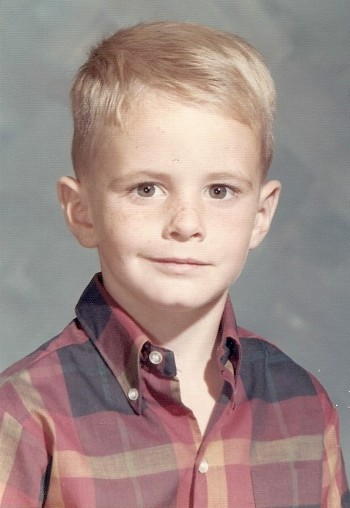 In this original BTB Investigation, we unveil the tragic story of Kirk Murphy, a four-year-old boy who was treated for “cross-gender disturbance” in 1970 by a young grad student by the name of George Rekers. This story is a stark reminder that there are severe and damaging consequences when therapists try to ensure that boys will be boys.
When we first reported on three American anti-gay activists traveling to Kampala for a three-day conference, we had no idea that it would be the first report of a long string of events leading to a proposal to institute the death penalty for LGBT people. But that is exactly what happened. In this report, we review our collection of more than 500 posts to tell the story of one nation’s embrace of hatred toward gay people. This report will be updated continuously as events continue to unfold. Check here for the latest updates.
In 2005, the Southern Poverty Law Center wrote that “[Paul] Cameron’s ‘science’ echoes Nazi Germany.” What the SPLC didn”t know was Cameron doesn’t just “echo” Nazi Germany. He quoted extensively from one of the Final Solution’s architects. This puts his fascination with quarantines, mandatory tattoos, and extermination being a “plausible idea” in a whole new and deeply disturbing light.
On February 10, I attended an all-day “Love Won Out” ex-gay conference in Phoenix, put on by Focus on the Family and Exodus International. In this series of reports, I talk about what I learned there: the people who go to these conferences, the things that they hear, and what this all means for them, their families and for the rest of us.
Prologue: Why I Went To “Love Won Out”
Part 1: What’s Love Got To Do With It?
Part 2: Parents Struggle With “No Exceptions”
Part 3: A Whole New Dialect
Part 4: It Depends On How The Meaning of the Word "Change" Changes
Part 5: A Candid Explanation For "Change"
 At last, the truth can now be told.
Using the same research methods employed by most anti-gay political pressure groups, we examine the statistics and the case studies that dispel many of the myths about heterosexuality. Download your copy today!
And don‘t miss our companion report, How To Write An Anti-Gay Tract In Fifteen Easy Steps.
 Anti-gay activists often charge that gay men and women pose a threat to children. In this report, we explore the supposed connection between homosexuality and child sexual abuse, the conclusions reached by the most knowledgeable professionals in the field, and how anti-gay activists continue to ignore their findings. This has tremendous consequences, not just for gay men and women, but more importantly for the safety of all our children.
Anti-gay activists often cite the “Dutch Study” to claim that gay unions last only about 1½ years and that the these men have an average of eight additional partners per year outside of their steady relationship. In this report, we will take you step by step into the study to see whether the claims are true.
Tony Perkins’ Family Research Council submitted an Amicus Brief to the Maryland Court of Appeals as that court prepared to consider the issue of gay marriage. We examine just one small section of that brief to reveal the junk science and fraudulent claims of the Family “Research” Council.
 The FBI’s annual Hate Crime Statistics aren’t as complete as they ought to be, and their report for 2004 was no exception. In fact, their most recent report has quite a few glaring holes. Holes big enough for Daniel Fetty to fall through.
“Google” is a trademark of Google Inc.
© Box Turtle Bulletin. All Rights Reserved.
 Posts
Posts  Posts via daily email: