Box Turtle Bulletin
 News and commentary about the anti-gay lobby
“Now you must raise your children up in a world where that union of man and box turtle is on the same legal footing as man and wife…”
News and commentary about the anti-gay lobbyNovember 29th, 2012
And they see parallels between Uganda’s attempt to wipe out gay people from their country and another historical precedent:
Ruth Messinger, president of American Jewish World Service (AJWS), today issued the following statement about Uganda’s Anti-Homosexuality Bill, which may be voted upon by that country’s parliament in the coming days:
Uganda’s Anti-Homosexuality Bill is an abhorrent violation of human rights against lesbian, gay, bisexual, and transgender (LGBT) people and a grave threat to civil society in Uganda. Whenever basic human rights such as equal treatment under the law and the rights to safety, assembly, association, expression and privacy are denied, we are compelled to speak out.
The most tragic chapter of Jewish history provides a bitter lesson that the stripping away of human rights from specific minorities is often a precursor to the targeted destruction of oppressed people.
We stand in solidarity with Uganda’s LGBT community and with the defenders of human rights in Uganda, who work tirelessly to safeguard the rights and dignity of all.
November 28th, 2012
Rick Warren is at it again. The megachurch pastor is explaining why homosexuals don’t have to act all homosexual, and he does it with some cute little equivalencies:
Here’s what we know about life. I have all kinds of natural feelings in my life and it doesn’t necessarily mean that I should act on every feeling. Sometimes I get angry and I feel like punching a guy in the nose. It doesn’t mean I act on it. Sometimes I feel attracted to women who are not my wife. I don’t act on it. Just because I have a feeling doesn’t make it right. Not everything natural is good for me. Arsenic is natural.
Don’t be surprised if he ducks any criticism with a hurt, victimized video message. He did it four years ago, which inspired my very first political youtube:
November 28th, 2012
The contentious House session dealing with the assignment of control over the nation’s oil resources to the government (without oversight) ended on Monday when the Speaker stomped out the door. Now she is suspending sessions:
The Speaker of Parliament Rt. Hon. Kadaga Rebecca has suspended sittings of the House and directed the Parliament Committee on Rules Privileges and Discipline to review the behaviour of MPs in Tuesday’s Sitting.
In her address to Parliament November 28, the Speaker described the conduct exhibited by Members in yesterday’s prematurely adjourned House as unparliamentarily, unruly and disorderly. She said the behaviour exhibited by some MPs was beneath the dignity and honour expected of Honourable Members.
She has directed the Rules, Privileges and Discipline Committee to review video of the session and report back on Monday with recommendations for punishment of unruly members.
November 28th, 2012
TODAY’S AGENDA:
Events This Weekend: International Bear Pride, Cologne, Germany; Hong Kong Gay and Lesbian Film Festival, Hong Kong, China; Holly Folly, Provincetown, MA.
TODAY IN HISTORY:
Dallas Judge Gives Light Sentence In Gay Man’s Murder: 1988. It was a common sport among Dallas-area high school students throughout the 1980s and well into the 1990s: drive into the Oak Lawn gayborhood on a weekend night and spend the evening “gay bashing” — their term for it. (Full disclosure: one of my friends was stabbed in the chest and spent days in intensive care in one such attack while walking along Throckmorton St. His assailants were never found.) In one case, nine friends from North Mesquite High School drove to Oak Lawn one night in May to “pester the homosexuals.” According to the New York Times’s description of the event:
Witnesses who were in that group said the boys were standing on a street corner and shouting at passers-by, and then Tommy Lee Trimble, 34, and John Lloyd Griffin, 27, drove up and invited the boys into their car. Mr. Bednarski was said to have persuaded one more friend in his group to get in the car.After the car reached a secluded area of Reverchon Park, Mr. Bednarski is said to have ordered Mr. Trimble and Mr. Griffin to remove their clothes. On their refusal, a witness said, Mr. Bednarski drew a pistol and began firing. Mr. Trimble died immediately. Mr. Griffin died five days later.
Bednarksy was found guilty of murder, but Texas law allows the defendant to decide whether the judge or jury would determine the sentence. Bednarksy’s defense lawyer sensed that the judge was sympathetic and chose him. On November 19, Judge Jack Hampton announced that he considered, among other things, that Bednarski has no prior criminal record, was attending college, and was raised n a “good home” by a father who was a police officer, before deciding on the sentence: 30 years in prison instead of a life sentence. As he explained to the Dallas Times Herald two days later: “They two guys that got killed wouldn’t have been killed if they hadn’t been cruising the street picking up teenage boys. I don’t care for queers cruising the streets picking up teenage boys. I’ve got a teenage boy.”
Those remarks touched off a furor in the gay community. Paul Varnell of the Illinois Gay and Lesbian Task Force summed up the reaction and said, “It appears that we do have one law for heterosexuals and one law for homosexuals.” John Wiley Price, the outspoken African-American activist and Dallas County Commissioner, said, “The only difference between the Ku Klux Klan and Judge Hampton is that one wears a white robe and the other a black robe.” Hampton, who had been first elected judge in 1981 and would be up for re-election in 1990, remained unconcerned. “Just spell my name right. Nobody will remember by 1990 anyway.” He was right. He was re-elected in 1990, but lost his seat finally in 1992.
If you know of something that belongs on the Agenda, please send it here. Don’t forget to include the basics: who, what, when, where, and URL (if available).
As always, please consider this your open thread for the day.
November 28th, 2012
And meanwhile, in an entirely 100% coincidental move that has nothing at all whatsoever to do with US concern over the Ugandan Kill the Gays Bill, the Us Catholic Bishops have chosen today to announce new piles of cash being sent to Uganda and her neighbors. (Albany Tribune)
The U.S. Conference of Catholic Bishops’ (USCCB) Subcommittee on the Church in Africa approved 49 grants to 16 episcopal conferences and 4 regional associations of the Church in Africa for a total of $1,226,500. The subcommittee approved the grants during the USCCB’s General Assembly meeting in Baltimore.
Grant to Ethiopia, Uganda and Tanzania will help implement the Year of Faith and the new evangelization. With the addition of these most recent awards, the subcommittee has given out 109 grants for a total of $2,805,442 in aid this year.
November 27th, 2012
Ugandan LGBT advcoate Kasha Jacqueline posted this helpful tutorial on her Facebook page. I took the liberty of changing the bullets to numbers so we can identify the stage where the Anti-Homosexuality Bill currently stands, which appears to be at B.5, in which the committee is preparing its final report for the full House.
THE PARLIAMENT OF THE REPUBLIC OF UGANDA
The Process of the Bill in Parliament
How a Bill becomes Law
1. PRIVATE MEMBER’S BILL. Article 79(1) of the constitutional provides that “parliament shall have the power to make the Laws on any matter for the peace, order, development and good governance of Uganda”. A bill is a draft of an Act of parliament and includes both a private member’s Bill and a Government Bill. A private member’s Bill is moved by a backbench MP.
A. Plenary
- MP. Committee chairperson moves motion seeking leave (permission) to present private member’s Bill.
- Provides proposed draft of the Bill.
- MPs debate and vote on motion.
- If the MPs reject the motion; the private member’s Bill is dropped.
- If the motion is approved: printing and publication of the Bill is done by clerk to parliament.
- Bill is published in the Gazette
- Private member’s Bill is introduced for the first reading accompanied by certificate of financial implication.
- Speakers refer Bill to appropriate committee.
B. Committee
- Committee scrutinizes Bill
- Calls responsible mover(s)
- Calls various stakeholders and government in public hearings
- Reviews relevant and related laws/documents
- Writes report with proposed amendments to plenary
NOTE: The committee can only propose amendments and changes to the bill. It cannot make those changes directly. Those changes can only be made through the following steps:
C. Plenary
- Mover moves and justifies motion for second Reading of the Bill
- Committee chairperson presents report on the Bill
- Minority Report is presented (if it exists )
- MPs debate committee report on principles of the Bill
- Parliament votes for second Reading of the Bill
- Bill referred to the committee of the whole house
D. Committee of the Whole House
- Committee of the whole house means a committee composed of the whole body MPs.
- Chaired by the speaker /deputy speaker (referred to as chairperson)
- Sits in the chamber.
- Speakers leaves the chair, sits at the clerk’s Table
- MPs approve causes, and schedules of the Bill.
E. Plenary
- MP in charge of Bill asks plenary to resume
- Reports outcome of committee of the whole house
- Plenary votes for Third Reading of the Bill
F. Clerk’s office
- Clerk’s office prepares copies for authentication and Assent of the president.
- Copy sent to the president.
G. Presidents office
- President assents to Act of parliament*
- Act of parliament becomes Law of Uganda
- Implementation starts on commencement date
- Law is published in government Gazette
*president may reject to give assent
Constitution provides that the president shall within 30 days after a bill is presented to him/her either:-
- Assent to the bill
- Return the bill to parliament with a request that the bill or a particular provision of it be reconsidered by parliament; or
- Notify the speaker in writing about the decision
The bill may be reconsidered and then presented for the president’s approval. However it may become law without the president’s assent if he/she returns it to parliament two times. It should have the support of at least two-thirds of all MPs.
November 27th, 2012
 I’m sure you’ve all heard by now about Angus T. Jones, the ‘half’ in CBS’s Two and a Half Men denouncing the moral character of the television show in which he stars.
I’m on Two and a Half Men, and I don’t want to be on it. Please stop watching it, and filling your head with filth. People say it’s just entertainment. Do some research on the effects of television and your brain, and I promise you you’ll have a decision to make when it comes to television, especially with what you watch.
I certainly would agree that the show is an inappropriate choice, but that’s because it’s insipid and banal and will rot your brain until is oozes out of your ear and drips on your collar. But as for “filth”, meh.
I also think that if you make millions off of a television about which you think others should not watch, perhaps the “moral” thing to do is to politely resign. And if you think that people should not watch they show, then give back the money they paid you. But that’s just me.
What I find interesting is that Forerunner Church is aligned with and seemingly based on the International House of Prayer. Which was in our commentary just last week.
UPDATE: When this story broke, the Associated Press reported that the video was posted by Forerunner Christian Church in Fremont. Oooops. (WaPo)
NEW YORK (AP) – In a story Nov. 26 about Angus T. Jones, the teenage actor in “Two and a Half Men,” criticizing the show as “filth” in an online video, The Associated Press misidentified the organization that posted the video. It was Forerunner Chronicles in Seale, Ala., not Forerunner Christian Church of Fremont, Calif.
I haven’t found any connection between Forerunner Chronicles and either the Forerunner Christian Church nor the International House of Prayer. So it seems that this particular dose of crazy is sitting out there by itself.
November 27th, 2012
I have two follow-ups to my post this morning. I was completely remiss in neglecting to recognize the heroic efforts of Dr. Warren Throckmorton, a psychology professor at the evangelical Grove City College in Pennsylvania, who has been an outspoken critic of not just the Anti-Homosexuality Bill itself, but of the events leading up to it going all the way back to that fateful conference in Kampala in March 2009. It was only a few years earlier that Dr. Throckmorton had been an advocate for the ex-gay movement, before his critical thinking got the better of him. I don’t know if he qualifies as a religious leader per se, but he is certainly a leader who is led by his faith.
Perhaps a more puzzling religious leader to come out against the anti-homosexuality bill is Solomon Male, a Ugandan pentecostal pastor who is as anti-gay as they come. Male, along with pastors Martin Ssempa and Robert Kayiira were recently found guilty of being part of a conspiracy to falsely accusing a rival pastor of homosexuality. In a post at The African Report, Male says this about Uganda’s proposed Anti-Homosexuality Bill:
Religious leaders, members of the National Coalition Against Homosexuality and Sexual Abuses in Uganda (NCAHSAU), said the proposed law will not end homosexuality in the East African country. NCAHSAU director Solomon Male said the bill that has drawn worldwide condemnation was populist.
“The basis of our anti-homosexuality initiatives since 2006, which culminated in the formation of our organisation was to sensitise the public about the challenge and dangers of homosexuality and sexual abuses,” he said. “It led to some politicians coming up with a hurried populist, opportunistic and hypocritical bill against homosexuality, which is now before parliament.”
Male said their organisation was set up to fight for the rights of victims of homosexuality. He claimed many youths were being lured into homosexuality while at school and in churches. However, Male accused security agencies of covering up for prominent people who behind the activities. He accused MP David Bahati who originated the bill of riding on the popularity of their campaign to further his political interests.
“As the national campaign against homosexuality became popular, Honourable David Bahati and his team came up with the anti-homosexuality bill 2009,” Male said. “Although it may have been well intentioned, we feel that it will not achieve what many Ugandans think it will achieve. It is a waste of precious time, financial and other resources that should have been applied more productively elsewhere.”
He maintained that existing laws were sufficient to deal with people who force others into homosexuality.
“Our Penal Code has very good laws, sufficient to address homosexuality and abuse of children, which the proposed law is purportedly intended to address.”
Jeff Sharlet’s indispensable book, C Street: The Fundamentalist Threat to American Democracy
Kyazze and Pastor Male are nothing if not ambitious. Their only critique of the bill is that it is actually too soft on homosexuality. They see a clause forbidding the media from exposing victims of gay rape as evidence there’s a gay infiltrator within their ranks. Even (James Nsaba) Buturo the (former) minister of ethics and integrity and chairman of the Fellowship group from which the bill emerged, is suspect in their eyes. They don’t think he’s gay, but they wonder whether he’s protecting powerful homosexuals. Like many Ugandans, both pastors believe the bill’s timing has as much to do with a massive corruption inquiry that has brushed closer to the dictator than any other.
By no means do I place Warren Throckmorton on the same category as Solomon Male. But they are, as far as I can recall, the only two prominent Christian leaders who have spoken out recently against the bill. There are miles of room along the spectrum between the two men that any number of other pastors can chose from to speak out, and frankly, I don’t much care right today where they wish to place themselves along that spectrum. Just speak out. That’s all you have to do.
November 27th, 2012
I’ve been telling you how contentious the Petroleum Bill’s are in Uganda’s Parliament. Daily Monitor has just reported:
Parliament is in disarray as the Speaker, Ms Rebecca Kadaga, suddenly abandons chairing the day’s afternoon session when emotions ran high and chaos descended upon a scheduled debate on the now-controversial oil Bill.
Ms Kadaga stormed out through a side door when it became clear that she had lost control of proceedings. The Sergeants-At-Arms was seen taking position beside the ceremonial Mace moments before she suddenly exited the chambers as MPs engaged in a chaotic exchange. …There is still no indication whether Parliament is still in session – minus a Speaker to chair proceedings – or it has been adjourned.
Some have suggested that the Anti-Homosexuality Bill might be used as a diversion to the controversial oil bills, which empowers a single person in President Yoweri Museveni’s cabinet to negotiate and sign contracts for oil exploration, drilling, refining and transportation. The bills also provide virtually no oversight or transparency in the process, which is sure to cement Uganda’s reputation as eastern Africa’s most corrupt country. If Parliament does clear the two Petroleum Bills, then the Anti-Homosexuality Bill may become politically useful to many members of the government who will want to distract the public from the massive theft of oil wealth that is about to take place. This may explain why the Anti-Homosexuality Bill is next on the list.
Which means that Uganda’s oil policy can be summed up this way: yes, we’re going to steal your oil wealth — but look over there! Homosexuals!!!
November 27th, 2012
 With Uganda poised to pass what would become one of the most draconian anti-gay laws in the world, human rights advocates, LGBT activists, and diplomats from around the globe are lobbying members of the Ugandan government to set aside the Anti-Homosexuality Bill. But there is one set of voices that is conspicuously silent: church leaders. So far, the only religious voices to speak up about it are those who favor its passage, including Scott Lively and the American Family Association’s Bryan Fischer. The Family “Research” Council’s Tony Perkins, while not addressing the Anti-Homosexuality Bill directly, praised Uganda over the weekend as “a modern example of a nation prospered by God.” (Perkins had previously lied about what the bill would do if enacted and lobbied Congress against a resolution condemning the bill.)
So far, those are among the few religious leaders speaking up about the bill, all of them supporting it directly or indirectly. And so far, major religious leaders against the bill have been conspicuous by their silence. The HRC called on them to speak up in a press release last week:
“American faith leaders know that calling for the death penalty – or even calling for imprisonment of – an entire community is not in line with Christian values,” said HRC President Chad Griffin. “American Christian faith leaders with ties to Uganda, like Rick Warren and T.D. Jakes, must reach out to their influential Ugandan friends to ensure that the human rights of Ugandans are not put up to a vote.”
American Christian faith leaders have been active in Uganda for decades and have significant ties to Ugandan political leaders and faith leaders. Such influential American faith leaders, including Rick Warren, T.D. Jakes, Joel Osteen, and voices from the Trinity Broadcasting Network, have a moral obligation to urge their Ugandan friends and allies to condemn the bill. Many of these American faith leaders have shown a commitment to fighting the HIV/AIDs epidemic in Uganda and know passage of this bill would curtail these efforts. Public statements and private conversations by these American faith leaders, if they are done immediately, could save the lives of thousands of Ugandans.
Rick Warren last addressed the Anti-Homosexuality Bill in late 2009, when he condemned the bill. Three years is an eternity in politics, and he has been silent since then. Silence will only mean that Scott Lively and Tony Perkins is speaking for them.
November 27th, 2012
Today’s Order Paper (DOC: 45KB/3 pages) for Uganda’s Parliament shows the Anti-Homosexuality Bill moved to the top of the section titled “Notice of Business to Follow.” When the anti-gay bill first appeared on the Order Paper last week, it was placed third behind a motion to urge the government to bail out a steel mill and the presentation and adoption of a report of an investigation of the energy sector. Those two items have now been bumped down a notch.
Today’s business is tied up over controversial clauses in two Petroleum Bills which are currently being considered in Parliament. Those bills’ opponents vow to hold a demonstration in Kampala over the overly broad powers that the legislation would grant to the Energy Minister, a presidential appointee, to grant and revoke oil exploration, extraction, refining and transport licenses and contracts. Opponents say the bills provide very little oversight or transparency for those activities, making the legislation, essentially, a mechanism for legalizing graft. Uganda has recently been named the most corrupt country in eastern Africa. If the oil bills become law or if the public demonstrations agains them become too noisy, some fear that Parliament may turn to the Anti-Homosexuality Bill in order to create a public distraction.
November 27th, 2012
In Monday’s daily State Department briefing, the subject of Uganda’s Anti-Homosexuality Bill was raised by a Washington Blade reporter. Victoria Nuland, a State Department spokesperson, said that Assistant Secretary of State for African Affairs Johnnie Carson met with Ugandan leaders last weekend and raised concerns about the bill, which is expected to be debated in Parliament as early as this week:
“As we have regularly said, we call on the parliament of Uganda to look very carefully at this because Uganda’s own Human Rights Council has made clear that if this were to pass, it would put the country out of compliance with its own international human rights obligations,” Nuland said. “And so, (Assistant Secretary of State for African Affairs Johnnie) Carson had a chance to make that point again and our strong opposition to this, to the president, to the parliament and to key decision makers in Uganda.”
Nuland confirmed that the bill was passed out of the Legal and Parliamentary Affairs committee last week, but was unable to confirm reports that the committee recommended the removal of the death penalty for “aggravated homosexuality” because the committee has refused to make the draft recommendations public.
“I don’t know that we have actually seen the version that passed committee,” Nuland said. “They’ve been a little bit close hold about this, partly because there’s been so much controversy in the international community. So our concern is about any criminalization of homosexuality, obviously.”
Last Friday, the BBC rushed to report that the death penalty had been removed from the bill. In fact, nobody knows what the committee has recommended because the committee has refused to release its report to the public. In further fact, if the committee did recommend removing the death penalty, that only means that the committee recommended its removal. It’s actual removal would only happen if the full Parliament votes to accept the committee’s recommendation, which hasn’t happened yet. So despite reports to the contrary, the death penalty has not been removed, and we don’t even know for sure whether the committee has even recommended its removal. The last time the committee claimed to have recommended its removal in 2011, it turned out that it only recommended a slight change to the bill to make the death penalty’s presence much less obvious.
Nuland refused to say whether Carson raised the possibility of cuts to American aid to Uganda if the Anti-Homosexuality Bill becomes law:
“I’m not going to get into any hypothetical situations,” Nuland said. “Our focus now is on raising awareness of the concerns within Uganda about this bill, so we don’t get to that stage.”
Asked by another reporter about whether a pledge to cut aid would be “a good, strong point to make” if the United States opposes the bill, Nuland said she won’t “make prospective points from the podium here about where we might go if this bill passes.”
The Blade has a full transcript of the exchange. Britain, Sweden, and the European Union have warned that the bill’s passage would place their aid to Uganda in jeopardy. LGBT advocates in Uganda caution that direct threats of cutting aid has in the past sparked backlashes against LGBT people there, and would almost certainly be counterproductive among Ugandan politicians. They’ve instead urged the kind of back-channel discussions which appear to be taking place now. Carson’s direct involvement is encouraging, since he is a more senior State Department diplomat than the local U.S. ambassador in Kampala. Carson has been engaged with senior Uganda officials over the Anti-Homosexuality Bill since it was first introduced in 2009.
November 27th, 2012
TODAY IN HISTORY:
Pennsylvania Outlaws Sodomy: 1700. The Pennsylvania assembly passed a new sodomy law to replace the old one which had been abrogated in 1693. The new law read:
…whoever shall be legally convicted of sodomy or bestiality, shall suffer imprisonment during life, and be whipped at the discretion of the magistrates, once every three months during the first year after conviction. And if he be a married man, he shall also suffer castration, and the injured wife shall hae a divorce if required.
In keeping with the pacifist nature of the Quakers who dominated the political structures in Pennsylvania, the colony’s law against sodomy was quite lenient: it was the only colonial law which didn’t call for the death penalty. That relative pacifism however didn’t extend to those of African descent. Another law, “An Act for the Trial of Negroes,” added this:
…”if any negro or negroes within this government shall commit a rape or ravishment upon any white woman or maid, or shall commit murder, buggery or burglary, they shall be …. punished by death.”
[Source: Jonathan Ned Katz. Gay/Lesbian Almanac (New York: Harper & Row, 1983), pages 122-123.]
 Harvey Milk Assassinated: 1978. Harvey Milk finally succeeded in winning political office as a gay man for two reasons. One, he refused to hide who he was; and two, he made it his mission to build alliances with groups that other gay activists thought were impossible to reach. Among those alliances, initially, was with the most conservative member of the San Francisco Board of Supervisors, Dan White. There couldn’t have been two politicians from more opposite ends of the political spectrum. White, a former cop, was a conservative Catholic representing a blue-collar neighborhood, while Milk, a gay Jew from New York, represented the growing gay districts surrounding the Castro. Milk and White made several media appearances in which they spoke warmly of each other, and Milk began telling friends that he thought White was “educable.” That began to change however when Milk changed his mind about White’s opposition to a proposed psychiatric treatment center in White’s district. Harvey initially supported White, which would have given White the 6-5 majority he needed to block the facility. But as Harvey learned more about the center, he discovered that San Francisco children would be sent instead far away to a state hospital where they would be cut off from their families. He concluded that “they’ve got to be next to somebody’s house,” and switched his vote.
The loss stunned White, and for several months he refused to speak to Milk or his aides. He also tried to retaliated by switching his vote on Harvey’s gay rights bill, but the bill passed anyway 10-1. White became increasingly disillusioned with politics, and abruptly resigned on November 10, 1978. He quickly regretted his decision, and asked Mayor George Moscone to re-appoint him as Supervisor. Instead of complying with the request immediately, Moscone said he would think it over and announce his decision on November 27.
 The night before the scheduled announcement, White learned through a reporter that he would not get the reappointment. The next morning White went to City Hall with his loaded .38 Smith & Wesson. He went to Moscone’s office and asked for a meeting. Moscone agreed and invited him into the mayor’s office. There, White shot Moscone twice in the abdomen and twice in the head. He then went down the hall to Milk’s office. When Milk got up out of his seat to greet White, White shot him three times in the chest, once in the back, and twice more in the head.
On November 27, 1978, tens of thousands of stunned mourners gathered in the Castro for an impromptu candlelight march to City Hall. The sea of candles stretched ten city blocks long. At the steps of city hall, Joan Baez led the crowd in singing “Amazing Grace” and the San Francisco Gay Men’s Chorus sang a hymn by Felix Mendelssohn.
TODAY’S BIRTHDAY:
 John Aravosis: 1963. An attorney, Democratic political consultant, gay activist and blogger, Aravosis is the founder of Americablog. His first major success as a gay activist came in 1998 when he defended U.S. sailor Timothy R. McVeigh (not to be confused with the Oklahoma City bomber Timothy McVeigh), who was being kicked out of the Navy after he was outed by America Online. The internet provider had released the identity behind McVeigh’s email account even though the Navy never bothered to get a court order or warrant, in direct violation of AOL’s terms of service. McVeigh was days from being discharged when Aravosis embarked on a massive publicity campaign that caught the attention of ABC News, Time and Newsweek. It also got the attention of another lawyer, who took McVeigh’s case pro bono. McVeigh not only won an honorable discharge from the Navy, but also a large settlement from AOL.
Aravosis founded AmericaBlog in 2004. AmericaBlog first received widespread media attention in 2005 after it outed “Jeff Gannon” (real name: Jeff Guckert), a member of the White House press corps who had a reputation for fielding softball questions during news conferences.
If you know of something that belongs on the Agenda, please send it here. Don’t forget to include the basics: who, what, when, where, and URL (if available).
As always, please consider this your open thread for the day.
Clause by Clause Through Uganda's Anti-Homosexuality Bill. Part 1 begins here.
November 26th, 2012

The proposed Anti-Homosexuality Bill, 2009, as published in the official Uganda Gazette on September 25, 2009. (Click to download, PDF: 847KB/16 pages.)
This is our final installment of the clause-by-clause review of Uganda’s proposed Anti-Homosexuality Bill. There is now a renewed push by Uganda’s Parliament Speaker Rebecca Kadaga to pass it before Parliament breaks for Christmas on December 15. The bill had been the hands of the Legal and Parliamentary Affairs Committee, which on November 23 announced that they were prepare to send the bill to the full House for debate and a final vote, possibly as early as Tuesday (Nov 27).
There has been considerable confusion over what would happen if the bill were to become law. Most of the attention has focused on the bill’s death penalty provision, but even if it were removed, the bill’s other eighteen clauses would still represent a barbaric regression for Uganda’s human rights record. In an update to a series which first appeared last February, we will examine the original text of the bill’s nineteen clauses to uncover exactly what it includes in its present form.
A couple of the clauses in the Anti-Homosexuality Bill are administrative:
15. Jurisdiction.
Save for aggravated homosexuality that shall be tried by the High Court, the magistrates court shall have jurisdiction to try the other offences under this Act.
19. Regulations.
The Minister may, by statutory instrument, make regulations generally for better carrying out the provisions of this Act.
These clauses look rather innocuous on first glance. Clause 15 sets out which courts will have jurisdiction over which portion of the bill. Uganda’s High Court hears the most serious cases, and Clause 1 gives it sole jurisdiction over “aggravated homosexuality” (Clause 3) which currently carries the death penalty under the proposed bill. Magistrate Courts generally sit below High Court in terms of the severity of criminal cases that they hear. As far as I know, it appears that Clause 15 is probably fairly typical given the kinds of penalties that would be under consideration.
But it’s in Clause 19 that things become quite alarming. Someone will be tasked to issue further regulations to ensure that the Anti-Homosexuality Bill is enforced. And who is that Minister charged with that task? To find out, you will need to find the definition in Clause 1:
“Minister'” means the Minister responsible for ethics and integrity;
In the current regime, that would be Ethics and Integrity Minister Simon Lokodo, a defrocked Catholic priest who last week led a group of armed guards in a raid of a hotel in Entebbe where a LGBT advocacy conference was taking place. He summarily ordered the arrest of LGBT advocate Kasha Jacqueline Nabageser, but Kasha slipped away and was able to avoid Lokodo’s thugs. The following June, he ordered another raid of an LGBT rights workshop. This time, four activists were detained until their lawyers showed up to remind police that no laws were broken. The next day, Lokodo announced that 38 NGO’s would be banned for acting as “channels through which monies are channeled to (homosexuals) to recruit.” If Lokodo could break up a meeting with no legal basis whatsoever, imagine the reign of terror he would engineer once he has the Anti-Homosexuality Bill with all of the opportunities for abuse it provides.
Lokodo’s predecessor, James Nsaba Buturo, also saw his office as enforcer-in-chief of Uganda’s particular brand of “ethics and integrity.” And he, like Lokodo, also saw himself as the nation’s pastor, writing lengthy op-eds in Ugandan newspapers intoning on the moral evils he saw plaguing the country. Before President Yoweri Museveni came to power in 1986 following a civil war, Buturo served in Milton Obote’s bloody regime as an enforcer who was adept at making Obote’s enemies disappear. In Museveni’s government, he wielded a softer touch, but was no less insistent in his goal of making gays disappear. While Buturo has apparently fallen out of favor with the Museveni government, having been forced to resign in early 2011, he set a pattern that Lokodo would emulate. In December 2010, Buturo banned the screening of a documentary film which depicted, in part, the work of LGBT human rights workers.
One senses that should the Anti-Homosexuality Bill becomes law, the Ministry of Ethics and Integrity could very well change its name to the Ugandan Inquisition. And why not? There are many parallels. An early draft of the bill included a paragraph in its accompanying memorandum extolling the virtues of ex-gay therapy. That paragraph was dropped when the bill was introduced into Parliament in 2009, but that didn’t stop the bill’s supporters to trot out a supposedly ex-gay person as a modern-day converso. And the witch-hunts which would be unleashed by Clause 14, the ban on all deviation from the Ugandan Inquisition via Clause 13, the startling ease with which someone could be put to death in Clause 3 with the High Court being put in charge of the auto-da-fé — these are the measures that Tomás de Torquemada himself would appreciate.
Clause By Clause With Uganda’s Anti-Homosexuality Bill:
Clauses 1 and 2: Anybody Can Be Gay Under the Law. The definition of what constitutes “homosexual act” is so broad that just about anyone can be convicted.
Clause 3: Anyone Can Be “Liable To Suffer Death”. And you don’t even have to be gay to be sent to the gallows.
Clause 4: Anyone Can “Attempt to Commit Homosexuality”. All you have to do is “attempt” to “touch” “any part of of the body” “with anything else” “through anything” in an act that does “not necessarily culminate in intercourse.”
Clauses 5, 6, 8, 9, and 10: How To Get Out Of Jail Free. The bill is written to openly encourage — and even pay — one partner to turn state’s evidence against another.
Clauses 7, 11, and 14: Straight People In The Crosshairs. Did you think they only wanted to jail gay people? They’re also targeting family members, doctors, lawyers, and even landlords.
Clause 12: Till Life Imprisonment Do You Part. And if you officiate a same-sex wedding, you’ll be imprisoned for up to three years. So much for religious freedom.
Clause 13: The Silencing of the Lambs. All advocacy — including suggesting that the law might be repealed — will land you in jail. With this clause, there will be no one left to defend anyone.
Clause 14: The Requirement Isn’t To Report Just Gay People To Police. It’s To Report Everyone. Look closely: the requirement is to report anyone who has violated any the bill’s clauses.
Clauses 16 and 17: The Extra-Territorially Long Arm of Ugandan Law. Think you’re safe if you leave the country? Think again.
Clause 18: We Don’t Need No Stinking Treaties. The bill not only violates several international treaties, it also turns the Ugandan constitution on its head.
Clauses 15 and 19: The Establishment Clauses For The Ugandan Inquisition. These clauses empower the Ethics and Integrity Minister to enforce all of the bill’s provisions. He’s already gotten a head start.
November 26th, 2012
TODAY’S BIRTHDAYS:
 Simon Tseko Nkoli: 1957. Born in Soweto, Nkoli became a youth activist against apartheid with the Congress of South African Students and with the United Democratic Front. He also became a gay rights activist when he joined the mainly white Gay Association of South African in 1983 and later formed the Saturday Group, the first black gay group in Africa. Nkoli’s anti-apartheid activism led to his arrest in 1984, when he faced the death penalty for treason with twenty-one others who became collectively known as the Delmas 22. While prisoner, he came out as gay. Fearing that the state would use his homosexuality against the entire group, the others of the Delmas 22 demanded a separate trial. But in the end he won them over and they stood trial together because, as they all realized, they were in the same struggle together. As Nkoli later wrote in the anthology, Defiant Desire: Gay and Lesbian Lives in South Africa
By coming out as gay while a prisoner against apartheid, he is credited with helping to change the attitude of the African National Congress toward gay rights. Patrick “Terror” Lekota, who later became chairman of the ANC, remarked, “all of us acknowledged that [Nkoli’s coming out] was an important learning experience . . . His presence made it possible for more information to be discussed, and it broadened our vision, helping us to see that society is composed of so many people whose orientations are not the same, and that one must be able to live with it.” And so, when it came to writing the Constitution, “how could we say that men and women like Simon, who had put their shoulders to the wheel to end apartheid, how could we say that they should now be discriminated against?”
After his acquittal and release from prison in 1988, he founded the Gay and Lesbian Organisation of the Witwatersrand (GLOW), which organized South Africa’s first Gay Pride march in 1990. He also was among the first African gay men to come out publicly as HIV-positive and founded Positive African Men in Johannesburg. He was among the first gay activists to meet with President Nelson Mandela in 1994, and he campaigned successfully for anti-discrimination measures on the Bill of Rights of the South African Constitution. Nkoli lived long enough to see South African repeal its sodomy law in 1998, shortly before he died on November 30.
If you know of something that belongs on the Agenda, please send it here. Don’t forget to include the basics: who, what, when, where, and URL (if available).
As always, please consider this your open thread for the day.
Featured Reports
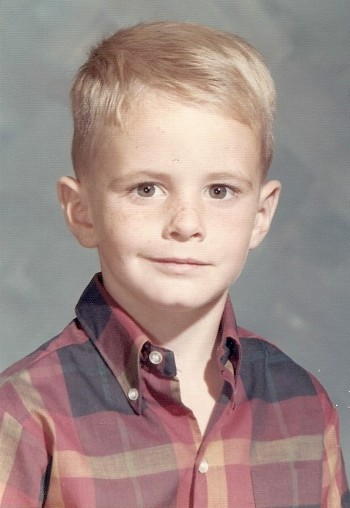 In this original BTB Investigation, we unveil the tragic story of Kirk Murphy, a four-year-old boy who was treated for “cross-gender disturbance” in 1970 by a young grad student by the name of George Rekers. This story is a stark reminder that there are severe and damaging consequences when therapists try to ensure that boys will be boys.
When we first reported on three American anti-gay activists traveling to Kampala for a three-day conference, we had no idea that it would be the first report of a long string of events leading to a proposal to institute the death penalty for LGBT people. But that is exactly what happened. In this report, we review our collection of more than 500 posts to tell the story of one nation’s embrace of hatred toward gay people. This report will be updated continuously as events continue to unfold. Check here for the latest updates.
In 2005, the Southern Poverty Law Center wrote that “[Paul] Cameron’s ‘science’ echoes Nazi Germany.” What the SPLC didn”t know was Cameron doesn’t just “echo” Nazi Germany. He quoted extensively from one of the Final Solution’s architects. This puts his fascination with quarantines, mandatory tattoos, and extermination being a “plausible idea” in a whole new and deeply disturbing light.
On February 10, I attended an all-day “Love Won Out” ex-gay conference in Phoenix, put on by Focus on the Family and Exodus International. In this series of reports, I talk about what I learned there: the people who go to these conferences, the things that they hear, and what this all means for them, their families and for the rest of us.
Prologue: Why I Went To “Love Won Out”
Part 1: What’s Love Got To Do With It?
Part 2: Parents Struggle With “No Exceptions”
Part 3: A Whole New Dialect
Part 4: It Depends On How The Meaning of the Word "Change" Changes
Part 5: A Candid Explanation For "Change"
 At last, the truth can now be told.
Using the same research methods employed by most anti-gay political pressure groups, we examine the statistics and the case studies that dispel many of the myths about heterosexuality. Download your copy today!
And don‘t miss our companion report, How To Write An Anti-Gay Tract In Fifteen Easy Steps.
 Anti-gay activists often charge that gay men and women pose a threat to children. In this report, we explore the supposed connection between homosexuality and child sexual abuse, the conclusions reached by the most knowledgeable professionals in the field, and how anti-gay activists continue to ignore their findings. This has tremendous consequences, not just for gay men and women, but more importantly for the safety of all our children.
Anti-gay activists often cite the “Dutch Study” to claim that gay unions last only about 1½ years and that the these men have an average of eight additional partners per year outside of their steady relationship. In this report, we will take you step by step into the study to see whether the claims are true.
Tony Perkins’ Family Research Council submitted an Amicus Brief to the Maryland Court of Appeals as that court prepared to consider the issue of gay marriage. We examine just one small section of that brief to reveal the junk science and fraudulent claims of the Family “Research” Council.
 The FBI’s annual Hate Crime Statistics aren’t as complete as they ought to be, and their report for 2004 was no exception. In fact, their most recent report has quite a few glaring holes. Holes big enough for Daniel Fetty to fall through.
“Google” is a trademark of Google Inc.
© Box Turtle Bulletin. All Rights Reserved.
 Posts
Posts  Posts via daily email: