Box Turtle Bulletin
 News and commentary about the anti-gay lobby
“Now you must raise your children up in a world where that union of man and box turtle is on the same legal footing as man and wife…”
News and commentary about the anti-gay lobbyNovember 26th, 2012
Well, for one thing, it might mean that Uganda’s Parliament may decide to take up the Anti-Homosexuality Bill on Tuesday.
 Oil was discovered in Uganda in 2006, and the country’s political class have engaged in a mad rush for the spoils since then. One byproduct of the country’s fledgling oil industry is that Uganda has now been named the most corrupt country in eastern Africa, which is no small feat considering the competition. That fight over oil riches has paralyzed the oil sector, and so far not a single drop of crude has made it onto the world markets. Right now, Parliament is in a fierce argument over two bills, one to regulate the exploration, development and production, and a second to regulate its refining, storage and transportation. Those two bills appear in Parliament’s Orders Papers ahead of the Anti-Homosexuality Bill, which is currently listed under “Notice of Business to Follow.”
Several members of Parliament are trying to block the oil bills over what they decry as its lack of transparency and the overly-broad powers granted to the Energy Minister, who is a Presidential appointee, to negotiate, grant, and revoke oil contracts with virtually no oversight. This only guarantees that the floodgates of corruption will open even wider. Some M.P.s threaten a public demonstration on Tuesday, with police promising to break up any “unauthorized” demonstrations. Frank Mugisha, executive director of Sexual Minorities Uganda, warned via Twitter that the ruling party in Parliament may decide to take up the Anti-Homosexuality Bill in order to divert attention from the demonstration. Mugisha isn’t the only one to see a connection between the anti-gay legislation and oil. Last February, journalist Dayo Olopade noticed that three days before the Anti-Homosexuality Bill was reintroduced into Parliament, President Yoweri Museveni had signed a controversial new contract:
“You’d think that the government, given pressure regarding the oil sector, would begin the legislative session with the oil reforms,” says Angelo Izama, an experienced Ugandan journalist on the oil beat. “But they began with the gay bill. It’s not accidental.” The semi-successful diversion, coupled with disregard for parliamentary procedures, illustrates the lack of checks on the behavior of the Museveni government.
Update: This report from Uganda’s NTV suggests that tomorrow’s demonstration might grow:
November 25th, 2012
 He’s actually behaving like a proud papa:
World Net Daily has just published a major story on Uganda, where President Museveni has publicly repented for the sins of the nation in the model of 2 Chron 7:14 on the 50th anniversary of the country’s independence. It also breaks the news that the Ugandan Parliament has dropped the death penalty provision of the Anti-Homosexuality Bill which is now expected to pass into law with overwhelming public support. I am heavily quoted in the article.
Breaking Update. The story has been picked up by Drudge!! and is running in the top spot in the left column.
Here is the article on WND. http://www.wnd.com/2012/11/ugandan-president-repents-of-personal-national-sins/
This is a huge blessing for Uganda and for me personally after having been vilified globally (and falsely) for two years by the leftist media as the accused mastermind of the death penalty provision. Please give this story your best push for maximum exposure. Blessings, Pastor Scott Lively
Drudge!!! And here’s Lively on WND:
Lively added that (Uganda President Yoweri) Museveni is definitely drawing a contrast between Uganda and the West.
“This incident is also important as a contrast to the picture being painted of Uganda by the godless left of a backwards, violent and savage culture intent on murdering homosexuals,” Lively said.
“On the contrary, Museveni is calmly and confidently setting the course of his nation by the guidance of the Bible, in a way that also shows great courage and resolve,” Lively said.
Homosexual activist groups have criticized the government of Uganda and Museveni for passing laws criminalizing homosexual behavior. A current bill before the Ugandan Parliament increases the jail sentences for homosexual acts and includes criminal penalties for those who encourage or promote homosexuality. The bill had included the death penalty for those who commit multiple acts of homosexual behavior, but the provision has been removed, BBC News reports.

Scott Lively speaking at the infamous anti-gay conference in Kampala, Uganda, March 7, 2009.
Lively is best known for his role, reported first here on BTB, as featured speaker at an anti-gay conference held in Kampala in March 2009. During that conference, Lively touted his book, The Pink Swastika, in which he claimed that gays were responsible for founding the Nazi Party and running the gas chambers in the Holocaust. Lively then went on to blame the Rwandan genocide on gay men and he charged that gay people were flooding into Uganda from the West to recruit children into homosexuality via child sexual molestation. Lively would later boast that his March 2009 talk was a “nuclear bomb against the gay agenda in Uganda.”
And what a bomb it was. During that same trip, Lively met with several members of Uganda’s Parliament. The public panic stoked by the March conference led to follow-up meetings, a march on Parliament, and a massive vigilante campaign waged on radio and the tabloid press. Only two weeks after the conference, rumors were circulating that Parliament was drafting a new law that “will be tough on homosexuals.” That new law, in its final form, was introduced into Parliament later in October. Lively eventually disavowed the proposed death penalty, but he really had to struggle with it a while before finally deciding that it was not worth supporting because, after all, its presence might tank the rest of the bill. Otherwise, he said, it was “an encouraging step in the right direction” which “deserve(s) support from Christian believers and other advocates of marriage-based culture around the world.”
November 25th, 2012

And he’s having “the Father of the Ugandan Homosexual Movement” — whatever that means — on his show tomorrow. We can expect that Lively will likely endorse Uganda’s Anti-Homosexuality Bill, especially now that there are unconfirmed rumors that the death penalty will be removed. (Don’t believe those rumors until you see it in writing. They’ve tried to pull that lie many, many times before, and Lively was happy to play along.)
November 25th, 2012
This list comes via Ugandan LGBT advocate Kasha Jacqueline. The Anti-Homosexuality Bill could come to a vote as early as this week. To be effective, please be polite, but also be firm. The best rule of thumb to observe would be to put yourself into their shoes and try to imagine the arguments that would appeal to you. Also remember that all Ugandan are as proud of their country as you are of yours. Insults will inevitably backfire, and it will be LGBT Ugandans suffering the consequences, not those who sit comfortably in countries far away lobbing emails and phone calls. Don’t given them propaganda that can be used against your brothers and sisters. Ugandan LGBT advocates also strongly advise that bringing up foreign aid is another sure-fire way to provoke a backfire.
For reference to specific parts of the bill, please refer to our detailed examination of the nineteen clauses of the Anti-Homosexuality Bill, beginning here.
1. President: Yoweri Museveni
His Excellency, Lt. Gen. Yoweri Museveni (Mr. President, subsequently)
Office of The President
Parliament Avenue
Telephone: +256 (0) 414 343 311
Fax: +256 (0) 414 436 102
E-mail: museveni@starcom.co.ug, aak@statehouse.go.ug
2. Secretary, Office of the President
Mrs. T. Kinaalwa
Tel. 041 4 233 717
Fax 041 4 256 143
Email: Ugandasecretary@op.go.ug
3. Speaker of the Parliament: Rebecca Kadaga
Rt. Hon. Rebecca Kadaga
Parliament of the Republic of Uganda
Tel: +(256) 377 000/150
Fax: +(256) 414 346 826
3. Prime Minister: Amama Mbabazi
Rt. Hon. Amama Mbabazi
Postal Building
Yusuf Lule Road
P.O. Box 341
Kampala
Phone: +(256) 414 254 252
Fax: +(256) 414 341 139
E-mail: ps@opm.go.ug
http://www.opm.go.ug/
4. The Minister of Foreign Affairs:
Hon. Sam Kutesa
Email: mofa@starcom.co.ug
Tel: +(256) 41-257 525/345 661/258 252
Fel: +(256) 41-258 722/232 874
5. State Minister of Ethics and Integrity: Simon Lokodo
Hon. Simon Lokodo
Office of The President Parliament
Tel: +(256) 414 301 600
Fax: +(256) 414 343 177
E-mail: info@dei.go.ug
6. Minister of Health: Christine Ondoa
Hon. Dr. Christine Ondoa
Tel: +(256) 414-340 874 /231 563 /9
Email: info@health.go.ug
7. Minister of Justice and Constitutional Affairs: Kahinda Otafiire
Hon. Kahinda Otafiire
Tel: +(256) 41 230 538
Fax: +(256) 41- 254 829
E-mail: mojca@africaonline.co.ug, info@justice.go.ug
8. Minister of Gender, Labour & Social Affairs: Kabwegyere Tarsis
Hon. Kabwegyere Tarsis
Tel: +(256) 775 785 282, +(256) 782 808 191
Email: support@whatcouldbe.info
9. Director General Uganda AIDS Commission
Dr. Kihumuro Apuuli
Office of The President
Parliament Avenue
P.O. BOX 7168,
Kampala, Uganda
Tel: 071 2 968 028
Tel: +(256) 414 288 065, +(256) 414 258 173
Email: uac@uac.go.ug
Clause by Clause Through Uganda's Anti-Homosexuality Bill. Part 1 begins here.
November 25th, 2012

The proposed Anti-Homosexuality Bill, 2009, as published in the official Uganda Gazette on September 25, 2009. (Click to download, PDF: 847KB/16 pages.)
There is now a renewed push by Uganda’s Parliament Speaker Rebecca Kadaga to pass the proposed Anti-Homosexuality Bill before Parliament breaks for Christmas on December 15. The bill had been the hands of the Legal and Parliamentary Affairs Committee, which on November 23 announced that they were prepare to send the bill to the full House for debate and a final vote, possibly as early as Tuesday (Nov 27).
There has been considerable confusion over what would happen if the bill were to become law. Most of the attention has focused on the bill’s death penalty provision, but even if it were removed, the bill’s other eighteen clauses would still represent a barbaric regression for Uganda’s human rights record. In an update to a series which first appeared last February, we will examine the original text of the bill’s nineteen clauses to uncover exactly what it includes in its present form.
In Clauses 16 and 17, we’ve seen how eager those behind the Anti-Homosexuality Bill are to extend the bill’s reach far beyond Uganda’s borders, not just through its extradition clause, but also to criminalize acts committed by Ugandan citizens and legal residents while they are abroad. Which means that if you advocate for LGBT citizens while in the U.S., where the First Amendment guarantees everyone the right to freedom of speech, and you will be slapped with a five to seven year prison sentence upon returning to Uganda for violating Clause 13 even those the “offense” didn’t take place on Ugandan soil. The next section, Clause 18, will only further solidify Uganda’s contempt not just for the laws of other nations, but also for International Law itself:
18. Nullification of inconsistent international treaties, protocols, declarations and conventions.
(1) Any International legal instrument whose provisions are contradictory to the spirit and provisions enshrined in this Act, are null and void to the extent of their inconsistency.(2) Definitions of “sexual orientation”. “sexual rights”, “sexual minorities”, “gender identity” shall not be used in anyway to legitimize homosexuality, gender identity disorders and related practices in Uganda.
This clause would have the effect of pulling Uganda out of all treaties which it has already become a signatory if it decides that those treaties would infringe, in any way, on the Anti-Homosexuality Bill. But Uganda’s constitution (PDF: 460KB/192 pages) already spells out Uganda’s obligation to observer all treaties that it entered into before it went into effect in 1995 (see Article 287 on page 171):
287. International agreements, treaties and conventions.
Where—
(a) Any treaty, agreement or convention with any country or international organization was made or affirmed by Uganda or the Government on or after the 9th day of October,1962, and was still in force immediately before the coming into force of this constitution; or
(b) Uganda or the government was otherwise a party immediately before the coming into force of this constitution to any such treaty, agreement or convention,
The treaty, agreement or convention shall not be affected by the coming into force of this constitution: and Uganda or the Government, as the case may be, shall continue to be a party to it.
Furthermore, the constitution already spells out the manner in which Uganda enters into a treaty (see Article 123, pages 89-90).
123. Execution of treaties, conventions and agreements.
(1) The President or a person authorised by the President may make treaties, conventions, agreements or other arrangements between Uganda and any other country or between Uganda and any international organisation or body, in respect of any matter.
(2) Parliament shall make laws to govern ratification of treaties, conventions, agreements or other arrangements made under clause (1) of this article.
The Civil Society Coalition on Human Rights and Constitutional Law, a Ugandan human rights group, explained the constitutional problem posed by Clause 18 (PDF: 344KB/17 pages, see page 10):
Parliament cannot legislate or simply wish away these (treaty) obligations just because they are inconsistent with a domestic legislation. Indeed, international law prohibits such a thing. … Parliament has only a procedural role to incorporate treaties into Ugandan law – and that is the full extent of its powers. It cannot purport to proscribe the limit of the President’s treaty making powers. Nor indeed, can Parliament bind its own future action by purporting to exercise in advance its power to scrutinize treaties signed by the President and determine which of them to ratify.
All that Parliament can do is to either ratify or refuse to ratify a treaty after it is signed, and in the latter case such treaty does not become part of Ugandan law. This is the balance of executive power and democratic input achieved by Article 123, and one that clause 18 of the Bill is incompetent to amend.

Recommendations from the Legal and Parliamentary Affairs Committee in May, 2011 (Click to download, PDF: 57KB/6 pages.)
When the Legal and Parliamentary Affairs committee reported back to Parliament in May 2011, it saw the wisdom of the Civil Society Coalition’s argument, but only partly. It struck out the words “nullification of inconsistent” from Clause 18’s title, and recommended changing subclause 1 to read:
“(1) Notwithstanding the provisions of any other law, any international legal instrument subsequent to the coming into force of this Act whose provisions contradict the spirit and provisions enshrined in this Act may be ratified by Parliament”.
Justification
To enable Parliament have a final say on such instruments before they can bind the country.
The committee’s recommendation would have had the effect of retaining the legal effects of treaties to which Uganda was already a signatory, but it would nevertheless seek to place an extra-constitutional restriction on future Parliaments’ ability to comply with future treaties. It would also still violate the constitution by interfering with the President’s constitutional powers to sign future treaties. Why the Legal and Parliamentary Affairs committee believed that their proposed modification was any more in compliance with the constitution than the bill’s original text is mystifying. Regardless, the Eighth Parliament expired before it could act on the committee’s recommendation. When the bill was re-introduced in the Ninth Parliament, it was brought back with the original October 2009 language intact, including Clause 18, which is still officially part of the bill.
Clause By Clause With Uganda’s Anti-Homosexuality Bill:
Clauses 1 and 2: Anybody Can Be Gay Under the Law. The definition of what constitutes “homosexual act” is so broad that just about anyone can be convicted.
Clause 3: Anyone Can Be “Liable To Suffer Death”. And you don’t even have to be gay to be sent to the gallows.
Clause 4: Anyone Can “Attempt to Commit Homosexuality”. All you have to do is “attempt” to “touch” “any part of of the body” “with anything else” “through anything” in an act that does “not necessarily culminate in intercourse.”
Clauses 5, 6, 8, 9, and 10: How To Get Out Of Jail Free. The bill is written to openly encourage — and even pay — one partner to turn state’s evidence against another.
Clauses 7, 11, and 14: Straight People In The Crosshairs. Did you think they only wanted to jail gay people? They’re also targeting family members, doctors, lawyers, and even landlords.
Clause 12: Till Life Imprisonment Do You Part. And if you officiate a same-sex wedding, you’ll be imprisoned for up to three years. So much for religious freedom.
Clause 13: The Silencing of the Lambs. All advocacy — including suggesting that the law might be repealed — will land you in jail. With this clause, there will be no one left to defend anyone.
Clause 14: The Requirement Isn’t To Report Just Gay People To Police. It’s To Report Everyone. Look closely: the requirement is to report anyone who has violated any the bill’s clauses.
Clauses 16 and 17: The Extra-Territorially Long Arm of Ugandan Law. Think you’re safe if you leave the country? Think again.
Clause 18: We Don’t Need No Stinking Treaties. The bill not only violates several international treaties, it also turns the Ugandan constitution on its head.
Clauses 15 and 19: The Establishment Clauses For The Ugandan Inquisition. These clauses empower the Ethics and Integrity Minister to enforce all of the bill’s provisions. He’s already gotten a head start.
November 25th, 2012
TODAY’S AGENDA:
Events This Weekend: Hong Kong Gay and Lesbian Film Festival, Hong Kong, China; White Party, Miami, FL; NOLA Masquerade, New Orleans, LA;
TODAY IN HISTORY:
Judge Rules Utah Teacher’s Rights Were Violated: 1998. Wendy Weaver, who taught psychology and physical education at the high school in Spanish Fork, Utah, became embroiled in controversy when her ex-husband, Gary Weaver, told the district in 1997 that she was a lesbian. Rumors quickly began to swirl around Spanish Fork High School, and that summer students began asking her if she was gay. She answered truthfully, and a few of the girls dropped out of the girl’s volleyball team that she was coaching. On July 14, the school district removed her as volleyball coach and banned her mentioning her “lifestyle” or partner to students, parents or staff. If she mentioned a word about her sexuality to anyone, she would be fired. A letter to that effect was placed in her employee record.
When word got out, an overflow crowd showed up to denounce Weaver at a Nebo Board of Education meeting on November 14, 1997, where parents demanding the right to pull their children out of any class she taught. A group of parents formed Nebo Citizens for Moral and Legal Values and presented a petition signed by 2,700 parents demanding her removal. After Weaver filed suit in Federal Court alleging that her First Amendment Rights were being violated, the parents group filed a suit of their own demanding the revocation of Weaver’s teaching certification.
It all came to a head on November 25, 1998 when U.S. District Judge Bruce Jenkins issued a sweeping 25-page ruling finding that Weaver’s constitutional rights of free speech and equal protection were violated. The judge ordered the school district to remove its threat to fire her from their files, restore her to the girl’s volleyball coaching job, and to pay her $1,5000 in damages. He found the limits on Weaver’s speech to be overly broad. “Indeed,” wrote Judge Jenkins, ” these restrictions limit Ms. Weaver’s ability to speak on her sexuality outside of the school, as, for example, when meeting a parent of a student in the supermarket, or when speaking at dinner with a friend who may be a staff member at the school, or even when speaking with her own children, who are students in the school district.” All of this was a gross violation of Weaver’s constitutional rights. “Simple as it may sound, as a matter of fairness and evenhandedness, homosexuals should not be sanctioned or restricted for (speech) where heterosexuals are not likewise sanctioned or restricted.”
If you know of something that belongs on the Agenda, please send it here. Don’t forget to include the basics: who, what, when, where, and URL (if available).
As always, please consider this your open thread for the day.
November 24th, 2012
TODAY’S AGENDA:
Events This Weekend: Hong Kong Gay and Lesbian Film Festival, Hong Kong, China; White Party, Miami, FL; NOLA Masquerade, New Orleans, LA;
THIS MONTH IN HISTORY:
The Mental Hygiene Aspects of Homosexuality: 1917. The theories behind the Eugenics movement were formulated by Sir Francis Galton, half-cousin of Charles Darwin. Drawing on Darwin’s theories of evolution, Galton sought to create a practical application of those theories in his 1883 book, Inquiries into Human Faculty and its Development, in which he suggested that, through carefully considered interventions, the human condition could be improved. In addition to Eugenics, which took a more narrow human-husbandry approach to improving the population, those ideas launched a broader “social hygiene” movement which had many positive results: the regulation and eventual abolition of child labor, mandatory and free education primary and (eventually) secondary education, workplace health and safety rules, anti-tenement ordinances, pre-natal care, food safety regulations, immunizations, sanitation, and birth control — although the latter, in some of its manifestations, also had its negative qualities as well. Particularly where forced sterilization of “undesired” population groups were concerned.
Eugenics was the dark side of the social hygiene movement, as was its “racial hygiene” component which simply provided a weak scientific gloss over longstanding prejudices and racial policies designed to prevent “race-mixing.” While not everyone involved in social hygienes were eugenicists, there was often a certain degree of crossed influences between the two areas of discussion. We can best see this in a textbook which was published in November 1917 by William Alanson White, a professor of nervous and mental diseases at Georgetown University. In The Principles of Mental Hygiene, he touched on a large number of topics, including homosexuality. That passage is particularly striking because of the way White described homosexuality according to its impact on “the herd.”
THE HOMOSEXUAL
This social group, like the others, is a complex and heterogeneous one and one, too, that we have only recently come to study scientifically. Perhaps no group of individuals have suffered from less understanding, have been treated with greater lack of consideration, than this group. The antipathic emotions have held almost complete sway and so have made the scientific approach to the problem practically impossible. The history of society’s attitude towards the homosexual is much the same as the history of its attitude towards the prostitute except that it has, if possible, been more completely dominated by the antipathic emotions.
Homosexuality has come of late to have a much broader meaning than that usually connoted by the popular speech. It means that degree of attraction for the same sex which turns the individual aside on the path towards a heterosexual goal and therefore away from those activities which naturally lead to procreation and are therefore race-preservative. The term by no means necessarily connotes actual concrete acts of sexual perversion. In this large sense it is readily seen why it should be tabooed by the herd. Its tendency is destructive to the interests of the herd as a biological unit and therefore the reaction against it. The reaction of hate and its congeners is the instinctive way of self-protection and must necessarily precede any judicial, intelligent attitude based upon scientific knowledge which can only come in the course of development when instinct shall have been controlled and directed by reason.
As already intimated, the homosexual group is a large and complex one and we are only beginning to be able to approach its problems with a clear scientific vision, but as we are able to do this we come more and more to an appreciation of how widely this particular type of inefficiency is distributed. Again, therefore, we come to appreciate the emphasis which I have all along put upon the necessity for studying the individual in order that he may be dealt with for what he is rather than perfunctorily classified with this or that social group just because, and for no other reason, the accident of circumstance has found him momentarily identified with it. Distinct homosexual types are found among the insane, the criminal, the feeble-minded, the epileptic, the vagrant, etc., etc., so that we must come to realize that it is a type of reaction, not a label to distinguish a given individual from all others, and try in our investigations to evaluate the part it has played in the social inadequacy of the particular individual under consideration.
Viewed in this way it becomes a problem like all the others and the objects of treatment come out clearly instead of being befogged by a haze of emotion.
The homosexual reaction should be corrected if possible. Psychotherapy is the most hopeful way of approach. Failing this the individual should be taught to use his energies as best he can based upon an understanding of himself. The ideal, next to cure, would be a direction of the energies into socially useful channels, which direction would at the same time afford an adequate fulfilment (sic) of the individual.
Homosexuality, in the broad sense here used, is found as a type of reaction in a great many conditions which constitute or lead to social inadequacy. It, therefore, offers a natural barrier to procreation of the socially inadequate classes the immense value of which, to the herd, has not been appreciated. It is, so to speak, a natural means of sterilization.
[Source: William A. White. The Principles of Mental Hygiene (New York: The Macmillan Company, 1917): 208-211.]
If you know of something that belongs on the Agenda, please send it here. Don’t forget to include the basics: who, what, when, where, and URL (if available).
As always, please consider this your open thread for the day.
November 23rd, 2012
We’ve seen this before. News reports are emerging that the Ugandan Parliament’s Legal and Parliamentary Affairs Committee has “dropped” the death penalty from the Anti-Homosexuality Bill, exchanging it for life imprisonment for those charged with “aggravated homosexuality” — which could be just about anyone, given the overly-broad wording of the bill’s clauses. What’s distressing is that mainstream and LGBT journalists are picking it up despite Ugandan politicians stressing that they can’t release the committee’s draft recommendations to the public, so all we have are Ugandan politicians’ word for it. The BBC has bungled the story several times before; you’d think they’d be more cautious. I can’t tell you how many times there have been pronouncements that the death penalty was dropped only to find out that it was still in the bill. But I’ll try:
That’s not an exhaustive list. That’s just what I was able to find quickly this morning.
So now we have fresh reports that the Legal and Parliamentary Affairs Committee has again “dropped” the death penalty from its recommendations to Parliament, the same announcement that they made before when their tried to pull their death-by-stealth move in May 2011. But this time, they say that they can’t release the draft of their recommendations before Parliament because, you know, it’s a “secret.” Gotta follow the rules, you know. But despite this track record, the BBC and Pink News are confidently reporting that the death penalty has been dropped. Journalists with very short attention spans might believe it, but I don’t. And neither should you until we can all see it in writing — and the recomendation is adopted by the full Parliament. Nothing gets dropped until that vote takes place, and it hasn’t happened yet.
November 23rd, 2012
WBS Television in Uganda late yesterday posted another report on YouTube featuring statements by members of the Legal and Parliamentary Affairs Committee, which is charged with marking up the Anti-Homosexuality Bill with recommended changes.
There are a few troubling aspects to the report. First, the reporter claims that the death penalty has been removed for “homosexuality acts with minors,” which sounds very suspiciously like several other previous reports, later proven to be false, that the death penalty had been removed. The last time we heard that line, we would quickly learn that the Legal and Parliamentary Affairs committee, in fact, had not removed the death penalty from the bill, but instead had simply obfuscated the death penalty’s presence in the bill. A complete explanation can be found here.
The second troubling aspect is that the reporter described the clause containing the death penalty as prohibiting “”homosexuality acts with minors” — which it does, but it also imposes the death penalty for much, much more. This, too, is in line with several prior false statement by the Anti-Homosexuality Bill supporters who had tried to misrepresent the scope of the “aggravated homosexuality” clause. Again, a complete explanation of who can qualify for the death penalty can be found here. The fact that the clause is being misrepresented again suggests to me that those who are speaking about the committee’s draft report are being far from candid about what the draft recommendations contain. A huge, waiving red flag like that casts serous doubt in my mind that the death penalty has been removed.
And in case that red flag isn’t big enough, now we’re being told that the draft report from the Legal and Parliamentary Affairs Committee is being held secret, and that we won’t know its contents until debate begins and the bill is voted on — which can take place in just a matter of a few hours.
This is one of the junk emails sent to all members of Parliament on the Legal and Parliamentary Affairs Committee warning them to go slow about the Anti-Gay Bill which Speaker Rebecca Kadaga had two weeks back asked them to finalize so that the House begins debating it. The emails, the majority of which indicate New York as the town from where they have been sent, try to explain to the M.P.’s that gays are normal people and thus their rights should not be trampled upon.
Despite this pressure however, the members sat in a crisis meeting for close to two hours going through the bill’s seventeen (sic) clauses and approved it for debate before the House beginning next week.
“We have come to the conclusion of this bill and it is ready to be ushered into Parliament this afternoon. Iedit) If it means stopping me from going to the United States for all my life, going to any country because of this bill, I shall stand by this bill and I’m for (M.P. David) Bahati (the bill’s sponsor) for what he has come up with to protect our minors the other generations all around us.”
“We received the instructions from the House to finalize it and we have finalized it.”
The members however lifted the death penalty sentence to anyone who engages in homosexuality acts with minors, putting the punishment at life imprisonment and those who carry out the act above the age of consent will have the lowest penalty as seven years imprisonment.
The draft report made by the committee however was confiscated from all members sitting on the committee so as it is not distributed before its debate.
“The rules do not allow me to divulge the contents of the committee meetings before the final report is submitted to Parliament. But we are looking at the bill. … (Edit)…
There are some, there is still some work. In some respects we needed more information. We needed some technical information in terms of the sentences that we’re proposing in the bill.”
Meanwhile, Parliament has refuted reports that Speaker Rebecca Kadaga has been issued with a travel ban to the U.S.A. due to her tough stand against homosexuals. The validity of these reports however are being questioned as some M.P.’s confirmed off-record having seen the travel ban itself.
“I’d like to clarify that there is no formal communication that has come to Parliament about this issue as yet, and therefore we are dismissing that information in the context of this House because as far as we are concerned it isn’t official.
Parliament next week will begin discussing the Anti-Homosexuality Bill, a private member’s bill presented by Honorable David Bahati. If passed, homosexuality and same-sex marriages will be criminal in Uganda, a matter which however has raised controversy on the world scene with countries like the U.S.A. pledging to cut aid to Uganda.
November 23rd, 2012
WBS Television in Uganda posted this YouTube report titled, “USA slaps travel ban on Speaker Kadaga over Anti-Gay Bill.” The report itself doesn’t address the travel ban, but a statement posted on the Parliament’s web site denies receiving any communication from the U.S. Mission in Kampala about any travel bans. Instead of describing specific sanctions, the WBS report merely speaks of unspecified sanctions “threatening the country and individuals.” M.P. Stephen Tashobya, who chairs the Legal and Parliamentary Affairs Committee charged with holding hearings on the Anti-Homosexuality Bill, says that some members of Parliament have received letters threatening sanctions.
As the demand for the anti-gay bill gains pace in the country, it appears the Western world is putting a fierce energy in ensuring that the anti-gay bill does not find its way into the law books of the country. U.S. President Barack Obama has reportedly expressed his discomfort with the proposal to criminalize homosexuality and lesbianism, threatening the country and individuals behind the move with grave sanctions.
“…To have had, I think, from two members of Parliament that they have received a letter from an assistant from the President of the U.S. expressing concern about the passing of the bill.”
(Legal and Parliamentary Affairs Committee Chairman Stephen) Tashobya however says that as the committee starts to scrutinize the proposals, it will collect views of both local and international stakeholders.
“First of all, any person anywhere in the world has the right to come in to give his views about this bill which is before Parliament.”
Same-sex practices are unpopular in the African context, but are considered a human right by activists in the West. The letter comes a few weeks after Speaker Rebecca Kadaga pledged to deliver the bill as a Christmas package to Ugandans.
Warren Throckmorton says that the State Department has denied that Obama has threatened sanctions.
November 23rd, 2012

J.C. Leyendecker, “Merry Christmas from Kuppenheimer,” 1924.
Today is Black Friday, the traditional start of the Christmas shopping season. Apparently the name Black Friday has two origins. In Philadelphia in the early 1960s, it referred to the gridlocked traffic that occurred as everyone rushed to the stores to take advantage of post-Thanksgiving sales. In the ’70s, economists began calling the day “Black Friday” because it was the day in which many retailers would begin to turn their profits for the year (or, go “in the black,” as opposed to remaining “in the red.”) But with the rise of online shopping, and with some stores beginning to open earlier on the evening of Thanksgiving day to get an early start on the lucrative shopping season, Black Friday may go the way of the dodo bird. For me, it already has. I’ve never seen a dodo bird, and I’ve never bothered to venture within a half-mile of a shopping mall or retail outlet on Black Friday. How about you?
TODAY’S AGENDA:
Events This Weekend: Hong Kong Gay and Lesbian Film Festival, Hong Kong, China; White Party, Miami, FL; NOLA Masquerade, New Orleans, LA;
TODAY IN HISTORY:
Georgia Supreme Court Strikes Down State Sodomy Law: 1998. It took twelve years for the Georgia Supreme Court to do what the U.S. Supreme Court refused to do. In 1986, the U.S. Supreme Court upheld Georgia’s sodomy law as constitutional in Bowers v. Hardwick (see Jun 30), a ruling that deeply disappointed the gay community and set back the quest to get rid of the nation’s sodomy laws by nearly two decades. But in 1998, the Georgia Supreme Court struck down that state’s law, the very law that was in question in Bowers, as a violation to the right to privacy under the state’s constitution. Unlike the 1986 case which involved a gay man who was in a consensual sexual relationship with another man, this case a heterosexual man who was accused of performing non-consensual oral sex on a niece. The jury acquitted him of the non-consensual portion of the charge due to lack of evidence, but convicted him of sodomy since Georgia, like many states, defined sodomy to include oral sex. And unlike many states, Georgia made it a crime regardless of whether it was heterosexual or homosexual. On appeal, the defense held that the statute was unconstitutional, but the state was confident. After all, the law had already been validated by the U.S. Supreme Court.
But the Georgia Supreme Court saw it differently. “While many believe that acts of sodomy, even those involving consenting adults, are morally reprehensible, this repugnance alone does not create a compelling justification for state regulation of the activity,” the court ruled in its 6-1 decision. Citing a 1905 state ruling, the state Supreme Court found that the defendant had “the right to be let alone,” a right that was more expansive than the right to privacy protected by the U.S. Constitution. “We cannot think of any other activity that reasonable persons would rank as more private and more deserving of protection from governmental interference than consensual, private, adult sexual activity,” Chief Justice Robert Benham wrote in the decision.
If you know of something that belongs on the Agenda, please send it here. Don’t forget to include the basics: who, what, when, where, and URL (if available).
As always, please consider this your open thread for the day.
November 22nd, 2012
The Uganda Parliament is poised to pass the Anti-Homosexuality Bill sometime between now and Christmas. Meanwhile, five European countries — Britain, Ireland, Norway, Denmark, and Sweden — have already announced they were freezing aid payments to Uganda due to massive corruption when it was discovered that millions of Euros in foreign aid has ended up in the personal bank accounts of several Ugandan top leaders including Prime Minister Amama Mbabazi. Their announcements came before the Anti-Homosexuality Bill went onto Parliament’s agenda, although Sweden and Britain have previously stated that they would either cut foreign aid if the Anti-Homosexuality Bill becomes law. The US last year issued a directive stating, “Agencies involved with foreign aid, assistance, and development shall enhance their ongoing efforts to ensure regular Federal Government engagement with governments, citizens, civil society, and the private sector in order to build respect for the human rights of LGBT persons.”
But with so many reasons for the U.S. to cut aid to Uganda — or at least to have a serous sit-down with Ugandan authorities, US Ambassador to Uganda Scott H. DeLisi has made the rounds in Kampala to say that there are no plans to spend your tax dollars more effectively elsewhere:
Ambassador Scott H. DeLisi
“The U.S has decided to continue giving aid to Uganda despite the ongoing numerous investigations into the misuse of foreign aid.” Ambassador Scott H. DeLisi said
Scott H DeLisi, the Ambassador of US to Uganda said they will work with several organisations that receive funds to ensure proper use and allocation of the funds.
He said that in a meeting with Uganda’s minister of internal affairs Hilary Onek on Nov 20, the ambassador said they agreed to work together with the ministry to monitor and fulfill the intended purposes of their funds.
Onek thanked the U.S government for its commitment to send funds to Uganda and equated the current state of corruption to measles which has produced a rush on the skin as a sign of healing.
To be clear: the five European countries took action before the Anti-Homosexuality Bill returned to the headlines, and we have no evidence that their actions are related to the renewed push to pass the bill into law. The Anti-Homosexuality Bill appeared on Parliament’s agenda only yesterday, the day after DeLisi made his statement. But now that the bill is on the table, it’s time for the U.S. to step up and insist that my tax dollars and yours — a half a billion dollars’ worth — will not be shipped to a country that is bound and determined to kill its LGBT people. I don’t know about you, but I have no intention of going over the fiscal cliff while Uganda embarks on another anti-gay with hunt with my money.
This is a human rights crisis of epic proportions that is unfolding before our eyes. It is our Nuremberg. And it’s time our State Department stepped up and sent the only message that matters to Uganda’s leaders: pass this bill and the flow of dollars ends.
You can find contact information for the U.S. Mission in Uganda here. They even have a Twitter feed here, although it doesn’t appear to respond to tweets.
November 22nd, 2012

J.C. Leyendecker’s Thanksgiving cover for the Saturday Evening Post, 1928.
My parents and Chris’s parents, both sets, are coming to our house for Thanksgiving this year. His parents are coming in from Texas; mine from Ohio, after having performed their duty of selecting the next President on behalf of the entire nation. On the menu: turkey, mashed potatoes and gravy, cornbread dressing, oyster dressing, green bean casserole, savory tomato crisp, deviled eggs, assorted veggies, cranberry sauce, pumpkin pie and pecan pie, all of it home made (except for the cranberry sauce, which, by tradition, must be jellied and cylindrical, retaining the indentations molded into its sides by the can from which it came). There will also be wine and Miller Lite and football. Pretty ordinary, I guess. No mac and cheese though — not that there’s anything wrong with that.

David Cecil (AP)
TODAY’S AGENDA:
British Producer of Gay Play To Appear in Uganda Court: Kampala, Uganda. Last September, David Cecil was arrested and charged with “disobeying lawful orders” after he staged a play, “The River and the Mountain” at two small venues in the Kampala suburbs. He went ahead with those performances after the Uganda Media Council had banned its performance at the National Theater. The Uganda Media Council reportedly determined that the play, which depicts a gay business man who experiences harassment by the friends, family and government and is murdered by his employees, was “obnoxious.” Cecil contends that the order banning the play at the National Theatre did not clearly state that the play was banned altogether everywhere in Uganda, so he went ahead with the performances at alternate venues. He was released on bail after spending four days in Uganda’s notorious Luzira maximum security prison. Cecil is due back in court today for a second hearing, where his lawyer will argue that the Media Council is an advisory body with no regulatory authority. If Cecil is convicted, he faces up to two years imprisonment.
Events This Weekend: Hong Kong Gay and Lesbian Film Festival, Hong Kong, China; White Party, Miami, FL; NOLA Masquerade, New Orleans, LA;

Benjamin Britten and Peter Pears
TODAY’S BIRTHDAYS:
Benjamin Britten. 1913. Fame came early to the English composer with his a cappella choral work, A Boy Was Born when he was just 21, and his 1945 opera Peter Grimes sealed his international reputation. His compositions were both prodigious and varied: working in orchestral, chamber, instrumental, choral and solo vocal. Much of his vocal work was written for tenor Peter Pears, who he met in 1937 and who became his musical inspiration and life partner. In 1939, Britten and Pears went to America, where his friendship with Aaron Copland inspired the development of Britten’s own work, notably his operetta Paul Bunyan.
Britten’s sexuality wasn’t the only thing controversial about him: he was was also a pacifist during World War II. On returning to Britain in 1942, he fought a long battle to wing the status of conscientious objector. That greatly hindered his ability to have his works performed in London both during and after the war. It also shaped his work; many of his operas throughout the 1950s and 1960s featured an “outside” character on the fringes of society, many of them at least suggestive of being gay. His 1973 opera, Death in Venice, based on a novel by Thomas Mann, is perhaps the first to feature an openly gay character. As the decades wore on, Britten found that he was no longer an outsider, but an acclaimed 20th century composer. On July 2, 1976, he was awarded a life peerage as Baron Britten, just a few months before he died. Pears died ten years later, and was buried next to Britten at a churchyard in Aldeburgh.
 Billie Jean King: 1943. Like all tennis greats, she started playing at a young age and won her first Wimbledon double’s title in 1962 at the age if eighteen. That was the the first of 20 Wimbledon titles between 1961 and 1979. she also one 13 U.S. titles, four French and two Australian. Throughout her career, she fought for equal prize money for men and women players. When she won the U.S. Open in 1972 but received $15,000 less than the men’s champion, she announced that she would not play the next year if the prize money weren’t made equal. The following year, the U.S. Open became the first major tournament to equalize its prize money for men and women.

Billie Jean King being congratulated by Bobby Riggs after his defeat.
Her campaign for tennis equality took a particularly public turn in 1973 when Bobby Riggs, a champion mens player from the 1940s, claimed that women’s tennis was so inferior to men’s that even a fifty-five year old like himself could beat the top women’s players. King accepted the challenge, and the Battle of the Sexes was on. Before more than 30,000 spectators at Houston’s Astrodome and a worldwide audience of 50 million people in 27 countries, King beat Rigs 6-4, 6-3, 6-3.
In 1974, King became the first president of the Women’s Tennis Association. In 1983, she retired from singles play, but continued to play doubles sporadically from 1984 through 1990. In 1981, King was sued for palimony by a former lover with whom she had had a relationship since 1971. The lawsuit effectively outed King, making her the first prominent professional female athlete to be openly gay. This came about despite her having been married to her husband since 1965. They divorced in 1987. Since then, she has been very involved with the Women’s Sports Foundation and the Elton John AIDS Foundation. In 2012, she was awarded the Presidential Medal of Freedom by President Barrack Obama for her work in advocating for the rights of woman and the LGBT community.
If you know of something that belongs on the Agenda, please send it here. Don’t forget to include the basics: who, what, when, where, and URL (if available).
As always, please consider this your open thread for the day.
November 21st, 2012

Uganda Parliament Speaker Rebecca Kadaga and President Yoweri Museveni (Uganda Observer)
Since the proposed Anti-Homosexuality Bill was first introduced in Uganda’s Parliament in October 2009, it has been like a recurring bad dream. Like most recurring dreams, you don’t have this one every night; you only experience it when stressful events trigger its return. Over the past three years, we’ve seen the AHB dominate the headlines, then go dormant, and then come back whenever there are external or internal events which call for either a diversion or a handy weapon.
Did Britain threaten to cut off aid? Let’s revive the bill. Did a feisty opposition leader provoke a violent crackdown? Let’s bring back the bill. Did the American Secretary of State just declare that “gay rights are human rights“? Time to bring it back. Clinton’s speech before the United Nations in Geneva proved a handy pretext to re-introduce the bill into Parliament last February, but it has been languishing in committee since then.
So why the sudden impetus now? One Ugandan human rights leader sees one possibility:
But Kikonyogo Kivumbi, executive director of civil rights organisation Uhspa-Uganda, painted a different picture by describing the anti-gay legislation as a “political weapon” for the Ugandan dictatorship in its attempts to influence the UN.
“Uganda is using the bill to threaten and blackmail the West,” he told IBTimes UK. “They know that respect of human rights is a sensible subject in the West and they are using it to blackmail the international community.”
The activist added that the Ugandan government is furious at a UN report which claimed it was abetting rebels in the Democratic Republic of Congo. The report found that ministers in Kampala are supporting the M23 rebels “in the form of direct troop reinforcements in DRC territory, weapons deliveries, technical assistance, joint planning, political advice and facilitation of external relations”.
Kivumbi said. “When the report came out, the regime was furious and threatened to pull out of Somalia [where around 5,000 Ugandan troops are currently supporting the African Union’s peace-keeping mission and curbing the Islamist militant group Al-Shabaab].
“They are threatening the sovereignty of a state, Congo, using the Somalia deal which they consider a soft spot for the West.”
This news mostly escaped western notice, but the UN report was a huge deal in Uganda when it came out. President Yoweri Museveni was clearly stung by the report, and he has threatened to pull Ugandan troops out of its peacekeeping mission in Somalia, where they have played a central role in pushing armed clans out of Mogadishu. Ugandan authorities are also making a show of closing its border with Congo even as Congolese rebels have captured the strategic Eastern city of Goma.

L-R: Prime Minister Amama Mbabazi, First Lady and M.P. Janet Museveni
That row over the Congo is only one of a long list of conflicts confronting the Ugandan government. Over the past few months, Britain, Ireland, Norway, Denmark, and Sweden announced that they were cutting direct aid to the Ugandan government after learning that much of it went into the personal bank account of Prime Minister Amama Mbabazi. Well gee, how did it get there?, he asked with feigned ignorance as he promptly found seventeen scapegoats to fire. Those scapegoats are now firing back. A similar scandal is reaching First Lady and Parliament Member Janet Museveni. And in yet another scandal, dozens of leaders have been caught in a US$650 million pension scam in which they registered thousands of so-called “ghost pensioners” to skim payments off of the nation pension plan’s meager resources. In reaction to all that, the World Bank has now warned that it would review its aid to Uganda, and last weekend, Britain announced that it not just halted its direct aid, but had frozen all bilateral aid, including aid to NGO’s and Ugandan financial institutions as well. That’s a huge hit. Total bilateral aid for the year was set for £98.9 million (US$157 million).
(By the way, the nation’s clerics, sensing an opportunity, have called on foreign governments to bypass the kleptocracy and give the foreign aid directly to them. But obviously, Britain isn’t buying.)
Meanwhile, Uganda’s primary referral hospital, Mulago Hospital, was forced to close its intensive care unit due to lack of funds while the country continues to struggle with nodding disease (the government’s response included feeding its victims rotten food) and a fresh Ebola outbreak. But when anti-corruption activists tried to hold a meeting to demand accountability in government, police intervened and put a stop to it. And, by the way, foreigners are getting brand new identity cards soon. The only reason Ugandans aren’t getting new national identity cards is because that project, too, has been botched by corruption.

Parliament Speaker Rebecca Kadaga
So with all that going on, why not throw the masses some tripe and bring up the Anti-Homosexuality Bill? The timing is obviously ripe for it. All that was needed was a pretext. And that came earlier this month when Parliament Speaker Rebecca Kadaga went to Canada for an Inter-Parliamentary Union Assembly and was present when Canada’s Foreign Minister John Baird blasted Uganda’s human rights record. Baird particularly singled out the proposed Anti-Homosexuality Bill and the murder of Ugandan LGBT advocate David Kato in January, 2011. Kadaga replied with an angry retort, complete with the usual appeals to Uganda’s sovereignty and denunciations of Western colonialism. When she returned home to Entebbe, she was greeted with a hero’s welcome. She then announced to the cheering crowds that Uganda, by God, would show the world it can’t be pushed around anymore.
Speaker Kadaga has emerged as a pivotal figure lately in Ugandan politics. Amid widespread discontent over Museveni’s determination to remain in office through media manipulation and constant crackdowns on the opposition, Kadaga’s fearless brashness plays like a breath of fresh air. Her longstanding position in the ruling National Resistance Movement doesn’t appear to hurt either, as that makes her both a practical and a plausable successor to Museveni should he accept calls to restore term limits when his current term ends in 2016, after which he will have been in power for more than thirty years.
Kadaga’s political instincts are sharp, and she knows a popular, career-enhancing platform when she sees one. She has been a supporter of the Anti-Homosexuality Bill from the very beginning, and before that, for increased penalties for homosexuality. In April 2009, while Deputy Speaker, she presided over Parliament as M.P. David Bahati sought approval to submit an Anti-Homosexuality Bill as a private member’s bill. The bill failed to come to a vote before the Eight Parliament expired in May 2011.But after the Ninth Parliament elected her as Speaker, Kadaga promptly to engineered the bill’s reintroduction in February 2012. She is now pushing for its passage before Parliament breaks for Christmas on December 15. She says it will be a “Christmas gift” to the Ugandan people, and given the widespread homophobia in Ugandan society, the bill’s passage would only enhance Kadaga’s reputation further. And by the way, the bill’s passage under her leadership might, conveniently, help to quash rumors which surround the fact that, at age 56, Kadaga remains unmarried and without children in a country that takes these things very seriously.
So where is Museveni in all this? It’s usually right about now when a government spokesperson comes forward to tell us that the President or his cabinet has “rejected” the bill. But nobody from Museveni’s cabinet is throwing cold water on it this time. And it may well be that with all of the challenges that Museveni is facing, the bill’s passage, or even its mere threat, may serve Museveni’s interests as much as they serves Kadaga’s. If this bill is passed, she will get the credit — a good thing in domestic politics in the short term — because it will have her fingerprints all over it. But those fingerprints won’t dust off so easily in the long term when the country deals with the fallout with further reductions of foreign aid. That could be particularly damaging in the eyes of those who had supported her as a potential successor to Museveni, and that could play to Museveni’s long-term benefit.
None of this says that the bill’s passage is imminent, and none of its says that it’s not. That’s the tricky thing about trying to read the tea leaves in Uganda. The only thing that is certain is that it all comes down to whose interests are served best and how they are best served. If Kadaga passes the bill now, she will be a hero, for at least few months anyway. If its delayed again, then it’s still out there, ready to be acted on, until the Ninth Parliament expires in 2016. Either way, the larger message has gone out: leave us alone or the gays gets it.
November 21st, 2012
The Anti-Homosexuailty Bill has appeared on the Orders Paper for the Ugandan Parliament. Today’s Orders Paper (DOC: 39KB/4 pages) shows a rather full agenda, with the Anti-Homosexuality Bill appearing under “Notice of Business to Follow”:
NOTICE OF BUSINESS TO FOLLOW
- MOTION FOR A RESOLUTION OF PARLIAMENT TO URGE GOVERNMENT TO BAIL OUT SEMBULE STEEL MILLS LTD FROM THE INTENDED SALE OF ITS PROPERTIES
- PRESENTATION, CONSIDERATION AND ADOPTION OF THE REPORT ON THE ADHOC COMMITTEE INVESTIGATING THE ENERGY SECTOR
- THE ANTI-HOMOSEXUALITY BILL, 2012
- THE PUBLIC ORDER MANAGEMENT BILL, 2012
- REPORT OF THE COMMITTEE ON SCIENCE AND TECHNOLOGY ON THE STATUS OF SCIENCE AND TECHNOLOGY IN PUBLIC UNIVERSITIES
- REPORT OF THE COMMITTEE ON SCIENCE AND TECHNOLOGY ON THE AFRICAN SPACE RESEARCH PROGRAM (ASRP)
- REPORT OF THE COMMITTEE ON NATIONAL ECONOMY ON THE REQUEST BY GOVERNMENT TO BORROW SDR 87.1 MILLION (USD 135.0M) FROM THE INTERNATIONAL DEVELOPMENT ASSOCIATION (IDA) OF THE WORLD BANK GROUP FOR FINANCING OF THE WATER MANAGEMENT AND DEVELOPMENT PROJECT (WMDP)
- REPORT OF THE COMMITTEE ON THE NATIONAL ECONOMY ON THE STATE OF THE ECONOMY
- PETITION AGAINST THE OFFICIAL RECEIVER OF UGANDA ELECTRICITY BOARD (UEB) AND UEB (IN LIQUIDATION) FOR NON-PAYMENT OF GRATUITY
[Emphasis added]
This Order Paper doesn’t indicate when Parliament might take up the bill. It could linger for several weeks as “business to follow,” or it could be pulled forward for immediate action at any time. The current session runs until December 15th before breaking for Christmas. Unlike last May when Parliament was racing against the clock to beat its expiration, the Ninth Parliament remains seated until 2016.
Featured Reports
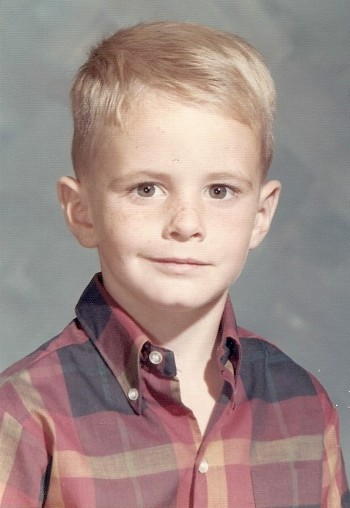 In this original BTB Investigation, we unveil the tragic story of Kirk Murphy, a four-year-old boy who was treated for “cross-gender disturbance” in 1970 by a young grad student by the name of George Rekers. This story is a stark reminder that there are severe and damaging consequences when therapists try to ensure that boys will be boys.
When we first reported on three American anti-gay activists traveling to Kampala for a three-day conference, we had no idea that it would be the first report of a long string of events leading to a proposal to institute the death penalty for LGBT people. But that is exactly what happened. In this report, we review our collection of more than 500 posts to tell the story of one nation’s embrace of hatred toward gay people. This report will be updated continuously as events continue to unfold. Check here for the latest updates.
In 2005, the Southern Poverty Law Center wrote that “[Paul] Cameron’s ‘science’ echoes Nazi Germany.” What the SPLC didn”t know was Cameron doesn’t just “echo” Nazi Germany. He quoted extensively from one of the Final Solution’s architects. This puts his fascination with quarantines, mandatory tattoos, and extermination being a “plausible idea” in a whole new and deeply disturbing light.
On February 10, I attended an all-day “Love Won Out” ex-gay conference in Phoenix, put on by Focus on the Family and Exodus International. In this series of reports, I talk about what I learned there: the people who go to these conferences, the things that they hear, and what this all means for them, their families and for the rest of us.
Prologue: Why I Went To “Love Won Out”
Part 1: What’s Love Got To Do With It?
Part 2: Parents Struggle With “No Exceptions”
Part 3: A Whole New Dialect
Part 4: It Depends On How The Meaning of the Word "Change" Changes
Part 5: A Candid Explanation For "Change"
 At last, the truth can now be told.
Using the same research methods employed by most anti-gay political pressure groups, we examine the statistics and the case studies that dispel many of the myths about heterosexuality. Download your copy today!
And don‘t miss our companion report, How To Write An Anti-Gay Tract In Fifteen Easy Steps.
 Anti-gay activists often charge that gay men and women pose a threat to children. In this report, we explore the supposed connection between homosexuality and child sexual abuse, the conclusions reached by the most knowledgeable professionals in the field, and how anti-gay activists continue to ignore their findings. This has tremendous consequences, not just for gay men and women, but more importantly for the safety of all our children.
Anti-gay activists often cite the “Dutch Study” to claim that gay unions last only about 1½ years and that the these men have an average of eight additional partners per year outside of their steady relationship. In this report, we will take you step by step into the study to see whether the claims are true.
Tony Perkins’ Family Research Council submitted an Amicus Brief to the Maryland Court of Appeals as that court prepared to consider the issue of gay marriage. We examine just one small section of that brief to reveal the junk science and fraudulent claims of the Family “Research” Council.
 The FBI’s annual Hate Crime Statistics aren’t as complete as they ought to be, and their report for 2004 was no exception. In fact, their most recent report has quite a few glaring holes. Holes big enough for Daniel Fetty to fall through.
“Google” is a trademark of Google Inc.
© Box Turtle Bulletin. All Rights Reserved.

 Posts
Posts  Posts via daily email: