Box Turtle Bulletin
 News and commentary about the anti-gay lobby
“Now you must raise your children up in a world where that union of man and box turtle is on the same legal footing as man and wife…”
News and commentary about the anti-gay lobbyJanuary 5th, 2014
 One of the more stupid anti-gay positions taken by American Catholics in the past few years was the decision by some dioceses to disallow children of gay couples to attend parochial schools. It’s hard to fathom what that was supposed to accomplish.
But now Pope Francis has called for a reassessment of how the Church responds to children of gay or divorced parents.
“On an educational level, gay unions raise challenges for us today which for us are sometimes difficult to understand,” Francis said in a speech to the Catholic Union of Superiors General in November, extracts of which were published on Italian media websites on Saturday.
…
The pontiff said educational leaders should ask themselves “how can we proclaim Christ to a generation that is changing?”“We must be careful not to administer a vaccine against faith to them,” the 77-year-old added.
The Catholic Church and Pope Francis hold and espouse views that are damaging to our community. But unlike his predecessor, Pope Benedict the Malevolent, Francis seems to be aware that the future looks dim for any organization who’s approach to expansion is, “Not you, nor you, nor you, nor you, nor you!”
January 5th, 2014
TODAY’S AGENDA is brought to you by:

Named for the nearby Forrest Theater, the restaurant and bar was bought in 1944 by Barney Zeeman, a pianist and former dance band leader in the 1920s and 1930s. He died in 1976. The Forrest continued to operate as a gay bar in various incarnations through the early 1980s. It is now a leather bar known as the Bike Stop. From Drum magazine, November 1964, page 31. Drum was published by The Janus Society, a Philadelphia gay rights group.
TODAY IN HISTORY:
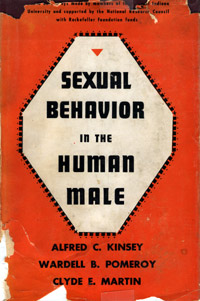
Kinsey’s “Sexual Behavior in the Human Male” Published: 1948. The dry, scientific, statistics-laden Sexual Behavior in the Human Male was published by W.B. Saunders, a respected publisher of medical textbooks and journals who had no idea what they were getting into when they agreed to publish this book. Their experience was with a limited customer base where a run of 5,000 copies was considered a huge success. W.B. Saunders ended up publishing a quarter of a million copies during that first year instead.
The only person who wasn’t surprised by the runaway success of what became known simply as “The Kinsey Report” was Alfred Kinsey himself. He and his colleagues had spent the previous nine years interviewing nearly 12,000 people across the country, asking them questions covering more than five hundred details of their intimate, sexual lives. When the book was finally published, America was emerging from the frugality that marked the Great Depression and World War II, full of economic and cultural vitality and itching to settle down in their Levittown houses and start making thousands of babies. The Kinsey Reports quickly entered popular culture along with Tiki-chic, bachelor pads, and a huge post-war baby boom. Sex was breaking out all over, and “Kinsey” became a popular code-word for anything risqué. It also introduced millions of Americans to the notion that gay people — and a lot of other people as well — were have gay sex. Now more than sixty years later, Sexual Behavior in the Human Male (and its companion volume, 1953’s Sexual Behavior in the Human Female) are still the books that everyone loves — especially those who have never read them. They are also the books that social conservatives love to hate, blaming them for sparking the sexual revolution of the 1960’s. For more information about the book’s impact, you can check out our report, “According To The Kinsey Reports,” which was written on the occasion of the book’s sixtieth anniversary.
“Male Hairdresser” Found Murdered: 1955. Miami’s Miami’s long-running anti-gay witch hunt had been going on for much of 1954 (see Aug 3, Aug 11, Aug 12, Aug 13 (twice that day), Aug 14,Aug 26, Aug 31, Sep 1, Sep 2, Sep 7, Sep 15, Sep 19, Oct 6, Oct 20,Nov 12 and Dec 16), but it almost seemed as though things might be calming down again for South Florida’s gay community as the new year began. Those hopes were shattered when Miami Beach police were called to an apartment when a resident discovered that his roommate, 29-year-old William B. Bishop, had been murdered. The Miami News’ front page report was very nearly as “hysterical” as the phone call that Bishop’s roommate reportedly made to police when he discovered the body. According to The Miami News:
Bishop’s nude body was trussed with handkerchiefs, a silk dressing gown sash and an electric wire cord, and he had been wounded. The exact cause of his death was unknown hours after one of the nearly hysterical roommates notified police at 8:10 a.m. Beach detectives and sheriff’s office homicide investigators found the body on the terrazzo floor of a jalousied porch in the apartment at 235 82nd St. Bishop shared the living quarters with two friends.

“Edward Hedgepeth, left, and William H. Tower, roommates of slain William B. Bishop, are escorted to a telephone by Officer C.E. Hobson of Miami Beach. The two said they slept undisturbed while Bishop was dying on apartment porch. — Miami Daily News photo by Spencer.
The Miami News didn’t identify Bishop as gay, but it may as well have. Not only was he identified as a “male beautician” in the headline, but his two room mates were also identified by name and professions: another hairdresser and a florist. The florist, William H. Tower, 22, told detectives that he went to bed at 6:30 p.m. the night before while the other roommate, Edward B. Hedgepeth, 27, went to bed at about 11 p.m. Neither of them heard anything unusual overnight. When Tower got up the next morning, he found Bishop on the porch.
Detectives apparently regarded the crime scene as quite a spectacle, and they invited reporters onto the porch to get a closer look at the body. The Miami News happily supplied the details:
Bishop’s hands were tied behind him with a man’s handkerchief and the dressing gown sash, which were twisted together. The wrists and ankles were bound together with the electric extension cord, and a dish towel and another handkerchief were knotted around the face as a gag. … John Berdeaux, sheriff’s homicide investigator, said: “It looks to me like a sadistic murder.”
The police also appeared to have allowed reporters to go through the apartment as well:
A desk in the apartment was littered with reading matter about homosexuals, including the book, “Strange Loves,” by Dr. LaForest Potter. The book was described on the jacket as a study in sexual abnormality.”
Reporters also drew parallels to another unrelated murder which had occurred the summer before of a “Coral Gables schoolboy (who) was found dead in a tree near his home… The youth had been bound with rope to a pole held between forks in a tree.” After noting that that crime was still unsolved (in fact, investigators weren’t even sure whether that death was a murder or suicide), the reporters apparently ran out of anti-gay stereotypes to exploit, and so the article came to an end.
The Brunswick Four Arrested: 1974. It was amateur night at the Brunswick Tavern in Toronto, and Adrienne Potts and Pat Murphy regaled the audience by singing “I Enjoy Being a Dyke” (a take-off from the Rodgers and Hammerstein Flower Drum Song tune “I Enjoy Being a Girl”). The tavern’s management objected and asked the Potts and Murphy to leave along with their friends Sue Wells and Jennifer Beyer. When the four refused to leave, management called police. Eight officers arrived, dragged them out of the bar, and detained them at the station for five hours of harassment before being charged with creating a disturbance and obstructing the police.
Pat Murphy was also a member of Toronto Gay Action, which made sure there was plenty of publicity surrounding the arrest. The group became known as the Brunswick Four, and Judy Lamarsh, former Secretary of State for Canada, defended the women free of charge. Charges were dropped against Wells. Murphy and Beyer were acquitted, and Potts was given three months probation.
After the trial, Potts, Murphy and Beyer compelled the Crown to charge the arresting officers with assault after collecting extensive evidence in the form of doctors’ notes and photographs of their bruising. But the police officers had exchanged hats and badge numbers before entering the tavern, which prevented the women from making positive identifications. Murphy, Potts and Beyer refused to participate in the trial, calling it a scam and a miscarriage of justice. The officers were acquitted and Murphy was sentenced to thirty days in jail for contempt of court for refusing to rise for a recess. Despite the unsatisfactory outcomes, the incident is regarded by many as Canada’s Stonewall for inspiring a more outspoken and confrontational gay rights movement in Canada.
TODAY’S BIRTHDAYS:
 Kay Lahusen: 1930. Her life partner, pioneering lesbian rights advocate Barbara Gittings (see Jul 31), was probably more famous, but Kay Lahusen was an equal partner in the couple’s active participation in the early gay rights movement. She had been raised in Cincinnati by her Christian Science grandparents, and she encountered her first crisis over her sexuality while still in high school when she fell in love with another girl and developed what she thought was “the world’s greatest friendship.” But that friendship also stirred feelings of love, desire, and sex, “just like straight people feel. I have to tell you, I had a breakdown over this revelation.” She went to bed and stayed there for two weeks. When her grandparents called a Christian Science practitioner to the house to pray over her, Lahusen decided that she had no choice but to figure out how to pull herself up and deal with the situation head-on. “I just decided that I was right and the world was wrong, and that there couldn’t be anything wrong with this kind of love.”
After a difficult breakup with that same girlfriend in college, she moved to Boston to work in the Christian Science Monitor’s reference library, where she observed that “they filed homosexuality under ‘vice’.” In 1961, she read Voyage from Lesbos: the Psychoanalysis of a Female Homosexual

Photo of Lilli Vincenz, by Kay Lahusen, on the January 1966 cover of The Ladder
Together, they established a much more politically active wing of the Daughters of Bilitis, and their strong push for visibility came to epitomize the East Coast approach to gay advocacy. When Barbara began editing The Ladder in 1962, she pushed the magazine into a much bolder direction. She quickly replaced the magazine’s hand-drawn covers with photos of real lesbians, photos which were often supplied by Kay — credited as “Kay Tobin” because, she said, “Lahusen is too hard to pronounce.” By then, Lahusen was becoming “the first gay photojournalist” by photographing an increasing number of gay rights pickets on the East Coast.

Kay Lahusen, walking a picket line in front of Independence Hall in 1969, just a few days after the Stonewall rebellion.
It was those pickets, including at Philadelphia’s Independence Hall (see Jul 4), the White House (see Apr 17 and May 29)and Pentagon (see Jul 31), which became a source of growing tension between the East and West Coast branches of the DOB. Lahusen and Gittings, along with other East Coast gay rights activists like Frank Kameny (see May 21) and Randolphe Wicker, believed that a more direct and confrontational approach was needed if anything was truly going to change, and they were increasingly frustrated by the cautious and accommodating approach advocated by West Coast leaders. When the national DOB became paralyzed over how to respond to a police raid on a lesbian bar in Philadelphia (see Mar 8), Lahusen and Gittings decided it was time to move on.
After leaving DOB, they began working with other men and women on the East Coast through a host of other organizations, including the Homophile Action League, the East Coast Homophile Organization (ECHO), the North American Conference of Homophile Organizations (NACHO) and, after Stonewall, the Gay Activist Alliance (GAA). They also played key roles in the drive to get the American Psychiatric Association to drop homosexuality from its list of mental disorders. Kay’s activism continued into the 1980s when, after becoming a realtor, she organized a group of agents to march in New York’s Gay Pride Parade. Kay and Barbara remained together for 46 years, until Barbara’s death from breast cancer in 2007. Key currently lives in an assistance living facility in Pennsylvania.
[Source: Eric Marcus. Making History: The Struggle for Gay and Lesbian Equal Rights : 1945-1990 : An Oral History
 Alvin Ailey, Jr.: 1931-1989. It can be said that Alvin Ailey single handedly elevated African-American dance from popular steps to modern art. It’s hard to imagine African-American modern dance without his Alvin Ailey American Dance Theater, even though he was always proud of the fact that his dance company was integrated. Ailey combined modern dance with classical styles, bringing together a long, unbroken leg line (“a ballet bottom”) and a dramatically expressive upper torso (“a modern top”). “What I like is the line and technical range that classical ballet gives to the body. But I still want to project to the audience the expressiveness that only modern dance offers, especially for the inner kinds of things,” he once explained. His signature work, Revelations, drew on his memories of his early childhood in Texas, combining elements of blues, spirituals, and gospel music with a thoroughly modern choreography. His 1970 American Ballet Theatre commission, The River, had the ABT’s ballet company employing classical dance styles with the music of Duke Ellington.
 Ailey relative openness about his sexuality was the source of continued tensions between him and his mother. When he was dying of AIDS in 1989, he asked his doctor to announce that he had died of a blood disorder to spare his mother the social stigma of dying from AIDS. Considering the many barriers that Ailey smashed to smithereens during the course of his career in dance, his final act stands as a sad anomaly. And yet his work endures. His dance troupe carries on his legacy through performances, commissions and in providing higher education to dance students through The Ailey School.
If you know of something that belongs on the agenda, please send it here. Don’t forget to include the basics: who, what, when, where, and URL (if available).
And feel free to consider this your open thread for the day. What’s happening in your world?
January 4th, 2014
TODAY’S AGENDA is brought to you by:

From Michael’s Thing, a bi-weekly bar guide, August 2, 1976, p.24.
 TODAY IN HISTORY:
Gay Man Stabbed to Death in Texas: 1995. Fred Mangione, 46, and his longtime partner, Kenneth Stern, 42, popped in to Dolly’s Place in Katy, Texas for drinks. The two had known each other for sixteen years, and had lived in the Houston area for the past ten, where they worked in the restaurant industry and shared their home with their two ailing mothers. That night, they had had a quite day with “the Moms,” strolled through a nearly empty local mall, and made plans to spend Valentine’s Day together by themselves in Disney World before deciding to grab a couple of drinks. They were regulars at Dolly’s Place, and felt comfortable with the place:
In this anonymous suburb west of Houston, where one fast-food restaurant blends into another, Stern and Mangione had managed an unusual popularity. At Community Bank, at the pancake house, at Dolly’s, where they were the designated gay couple among a largely heterosexual clientele, their appearance usually was greeted with cries of, “Here come Kenny and Fred!”
“People come into your life and they touch you,” said Suzie Andrews, 33, an office manager who had known the couple for several years. “They showed us a great deal. We were even aware at the time of how much they were showing us — the longevity of their relationship, how much love and togetherness they shared. They were like an old married couple.”
When Mangione started selling some Avon products to some of the bar patrons, someone yelled out that someone should “whip those fags.” A short time later, Daniel Bean, 19, and his half-brother Ronald Henry Gauthier, 21, who were visiting from Montana and were in the bar that night having drinks, talked to the man and appeared to have talked him down. Witnesses later said that Gauthier told the man they were going to mess with the “fags.” They then struck up a friendly conversation with Mangione and Stern. When Mangione and Stern decided to go to a convenience store for cigarettes, the brothers asked to tag along.
When the four return, Stern walked into the bar first, assuming the others were following behind. Instead, Gauthier walked in and began beating Stern. Bean then walked in and threw a dear-gutting knife with a six inch blade, covered in blood, onto the bar and joined the beating. Other patrons pulled the brothers off Stern. Wondering where Mangione was, Stern and the patrons ran outside to discover Mangione lying on the floor of a van covered in blood, the result of some 35 stab wounds.
When police arrived and arrested the brothers, they told police that they had just “fucked up a fag.” “It’s very obvious the victim was targeted because of the fact that he was homosexual,” sheriff’s Capt. Don McWilliams said. “They demonstrated no remorse at all over this.”. The two also bragged about being members of the German Peace Corps, a neo-nazi group based in California. Gauther would later deny being a member of the group during the trial, but Bean had the group’s initials tatooed on his arm.

Kenneth Stern holds a cross necklace given to him by his partner, Fred Mangione. (via)
Three years before Matthew Shepard’s death, Fred Mangione’s murder became among the earliest anti-gay hate crime murders to gain national attention. His murder also pulled the local community together, with a prayer vigil at Dolly’s Place and a well attended funeral. Community members also packed to court room to demand that Bean and Gauthier bond, then set at $200,000, was not reduced further. The judge decided, instead, to hold the pair without bond. After the trial, Bean was sentenced to life for stabbing Mangione. Gauthier was given only 10 years probation. Jurors told reporters that the prosecution failed to convince them that Gauthier was involved with the stabbing.
Gauthier’s sentenced was met with outrage from the Houston Gay Political Caucus, and Stern expressed his concern that Gauthier would live with his mother in the subdivision right next to Stern’s. “For the rest of my life,” he said, “I have to watch what he does.”
HIV-Travel Ban Lifted: 2010. One of the late Sen. Jesse Helm’s (R-NC) last legacies finally fell into the trash heap of history when the ban against people with HIV from entering the United States was finally lifted. The ban had been in place since 1987, when the former Senator from Anti-Gay USA added an amendment added to a 1987 appropriations bill which required that HIV/AIDS be included on the list of excludable diseases for immigration. When HHS moved to remove AIDS from the list in 1993, Congress retaliated by approving a measure that made the HIV/AIDS immigration and travel ban law. That law remained in place until 2008, when President George W. Bush signed the sweeping President’s Emergency Plan for AIDS Relief (PEPFAR) into law. The law, which vastly expanded U.S. aid to combat HIV/AIDS overseas, also included a provision repealing Helms’s 1993 amendment. The Bush administration initiated the cumbersome and time-consuming rule-change process in order to lift the administrative application of the ban. That process was completed nearly two years into President Barack Obama’s first term.

TODAY’S BIRTHDAY:
Marsden Hartley: 1877-1943. He was born Edmund Hartley, the youngest of nine children in Lewiston, Maine. His mother died when he was eight and his father married Martha Marsden four years later. Edmund adopted his step-mother’s maiden name as his first name while in his twenties, after having studied art at the Cleveland School of Art, the New York School of Art, and the National Academy of Design. In 1909, he landed his first major exhibition at Alfred Stieglitz’s Gallery 291 in New York, followed by a second exhibition in 1912.
That same year, Marsden took his obligatory trip to Paris and Germany, where he met Gertrude Stein (see Feb 3, Franz Marc, Wassily Kandinsky, and Charles Demuth (see Nov 8). Hartley remained in Germany after the outbreak of World War I, returning only after the death of a young German soldier, Karl von Freyburg. Hartley’s famous Portrait of a German Officer (1914) includes a full range of German military insignia and banners, along with von Freyburg’s initials, regiment number (4), and his age (24). Harley painted a series of what he called the War Motifs, which were intended to reflect his revulsion of the war. But his usage of German imagery proved highly unpopular with American collectors and critics.

Marsden Hartley, Madawaska Acadian Light Heavy (1940), a portrait of a wrester.
By 1919, Hartley moved away from abstract impressionism in favor of landscapes, still lifes and figure studies. By the 1930s, is figure studies turned decidedly masculine. In 1938, he painted Adelard the Drowned, Master of the “Phantom”, inspired by the death of a close friend, Alty Mason. (The nature of their relationship isn’t clear.) The painting features his friend’s unbuttoned shirt, hairy chest, and a single white flower placed at his left ear. A year later, Hartley placed Mason in Christ Held by Half-Naked Men, as a kind of an all-male pietà . But most of his work remained concentrated in landscapes set in Maine and Nova Scotia, where he remained for much of his life. Recognition and fame eluded Marsden during his lifetime. Not until twenty years after his death in 1943 did the New York Times recognize his portraits as “the boldest paintings of male figures in the history of American art.” In 2003, another Times critic drew a more direct observation: “Hartley painted what Whitman, the pre-eminent poet of the physical, hailed as the body electric.”

Michael Stipe: 1960. Stipe met bandmate Peter Buck at a record store in Athens, Georgia, that Peter managed. “He was a striking-looking guy and he also bought weird records, which not everyone in the store did.” Buck later recalled. They formed R.E.M. with Bill Berry and Mike Mills, and with Stipe as lead singer. The band’s first album, Murmer (1983), found critical success, even though critics couldn’t make out the lyrics due to Stipe’s mumbling. His vocal styling continued on their second album Reckoning (1984), by which time Stipe’s mumbling became fodder for parodies. Stipe answered his critics: “It’s just the way I sing. If I tried to control it, it would be pretty false.”
In 1985, R.E.M. finally began to hit their musical stride when Stipe decided to enunciate more clearly for Fables of the Reconstruction. The clearer singing began to reveal an earnest, albeit nonlinear, writing style in his lyrics. That nonlinearity extends to his personal life as well: he doesn’t consider himself gay. “I don’t,” he reiterated in 2005. “I think there’s a line drawn between gay and queer, and for me, queer describes something that’s more inclusive of the grey areas.” In a 2011 interview, Stipe said that he was “around 80-20” gay, but still prefers to identify as queer. “A lot of younger people have a much more it-is-what-it-is approach to sexuality. The black and white binary approach just does not work. So you find the terms that make you most comfortable.” R.E.M announced their retirement as a band in September 2011.
If you know of something that belongs on the agenda, please send it here. Don’t forget to include the basics: who, what, when, where, and URL (if available).
And feel free to consider this your open thread for the day. What’s happening in your world?
January 3rd, 2014
Trestin Meacham has convinced himself that the State of Utah could get rid of gay marriages by simply declaring the Federal Judge’s decision null. Although the Supreme Court has ruled many times that states cannot nullify decisions that fall under the US Constitution (the Supremacy Clause), Meacham insists otherwise.
And the erstwhile Constitutional Party candidate has vowed not to eat until Utah nullifies Judge Shelby’s ruling, subsisting only just water and “an occasional vitamin”.
I’m not sure that I believe Meacham. He says he’s lost 20 pounds since the decision, but he’s still up walking around and that seems a bit suspect to me. Twelve days without food is a very very long time.
But, since Utah isn’t going to go with his wacky hypotheses, I guess he’ll either he’ll break his fast, be institutionalized, or die.
January 3rd, 2014
I’ve long derided the glib phrase, “Love the Sinner, Hate the Sin”.
First, I don’t think there is anything inherently sinful in homosexuality, especially lived in a responsible, mature and spiritual way. But that isn’t my objection; you can define sin however you like.
Believe me, growing up the son of a Pentecostal pastor, it seemed like most everything was either sin or right up next to it: movies, television, secular music, dancing, playing cards (but just the kind with clubs and diamonds, not the kind with old maids), boys going shirtless, boys and girls swimming together, and of course smoking and drinking and sex outside marriage. And if anything new came along, you’d better put it on the sin list just to be safe.
But those were ‘things Christians don’t do’, not things that you lobbied and tried to ban in Caesar’s realm. So if you want to think something is sin, by all means don’t do it. Just stay out of my life and my rights (and my Ketel One martini, dry with two olives).
No, my problem with the phrase is that it has mostly been a lie, a claim that was mocked by the actions of those making it. Never did I see much love directed toward the “sinner” and it seems that all the hate was directed not towards whatever sin was imagined that he engaged in, but rather toward the one who was imagined to be doing it.
Love the sinner? Fire him! Love the sinner? Take away her children! Love the sinner? Ban his marriage rights! Love the sinner? Bully her in the school hallways! Love the sinners? Don’t let them eat cake!
But Micah Murray, writing at Huffington Post, gives another reason why this trite phrase will no longer pass his lips. Murray still considers homosexual acts to be sinful, but he now sees that by focusing on the sin of gay people, you don’t see the people of gay people.
Sinner.
And despite all my theological disclaimers about how I’m just as much a sinner too, it’s not the same. We don’t use that phrase for everybody else. Only them. Only “the gays.” That’s the only place where we make “sinner” the all-encompassing identity.
Then we try to reach them, to evangelize them. We speak of “the gays” in words reminiscent of the “savages” from those old missionary stories — foreign and different and far away, the ultimate conquest for the church to tame and colonize and save.
Maybe we accept them in our midst. But even then, it’s sinners in our midst — branded with a rainbow-colored scarlet letter. They aren’t truly part of us.
Even that word “them” makes me cringe as I speak it, as if my brothers and sisters are somehow other, different from me.
It’s a special sort of condescending love we’ve reserved for the gay community. We’ll agree to love them, accept them, welcome them — but we reserve the right to see them as different. We reserve the right to say “them” instead of “us.” We embrace them with arms full of disclaimers about how all the sinners are welcome here. And yet, they’re the only ones we constantly remind of their status as sinners, welcome sinners.
And sadly, that is quite true.
I still find Micah’s position to be less than ideal. For all his efforts, it’s clear that he is still clinging to gay=sin. But I applaud his honesty and his desire to set aside the weights that hold him in a place of condemnation.
He is in an in-between place. But if more of conservative Christendom were in that place, my life would be easier.
January 3rd, 2014
Supreme Court Justice Sonia Sotomayor should ignore Utah’s request for a temporary ban on gay marriages, attorneys representing gay couples argued in a Friday morning filing.
“Forcing same-sex couples and their families to wait and hope for the best during the pendency of this appeal imposes an intolerable and dehumanizing burden that no family should have to endure,” James Magleby and Peggy Tomsic, attorneys at Magleyby and Greenwood argued in the filing.
It isn’t certain when Sotomayor will respond or if she will instead take the stay request to the full court.
One of the reasons that the State of Utah gave for seeking the stay (and one of their arguments as to why they assert they would win on appeal) is that same-sex marriage is one of them there newfangled gadgets and not “deeply rooted in the nation’s history and tradition.” Which reminds me of this paraphrase of Nathaniel Hawthorne:
Tradition sometimes brings down truth that history has let slip, but is oftener the wild babble of the time, such as was formerly spoken at the fireside and now congeals in websites.
January 3rd, 2014
Back in 1990, three white supremacists were found guilty of conspiring the bomb Seattle’s Neighbors Bar. The three were arrested the day before they were to plant their four pipe bombs in an alley and phone in a bomb threat. The plan was to detonate the bombs after everyone evacuated out the back emergency exit. The longest sentence handed down was to the ring leader, who was given just a nine year sentence.
January 3rd, 2014
When the Defense Department’s “don’t ask, don’t tell” policy was overturned and gay soldiers could serve openly, anti-gay activists warned of unexpected consequences. And, in a way, they were right.
On New Year’s Eve, someone entered Seattle’s Neighbors Bar, poured gasoline on the stairway, and set the club on fire. What happened next illustrates one unexpected consequence of having trained soldiers who are a part of all walks of life. (kirotv)
In the first few seconds after the fire roared up the back stairway of Neighbours nightclub in Seattle, US Army Staff Sgt. Christopher Bostick was one of a few New Year’s Eve revelers who reacted immediately.
“I’m embarrassed to say, my first move was to go after it with cups of water. Then I quickly realized, this fire is way bigger than that, he said.
In the next breath, the Army Intelligence veteran of Iraq and Afghanistan tours sharpens his tone, as if news of impending violence is to follow.
“You know, in 30 seconds, if that fire did what the arsonist intended, there’s no telling how many people could have died.”
While 750 people counted down to the new year, Bostick rushed to grab a fire extinguisher from behind the bar. He and Air Force member Mike Casey went to work putting out the gasoline-fueled fire.
“It was like the Carrie movie,” Bostick recounted, “you see just fire everywhere. And that’s all you can see and for a second, that’s all you’re focused on.”
The crowd evacuated smoothly, no one was hurt, and the police are investigating.
January 3rd, 2014
January 3rd, 2014
 In 2012, Minnesota was in the midst of a battle over whether to amend the state constitution to ban same-sex marriage. One of the more visible (and definitely most colorful) allies for equality was Minnesota Vikings punter Chris Kluwe.
Eventually the voters of Minnesota rejected the amendment and the legislature passed a bill legalizing same-sex marriage. But things did not go as well for Kluwe, who was fired from the team.
At the time, Kluwe gave a non-committal response as to the reason why he was let go at the height of his career. But now – having accepted that it is unlikely that he will play again for the NFL – Kluwe is claiming that he was probably fired for his pro-gay activism.
Writing for Buzzfeed, the former player gives praise to Vikings owner Zygi Wilf, who thanked him for his advocacy, but blames his firing on “a bigot and two cowards”. He chastises Vikings Head Coach Leslie Frazier (himself fired this week) and General Manager Rick Spielman for lacking the backbone to stand up for decency, but the real blame he saves for Special Teams Coordinator Mike Priefer.
The most incendiary claim is this:
Near the end of November, several teammates and I were walking into a specialist meeting with Coach Priefer. We were laughing over one of the recent articles I had written supporting same-sex marriage rights, and one of my teammates made a joking remark about me leading the Pride parade. As we sat down in our chairs, Mike Priefer, in one of the meanest voices I can ever recall hearing, said: “We should round up all the gays, send them to an island, and then nuke it until it glows.”
The Vikings issued a statement that Kluwe was “released strictly based on his football performance”. I can’t judge that position, but the response from those who follow the sport closely seems mixed in their response.
But the management also stated that they take his allegations “very seriously and will thoroughly review this matter”. And, indeed, they should. For while many football fans may not be supporters of marriage equality, few would be comfortable with the raw hatred that was reflected in Priefer’s alleged outburst.
Priefer has denied the incident, using the “I have gay family members” defense.
I vehemently deny today’s allegations made by Chris Kluwe.
I want to be clear that I do not tolerate discrimination of any type and am respectful of all individuals. I personally have gay family members who I love and support just as I do any family member.
The primary reason I entered coaching was to affect people in a positive way. As a coach, I have always created an accepting environment for my players, including Chris, and have looked to support them both on and off the field.
The comments today have not only attacked my character and insulted my professionalism, but they have also impacted my family. While my career focus is to be a great professional football coach, my number one priority has always been to be a protective husband and father to my wife and children.
I will continue to work hard for the Minnesota Vikings, the Wilf family and all of our loyal fans.
This variation of the “some of my best friends” defense has all the believability of Sarah Palin’s similar claim. While I have no idea as to the facts of the matter, this has several flaws that raise red flags.
People who really have gay friends whom they support say, “I love my gay friends!” Those who hold animus say “I love gay people just like I love all people!” Priefer loves his gay family members just like he does “any family member”.
And I’m not sure why the appeal to ‘look at me, I’m a hetero with a wife and kids’ was thrown in there. But one possible reason for the inclusion of “protective” is a warning to the media that he will go on attack if they look too closely at his family. Before his son, Mike Priefer, Jr., made his Twitter account private, one blogger found that he had sent dozens of tweets which reflect a hostile attitude towards gay people.
A few Vikings players (mostly newer players including Kluwe’s replacement) have rallied around Priefer, who is hoping to replace Frazier as Head Coach. But so far (as best I can find), no one who was on the team at the time has categorically denied that Priefer said the things that Kluwe asserts.
It will be interesting to see how this plays out. But the Vikings ownership and management will have to tread carefully.
At the moment, Priefer’s statement doesn’t pass the smell test. Kluwe is too detailed in his dates and places and comes across as credible while Priefer’s bigoted comments, should they be confirmed, are beyond social acceptance in Minnesota. Should the Vikings promote Priefer, they will invite controversy and a negative association with the team in an industry which relies heavily on community goodwill.
January 3rd, 2014
The Salt Lake Tribune is reporting this morning that Evergreen International, the predominant Mormon ex-gay group founded in 1989, has merged with North Star International, a newer LDS-affiliated group:
Combining the two groups, organizers say, will create “the largest single faith-based ministry organization for Latter-day Saints who experience same-sex attraction or gender-identity incongruence and will also provide increased access to resources for church leaders, parents, family and friends.”
The scale and scope of the challenges facing this community “can sometimes be overwhelming,” North Star board chairman Jeff Bennion writes in a news release, “which is why I am thrilled that so many of the strong and experienced associates of Evergreen will be standing even more unitedly with us.”
Part of the “overwhelming” scale and scope of the challenges is undoubtedly the growing acceptance of LGBT people in society overall, including within the LDS church’s membership. Church officials have acknowledged that many congregations have experienced deep divisions in the wake of the church’s heavy involvement in California’s Prop 8 campaign. The church has taken several steps to try to soften its public image since the divisive 2008 campaign. In recent weeks, Utah has become the seventeenth state to offer marriage equality for same sex couples following a ruling by a federal district judge striking down the state’s ban on same sex marriage as unconstitutional.
The Tribune reports that Evergreen President David Pruden will not be joining North Star, but will remain in his role as Executive Director of the National Association for Research and Therapy of Homosexuality (NARTH), which is ostensibly the “secular” arm of the ex-gay movement. Evergreen board chair Preston Dahlgren will become a member of North Star’s board.
This move is the latest in a larger re-alignment within the ex-gay movement. Nearly two years ago, Exodus International president Alan Chambers after Chambers acknowledged that “99.9%” of ex-gay ministry members “have not experienced a change in their orientation,” disavowed the particular form of sexual orientation change therapy known as Reparative Therapy, and acknowledged that gay Christians can enter heaven. Exodus, a predominantly Evangelical-based organization, was the largest ex-gay organization in the U.S. at the time of Chambers’s statements. Over the next year and a half, Exodus struggled to find a new direction within the ex-gay movement before finally announcing its closure at its final conference last June. A newer organization, Restored Hope Network, comprised of more hard core elements of the former Exodus network, has formed in an attempt to claim Exodus’ role in the ex-gay movement.
In contrast to Restored Hope Network, North Star International appears to be taking a softer approach to the question of whether change in sexual orientation is possible:
As to the question of changing or diminishing sexual orientation, North Star takes no position, says the group’s newly named president, Ty Mansfield.
“If someone had a positive experience with reparative therapy or change, we are OK with them sharing that,” says Mansfield, a marriage and family therapist in Provo. “If they had a negative experience, they can share that, too.”
…This approach “is more consistent with national positions by the American Psychological Association that change is not possible and reparative therapy is not effective,” says Richard Ferre, an adjunct psychiatry professor at the University of Utah. “The group is still trying to provide a support for Mormon gays to maintain their connections with their religion.”
The Evergreen International web site is “being rebuilt” and provides visitors with a link to SameSexAttraction.org. North Star International, which was founded in 2006, has a lengthy announcement on its web site.
January 3rd, 2014
TODAY’S AGENDA is brought to you by:

Early gay publications were noticeably male-centric. One notable exception was the Daughters of Bilitis’s The Ladder, which featured almost no advertising. So finding ads for businesses catering to lesbians is extremely difficult. Here’s one for a club called Bacchanal in what is now West Hollywood, announcing that the new management was opening up the club to the “hottest guys in Hollywood” for Thursday’s “Boys Nite.” From The Advocate, May 24, 1972, page 18. The location is now a restaurant and bar called The Dark Room.
THIS MONTH IN HISTORY:
Addressing “A Horror of Everything Related to the Homosexual Tendency”: 1899. In 1897, British sexologist Havelock Ellis (see Feb 2) published the first installment of his six-volume Studies in the Psychology of Sex. Volume 1 was subtitled Sexual Inversion, as homosexuality was more often called in the English language at that time, with some of the material the product of a collaboration with early gay rights advocate John Addington Symonds (see Oct 5). Two years later, Sexual Inversion was still making waves for being the first scientific book to discuss homosexuality in a humane and nonjudgmental way. Ellis argued against the contemporary attitudes about homosexuality being abnormal, criminal, or immoral, and presented it instead as a variation in a broad spectrum of sexual expressions. Ellis concluded that it was useless to try to change sexual orientation, and he advocated for the abolishment of Britain’s anti-gay laws like the “gross indecency” law under which Oscar Wilde was prosecuted in 1895.
Most books about homosexuality at the turn of the century were severely restricted in their distribution. Sexual Inversion was first published in German in 1896 because Ellis feared it would be censored in England. Since several other books on sexuality had already been published there, German had become the lingua franca, so to speak, of sexuality research. When the first English edition was published in London in 1897, its distribution was restricted to the professional trade. In the January 1899 edition of the International Journal of Ethics, a writer by the name of H. Sturt reviewed Ellis’s book, calling it “a solid and valuable contribution to psychology” and commending Ellis for “give(ing) the impression that he is a genuine scientific man doing his best to illustrate an obscure… province of human nature.” Sturt, then argued that the restrictions placed on Sexual Inversion’s distribution was a misguided policy:
There are some who would raise the general question whether a subject like the present can fitly be made the matter of a published treatise. Many excellent persons have a horror of everything related to the homosexual tendency. Their feelings command our respect, and yet it seems better to have the subject brought out publicly. That all sorts of immature and half-educated people should read Mr. Ellis’s book is, of course, most undesirable. But in view of the prevalence of sexual inversion it is necessary that every schoolmaster, every criminal lawyer, we had almost said every head of a family, should be acquainted with its phenomena. Were the subject better understood, mistakes would be avoided that have ruined thousands of lives.
[Source; Jonathan Ned Katz. Gay/Lesbian Almanac: A New Documentary (New York: Harper & Row, 1983): pp 296-297.]

Murder, she wrote.
Phyllis Lyon Kills Ann Ferguson: 1957. When the Daughters of Bilitis began publishing The Ladder in October 1956, it’s masthead identified its first editor as Ann Ferguson. In the second issue, Ferguson penned a short article addressing the first problem they encountered in publishing what would become the nation’s first magazine for lesbians. As Ferguson explained it, too many people feared “that names on our mailing list may fall into the wrong hands, or that by indicating interest in this magazine a person will automatically be labeled a homosexual.” She assured readers that subscribers included all kinds of people, including lawyers, social workers, psychiatrists, business, and other professionals. She also assured readers that “Daughters of Bilitis is not outside the law — we advocate no illegal actions by anyone.”
Ferguson revealed that the organization had obtained legal council and would file for incorporation under the laws of California. She also explained a recent Supreme Court decision which upheld the rights of citizens to refuse to reveal to Congressional committees the names on subscription lists or lists of purchases. So in addition to the organization’s own bylaws prohibiting the disclosure of The Ladder’s subscription lists, “the decision also guarantees that your name is safe!”
Ferguson had been at the helm for only thee months when the January 1957 issue included this startling announcement:
ANN FERGUSON IS DEAD!
I confess. I killed Ann Ferguson. Premeditatedly and with malice aforethought. We ran an article in the November issue of THE LADDER entitled “Your Name is Safe”.” Ann Ferguson wrote that article. Her words were true, her conclusions logical and documented — yet she was not practising what she preached.Somehow it didn’t seem right,
She spent some time considering the situation. Then came to a conclusion. At the November public discussion meeting of the Daughters of Bilitis we got up — Ann Ferguson and I — and did away with Ann. Now there is only Phyllis Lyon.
Seriously, my pseudonym was taken in the first place without much thought. Somehow, it seemed the thing to do. But all it did was create problems. If you’re going to write under a pseudonym then you should go by that name in personal contacts. But everybody connected with the Daughters of Bilitis already knew me as Phyllis and the attempt to call me Ann confused everyone, including me.
I’m sure that I’m not placing myself in any jeopardy by using my real name — and I’m only simplifying matters and practising what I preach.
Phyllis Lyon (see Nov 10) with her partner Del Martin (see May 5) were among eight women who founded the Daughters of Bilitis in 1955 (see Oct 19). In 2008, they Phyllis and Del became the first same-sex couple to be legally married in the state of California. Del passed away later that year. At last report, Phyllis still lives in their home in San Francisco.
[Sources: Ann Ferguson. “Your Name Is Safe!” The Ladder, 1, no. 2 (November 1956): 10-12.
Phyllis Lyon. “Ann Ferguson Is Dead!” The Ladder, 1, no. 4 (January 1957): 7.]

TODAY’S BIRTHDAY:
Dorothy Arzner: 1897-1979. Hollywood was a man’s world, but Dorothy Arzner managed to become a director despite the obstacles. When she first decided that her future lay in motion pictures after serving in the ambulance corps during World War I, she was hired right away by Paramount. As a stenographer. But she used that position to move on to script writer, then film editor. That’s where her work in the 1922 classic Blood and Sand
When Paramount refused to promote her to director, she threatened to move to Columbia Studios. Paramount relented and named her director for the successful silent comedy Fashions for Women. She directed the first talkie for “The It Girl,” Clara Bow, in The Wild Party (1929). Arzner showed considerable ingenuity in making the film: She invented the boom mike when she had the sound crew suspend a microphone from a fishing rod so Bow could move uninhibited around the set. The Wild Party, set in a women’s college, introduced coded references to lesbian themes. Similar themes would emerge in Anybody’s Woman (1930) and Working Girls (1931). Arzner launched the careers of Katherine Hepburn in Christopher Strong


Dorothy Arzner and Joan Crawford
When World War II came along, Arzner directed several army training films. By 1943, Arzner stopped directing major studio feature films due to an illness. When she was ready to return after the war, she found that the workplace had grown impatient with women holding on to “men’s” jobs now that men were returning from fighting overseas. Arzner turned to teaching instead, first at the Pasadena Playhouse and then at the newly-established film school at UCLA, where Francis Ford Coppola was one of her students. Meanwhile, her old friend (and rumored paramour) Joan Crawford, who had married the chairman of Pepsico, got Arzner hired to make more than 50 television commercials in the 1950s. In 1975, Aarzner was recognized with a special tribute by the Directors Guild of America, after having become the guild’s first female member in 1936. She continued teaching until her death in 1979 at the age of 82.
Here are a couple of clips from The Wild Party:
http://www.youtube.com/watch?v=L0ZOGBj3cMMIf you know of something that belongs on the agenda, please send it here. Don’t forget to include the basics: who, what, when, where, and URL (if available).
And feel free to consider this your open thread for the day. What’s happening in your world?
January 2nd, 2014
 I don’t think anyone has been disallowed recently, but yesterday, January 1, was the day that it become official, gay youth can participate in the Boy Scouts. Gay adults cannot participate and, eventually, that will become a problem as current scouts become 18 and find themselves or their friends kicked to the curb.
But this week is for celebrating, so welcome Boy Scouts of America to the current century!
Meanwhile, the promised mass exodus from BSA of troops and members who are horrified that little gay Joey may be in the same room as their precious little darlings, seems not to have happened. (NBC)
So far, the vast majority of charter partners nationwide have chosen to remain Scout sponsors, said BSA spokesman Deron Smith. The organization estimates that less than 2 percent of its 116,000 troops and packs were dropped by their sponsors.
But those who oppose the, gasp, immorality of treating your neighbor like yourself have started a new group for troops who want to be exactly like the Boy Scouts except gayhateier.
Nonetheless, an alternate faith-based Scouting group formed in the wake of the vote is preparing to welcome many ex-Boy Scouts into its organization. The group, Trail Life USA, launches on Jan. 1. It will not allow open and avowed gay youth, according to board chairman John Stemberger, a former BSA Scoutmaster.
Some 425 units, with an average of 20 boys, have signed up with Trail Life USA. About half of the incoming adults and youth were formerly with the Boy Scouts, said Stemberger. “We’re not trying to compete with the BSA,” he said. “We’re just trying to provide a quality program for those that want it.”
Trail Life promises to build men of faith and character who will become godly husbands, fathers, and citizens. And unlike the BSA, they aren’t building men of character if they are gay. Or Mormon. Or Jewish. (Who knew there were so many kinds of people that are a threat to their precious little darlings? Not just little Joey, but little Nephi, and little Mosheh as well.)
So now Trail Life can join the much larger Royal Rangers, Calvinist Cadets, Boys’ Brigade, and Royal Ambassadors, in being “not the Boy Scouts”. And how many kids will want to take off the Boy Scout uniform with its history and neckerchief and patches and jamborees and put on the Trail Life t-shirt? I’m betting on not many.
January 2nd, 2014
Most of us have heard of fan fiction, the amature storytelling of romantic liaisons between real or fictional characters who have no relationship otherwise. And we probably are familiar with yaoi, the boy with boy romantic animation that is created and consumed in mass by young Japanese women.
But I was unfamiliar with the fascination that many Chinese seem to have with the BBC show Sherlock. (BBC)
When UK Prime Minister David Cameron visited China in December and opened an account on weibo, China’s version of Twitter, the top request for him was to speed up the release of the new series of Sherlock. That day finally arrived.
The show was launched on Youku, a Chinese video-hosting website similar to YouTube, just two hours after its premiere in Britain. It got almost 3m hits overnight, and weibo has been lit up by fans discussing the new episode.
Nor was I aware that many Chinese viewers seem intent on seeing Holmes and Watson as a couple.
But the most fervent fans are those intent on finding a gay subtext to the relationship between Holmes and Watson. There are numerous Chinese sites that host Sherlock fan fiction, depicting the detectives as a couple. And among this group of fans, many identify themselves as funu or “rotten women” – young women who like gay stories.
“I have to say, this show is catering to our rotten girls’ taste more and more,” said one fan.
“Sherlock tortures Watson a thousand times, and Watson loves him like his first love,” wrote another. “I’ve waited two years, and it didn’t disappoint me.”
All of which is probably fine with the show’s star, Benedict Cumberbatch, who officiated at the same-sex wedding of friends last summer.
January 2nd, 2014
TODAY’S AGENDA is brought to you by:

Before Grindr and Scruff, you had to meet guys the old fashioned way: at bars or through pen pal services like this one from Danville, Kentucky. From The Advocate, March 15, 1972, page 10.
TODAY IN HISTORY:
Governor vows to rid islands of homosexuals: 1963. The following item appeared below the fold of the front page of the Virgin Islands Daily News:
Action to Rid Here of Deviates Begins
Governor Paiewonsky today declared that his Administration has no intention of permitting the Virgin Islands to become a haven for homosexuals in which to spread their peculiar perversions.
To this end he has directed Commissioner of Public Safety, Otis L. Felix to undertake an immediate investigation into the extent of the problem in the Virgin Islands simultaneous with an all out drive against offenders.
If existing law is inadequate, says the Governor, the Attorney General will prepare legislation designed to eliminate this offensive activity in the Islands.
Noting that a large number of such persons are reported to have come to the Virgin Islands from other places, the Governor stated that the public interest required that our children be protected from the spread of homosexual practices.
According to an op-ed from the English language San Juan Star reprinted in the Mattachine Review, Gov. Paiewonsky’s pledge came on the heels of the recent murder of Sheldon Nulty, whose death was pinned on “homosexual jealousy.” The columnist compare this logic to trying to “drive all married men out of town because occasionally a husband murders his wife.” The U.S. Virgin Islands repealed its sodomy law on October 18, 1984, with repeal going into effect on January 16, 1985.
TODAY’S BIRTHDAY:
 William “Billy” Haines: 1900-1973. Throughout his life, Haines refused to deny his homosexuality. At the age of 14, he ran way from home with his boyfriend. Five years later he became a top model, and from 1924 through 1930, he was one of Hollywood’s most dashing leading men during the Silent era. He was already starting to successfully transition to talkies when he picked up a sailor in Los Angeles’s Pershing Square and took him to a room at the YMCA. The police raided the Y and Haines was arrested. MGM head Louis B. Mayer demanded that Haines enter into a sham marriage to salvage his career, but Haines refused to leave his longtime lover Jimmie Shields. Haines was fired and his name was entered into the so-called Doom Book, the blacklist maintained by Hays Commission.
Haines and Sheilds turned their attentions to each other and to interior design. Their design business took off quickly, thanks to Haines’s connections in Hollywood which allowed them to become the designers to the stars. Clients included Joan Crawford, Gloria Swanson, Carole Lombard, George Cukor, Betsy Bloomingdale, the Annenbergs and the Reagans. Haines and Shields remained together for nearly fifty years, prompting their friend Joan Crawford to dub them the “the happiest married couple in Hollywood.” Gloria Swanson tried to get Haines back into the movie studio for Sunset Boulevard in 1950, but Haines declined. Haines died on December 26, 1973 of cancer. Soon after, Jimmie Shields put on Haines’s pajamas, crawled into their bed, and took an overdose of pills. They are buried together at Woodlawn Memorial Cemetery. In 1999, Haines was the subject of a biography, Wisecracker: The Life and Times of William Haines, Hollywood’s First Openly Gay Star

Michael Tippett: 1905-1998. Britain, in some respects, is a small island, very nearly not quite big enough to simultaneously host two acclaimed openly gay classical composers who were pacifists during WWII. And so Michael Tippett has often been overshadowed by his contemporary, Benjamin Britten (see Nov 22). Tippett was imprisoned as a conscientious objector (Britten avoided imprisonment), and that, with his broader interest in humanitarian work, often influenced his music. His wartime premiere of his pacifist oratorio, A Child of our Time, (with Britten’s partner, Peter Pears, cast as soloist) received wide acclaim. The Times of London called it “strikingly original in conception and execution,” and The Observer hailed it as “The most moving and important work by an English composer for many years.”
The premier of his First Symphony, Third Quartet, and Fantasia Concertante on a Theme of Corelli — one of his most popular and frequently performed works — soon followed. But audiences and performers alike found his 1955 opera The Midsummer Marriage confusing. Modeled after Mozart’s The Magic Flute, Tippett’s work recast it as a Jungian manifesto where, as he put it, “a warm and soft young man was being rebuffed by a cold and hard young woman to such a degree that the collective, magical archetypes take charge.” The music, however, was well received, and he re-used the Four Ritual Dances from the opera as a separate concert work. Controversy surrounded premieres of two following works, the Piano Concerto (1955, its first appointed soloist backed out after declaring it unplayable), and the Second Symphony (1957). During the symphony’s premiere, the BBC Symphony orchestra actually broke down live on air a few minutes into the first movement and had to be restarted.
In 1965, Tippet visited America for the first time, and that experience marked a major turning point as he began incorporating jazz and blues into his music. His third opera The Knot Garden not only explored the complex themes of the Sexual Revolution, but also incorporated electric guitar and a drum set in the orchestra. His Third Symphony (1973) also was influenced by American blues, with the solo soprano’s part becoming a tribute to the late blues singer Bessie Smith. But his fourth opera The Ice Break was roundly criticized for its hackneyed use of American slang and the inclusion of race riots and a psychedelic trip giving what The Telegraph calls “toe-curling results.” Nevertheless, Tippett’s popularity grew through the 1970s and 1980s. He died in 1998, just six days after his ninety-third birthday.
If you know of something that belongs on the agenda, please send it here. Don’t forget to include the basics: who, what, when, where, and URL (if available).
And feel free to consider this your open thread for the day. What’s happening in your world?
Featured Reports
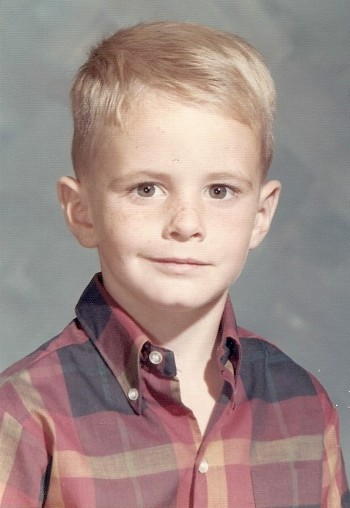 In this original BTB Investigation, we unveil the tragic story of Kirk Murphy, a four-year-old boy who was treated for “cross-gender disturbance” in 1970 by a young grad student by the name of George Rekers. This story is a stark reminder that there are severe and damaging consequences when therapists try to ensure that boys will be boys.
When we first reported on three American anti-gay activists traveling to Kampala for a three-day conference, we had no idea that it would be the first report of a long string of events leading to a proposal to institute the death penalty for LGBT people. But that is exactly what happened. In this report, we review our collection of more than 500 posts to tell the story of one nation’s embrace of hatred toward gay people. This report will be updated continuously as events continue to unfold. Check here for the latest updates.
In 2005, the Southern Poverty Law Center wrote that “[Paul] Cameron’s ‘science’ echoes Nazi Germany.” What the SPLC didn”t know was Cameron doesn’t just “echo” Nazi Germany. He quoted extensively from one of the Final Solution’s architects. This puts his fascination with quarantines, mandatory tattoos, and extermination being a “plausible idea” in a whole new and deeply disturbing light.
On February 10, I attended an all-day “Love Won Out” ex-gay conference in Phoenix, put on by Focus on the Family and Exodus International. In this series of reports, I talk about what I learned there: the people who go to these conferences, the things that they hear, and what this all means for them, their families and for the rest of us.
Prologue: Why I Went To “Love Won Out”
Part 1: What’s Love Got To Do With It?
Part 2: Parents Struggle With “No Exceptions”
Part 3: A Whole New Dialect
Part 4: It Depends On How The Meaning of the Word "Change" Changes
Part 5: A Candid Explanation For "Change"
 At last, the truth can now be told.
Using the same research methods employed by most anti-gay political pressure groups, we examine the statistics and the case studies that dispel many of the myths about heterosexuality. Download your copy today!
And don‘t miss our companion report, How To Write An Anti-Gay Tract In Fifteen Easy Steps.
 Anti-gay activists often charge that gay men and women pose a threat to children. In this report, we explore the supposed connection between homosexuality and child sexual abuse, the conclusions reached by the most knowledgeable professionals in the field, and how anti-gay activists continue to ignore their findings. This has tremendous consequences, not just for gay men and women, but more importantly for the safety of all our children.
Anti-gay activists often cite the “Dutch Study” to claim that gay unions last only about 1½ years and that the these men have an average of eight additional partners per year outside of their steady relationship. In this report, we will take you step by step into the study to see whether the claims are true.
Tony Perkins’ Family Research Council submitted an Amicus Brief to the Maryland Court of Appeals as that court prepared to consider the issue of gay marriage. We examine just one small section of that brief to reveal the junk science and fraudulent claims of the Family “Research” Council.
 The FBI’s annual Hate Crime Statistics aren’t as complete as they ought to be, and their report for 2004 was no exception. In fact, their most recent report has quite a few glaring holes. Holes big enough for Daniel Fetty to fall through.
“Google” is a trademark of Google Inc.
© Box Turtle Bulletin. All Rights Reserved.
 Posts
Posts  Posts via daily email: