Box Turtle Bulletin
 News and commentary about the anti-gay lobby
“Now you must raise your children up in a world where that union of man and box turtle is on the same legal footing as man and wife…”
News and commentary about the anti-gay lobbyJanuary 21st, 2014
TODAY’S AGENDA is brought to you by:

From The Advocate, May 24, 1972, page 5.
After a long battle to obtain a dance permit from the San Francisco Police Department, The Shed became a popular bar and after-hours dance club and (later) discotheque. It opened in 1972, just as the Castro was transitioning from a working class Irish neighborhood to a gay neighborhood. Located across the street from the Harvey Milk Memorial branch of the San Francisco Public Library, the building now looks like it might be a private residence.
TODAY IN HISTORY:
Time Magazine’s “The Homosexual In America”: 1966. Time magazine published an unsigned two-page article which, given that it was a “popular” magazine, provides a mirror of how gay people were viewed in the U.S. at that time:
It used to be “the abominable crime not to be mentioned.” Today it is not only mentioned: it is freely discussed and widely analyzed. Yet the general attitude is, if anything, more uncertain than before. Beset by inner conflicts, the homosexual is unsure of his position in society, ambivalent about his attitudes and identity — but he gains a certain amount of security through the fact that society is equally ambivalent about him.
In the second paragraph, Time provides some examples of that ambivalence that straight society had toward gay people:
The latest Rock Hudson movie explicitly jokes about it, Doubleday Book Shops run smirking ads for The Gay Cookbook, and newsstands make room for “beefcake” magazines of male nudes.
It’s hard to know whether Time indulged in some gay-baiting with Rock Hudson, but that line almost certainly raised a few eyebrows in Hollywood. The article went on:
But increasingly, deviates are out in the open, particularly in fashion and the arts. Women and homosexual men work together designing, marketing, retailing, and wrapping it all up in fashion magazines. The interior decorator and the stockbroker’s wife conspire over curtains. And the symbiosis is not limited to working hours. For many a woman with a busy or absent husband, the presentable homosexual is in demand as an escort — witty, pretty, catty, and no problem to keep at arm’s length. …
On Broadway, it would be difficult to find a production without homosexuals playing important parts, either onstage or off. And in Hollywood, says Broadway Producer David Merrick, “you have to scrape them off the ceiling.” … [I]n the theater, dance and music world, deviates are so widespread that the sometimes seem to be running a kind of closed shop.
As the article continues, the ugliness grows. Time cited a Los Angeles psychiatrist who declared homosexuals “failed artists, and their special creative gift a myth.” Time held gay people responsible for plays depicting “the degradation of women and the derision of normal sex. … They represent a kind of inverted romance, since homosexual situations as such can never be made romantic for normal audiences.” And Time projected its obsessions with sex onto gay people:
Even in ordinary conversation, most homosexuals will sooner or later attack the ‘things that normal men take seriously.’ It does not mean that homosexuals do not and cannot talk seriously; but there is often a subtle sea change in the conversation: sex (unspoken) pervades the atmosphere.
It was at this point when Time turned to the notorious psychologist of the 1950s, Edmund Bergler, who, though dead for four years, supplied the following from a book he wrote ten years earlier:
The late Dr. Edmund Bergler found certain traits present in all homosexuals, including inner depression and guilt, irrational jealousy and a megalomaniac conviction that homosexual trends are universal. Though Bergler conceded that homosexuals are not responsible for their inner conflicts, he found that the conflicts “sap so much of their inner energy that the shell is a mixture of superciliousness, face aggression and whimpering. Like all psychic masochists, they are subservient when confronted by a stronger person, merciless when in power, unscrupulous about trampling on a weaker person.”
It was all there: gay people were “not like everybody else. They were “anxiously camouflaged,” “catty,” “megalomaniacal,” “supercilious,” “conspiring,” “wimpy,” “camp,” “psychic masochists,” “irrationally jealous,” “beset by inner depression and guilt,” “pathetic,” suffering from “a disabling fear of the opposite sex,” trapped in “a case of arrested development,” “subservient around strangers,” “merciless around those weaker than them,” “antagonistic toward heterosexuals,” “mocking of heterosexuals,” “inferior to heterosexuals” and, yes, conspiring over curtains while also nursing their “constant tendency to prowl or ‘cruise’ in search of new partners” while “refus(ing) to accept the full responsibilities of life.” And Time’s concluding remarks were nearly indistinguishable from what we regularly hear today from the likes of Peter LaBarbera, Bryan Fischer, Scott Lively, or the minions at the Family “Research” Council:
Lack of procreation or of marriage vows is not the issue; even Roman Catholic authorities hold that an illicit heterosexual affair has a degree of “authentication,” while a homosexual relationship involves only “negation.” Roman Catholic thought generally agrees that homosexuality is of and in itself wrong because, as New York’s Msgr. Thomas McGovern says, it is “inordinate, having no direction toward a proper aim.” Even in purely nonreligious terms, homosexuality represents a misuse of sexual faculty and, in the worlds of one Catholic educator, of “human construction.” It is a pathetic little second-rate substitute for reality, a pitiable flight from life. As such it deserves fairness, compassion, understanding and, when possible treatment. But it deserves no encouragement, no glamorization, no rationalization, no fake status as minority martyrdom, no sophistry about simple differences in taste — and, above all, no pretense that it is anything but a pernicious sickness.
The gay community’s reaction was biting. An unsigned commentary in the Daughters of Bilitis’ The Ladder (possibly by pioneering activist Barbara Gittings (see Jul 31), who was the magazine’s editor at the time) read, in part:
In its final frenzied paragraph TIME shows its Catholic petticoats, TIME rolls religious, psychiatric, and plain bourgeois prejudice into one big mudball which it slings about, hoping to blacken homosexuality forever… TIME calls homosexuality “a pathetic little second-rate substitute for reality, 11 Ditto for TIME’s essay on the subject.
The Ladder also quoted from a New York psychologist, Fritz Fluckiger, who had spoken at a DOB meeting: “They are famous for having a large research staff — and indeed, they have found every single cliche you can think of, to put in that essay.”
The following month, Gittings’s partner, Kay Lahusen (see Jan 5), writing as Kay Tobin. quoted Dr. Isadore Ruben, publisher of Sexology magazine, who said that Time ordinarily prides itself in being up-to-date on whatever it covers. “But if this is so, then I am forced to conclude that if they are not ignorant, the editors of this essay are intellectually dishonest, motivated by prejudice, and guilty of deliberate omission and distortion.” That same issue also published three letters which had been sent to Time’s editor that the magazine declined to publish. Naturally, it was the letter from Frank Kameny (see May 21, founder of the Mattachine Society of Washington, D.C) which was the most forceful:
Instead of a mature, fair, objective assessment of the issue of homosexuality, divorced from ancient prejudices, pre- (sic) and misconceptions, and intolerances, we have a venomous, petulant polemic, suitable for a second-rate conservative publication.
From its stereotyping of “the homosexual” in the same invalid fashion as that in which others type “the Negro” or “the Jew,” to its choice as a major “authority” of a man (Bergler) whose views are discredited and disavowed even by his own professional colleagues, TIME has remained in the millenia-old intellectual and emotional rut on this question.
Instead of making a skeptical examination of the claims of modern psychiatry and finding that they are based upon shabby, slipshod science, including poor sampling techniques, built-in conclusions, and armchair theorizing about the nature of homosexuality, TIME swallows these claims hook, line, and sinker.
…The concluding three sentences are an unwarrantedly vicious attack upon a sincere effort to improve the status of a maligned and persecuted group of people and to gain for them the dignity to which all human beings have the right to aspire. Those sentences are the voice of a closed mind, of a mind which clearly has pre-judged, is not open to change, and is therefore in the most fundamental sense, prejudiced.
[Sources: Unsigned. “The homosexual in America” Time (January 21, 1966): 40-41. Available online with subscription here.
Unsigned. Column: “Cross-currents.” The Ladder 10, no. 6 (March 1966): 18.
Kay Tobin. “A rebuke for TIME’s pernicious prejudice.” The Ladder 10, no. 7 (April 1966): 20-22.
Franklin E. Kameny. From “Letters TIME didn’t print.” The Ladder 10, no. 7 (April 1966): 22-23.]
If you know of something that belongs on the agenda, please send it here. Don’t forget to include the basics: who, what, when, where, and URL (if available).
And feel free to consider this your open thread for the day. What’s happening in your world?
January 20th, 2014
Today the Oklahoma United Methodists for Equality ran the following ad in the Tulsa World:

January 20th, 2014

Vladimir Putin has repeatedly insisted that the homophobic law in Russia which illegalizes any public support for gay people is merely a crackdown on pedophilia. On Friday he again insisted that this was the case. (NYDailyNews)
“We have no ban on nontraditional sexual relations. We have a ban on propaganda of homosexuality and pedophilia. I want to underline that, on propaganda among minors,” he said.
“We aren’t rounding up anyone, we have no criminal punishment for such relations unlike many other countries,” he said. “One can feel relaxed and at ease, but please leave the children in peace.”
These claims seem difficult to reconcile with the reality that the crackdown is broad and that “propaganda” is, in implementation, inclusive of just about anything.
A gay Russian protester was detained on Saturday for unfurling a rainbow flag during the Olympic torch relay as it passed through his hometown of Voronezh, 560 miles north of Sochi, where the games will begin Feb. 7.
Photos uploaded by his friends show Pavel Lebedev pulling out the flag and then being detained by Olympic security personnel, who wrestle him to the snow as they wait for police to arrive.
Lebedev, reached by The Associated Press on the phone, said he was still in the police station and undergoing questioning.
January 20th, 2014
TODAY’S AGENDA is brought to you by:

From The Advocate, March 15, 1972, page 4.
In 1969, The 5th Dimension had a massive hit with the medley “Aquarius/Let the Sun Shine In” from the hit musical Hair. It stayed at number one for six weeks, and celebrated the popular hope for a new age of peace guiding the planets and love steering the stars. As for the age of Aquarius itself, “the now generation” believed that they had seen its dawning, but among people who take these things seriously there is actually a raging argument over when and whether the 2,150 year astrological age actually starts. Whatever. As for the zodiac sign, today is the first day for Aquarius, according to most calculations. So how about some harmony and understanding?

Murder, she wrote.
THIS MONTH IN HISTORY:
Phyllis Lyon Kills Ann Ferguson: 1957. When the Daughters of Bilitis began publishing The Ladder in October 1956, the masthead identified its first editor as Ann Ferguson. In the second issue, Ferguson penned a short article addressing the first problem they encountered in publishing what would become the nation’s first magazine for lesbians. As Ferguson explained it, too many people feared “that names on our mailing list may fall into the wrong hands, or that by indicating interest in this magazine a person will automatically be labeled a homosexual.” She assured readers that subscribers included all kinds of people, including lawyers, social workers, psychiatrists, business, and other professionals. She also assured readers that “Daughters of BIlitis is not outside the law — we advocate no illegal actions by anyone.”
Ferguson revealed that the organization had obtained legal council and would file for incorporation under the laws of California. She also explained a recent Supreme Court decision which upheld the rights of citizens to refuse to reveal to Congressional committees the names on subscription lists or lists of purchases. So in addition to the organization’s own bylaws prohibiting the disclosure of The Ladder’s subscription lists, “the decision also guarantees that your name is safe!”
Ferguson had been at the helm for only thee months when the January 1957 issue included this startling announcement:
ANN FERGUSON IS DEAD!
I confess. I killed Ann Ferguson. Premeditatedly and with malice aforethought. We ran an article in the November issue of THE LADDER entitled “Your Name is Safe”.” Ann Ferguson wrote that article. Her words were true, her conclusions logical and documented — yet she was not practising what she preached.Somehow it didn’t seem right,
She spent some time considering the situation. Then came to a conclusion. At the November public discussion meeting of the Daughters of Bilitis we got up — Ann Ferguson and I — and did away with Ann. Now there is only Phyllis Lyon.
Seriously, my pseudonym was taken in the first place without much thought. Somehow, it seemed the thing to do. But all it did was create problems. If you’re going to write under a pseudonym then you should go by that name in personal contacts. But everybody connected with the Daughters of Bilitis already knew me as Phyllis and the attempt to call me Ann confused everyone, including me.
I’m sure that I’m not placing myself in any jeopardy by using my real name — and I’m only simplifying matters and practising what I preach.
Phyllis Lyon (see Nov 10) with her partner Del Martin (see May 5) were among eight women who founded the Daughters of Bilitis in 1955 (see Oct 19). In 2008, they Phyllis and Del became the first same-sex couple to be legally married in the state of California. Del passed away later that year. At last report, Phyllis still lives in their home in San Francisco.
[Sources: Ann Ferguson. “Your Name Is Safe!” The Ladder, 1, no. 2 (November 1956): 10-12.
Phyllis Lyon. “Ann Ferguson Is Dead!” The Ladder, 1, no. 4 (January 1957): 7.]
An Improved Method for Delivering Electric Shocks for Aversion Therapy: 1965. Electric shock aversion therapy was just one of many torturous methods which had been used to try to “cure” gay people throughout the twentieth century. Being that it’s use of electricity somehow managed to convey a “technological” gloss into a very crude affair — male patients were shown nude photographs and given painful jolts if the showed any kind of interest in photos of men — it might be surprising that there had, in fact, been only a few basic “improvements” since the technology was first developed in 1935 (see Mar 11 and Sep 6). Three researchers, Bernard Tursky, Peter D. Watson and D.M. O’Connell from Harvard’s Department of Psychiatry and the Massachusetts Mental Health Center, wrote in the journal Psychophysiology about that lack of progress:
Very little systematic work has been done toward designing a satisfactory electrode for the delivery of electric shock in psychological experimentation, although a wide variety of electrode types have been used. These, for example, have included: (a) plates of various metals and different sizes and shapes, either taped or strapped to the fingers, arms or legs of Ss (subjects); (b) cups filled with saline solution into which Ss’ fingers were immersed; (c) standard EEG electrodes attached to the earlobes; and (d) wires attached to the teeth by wax or cups.
Several studies have been conducted to determine the effect of varying the absolute and relative sizes of electrodes. It was found that the smaller the electrode, the less current was needed to produce a given subjective intensity, and that when there was a considerable difference in the relative sizes of the two electrodes, the sensation was felt primarily under the smaller electrode. These studies indicate that the size and the configuration of the electrodes are important variables.
Such was the nature of this kind of research that the very people who were being subjected to painful electric shocks were reduced to the smallest abbreviation possible: they were just “Ss”, and the less said of them the better. The real problem, as far as Tursky, Watson and O’Connell were concerned, was that currently existing technology really did have some problems that they felt needed addressing. Those problems were fourfold:
These are (a) precise delimitation of the area of stimulation; (b) minimal interference with the mobility of the S; (c) freedom from skin irritation and burning; and (d) reduction of muscle involvement as a secondary concomitant of shock stimulation.

The “improved” electrode (click to enlarge).
Tursky, Watson and O’Connell believed that they had an answer. Instead of separate electrodes placed throughout the body, they devised a concentric electrode configuration which “has been found to be highly satisfactory. An inner aluminum disk was surrounded by second aluminum ring, both of which were held together in a plastic case. In order to avoid skin irritation and burning, the electricity was conducted between the device through small sponge pads soaked in saline and coated with an electrode paste. This, they said, was a marked improvement over the older methods:
When an electrical stimulus is applied through a simple metal electrode in direct contact with the skin for long periods of time, small area burns may occur. This can be explained by thinking of the metal electrode as an infinite number of conductors making contact with the skin. Any one of these contacts can form a low resistance path which becomes the focal point for all current flow. The sponge and salt paste contact, used in our electrode, acts to diffuse current flow and insures equal density over the entire surface. In two year sof use with over one hundred Ss, this electrode has not caused any burns.
In other words, they created the torturer’s dream: a system of torment that leaves no mark. Well, at least none that we can see. It was also your parents’ and grandparents’ tax dollars at work. The research was supported by a grant from the U.S. Public Health Service.
[Source: Bernard Tursky, Peter D. Watson, D.N. O’Connell. “A concentric shock electrode for pain stimulation.” Psychophysiology 1, no. 3 (January 1965): 296-298.]
If you know of something that belongs on the agenda, please send it here. Don’t forget to include the basics: who, what, when, where, and URL (if available).
And feel free to consider this your open thread for the day. What’s happening in your world?
January 19th, 2014
The Boston Herald
Each ultimately must unseat a Democratic incumbent, overcome brushes with hate and confront passionate divisions within the GOP about the way they live their lives. The Republican Party is trying to soften its tone on divisive social issues, but many religious conservatives see homosexuality as immoral.
January 19th, 2014

TODAY’S AGENDA:
Premiere of “Looking”: HBO. What do you want in a gay series? When Showtime came out with Queer as Folk, we were willing to look past the barely passable acting, hackneyed dialogue and soap opera emoting just to have a television show that showed gay people — regardless of whether those people corresponded to anyone we knew in real life. Will and Grace was minstrel, but it was our minstrel, and genuinely funny too. But those programs, along with “The L-Word” and “The New Normal,” all seemed to have a kind of Gay People for Dummies vibe, I guess so straight audiences wouldn’t be lost without the subtitles. I would hope that today, with more than a third of Americans living in marriage equality states, maybe it’s time for a TV series in which the main characters are gay — really gay, but not self-consciously, defiantly, outrageously, tragically or poignantly so.
It looks like we may have that in HBO’s “Looking,” a half-hour comedy-drama that follows a trio of friends in San Francisco. Reviews are promising. The New Yorker’s Emily Nussbaum calls “Looking” a “stealth breakthrough, if only because it treats its highly specific circle of gay men with warmth and playfulness, viewing their struggles as ordinary, not outrageous.” The Washington Post’s Hank Stuever favorably contrasts “Looking” to other series gone by:
Closets are now so emptied — and gay culture is increasingly seen in perspective rather than merely as a topic — that “Looking” can spare itself the broad declarations of identity or liberty. For so long, film and TV projects about gay men involved obligatory scenes of bigotry and despair, in which the good times were unfailingly interrupted by requisite suffering. It was always a short hop from the disco floor to the hospital bed.
Stuever does warn that “a self-consciousness about being a ‘gay show’ is still evident, mostly in the writing,” so I guess one can’t expect perfection. But this does look promising. “Looking” stars Jonathan Groff, Frankie J. Alvarez and Murray Bartlett, with Scott Bakula, Russell Tovey and Raul Castillo rounding out the cast. “Looking” premieres tonight at 10:30 p.m. EST on HBO East, and 10:30 p.m. PST on HBO West. Check your local listings.
Events This Weekend: Aspen Gay Ski Week, Aspen, CO; Bärenpaadiie, Hamburg, Germany; Midsumma, Melbourne, VIC; Mid-Atlantic Leather Weekend, Washington, DC.
TODAY’S AGENDA is brought to you by:

From The Blade, December 1976, page 13.
 Lambda Rising opened in 1974 in a tiny 300 square foot space with 250 titles, and it quickly became a kind of an informal community center for Washington, D.C.’s gay community. From those humble beginnings, it moved in 1984 to a larger 4,800 square foot, two story space on Connecticut Avenue and expanded to three other locations in Baltimore, Richmond, and Rehoboth Beach. In 2003, Lambda Rising bought the venerable Oscar Wilde Book Shop in New York and saved it from certain closure. But the rise of Amazon.com and the willingness of general bookstores to carry LGBT titles cut into Lambda Rising’s business. Lambda Rising sold Oscar Wilde in 2006, and closed its three expansion bookstores between 2007 and 2009. The main store on Connecticut Avenue finally closed its doors for good on December 31, 2010.

TODAY IN HISTORY:
The Death of Murray Hall: 1901. The headline in the January 19, 1901, New York Times undoubtedly shocked a lot of people who thought they knew a gregarious Tammany Hall politician pretty well:
Murray H. Hall, the woman who masqueraded as a man for more than a quarter of a century, and the secret of whose sex came out only after her death last Wednesday night at 145 Sixth Avenue [renumbered in the 1920s to 453 6th Ave, between 11th and 12th streets — ed], was known to hundreds of people in the Thirteenth Senatorial District, where she figured quite prominently as a politician. In a limited circle she even had a reputation as a “man about town,” a bon vivant, and all-around “good fellow.” She was a member of the General Committee of Tammany Hall, a member of the Iroquois Club, a personal friend of State Senator “Barney” Martin and other officials, and one of the most active Tammany workers in the district.
She registered and voted at primaries and general elections for many years, and exercised considerable political influence with Tammany Hall, often securing appointments for friends who have proved their fealty to the organization never exciting the remotest suspicion as to her real sex.
She played poker at the clubs with city and State officials and politicians who flatter themselves on their cleverness and perspicacity, drank whisky and wine and smoked the regulation “big black cigar” with the apparent relish and gusto of the real man-about-town. Furthermore, Murray Hall is known to have been married twice, but the woman to whom she stood before the world in the attitude of a husband kept her secret as guardedly as she did.
Hall’s secret was found out when his doctor was called to treat him for an illness he had been suffering for many years. That illness, it turned out, was breast cancer. By the time the doctor made the diagnosis, the cancer had spread to the heart. He died two days later. The Times reported that Hall was a book lover, preferring scientific and medical books, which led to speculation that Hall was trying to treat himself for cancer before finally succumbing. C.S. Pratt, the bookseller who Hall dealt with (and who to whom Hall sold his library three months before his death), had no clue that Hall was anything other than a man.
“He seemed to me to be a modest little man, but occasionally he showed an irascible temper. He would never talk about himself and shunned garrulous and inquisitive companions. In fact, when I met him on the street he was either accompanied by his black and tan dog or some woman or women, strangers to me, who I supposed were clients.”
“During the seven years I knew him I never once suspected that he was anything else than what he appeared to be. While he was somewhat effeminate in appearance and talked in a falsetto voice, still his conduct and actions were distinctively masculine. This revelation is a stunner to me and, I guess, to everybody else who knew him.”
Hall had been quite successful in the rough-and-tumble political world of Tammany Hall:
Why,” continued the Senator, “when the County Democracy was in the heyday of its glory, Murray Hall was one of the bright stars in that constellation. He was the Captain of his election district when he lived and kept an intelligence office between Seventeenth and Eighteenth Street, on Sixth Avenue. That was some years ago, when the district was cut down, making Fourteenth Street the northern boundary. Hall moved so as to be in with his political pals. He used to hobnob with the big guns of the County Democracy, and I knew he cut quite some figure as a politician.
He also cut quite a figure as a ladies man. Married twice, both wives complained that he was “too attentive to other women.” His adopted daughter, Imelda Hall, had no idea about her father’s background. When she testified at a Coroner’s inquest two weeks later, she referred to her father as “he.” The Coroner interrupted to ask, “Wouldn’t you better say ‘she’?” She replied, “No, I will never say ‘she’.”

TODAY’S BIRTHDAY:
Patricia Highsmith: 1921-1995. The American author most widely known for her psychological thrillers Strangers on a Train

After graduating from Barnard in 1942, Highsmith wrote for comic books until 1947. Her first book, 1950’s Strangers on a Train
Her fourth book, The Talented Mr. Ripley
But Highsmith’s life, in many ways, imitated her art, particularly her anti-hero Tom Ripley: she lied, stole, fought, and insinuated herself into love triangles that she then set about destroying. Otto Penszler described her as “a mean, hard, cruel, unlovable, unloving person. I could never penetrate how any human being could be that relentlessly ugly.” A publisher once commented, “She may have been one of the dozen best short-story writers of the 20th century, and she may have been one of the dozen most disagreeable and mean-spirited.”
She had relationships, mostly with women, but they never lasted long. She had a fling with artist Allela Cornell in 1943 (Cornell later committed suicide in 1946 by drinking nitric acid), and between 1959 and 1961 she was involved with lesbian pulp fiction writer Marijane Meaker (who wrote as Vin Packer and Ann Aldrich). But as Highsmith grew older and more financially successful, she lived mainly alone and became increasingly eccentric, and not in a charming sort of way. She raised 300 pet snails that she carried around in her purse, and which she sometimes let out at dinner parties when she was bored. She was intensely anti-Semitic, racist, alcoholic, a “consummate atheist,” and, later in life, fiercely anti-American. While living in Switzerland in the 1980s, she invented nearly 40 pseudonyms while writing to newspapers denouncing the “influence” of Jews. She died alone in a Swiss hospital in 1995 at the age of 74. Her last visitor was her accountant. Her last book, Small g: A Summer Idyll
If you know of something that belongs on the agenda, please send it here. Don’t forget to include the basics: who, what, when, where, and URL (if available).
And feel free to consider this your open thread for the day. What’s happening in your world?
January 18th, 2014
And councilman Rob Webb blinks:
January 18th, 2014
The Robert F. Kennedy Center for Justice and Human Rights issued a press release saying that a delegation met with Uganda President Yoweri Museveni to discuss the Anti-Homosexuality Bill. This meeting follows a letter written by the center’s president Kerry Kennedy and retired South African Archbishop Desmund Tutu asking for a meeting. The meeting happened today in Entebbe:
The delegation – comprised of Ms. Kennedy, Santiago A. Canton, Director of RFK Partners for Human Rights, and Wade McMullen, Staff Attorney for the RFK Center – expressed their grave concern over the legislation that would further criminalize homosexual conduct, censor freedom of expression, and ban civil society organizations working on LGBTI issues in Uganda. Archbishop Desmond Tutu who joined the conversation via telephone similarly expressed his concern, stating the Anti-Homosexuality Bill was reminiscent of oppressive laws passed under apartheid in South Africa.
President Museveni pledged to reject the bill as currently drafted, calling the legislation “fascist.” The President stated that he will consult with his party and plans to introduce a new piece of legislation aimed at protecting minors from being coerced into sexual activity.
The RFK Center reiterated that the government should focus on enforcing the Ugandan Penal Code provisions that already outlaw both opposite-sex and same-sex sexual abuse of minors. Should new legislation be introduced along the lines of the President’s suggestion, the RFK Center strongly advised that any bill should only focus on strengthening current child protection measures, may not discriminate against individuals based on their sexual orientation or gender identity, and must fully respect the rights to freedom of expression and freedom of association.
“I welcome President Museveni’s decision to reject this hateful bill,” said Archbishop Tutu. “It is time for our African brothers and sisters to move past the antiquated notion that someone could be a criminal for who they love.”
If Museveni holds to his promise, this would be welcome news. A news report yesterday erroneously suggested that Museveni had already pledged in a letter dated December 28to refuse to assent to the Anti-Homosexuality bill passed by Parliament a week earlier. Once the full contents of that letter became available, it became clear that Museveni had not made any such pledge at that time.
The letter also dwelled extensively on fears that individuals were being “recruited” into homosexuality by economic incentives. That concern, rather than child sexual abuse specifically, may be behind his motivation for new legislation, as pedophilia is often conflated with homosexuality in Uganda, as it is elsewhere in anti-gay circles. Museveni’s desire for new legislation bears watching, and it’s good that the RFK Center reminded him that the Uganda Penal Code’s provisions against child sexual abuse are already gender neutral.
Museveni has said that he will bring the Anti-Homosexuality Bill up before his ruling party’s caucus for further discussion. There’s no word yet on when those discussions will take place.
In 2011, the RFK Center honored Ugandan LGBT advocate Frank Mugisha with the Robert F. Kennedy Human Rights Award.
January 18th, 2014
TODAY’S AGENDA:
Events This Weekend: Arosa Gay Ski Week, Arosa, Switzerland; Aspen Gay Ski Week, Aspen, CO; Bärenpaadiie, Hamburg, Germany; Midsumma, Melbourne, VIC; Mid-Atlantic Leather Weekend, Washington, DC.
TODAY’S AGENDA is brought to you by:

From The Advocate, March 15, 1972, page 13.
The City of the Angels’ more fallen denizens gathered at the Fallen Angel. I haven’t been able to find any information about this bar. I just kind of like the groovy post-psychedelic, artwork of the angel who’s obviously had a rough time lately. The location is now a Metro PCS store, just down from a Salvadorian bakery and not far from MacArthur Park.
TODAY IN HISTORY:
Transgender Man In the News: 1894. The following item appeared in the Badger State Banner, published in Black River Falls, Wisconsin. A larceny case became a case about the nature of the defendant and his wife.
Anna Morris Given One Year
Anna Morris, alias Frank Blunt, the woman who has tried to be a man for the last fifteen years, was sentenced to the penitentiary for one year by Judge Gibson at Fond du Lac. She was arrested several months ago in Milwaukee charged with stealing $175 in Fond du Lac. It was then discovered that the prisoner was a woman, although she had worn masculine attire nearly all her life. A jury convicted her of larceny and a motion for a new trial was overruled. After the sentenced had been passed Gertrude Field, a woman who claimed to have been married to the prisoner in Eau Claire, fell upon the neck of the prison and wept for half an hour. This woman had furnished all the money for Blunt’s defense, and now proposes to carry the case to the Supreme Court.
[Source: Jonathan Katz’s, Gay American History: Lesbians and Gay Men in the U.S.A. (New York: Thomas Y. Crowell, 1976): pp 231-232.]
A Simple Home Device for Aversion Therapy: 1964. On this date, the British Medical Journal published this article by R.J. McGuire and M. Vallance:

Click to enlarge
Aversion Therapy by Electric Shock: a Simple Technique
Aversion therapy has been used for many years in the treatment of alcoholism. Apomorphine and emetine are the usual drugs used as the unconditioned stimuli for nausea and vomiting, with alcohol as the conditioned stimulus. More recently the same procedure has been used in the treatment of sexual perversions — for example, fetishism, transvestism and homosexuality.There are several disadvantages to the use of drugs in conditioning procedures. The time between the stimulus being presented and the nausea being produced is uncertain. The patient may not even feel nausea; and, further, the cerebral depressant effect of the drug may interfere with the patient’s ability to form conditioned responses. In addition, the treatment may have to be terminated prematurely because of its dangerous side-effects.
Alternative unpleasant responses can be used to produce aversion. In experimental psychology electric shock has been widely used both in animals and in humans. In clinical treatment, however, it has been less often used. The technique is simpler, more accurately controlled, and more certain in producing an unpleasant effect than drugs. This article describes a simple apparatus designed by one of us (R. J. McG.) and its use in the aversive treatment of sexual perversions, alcoholism, smoking, and neurotic symptoms.
Apparatus. — The components are cheap (under £1) and fit into a box approximately 6 in. (15 cm.) square and 2 in. (5 cm.) deep (Figs. 1 and 2). It is powered by a 9-volt battery and is therefore completely portable. The shock is administered through electrodes on a cuff around the patient’s forearm. To construct the apparatus requires no special skill, and the technical details are given at the end of the article.
…After initial instruction he can treat himself and may take the apparatus home to continue the treatment there. Besides saving the therapist’s time and making frequent treatment possible, this arrangement is to be preferred when the symptom is one usually indulged in alone-for example, masturbation to perverse fantasies. While the patient can use the apparatus whenever he is tempted to masturbate, he should also each day deliberately carry out the treatment at a time when the desire to masturbate is not strong.
This isn’t the first time a device for administering electric shock has been described in the medical literature for treating homosexuality. Electric Shock Aversion Therapy has been discussed since at least 1935 (see Sep 6). But as modern science entered the space age, a few therapists got the idea that there was a demand for an inexpensive home version.
[Source: R.J. McGuire, M. Vallance. “Aversion Therapy By Electric Shock: A Simple Technique.” British Medical Journal 1, no. 5376 (January 18, 1964): 151-153. Available online here.]

Anita Bryant and Bob Green at a church service during the campaign against Miam-Dade’s gay rights ordinance.
Miami-Dade County Approves Gay Rights Ordinance: 1977. An angry mob of anti-gay conservatives led by singer and Florida Orange Juice spokesperson Anita Bryant packed the Miami Commission Chambers in an attempt to shout down a proposed gay rights ordinance which would extending nondiscrimination protections in employment, housing and accommodations on the basis of “affectional or sexual preference.” Despite the evident anger in the room, the Commission passed the ordinance 5-3.
Bryant and her husband, Bob Green, vowed to lead a campaign to repeal the ordinance at the ballot box, a campaign that she subsequently won (see Jun 7). That victory led to similar campaigns to overturn similar ordinances in St Paul, Minnesota (see Apr 25); Wichita, Kansas (see May 9); and Eugene Oregon. That tidal wave reached its high-water mark in on November 7, 1978 when California voters defeated the Brigg’s Initiative which would have banned gays and lesbians from working in public schools. That same day, voters in Seattle also roundly rejected a ballot initiative to rescind that city’s anti-discrimination ordinance.
On December 1, 1998, the Miami-Dade County Commission again passed another non-discrimination ordinance by a vote of 7-6. Opponents again petitioned for a vote, but the law was upheld on September 10, 2002.

All Saints Episcopal Church, Pasadena, CA.
First Same-Sex Blessing In Episcopal Church: 1992. Mark Benson, a 47-year-old physician’s assistant, and Philip Straw, a 45-year-old postal worker, both of Pasadena, California, had been together for eight years when they decided to make honest men of each other. And so they did what any normal self-respecting church-going couple would do when they wanted to get married. They went to their church, All Saints Episcopal Church of Pasadena, which just happens to be the largest Episcopal Church west of the Mississippi. It also happened to have a very receptive rector in Rev. George Regas. He had already proposed that All Saints begin blessing gay unions in a sermon two years earlier.
Regas held back from calling the ceremony a “wedding,” calling it a blessing instead. But even that small concession went far beyond what the national denomination at the time was willing to sanction. At the denomination’s national summit in 1991, they were unable to reach a consensus on a wide range of gay-related issues, instead affirming a “traditional” standard which calls for unmarried people to remain celibate. Regas understood that the ceremony, which was attended by 500 guests, would case a stir. “Homosexuality is such a divisive issue, I’m sure there is a great deal of distress” about the ceremony, he told a reporter from The Los Angeles Times. “But the people who were there, who know these men, knew this was appropriate and good. … It had such a sense of rightness about it.”
Of course, not everyone agreed. Two weeks later, a group of fundamentalists marched outside All Saints during a Sunday service holding signs reading “Homosex is a sin,” and handing out flyers asking “What’s worse than dying with AIDS?” to parishioners. The protest was organized by R.L. Hymers, pastor of the Baptist Tabernacle of Los Angeles, who in 1986 had asked his parishioners to pray for God to remove Supreme Court Justice William J. Brennan from his seat on the court by death over Brennan’s 1973 vote in Roe v Wade. He also chartered an airplane to fly over Los Angeles trailing a banner reading, “Pray for Death: Baby killer Brennan.” Hymers was similarly bombastic during this protest. “It’s absolutely the wrong signal with the AIDS epidemic raging out of control, he told reporters. “The last thing a pastor should do is advocate a life-threatening and soul-threatening practice of sodomy.”
Regas remained unapologetic. “We have done what we think God is calling us to do. We believe the inclusive love of Christ welcomes everybody.” Philip Straw died from AIDS the following December.
If you know of something that belongs on the agenda, please send it here. Don’t forget to include the basics: who, what, when, where, and URL (if available).
And feel free to consider this your open thread for the day. What’s happening in your world?
January 17th, 2014
My suspicions were confirmed. Buzzfeed’s J. Lester Feder has obtained a copy of the December 28 letter that Uganda President Yoweri Museveni sent to Parliament Speaker Rebecca Kadaga which an article in this morning’s Daily Monitor charactrized as “blocking” the Anti-Homosexuality Bill. As Daily Monitor pointed out, Museveni criticized Kadaga and Parliament for rushing to pass the bill without the proper quorum, an act that violates the Uganda Constitution. However, there is nothing in the letter to indicate that Museveni will send the bill back to Parliament as provided in the Constitution. Nor does he indicate whether he considers the bill to be legitimately sitting on his desk awaiting action. As Feder notes, this provides little comfort to Uganda LGBT activists:
Though Museveni argues the bill was not duly passed, under the Ugandan constitution, a bill sent by parliament to the president becomes law with in 30 days if he does not block it.
“The danger is he has the bill, and 30 days may end” without him taking formal action, (Sexual Minorities Uganda executive director Frank) Mugisha said. The letter is dated December 28, which means Museveni has under two weeks at most to reject the bill. But the deadline could be as soon as Monday or Tuesday if he received the bill immediately after its passage on December 20.
Additionally, Mugisha said, Museveni’s long discussion of how homosexuality is “abnormal,” he added, could “increase hatred.”
Feder has posted the entire letter on Scribd. Certainly, the excerpts quoted in Daily Monitor represent some of the more inflammatory remarks, and those selective quotes certainly pose a danger of stoking readers’ homophobia. But reading the entire letter — once you get past the first two pages where Museveni discusses other matters — provides a great deal of insight into Museveni’s thinking which, at least in the Uganda context, is somewhat more “balanced,” relatively speaking, than the Daily Monitor article suggests.
On the whole, Museveni sees two kinds of gay people: people who are really gay (who he calls the “abnormals”), and those who, according to popular lore in Uganda, are “recruited” into homosexuality for economic reasons. What’s interesting is that in the second to last paragraph, he expresses his doubts that the second camp could be, as he put it “‘hooked’ into homosexuality.” As for the former group (the “abnormals”), he suggests, in his own way, that they are more or less born that way (to borrow a phrase that he does not use), and have the same right to exist as albinos, people with epilepsy, infertile women, and other “abnormals” who were also created by God.
Museveni also describes famous Ugandans from the pre-colonial era who were gay and who “did outstanding and really unique service to the respective communities, their private problems notwithstanding.” He also noted the British mathematician and cryptologist Alan Turing, “the genius mathematician that cracked the German Enigma code for the anti-Hitler alliance. … Only the other day, the Queen had to apologize to this sexually abnormal person but much more useful to society than the millions of sexually normal people.”
The entire letter, which I have transcribed below, is something everyone should read in full, as it shows a man who is struggling to come to grips with something that he does not quite understand, and is taking the time to try to think it out in writing.
…Recently, we had the anti-homosexuality Bill. This is, again, something we advised to shelve until we had studied it in depth. Some elements, however, insisted and, even without quorum of Parliament, “passed” it. How can you “pass” law without the quorum of Parliament after it has been pointed out? What sort of Parliament is this? How can Parliament be the one to break the Constitution and the Law repeatedly?
Coming to the substance of the homosexual debate, I would like to ask: “Who is a Homosexual?” My answer is that a homosexual is somebody who is abnormal because the normal person was created to be attracted to the opposite sex in order to procreate and perpetuate the human race. The same goes for other species — cattle, pigs, etc. Indeed, my Bishop of North Ankole, Rt. Rev. Muhanguzi, was partially right in one of his sermons when he asked the following question: “Ruhanga nabaasa okwehakanisa? — How can God contradict himself by saying in the Book of Genesis that Adam should be given a wife, Eve, and then also create homosexuals?”
Since I have not concentrated my mind on this subject, Bishop Muhanguzi’s question sounded logical. However, now that I have been forced to concentrate my mind on this issue by the actions of a small group of our MPs, led by the Rt. Hon. Kadaga, I can see the fallacy in Bishop Muhanguzi’s position. Who creates albinos? Is it not the same God that creates other people — Black Africans and Europeans? Do albinos create themselves? No. Simply, nature goes wrong in a minority of cases. Fortunately, our indigenous science has since millennia detected and described these abnormalities. Albinos are called nyamagoye. Homosexuals are called ebitiingwa or ebisiyiyagyi (Luganda). Epilepsy is called entsiimbo. A barren women [sic] is called enguumba (in the past it was not widely known that men could also be enguumba ). There is another abnormality known as “epa” — where a woman does not achieve puberty by not developing breasts (amabeere), pubic hair (enza), hairs in the arm-pit (ebyakyeeri) or menstruate (okuzira). There are Mongols (ebigoori-goori), etc., etc. In Runyankore some of these are called amahano. In the pre-colonial times, I think, some of these were killed, especially epa. So were even lighter cases of, for instances, pre-marital pregnancy, ebinyandaalo. These abnormalities are different from disability, obumuga or oburema. The other is eihano (abnormal) and the other is ekimuga or ekirema (disabled). The difference is that a disabled person is a normal person but who got disabled in some aspect. Eihano is abnormal fundamentally mainly because the hormones malfunctioned.
The question at the core of the debate of the homosexuals is: “What do we do with an abnormal person? Do we kill him/her? Do we imprison him/her? Or do we contain him/her?”
In the traditional society, it is not very clear whether they would kill these abnormal people. What is clear is that they would try to contain these abnormalities by being particular about the person they married (okushweera) or got married to (kushweerwa). They used to kutaasha (report on the qualities of the intended bride). Unfortunately, this has been interfered with by the concept of “falling in love at first sight” grabbed by our “modern” women and men. This is a big mistake. What do you know about problems (blemishes — emizze) of the person you have fallen in love with at first sight?
I suspect this has been the problem in Europe and the West. Even there, they had the same principles in the past — of careful selection. They, however, abandoned these in preference for money initially and, eventually, for just, freelance bonding. It may be this that has increased the phenomena of the abnormal sexual conduct. The abnormal people have increased.
Apart from the people who are born abnormal, it seems there is a larger group of those that become homosexual for mercenary reasons — they get recruited on account of financial inducements. This is the group that can be rescued. Possibly many of our youth fall in his [sic] category. How about the women lesbians? Apart from the ones that are abnormal and the ones that may become lesbian for mercenary reasons, there may be those that go into that practice because of sexual starvation when they fail to get married. Women are normally more than men for reasons I do not know. In the past, this imbalance could have been addressed by polygamy. Some of the religions de-campaign this traditional practice. What happens, then, to these surplus women? I normally separate spiritual matters from social issues, ever since the 1960s. Some confuse the two: If socially you behave in a given manner, then you are not spiritual, they seem to say. My private view, which I never seek to impose on anybody, is that people can have different social arrangements but be very spiritual. Can’t a Moslem who is polygamous be as spiritual, as godly, as a Christian who is monogamous?
The groups that can be rescued, therefore, are those who are homosexual or lesbian for mercenary reasons or on account of frustration — failure to get legal partners. The rescue for these mercenary deviants is, first and foremost, economic — rapidly industrialize Uganda, modernize agriculture, etc. Do not delay any project of factory, services or infrastructure. By so doing you are exposing those unemployed youth or impecunious students to these risks and temptations. If you do not do this and you only talk about legislation, you are a quack social doctor. Even with legislation, they will simply go underground and continue practicing homosexuality or lesbianism for mercenary reasons. By providing for UPE, USE, Government scholarship, the student loan scheme, etc. we are trying to rescue our youth from extreme need. However, these do not cover their other financial needs — pocket money, necessities like videos, poor parents, unemployed siblings, etc., etc. Do we not have legislation against prostitution? Why has it not stopped prostitution?
In addition to working on the social-economic issues of our youth with great vigour (instead of behaving as if we are doing a favour to the investors who bring projects here), yes, we should legislate harshly against these people with money, from within and without, who take advantage of the desperation of our youth to lure them into these abnormal and deviant behaviors. I would support a life sentence for the one who lures normal youth into these disgusting behaviours — especially homosexuality. On this one I would agree with the Bill passed by Parliament.
The unanswered question, however, is: What do you do with the really abnormal people? In the Ankole-Kigezi-Buganda-Tooro-Bunyoro-Karagwe area, in the last 200 years, I am aware, through rumours, that there have been, at least, three very prominent persons who were homosexuals. Two were kings and one was a prominent chief. Some of these did outstanding and really unique service to the respective communities, their private problems notwithstanding. Only the other day, I saw on television that Dr. Allan Turing, the genius mathematician that cracked the German Enigma code for the anti-Hitler alliance, at Bletchely Park in the UK, was a homosexual. This man, along with the discovery of radar, gave an unfair advantage to the anti-Hitler group and enabled them to win the war. Yet, the British chemically castrated him in 1952, where-upon he committed suicide, apparently. Were the British correct in handling that issue like that? The British no longer think so. Only the other day, the Queen had to apologize to this sexually abnormal person but much more useful to society than the millions of sexually normal people.
Therefore, the challenge is how to correctly handle the sexually abnormal on the one hand and those who use money or any other influence to recruit sexually normal people into this abnormal and disgusting behaviour. When we meet in the NRM caucus, we shall, I am sure, find a scientifically correct position.
Three final points. One is the reason given for the hurry in rushing some of these legislations: “There is a lot of homosexuality in schools, etc.” Yes, that may be so. What, then, does it mean? Does it mean that homosexuality is more attractive? OR is it because of the bad economic conditions for the families of these children that drive them into homosexuality for mercenary reasons? Is it not the same economic conditions for the rural families that I have been talking about since 1995 when I made a countrywide tour after successfully experimenting with socio-economic transformation in the Nyabushozi area? Who do we not, all of us, put more vigour in the struggle for homestead incomes using the resource the Government has been sending to the rural areas? With the Army officers and Hon. Kataike, we have been able to distribute more than 5 million seedlings of coffee since September, 1 million seedlings of tea, 235,000 seedlings of fruits, etc. If we all supervised NAADS in our respective areas of representation, we would have gone much further in putting incomes into the homesteads so that we eliminate the poverty that makes our youths vulnerable.
The second point is that people who become homosexuals for mercenary reasons will get “hooked” to homosexuality. I doubt very much. What is there in homosexuality that would attract a normal human being? A man to fail to be attracted by the beauties of a female body and is attracted to the anus (I now understand) of another man can only represent terrible sickness. Let us cure the economic conditions so that we can rescuer our youth and, then, see how to deal with the few abnormals that may be there among us.
Finally, I do not agree with the position of the Western countries that homosexuality is an alternative sexual orientation to heterosexuality. You cannot call an abnormality an alternative orientation. It could be that the Western societies, on account of random breeding, have generated many abnormal people. Nevertheless, you cannot say that because the abnormals are many, they constitute an alternative way of life. My acid test for rejecting that position is that nature is purposeful. One of the main purposes of man is to perpetuate life. You cannot perpetuate human life without copulation of opposite sexes for the majority of animal species. Even many plants rely on cross-pollination. It is only a few that rely on self-pollination. Therefore, homosexuality and lesbianisn, if not mercenary or out of social frustration (for sexually starved women), is an abnormality and must be treated as such.
January 17th, 2014
The above NTV report comes from the same media company that owns Daily Monitor, Uganda’s largest independent newspaper. Earlier this morning Kampala time, Daily Monitor reported that President Yoweri Museveni had “blocked” the Anti-Homosexuality Bill which had been passed in Parliament in December with an apparent lack of quorum. (The pro-government New Vision makes no mention of Museveni’s letter, at least not on its online edition. The Uganda Media Centre, the government’s official press office, is similarly silent this morning.) Most other major media outlets reporting on this development are citing the Daily Monitor story.
Museveni’s letter to Parliament Speaker Rebecca Kadaga criticizing Parliament’s vote on December 20 was dated December 28 but only made public today. All of this leaves up in the air the bill’s precise status. Does Museveni’s letter represent a formal rejection of the legislation under the Constitution’s Article 91 (3) (b)? That seems to be the assumption most media outlets are making. It’s certainly what the Daily Monitor story implies, although it doesn’t say so explicitly.
But if that’s the case, why is this being made public only today? If this were a formal rejection of the Anti-Homosexuality Bill, that news would have come in handy last week at a meeting of Uganda’s foreign ambassadors in Kampala, many of them posted in Western countries where the Anti-Homosexuality Bill is deeply controversial. Instead, Ugandan envoys were told by Prime Minister Amama Mbabazi, according to the Daily Monitor report at that time, that “Before (the President) assenting to it, this matter (the legislation) will be taken to the Movement caucus which will advise accordingly before the Presidents signs it.” That caucus is expected to take place by the end of the month.
The other possibility is that this December 28 letter isn’t a formal rejection of the letter under the Constitution, but instead is a refusal to recognize that Parliament acted lawfully in passing the legislation without a quorum in the first place. This has been the consistent line that Prime Minister Mbabazi has repeated since the day Parliament acted. This may be the more likely possibility. But the uncertainty leaves the precise status — and more critically, the content — of the bill in doubt. After all, if Parliament acted illegally in passing the bill without a quorum, then that means that Parliament also acted illegally in holding its “Committee of the Whole House” where the proposed amendments to the Anti-Homosexuality Bill were debated and adopted. And if Parliament acted illegally in holding its Committee of the Whole House without a quorum, then that means that the death penalty has still not been formally removed from the Anti-Homosexuality Bill and it reverts back to its original state when it was first introduced in Parliament.
All of this leaves the precise status of the Anti-Homosexuality Bill completely up in the air. Hopefully we’ll have more clarity in the next few weeks when the ruling party caucus meets.
January 17th, 2014
TODAY’S AGENDA:
Events This Weekend: Arosa Gay Ski Week, Arosa, Switzerland; Aspen Gay Ski Week, Aspen, CO; Bärenpaadiie, Hamburg, Germany; Midsumma, Melbourne, VIC; Mid-Atlantic Leather Weekend, Washington, DC.
TODAY’S AGENDA is brought to you by:

From The Advocate, January 8, 1981, page 5.
Rounds was, euphemistically a “cruise bar.” Non-euphamistically speaking, it was a hustler bar, located in the Loop around East 53d Street and Second Avenue where hustlers and their johns hung out. It opened in 1979 with three partners, one of whom, Seymour Seiden, was allegedly mob connected. (Seiden had previously been a part owner of another gay bar, The Sanctuary, until 1972, when his partner was murdered the night before he was scheduled to testify before a federal grand jury.) Rounds’ opening night was a star-studded event, according to Charles Scaglione’s memoir (a non-mob partner, for what that’s worth, and the only straight one of the three), with David Geffen, Calvin Klein and Studio 54 owner Steve Rubel supposedly in attendance. Scaglione also said that over the years, Tennessee Williams, Truman Capote, Andy Warhol and Vladimir Horowitz showed up from time to time. Rounds was finally forced to close in 1994 following a police raid in response to complaints about prostitution.
TODAY IN HISTORY:
ACLU Says Anti-Gay Laws Are Constitutional: 1957. In response to pleas from gay activists from the Mattachine Society, Daughters of Bilitis and ONE Magazine, the National Board of Directors of the American Civil Liberties Union issued the following statement:
The American Civil Liberties Union is occasionally called upon to defend the civil liberties of homosexuals. It is not within the province of the Union to evaluate the social validity of laws aimed at the suppression or elimination of homosexuals. We recognize that overt acts of homosexuality constitute a common law felony and that there is no constitutional prohibition against such state and local laws on this subject as are deemed by such states or communities to be socially necessary or beneficial. Any challenge of laws that prohibit and punish public acts of homosexuality or overt acts of solicitation for the purpose of committing a homosexual act is beyond the province of the Union.
In examining some of the cases that have come to our attention, however, we are aware that homosexuals, like members of other socially heretical or deviant groups, are more vulnerable than others to official persecution, denial of due process in prosecution, and entrapment. As in the whole field of due process, these are matters of proper concern for the Union and we will support the defense of such cases that come to our attention.
Some local laws require registration when they enter the community of persons who have been convicted of a homosexual act. Such registration laws, like others requiring registration of persons convicted of other offenses are, in our opinion unconstitutional. We will support efforts for their repeal or proper legal challenge of them.
The ACLU has previously decided that homosexuality is a valid consideration in evaluating the security risk factor in sensitive positions. ‘We affirm, as does Executive Order 10450 and all security regulations made thereunder, that homosexuality is a factor properly to be considered only when there is evidence of other acts which come within valid security criteria.
Executive Order 10450, signed by President Dwight D. Eisenhower in 1953 (see Apr 27), went far beyond “security risk factors in sensitive positions.” It actually barred all federal employment for gay people. That ban remained in place until 1975 (see Jul 3).
In 1957, homosexuality was illegal in all forty-eight states in the Union, as well as the District of Columbia and all American territories. Illinois wouldn’t drop its anti-sodomy charge until 1961 (see Jul 28), and it would remain the only state to do so for the next decade. For many gay activists, overturning sodomy laws was still a distant dream. There were more pressing matters: police harassment, entrapment, raids, and other forms of official persecution. And for the first time, the ACLU committed to defending gay people in those areas.
That’s why a statement like this, which today would seem to be a setback for gay people, was actually welcomed by many gay activists at the time. The Daughters of Bilitis issue a statement “commend(ing) the ACLU for its fine work in the defense of civil rights for all citizens” and urged its members to support the ACLU “whenever and wherever possible.” The Mattachine Society agreed: “We believe that the serious interest of ACLU in matters of civil rights and due process of law merit the praise of Mattachine members and friends, and urge readers to support the organization’s effort with memberships and donations whenever possible.”
But ONE magazine, which was in the midst of its own legal battle with the Post Office (see Jan 13), wasn’t having it. “One question,” it asked. “Would it be within the province of the Union to evaluate the social validity of laws aimed at the suppression or elimination of Negroes, Jews, or Jehovah’s Witnesses? Of course it would. Then why not homosexuals?”
[Sources: Unsigned. “The ACLU Takes a Stand on Homosexuality.” The Ladder 1, no. 6 (March 1957): 8-9
Unsigned. “ACLU Position on Homosexuality.” Mattachine Review 3, no 3 (March 1957): 7.
Dal McIntire “Tangents.” ONE 5, no 4 (April 1957): 11-13.]

Merle Miller
New York Times Magazine Publishes “What It Means To Be A Homosexual”: 1971. The Harper’s October 1970 cover screed by Joseph Epstein — the one where he called gay people “an affront to our rationality” and were “condemned to a state of permanent niggerdom among men” — generated an outpouring of anger in the gay community, which resulted in a protest inside the offices of Harper’s (see Oct 27). Gay activists demanded another article to give the gay community equal exposure, but the Harper’s refused the request. Its editors also refused to apologize. The outrageous insults in the piece become something of a second, lesser Stonewall in the way it brought out even more gays and lesbians who decided it was time to become more involved publicly.
Among them was Merle Miller, a former editor at Harper’s who was also a novelist and biographer. His anger was apparent to two New York Times editors when they met for lunch one day. They discussed the Harper’s article, and as discussion that became increasingly heated — the other editors didn’t think there was anything wrong with it — Miller finally said, “Look, goddamn it, I’m homosexual … and I’m sick and tired of reading and hearing such goddamn demeaning, degrading bullshit about me and my friends.”
Now, it’s important to remember that throughout the 1970s, 80s and 90s, The New York Times had earned the enmity of gay people everywhere for its reticence in covering issues important to the gay community. In fact, under the editorship of A.M. Rosenthal, the very word gay was banned, unless it was a direct quote from someone else. He refused to make Walter Clemons a daily book critic once he found out Clemons was gay. Reporters and editors soon got the message: propose too many stories about gay people, and you too might come under suspicion.
But in 1971, The New York Times Magazine operated separately from the daily paper, and until the operations were merged in 1976, Rosenthal had no say what went into it. And so a few days later, those two editors proposed that Miller write a piece for the magazine. He accepted, and his essay, “What It Means To Be A Homosexual,” would become a landmark. Miller described the pain of growing up gay in Iowa, how, as a young reporter, he learned to behave as a stereotypical tough-guy blood-and-guts reporter, denouncing “queers” regularly, to hide who he was. At one time he sought a psychiatrist to try to become straight, to no avail:
It took me almost fifty years to come out of the closet, to stop pretending to be something I was not, most of the time fooling nobody. …I dislike being despised, unless I have done something despicable, realizing that the simple fact of being homosexual is all by itself despicable to many people, maybe, as Mr. Epstein says, to everyone who is straight. Assuming anybody is ever totally one thing sexually.
Miller’s essay was unlike anything that had ever been published before. Untold thousands of closeted gays read, for the first time, about Miller’s experience in coming to terms with his sexuality and his experience of coming out. Letters poured into the Times mail room — almost 2000 in the first six weeks alone, and almost all of them from gay people, expressing their gratitude for Miller’s honesty.
Later that year, “What It Means To Be A Homosexual” was published again in book form as On Being Different. Penguin Classics re-issued it again last year (available in paperback


Dr. Robert Bernstein
Texas AIDS Quarantine Proposal Withdrawn: 1986. Texas Health Commissioner Robert Bernstein announced that he was withdrawing the proposal to impose a quarantine on “incorrigible” people with AIDS (see Oct 22, Dec 14). The announcement came three days after twenty witnesses testified in a public hearing against the proposal, saying it would do little to stem the spread of the disease. The specter of a possible misuse of a quarantine, AIDS and other health advocates said, would prevent a lot of people with HIV/AIDS from getting tested or seeking services. Gov. Mark White also weighed in, saying that the proposed quarantine was “not an appropriate solution.”
In a news conference in Austin announcing the about-face, Bernstein said that because of the “furor and the emotion” the proposal generated, the relationship between public health officials and the gay community “would suffer out of all proportion to the value gained.” But he hadn’t yet given up on coming up with some method for isolating people with AIDS. “We’re not dropping it,” he said. “We are just going to go about it in a less tumultuous way.” Gay leaders in Texas hailed the turnaround and promised to help a newly expanded task force identify effective ways for dealing with the disease.

TODAY’S BIRTHDAY:
Ronald Firbank: 1886-1926. inspired by the Aesthetes of the late nineteenth century (especially Oscar Wilde), The plots in Firbank’s stories were mostly inconsequential, bare frameworks on which to hang his dazzling dialogue. He studied at Cambridge, but left in 1909 before completing his degree. He had converted to Catholicism — like Wilde and many other aesthetes who were drawn by the pageantry — and contemplated entering the priesthood. He didn’t, and spent much of his time traveling around the Mediterranean, living off of his family’s wealth.
Despite the tragic example set by Oscar Wilde’s conviction and imprisonment for “gross indecenc,y” Firbank saw no reason to hide his sexuality, either in his private life or in his books, which touched on a number of themes involving race, religion, social climbing, and sexuality, with many of his characters being gay, lesbian, and all shades in-between. Some of his stories were published posthumously, including 1915’s The Artificial Princess and 1926’s Concerning the Eccentricities of Cardinal Pirelli, which saw the title character falling dead of a heart attack while naked and chasing a choir boy around the church. Much of his other novels — Vainglory


If you know of something that belongs on the agenda, please send it here. Don’t forget to include the basics: who, what, when, where, and URL (if available).
And feel free to consider this your open thread for the day. What’s happening in your world?
January 17th, 2014


In case you missed it, there was a report out late last night that Uganda President Yoweri Museveni has sent the Anti-Homosexuality Bill back to Parliament.
January 16th, 2014
Daily Monitor, Uganda’s largest independent newspaper, has these developments under the headline, “Museveni Blocks Anti-Homosexuality Bill.”
President Museveni has confronted Speaker Rebecca Kadaga for passing the controversial Anti-gays Bill without quorum and described homosexuals as “abnormal” beings who can be “rescued” through economic empowerment.
In an eight-page letter to Speaker and MPs dated December 28, 2013, the President said he was forced to contrite on the issue by “a small group of our MPs, led by Hon Kadaga” who forced through the Bill even after he had advised to shelve it until the government had studied it in depth.
“Some elements, however, insisted and even without quorum of Parliament, passed it,” the President said. “How can you pass law without the quorum of Parliament after it has been pointed out? What sort of Parliament is this? How can Parliament be the one to break the Constitution and the Law repeatedly?”
The rest of the Daily Monitor article is loaded with Museveni’s peculiar theories about homosexuality:
While in the Bill passed by Parliament there is no provision for killing homosexuals; the President said, “The question at the core of the debate of homosexuality is; what do we do with an abnormal person? Do we kill him/her? Do we imprison him/her? Or we do contain him/her?”
While the President said homosexuality is an abnormal condition that can be cured, he disagreed with the position of Western countries that homosexuality is an “alternative sexual orientation”. “You cannot call an abnormality an alternative orientation. It could be that the Western societies, on account of random breeding, have generated many abnormal people,” he said, adding that his acid test for rejecting Western position is that nature is purposeful.
The President said apart from the people who are abnormal, it seems there is a group of those that become homosexual for “mercenary reasons”—they get recruited on account of financial inducements. He said this is a group that can be rescued and that many of the youth fall in this category.
But the important point is this: If Daily Monitor has it right, it would appear that the ball is now back in Parliament’s court, where Speaker Rebecca Kadaga, who reportedly harbors Presidential ambitions herself, has been an outspoken supporter of the Anti-Homosexuality Bill. According to Uganda’s Constitution, the President can send the bill back to Parliament twice before Parliament must muster a two-thirds majority to force the bill into law. What remains unclear is whether this constitutes the bill’s first return trip to Parliament under the constitution if Parliament didn’t have the proper quorum to pass the bill in the first place.
Update: Caution may be in order. According to Daily Monitor, the letter was dated December 28. Multiple news reports since the start of the new year have Museveni saying that he will bring the Anti-Homosexuality Bill before the entire ruling party caucus before deciding whether to give his assent or send it back to Parliament. But this report has him sending it back before bringing it before the caucus. Now that doesn’t mean he hasn’t sent it back. But if he did, it changes the character and possible outcomes for the party caucus. I think more clarification and confirmation is in order before we celebrate.
January 16th, 2014

Much to my surprise (and probably that of the A&E executives), Duck Dynasty has not benefitted from weeks of defense by those who malign and demean gay people. (Entertainment Weekly)
Though Duck Dynasty was expected by some to return to its biggest ratings yet after its huge controversy last month, the Louisiana-based reality show returned to lower viewership than its previous two premieres.
Wednesday night’s Duck Dynasty season 5 premiere had 8.5 million viewers. That’s huge for a cable reality show, but down 28 percent from its record-setting fourth season debut in August (11.8 million). It’s also slightly down from the show’s third season premiere in February last year (8.6 million). A&E notes the number up slightly from the fourth season finale on Oct. 23 (though obviously it’s standard to compare premieres to premieres).
What this means is difficult to discern. Perhaps there were more interesting things to distract the show’s core audience. Perhaps the weather played some role.
Or, perhaps, we have reached the point where saying truly vile things about gay people will turn off even an audience that identifies as conservative and Christian. It is possible that there is some segment of Middle America that will not argue with the self-appointed spokesmen or talk to the papers, but for whom the rants of Phil Robertson left a bad taste in their mouths.
And, unless it was an anomaly, this drop in ratings does not bode well for A&E’s revenues. Undoubtedly a number of viewers tuned in to see what the fuss was about and, if they have any taste at all, they won’t stick around. It may be that the quackers have reached their zenith and that it’s all downhill from here.
Featured Reports
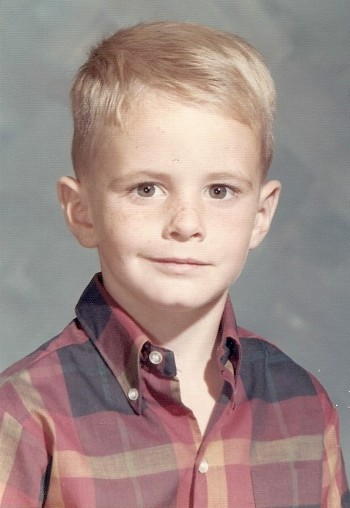 In this original BTB Investigation, we unveil the tragic story of Kirk Murphy, a four-year-old boy who was treated for “cross-gender disturbance” in 1970 by a young grad student by the name of George Rekers. This story is a stark reminder that there are severe and damaging consequences when therapists try to ensure that boys will be boys.
When we first reported on three American anti-gay activists traveling to Kampala for a three-day conference, we had no idea that it would be the first report of a long string of events leading to a proposal to institute the death penalty for LGBT people. But that is exactly what happened. In this report, we review our collection of more than 500 posts to tell the story of one nation’s embrace of hatred toward gay people. This report will be updated continuously as events continue to unfold. Check here for the latest updates.
In 2005, the Southern Poverty Law Center wrote that “[Paul] Cameron’s ‘science’ echoes Nazi Germany.” What the SPLC didn”t know was Cameron doesn’t just “echo” Nazi Germany. He quoted extensively from one of the Final Solution’s architects. This puts his fascination with quarantines, mandatory tattoos, and extermination being a “plausible idea” in a whole new and deeply disturbing light.
On February 10, I attended an all-day “Love Won Out” ex-gay conference in Phoenix, put on by Focus on the Family and Exodus International. In this series of reports, I talk about what I learned there: the people who go to these conferences, the things that they hear, and what this all means for them, their families and for the rest of us.
Prologue: Why I Went To “Love Won Out”
Part 1: What’s Love Got To Do With It?
Part 2: Parents Struggle With “No Exceptions”
Part 3: A Whole New Dialect
Part 4: It Depends On How The Meaning of the Word "Change" Changes
Part 5: A Candid Explanation For "Change"
 At last, the truth can now be told.
Using the same research methods employed by most anti-gay political pressure groups, we examine the statistics and the case studies that dispel many of the myths about heterosexuality. Download your copy today!
And don‘t miss our companion report, How To Write An Anti-Gay Tract In Fifteen Easy Steps.
 Anti-gay activists often charge that gay men and women pose a threat to children. In this report, we explore the supposed connection between homosexuality and child sexual abuse, the conclusions reached by the most knowledgeable professionals in the field, and how anti-gay activists continue to ignore their findings. This has tremendous consequences, not just for gay men and women, but more importantly for the safety of all our children.
Anti-gay activists often cite the “Dutch Study” to claim that gay unions last only about 1½ years and that the these men have an average of eight additional partners per year outside of their steady relationship. In this report, we will take you step by step into the study to see whether the claims are true.
Tony Perkins’ Family Research Council submitted an Amicus Brief to the Maryland Court of Appeals as that court prepared to consider the issue of gay marriage. We examine just one small section of that brief to reveal the junk science and fraudulent claims of the Family “Research” Council.
 The FBI’s annual Hate Crime Statistics aren’t as complete as they ought to be, and their report for 2004 was no exception. In fact, their most recent report has quite a few glaring holes. Holes big enough for Daniel Fetty to fall through.
“Google” is a trademark of Google Inc.
© Box Turtle Bulletin. All Rights Reserved.
 Posts
Posts  Posts via daily email: