Box Turtle Bulletin
 News and commentary about the anti-gay lobby
“Now you must raise your children up in a world where that union of man and box turtle is on the same legal footing as man and wife…”
News and commentary about the anti-gay lobbyPosts Tagged As: Uganda
January 20th, 2010
According to Uganda’s independent NTV, the cabinet considered and rejected the suggestion of withdrawing the Anti-Homosexuality Bill. (Also, in a reminder that Uganda is not a free democracy, this report closes with an update on CBS Radio, which was closed last autumn in a political dispute between President Yoweri Museveni and the traditional king (Kabaka) of Buganda.)
As we reported earlier today, the bill now goes to a subcommittee which will recommend changes to the bill.
Click here to see BTB\’s complete coverage of the past year\’s anti-gay developments in Uganda.
January 20th, 2010
Uganda’s state-owned New Vision reports that a “heated” Cabinet meeting took place yesterday to discuss the Anti-Homosexuality Bill. The discussions don’t look good:
Sources said the Cabinet was divided on the clause spelling out the death penalty. After failing to agree on a position, works minister John Nasasira reportedly proposed that the Bill be delayed. His position was rejected, sources disclosed.
This suggests that there are people in the cabinet who don’t even want the death penalty removed, let alone any of the other draconian and wide-ranging provisions of the proposed legislation. The independent Daily Monitor reports that MP David Bahati, the bill’s sponsor, said that he is willing to amend the proposed law in a way “without putting the values of the country at risk. He was tight-lipped about the Cabinet meeting itself.
The cabinet decided to form a sub-committee headed by Attorney General Khidu Makubuya to suggest amendments to the bill. Other members of the sub-committee include Regional Affairs State Minister Isaac Musumba, Education Minister Namirembe Bitamazire, Gender Minister Gabriel Opiyo, and Ethics and Integrity Minister James Nsaba Buturo. Buturo has been one of the bill’s strongest proponents.
It looks like any hope that the bill would be withdrawn is diminishing. Merely “amending” the bill would still leave a bill that would represent a staggering setback for human rights in Uganda. As the bill is currently written, it would:
It’s impossible to imagine any amendments short of a “strike-all” amendment that would represent a material improvement to the bill.
Click here to see BTB\’s complete coverage of the past year\’s anti-gay developments in Uganda.
January 19th, 2010
Warren Throckmorton posted this extremely short statement from Ambassador Richard Swett, who Warren identifies as National Prayer Breakfast spokesperson. Since neither the Family nor the National Prayer Breakfast has a web site where these things could be verified, I’ll have to take his word for it. The statement says that Uganda’s MP David Bahati, the guy behind the proposal to lock up Uganda’s gays and throw away the key (the ones he doesn’t want killed, at least), is not coming to the Family-sponsored event on February 4th:
Ambassador Richard Swett, a longtime associate of the Fellowship Foundation since his days in Congress in the early ’90s, confirmed the accuracy of Mr. Hunter\’s report to Warren Throckmorton. He went on to state, “The National Prayer Breakfast is an organization that builds bridges of understanding between all peoples, religions and beliefs and has never advocated the sentiments expressed in Mr. Bahati\’s legislation.”
For more information, contact Bob Hunter at loonlakeme@aol.com.
That’s a very good start. Now how about sending this statement to Ugandan media? And what about Sen. Inhofe, who is identified as the Family’s point man with Ugandan president Yoweri Miseveni?
Update: I was called away and neglected to finish my thought on Sen. Inhofe. He’s the guy who was been identified as the point man for Uganda. He has met recently with leaders on the region about the insurgency by the murderous Lord’s Resistance Army, so we know he is currently active in the region to put a stop to those violations of human rights.
But going back to the broader questions I raised this morning, there is another egregious threat to human rights that we have yet to see any aubstantive action. I really hope I’m wrong, but there hasn’t even been a hint to suggest this is even on his radar. I hope the Family’s opposition to this bill extends to their point man in Uganda, and not just statements for domestic consumption at home.
January 19th, 2010
The controversy surrounding Uganda’s draconian Anti-Homosexuality Bill has resulted in at least one call for a boycott:
[Ugandan pastor Martin] Sempa said, “Most Ugandans do not support homosexuality. We are to launch a campaign against consumption of US, UK, and Canada products in Uganda if those countries continue to threaten our country because of the anti gay bill. We will make people stop buying Coca Cola, Pepsi Cola and other products from USA.”
Click here to see BTB\’s complete coverage of the past year\’s anti-gay developments in Uganda.
January 19th, 2010
Frankly, my ability to take anyone at their word is very strained right now. Ugandan MP David Bahati, the guy who can’t wait to begin killing gay people or throwing them into a Ugandan prison for the rest of their lives (is there really a difference?), says he’s coming to Washington, D.C. to attend the National Prayer Breakfast on February 4. Bob Hunter and others connected with the secretive Evangelical group known as The Family have told Warren Throckmorton that Bahati’s not invited and he won’t be allowed in. That’s fine, I guess, if I could trust this information. We’ve heard directly from Bahati; why can’t we hear directly from Doug Coe, the head of the Family?
The Fellowship’s obsession with secrecy means that nobody with recognized authority within the Family has said anything about Bahati, let alone the Anti-Homosexuality Bill that is now before Uganda’s Parliament and which appears to have strong support among people associated with the Family. Bob Hunter, a Family member who has deep ties in Uganda, has appeared on NPR and Rachel Maddow to say that the Family doesn’t like the bill, but read the transcript again. Is he authorized to speak definitively on behalf of the Family?
MADDOW: Have you had to get permission to do this interview? Are you here with The Fellowship’s blessing?
HUNTER: No.
MADDOW: No?
HUNTER: No, I didn’t. I first went on National Public Radio, because I felt like I was scandalized on National Public Radio by name. And that’s why I started talking out.
Okay, so Hunter is speaking because he felt scandalized, not because he’s speaking on behalf of the Family. That is most certainly his prerogative. But he was so intent on defending himself that he forgot what he wanted to do on Maddow’s show. According to Jeff Sharlet:
He said he’d planned to talk about Senator Jim Inhofe, the fiercely anti-gay politician who is listed in Family documents as the “U.S. leader” responsible for working with Ugandan dictator Yoweri Museveni. Bob said he wants to see Inhofe take a bolder stand against this awful bill. But he got sidetracked.
Sidetracked is right. I’m glad he spoke against the bill. I’m also glad to hear him say that he knows others within the Fellowship who are against it. The last thing I want to do is throw cold water on that.
But I’m going to anyway. Because, you see, I know a lot of devout Catholics who worked to try to defeat anti-marriage amendments. Fortunately, they rarely do it by going on the offensive against Episcopalians who also want to defeat the amendments. But that aside, we all know that it’s what the leaders are doing that matters, and Catholic leaders have no qualms about letting everyone know where they stand. That’s why it’s impossible for anyone to claim that the Catholic Church opposes what they clearly support: anti-marriage amendments everywhere. There is no ambiguity about where the organization stands, whatever some members of it may believe personally.
But we have yet to hear from anyone in authority from the Family say anything about the Anti-Homosexuality Bill, and that leaves a truckload of ambiguity to deal with. Call me paranoid, but I think that this is exactly what they want. You see, the way things stand right now, Bahati can say whatever he wants — he can say he’s going to the National Prayer Breakfast even if he’s really not going. True or not, he can use that to build up his own political capital in Uganda with nary a contradictory whiff from the Family. Meanwhile, the Family’s silence means that Bahati isn’t embarrassed, nor are any other Family members like, say, Uganda President Yoweri Museveni. Bahati’s (and possibly Museveni’s) cherished dream goes forward, and the Family’s ties to Uganda’s political establishment remain intact. Everybody’s happy, except of course gay people in Uganda.
But on the other hand, maybe Bahati really is going to the National Prayer Breakfast. And maybe key members of the Fellowship — not Hunter, not people he knows, but others — support the kill-the-gays bills or its practically-equivalent effort, or at least are willing to look the other way. Meanwhile, those who are passing their assurances on the Warren Throckmorton may not be quite as in-the-know as they honestly think they are. How are we to know? And given the gravity of the situation, why should we go on their word while the Fellowship’s leaders maintain their useful silence? We shouldn’t, and more importantly we can’t afford to.
So, are Mr. Bahati or any other Ugandan political leaders going to Washington? I don’t know. Bahati says he is; Hunter says no. Does the Family support or oppose the Anti-Homosexuality Bill? Hunter says they oppose, but Sharlet says the group is divided and Hunter would appear to agree, especially if it’s true that Hunter went on Maddow to pressure Sen. Inhofe into taking a bolder stand (and failed). Only Doug Coe can answer all of this definitively, and pretty easily too. For the sake of all that is decent and humane, it’s time for Coe’s yes to be yes, and his no to be no. Silence is not an answer and time has almost run out.
So unless I hear it from Coe or another recognized senior leader who is officially authorized to speak on behalf of the Family, I’m sticking with the only first-person account I’ve seen so far. If trust is in short supply around here, it’s because the people who really matter have not lifted a finger to try to earn it.
Click here to see BTB\’s complete coverage of the past year\’s anti-gay developments in Uganda.
January 18th, 2010
David Bahati, the author of the Ugandan Anti-Homosexuality bill which, if passed would dole out penalties of death or life imprisonment to Uganda’s gay population and prison sentences for their heterosexual friends, told the Sunday Monitor that he would be traveling to the United States in February to attend – and perhaps speak at – the National Prayer Breakfast.
Dr. Warren Throckmorton has followed up on that claim and reports it to be incorrect.
However, according to Bob Hunter and others with the Fellowship Foundation, Bahati was invited months ago to come to Washington DC only as a volunteer and not to attend the NPB event. According to these sources, Bahati declined the invitation prior to introducing the Anti-Homosexuality Bill. According to Mr. Hunter, the Monitor article and Bahati\’s statements came as a complete surprise to the NPB officials here. However, in the event the article was accurate, the NPB officials and Congressional leaders were taking action to assure that Bahati did not come to any of the meetings.
Click here to see BTB\’s complete coverage of the past year\’s anti-gay developments in Uganda.
January 16th, 2010

Washington Hilton, site of the National Prayer Breakfast on February 4, 2010.
That’s according to a feature story in Uganda’s largest independent newspaper, The Sunday Monitor:
In February, David Bahati, the mover of the controversial Anti-Homosexuality Bill is expected to attend a prayer breakfast in the American capital of DC.
Mr Bahati, according to reports, may speak at the event where President Barack Obama – a gays-tolerant liberal president, is also expected to attend. On Friday, Mr Bahati said he would attend. The event is organised by The Fellowship- a conservative Christian organisation, which has deep political connections and counts several high-ranking conservative politicians in its membership.
“I intend to attend the prayer breakfast,” said Mr Bahati – himself a part organiser of the Ugandan equivalent of the national prayer breakfast. This week, citing international pressure, President Yoweri Museveni advised his party\’s National Executive Committee, his cabinet and the NRM parliamentary caucus to “go slow” on the Bill.

MP David Bahati
MP David Bahati is the sponsor of the draconian Anti-Homosexuality Bill that is now before Uganda’s Parliament. He is also a member of the secretive American evangelical group known as the Family, which founded and organizes the National Prayer Breakfast held on the first Thursday in February, typically at the Washington Hilton on Connecticut Avenue N.W. The Monitor reports that the Family has invited Bahati to the prayer breakfast.
Ethics and Integrity Minister James Nsaba Buturo, another is also said to be planning on attending the National Prayer Breakfast as well.
I find it absolutely incredible that secretive Family would risk this kind of attention at their premiere event. Did the Family actually extend an invitation to Bahati, as he has told The Monitor? If they did, will they honor that invitation or will they publicly repudiate their connections with Bahati and Buturo as had been suggested?
Also, every U.S. President since Eisenhower has attended and spoken at the breakfast. Will President Obama agree to share the same room with these two would-be murderers?
I think it’s a good time to convene a special session of the rainbow welcoming committee.
Click here to see BTB\’s complete coverage of the past year\’s anti-gay developments in Uganda.
January 15th, 2010
If any part of Uganda’s draconian Anti-Homosexuality Bill becomes law, that nation will be well on its way to becoming a pariah state for its gross violations of human rights. The UN High Commissioner on Human Rights has weighed in:
UN rights chief Navi Pillay on Friday urged the Ugandan government to scrap an anti-homosexuality bill which is to be put before parliament, saying that it was “blatantly discriminatory.”
“The bill clearly breaches international human rights standards, as it is blatantly discriminatory,” said Pillay in a statement.
…”It is extraordinary to find legislation like this being proposed more than 60 years after the adoption of the Universal Declaration of Human Rights … made it clear this type of discrimination is unacceptable,” she added.
Calling on Uganda to “shelve (the) draconian draft bill,” Pillay warned that the bill could seriously hurt the country’s reputation.
Click here to see BTB\’s complete coverage of the past year\’s anti-gay developments in Uganda.
January 15th, 2010
National Public Radio has a great piece this morning examining the role played by three American activists in the current anti-gay debacle playing out in Uganda. Here is probably the best observation I’ve seen to date on American evangelical responses to the Ugandan efforts to wipe LGBT people off the map:
Jim Naughton, a former canon in the Episcopal Diocese of Washington, D.C., says their message plays one way in the U.S., but differently in a place like Uganda. And they should have known.
“If you go to countries where there’s already a great deal of suspicion and maybe animosity towards homosexuals, and begin to tell people there, ‘Well, actually these people are child abusers, they’re coming for their children, that they’re the scourge that is being deposited on you by the secular West,’ you’re gonna get a backlash.” Naughton says it’s like “showing up in rooms filled with gasoline, and throwing lighted matches around and saying, ‘Well, I never intended fire.‘”
Many U.S. evangelicals, including (Scott) Lively, say they are “mortified” by the death penalty provision. Naughton doesn’t buy it.
“I think if they were mortified, they would have been mortified immediately,” he says. “Instead they were mortified — oh, two, three months into the campaign against this thing, when it was getting real traction.”
You can see Lively’s “fire” — actually he calls it his “nuclear bomb” — here.
There is, of course, one notable exception. Dr. Warren Throckmorton was publicly mortified as soon as he heard about plans for the anti-gay conference put on by Holocaust revisionist Scott Lively, Exodus International board member Don Schmierer, and International Healing Foundation’s Caleb Lee Brundidge last March. He has since been a tireless critic of that conference and the ensuing Anti-Homosexuality Bill. He also gets his due on the NPR report, while questioning the silence of other prominent ministries with close ties to Uganda.
If (Saddleback pastor Rick) Warren was slow to condemn the bill, other Christian conservatives have yet to do so, says Warren Throckmorton, who teaches psychology at Grove City College and has been monitoring U.S. evangelical response. He says some of the Christian groups most publicly tied to Uganda have been the quietest. Joyce Meyer Ministries, Oral Roberts University, the College of Prayer in Atlanta — all have close ties and declined to express reservations about the death penalty.
“Silence is often interpreted as consent,” says Throckmorton, who is himself a conservative evangelical. “So I think those kinds of responses may lead those individuals in Uganda to think that perhaps what [they’re] doing really is according to the evangelical faith.”
The NPR report ends with a claim that Uganda’s President Yoweri Museveni “called for the bill to be withdrawn.” While many have jumped to that conclusion, the fact is that Museveni was careful not to call for its withdrawal, and it is not clear that he will.
Click here to see BTB\’s complete coverage of the past year\’s anti-gay developments in Uganda.
January 15th, 2010
Last December, we reported that Ugandan Pentecostal pastor Martin Ssempa had announced a nationwide anti-gay rally for January 19. A few days later, two more religious leaders joined that call for a rally to support for the draconian Anti-Homosexuality Bill. Now Reuters is reporting that Ssempa, who has close ties to several American evangelical groups as well as Uganda’s president Yoweri Museveni, has announced a”million-man” march for February 17. It’s unclear whether this is a re-scheduling of the January 19 rally or an additional one.
Click here to see BTB\’s complete coverage of the past year\’s anti-gay developments in Uganda.
January 15th, 2010
Uganda’s independent Monitor reports that the Speaker of Uganda’s Parliament Edward Ssekandi insists that, despite President Yoweri Museveni’s call for a “discussion” of the Anti-Homosexuality Bill due to international outrage and the prospect of forfeiting badly needed donor aid, the bill will go forward in Parliament:
Uganda's Speaker of Parliament, Edward Ssekandi
Mr Ssekandi said: “There is no way we can be intimidated by remarks from the President to stop the Bill. This Bill was officially tabled in Parliament and was subsequently committed to a committee for scrutiny. The President has a right to express his views like any other people who have petitioned me.”
He added: “This was a private members\’ Bill and if the Executive wants to bring their views they are free. The Constitution is clear, it doesn\’t allow people of the same sex to get married and what we are looking for in the Bill is (basically) the penalty and the process should continue.”
When Museveni announced to the Executive Council of the ruling National Resistance Movement (NRM) that his Cabinet would sit down with fellow party member MP David Bahati to discuss the wide-ranging and draconian bill, many observers saw it as a signal that the bill would be withdrawn. But since then, we’ve noticed that while Uganda’s state-owned media gave Museveni’s remarks prominent play (the state-owned New Vision, the country’s largest daily newspaper, has mostly ignored the Anti-Homosexuality Bill until now), it has also been extremely cautious about reporting what the implications of his remarks might be. Meanwhile Bahati has remained defiant, insisting that he will proceed in pushing the so-called “kill-the-gays” bill through Parliament, and now it appears that the Parliament’s Speaker has Bahati’s back.
Museveni justified his announced intervention by telling the NRM gathering that the repercussions of the bill has gone beyond the borders of Uganda and has become a ign policy issue. But Voice of American yesterday reported that Uganda’s Foreign Affairs Minister Henry Okello Oryem now denies that the government is backing away from the draconian legislation because of foreign policy implications:
Foreign Affairs Minister Henry Okello Oryem
The minister said the president’s remarks to party members was in response to a recent war of words in the media between senior government officials over the gay bill, with one minister stating the government’s position was that the bill was “not necessary.”
“What the president was trying to say was that when it comes to those kind of issues that are related to the current issues relating to homosexuality – will aid be cut, will it affect our relations with other countries, and so forth – nobody has the right to comment on those matters except him as the president, and then it will be integrated by the Foreign Affairs [ministry],” said Oryem.

President Yoweri Museveni
So what’s happening? It’s hard to know. Uganda is effectively a one-party state (Museveni’s NRM controls more than two-thirds of Parliament) and Museveni is about to begin his twenty-fifth year in power. In many ways, he rules as a strongman, closing radio stations and declaring opposition demonstrations “illegal” whenever it suits him. Uganda’s 1995 Constitution (PDF: 459KB/a whopping 192 pages!) calls for an “independent” Electoral Commission, but all seven members of the commission are appointed by the President. The constitution originally called for term limits on the President, but that was amended in 2005 to remove those limits and allow Museveni to run for a third term in 2006.
In fact, with the NRM dominating Parliament as it does, Museveni can change the constitution pretty much at will, and there are suspicions that he may do so again to gain a further advantage in the upcoming 2011 elections. The NRM, not surprisingly, has already named him as their candidate for a fourth term. Assuming he wins and completes that term, he will have held power for thirty-one years. Uganda has not had a peacful change of government since its independence in 1962. Museveni came to power after overthrowing his predecessor in a civil war in 1985. Museveni’s predecessor, Milton Obote, came to power following an invasion from Tanzania in 1979 which overthrew Idi Amin. Despite the U.S. Congress having mandated that the State Department closely scrutinize the upcoming elections, few people expect a peaceful change in government next year.
None of these are the hallmarks of a transparent, functioning democracy. And yet, NRM appears to be a rather fractious party these days. In addition to competing statements on the Anti-Homosexuality Bill from various NRM ministers even after Museveni spoke on the subject, delegates at the NRM gathering openly challenged Museveni on his preferences for appointing fellow members of his Ankole tribe to key positions and steering the country’s resources to western Uganda, his home area.
Unlike his predecessors, Museveni seems to tolerate a measure of dissent, but this tolerance only goes so far and it extends to those areas which are useful to him. While he has no qualms about banning demonstrations by opposition parties and deploying a huge show of force to prevent them from taking place, Museveni has been remarkably “tolerant” of announced massive anti-gay rallies. Pentecostal pastor Martin Ssempa, who has close ties to several American evangelical groups as well as to Museveni and the First Lady (who also happens to hold a seat in Parliament), has just announced a”million-man” march for February 17 in support of the Anti-Homosexuality Bill.

President Yoweri Museveni
So let’s not be fooled into thinking that Uganda is a free-wheeling and fully functioning democracy. It isn’t, and Museveni holds all of the cards where the future of the Anti-Homosexuality Bill is concerned. And we must not forget this, because Museveni may point to those appearances of an open and functioning democracy as an excuse for refusing to prevail upon Bahati to withdraw the Anti-Homosexuality Bill, even though this is something which Museveni could very easily do without breaking a sweat.
The danger then, is that we may see a “compromise” in the works, which would be just as disastrous for human rights as having the bill become law unchanged. To see what I mean, consider what the bill does now. If passed, it would:
There can clearly be no “compromise.” Should even one provision of this bill survive, it would still represent a disastrous setback for human rights in Uganda. It could also, not surprisingly, become a powerful tool that Museveni could deploy against his political opponents with devastating effect.
In 1999, Museveni ordered a campaign of mass arrests under the current anti-gay law. “I have told the CID (Criminal Investigations Department) to look for homosexuals, lock them up and charge them,” he announced. Several people were jailed. Five men and women who had formed Right Companion, a fledgling LGBT group, were beaten and tortured by police and the women were sexually abused. Others fled the country in fear. The survival of any part of this proposed bill will result in anti-gay pogroms which will make 1999 look like child’s play.
Click here to see BTB\’s complete coverage of the past year\’s anti-gay developments in Uganda.
January 14th, 2010
Uganda’s largest independent newspaper Daily Monitor reports that U.S. Trade Representative Kirk Wyden has written a letter to Secretary of State Hillary Clinton on Tuesday recommending that she review Uganda’s trade status with the US if the Anti-Homosexuality Bill becomes law.
Daily Monitor has also seen a letter written by the US Trade Representative Ron Kirk Wyden to Secretary of State Hillary Clinton on January 12, saying: “I strongly urge you to communicate immediately to the Ugandan government, and President Yoweri Museveni directly, that Uganda\’s beneficiary status under AGOA (African Growth and Opportunity Act) will be revoked should the proposed legislation be enacted.”
The letter adds: “Beneficiaries of Agoa must meet certain eligibility criteria, one of which is to not engage in “gross violations of internationally recognised human rights.”
Under Agoa, signed in 2000, Uganda like several other sub-Saharan African states, got leeway to export products, duty-free, to the US market.
On that same day, Sen. Ron Wyden (D-OR), chair of the Senate finance Committee\’s subcommittee on International Trade, Customs and Global Competitiveness, issued a statement threatening Uganda with loss of preferential trade relations if that nation proceeds with passing the wide-ranging and draconian Anti-Homosexuality Bill.
Click here to see BTB\’s complete coverage of the past year\’s anti-gay developments in Uganda.
January 14th, 2010
We’ve been noticing the prominent yet cautious and non-committal coverage by Uganda’s state-owned media of President Yoweri Museveni’s comment that his cabinet will “discuss” the Anti-Homosexuality Bill with sponsor MP David Bahati. While Uganda’s independent media interpreted those remarks as being a “nail in the coffin” and suggested the bill would be withdrawn, Uganda’s state-owned media has refrained from encouraging that speculation.
As further evidence that the bill may be headed to a “compromise” position rather than withdrawn entirely, we have this clip sent in by an anonymous BTB reader. It shows Uganda’s state-owned UBC television airing public reactions to the prospect that the bill might be withdrawn. If this is to be taken as a tea-leaf, it’s not an encouraging one.
Click here to see BTB\’s complete coverage of the past year\’s anti-gay developments in Uganda.
January 14th, 2010
Uganda’s independent NTV Television maintains a YouTube channel, but unfortunately not all NTV news reports get uploaded. An anonyous BTB reader in Uganda sent this clip from the January 13 broadcast of “NTV Tonight.” It includes reactions from MP David Bahati, sponsor of the Anti-Homosexuality Bill, to President Yoweri Museveni’s remarks that his cabinet will “discuss” the bill with Bahati. Bahati responds:
“We welcome the comment of the president on this bill and the need to engage with cabinet to ensure that we have a fine piece of legislation that will protect our children, defend our traditional family as we know it, between a man and a woman.”
Interviewer: “Are you intimidated by the pressure that is mounting?”
Bahati: “As pressure intensifies, we are also intensifying prayer and we are happy that the religious leaders are engaged in this matter.”
Click here to see BTB\’s complete coverage of the past year\’s anti-gay developments in Uganda.
January 14th, 2010
Uganda’s independent newspaper The Monitor reports that members of the opposition Uganda People’s Congress continue to voice their objections to the Anti-Homosexuality Bill:
Mama Miria Obote, the party president, told journalists yesterday during a press briefing at party headquarters in Kampala that the Bill should be withdrawn since there already laws that governs homosexuality.
“This Bill was tabled to disrupt our donors. This is unfortunate because half of our budget comes from these donors so we need their support. We cannot afford to put in place laws that will distract the flow of funds into the state because it is what we solely depend on,” she argued.
A party spokesman pins the blame for the bill not on MP David Bahati, who introduced the private member’s bill into Parliament, but squarely on President Yoweri Museveni:
Mr Yonasani Kanyomozi, the party\’s National Chairman, told Daily Monitor that the government was directly involved in formulating the Bill but disguised it as Mr David Bahati\’s, the MP who proposed it. “This is not Bahati\’s Bill; it is a government Bill which was put in place to distract the public from the government\’s corruption cases.”
Yesterday, former Ugandan ambassador Olara A. Otunnu, who served under Milton Obote’s government before it was overthrown in a civil war by Museveni, announced his opposition to the Anti-Homosexuality Bill, calling it a violation of basic human rights. He is believed to be angling for the UPC’s nomination for the presidency for the 2011 elections. He survived what he calls an assassination attempt last month when his car was struck by a jeep belonging to the Presidential Guard Brigade.
Just before Christmas, the UPC’s Secretary General Chris Opaka spoke on television against the draconian anti-gay bill. He said, “The state has no business with what people do in their bedrooms. What two consenting adults do, the state has no business… absolutely! It is discriminatory.”
Click here to see BTB\’s complete coverage of the past year\’s anti-gay developments in Uganda.
Featured Reports
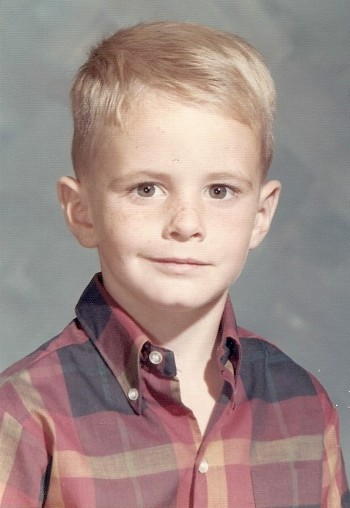 In this original BTB Investigation, we unveil the tragic story of Kirk Murphy, a four-year-old boy who was treated for “cross-gender disturbance” in 1970 by a young grad student by the name of George Rekers. This story is a stark reminder that there are severe and damaging consequences when therapists try to ensure that boys will be boys.
When we first reported on three American anti-gay activists traveling to Kampala for a three-day conference, we had no idea that it would be the first report of a long string of events leading to a proposal to institute the death penalty for LGBT people. But that is exactly what happened. In this report, we review our collection of more than 500 posts to tell the story of one nation’s embrace of hatred toward gay people. This report will be updated continuously as events continue to unfold. Check here for the latest updates.
In 2005, the Southern Poverty Law Center wrote that “[Paul] Cameron’s ‘science’ echoes Nazi Germany.” What the SPLC didn”t know was Cameron doesn’t just “echo” Nazi Germany. He quoted extensively from one of the Final Solution’s architects. This puts his fascination with quarantines, mandatory tattoos, and extermination being a “plausible idea” in a whole new and deeply disturbing light.
On February 10, I attended an all-day “Love Won Out” ex-gay conference in Phoenix, put on by Focus on the Family and Exodus International. In this series of reports, I talk about what I learned there: the people who go to these conferences, the things that they hear, and what this all means for them, their families and for the rest of us.
Prologue: Why I Went To “Love Won Out”
Part 1: What’s Love Got To Do With It?
Part 2: Parents Struggle With “No Exceptions”
Part 3: A Whole New Dialect
Part 4: It Depends On How The Meaning of the Word "Change" Changes
Part 5: A Candid Explanation For "Change"
 At last, the truth can now be told.
Using the same research methods employed by most anti-gay political pressure groups, we examine the statistics and the case studies that dispel many of the myths about heterosexuality. Download your copy today!
And don‘t miss our companion report, How To Write An Anti-Gay Tract In Fifteen Easy Steps.
 Anti-gay activists often charge that gay men and women pose a threat to children. In this report, we explore the supposed connection between homosexuality and child sexual abuse, the conclusions reached by the most knowledgeable professionals in the field, and how anti-gay activists continue to ignore their findings. This has tremendous consequences, not just for gay men and women, but more importantly for the safety of all our children.
Anti-gay activists often cite the “Dutch Study” to claim that gay unions last only about 1½ years and that the these men have an average of eight additional partners per year outside of their steady relationship. In this report, we will take you step by step into the study to see whether the claims are true.
Tony Perkins’ Family Research Council submitted an Amicus Brief to the Maryland Court of Appeals as that court prepared to consider the issue of gay marriage. We examine just one small section of that brief to reveal the junk science and fraudulent claims of the Family “Research” Council.
 The FBI’s annual Hate Crime Statistics aren’t as complete as they ought to be, and their report for 2004 was no exception. In fact, their most recent report has quite a few glaring holes. Holes big enough for Daniel Fetty to fall through.
“Google” is a trademark of Google Inc.
© Box Turtle Bulletin. All Rights Reserved.


 Posts
Posts  Posts via daily email: