Box Turtle Bulletin
 News and commentary about the anti-gay lobby
“Now you must raise your children up in a world where that union of man and box turtle is on the same legal footing as man and wife…”
News and commentary about the anti-gay lobbyPosts Tagged As: Uganda
August 9th, 2016
Yesterday, Uganda’s Minister of Ethics and Integrity Simon Lokodo appeared before journalists and read a statement following last week’s police raid on a Mr/Ms/Mx Pageant that was being held as part of Uganda Pride celebrations. The U.S. Ambassador to Uganda has condemned last week’s raid, as did a coalition of Ugandan LGBT and human rights organizations.
The law is clear that the promotion of LGBT activities is criminal in letter and intent, and offensive to the laws of the Republic of Uganda. I therefore, call upon all stakeholders, ministries, departments, agencies, local governments, faith-based organizations, civil society organizations, the media, the families , the communities join the government to curb the escalating levels of immorality by upholding and integrating the national ethical values of Uganda into their daily life and work.
A program to rehabilitate the members of LGBTI community with the ultimate aim of giving them a chance to live normal lives again has been developed in my office. And Government remains committed to ensuring that Ugandans live today our cherished values and principles.
Lokodo’s comments apparently received fairly wide play in Uganda’s press:
@KuchuTimes @KashaJacqueline @nkali_biggie @SMUG2004 @Opimva @frankmugisha @RevJide @USAmbUganda @femauganda @ pic.twitter.com/V47XWJsNfm
— FARUG (@Far_Uganda) August 9, 2016
The Ugandan government has also released a more lengthy statement on the official press office’s web site, which paints Uganda’s local LGBT community as a product of “foreign forces”:
The Government has learnt of the ongoing promotion of activities of the Lesbian, Gay, Bisexual, and Transgender (LGBT) Movement in Kampala, who with the influence of some foreign forces have organized week-long festivities in different locations in Kampala and Wakiso Districts.
The promotion of these festivities, which would purportedly culminate in a “Gay Parade” on Saturday 6th August 2016, is criminal and illegal as they have not been cleared by the Uganda Police Force, and are against the laws of the Republic of Uganda; specifically the Penal Code, which is built on precedents set in many other countries.
…We wish to emphasize that whereas the promotion of homosexuality is criminalized under the Penal Code, there is no violence against the LGBT community in Uganda — contrary to some claims made loosely by proponents of this movement.
…Government will not condone the promotion of the illegal activities of the lesbian, gay, bisexual, and transgender (LGBT)movement and through the Uganda police will work to ensure that the criminal and illegal activities of the Gay community are halted.
The organizers of the planned Gay Parade on Saturday 6th August 2016 are advised to stop their activities immediately. The public is called upon to refrain from joining and participating in Gay activities.
Hon. Lokodo is lost on the law as there is no such offence as "promotion of homosexuality" under the PCA. #UgPride16
— Susan Mirembe (@Cell_met) August 8, 2016
As several Ugandans have already pointed out, Uganda has no such law against “the promotion of LGBT activities.” Uganda’s constitution promises broad freedom of speech protections, although in practice the authoritarian President Yoweri Museveni has pushed a set of draconian laws through parliament that he has used as a pretext to jail dissidents and political opponents and ban meetings, rallies and other gatherings. The law requires organizations holding such meetings to notify police ahead of time and obtain permission before going ahead with the meeting. LGBT activists in Uganda say that they have complied with the law for Uganda Pride activities in 2014 and 2015 without incident. They also say that they gave notice to police in 2016, but the Ugandan authorities have accused the groups of violating the law.
Homosexuality itself is a crime under an older Ugandan law that was inherited from Britain when Uganda gained independence in 1962. According to that law, any person who “permits a male person to have carnal knowledge of him or her against the order of nature…commits an offence and is liable to imprisonment for life.” But there is no legal mechanism that prohibits LGBT advocacy or support activities. There are, however, plenty of non-legal or extra-legal mechanisms at play, which Lokodo has no fear of deploying.
Ethics Minister Simon Lokodo is a defrocked Catholic priest who was one of the strongest proponents of the notorious Anti-Homosexuality Bill, also known as the “Kill the Gays Bill” due to the death penalty for “repeat offenders” of homosexual activity, as well as for anyone who was gay and HIV-positive. Lokodo was among the chorus of Ugandans who repeatedly lied to the rest of the world about the existence of the death penalty in the proposed legislation.
The bill also would have added criminal penalties for anyone who advocated on behalf of gay people, anyone who provided housing or other services to gay people, and anyone who neglected to report gay people to police. In 2014, the Uganda Parliament approved an amended version the Anti-Homosexualty Bill which dropped the death penalty in favor of a lifetime sentence. Following worldwide condemnation and several countries suspending foreign aid to Uganda, the country’s Constitutional Court annulled the law on a technicality later that year in a face-saving move.
But even before Parliament acted on the bill, Lokodo often pretended as though the proposed legislation had already become law by shutting down LGBT rights conferences and meetings. He arrested the producer of a play which was being performed at a small theater portraying the difficulties LGBT people face living in Uganda. He has also moved to shut down NGOs for their perceived or actual support for LGBT rights, although Ugandan activists have repeatedly defied his ban on their work.
In 2009, American extremist Scott Lively, along with ex-gay activists Don Schmierer and Caleb Lee Brundidge appeared at the now infamous March 2009 conference in Kampala and called for “offering” gay people the false choice between lengthy prison terms and ex-gay therapy. Conference organizers also distributed copies of discredited American ex-gay activist Richard Cohen’s book, Coming Out Straight. Cohen was banned for life from the American Counseling Association, and his controversial “holding” or “touch” therapy techniques has made him the laughingstock of the ex-gay movement.
In his talk at the 2009 conference, Scott Lively re-inforced several stereotypes about gay people in Uganda, principally the idea that homosexuality is a foreign import in Africa and that people become gay as the result of financial and other material inducements from wealthy foreigners. Several members of Uganda’s parliament reportedly attended that conference and several other follow-up meetings after an announcement was made at the end of a Parliamentary session inviting members to the conference. While Lively is not the origin of those false stereotypes, he did reinforce them. They are also included as part of yesterday’s official government statement:
In our society, our African values and cultures consider sexual activity to be private and personal, and it is not conducted in public. Certainly, neither is homosexuality.
It is for this reason that the promotion of ‘gay’ activities is unwelcome.
In addition, we have noted that the promotions being held are aimed at mobilizing people to join this LGBT movement, which interestingly goes against the argument that gays are “born” that way. We are aware that there are inducements, including money, being offered to young people to promote the practice.
Meanwhile, local activists vow to resist government efforts to shut down public meetings:
Lokodo 2day addressed e nation n vowed 2 do everything within his power 2 'stop' gays.Wen wl this persecution end? pic.twitter.com/ICKE1yUEpW
— KuchuTimes (Q-Times) (@KuchuTimes) August 8, 2016
Minister Lokodo says, LGBT Ugandans can hold private events & I am saying we shall hold any events public or private like any Ugandan
— Dr. Frank Mugisha (@frankmugisha) August 8, 2016
@realraymond55 True! No one is hiding. We are here for good. @KuchuTimes @frankmugisha @KashaJacqueline @muganziruth
— Pepe Julian Onziema (@Opimva) August 9, 2016
We wont b forced 2 turn in2 an underground movement, we've worked way 2 hard 4 that. @KashaJacqueline @frankmugisha @Opimva @muganziruth
— KuchuTimes (Q-Times) (@KuchuTimes) August 9, 2016
August 5th, 2016
Uganda government official Minister of ethics & integrity Lokodo has threaten to call for mob violence towards any @Prideuganda2016 events
— Dr. Frank Mugisha (@frankmugisha) August 5, 2016
Minister Lokodo threatened to mobilize mob & large police attacks 4anyone who turns up for Pride Parade.This events suspended 4safety of all
— Nicholas Opiyo (@nickopiyo) August 5, 2016
Engagements with the State will continue next week with a view of holding Parade at a later date to be announced. Hopefully soon. Stay safe
— Nicholas Opiyo (@nickopiyo) August 5, 2016
UPDATE: @Prideuganda2016 postponed after lokodo threatens 2arrest any1 who takes part @KashaJacqueline @SMUG2004 #ugpridehijack #UGpride2016
— KuchuTimes (Q-Times) (@KuchuTimes) August 5, 2016
Is this right,no. But we must prioritize our lives.We wl b of no gd dead o behind bars @Prideuganda2016 #UGpridecancelled #ugpridehijack
— KuchuTimes (Q-Times) (@KuchuTimes) August 5, 2016
Yesterday, Uganda police raided a private party being held as part of Uganda Pride celebrations, arresting about 20-25 people and severely beating several transgender and crossdressing people attending a Mr/Mrs/Mx Uganda Pride pageant. Police later released all of those who had been arrested. LGBT leaders had vowed to continue with the rest of the planned activities for the week, but after a meeting with a government minister, organizers called off the rest of the Pride activities out of concern for the safety of participants. J. Lester Feder at BuzzFeed has the details:
On Friday, lawyer Nick Opiyo of Chapter 4 Uganda met with Ethics Minister Simon Lokodo to discuss the raid. Following the meeting, Opiyo told BuzzFeed News that Lokodo had threatened to bring opposition to the event to the streets, so organizers decided it should be canceled.
Frank Mugisha of Sexual Minorities Uganda, a local NGO, confirmed to BuzzFeed News that the parade on Saturday was cancelled and postponed “at least” until the following week.
“We decided to suspend it because of the risks to personal safety,” Opiyo said. “The minister threatened to mobilize a mob and a large police group to beat up anyone who shows up for pride tomorrow. We will engage the government next week with a view of holding the pride parade at another date soon.”
Opiyo indicates that Lokodo may be acting as a loose canon by directly breaking an agreement between the Ugandan government and donor nations which allowed similar pride events to take place quietly in 2014 and 2015.

Ethics and Integrity Minister Simon Lokodo
Simon Lokodo is a defrocked Catholic priest who is now, ironically, in charge of the Ministry of Ethics and Integrity. Seriously. He was one of the strongest proponents of the notorious Anti-Homosexuality Bill, which provided the death penalty for “repeat offenders” of homosexual activity, as well as for anyone who was gay and HIV-positive. It also added criminal penalties for anyone who advocated on behalf of gay people, anyone who provided housing or other services to gay people, and anyone who neglected to report gay people to police. Lokodo was among the chorus of Ugandans who repeatedly lied to the rest of the world about the existence of the death penalty in the proposed legislation. Even before Parliament acted on the bill, Lokodo often pretended as though the proposed legislation had already become law by shutting down LGBT rights conferences and meetings. He arrested the producer of a play which was being performed at a small theater portraying the difficulties LGBT people face living in Uganda. He has also moved to shut down NGOs for their perceived or actual support for LGBT rights, although Ugandan activists have repeatedly defied his ban on their work.
In 2014, the Uganda Parliament approved an amended version the Anti-Homosexualty Bill which dropped the death penalty in favor of a lifetime sentence. Following worldwide condemnation and several countries suspending foreign aid to Uganda, the country’s Constitutional Court annulled the law on a technicality later that year in a face-saving move.
This latest action against the LGBT community is taking place amid a rapid escalation of human rights violations being committed by Uganda police over the past few years in support of the increasingly authoritarian President Yowery Museveni. Police violence against the ruling party’s political opponents have become routine, culminating the arrest last March of opposition leader Kizza Besigye on trumped up charges of treason after Museveni won an unprecedented fifth term to continue his 30-year rule. According to a statement issued by a coalition of NGOs participating in the Uganda Pride activities:
This episode of police brutality did not happen in isolation, the groups said. It comes at a time of escalating police violence targeting media, independent organizations, and the political opposition.
“Any force by Ugandan police targeting a peaceful and lawful assembly is outrageous,” said Frank Mugisha, executive director of Sexual Minorities Uganda (SMUG), who was among those arrested. “The LGBTI community stands with all Ugandan civil society movements against police brutality.”
“The Ugandan government should condemn violent illegal actions by police targeting the LGBTI community and all Ugandans,” said Asia Russell at Health GAP. “The US and all governments should challenge President Museveni to intervene immediately and hold his police force accountable.”
LGBTI Ugandans routinely face violence, discrimination, bigotry, blackmail, and extortion. The unlawful government raid on a spirited celebration displays the impunity under which Ugandan police are operating. “The state has a duty to protect all citizens’ enjoyment of their rights, including the right to peacefully assemble to celebrate Pride Uganda,” said Hassan Shire, executive director at Defend Defenders. “A swift and transparent investigation should be conducted into last night’s unacceptable demonstration of police brutality.”
Yesterday’s raid provides a tragic reminder of why everyone needs to be concerned about the personal safety of anyone who might show up at a pride event the next few days. During yesterday’s raid, one transman was severely injured when he tried to escape by jumping from a balcony on the fourth floor of the hosting pub. He is currently in Mulago hospital in very serious condition:
The young man who was hurt last night, still needs our strength. He has not received full treatment – @Prideuganda2016
— Dr. Frank Mugisha (@frankmugisha) August 5, 2016
Young man hurt @Prideuganda2016 earlier examinations show 2 broken vertebrates,more exams tomorrow & possible treatment,send him strength
— Dr. Frank Mugisha (@frankmugisha) August 5, 2016
August 5th, 2016
A statement by @USAmbUganda on last night's police raid of a Uganda Pride Week event in Kampala. pic.twitter.com/1nzGeFD7fQ
— U.S. Mission Uganda (@usmissionuganda) August 5, 2016
The U.S. Ambassador to Uganda has released its statement on last night’s police raid on a LGBT pride celebration in Kampala:
Statement by U.S. Ambassador to Uganda Deborah R. Malac.
I was dismayed to hear the accounts of a police raid last night on a peaceful event in Kampala to celebrate Uganda Pride Week and recognize the talents and contributions of the country’s LGBTI community. The fact that police reportedly beat and assaulted Ugandan citizens engaged in peaceful activities is unacceptable and deeply troubling.
This incident adds to a growing list of reports concerning police brutality in Uganda. While the United States has faced its own recent allegations of improper use of force by law enforcement officials, the fact remains that abuses committed by those sworn to uphold the law are unacceptable in any country. As our own experience shows, issues of police brutality and impunity can only be resolved by holding officials accountable, and by encouraging open and frank dialogue between citizens and government. I hope Ugandan authorities will investigate this and other incidents, and treat them with the seriousness they deserve.
No person should face abuse or discrimination because of who they are. The U.S. Embassy stands with Uganda’s LGBTI community and Ugandans of all backgrounds and beliefs to defend the dignity of all citizens. We call on the Ugandan authorities to safeguard the freedoms of all Ugandans under the law.
The increasingly dictatorial president Yoweri Museveni continues to hold power after thirty years in office by grabbing ever greater police powers to harass and jail dissidents and political opponents. Last night’s raid is just part of a much larger pattern of police crackdowns on all peaceful gathering and meetings, including those taking place in private venues.
Meanwhile, Ugandan media have been following very closely the examples of police shootings in the U.S., and East Africans know the names of Michael Brown, Alton Sterling, and Philando Castile about as well as do most Americans. Museveni has been pointing to those events to discredit American criticisms of Ugandan police actions against his political opponents.
August 5th, 2016
Kasha Jaqueline’s Kuchu Times has published more details about yesterday’s police raid on a Uganda Pride event at a rooftop pub in downtown Kampala:
Soon, they started confiscating people’s cameras and phones claiming they did not want people to spread the news on Facebook! The Officer in Charge, a rather arrogant man in demeanor, addressed the now extremely perplexed crowd and informed us were being held for conducting a gay wedding even though the laws of the land were very clear on homosexuality. Our faces fell! It seemed like our ordeal had just began and on bad note. Efforts to correct this information were futile as he shut down everyone who attempted to pass on the right information of what was actually happening.
A short while later, the same officer said he was retaining us for holding an unlawful gathering under the Public Order Management Act. The organizers still tried to inform him that they had attained permission from the Police prior but all their pleas fell on deaf ears.
…The beatings then started as the officers kicked and whipped people. Media was called and pictures of the attendees taken; all this while with the police forcing them (the attendees) to look into the cameras. The officer once again addressed us and said he would not tolerate this kind of ‘nonsense’ in his division.
After staying in the cold bundled up like criminals for over one and a half hours, we were released with caution that next time would be fatal.
According to other tweets from last night, it appears that police singled out transgender and crossdressing participants for especially harsh treatment. It’s unknown at this time what other media photographers were at the raid. One tabloid, Red Pepper, has a particularly notorious history of publishing, photos, names, occupations and places of residences of LGBT people in prior vigilante campaigns.
Despite last nights events, the LGBT community remains defiant, and promise to maintain their schedule of activities this week:
If we get scared they win, pride is still going on @frankmugisha @KashaJacqueline @maronharewood @Opimva @FredKwint @KuchuTimes @HealthLGBTQ
— Pride Uganda (@Prideuganda2016) August 5, 2016
Yes, today we continue with the festival as planned! we refuse to be broken #ugpridehijack https://t.co/oQFZav5bDv
— KuchuTimes (Q-Times) (@KuchuTimes) August 5, 2016
Although activists urge caution:
dont pik unknown calls o meet wt any 1one requestg 4 a meetg.u cn refer em 2 @Prideuganda2016 o @clarekabale @KashaJacqueline #ugpridehijack
— KuchuTimes (Q-Times) (@KuchuTimes) August 5, 2016
August 5th, 2016
These are tweets Pride Uganda, Kasha Jaqueline’s Kuchu Times, Frank Mugisha, and other Ugandan LGBT activists describing a raid on a Uganda Pride event as it happened Thursday night:
@deryk_beatsby_deryk is the makeup artists for the Miss Pride 2016 Contestants @maronharewood @miz_cracker pic.twitter.com/cYnxsfFLnn
— Pride Uganda (@Prideuganda2016) August 4, 2016
Creative wear dedicated to #orlando49 @Prideuganda2016 @KashaJacqueline @SMUG2004 @Far_Uganda @frankmugisha pic.twitter.com/ONc1GaaiZX
— KuchuTimes (Q-Times) (@KuchuTimes) August 4, 2016
Creative wear showcasing @Prideuganda2016 @KashaJacqueline @Opimva @SMUG2004 @frankmugisha @Far_Uganda pic.twitter.com/xQNvhCJ5uZ
— KuchuTimes (Q-Times) (@KuchuTimes) August 4, 2016
Police interrupts Mr and miss pride pageant calm is being restored @KashaJacqueline @SMUG2004 .we remain strong Faith
— KuchuTimes (Q-Times) (@KuchuTimes) August 4, 2016
Uganda Pride has been held annually for several years, although it is never widely publicized. In most years, it has been held in secret, and publicized only after the events have taken place. Pride participants are usually told where the event is located very soon before it is scheduled to begin.
But there is one catch to that secrecy. The ruling party of Uganda’s increasingly dictatorial President Yoweri Museveni pushed the Public Order Management Act (PDF: 473KB/20 pages) through Parliament in 2013. The law gives police broad powers to prohibit peaceful assembly for any reason or for no reason. Museveni, who has been President since 1986, has used his expanded police powers to jail political opponents and prohibit peaceful meetings and rallies during his re-election campaign earlier this year.
Nevertheless, LGBT activists say that they had obtained permission from the police to hold this year’s event as required by law, and as they have done since the Public Order Management Act went into effect. No problems with police were reported by LGBT activists in 2014 or 2015. Why things are different for 2016 is anyone’s guess, although speculation obviously turns to possible connections to widespread allegations of police brutality against opposition leader Kizza Besigye and his supporters during and after Museveni’s re-election. Besigye is currently out on bail on trumped up charges of treason. It’s a common practice in Uganda to divert public attention to LGBT people whenever public confidence in the country’s political and legal institutions is shaken.
Uganda police wants to cover up the ongoing criticism against their brutality with a gay story. It's really absurd. @KuchuTimes @SMUG2004
— DHALIE WOW (@DHALIEWOW) August 4, 2016
Dr. Frank Mugisha is Executive Director of Sexual Minorities Uganda:
I am arrested by Ugandan police
— Dr. Frank Mugisha (@frankmugisha) August 4, 2016
And @Opimva is the Twitter handle for Pepe Julian Onziema, a prominent Ugandan transgender advocate.
Arrested
— TheNilote (@Opimva) August 4, 2016
Trans folks worse attacked by the Uganda Police- kicked, fondled & abused in today's raid of a Pride Beauty Contest pic.twitter.com/CZOIzsi6GC
— Nicholas Opiyo (@nickopiyo) August 4, 2016
Police rounds up all e attendees of Mr and miss pride. Says e gathering is illegal since homosexuality z a crime in uganda @KashaJacqueline
— KuchuTimes (Q-Times) (@KuchuTimes) August 4, 2016
J. Lester Feder at Buzzfeed spoke to some of the activists:
Around 20 to 25 people were arrested, those detained told BuzzFeed News after their release. That number included Pepe Julian Onziema and Frank Mugisha of Sexual Minorities Uganda, who both posted on their Twitter timelines that they were being placed under arrest at around 10:30 p.m. local time. Clare Byarugaba, former co-coordinator of the coalition opposing anti-LGBT legislation in Uganda and now on the staff of the human rights group Chapter 4 Uganda was also among those taken into custody, Chapter 4 director Nick Opiyo told BuzzFeed News.
Michael Lavers at the Washington Blade adds:
Asia Russell, executive director of Health GAP, an HIV/AIDS service organization, told the Washington Blade from Kampala that eyewitnesses said officers entered a nightclub in which a Uganda Pride beauty pageant was taking place at around 11 p.m. local time.
Russell said that up to 300 people were inside the nightclub — which is across the street from the U.S. Embassy — when the raid began.
She told the Blade that police “were assaulting people” with their hands and canes.
Russell said officers were “extremely brutal with” the gender non-conforming and trans women they singled out.
Russell told the Blade that eyewitnesses said the police sexually assaulted those who were inside the nightclub. She said they confiscated their cell phones and threatened to send the pictures they took of them to the media.
Police pulled off hair/braids from transwoman, transmen forced to undress by inmates, community queen arrested n severly beaten, To much
— BombasticKasha (@KashaJacqueline) August 5, 2016
Buzzfeed reports:
“They were beating people … mostly the trans women,” Adebayo Katiiti Phiona, who won the title of Mr. Pride in 2015, told BuzzFeed News. “A police person even stepped on a trans woman.”
At one point, police were apparently claiming that a gay wedding was taking place. While Uganda’s constitution does not allow same-sex marriage, conducting a gay wedding is not, in and of itself, a criminal offense in Uganda.
😕😤 Uganda police breaking up À@Prideuganda2016 Mr &miss celebrations mbu it's a gay wedding#brokensystem @KuchuTimes @KashaJacqueline –
— KuchuTimes (Q-Times) (@KuchuTimes) August 4, 2016
We are all waiting on police to tell us what to do next. This is a recap of 2012 @KashaJacqueline @Prideuganda2016 pic.twitter.com/c2V8DQAM7W
— KuchuTimes (Q-Times) (@KuchuTimes) August 4, 2016
Police claims gathering was a gay wedding @Prideuganda2016 @KashaJacqueline @SMUG2004 @Icebreakers_UG
— KuchuTimes (Q-Times) (@KuchuTimes) August 4, 2016
Homosexuality is a crime under an older Ugandan law that was inherited from Britain when Uganda gained independence in 1962. According to that law, any person who “permits a male person to have carnal knowledge of him or her against the order of nature…commits an offence and is liable to imprisonment for life.”
In 2009, the Anti-Homosexuality Bill was introduced into Parliament which would have provided for the death penalty for homosexual acts. It would have also provided criminal penalties for anyone who refused to report gay people to police, or who provided shelter or aid to anyone who was gay. An amended version of the law was passed by Parliament in 2014, but after worldwide condemnation with several countries suspending foreign aid to Uganda, the country’s Constitutional Court found a face-saving technicality to cite in order to annul the law. Meanwhile, the legal situation for LGBT people in Uganda remains very tenuous.
Let's make this inhumanity viral. What did we do wrong?why didn't they say no when organizers asked for permission?
— KuchuTimes (Q-Times) (@KuchuTimes) August 4, 2016
Police calls media to take pictures. Unnecessary outings. People being beaten @KashaJacqueline @Prideuganda2016 @SMUG2004
— KuchuTimes (Q-Times) (@KuchuTimes) August 4, 2016
People demanding to be told what our crime is. Police shuts us down with intimidation @KashaJacqueline @SMUG2004
— KuchuTimes (Q-Times) (@KuchuTimes) August 4, 2016
Of says he doesn't want this 'nonsense' in his division @Prideuganda2016 @KashaJacqueline @SMUG2004
— KuchuTimes (Q-Times) (@KuchuTimes) August 4, 2016
Police reinforcements brought in @KashaJacqueline @SMUG2004 @nickopiyo @chapter4uganda @
— KuchuTimes (Q-Times) (@KuchuTimes) August 4, 2016
All decor brought down. Claims of someone jumping off balcony in fear making rounds. @KashaJacqueline @SMUG2004 @chapter4uganda
— KuchuTimes (Q-Times) (@KuchuTimes) August 4, 2016
Police trying to explain the public management act. But how is this wrong if police has been informed? @KashaJacqueline @SMUG2004
— KuchuTimes (Q-Times) (@KuchuTimes) August 4, 2016
Police apparently were trying to use the Public Order Management Act as justification for blocking the Pride celebration, but activists say that they had complied with the law by obtaining police permission ahead of time.
Pepe Julian Onziema of Sexual Minorities Uganda told BuzzFeed News that police said the event was held without proper permission from police, a claim he emphatically denied.
“There’s no way we would hold an event without a clearance,” Onziema said, saying organizers had always communicated with police before holding Pride events for the last four years. “They don’t care as long as the word homosexuality is mentioned. As soon as that is mentioned, everything else ceases and [police feel they] have to act.”
Oc says gathering z illegal evn though @Prideuganda2016 had sought permission f4m relevant authorities @Prideuganda2016 @KashaJacqueline
— KuchuTimes (Q-Times) (@KuchuTimes) August 4, 2016
People have been released @SMUG2004 @KashaJacqueline @spectrumuganda what happens to the arrested activists now?
— KuchuTimes (Q-Times) (@KuchuTimes) August 4, 2016
Mr n miss pride attendes slowly trickle out of venue.Glad we r safe,nw let's gt our activists out of jail @Prideuganda2016 @KashaJacqueline
— KuchuTimes (Q-Times) (@KuchuTimes) August 4, 2016
A couple of hours later, all of the LGBT leaders were set free, apparently without charge:
After a few hours of detention,I have been set free,every one is safe. Thankyou all my friends for the support & solidarity @Prideuganda2016
— Dr. Frank Mugisha (@frankmugisha) August 4, 2016
@jeenashahesq @frankmugisha @Opimva Everyone has been released without a charge & are on their way home. We remiss unshaken by this
— Nicholas Opiyo (@nickopiyo) August 4, 2016
Although one person was reportedly injured seriously while trying to escape. According to the Washington Blade:
Russell also told the Blade that a trans woman who jumped from the fourth floor of the nightclub during the raid remains in critical condition at a local hospital.
“Police behavior throughout this unlawful raid was brutal,” said Russell.
A victim is currently hospitalized after jumping off the 4th floor to escape @PoliceUg brutality @frankmugisha @Opimva @KuchuTimes
— Sexual Minorities UG (@SMUG2004) August 4, 2016
Now at Mulago national hospital, Ugandan gay young man injured after jumping off 6th floor building during the police raid @Prideuganda2016
— Dr. Frank Mugisha (@frankmugisha) August 5, 2016
All that were arrested are out. But the one who jumped off the building is fighting for his life at the Mulago hospital #PrideUg2016
— Icebreakers Uganda (@Icebreakers_UG) August 4, 2016
This is very unfortunate, that one would rather jump off a building than face @PoliceUg brutality #PrideUg2016 https://t.co/n896wAL3Ai
— Sexual Minorities UG (@SMUG2004) August 4, 2016
Thank u world 4 standing wt n encouraging us!Our activists av bn released. We go to bed with heavy hearts @Prideuganda2016 @KashaJacqueline
— KuchuTimes (Q-Times) (@KuchuTimes) August 4, 2016
September 17th, 2014

John “Longjones” Abdallah Wambere
The U.S. Citizenship and Immigration Services has tentatively approved a request for asylum from Ugandan LGBT activist John Abdallah Wambere. Wambere, who co-founded Spectrum Uganda fourteen years ago and is known by his nickname “Longjones,” filed the request last May, saying that he feared persecution if he were to return to Uganda. He also was potentially liable for prosecution under the country’s Anti-Homosexuality Act which President Yoweri Museveni signed into law in February. The law has since been nullified by Uganda’s Constitutional Court on a technicality, but the generally dangerous anti-gay atmosphere remains. According to the Washington Blade:
U.S. Citizenship and Immigration Services in a letter dated Sept. 11 stated John “Longjones” Abdallah Wambere’s asylum request “has been recommended for approval,” pending the results of a mandatory background check. “I am overwhelmed,” said Wambere in a press release from Gay and Lesbian Advocates and Defenders, a Boston-based LGBT legal advocacy group that represents him. “I must say that I am blessed, but there are many stories out there.”
…Wambere, 41, noted in his asylum petition that he has been threatened, evicted from his home and publicly outed as a gay man by several Ugandan newspapers.
Just a week after the Anti-Homosexuality Act was signed into law, the Ugandan tabloid Red Pepper launched

Inside spread of Red Pepper, dated Saturday, March 1. Wambere’s photo appeared at top left. (Click to enlarge.)
an anti-gay vigilante campaign. which included Wambere’s photo under a headline, “Ugandan Homos Cabinet List Leaks.” Since then, clients abandoned his travel agency, he had been questioned by relatives and shunned by neighbors, was evicted, was harassed on the street by strangers and received threatening anonymous phone calls.
Wambere appeared in the documentary Call Me Kuchu, which portrays the hardships experienced by LGBT Ugandans, including the brutal murder of LGBT activist David Kato in January 2011. He also appeared in the 2010 Current TV documentary Missionaries of Hate.
September 3rd, 2014
Ugandan lawmakers took the first step toward re-introducing the nullified Anti-Homosexuality Act for another round of debate and possible passage by granting leave of two MPs to prepare the bill for introduction. The AHA had been annulled by the Constitutional Court on August 1 after Parliament passed the bill in December without a constitutionally-mandated quorum. Daily Monitor has more:
Yesterday, as the House resumed from a mini-recess, Deputy Speaker Jacob Oulanyah, said the two MPs (AHA’s original sponsor David Bahati and reputed co-author MP Benson Obua Ogwal) have been granted leave of Parliament to allow them time to prepare the Bill, triggering excitement among members.
…Shortly after the court nullification, lawmakers led by Kawempe North MP Latif Ssebagala began collecting signatures in support of a plan to immediately reintroduce the law. They wanted the House to suspend handling of the ongoing Budget process, with a proposal that the new Bill be the first on the Order Paper, a request that was turned down yesterday.
“We are now focusing on the Budget process and the Bill was already here and we passed it into law. If it had still been within Parliament, it would still be property of Parliament and we would have done whatever necessary to correct the anomalies,” Mr Oulanyah said.
“So when we finish the Budget and as soon as the movers of this Bill are ready, we will proceed. When it is introduced, we will handle it appropriately about those issues that were raised that caused the nullification,” he added. Under Uganda’s Penal Code Act, sexual acts “against the order of nature” are already criminalised.
This is officially the first step toward allowing a private member’s bill to be considered by Parliament. Before the original Anti-Homosexuality Bill was first introduced in Parliament in October 2009, M.P. David Bahati had received similar leave from Parliament in a little-noticed procedure six months earlier. (Government bills, in contrast to private members’ bills, have a slightly more direct line to introduction.) The next step would be the bill’s first reading, which constitutes its formal introduction into Parliament. After that, it goes to the Legal and Parliamentary Affairs Committee for consideration and proposed amendments. The bill then goes back to Parliament for its Second Reading, followed by the consideration of the Committee’s recommendations. After each clause of the bill and its proposed amendments are considered, then the bill goes to its third reading for final consideration. It then goes to the President for his assent. He may return the bill back to Parliament, but under Uganda’s constitution he has no power to veto the bill entirely.
These are the steps that the AHA followed before becoming law earlier this year, except that Parliament didn’t have a proper quorum when speaker Rebecca Kadaga called for a snap vote in December. This was apparently in keeping with the expressed desires of a large number of MPs who supported the bill’s passage but wanted to avoid having their names associated with it out of fear that they would be blacklisted for travel visas by foreign governments or that their pet projects would be de-funded. But since that maneuver didn’t work out so well with the Constitutional Court, Deputy Speaker Jacob Oulanya promised to follow the proper procedures this time:
Two weeks ago, President Yoweri Museveni met with ruling party members to strategize the way forward on the Anti-Homosexuality Act. The President announced the formation of a ten-member committee chaired by Vice President Edward Kiwanuka Ssekandi. Because the Court only ruled on the matter of the quorum and didn’t address the other constitutional issues raised by the legal challenge, the committee was tasked to review the legal challenge in its entirety to anticipate other grounds on which a future Anti-Homosexuality Act may be annulled. This latest move by Parliament may be an end-run around the President’s committee. The NTV reporter’s mention of the Anti-Homosexuality Act being the “property” of Parliament hints at a tug-of-war between the President and Parliament over the legislation’s future.
August 18th, 2014
The Ugandan opposition magazine Observer reports that the Inter-Religious Council of Uganda (IRCU), which is composed of members from the Uganda Muslim Supreme Council, Roman Catholic, Anglican, Orthodox and Seventh Day Adventist churches, has had its funding withdrawn for its HIV/AIDS program by the U.S. Agency for International Development over the IRCU’s support for the Anti-Homosexuality Act. Funding from the European Union was also withdrawn, forcing the IRCU to lay off its entire paid staff.
The multi-denominational organization was this month forced to lay off all staff after USAID abruptly ended its financial support worth $34.5m (Shs 89.7bn). This funding accounted for about 90 per cent of IRCU’s resource envelope. The local organization says it is a victim of its anti-gay stance, which the donor finds unacceptable, although some sources claim IRCU failed to meet some of USAID’s rigorous accountability procedures. Suspension of funding was communicated to IRCU in a June 26 letter by USAID Country Director Lislie Reed. She told the religious body that their partnership was being terminated effective July 31. According to IRCU General Secretary Joshua Kitakule, the funding was supposed to end in December 2014, but USAID had agreed to fund another follow-on project.
…Disagreement between the Americans and IRCU started when the religious leaders came out publicly to support the December 20, 2013 passing of the now-annulled Anti-Homosexuality Act. Religious leaders were vocal in their support for the law that criminalises homosexuality, and even organized an event at Kololo to celebrate after President Museveni endorsed it. At the time, the NGO’s budget had a balance of $7m (Shs 18.2bn), which was to cover the one year remaining on the funding calendar. This was cut to $2.35m (Shs 6.1bn), forcing IRCU to lay off at least 30 of its 55-member workforce. That number has further been reduced to just five after USAID terminated the partnership. The remaining employees are now not salaried.
August 13th, 2014
Ugandan President Yoweri Museveni met with MPs from his ruling National Resistance Movement to discuss the way forward on the Anti-Homosexuality Act after the Constitutional Court annulled it because Parliament acted without a constitutionally-mandated quorum when it passed it last December. During the meeting, Museveni warned the caucus that the AHA had already had a serious impact on the country’s economic development and announced a committee to study the bill and recommend changes. According to the government-controlled newspaper New Vision, Museveni evoked an African proverb in his discussions:
“This is now an issue of Semusota guli muntamu (a snake which has entered into a cooking pot). If we try to kill the snake, we may break the pot, if we don’t we won’t” the President reportedly told the caucus, citing a Luganda saying used to describe a delicate situation that poses a serious dilemma.
Another source said the president had set up a 10-member committee chaired by the Vice-President Edward Kiwanuka Sekandi to study the petition, which challenged the law. Sekandi had earlier excited MPs when he told the President that the Bill should be re-tabled in Parliament.
Other committee members include David Bahati, Chris Baryomunsi, Steven Tashobya, Jim Muhwezi, and Ruth Nankabirwa
“The committee has been tasked to report back to the caucus within a period of one month. The court only focused on quorum, but there are other grounds, which were not considered,” said the source.…Museveni had also warned critics of the law, including the US not to push Uganda on the matter. “I would like to discourage the US government from taking the line that passing this law will “complicate our valued relationship” with the US, as President Obama said.
Museveni also announced that the Attorney General would withdraw its notice that it would appeal the Constitutional Court’s decision to the nation’s Supreme Court.
More than 220 MPs in the 375-member Parliament have signed a petition asking Parliament Speaker Rebecca Kadaga to circumvent Parliament’s normal rules and bring the AHA up for a re-vote within three days. The NRM controls 263 seats in Parliament. In addition, the Ugandan military is allocated ten more seats.
Many of those MPs who signed the petition came away from the meeting dissatisfied with the committee’s formation. According to Uganda’s largest independent newspaper Daily Monitor:
However, a section of NRM MPs rejected the proposed committee, dismissing it as “dilly-dallying” and a “distraction”, continuing with the process of signing for the reintroduction of the Bill.
…However, NRM MPs; Amos Okot Ogong (Agago County), Eddie Kwizera (Bufumbira East) and Hatwib Katoto (Katerera County) told journalists while receiving a petition from the ex-gays association in support of the annulled law that they could not wait for the committee’s recommendations.
The “ex-gay association” was not named. It’s unclear whether the association is American or a local group. Pentecostal pastor Martin Ssempa had used the ex-gay angle in the months leading up to the introduction of the original Anti-Homosexuality Bill in 2009. American extremist Scott Lively, whose appearance at a March 2009 conference in Kampala with two other ex-gay activists, has called for “offering” convicted gays the false choice between lengthy prison terms and ex-gay therapy.
The tabloid Red Pepper, which has a long history of launching anti-gay vigilante campaigns in the media, has more on the disgruntled MPs:
Agago County MP Okot John Amos explains that appending signature on a motion seeking immediate re-tabling of the bill was the right move to tackle the approach by the activists.
Bufumbira East MP Eddie Kwizera noted that President Museveni’s warning to the Caucus meeting that the Anti-Homosexuality Act is a snake in the cooking pot which must be handled carefully can be solved by “applying heat on the pot and the snake flees”.
He added that since the mistake was made by Parliament, it will be corrected by the same institution. “This is not the first time a law is being nullified, the Referendum law was nullified on the grounds of quorum and Parliament had to reconvene, because it is the same parliament that erred,” Kwizera noted.
Katerera County MP Hatwib Katoto noted that he is ready to vote on the bill even if other procedures are put in place. “So we appeal to MPs who are still dilly-dallying saying this that, it is not in any way natural”, Katoto stated.
August 11th, 2014
A march took place in Kampala to present a petition to Parliament Speaker Rebecca Kadaga demanding the reintroduction of the recently nullified Anti-Homosexuality Act. Over the weekend, 207 Ugandan lawmakers signed a petition asking that Kadaga circumvent Parliamentary rules and call a snap vote to re-approve the AHA after the Constitutional Court nullified the law after parliament approved it in December without a constitutionally-mandated quorum. The first speaker in this raw NTV Uganda footage is unidentified, but the second is Kadaga, who told the crowd:
…thank the religious leaders, the young children, the public who are here, who have come to present a petition demanding that we re-table the Act. I just want to inform the public that I think that notwithstanding anything that happened, the public should be grateful to the members who have stood on the side of the family all this time and had the courage to sit and enact this law. And I want to assure you that now that we have the 207 signatures, the rest is going to be smooth.
The ruling National Resistance Movement’s Parliamentary caucus is set to meet with President Yoweri Museveni to map out a plan for the Anti-Homosexuality Act’s future.
August 11th, 2014
Daily Monitor reports that the Parliamentary caucus of the National Resistance Movement, Uganda’s ruling party, will meet today to discuss the way forward for re-enacting the Anti-Homosexuality Act, which was nullified by the Constitutional Court just days before President Yoweri Museveni was to attend a White House dinner in Washington, D.C. Museveni has confirmed that he will attend the meeting, according to MP David Bahati, who sponsored the original bill in 2009. According to Daily Monitor, there is a great deal of impatience among some of the MPs to get the law back on the books:
These MPs want Parliament to put on hold the handling of the ongoing Budget process and first ensure the restoration of the anti-gays law. There is also a request to the Speaker for the suspension of the House rules of procedure to allow the Bill to be passed without going through all the lengthy phases.
The Roman Catholic Archbishop of Kampala Cyprian Kizito Lwanga has reportedly given his support for the act.
Kampala is rife with rumors about how and why the AHA came to be struck down, especially since Ugandan courts are not known for acting with the kind of speed the Constitutional Court acted. The Ugandan magazine The Independent has a lengthy report outlining why they believe the law was nullified and Museveni’s options going forward. It’s hard to know how much stock to place in this report. None of the article’s sources are identified, and the point where the Independent discusses the judiciary’s independence — “No judge who opposes gay rights is ever appointed, according to those familiar with the process” — seems very unlikely. But it does show the kinds of rumors that are floating around Kampala.
August 8th, 2014
Nicholas Opiyo, one of the attorneys for the ten petitioners who succeeded on convincing Uganda’s Constitutional Court to nullify the Anti-Homosexuality Act on procedural grounds last Fiday, has tweeteed that the Attorney General of Uganda has made good on his vow to appeal the ruling to the country’s Supreme Court:
Attorney General of Uganda has lodged a notice of appeal against the AHA ruling of the constitutional court. We'll head to the Supreme Court
— Nicholas Opiyo (@nickopiyo) August 8, 2014
@JosephOkito At this point it is only a notice. The grounds of appeal will be filed later. That is the procedure
— Nicholas Opiyo (@nickopiyo) August 8, 2014
Opiyo spoke to TIME magazine about what has and hasn’t changed since the Anti-Homosexuality Act was struck down:
Nothing has changed much. The deep sense of homophobia in Uganda remains unchanged. In any case, it’s only been made worse by this ruling, because the debate has been reopened in a more bitter and fierce manner than we’ve seen before. To be positive, certain incidental things that are good will happen because of the ruling. First, individuals and organizations that have been facing arrest, intimidation or investigation will now have all those cases against them dropped, because the very foundation for these cases has now been declared unlawful. Organizations that have been closed under the [Anti-Homosexuality Act] will now have their operations resume without the fear of the law constricting their work. Even if parliament is resolved, as they are now, to reintroduce the law … they will at least pay attention, some attention to the issues that we have raised in our petition, and perhaps have a somewhat watered down or even—I’m hoping—progressive law in that regard.
This law was one of a couple of instances of morality politics coming into play in Uganda. What do you think the draw is to laws like this in Uganda and across Africa?
There has been a growing influence of American evangelical ideologies in the policies of government in Uganda. The examples are plenty in Uganda—in the HIV/AIDS campaign, Uganda was praised for its response to the HIV/AIDS campaign because it had the message for condom use. When the Christian evangelists got a foothold in influencing government, the policies changed from condom use to abstinence and being faithful. Condoms were “by-the-way;” that was the influence of what we call in Uganda people who are saved. If you look at the laws that have passed since then, whether it is a media law or an NGO law, it has a strong element of public morality. That’s new, what seems to be in my view, a moralization of the legislation process. They have a strong foothold in government mainly because the Pentecostal movement is a big movement. They have numbers, they have young people, and they have a huge following. Politicians like numbers.
MP Fox Odoi Oywelowo, one of the ten named petitioners to Uganda’s Constitutional Court, has criticized AHA supporters for petitioning Speaker Rebecca Kadaga to circumvent Parliament’s rules again and call for a snap vote on the law without formally reintroducing it in Parliament and following the normal procedures for passing a bill:
A day earlier, well-respected journalist Andrew Mwenda, who was also one of the petitioners, appeared on an NTV Uganda talk show to talk about the Anti-Homosexuality Act in a global context:

President Barack Obama and First Lady Michelle Obama with Uganda President Yoweri Museveni
Daily Monitor, Uganda’s largest independent newspaper, reports that the Netherlands, Sweden, United Kingdom and the U.S. are resuming foreign aid to Uganda. And just four days after the court nullified the law, President Barack Obama and the First Lady welcomed Ugandan President Yoweri Museveni for a White House dinner during a three-day summit of 50 African heads of state in Washington, D.C. The photo of the three, which was released by the State Department, drew criticisms from human rights advocates:
“Rolling out the literal red carpet for some of Africa’s longest serving dictators that clearly do not respect the fundamental human rights of their citizens will always paint an unfortunate picture of the U.S. and our relationship with the continent,” Jeffrey Smith of the Robert F. Kennedy Center for Justice and Human Rights told the Washington Blade on Thursday. “It provides easy ammunition to critics who claim the U.S. is only interested in working with those who lend a hand in the fight against terrorism, like Uganda, or those who sit on vast oil reserves, as in Nigeria.”
Nikki Mawanda, a transgender advocate from Uganda who is currently seeking asylum in the U.S., also questioned Obama’s decision to invite Museveni to the White House. “It’s basically beyond proper,” Mawanda told the Blade on Thursday. “It shows us the president is very comfortable with what Museveni is doing and basically they can sit and mingle.”
Also attending the White House dinner were:
August 7th, 2014
Daily Monitor is reporting that more than 150 members of Parliament have signed their names to a petition demanding that Parliament re-approve the Anti-Homosexuality Act after a Constitutional Court nullified the law last week:
By yesterday evening, the drive had garnered the support of 158 MPs.
In a telephone interview yesterday, Mr (David) Bahati (the bill’s original sponsor) said he would again take the lead in presenting the Bill, reiterating that it is the shield for the Ugandan society from practices that are a threat to children, family values and posterity.
“We want to rectify the procedural issue that court pointed out. MPs are making a statement that the when the foundation of this nation is destroyed, the representatives of the people cannot stand by and look on. What happened on Friday was an empty victory .We are going to rectify what the court decided,” Mr Bahati said.
Kawempe North MP Latif Sebaggala, the brainchild of the drive to collect signatures, yesterday indicated that a committee will be formed next Tuesday to chart a way forward on how the Bill will be re-introduced.
Ordinarily, a bill would have to be introduced in Parliament and follow the original route of three readings, a committee report, and a statement of financial impact from the government. Pink News reports that MP’s are planning to short-circuit that process:
MP David Bahati, who tabled the original bill, previously said that rules could be flouted in an emergency.
He said: “We can suspend any of the rules if we think it is important.
“Whether it’s tomorrow or a week or a month, we will take whatever time is required to make sure that the future of our children is protected, the family is protected, and the sovereignty nation of the protected.
“The issues of technicalities is not a big deal to anybody. But the big deal… is that homosexuality is not a human right here in Uganda.”
August 4th, 2014
 Scott Lively is “not unhappy” — that’s the closest semblance to humanity that he can muster — that Uganda’s Constitutional Court voided the Anti-Homosexuality Act last Friday. His mitigated joy is not because the law was unjust, but because he thinks this latest development can provide him with some kind of vindication:
Now that the Ugandan government has shown itself capable of self-governance, I’m waiting for calls of apology from media outlets around the world who for years have insinuated (or outright insisted) that the Ugandans were merely my puppets in a nefarious scheme to persecute homosexuals there. That lie is also, of course, the premise of the “Crimes Against Humanity” lawsuit filed against me here in U.S. Federal Court by Sexual Minorities Uganda (SMUG) and their Marxist New York attorneys of the ironically named Center for Constitutional Rights.
…The evolutionist hero Charles Darwin taught that Blacks were an intermediary step in the evolutionary progression of apes into human beings… Darwin’s intellectual descendants dominate western civilization today, including the so-called mainstream media. Individual politicians and journalists may not personally express such blatantly offensive beliefs, but their Neo-Colonial attitude toward the Africans in the matter of African countries legislating their own moral values is grossly paternalistic at best — and inescapably implicitly racist.
In contrast, I, and my fellow Christians who have served as missionaries to Africa for generations have always treated the Africans as equals, created in the image of God just as we are. Every Christian who has ever visited Uganda knows that the typical Ugandans are a warm and lovely people: intelligent, caring and capable. Though they are very poor, their culture (outside of some areas which still embrace paganism) is highly civilized and its leaders are well educated and quite competent.
That is rich. Lively, who last I checked was still white, describes himself as the “Father of the Ugandan Pro-Family Movement.” You literally cannot get any more paternalistic than that. Those titular caps are all his, which he bestowed upon himself when he listed his qualifications to run for Massachusetts governor in 2012. He’s long had a paternal view of his Ugandan partners. In 2010, he told reporter Mariana van Zeller:
I was actually one of the people that helped to start the pro-family movement there. …they were finding people there, primarily homosexual men from Europe and the United States coming into the country and working to try to change the social values. And they didn’t know what to do. They had never had a pro-family movement. This was all new to them. So they wanted to draft some kind of law. And it wasn’t written at that point. It was just sort of the idea that they wanted to do something. So they invited me to come and speak along with a couple of other people from the U.S., and I did.

“Can anyone say AIDS?” Scott Lively calling AIDS a just punishment from God at an anti-gay conference in Kampala, Uganda, March 7, 2009.
That talk he gave, he bragged, was his “nuclear bomb against the gay agenda in Uganda.” Those weren’t my words, that was his boast just a week after he dropped that bomb:
On the positive side, my host and ministry partner in Kampala, Stephen Langa, was overjoyed with the results of our efforts and predicted confidently that the coming weeks would see significant improvement in the moral climate of the nation, and a massive increase in pro-family activism in every social sphere. He said that a respected observer of society in Kampala had told him that our campaign was like a nuclear bomb against the “gay” agenda in Uganda. I pray that this, and the predictions, are true. [Emphasis mine]
Don’t you see? He started the so-called “pro-family” movement there. He spoke on the radio and in churches, instruct them in dealing with all those homosexuals. He, who knew they were thinking about writing a new law, spent the morning of March 5, 2009 meeting with members of Uganda’s Parliament at the Parliament Conference Hall. He went on television to “expose[] a book distributed to schools by UNICEF that normalizes homosexuality to teenagers.” He expected a massive protest in response to his work (which he got over the next several weeks.) He proudly dropped that “nuclear bomb” on Uganda. And after all of those boasts, he accuses his critics of being “grossly paternalistic at best — and inescapably implicitly racist.” But not him, the great “Father of the Ugandan Pro-Family Movement.”
Even his “nuclear bomb” analogy is megalomaniacal. It’s also somewhat problematic. It implies that, much like the unsuspecting residents of Hiroshima on a quiet and sunny August morning, we were all just going about our business when suddenly — Boom! — out of nowhere, Lively came along and laid waste to the landscape. I’m sure he takes a great deal of satisfaction with that image, but it’s inaccurate, just as inaccurate as the charge that holds him responsible for “exporting” homophobia to Uganda — as though they didn’t already have a vast supplies of it before he got there. Whenever I’ve been invited to speak on these events, I’ve used a different analogy. I would characterize the already-existing homophobia in Uganda as a ranging bonfire, and what Lively did was fly by and dump a jetload of napalm on it. Lively didn’t create the homophobic conditions, but he unquestionably added more than enough fuel to propel events forward in a direct line to where we are today.

“The gay movement is an evil institution.” Kampala, March 7, 2009.
Lively was joined by two other Americans at his now-infamous 2009 talk in Kampala: Exodus International board member Don Schmierer and Caleb Lee Brundidge, a so-called “life coach” for Richard Cohen’s ex-gay outfit, the International Healing Foundation. (Brundidge also went around Phoenix’s mortuaries praying to raise the dead, undoubtedly with a similar success rate.) The talks by Schmierer and Brundidge were mild-mannered by American standards, but they prepared the ground for Lively by building up his credibility as a political and legal expert. Lively ran with it. He described the gay movement as an “evil institution.” They’re after your children, he warned. AIDS, was just “the penalty of your error which is appropriate,” he said. “Super-macho” gay men were responsible for the Nazi gas chambers, he declared. “The Rwandan stuff probably involved these guys,” he added, referring to the 1994 massacre that took place just across Uganda’s southern border, only seven hours away by car. He took the many myths and fears about gay people that were already circulating there and amplified it with his own self-aggrandizement: “I know more about this than almost anyone in the world.”

The Ugandan tabloid Red Pepper, April 19, 2009.
This was his message, at that conference (and on the DVD taped there to be distributed later), in churches, on radio and television, and in meetings with political leaders. His campaign was highly effective, perhaps even beyond his fondest dreams. It’s no wonder Lively prefers to glory in the power of his nuclear bomb. And while the analogy is problematic in the details, I’ll go with it. But I have to ask: who drops a nuclear bomb and then turns around and scoffs at the suggestion that it created a toxic rain of radioactive fallout?
Well, Scott Lively does. Soon after he left Uganda, its LGBT citizens found themselves engulfed in a nationwide vigilante campaign cheered on by the tabloids and FM radio. (How’s that for a Rwanda echo?) There were marches on Parliament while ordinary LGBT people found themselves besieged by mobs, kicked out of their homes, abandoned by their families and fired from their jobs. But Lively countered that it wasn’t his fault; it was all the homosexuals’ fault“:
It is as if the militant ranks of “Code Pink” were transported back to 1890s America to agitate for “sexual freedom.” Our great grandparents would not have countenanced this. There would have been violence, as there has now been in Uganda.
That is, of course, the strategy: Agents provocateur goad unsophisticated natives into over-reacting, while the “gay” media lie in wait to catch the images and spin the propaganda that is even now poisoning the gullible against the Ugandans.
“Unsophisticated natives” — who’s being paternalistic and implicitly racist now?
The Anti-Homosexualty Bill that emerged from his nuclear fallout would have mandated lifetime imprisonment for anyone convicted of homosexuality, and the death penalty for, among others, those who were HIV-positive or were “serial offenders” of any part of that bill. Other parts of the bill imposed lengthy prison sentences for anyone who provided services or rented homes to LGBT people, or who advocated on their behalf, or who failed to report them to police.
I have no evidence to tie Lively’s handiwork to any particular clauses in that draconian bill, but Lively’s interview with van Zeller is revealing. When asked if he supported the bill, his only objection was to the death penalty. She asked about the other clauses. “I would not have written the bill this way,” he replied, but declined to say which other clauses should be eliminated or modified. His only complaint was that the bill missed an opportunity to make Uganda “the first country in the world to have a government-sponsored ex-gay therapy.” He wanted to give Ugandans the false choice between coerced ex-gay therapy and spending the rest of their lives in the notorious Luzira prison. But then he added:
Like I said, I would not have written the bill this way. But what it comes down to is a question of lesser of two evils, you know like many of the political choices that we have. What is the lesser of two evils here? To allow the American and European gay activists to continue to do to that country what they’ve done here? Or to have a law that may be overly harsh in some regards for people who are indulging in voluntary sexual conduct? I think the lesser of two evils is for the bill to go through.
Mariana van Zeller quickly followed up:

Hmmm… Let’s see…
van Zeller: Even with the death penalty attached to it?
Lively: Even with the death penalty… well… if it’s clearly restricted to pedophiles… I still don’t… No, I’ve told them I won’t support it if it has the death penalty in it. So even with that, I think that would do more harm… It’s… it’s… it’s just that’s the sort of vice that you’re sort of trapped in here. It’s two very extreme positions, and they’re… The Ugandans could have gone the middle course, and they didn’t have to go this far. So you’re sort of… people like myself are sort of stuck. Am I going to endorse something that goes too far to protect the whole society? You know, and I guess I have to say just on my principles I don’t believe that it’s… that I could support it that way.
You can see his internal conflict here. He considers the question, and actually spends a good fifteen seconds — I timed it on the video — hemming and hawing as he turns it over in his mind before he finally says “I’ve told them I won’t support it if it has the death penalty in it.” But that’s still not the end of his answer. He complains that he has to make a choice — that “people like myself are sort of stuck” — between whether people should live or die. I mean seriously, who responds to a question about whether gay people should be put to death by having to mull it over in his mind?

Red Pepper, February 27, 2014.
Scott Lively does, and Parliament went on to pass the bill into law. Just before it did so in a rushed session in December 2013, it approved a few minor modifications. It dropped the death penalty and replaced it with lifetime prison sentence — as if that were an improvement, and after rejecting a proposal to reduce the penalty for plain-old-homosexuality to fourteen years. It dropped the clause requiring family members to report their loved ones to police, but it added a provision mandating life in prison for those who enter into a same-sex marriage — even if they did so while abroad. After President Yoweri Museveni signed that bill into law, Lively’s only response was to chastise Obama for calling it “a step backwards for Ugandans.” Meanwhile, Uganda’s leading tabloid launched yet another multi-day vigilante campaign featuring hundreds of names, addresses, places of employment and even photos, driving LGBT people underground and fleeing for their lives. Who looks at of this and merely shrugs his shoulders and says not to worry, it won’t be so bad?
Of course you know the answer. Scott Lively does, and he did it in his second response/excuse for the law. This one was particularly condescending to Uganda: “Poor countries with limited criminal justice systems tend to rely on the harshness of the letter of the law to be a deterrent to offenders. In practice, the sentencing is usually pretty lenient and I expect that will be the case under this new law as well.” As if the Ugandan people didn’t deserve better and its government couldn’t possibly be expected to meet the usual standards we expect from nations who style themselves democracies.
Love the sinner, hate the sin, right? We’ve all heard that before. Lively himself instructed a Latvian audience in 2007 to use that phrase as an inoculation against charges of hating gay people. But more recently he admitted that the empty incantation was just that: nothing more than “a disclaimer to prove (Christians) aren’t haters.”He then lamented that this magical spell didn’t “mitigate their hostility toward me for saying it anyhow. Trust me.” Lively complains to anyone who will listen about the Southern Poverty Law Center’s labeling his Abiding Truth Ministries a hate group. But if his own sinister actions and cynical statements aren’t the very textbook definition of hatred, then there’s no such thing as hate anywhere.
But once again, we see his unconcealable hatred in his latest statement on Uganda’s Anti-Homosexuality Act: “I am not unhappy that the Ugandan law as written has been nullified. I have always said it was too harsh and did not emphasize prevention and therapy for homosexual disorder.” (Emphasis mine.) He saves that gossamer-thin sentiment for his very last paragraph, and I suppose we’re supposed to feel lucky he conceded that much.
Westboro Baptist is typically held up as the go-to example for the most extreme brand of anti-gay hatred imaginable, but I must strongly disagree. Westboro is a circus side show, a bunch of clowns with a talent for tweaking their targets, but with no results to show for it. Lively’s evil has had real-world consequences. And by his boasts, we can see how much satisfaction he derives from his malevolence.
August 2nd, 2014
The first video is an excellent report from NTV Uganda.
The second video has one very minor error: the Anti-Homosexuality Bill was introduced in 2009, not 2007. Otherwise, it’s a very good recap of the bill’s progress through Parliament and ends with an overview of the debate over Parliament’s lack of quorum. In between, you’ll see reactions from the bill’s supporters including the bill’s sponsor, MP David Bahati.
The government-run UBC doesn’t run an active YouTube channel, but on its Facebook page, it gave this response from President Yoweri Museveni:
President Museveni’s response on the Anti-homosexuality Ruling yesterday. ” I belong to a political party called NRM. I don’t answer questions on a freelance way. I have not had time to meet the caucus. When i meet with the NRM caucus, i will have an answer, I am sent bills by the authorised people and I sign them if I agree with the contents.
Featured Reports
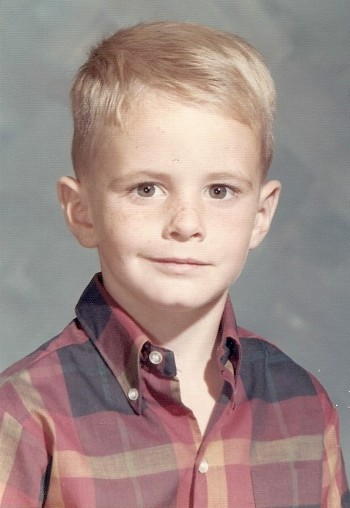 In this original BTB Investigation, we unveil the tragic story of Kirk Murphy, a four-year-old boy who was treated for “cross-gender disturbance” in 1970 by a young grad student by the name of George Rekers. This story is a stark reminder that there are severe and damaging consequences when therapists try to ensure that boys will be boys.
When we first reported on three American anti-gay activists traveling to Kampala for a three-day conference, we had no idea that it would be the first report of a long string of events leading to a proposal to institute the death penalty for LGBT people. But that is exactly what happened. In this report, we review our collection of more than 500 posts to tell the story of one nation’s embrace of hatred toward gay people. This report will be updated continuously as events continue to unfold. Check here for the latest updates.
In 2005, the Southern Poverty Law Center wrote that “[Paul] Cameron’s ‘science’ echoes Nazi Germany.” What the SPLC didn”t know was Cameron doesn’t just “echo” Nazi Germany. He quoted extensively from one of the Final Solution’s architects. This puts his fascination with quarantines, mandatory tattoos, and extermination being a “plausible idea” in a whole new and deeply disturbing light.
On February 10, I attended an all-day “Love Won Out” ex-gay conference in Phoenix, put on by Focus on the Family and Exodus International. In this series of reports, I talk about what I learned there: the people who go to these conferences, the things that they hear, and what this all means for them, their families and for the rest of us.
Prologue: Why I Went To “Love Won Out”
Part 1: What’s Love Got To Do With It?
Part 2: Parents Struggle With “No Exceptions”
Part 3: A Whole New Dialect
Part 4: It Depends On How The Meaning of the Word "Change" Changes
Part 5: A Candid Explanation For "Change"
 At last, the truth can now be told.
Using the same research methods employed by most anti-gay political pressure groups, we examine the statistics and the case studies that dispel many of the myths about heterosexuality. Download your copy today!
And don‘t miss our companion report, How To Write An Anti-Gay Tract In Fifteen Easy Steps.
 Anti-gay activists often charge that gay men and women pose a threat to children. In this report, we explore the supposed connection between homosexuality and child sexual abuse, the conclusions reached by the most knowledgeable professionals in the field, and how anti-gay activists continue to ignore their findings. This has tremendous consequences, not just for gay men and women, but more importantly for the safety of all our children.
Anti-gay activists often cite the “Dutch Study” to claim that gay unions last only about 1½ years and that the these men have an average of eight additional partners per year outside of their steady relationship. In this report, we will take you step by step into the study to see whether the claims are true.
Tony Perkins’ Family Research Council submitted an Amicus Brief to the Maryland Court of Appeals as that court prepared to consider the issue of gay marriage. We examine just one small section of that brief to reveal the junk science and fraudulent claims of the Family “Research” Council.
 The FBI’s annual Hate Crime Statistics aren’t as complete as they ought to be, and their report for 2004 was no exception. In fact, their most recent report has quite a few glaring holes. Holes big enough for Daniel Fetty to fall through.
“Google” is a trademark of Google Inc.
© Box Turtle Bulletin. All Rights Reserved.
 Posts
Posts  Posts via daily email: