Box Turtle Bulletin
 News and commentary about the anti-gay lobby
“Now you must raise your children up in a world where that union of man and box turtle is on the same legal footing as man and wife…”
News and commentary about the anti-gay lobbyPosts Tagged As: Uganda
May 12th, 2011

MP David Bahati
Warren Throckmorton appears to have confirmed what the Human Rights Commission has warned about earlier today, that the report from the Legal and Parliamentary Affairs Committee recommends that in the Clause 3 defining “aggravated homosexuality” and which specifies that “A person who commits the offence of aggravated homosexuality shall be liable on conviction to suffer death,” that the phrase “suffer death” should be replaced with “the penalty provided for aggravated defilement under Section 129 of the Penal Code Act.”
And what is that penalty for “aggravated defilement” (which, by the way, deals with child molestation, a law that is already gender neutral)? That section of the penal code specifies that anyone who “commits a felony called aggravated defilement and is, on conviction by the High Court, liable to suffer death.”
In other words, the death penalty is being replaced with — the death penalty under subterfuge.
Which means that when MP David Bahati, sponsor of the Anti-Homosexuality Bill, told NPR just this very morning that the committee had recommended that the death penalty be removed, that he was lying before his god and his country.
Of course, such evil should come as no surprise to anyone who’s been paying attention.
May 12th, 2011
“No amendments, no changes, would justify the passage of this odious bill,” State Department spokesman Mark Toner told reporters. “Both (President Barack Obama) and (Secretary of State Hillary Clinton) publicly said it is inconsistent with universal human rights standards and obligations.”
The State Department, he said, is joining Uganda’s own human rights commissions in calling for the bill’s rejection.
“We are following this legislative process very closely,” Toner said. “Our embassy is closely monitoring the parliament’s proceedings and we also are in close contact with Uganda’s civil rights and civil society leaders, as well as members of the (lesbian, gay, bisexual and transgender) community there.”
May 12th, 2011
Human Rights Watch has issued a press release saying that they have seen the report from Uganda’s Legal and Parliamentary Affairs Committee, which held hearings on Friday and Monday on the Anti-Homosexuality Bill. Despite denunciations from human rights groups and the U.S. State Department, the committee’s report with its recommendations was forwarded to Parliament Speaker Edward Ssekandi on Tuesday, which allowed the bill to show up on Parliament’s agenda on Wednesday. The bill was scheduled to go through its second and third reading as the last item on the agenda. It would have been during the second reading when the committee’s report would be revealed and recommendations discussed and either adopted or rejected. Once any and all amendments have been considered, then the bill would undergo its third reading in its final form for a vote.
Despite erroneous news reports to the contrary, the bill has not been amended since its introduction in October, 2009. To understand the committee’s recommendations, it’s important to review what the bill would do in its current form. It passed, it would:
There has been much speculation about what the committee’s report recommends. HRW says that the recommendations amount to minimal tweaks, plus a whole new “crime” that wasn’t included before:
The committee proposes amendments to the October 2009 draft bill. Despite the suggestion by the bill’s author, David Bahati, that the death penalty could be deleted from the legislation, the committee recommends retaining it. The committee proposes rewording the provision to align with the current Penal Code provision on “aggravated defilement,” which is punishable by death.
Some recommendations integrate concerns raised by Ugandan and international human rights groups. The committee states that provisions criminalizing “attempted” homosexuality should be removed, rightly stating such allegations would be very difficult to prove, Human Rights Watch said. The committee also recognizes that provisions requiring anyone who knows of homosexual conduct to report to police within 24 hours would create “problems especially to professionals whose ethics include confidentiality in order to be able to carry out their functions like Doctors, Lawyers and Counselors.”
The committee also suggests removing the clauses on extra-territorial prosecution of homosexuality and on nullifying Uganda’s international human rights obligations to the extent that they contradict the Anti-Homosexuality Bill.
The committee recommends the creation of an additional crime, “conduct[ing] a marriage ceremony between persons of the same sex,” punishable by three years in prison, which was not in the original draft. It also suggests deleting the crimes of “aiding and abetting homosexuality,” and “conspiracy to commit homosexuality,” but including a penalty of seven years in prison for “procuring homosexuality by threats.” The committee did not comment on the current proposed provision criminalizing the “promotion of homosexuality,” which would jeopardize the legitimate work of national and international activists and organizations working to defend and promote human rights in Uganda.
Warren Throckmorton has looked into Uganda’s constitution and Rules of Procedures to understand what is at stake when Parliament reconvenes tomorrow morning:
Apparently, President Museveni cannot directly veto the AHB. I confirmed this with two sources today and read through their Rules of Procedure and Constitution. He can send it back or refuse to assent to it (although it would be the first time he has ever done so) but he cannot directly stop it. If he refuses to assent to it, Parliament can either turn around and pass it or they can wait 30 days for it to become law. It can either pass or fail tomorrow. If it comes up and fails then it is done in present form. If it doesn’t come up tomorrow, then a MP can make a motion to continue all business forward. In addition, I heard today, but cannot confirm that if no motion is passed to continue all business, then the new incoming Speaker could direct the committees to pick up where they left off with unfinished bills from the last Parliament. We apparently could be monitoring this particular AHB until at least May 19.
May 11th, 2011
Headlines like this one in the Los Angeles Times are exasperating, especially considering we’ve spent the entire day chasing down erroneous reports from the Associated Press. So let’s get this straight once and for all: the death penalty has not yet been removed from the proposed Anti-Homosexuality Bill.
The opportunity to offer any amendments to the bill comes during the second reading in Parliament, which has not occurred yet. There are those who say the death penalty will be dropped when the measure is brought to the floor for it second reading. There are those who say that a recommendation to drop the death penalty has been included as part of the report from the Legal and Parliamentary Affairs Committee. But the death penalty has not yet been dropped, nor have any other talked-about changes to the bill been implemented. Until the bill comes up for the its second reading and those amendments to the bill are actually proposed and approved, the bill remains as it has been since its introduction.
Mainstream media have been wrongly reporting this for more than a year now. Every time they’ve reported it, they have been wrong. Stop doing it, mainstream media.
May 11th, 2011
[Update: 8:00 p.m. EDT: Jacqueline Kasha Facebook status says:
The Bill kept being raised but because of time it wasnt discussed. However after all the reactions that came from MPs it has strong support.On our way out the Government whip together with another MP Odong Otto told security that we shouldnt be allowed back in parliament and that we should all go to the West.
Those statements mean that should the Bill be discussed on Friday which is the next date agreed by the house. Its very possible it will sail through. Today a Bill was discussed for the 2nd and 3rd reading and voting within 20mins, it didnt pass because of lack of quorum so meaning should the AHB reach the floor it will pass because it has a lot of support.
We need a HUGE miracle.
Jacqueline’s assessment is considerably more pessimistic than Melanie Nathan’s source. It’s very difficult to handicap this race.]
[Update: 3:10 p.m. EDT: Melanie Nathan has an update: I have received word from a source in Uganda’s Parliament that although the Bill is on the agenda for Friday, tomorrow being a national holiday for the swearing in of President Museveni, they assert that there is a very strong chance the Bill will not make it to the floor and that Parliament will be prorogued before it can be debated and voted upon. The source, stated that Cabinet members and government have been overwhelmed with e-mails, statements and complaints from all around the world. The source believes this may well factor into preference given to other Bills in the last moments of this Parliamentary Session. The source went further to state that it was made as a commitment to him from the Speaker that “there would not be time” to hear it. He did not necessarily trust the commitment.” I think it is wise not to trust that commitment.]
[Update: 1:50 p.m. EDT: Frank Mugisha told the Associated Press that today’s Parliament proceedings were interrupted by a walkout among women MP’s who were upset over an unrelated bill (Both the Marriage and Divorce Bill and the HIV and AIDS Prevention and Control Bill have drawn fire from women’s groups. It’s unclear which bill triggered the walkout.) Parliament was then unable to continue due to a lack of quorum.]
Uganda’s Parliament has suspended business for the day without having taken up debate and a vote on the Anti-Homosexuality Bill. Sexual Minorities Uganda’s Frank Mugisha, who has been on hand at Parliament (and enduring insults from Parliament members as a result) just posted on Facebook that Parliament will reconvene on Friday with the Anti-Homosexuality Bill back on the agenda.
Daily Monitor, Uganda’s largest independent newspaper, has been focusing its resources on the larger ongoing turmoil over nationwide month-long riots, demonstrations, and today’s return of opposition leader Kizza Besigye from Nairobi, Kenya. He was expected to return to Entebbe today after having been treated in a Nairobi hospitals for injuries sustained at the hands of Uganda’s security forces. Ugandan security forces reportedly tried to block his return, and as of this writing it is still unclear whether he will be allowed to do so. Debate over Besigye’s return has overtaken events in Uganda’s Parliament, which may account for its sudden recess until Friday.
Warren Throckmorton also confirms that the Anti-Homosexuality Bill will be scheduled for Friday. While the 8th Parliament remains constitutionally in effect until May 18, a Parliament spokesperson told Throckmorton that Friday is the last day the current Parliament can act because swearing-in ceremonies for the 9th Parliament will begin on Monday.
Contrary to widespread mainstream media reports, the Anti-Homosexuality Bill is neither dead nor dropped. This isn’t the first time mainstream media has gotten this wrong.
ADDENDUM, 5/14: It turns out that the walkout by women delegates was over the Marriage and Divorce Bill. The bill would have “it would abolish forced marriage and allow women to divorce their husbands on the basis of cruelty, among others,” according to Daily Monitor. The walkout occurred when the Attorney General said that he was not ready for the bill to be voted on.
May 11th, 2011
[UPDATE: 1:10 EDT: Parliament has recessed for the day, and has scheduled another session for Friday. The Anti-Homosexuality Bill will be scheduled for Friday. Please see this post for more information.]
[UPDATE: 11:15 EDT: The Washington Post’s version of the AP report has been corrected (at least to one extent) to identify the MP as John Arumadri, whose name is listed on Uganda Parliament’s list of MP’s. However, the Anti-Homosexuality Bill was added to Parliament’s Order paper sometime between Warren Throckmorton’s post earlier this morning and now. At some point during the day, the Anti-Homosexuality Bill was added to the agenda. Was it added after the AP report went out? At this point, I an disinclined to believe the AP report without further confirmation.]
[UPDATE: 10:40 EDT: The AP report is in error. The Bill is on the agenda. Apparently, it was added sometime in the past few hours. When Warren Throckmorton posted his announcement that the bill was not on the agenda earlier this morning, the link to the Parliament’s Order’s paper was different. That link now goes to a blank page requiring a login. The new Order Paper is posted at a different URL. Despite the erroneous AP report that appears to cite a non-existent Parliament member, the bill is still scheduled for a vote.]
[UPDATE: 10:12 EDT: The AP reports that the bill is not on the agenda. The report cites an MP John Alimadi, saying that “the bill may have been dropped from the agenda because of a worldwide outcry against it.” However, Uganda Parliament’s list of MP’s does not include anybody by that name. We have seen erroneous reporting about the bill in the mainstream press before. Skepticism is warranted until we learn further details from someone who verifiably exists.]
The Anti-Homosexuality Bill is now officially scheduled to for a vote in Uganda’s Parliament. It is listed as the last item before adjournment in today’s published Order Paper. Pushing through seven bills in one day would be a remarkable feat for a body that typically works at a snail’s pace.
For comparison purposes, yesterday’s order paper called for a third reading for the Public Procurement and Disposal of Public Assets (Amendment Bill , and a second and third reading for the Companies Bill and the Marriage and Divorce Bill. Only the first item was acted upon. Today, the remaining two bills return for their second and third reading along with three others: the HIV and AIDS Prevention and Control Bill (which itself has also been contentious), the Ugandan National Meteorological Authority Bill, and the Anti-Homosexuality Bill.
Kampala is seven hours ahead of the Eastern seaboard and ten hours ahead of the Pacific Coast. We hope to learn what happens later this afternoon.
May 10th, 2011
 The Archbishop of Canterbury Rowan Williams has issued this short statement on Uganda’s pending Anti-Homosexuality Bill:
Overall, the proposed legislation is of shocking severity and I can’t see how it could be supported by any Anglican who is committed to what the Communion has said in recent decades. Apart from invoking the death penalty, it makes pastoral care impossible – it seeks to turn pastors into informers.
May 10th, 2011
The U.S. State Department is paying close attention to the Ugandan Parliament’s moves to bring the Anti-Homosexuality Bill to a vote. The following on-the-record comments from Hilary Renner, spokesperson for the State Department’s Bureau of African Affairs, were sent to BTB and other outlets in response to requests for comment:
The Department of State opposes the draft Anti-Homosexuality Bill, which we view as manifestly inconsistent with international human rights obligations. We continue to monitor activity surrounding the proposed legislation, including the public debate.
President Obama, Secretary Clinton, Assistant Secretary Johnnie Carson, and U.S. Ambassador to Uganda Jerry Lanier have all spoken out in opposition to the bill. These public statements underscore the U.S. government’s strong support of the rights of the LGBT community in Uganda and throughout the world.
We are not alone in our calls to stop this bill. Many from the international community have also expressed shared concern about the draft bill. And Uganda’s own Human Rights Commission issued a report in October 2010 calling the bill unconstitutional and inconsistent with international law. Many civil society groups in Uganda have advocated against this legislation, and we continue to support those efforts.
We urge Ugandan lawmakers to reject this bill and, instead, to safeguard the human rights of all Ugandans and ensure that neither sexual orientation nor gender identity provides a legal basis for discrimination or persecution.
The White House, the Department of State, and our Embassy in Kampala have been very active in speaking up, both privately and publicly, against the bill and promoting the protection of human rights for LGBT individuals in Uganda.
Public statements by President Obama, Secretary Clinton, and Bureau of African Affairs Assistant Secretary Johnnie Carson have urged Uganda to safeguard the human rights of all Ugandans, regardless of sexual orientation.
We meet regularly with human rights advocates and representatives of LGBT groups to solicit their advice on how we can best support the protection of human rights in Uganda.
We continue to monitor the situation closely and are reviewing how we would respond to the passage of this legislation.
Stating our views about the draft Anti-Homosexuality Bill does not amount to meddling in Uganda’s parliamentary affairs. Our statements are grounded in international human rights law and the obligations that it entails for all states, including Uganda and the United States.
If adopted, a bill further criminalizing homosexuality would constitute a significant step backwards for the protection of human rights in Uganda. Respect for human rights is key to Uganda’s long-term political stability and democratic development, as well as its public health and economic prosperity.
Human rights are also a cornerstone of U.S. foreign policy. The White House, the Department of State, and our embassies and consulates overseas will continue to advocate for greater respect for the human rights of LGBT individuals, and we will continue to speak up when we are concerned about abuses, such as those that would be encouraged by or follow from the legislation proposed in Uganda.
Meanwhile, Rep. Barney Frank (D-MA) has issued a statement condemning Uganda’s moves against the LGBT community:
“I’m disturbed by the news that Uganda is considering going ahead with a measure that denies the humanity of gay, lesbian, bisexual and transgender people.”
“I was pleased when the Financial Services Committee overwhelmingly, in a bipartisan way, voted in favor of my amendment urging the Secretary of the Treasury to oppose any financial assistance from multilateral development institutions to countries that persecute people on the basis of their sexual orientation, gender identity or religious beliefs. In the discussion of the amendment I offered, I specifically mentioned the deeply troubling case of Uganda, which is now considering legislation to legally deprive people of these basic human rights.”
“If the bill before the Ugandan parliament becomes law, it must be the policy of the United States government to oppose any aid to Uganda from the World Bank, the African Development Bank, or any other international financial institution of which we are a member.”
With efforts underway to identify potential budget cuts to reduce the deficit, this move should be fairly easy.
Pink News reported earlier today that British Foreign Secretary William Hauge said that the UK is also urging Uganda not to pass the Anti-Homosexuality Bill:
to questions on Twitter, Mr Hague wrote: “We oppose this bill and will continue to raise our concerns with Ugandan government. We urge Ugandan MPs to reject it.” He continued: “Our embassy is lobbying Ugandan gov & the UK initiated a formal EU demarche [diplomatic move] to the Ugandan foreign minister on the bill.”
Human Rights Watch call issued a statement, calling Uganda’s recent moves “deeply alarming that the Ugandan parliament is again considering this appalling bill, which flies in the face of human decency and violates international human rights law.”
And finally, Warren Throckmorton has confirmed that the report from Stephen Tashobya, Chair of the Legal and Parliamentary Affairs committee, was completed and sent on to Parliament. A Parliament spokesperson confirmed that the report, which includes recommendations for modifications to the bill, will be made public tomorrow. Only one bill passed today, which pushes two other major pieces of legislation off until tomorrow. But the spokesperson speculated that Parliament may hold its session open late into the evening to complete its agenda
May 10th, 2011
[Correction: The Ugandan Embassy is on 16th St, not 15th street as originally reported. The link to Google Maps was/is correct.]
[Update 12:00 EST: It should be noted that while there has been much discussion about dropping the death penalty or making other alterations to the bill, none of that has occurred yet. The time when that might occur — if one would believe that such modifications were to occur — would be during its second reading. As of today, the death penalty is still in the bill.]
[Update 1:15 EST: Warren Throckmorton has confirmed that the report from Stephen Tashobya, Chair of the Legal and Parliamentary Affairs committee, was completed and sent on to Parliament. A Parliament spokesperson confirmed that the report, which includes recommendations for modifications to the bill, will be made public tomorrow. Only one bill passed today, which pushes two other major pieces of legislation off until tomorrow. But the spokesperson speculated that Parliament may hold its session open late into the evening to complete its agenda.]
[Update: 1:35 EST: GetEqual has also added a dial-in campaign in addition to their scheduled protest: “GetEQUAL is calling on every American citizen to dial-in into the Ugandan Ambassador to the United States, Perezi K. Kamunanwire and inform him that every Ugandan life matters. Participants will begin calling the Ugandan Embassy at 10:00am today and continue until the vote. The call in number for the Ugandan Embassy is (202) 726-4758.]
[Update: 1:45 EST: From Pink News: “Foreign secretary William Hague says that the UK is continuing to urge Uganda not to pass a bill that could see gay people executed. Responding to questions on Twitter, Mr Hague wrote: “We oppose this bill and will continue to raise our concerns with Ugandan government. We urge Ugandan MPs to reject it.” He continued: “Our embassy is lobbying Ugandan gov & the UK initiated a formal EU demarche [diplomatic move] to the Ugandan foreign minister on the bill.”]
[Update: 1:55 EST: I will be on Michelangelo Signorile’s program on SiriusXM OutQ with guest host Mike Rogers to talk about the Anti-Homosexuality Bill. I will be on shortly after 3:00 EST. If you’d like to listen online for free, you can register here. The channel is 108 on both Sirius and XM.]
The Ugandan Parliament has published in today’s order paper a notice of upcoming business:
NOTICE OF BUSINESS TO FOLLOW
1. BILLS SECOND READING
I) THE HIV AND AIDS PREVENTION AND CONTROL BILL, 2010
II) THE ANTI HOMOSEXUALITY BILL, 2009
There are two ways to read this. The bill’s listed under “business to follow” do not always come up for immediate consideration. I’ve watched some bills remain under this notice for weeks on end.
On the other hand, Wednesday May 11 is a very significant day, and the vote can be an important diversion. Not only is it the last scheduled day of final scheduled session of the 8th Parliament, but it also happens to coincide with the day in which the opposition leader, Dr. Kizza Besigye, plans to return from Nairobi, Kenya, where he had been treated for injuries sustained when he was attacked by security forces during a peaceful protest. Police smashed the window of a car he was riding in and sprayed pepper spray and tear gas. Besigye was blinded and received multiple injuries. When he attempted to go to neighboring Kenya for treatment, the Ugandan government delayed his flight from Entebbe airport for nearly two hours. Thousands have been injured in rioting that has taken place in multiple cities across the country, as unrest has spread over rising fuel and food prices, as well as ongoing widespread corruption within the government. Human rights advocates have condemned the government’s violent response to peaceful protests.
Clearly, passing the Anti-Homosexuality Bill, which is very popular among ordinary Ugandans, would be a cynical diversionary ploy on the part of the government.
There is another political factor one must consider. Parliament Speaker Edward Ssekandi is fighting to retain his position as Speaker in the next Parliament. According to this New Vision article, MP David Bahati, the sponsor of the Anti-Homosexuality Bill, appears to be involved, either directly or behind the scenes, in the Speaker selection process. He may be using that leverage to force the speaker to fast-track the bill for a vote.
If the bill does come up for a second reading, that is when amendments to the bill may be offered. A third reading can quickly follow a second reading, at which time the bill would be passed and sent to the President. The president can assent to the bill or return it to Parliament for changes. According to one Parliament member, the President has not returned a bill to Parliament during his term.
The Anti-Homosexuality Bill, if passed in its current form, would impose the death penalty for those who are HIV-positive, who is a “repeat offender,” or whose partner is deemed “disabled” regardless of whether the relationship was consensual. It would also impose a lifetime sentence for other cases. The bill would lower the bar for conviction, making mere “touching” for the perceived purpose of homosexual relations a criminal offense. It threatens teachers, doctors, friends, and family members with three years imprisonment if they didn’t report anyone they suspected of being gay to police within twenty-four hours. It also would broadly criminalize all advocacy of homosexuality including, conceivably, lawyers defending accused gay people in court or parliamentarians proposing changes to the law. It even threatens landlords under a “brothel” provision if they knowingly rent to gay people.
GetEqual has announced a protest for this afternoon from 4:00 p.m. to 6:00 p.m. at the Ugandan Embassy, 5911 16th Street NW in Washington, D.C. (map). Says GetEqual: “Please bring signs, banners, and your best protest chants Tuesday afternoon to the Ugandan Embassy as we let Uganda know that we stand in solidarity LGBT Ugandans, their families and friends, and we will not sit idly by while Members of Parliament debate whether to imprison or kill them.”
If you can’t make it to the protest in person, you can call, write, and/or fax the Ugandan Ambassador to the United States. Please be polite, but firm. The contact information is:
His Excellency Professor Perezi K. Kamunanwire
Ambassador Extraordinary and Plenipotentiary
Tel: (202) 726 4758
Fax: (202) 726 1727
pkamunanwire@ugandaembassyus.org
Also, there’s an AllOut petition you can sign online. It now has over 250,000 signatures and is addressed to President Museveni. There is another petition at Avaaz.org with over 650,ooo signatures. Sign both of them. The second one has some incorrect information listed — the bill was never “stopped.” Also, the bill is not dead “If we block the vote for two more days until Parliament.” The bill doesn’t officially die until the 8th Parliament expires on May 18. It could be called back into special session before then.
You can keep up with ongoing developments on this facebook page and on Warren Throckmorton’s blog. We will do what we can here as well.
May 9th, 2011
[The following statement has been released by Uganda’s Civil Society Coalition on Human Rights and Constitutional Law. The Coalition is made up of 23 Ugandan and East African NGO’s focusing on human rights, HIV/AIDS, labor rights, and women’s and refugee issues. The statement reiterates comments made earlier today in testimony before the Legal and Parliamentary Affairs Committee concerning the proposed Anti-Homosexuality Bill. The statement references some of the political turmoil that has engulfed Uganda for nearly a month, as well as important court cases that are directly relevant to LGBT rights. One of those cases involved the late David Kato and others whose photos were published in the tabloid Rolling Stone (no relation to the U.S. publication by the same name) under the headline of “Hang Them!” The court ruled that Rolling Stone had violated the plaintiff’s rights three weeks before Kato was murdered. The statement below echos many of the themes heard in the posted audio clip from today’s testimony.]
Is Uganda’s “Kill the Gays” Bill being used to blind the World?
Press statement for release on Monday 9th May 2011.
Just days after opposition leader Colonel Kizza Besigye was deliberately blinded with pepper spray while on his way to work, the internationally reviled Anti-Homosexuality Bill was brought back to Parliament for public hearings in preparation for the second reading. Speculation is rife that the Bill, once believed to have been permanently shelved by Cabinet in light of its many absurdities, is being used to blind the world to everything else that is going on in Uganda right now. Alternatively that re-opening the discussion about a backwards looking and harmful proposal is symptomatic of a more general problem of weak governance.
Whatever the case may be, Uganda is struggling to come to terms with rampant inflation, teargas and mass arrests on an unprecedented scale: As civil society protests the draconian crack-down on protesters and opposition, it is clear that if the hate-filled Kill the Gays Bill is passed, it will finish the process of burying alive not just the sexual minorities of Uganda, but also all those who support the principles of constitutionalism, human rights for all, inclusivity, and democratic governance.
The essence of our submission to the Legal & Parliamentary Affairs Committee of the Ugandan Parliament, as made on Monday 9th May 2011, is therefore as follows:
From a LEGAL PERSPECTIVE, the Anti-Homosexuality Bill is:
1) Unconstitutional because it violates the rights to privacy, freedom from discrimination, equal protection for all, and protection of minorities. These rights as they relate to sexual minorities have already been established in Uganda’s High Court in the cases of Victor Mukasa & Another vs. Attorney General (High Court Miscellaneous Cause No 24 of 2006), and Kasha Jacqueline, Pepe Onziema & David Kato v. Giles Muhame and The Rolling Stone Publications Ltd (2011).
Six of the eighteen substantive provisions of the Anti-Homosexuality Bill 2009 are UNCONSTITUTIONAL. This implies that parliament can only pass them after amending the constitution.
2) Disproportionate because it elevates the crimes provided for to the same levels as those of terrorism, treason and misprison of treason. The Bill therefore proposes that consensual sex between adults is as dangers to the people of Uganda as the placing of a bomb in a crowded nightspot!
3) Redundant because it replicates existing provisions. Most importantly:
The new provisions of the Bill if passed into law would be are largely incapable of implementation. Most importantly:
Twelve of the eighteen substantive provisions are REDUNDANT. This is because they either replicate existing law or they are incapable of being practically implemented. In essence, this makes the whole bill a waste of time, for without a constitutional Amendment, it would be useless to pass a Bill whose provisions are either unconstitutional or redundant.
From a MEDICAL PERSPECTIVE the Bill is based on false science, myths and discredited theories with regard to:
If adopted, the Bill would force Medical professionals to inform on their homosexual clients, thereby breaking the two most fundamental tenets of their profession, namely the Hippocratic Oath and the commitment to total client confidentiality.
From a PUBLIC HEALTH PERSPECTIVE the Bill, if passed into law, would be a direct attack on Uganda’s already weak efforts to combat HIV/AIDS, as it would criminalise outreach, education and information at a time when new infections are on the rise and more people need to be placed on ARV treatment. It is generally understood that stigmatisation of vulnerable and at-risk groups is one of the biggest obstacles to HIV prevention; this Bill simply worsens the stigma and makes it impossible for health workers to do their jobs. The Bill, if passed into law, will thus become a further hindrance to Uganda’s attainment of the Millenium Development Goals. From a mental health perspective, the Bill is bound to produce an increase in depression and suicides by persons who feel they have no choice but to suppress their sexuality.
From a GOVERNANCE PERSPECTIVE the Bill is repugnant in that it criminalises a range of civil society activities, and thereby circumscribes their capacity to intervene effectively. It undermines civil society’s freedom of expression through banning the ‘promotion’ of sexual health and sexual rights messages. It also asserts a single model of family rather than recognising the diversity of traditional and modern structures already existent in Uganda. As such it stifles the majority of Uganda’s heterosexual citizens, alongside their homosexual brothers and sisters.
From a POLITICAL PERSPECTIVE the Kill the Gays Bill, and the wider homophobic discourse which it is derived from, and which it seeks to exacerbate, is being used to divert the attention of ordinary Ugandans from more immediately pressing issues.
CAN THE BILL BE AMENDED?
The Coalition has been reliably informed that attempts have been made to find a ‘win win situation’ which protects both National and International interests by amending those portions of the Bill which are most offensive to international best practice. We also hear that Honorable Bahati, has proposed a number of amendments to his original Bill.
As a Coalition we do not believe that there is any conflict between national and international perspectives on the failings of the original Bill, nor do we believe that amendments in any way offer an acceptable way forward; while the wording may change, the intention of an Anti-Homosexuality Bill will remain the same: to Kill the Gays. We therefore reject the original Bill, together with any attempts to amend it, in their entirety.
HAS THE PROCESS BEEN SUFFICIENTLY TRANSPARENT?
We also protest the manner in which, since the tabling of the Bill in 2009, attempts have been made to exclude the voices of civil society actors from the debates about the Anti-Homosexuality Bill. Laws, unlike sex between consenting adults, should be done in public, not behind closed doors. We therefore thank the Legal & Parliamentary Affairs Committee for hearing our submissions on Monday 9th May 2011.
POSITION AND RECOMMENDATIONS ON THE WAY FORWARD
1. We call unanimously for the complete withdrawal of the Anti-Homosexuality Bill, whether in its original or amended form.
2. We urge the incoming Parliament to pursue urgent legal reform to introduce clear legal recognition of the distinction between consensual and non-consensual sex between adults, whatever their gender. Specifically:
3. We call for a broader, more informed and ongoing dialogue on sexual health and sexual rights, between a broad range of stakeholders, including but not limited to: Government, religious leaders, traditional leaders, human rights activists, feminists, journalists, public health workers, sexual majorities and minorities, to minimise the manipulation of sexuality for political purposes, and to maximise human rights, public health and good governance for all.
For further information on the work of the Coalition, please go to www.ugandans4rights.org or write to us on info@ugandans4rights.org.
May 9th, 2011
[Update: Paul Canning alerted me to this 30-minute audio snippet from today’s hearing. Beginning at the two-minute mark, the speaker describes how the bill is based upon false premises and is not supported by science:]
Warren Throckmorton has his ear to the ground on the rapidly developing situation in Uganda, where Parliament may be set to pass the draconian Anti-Homosexuality Bill into law. He reported that the Human Rights Commission, Sexual Minorities Uganda and the Coalition on Human Rights all testified against the bill during hearings today. The Associated Press reports that pastor Martin Ssempa testified again this morning, calling for the death penalty to be removed and replaced with seven year’s imprisonment. This is a remarkable backtracking from supporting lifetime imprisonment previously. Ssempa went on to call for the bill’s passage “because homosexuality is killing our society.”
LGBT Advocate and retired Anglican Bishop Christopher Senyonjo also testified against the bill. He warned the committee that the bill would not make gay people suddenly disappear, but would instead turn Uganda into a police state. He also warned that the bill would result in an increase in the spread of HIV/AIDS because gay Ugandans would fear seeking treatment.
The AP also reported on the bill’s future:
Stephen Tashobya, the head of the parliament committee, said it is time legislators give the bill priority. He said a report on the bill would be ready by Tuesday and could be presented to parliament by the end of the week.
“Due to public demand the committee has decided to deal with bill,” Tashobya said. “The bill has generated a lot of interest from members of the public and members of parliament and that is why we spared some time deal with before this parliament ends.”
Parliament is due to end on May 11, although Parliament itself doesn’t constitutionally expire until the 18th. It’s not clear whether there is enough time for the bill to make it to the floor before the 11th, but Frank Mugisha of Sexual Minorities Uganda said that if Parliament does take up the bill, it will be almost certainly be passed. Warren Throckmorton, who is constantly updating this thread with new information as he finds it, comments on the bill’s prognosis:
Tashobya is quoted as saying he would have the report completed by tomorrow. However, he just told me a few minutes ago that he cannot promise to complete the report by tomorrow. He did say that he would complete the report before the end of Parliament which is the 18th of May. When I asked him how the Parliament could vote on a bill in this manner, he said that the Speaker (Edward Ssekandi) makes those decisions. Theoretically, the Speaker could call Parliament into session anytime before May 18 for a vote on any left over bills.
According to Tashobya, the Company bill did not pass today, and the Procurement bill was pushed to tomorrow, thus making it even more difficult for any new bills to come to the floor before Speaker Ssekandi’s end of official business date of May 11. The AHB coming to the floor appears to hinge on the completion of the committee report by Mr. Tashobya sometime tomorrow and the Speaker’s willingness to bring it to the floor on Wednesday. If this does not happen, the Speaker would have to call the MPs together sometime during the festivities of the Presidential inauguration and the swearing in of the new Parliament on the 18th.
The Anti-Homosexuality Bill, if passed in its current form, would impose the death penalty for those who are HIV-positive, who is a “repeat offender,” or whose partner is deemed “disabled” regardless of whether the relationship was consensual. It would also impose a lifetime sentence for other cases. Those provisions may be modified, although that still remains uncertain.
Even with those proposed modifications, the bill would still remain a potent threat to human rights. The bill would lower the bar for conviction, making mere “touching” for the perceived purpose of homosexual relations a criminal offense. It threatens teachers, doctors, friends, and family members with three years imprisonment if they didn’t report anyone they suspected of being gay to police within twenty-four hours. It also would broadly criminalize all advocacy of homosexuality including, conceivably, lawyers defending accused gay people in court or parliamentarians proposing changes to the law. It even threatens landlords under a “brothel” provision if they knowingly rent to gay people.
There is an AllOut petition which is now at about 40,000 signatures with a goal of 100,000 signatures by tomorrow. This will be presented at Parliament by Bishop Senyonjo tomorrow.
May 6th, 2011
That’s what the blogger GayUganda is hearing, that the draconian Anti-Homosexuality Bill may be getting its hearing before the Legal and Parliamentary Affairs Committee of Uganda’s Parliament:
Now, the anti-Homosexuality Bill is at present being discussed in the parliament of Uganda. Just today, as I write. Yes, today, Friday the 6th of May 2011. Committee hearings are reportedly going ahead.
Now, remember that this is the lame duck session of parliament. And, remember that it is supposed to end soon, on 11 May 2011.
If the bill makes it out of the committee today, it could conceivably receive its final vote next week before Parliament ends on Wednesday.
[Update: Warren Throckmorton spoke with M.P. David Bahati, the bill’s sponsor, and Charles Tuhaise, a researcher for parliament’s research office. They confirmed that hearings did begin on the bill today, and will likely wrap up on Monday, and will include testimony from the NGO Coalition on Human Rights and Constitutional Law. Also expected to testify are Pastors Martin Ssempa and Steven Langa. It was Langa who first organized the infamous Kampala conference featuring three American anti-gay activists in March 2009 which kicked the entire anti-gay campaign which culminated with this bill. Bahati was keen to point out that while Parliament may wide up its business next week, it won’t officially end until May 19.]
Uganda has been rocked in recent weeks with rioting and demonstrations against rising gas prices. The government has been responding with extraordinarily violent crackdown on dissent. One opposition leader was seriously injured and fled to neighboring Kenya for treatment. The disturbances even spilled onto the floor of Parliament, which had to suspend its session temporarily on Tuesday. GayUganda believes that forces behind the bill see as an opportunistic diversion for the violence that is racking the country:
So, it is a DIVERSION. The government needs a heady diversion for the country. For the outraged citizens of Uganda.
So, and this is very important, what is the government trying to do?
In actual fact, that diversion is not going to work. Because the citizens of Uganda are simply more concerned about the rising prices of food, and the deteriorating human rights situation. Their homophobia is a reflex which the government wants to use. But, it is not likely to work.
The diversion also can work both ways. With most of the media’s attention focus on the ongoing violence and protests, it could also be that the bill’s supporters see an opening for it to be passed when nobody’s paying attention.
The Anti-Homosexuality Bill, if passed in its current form, would impose the death penalty for those who are HIV-positive, who is a “repeat offender,” or whose partner is deemed “disabled” regardless of whether the relationship was consensual. It would also impose a lifetime sentence for other cases. The bill would lower the bar for conviction, making mere “touching” for the perceived purpose of homosexual relations a criminal offense. It threatens teachers, doctors, friends, and family members with three years imprisonment if they didn’t report anyone they suspected of being gay to police within twenty-four hours. It also would broadly criminalize all advocacy of homosexuality including, conceivably, lawyers defending accused gay people in court or parliamentarians proposing changes to the law. It even threatens landlords under a “brothel” provision if they knowingly rent to gay people.
Last week, the bill’s sponsor, M.P. David Bahati, agreed to “drop” the death penalty provision in order to get the bill passed. He has made this offer several times before. Given the draconian nature of the bill, the removal of the death penalty is hardly an improvement over the alternative of lifetime imprisonment in a Ugandan prison. The ruling government announced in March that the bill would be shelved over Bahati’s loud objections. Since then, Bahati and others have exerted increasing pressure to revive the bill, including paying people to pose as “ex-gays” to launch false allegations against the gay community.
Uganda’s economy depends on foreign donors for much of its support. Uganda, in recent years, has also tried to improve its coffee exports to premium distributors, an effort which has largely failed to get off the ground due to the reluctance of American and Western consumers to purchase coffee bearing the Ugandan label. Eco-tourism, which has been an important part of Uganda’s economic development, is also taking a hit due to Uganda’s declining reputation, despite being at the headwaters of the Nile at Lake Victoria, and possessing an abundance of wildlife and natural beauty.
GayUganda reminds is that what is happening is not occurring in isolation. The Anti-Homosexuality Bill may well be passed while, at the same time, the Ugandan government is instituting a violent and repressive crackdown against the human rights of all its citizens. As I observed last week, Uganda is now treating its citizens with just a small taste of how it will seek to treat its LGBT residents. GayUganda draws the point further:
But, remember that this is time for the GAY MOVEMENT around the world to make COMMON CAUSE with the average citizen of Uganda to decry the abuse of human rights of ALL UGANDANS.
Do not separate the two issues. Mention both in the same sentence, in the same breath.
Tell this to your leaders in the community, to your leaders in your country. To your leaders in your parliament, and to your leaders nationally and internationaly.
LGBTI rights are HUMAN Rights. They are not divisible. They are not above others, they are not distinct from the others.
Make common cause in demanding the cessation of abuse of rights of Ugandans, including LGBTI ugandans, by the Government of Uganda.
Let the message go out, simple, clear, unambiguous.
LGBTI rights are human rights. And, we are concerned about the rights of ALL Ugandans, including LGBTI Ugandans.
April 26th, 2011

Ugandan MP David Bahati (AP Photo/Ronald Kabuubi)
Ugandan M.P. David Bahati is not taking no for an answer. Last month, Information Minister Kabakumba Masiko articulated the government’s position that the draconian Anti-Homosexuality Bill would not be voted on in Parliament. Immediately, Bahati swung into action demanding that Parliament’s Legal and Parliamentary Affairs Committee, where the bill had been held for more than a year, schedule hearings on the bill. Since then, committee chairman Stephen Tashobya has been somewhat ambivalent about the bill, saying on the one hand that it may come up for discussion, and on the other hand pointing out that there is very little time left for the current Parliament to act before it expires next month.
Today, the Associated Press rorts that Bahati re-issued his “consession” that he would consider dropping the death penalty from the bill if it would help to move the bill forward. That’s not much of a concession; the more “lenient” punishment is lifetime imprisonment in a Ugandan prison. That’s hardly an improvement, and it’s barely scratching the surface. The bill would lower the bar for conviction, making mere “touching” for the perceived purpose of homosexual relations a criminal offense. It threatens teachers, doctors, friends, and family members with three years imprisonment if they didn’t report anyone they suspected of being gay to police within twenty-four hours. It also would broadly criminalize all advocacy of homosexuality including, conceivably, lawyers defending accused gay people in court or parliamentarians proposing changes to the law. It even threatens landlords under a “brothel” provision if they knowingly rent to gay people.
More worrying, newspapers all over the world are carrying this AP article with a misleading headline indicating that the death penalty’s being dropped is a fait accompli. Nothing could be further from the truth. The penalty has not been officially dropped. This is merely a statement of concession that Bahati is reiterating, one that he has made many times before. The bill itself remains unchanged.
The AP report also has Tashobya providing some wiggle room on whether the bill will come up for a vote:
But Stephen Tashobya, the chairman of the Legal and Parliamentary Affairs Committee, said the legislation may come up for a vote before parliament’s session ends May 12.
“We shall try and see how far we can go with the bill. It may be possible. We are doing all we can. We have limited time,” he said Tuesday, before adding: “Many people have expressed concern about that provision providing for the death sentence and I’m sure when we start hearings on that bill we will hear many more concerns.”
Whether Parliament can take up these measures in the two weeks it has left remains uncertain. Over the past week, the Ugandan government has been struggling with an open rebellion on the streets of Kampala. Things are only now beginning to quieten down, but the situation remans tense. That distraction only adds to the issues that Parliament will be grappling with before it ends on May 12.
In recent weeks, the bill’s supporters have been ratcheting up pressure for a vote, pressure which includes paying enourmous sums of money by Ugandan standards to gay people to hurl false accusations and pose as “ex-gays.” Governmental sources have responded by suggesting that some provisions of the bill be shifted to other bills, where they stand a better chance of passing with little notice.
April 15th, 2011
Uganda held elections recently, and as expected President Yoweri Museveni waltzed into another term in office with 68% of the vote. Whether those elections were free and fair is another matter — Museveni’s cronies dominate the supposedly independent Electoral Commission and he has sharply curtailed broadcasters’ from allowing opposition candidates access to the airwaves. When his next term ends, he will have been in power for 30 years, which would be a remarkable achievement if Uganda were truly a functioning democracy. He is already the longest serving leader in East Africa. Unsurprisingly, Museveni has been sharply critical of the Libya uprising.
Museveni’s main rival, Kizza Besigye, has cried foul over the election results. When Museveni banned protests over the election results, Besigye responded that he wouldn’t hold a protest march, but would instead just “walk to work.” As a result, he has been arrested twice over the past few days. Yesterday, Besigye led a “walk to work” from his home in Kasangati to his party’s office in Najjanankumbi, a 20km trek which would have taken him through the heart of Kampala. Military police responded with teargas, water canon, rubber bullets and batons. Besigye was hit on his left hand by a rubber bullet and rushed to a hospital.
 Forty-seven people were reportedly injured in the violence, some suffering gunshot wounds. A seven-months’ pregnant woman’s condition is described as “grave.” “Walk to work” violence has also broken out throughout western and northern Uganda. At least 220 people were arrested nationwide. The ruling National Resistance Movement itself shows signs of division over the protests. At least one “walk to work” campaign in Mbala was organized by ruling party officials to protest price increases and to denounce the crackdown on the opposition. Opposition members of parliament condemned the government’s crackdown, forcing an early adjournment.
The government banned live broadcasts of the events, and there are reports that Facebook and Twitter have been blocked. Daily Monitor, Uganda’s largest and most reliable independent newspaper, reports that its internet access was interrupted as well. NTV Uganda, which is owned by the same media company as Daily Monitor, nevertheless continued broadcasting updates and posting video on their YouTube channel.
Since Uganda’s independence in 1962, its history has been marked by a series of violent struggles between the in-caste and outcasts. As perennial outcasts, the country’s beleaguered LGBT community has served as the canary in the coalmine — as LGBT communities often do throughout the world. Uganda’s recent anti-gay campaigns culminating in an attempt to kill off its LGBT population serves as a reminder that a country that treats the least of its people with genocidal tendencies is not going to be a benign presence to the legitimate human rights and developmental aspirations of its larger populace.
If there is an upside, it is that a government that is willing to go through such drastic lengths to prevent its opposition from pointing out its flaws is also the same government that appears determined not to allow its foreign aid be jeopardized by passing the Anti-Homosexuality Bill. But realistically, that’s not even a slim sliver of a silver lining. William Faulkner explained the racial divisions in the Southern U.S. by saying “The past isn’t dead. It isn’t even past.” Uganda’s undead demons are still on the loose.
April 14th, 2011

George Oundo
Last week, we reported that George Oundo, the off-again, on-again Ugandan “ex-gay” poster boy under Pentecostal Pastor Martin Ssempa’s wing, was on-again, supporting Ssempa’s drive to re-open debate in the draconian Anti-Homosexuality Bill which is languishing in Uganda’s Parliament. Oundo stood before reporters and claimed that he had been a founding member of a group whose aim was the “”recruitment of the next generation of homosexuals.” He also accused human rights groups, including the London-based Amnesty International, of financing the recruitment of young Ugandans into homosexual lifestyles.
The New York Times finally decided to catch up with this week-old news today, reporting on Ssempa’s demand that Parliament begin debating the bill. But their report adds an interesting addendum to the story: Oundo recanted his story an hour after his public statement:
But an hour later, in a quiet hotel, Mr. Oundo recanted much of what had been said at the meeting.
“David Kato was murdered; it was a plot,” Mr. Oundo said. “I don’t support the bill.”
As for being a “former homosexual,” that, too, was not true.
“I’ve always been gay,” Mr. Oundo said, in a timid but growing voice. “I didn’t choose it.”
“David Kato was the first one who taught me to protect my human right,” Mr. Oundo added.
Mr. Oundo said that his presence alongside Mr. Ssempa at Parliament had been to “protect” himself and that he had been contacted only that morning by Mr. Kagaba about the meeting and offered about $42 to attend. He said Mr. Ssempa had offered him about $2,000 in 2009 to repent and switch sides in the debate, but later reneged. Either way, Mr. Oundo became a poster-child for Mr. Ssempa’s anti-homosexuality movement.
Mr. Ssempa declined to comment on the allegations.
Mr. Oundo admitted that he had picked up boyfriends at high schools and universities, what the antigay movement calls recruiting. But he said Uganda’s gay population was full of “natural-borns,” like himself.
“If I live or die, I am gay, and if I am buried, bury me gay,” he said.
It’s hard to know what to believe when it comes to Oundo. He was a key player in a series of vigilante campaigns in 2009, particularly in the campaigns which immediately followed the infamous March 2009 anti-gay conference put on by American activists Scott Lively, Don Schmierer and Caleb Lee Brundidge. Oundo himself appears to have a great deal of difficulty deciding which side he should be on. This story, which appears to show Oundo playing both sides of the fence on the very same afternoon, only adds to the confusion.
Featured Reports
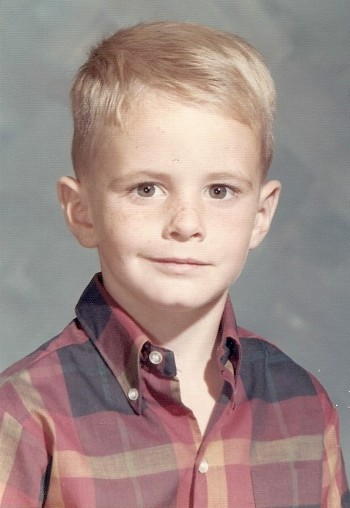 In this original BTB Investigation, we unveil the tragic story of Kirk Murphy, a four-year-old boy who was treated for “cross-gender disturbance” in 1970 by a young grad student by the name of George Rekers. This story is a stark reminder that there are severe and damaging consequences when therapists try to ensure that boys will be boys.
When we first reported on three American anti-gay activists traveling to Kampala for a three-day conference, we had no idea that it would be the first report of a long string of events leading to a proposal to institute the death penalty for LGBT people. But that is exactly what happened. In this report, we review our collection of more than 500 posts to tell the story of one nation’s embrace of hatred toward gay people. This report will be updated continuously as events continue to unfold. Check here for the latest updates.
In 2005, the Southern Poverty Law Center wrote that “[Paul] Cameron’s ‘science’ echoes Nazi Germany.” What the SPLC didn”t know was Cameron doesn’t just “echo” Nazi Germany. He quoted extensively from one of the Final Solution’s architects. This puts his fascination with quarantines, mandatory tattoos, and extermination being a “plausible idea” in a whole new and deeply disturbing light.
On February 10, I attended an all-day “Love Won Out” ex-gay conference in Phoenix, put on by Focus on the Family and Exodus International. In this series of reports, I talk about what I learned there: the people who go to these conferences, the things that they hear, and what this all means for them, their families and for the rest of us.
Prologue: Why I Went To “Love Won Out”
Part 1: What’s Love Got To Do With It?
Part 2: Parents Struggle With “No Exceptions”
Part 3: A Whole New Dialect
Part 4: It Depends On How The Meaning of the Word "Change" Changes
Part 5: A Candid Explanation For "Change"
 At last, the truth can now be told.
Using the same research methods employed by most anti-gay political pressure groups, we examine the statistics and the case studies that dispel many of the myths about heterosexuality. Download your copy today!
And don‘t miss our companion report, How To Write An Anti-Gay Tract In Fifteen Easy Steps.
 Anti-gay activists often charge that gay men and women pose a threat to children. In this report, we explore the supposed connection between homosexuality and child sexual abuse, the conclusions reached by the most knowledgeable professionals in the field, and how anti-gay activists continue to ignore their findings. This has tremendous consequences, not just for gay men and women, but more importantly for the safety of all our children.
Anti-gay activists often cite the “Dutch Study” to claim that gay unions last only about 1½ years and that the these men have an average of eight additional partners per year outside of their steady relationship. In this report, we will take you step by step into the study to see whether the claims are true.
Tony Perkins’ Family Research Council submitted an Amicus Brief to the Maryland Court of Appeals as that court prepared to consider the issue of gay marriage. We examine just one small section of that brief to reveal the junk science and fraudulent claims of the Family “Research” Council.
 The FBI’s annual Hate Crime Statistics aren’t as complete as they ought to be, and their report for 2004 was no exception. In fact, their most recent report has quite a few glaring holes. Holes big enough for Daniel Fetty to fall through.
“Google” is a trademark of Google Inc.
© Box Turtle Bulletin. All Rights Reserved.
 Posts
Posts  Posts via daily email: