Box Turtle Bulletin
 News and commentary about the anti-gay lobby
“Now you must raise your children up in a world where that union of man and box turtle is on the same legal footing as man and wife…”
News and commentary about the anti-gay lobbyPosts Tagged As: Uganda
Clause by Clause With Uganda's Anti-Homosexuality Bill
February 13th, 2012

Uganda’s proposed Anti-Homosexuality Bill has been re-introduced into Parliament and is currently in the hands of the Legal and Parliamentary Affairs Committee. As the Committee considers what to do with the bill, there has been considerable confusion over what would happen if the bill were to become law. Most of the attention has focused on the bill’s death penalty provision, but even if it were removed, the bill’s other seventeen clauses would still represent a barbaric regression for Uganda’s human rights record. In this series, we will examine the original text of bill’s eighteen clauses to uncover exactly what it includes in its present form.
To begin our examination, let’s skip past the introductory material and go directly to the first clause of the bill:
1. Interpretation.
In this Act. unless the context otherwise requires –
“authority” means having power and control over other people because of your knowledge and official position; and shall include a person who exercises religious. political, economic or social authority;
“bisexual” means a person who is sexually attracted to both males and females;
“child” means a person below the age of 18 years:
“currency point” has the value assigned to it in the Schedule to this Act;
“disability” means a substantial limitation of daily life activities caused by physical. mental or sensory impairment and environment barriers resulting in limited participation;
“felony” means an offence which is declared by law to be a felony or if not declared to be a misdemeanor is punishable without proof of previous conviction, with death or with imprisonment for 3 years or more.;
“gay”” means a male person who engages in sexual intimacy with another person of the same sex;
“‘gender”” means male or female;
“HIV” means the Human Immunodeficiency Virus;
“homosexual”‘ means a person who engages or attempts to engage in same gender sexual activity;
“homosexuality”‘ means same gender or same sex sexual acts;
“lesbian” means a female who engages in sexual intimacy with another female;
“Minister'” means the Minister responsible for ethics and integrity;
“misdemeanor” means an offence which is not a felony;
“serial offender” means a person who has previous convictions of the offence of homosexuality or related offences;
“sexual act” includes –
(a) physical sexual activity that does not necessarily culminate in intercourse and may include the touching of another’s breast, vagina, penis or anus:
(b) stimulation or penetration of a vagina or mouth or anus or any part of the body of any person, however slight by a sexual organ;
(c) the unlawful use of any object or organ by a person on another person’s sexual organ or anus or mouth;
“sexual organ” means a vagina, penis or any artificial sexual contraption;
“touching” includes touching—
(a) with any part of the body;
(b) with anything else;
(c) through anything;
and in particular includes touching amounting to penetration of any sexual organ. anus or mouth.
“victim” includes a person who is involved in homosexual activities against his or her will.
These definitions may seem innocous as they stand alone, but as we go through the bill, I want you to keep them in mind because they have the effect of broadening the bill far beyond the scope that most people would assume. To see how this works, we only have to go into the second clause which specifies “the offence of homosexuality”:
2. The offence of homosexuality.
(1) A person commits the offence of homosexuality if-(a) he penetrates the anus or mouth of another person of the same sex with his penis or any other sexual contraption;
(b) he or she uses any object or sexual contraption to penetrate or stimulate sexual organ of a person of the same sex;
(c) he or she touches another person with the intention of committing the act of homosexuality.
(2) A person who commits an offence under this section shall be liable on conviction to imprisonment for life.
It should be noted that Ugandan law already provides lifetime imprisonment under § 145 of the Penal Code, which reads:
Any person who— (a) has carnal knowledge of any person against the order of nature; (b) has carnal knowledge of an animal; or (c) permits a male person to have carnal knowledge of him or her against the order of nature, commits an offence and is liable to imprisonment for life.
The phrase “against the order of nature” has been interpreted throughout the English-speaking world as including homosexuality. But because the British Colonial-era law which Uganda inherited doesn’t provide precise definitions, it has been common practice to require evidence of penetration (for men) or direct genital contact in order to prove an individual’s guilt under this law.
But the new definitions provided by the proposed legislation would greatly open the possibility for conviction to just about anyone who has simply bumped into or brushed up against an accuser with an axe to grind. Look again at Clause 2, 1.c. A person, under this clause, can be sent to a Ugandan prison for life for merely “touching” someone, which under the definition provided under the first clause which includes touching “any part of the body” “with anything else” (a finger? a foot? a ten foot pole?) “through anything.” All of which means that someone can “commit homosexuality” even if they are fully clothed and there is no actual skin-to-skin contact. All that is required is “touching” with the perceived “intention” of committing the act of homosexuality, and that act, in turn, is defined as any same-sex “sexual act”, which itself is broadened so as to “not necessarily culminate in intercourse.”
Ugandan anti-gay activists (and Ugandan police) have previously complained that Ugandan law currently makes conviction of homosexuality difficult. The wording on this bill obviously lowers the bar considerably. Just about anyone can be accused of committing a homosexual act without actually, you know, committing anything close to a homosexual act.
With the bar thus lowered, it will conceivably be very difficult for anyone who is falsely accused of being gay — one can easily imagine rival politicians, business owners and pastors falling prey to such accusations — of proving their innocence. With these two clauses alone, the Anti-Homosexuality Bill already poses grave dangers for virtually anyone in Uganda who has ever acquired an enemy. And to think we still have sixteen clauses to go.
Clause By Clause With Uganda’s Anti-Homosexuality Bill:
Clauses 1 and 2: Anybody Can Be Gay.
Clause 3: Anyone Can Be “Liable To Suffer Death”
Clause 4: Anyone Can “Attempt to Commit Homosexuality”
Clauses 5 and 6: Anyone Can Be A Victim (And Get Out Of Jail Free If You Act Fast)
Clauses 7 and 14: Anyone Can “Aid And Abet”
Clauses 8 to 10: A Handy Menu For “Victims” To Choose From
Clauses 11, 14, 16 and 17: Nowhere To Run, Nowhere To Hide
Clause 12: Till Life Imprisonment Do You Part
Clause 13: The Silencing of the Lambs
Clause 14: The Requirement Isn’t Only To Report Gay People To Police. It’s To Report Everyone.
Clauses 15 and 19: The Establishment Clauses For The Ugandan Inquisition
February 9th, 2012
Why oh why can’t the mainstream media — or even the LGBT media — get this one right? Here’s the Advocate:
The measure was originally introduced in 2009 by David Bahati and called for same-sex sexual activity to be punishable with the death penalty or life imprisonment. Bahati reintroduced the bill on Tuesday without the death penalty provision, according to the AP, but left life imprisonment in as the maximum sentence for what he calls “aggravated homosexuality.”
And here’s the Associated Press (via Washington Post):
Bahati now says he has rewritten the bill to remove the death penalty provision, leaving life imprisonment as the maximum sentence for what he calls “aggravated homosexuality.”
This follows a similar false report from the BBC which claimed the same thing. The BBC has since made a slight modification to their report (which still carries the false headline “Uganda MP revives anti-gay bill but drops death penalty”) which now tells the real story:
Mr Bahati told the BBC’s Joshua Mmali in the capital, Kampala, that for procedural reasons, the bill had been reintroduced in its original form but that the provision for capital punishment would be removed at committee stage. [Emphasis added.]
The original form, which includes the death penalty, is here. As for the “committee stage”, the Legal and Parliamentary Affairs Committee recommended a sly change to the bill. They recomended removing the explicit language calling for “death by hanging,” and replacing it with a reference to the penalties provided in an unrelated already existing law. That law however specifies the death penalty. Which means that the Legal and Parliamentary Affairs Committee recommended that the death penalty be retained through stealth. Bahati then went on to claim that the death penalty was removed even though it was still a part of the bill.
The bill currently is back in the hands of the Legal and Parliamentary Affairs Committee, the same committee that attempted that sleight of hand trick last May.
Bahati has proven himself an excellent spinner, and writers reporting on the Anti-Homosexuality Bill have consistently failed to verify his words. Until they do, Bahati’s false statements will continue to be presented as though they were facts, and it will be the work of others to demonstrate again that his statements are manifestly untrue. Maybe someday writers for news outlets will begin to behave as journalists and not stenographers. But that day has not arrived.
February 9th, 2012
The Uganda Media Centre, which serves as something of a press office for Uganda President Yoweri Museveni, has issued a statement distancing itself from the Anti-Homosexuality Bill which was reintroduced into Parliament this week.
ANTI-HOMOSEXUAL BILL
***Wednesday 8th February 2012***17:00 hour
***No Embargo***
RESPONSE TO INTERNATIONAL CRITICISM OF DEBATE ON ANTI-HOMOSEXUAL BILL.Uganda has today been the subject of mass international criticism as a result of the debate on the Anti-Homosexual Bill at parliament. What many of these critics fail to convey is the bill itself was introduced by a back bencher. It does not form part of the government’s legislative programme and it does not enjoy the support of the Prime Minister or the Cabinet. However as Uganda is a constitutional democracy, it is appropriate that if a private members bill is presented to parliament it be debated.
Cultural attitudes in Africa are very different to elsewhere in world, 2/3 of African countries outlaw homosexual activity and 80% of east African countries criminalize it. Whilst on a global level more than 80 countries outlaw homosexual acts. Contrary to reports, the bill before parliament even if it were to pass, would not sanction the death penalty for homosexual behavior in Uganda.
Many international governments and politicians, who have criticized Uganda for debating this private members bill, remain mute in the face of far graver and far more draconian legislation relating to homosexuality in other countries. One might ask for example, if Uganda enjoyed as close a relationship with the US and European countries as Saudi Arabia (which sentences homosexuals to corporal and capital punishment) would we have attracted the same opprobrium as a result of allowing this parliamentary debate.
Unlike many other countries, no one in Uganda has ever been charged with the criminal offence of homosexuality. Moreover the main provisions of this bill were designed to stem the issue of defilement and rape which in the minds of Ugandan’s is a more pressing and urgent matter that needs to be addressed.
As a parliamentary democracy this process of debate will continue. Whilst the government of Uganda does not support this bill, it is required under our constitution to facilitate this debate. The facilitation of this debate should not be confused for the governments support for this bill.
For God and my Country
Minister of State for Ethics and Integrity Hon. Lokodo Simon
There are a couple of points that must be addressed in this statement. First, if the bill is passed, it most certainly does include the death penalty “for homosexual behavior in Uganda.” Despite numerous false reports to the contrary, that provision is still in the bill. We now have confirmation that it was the original 2009 language of the bill which received its first reading on Tuesday. Throughout this saga, there have been numerous conflicting claims that there are agreements to remove the death penalty provisions (claims which have now been going on for more than two years’ running), but the closest we’ve come to it has been a proposal to make minor, inconsequential changes in the language which keeps the death penalty in place.
Second, the statement also says that “main provisions of this bill were designed to stem the issue of defilement and rape.” I’ll leave you to inspect the actual text of the bill itself, along with its proposed changes. The issue of “defilement and rape,” at most, occupies perhaps a dozen or so words in the entire eighteen clauses of the bill.
But let’s return to the bigger question: what’s going on here? The Ugandan Government has repeatedly tried to “reject” the bill, but Parliament, despite the ruling party’s nearly complete dominance over the body, continues to push it forward. Parliament’s motivation appears to be twofold. First, there is a genuine backlash brewing against what is seen as foreign meddling in Uganda’s sovereignty, a backlash which is fueled by the perceptions that Uganda is being treated as a colony of rich white Europeans and Americans.
But that doesn’t tell the whole story. One Ugandan observer who writes the blog SebaSpace believes that the dynamics are as much internal as external. Corruption is endemic in all branches of government, and with the Ugandan government signing oil contracts right and left while keeping Parliament in the dark to exploit recently-found deposits in western Uganda, and with members of Parliament also scrambling to seek their own piece of the public pie, and all of that coupled with a general dissatisfaction with an autocratic president who has sat on the executive throne, as it were, for more than a quarter century, and what you now have is a classic power grab:
Parliament is still smarting from the humiliation President Museveni dealt them on this bill in January 2010. Bahati had mobilized them, led them up the hill and then brought them back down with tails between their legs when Museveni told them in his characterically condescending manner that the matter was a foreign policy issue that only he dealt with. They have never forgiven him for that slight.
Parliament has thus been seething in a state of pique at having been publicly shown to be impotent in the face of a dismissive executive. It wasn’t the first time he had done that, of course, but this one rankled especially because Museveni made no secret of the fact that he was acting at the behest of foreigners.
Such is the hunger for Parliament to show that they matter in Uganda that, at the time in 2010, even Beti Kamya, a friend of the gay community if there ever was one, waded in and lectured the donor community about Parliament’s independence in Uganda.
…Parliament is in a such a mutinous mood that they will thumb their noses at Uganda’s donors to pass this heinous bill – just to prove to themselves that they actually matter, even if the consequences for Uganda’s foreign aid could be dire – a classic case of cutting off their noses to spite their faces
February 8th, 2012
This NTV Uganda report quickly covers most of the clauses of the Anti-Homosexuality Bill, and, unusual for Ugandan media, focuses on opposition to the bill from Ladislaus Rwakafuzi, a senior human rights lawyer, and Pepe Julian Onziema of Sexual Minorities Uganda.
One interesting tidbit is the report that the Anti-Homosexuality Bill was referred again to the Legal and Parliamentary Affairs Committee. If true, that would be an interesting development. During the Eighth Parliament, the bill languished in the committee for more than a year before it was quickly rushed to the floor or Parliament with a report recommending a few cosmetic changes.
If this bill was in fact sent back to the same committee, it could mean one of two things: It could be bottled up there again as it was before, or the committee could quickly act to bring the bill back out to the floor for a final vote based on its earlier inconsequential recommendations. There is, right now, considerable pressure inside Uganda for the latter step, if for no other reason than as an act of defiance against international condemnation.
February 8th, 2012
Auntie Beeb is recklessly confused again:
The BBC’s Joshua Mmali in the capital, Kampala, says Mr Bahati, the primary backer of the bill, has confirmed the draft legislation has changed in one fundamental way.
Those found guilty of “aggravated homosexuality” – defined as when one of the participants is a minor, HIV-positive, disabled or a “serial offender” – would no longer face the death penalty, as originally proposed.
No no no no no no NO! A thousand times no! The death penalty has not been dropped!
The bill’s proponents have been claiming that line for more than two years, even though no action has been taken whatsoever to remove the provision. The BBC has done this before, and they’ve allowed blatantly false statements by M.P. David Bahati, the bill sponsor, go unchallenged. They were wrong then and they are wrong now. It’s incredible that such irresponsible and incompetent reporting can persist in the mainstream media.
But then, what do you expect of a news organization which asks the question, “Should homosexuals face execution?”
February 7th, 2012
Metro Weekly’s Chris Geidner has the statement:
In a statement provided to Metro Weekly, State Department spokesperson Hilary Fuller Renner wrote, “Our message is unchanged: The Department of State opposes the anti-homosexuality bill, which we view as manifestly inconsistent with Uganda’s international human rights obligations. We call on the Ugandan government to reinforce its respect for the human rights of all individuals, including LGBT individuals.”
The State Department says they are raising concerns with “senior Ugandan officials” and note that Ugandan diplomats agreed to “take immediate concrete steps to stop discrimination and assaults against LGBT persons” during that country’s recent Universal Periodic Review at the United Nations Human Rights Council.
February 7th, 2012
While the Ugandan Parliament is renewing its efforts to legislate LGBT people out of existence, we learn that Members of Parliament have received a car allowance of 103 million Uganda Shillings (US$44,556) in a deal which, Daily Monitor reports, was supposed to be kept hush-hush because of the hard economic times. One MP threatened to prevent Parliament from re-opening today if he was not promptly paid. Parliament re-opened today. Take from that what you will.
There are 386 Members of Parliament, times $44,556. That’s US$17,198,616 for a fleet of new Hummers and SUVs in a country where the per capita income is US$523.
February 7th, 2012

Uganda Parliament’s Order Paper for February 7. (Click to enlarge.)
It is now early evening in Kampala, and in an apparent sign of the Parliament’s lack of transparency, today’s Order Paper is still not posted on the Parliament’s web site. However, a copy has been making the rounds on the Internet, showing that the Anti-Homosexuality Bill, 2009, is scheduled for its first reading today. Warren Throckmorton has info on the bill’s path going forward:
According to a person in the plenary session of Parliament, Speaker Kadaga said the bills renewed from the 8th Parliament will be read for the first time today but reports on the bills from the 8th Parliament will be used as a basis for moving toward a 2nd reading and debate. If true, this means that the time from first reading to second reading, debate and possible passage will be much shorter than would be true if a new bill was introduced.
Based on reports from Parliament in October, 2011, it was anticipated that the anti-gay measure would be considered by the new Parliament without repeating the first reading. During the October 2011 session, the Parliament voted to return unfinished business from the 8th Parliament to the current session. At that time, Kawesa said that Speaker of the House Rebecca Kadaga’s Business committee could recommend that the anti-gay bill go back to committee or it could recommend that the former committee report become the basis for debate in the Parliament. Based on the Kawesa’s statement today, the bill is starting over in committee.
The bill’s original text, combined with the recommendations of the Legal and Parliamentary Affairs Committee, would look something like this:
I am attempting to find a copy of the bill as it currently exists. According to procedure, if a bill is being introduced in Parliament for its first reading, then it is supposed to be published in the Uganda Gazette.
February 6th, 2012
According to this news report from Uganda’s NTV, the Parliament’s Business Committee met today and agreed to move the revived Anti-Homosexuality Bill forward to the full house, possibly as early as tomorrow when the Ninth Parliament begins its third sitting following its Christmas break. There are reports that several lawmakers in Parliament are aggressively pushing for the bill’s passage as part of broader anger over the American and British announcements making nations’ protections of LGBT rights a component of foreign policy.
It is unclear exactly which form the revived bill will have. As originally written the bill has these eighteen clauses:
Shortly before the Eight Parliament ended, the Legal and Parliamentary Affairs Committee recommended several changes to the bill. Despite numerous false reports to the contrary, the removal of the death penalty was not one of the changes. According to Human Rights Watch, the committee recommended removing Clause 4 which would criminalize “attempted homosexuality,” along with Clause 7 (“aiding and abetting homosexuality”) and Clause 8 (“conspiracy to commit homosexuality”). The committee found that clause 14, which would require anyone knowing an LGBT person to report that person to police, would “create problems,” although it is unclear whether the committee recommended its removal. The committee also recommended removal of the extraterritorial Clauses 16 through 18, but added a new crime: “conduct[ing] a marriage ceremony between persons of the same sex,” punishable by three years in prison. That clause was not in the original draft.
The Eighth Parliament ended before the committee’s recommendations could be considered for adoption. Without that action, it appears that the bill is likely still in its original form.
February 3rd, 2012
Moments ago, the online news portal UGPulse reported that the Ugandan Parliament’s Business Committee will hold discussions on the proposed Anti-Homosexuality Bill on Monday, February 6.
In a letter to MPs on the committee from the office of the Clerk to Parliament, the meeting slated for Monday next week is expected to consider the legislative programme for the 3rd meeting of the 1st session of the 9th Parliament.
The Business Committee is presided over by Speaker Rebecca Kadaga, who is believed to be a bill supporter. Membership also includes the “Leader of Government Business,” although the Parliament’s web site doesn’t specify who that is. M.P. David Bahati, the bill’s sponsor, is also the acting head of the ruling party’s caucus, and that position might give him a presence at that meeting.
The Anti-Homosexuality Bill was revived at the start of the Ninth Parliament after the Eight Parliament expired before bringing it to a final vote. Shortly before the end of the Eight Parliament, there were false reports that the death penalty provisions were about to be removed from the bill. In fact, no changes have been made to the bill itself because Parliament expired before proposed changes could be voted on. But even if those proposed changes had been accepted by Parliament, the death penalty would have remained firmly in place.
February 1st, 2012
A video appeared on YouTube yesterday showing Kenya’s Chief Justice Willy Mutunga declaring that “gay rights are human rights.” The remarks were delivered on September 8, 2011 at a groundbreaking ceremony for FIDA Uganda, a Ugandan organization of Women Lawyers. FIDA Uganda was among the organizations which denounced the Anti-Homosexuality Bill.
The Chief Justice’s speech in Uganda is interesting for three reasons. First, his call for recognizing that “gay rights are human rights” actually pre-dates an identical declaration from US Secretary of State Hillary Clinton by two full months. Secondly, the woman wearing lavender you see seating herself at the beginning of the video is Uganda’s Speaker of Parliament Rebecca Kadaga, who played an important role in reviving the Anti-Homosexuality Bill in October. And finally, Uganda and Kenya close neighbors, sharing a common history as part of Britian’s East African colonies, and they maintain extensive political and economic ties. Much of Uganda’s imports and exports flow through the Kenyan port of Mombasa, and the two countries are part of a larger emerging common market, the East African Community. The situation for LGBT people in Kenya is generally much better than in Uganda, although there have been instances of mob violence against suspected gay people in recent years.
Mutunga has an interesting history. In the early 1980s as a student, he was politically active against Kenyan president/dictator Daniel Arap Moi, which led to his detention and exile to Canada. When Kenya turned to multi-party elections in 1991, he returned home and became part of Kenya’s “Young Turks, advocating for human rights in the country. He continued to work in human rights positions throughout most of the next two decades. After Kenya reorganized under a new constitution following the disputed 2007 which broke down into nationwide violence, Mutunga was named to the country’s new High Court in 2011.
Here is the video and transcript of a portion of Justice Mutunga’s remarks:
We have fought and succeeded in demanding our rights of movement and association although we can’t take them for granted. We should see less of the workshopping in hotels, less of the flipcharts and the [?], as we now move to the countrysides and make sure our people own and protect the human rights and social justice messages.
The other frontier of marginalization is the gay rights movement. Gay rights are human rights. Here I’m simply confining my statement to the context of human rights and social justice paradigm, and avoiding the controversy that exists in our constitutions and various legislation. As far as I know, human rights principles that we work on, do not allow us to implement human rights selectively. We need clarity on this issue within the human rights movement in East Africa, if we are to face the challenges that are spearheaded by powerful political and religious forces in our midst. I find the arguments made by some of our human rights activists, the so-called “moral arguments” simply rationalizations for using human rights principles opportunistically and selectively. We need to bring together the opposing viewpoints in the movement of this issue for final and conclusive debate.
I thank the FIDA movement, membership, leadership, and its national, regional and global network for the honor bestowed on me. I’m very proud of this honor and I will never take it for granted.
January 27th, 2012
LGBT rights advocate Val Kalende sees developments in Uganda that she says the foreign press has been reluctant to notice because it doesn’t fit the popular narrative. Despite the headlines, she says an important story isn’t getting told: it’s getting better for the LGBT movement in Uganda:
The death of David Kato has galvanized a breed of new activism and synergies in the Ugandan LGBT community. On my recent visit to Uganda, I met and interacted with a number of young activists and organizations whose joining the movement was a response to the death of this great activist. The movement has certainly grown bigger and stronger thanks to ongoing organizing by the Uganda Civil Society Coalition on Human Rights and Constitutional Law. It is encouraging to know that what began as a make-shift entity to respond to the Anti-Homosexuality bill has not only become proactive in action but more grounded in a multi-dimensional sexual rights advocacy. Members of the coalition feel that it is time to move Beyond the Anti-Homosexuality bill and build a movement of sexual rights activists who will influence policy and change repressive laws that hinder the freedom of sexual minorities.
…The general situation of LGBT persons in terms of security and awareness of rights has improved. What is often read and heard in international media is not what is on the ground. It is not what I saw on my recent visit. LGBT persons in Uganda are not in hiding. When people like Secretary Hilary Clinton speak out against human rights violations in Africa, they send a strong message to our governments that persecution of LGBT persons is a human rights violation. This comes with some degree of protection from the state because our governments know that the world is watching. I spoke with some activists who feel protected by the state (the Police) than ever before. Even if there’s still a lot of work to be done by government, it is important to acknowledge that today, LGBT activists can engage the police. According to a report from the Hate No More campaign launched in 2o11 by Freedom and Roam Uganda, activists have held meetings with the police and some police official have shown interest in being educated and engaged on LGBT issues.
The situation of LGBT persons in Uganda is getting better. Not worse. It is important that international allies, donors, and partners know that their support and resources are making a difference.
Kalende writes that it’s hard to get that message across; foreign journalists don’t want to hear it. They’re more interested in creating pieces like the BBC’s Scott Mills, whose documentary “The World’s Worst Place to be Gay?” she found to have “prey(ed) on the plight of Ugandan LGBT persons and do nothing to give back to their communities.” Instead, she points to a group of LGBT community activists living in a Kampala ghetto who embarked on community development projects that earned the respect of otherwise “would-have-been homophobic heterosexuals.” She adds:
I was speaking at a conference at Union Theological Seminary in NYC when an American journalist walked up to me and said her editor doesn’t want to publish stories that portray the “getting better” situation for LGBT persons in Uganda. For the past three years since the introduction of the Bahati bill we have talked about how bad things are. Can we now begin to celebrate the progress we are making?
She notes that the international attention has been helpful in shining a spotlight on the Anti-Homosexuality Bill and related problems, but:
In self-criticism, I know that most African LGBTs are not bold enough to condemn the kind of “Mill’s nonsense” that my colleague echoed. We have allowed the West to dictate our politics and write our narratives that we are losing our identity. I know that the arguments I make here are not popular; they don’t attract sympathy because they portray African LGBT persons as competent and independent when people expect them to be stupid.
Afrogay nods in agreement. Val’s essay is required reading, a heart-felt piece with much to chew on. I don’t think it’s to say things in Uganda are even close to perfect. They aren’t. But balance and perspective is always a must, and wherever improvements occur they should be noted.
January 26th, 2012
It was one year ago today when Ugandan LGBT advocate David Kato was brutally murdered in his home. Today, NTV Uganda has posted this news report on a memorial service which was held on the grounds of the Emerald Hotel in Kampala.
There has been a great deal of discussion over the past several years about the influence American pastors have had in stoking the flames of homophobia in Uganda. Against that backdrop, it was very refreshing to see an American pastor, Rev. Joseph Tolton of Rehoboth Temple Christ Conscious Church in New York City, speaking at the memorial. Also speaking at the memorial was Kato’s mother and retired Anglican bishop Christopher Senyonjo.
January 23rd, 2012
Former South African president Thabo Mbeki was in Uganda to speak at a forum at Makerere Univesity about post-cold war Africa when law professor Sylvia Tamale, an opponent of the proposed Anti-Homosexuality Bill, asked him what he would say to Ugandan M.P. David Bahati, the bill’s sponsor. “I would say to the MP; sexual preferences are a private matter,” said Mr Mbeki. “I don’t think it is a matter of the state to intervene.” He then drew a line between the kind fo state oppression the bill represents and governmental policies of South Africa’s Apartheid government:
Mr Mbeki said apartheid South Africa prohibited sexual relations “across the colour line” aided by The Immorality Act which handed the police legal ground to raid “people’s bedrooms” before dragging them to court for prosecution.
“I mean what would you want? It doesn’t make sense at all. That is what I would say to the MP. What two consenting adults do is really not the matter of law,” he said.
January 18th, 2012
Last Friday, Perezi K. Kamunanwire, Uganda’s ambassador to the U.S. suddenly withdrew as keynote speaker for a Martin Luther King Day event sponsored by the United Negro College Fund on Monday after the UNCF expressed concern over the Anti-Homosexuality Bill which had been revived in Uganda’s Parliament. UNCF president and CEO Michael Lomax wrote the Ambassador a letter expressing alarm over what he described as the bill’s “draconian penalties” and called on the ambassador to “address this issue when you speak at the King Day and take questions at the conclusion of your remarks.” The ambassador chose instead to withdraw from the event rather than face the uncomfortable questioning.
There has been an increasing aggressiveness in Uganda’s government and media against stepped up worldwide condemnation of countries which criminalize gay relationships. In recent weeks, we’ve even seen a stepped up hostility coming from what had been until now a very well-balanced independent newspaper, Daily Monitor. (More on that momentarily.) Ambassador Kamunanwire is playing his role in that push back. Yesterday, he blasted the UNCF for sending him an “incendiary” letter and claimed that the Uganda Parliament was not reconsidering the bill, despite numerous local reports to the contrary.
The aggressive push back has been joined by others in Uganda’s diplomatic staff. Yesterday evening, we received an email from a BTB reader in the Washington D.C. who was attending a talk by Rev. Mark Kiyimba, pastor of the New Life Kampala Unitarian Universalist Church, who was speaking at the Unitarian Universalist Church of Silver Spring, MD. Rev. Kiyimba has been a vocal opponent of the Anti-Homosexuality Bill. According to the emailer, Dickson Ogwang, Minister Counselor at the Uganda Embassy in Washington, DC, rose during the Q&A session to give “the familiar government spin”, including misdirection about the brutal murder of Ugandan LGBT advocate David Kato. According to our reader, “Rev. Kiyimba responded well, but clearly was put in the difficult spot of being challenged to call a government minister a liar.” Our reader also observed:
“Mr. Ogwang looked mighty pleased to snap a digital photo of Rev. Kiyimba shaking hands with MD State Senator (and local LGBT rights champion) Jamie Raskin. My inner cynic wonders whether the photo will emerge in Ugandan press as “proof” that Ugandan gay rights advocates are merely tools of the West.”
There is certainly precedent for that. Daily Monitor, Uganda’s largest independent newspaper and an until-now largely reliable source of information about developments over the Anti-Homosexuality Bill, carried a lengthy, incendiary article in its Sunday Magazine on January 8. The article by Bernard Sabiti, an aspiring born-again politician and journalist, featured a large photo of LGBT advocate Frank Mugisha receiving the Rafto Foundation’s award for human rights in Bergen, Norway. The caption under the photo however reads, “Mr Mugisha receives one of his many awards for ‘bashing’ his motherland over gay rights.” Referencing Frank’s recent op-ed in the New York Times, the rest of the article goes downhill from there:
In a December 22 high-profile New York Times Op-ed titled “Gay and Vilified in Uganda”, Mr Mugisha repeats the same over-recycled allegations against his own country, in which he adds some even more absurd statements that are not true at all. In the article, for example, he writes that: “More benignly, if people are still single by the time they reach their early 20s, what Ugandans call a “marriage age,” others will begin to suspect that they are gay.”
This is hogwash. With more Ugandans spending more time at school and tightening economic conditions, who doesn’t know that marrying in late 20s and 30s is a very normal thing in Uganda these days?
Even after the Uganda Police concluded investigations which failed to link David Kato’s killers to homophobia and court appropriately sentencing them, in the article, Mr Mugisha still insinuates that “…because of this work, David was bludgeoned to death at his home, with a hammer.”
The matter of the Rolling Stone newspaper that published a list of homosexuals which is the basis of the western gay propaganda alleging that “the press” in from page 21
Uganda promotes murdering homosexuals is even too absurd to comment about. These people know nothing about Uganda’s culture, let alone that of the tabloid, where many journalism students try many stunts to come up with a publication that can sell in a tough media market and a poor reading culture.
Even “credible” newspapers here struggle yet they have been in the market far too long to stage competition against them. But many People here also love sensationalism and gossip and some enjoy nudity. That was what Giles Mahame, the Rolling Stone publisher, was tapping into.
If not, given the shrewdness of Ugandans, it wouldn’t be farfetched to say that the Rolling Stone stunt could have as well been a stunt by the homosexuals themselves to elicit international sympathy and the cash that no doubt followed it. [Emphasis added.]
The article has had its chilling effect. Frank told Michelangelo Signorile last weekend that he now fears for his life:
“Just two days ago there was a very big piece of news about me,” said Frank Mugisha, executive director of Sexual Minorities Uganda, in an interview by phone from Kampala on my radio program on SiriusXM OutQ yesterday, referring to an article he says was written in a local newspaper, attacking him for writing the New York Times op-ed.
“It said that everything we are saying is not true. That we are just trying to get sympathy in the Western world. They put my picture in the newspaper with all these hate words and of course I got a lot of bad emails, bad phones, a lot of harassment against me.”
…”Every day of my life here in Uganda I have to be careful of what I do,” Mugisha said in the radio interview yesterday. “It has reached the point that where I even have to be careful when I’m going to get food in a restaurant, to be sure that the food I’m getting, that I trust the restaurant, because I’m scared I could get poisoned. Even when I want to go shopping I have to call a friend and say can you come with me because my face has been in the newspapers, my face has been in the media. Just two days ago when my face was put in the newspapers I received harassment already. Now it is my fear of stepping out my house. If I want to go and buy food, because I have to eat, what is going to happen to me today?”
Whether Rev. Kiyimba’s photo snapped last night will be deployed for a similarly sinister purpose remains to be seen. Clearly Uganda, along with many other African nations, are on the defensive over recent British and American announcements that the manner in which LGBT people are treated in their home countries are a matter of international concern. The predictable backlash is brewing. That’s not to say that the British and American positions are wrong or misguided. But we are seeing increasing fallout over the spotlight they have cast on Uganda and elsewhere. And it means that we need to follow those statements with greater vigilance, and we must demand that Uganda and other nations take positive actions to ensure the safety of all LGBT people, including their advocates and leaders.
Featured Reports
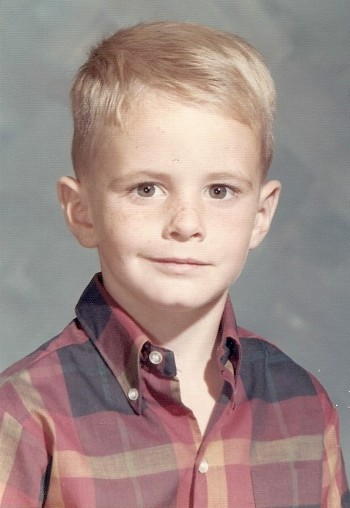 In this original BTB Investigation, we unveil the tragic story of Kirk Murphy, a four-year-old boy who was treated for “cross-gender disturbance” in 1970 by a young grad student by the name of George Rekers. This story is a stark reminder that there are severe and damaging consequences when therapists try to ensure that boys will be boys.
When we first reported on three American anti-gay activists traveling to Kampala for a three-day conference, we had no idea that it would be the first report of a long string of events leading to a proposal to institute the death penalty for LGBT people. But that is exactly what happened. In this report, we review our collection of more than 500 posts to tell the story of one nation’s embrace of hatred toward gay people. This report will be updated continuously as events continue to unfold. Check here for the latest updates.
In 2005, the Southern Poverty Law Center wrote that “[Paul] Cameron’s ‘science’ echoes Nazi Germany.” What the SPLC didn”t know was Cameron doesn’t just “echo” Nazi Germany. He quoted extensively from one of the Final Solution’s architects. This puts his fascination with quarantines, mandatory tattoos, and extermination being a “plausible idea” in a whole new and deeply disturbing light.
On February 10, I attended an all-day “Love Won Out” ex-gay conference in Phoenix, put on by Focus on the Family and Exodus International. In this series of reports, I talk about what I learned there: the people who go to these conferences, the things that they hear, and what this all means for them, their families and for the rest of us.
Prologue: Why I Went To “Love Won Out”
Part 1: What’s Love Got To Do With It?
Part 2: Parents Struggle With “No Exceptions”
Part 3: A Whole New Dialect
Part 4: It Depends On How The Meaning of the Word "Change" Changes
Part 5: A Candid Explanation For "Change"
 At last, the truth can now be told.
Using the same research methods employed by most anti-gay political pressure groups, we examine the statistics and the case studies that dispel many of the myths about heterosexuality. Download your copy today!
And don‘t miss our companion report, How To Write An Anti-Gay Tract In Fifteen Easy Steps.
 Anti-gay activists often charge that gay men and women pose a threat to children. In this report, we explore the supposed connection between homosexuality and child sexual abuse, the conclusions reached by the most knowledgeable professionals in the field, and how anti-gay activists continue to ignore their findings. This has tremendous consequences, not just for gay men and women, but more importantly for the safety of all our children.
Anti-gay activists often cite the “Dutch Study” to claim that gay unions last only about 1½ years and that the these men have an average of eight additional partners per year outside of their steady relationship. In this report, we will take you step by step into the study to see whether the claims are true.
Tony Perkins’ Family Research Council submitted an Amicus Brief to the Maryland Court of Appeals as that court prepared to consider the issue of gay marriage. We examine just one small section of that brief to reveal the junk science and fraudulent claims of the Family “Research” Council.
 The FBI’s annual Hate Crime Statistics aren’t as complete as they ought to be, and their report for 2004 was no exception. In fact, their most recent report has quite a few glaring holes. Holes big enough for Daniel Fetty to fall through.
“Google” is a trademark of Google Inc.
© Box Turtle Bulletin. All Rights Reserved.
 Posts
Posts  Posts via daily email: