Box Turtle Bulletin
 News and commentary about the anti-gay lobby
“Now you must raise your children up in a world where that union of man and box turtle is on the same legal footing as man and wife…”
News and commentary about the anti-gay lobbyPosts Tagged As: Uganda
December 23rd, 2011
 Way to go, Frank Mugisha:
Many Africans believe that homosexuality is an import from the West, and ironically they invoke religious beliefs and colonial-era laws that are foreign to our continent to persecute us.
The way I see it, homophobia — not homosexuality — is the toxic import. Thanks to the absurd ideas peddled by American fundamentalists, we are constantly forced to respond to the myth — debunked long ago by scientists — that homosexuality leads to pedophilia. For years, the Christian right in America has exported its doctrine to Africa, and, along with it, homophobia. In Uganda, American evangelical Christians even held workshops and met with key officials to preach their message of hate shortly before a bill to impose the death penalty for homosexual conduct was introduced in Uganda’s Parliament in 2009. Two years later, despite my denunciation of all forms of child exploitation, David Bahati, the legislator who introduced the bill, as well as Foreign Minister Henry Okello Oryem and other top government officials, still don’t seem to grasp that being gay doesn’t equate to being a pedophile.
You can see BTB’s coverage of those 2009 workshops and meetings with Parliament here. Frank Mugisha is Executive Director of Sexual Minorities Uganda, where he works at great personal risk and sacrifice:
I remember the moment when my friend David Kato, Uganda’s best-known gay activist, sat with me in the small unmarked office of our organization, Sexual Minorities Uganda. “One of us will probably die because of this work,” he said. We agreed that the other would then have to continue. In January, because of this work, David was bludgeoned to death at his home, with a hammer. Many people urged me to seek asylum, but I have chosen to remain and fulfill my promise to David — and to myself. My life is in danger, but the lives of those whose names are not known in international circles are even more vulnerable.
Go read his entire op-ed before you do anything else today.
December 19th, 2011
(At 0:45) The crucial elements that we need in this region, apart from peace and democracy, is infrastructure development. … This is the policy you should concentrate on. Yes, I know homosexuals are important [laughter and scattered applause], but homosexuals also need electricity. [laughter] So before anybody gives me a lecture about homosexuals and their rights, please first talk about the railroads.
Uganda’s President Yoweri Museveni lashed out at international donors at the International Conference on the Great Lakes Region. (African Great Lakes refers generally to the areas of D.R . Congo, Uganda, Kenya, Rwanda, Burundi, and Tanzania.) His remarks, for whatever reason, don’t seem to have gotten much play in the major Uganda media online. The above report is from Kenya’s NTV, and here is the take from Kenya’ The Nation. Warren Throckmorton reacted:
Hard to use all of those modern conveniences if you are in jail, Yoweri. Although maybe Museveni is right. If the [Anti-Homosexuality Bill] passes, gays will need electricity in jails, and roads and railways to take them there.
Warren’s right to poke at the myopia with which African leaders are reacting to recent policy statements by the U.S. and U.K. which either implicitly or explicitly link foreign aid to how nations treat LGBT populations. But there is a legitimate concern, shared by LGBT advocates on the ground, over a backlash should the idea that human rights abuses against LGBT people are more important than human rights abuses generally take hold and become part of popular wisdom. Remember, Museveni has held power for 25 years — an achievement itself which is hardly the mark of a democratic leader — and he has done it by manipulating the constitution and media, by installing a compliant electoral commission, and clamping down hard on political opponents. The West’s failure to address those problems with similar vigor will only feed growing cynicism over western motives.
Again, I raise this point not to say that protection against LGBT abuses should not be a priority. After all, it is gay people who are being targeted for murder by the state, not members of the opposition Forum for Democratic Change. But if Ugandans are violently denied the right to peaceful assembly and redress of grievances in the political sphere, it should come as no surprise when authorities also see no need to guarantee the rights of LGBT people to those same things. Yes, gays need electricity and railroads, and so does everyone else. But everyone, gays included, also need the freedom to use them.
December 15th, 2011
One of the more immediate fallouts of the infamous March 2009 conference put on by three American anti-gay activists in Kampala, besides the notorious Anti-Homosexuality Bill, was a long and fearsome anti-gay vigilante campaign waged by the tabloids and on television and radio. During the anti-gay hysteria that swept Uganda, several powerful pastors took the opportunity to launch wild accusations against rival pastors in a bid to increase their own power base and financial clout. Three preeminent Ugandan pastors, Martin Seempa, Solomon Male and Bob Kyazze, were charged with conspiracy to falsely defame a rival pastor by accusing him of sodomy.
Today, the African news blog Behind the Mask reports that a Ugandan magistrate has ruled that Ssempa, Male and Kyazze have “case to answer.” In other words, the magistrate ruled that there is ample evidence that a crime may have taken place and that it is now up to the defendants to put on a defense:
Magistrate John Patrick Wekesa ruled this morning in Kampala that the three Christian preachers, Martin Sempa, Solomon Male and Bob Kyazze should start defending themselves against charges of involvement in conspiracy to damage (Pastor Robert) Kayanja’s name by way of a homophobic smear campaign.
The court has set December 19, as the date for the pastors to defend themselves.
The accused pastors, their lawyers, Henry Ddungu and David Kaggwa, together with David Mukalazi and Deborah Kyomuhendo (agents of the accused) face charges of conspiring to injure Pastor Kayanja’s reputation. The two lawyers were included for allegedly commissioning false affidavits.
The defendants face up to five years imprisonment if convicted. Twenty-one prosecution witnesses have testified in court so far this year. The for earlier sodomy charges that had been filed against Kayanja by the three pastors and their lawyers have been closed for lack of evidence.
Martin Ssempa and Solomon Male have been outspoken supporters of the proposed Anti-Homosexuality Bill, a wide-ranging piece of legislation which would have imposed the death penalty against gay people under certain circumstances, lifetime imprisonment for the rest, and harsh criminal penalties for virtually anyone else who knew them or provided services to them. Ssempa had enjoyed support from several American Evangelical pastors, churches and organizations, including Saddleback pastor Rick Warren and Las Vegas-based Canyon Ridge Christian Church. Warren finally denounced Ssempa and the Anti-Homosexuality Bill in 2009 after weeks of pressure, and Canyon Ridge reluctantly cut ties with Ssempa after defending him for several months.
UPDATE: Daily Monitor is out with its article, naming four pastors being tried:
The quartet, Solomon Male of Arising for Christ, Martin Sempa of Makerere Christian Centre, Robert Kayiira and Michael Kyazze of Omega Healing Ministries are jointly charged with Ms Dorothy Kyomuhendo, former State House aide, and artiste David Mukalazi.
December 7th, 2011
NTV is owned by the same company that publishes Daily Monitor, Uganda’s largest independent newspaper. This news report was posted to their YouTube channel just moments ago:
The report itself is very calm and measured. But it does reflect prevailing opinion not only in Uganda but through much of Africa when the reporter asks at the end, “Will Uganda blink and bow to the pressure?” The image of bowing, as you can imagine given Africa’s history, has a very specific humiliative resonance that goes much deeper than much of the rest of the world. The three lawmakers in the report — Anti-Homosexuality Bill author M.P. David Bahati, M.P. Steven Ochola of the opposition Forum for Democratic Change (FDP), and Ethics and Integrity Minister Simon Lokodo (Lokodo is identified as “Rev. Fr.,” despite having been defrocked by the Vatican) — all spoke against Secretary of State Hillary Clinton’s remarks in Geneva. Human rights lawyer Ladislaus Rwakafuzi suggests that a sort of “don’t ask, don’t tell” compromise might be the best way to go for Uganda’s LGBT community.
Update: Paul Canning pointed me to this question which NTV has put on its Facebook page. The responses are pretty fascinating. Yes, there are some pretty odious comments. But at least on Facebook, those East Africans who are defending gay rights as human rights are not exactly shrinking violets. I would ordinarily suggest that you chime in, but as it is, we have plenty of people in Uganda making the case to fellow Ugandans for fellow Ugandans. That’s always good to see.
December 7th, 2011
ThinkProgress found that yesterday’s announcements by the Obama Administration that American international agencies would use their resources to promote human rights for LGBT people worldwide was barely mentioned on American television. It’s getting a bit more play in the newspapers, but since fewer people are getting their news from newspapers, I wonder whether this is something that has, so far, slipped right past most Americans as they go about their days.
In Africa as well, yesterday’s announcement has been met mostly with silence so far, although it generally takes a day or two before stories like this percolate through the press. Neither Uganda’s independent Daily Monitor nor the pro-government New Vision mentioned the story, although Daily Monitor does cover a talk by U.S. Ambassador Jerry Lanier urging Uganda to stand on its own economically, citing hard economic times in the U.S. which may result in lower levels of aid. Kenya’s Daily Nation, which is owned by the same media company as Uganda’s Daily Monitor, also didn’t cover the story. Neither did The Standard.
In Nigeria, where the country’s Senate recently passed a bill which would impose prison sentences for gay relationships and LGBT advocacy, a quick look at the Nigerian Tribune, Daily Sun, Vanguard, and Guardian revealed no mention of the story. The Nation carried a brief mention of Secretary of State Hillary Clinton’s speech in Geneva. That story was pretty straightforward and was limited to quotes from Clinton’s speech. Punch, which I suspect may be a tabloid, although it’s articles are much more “newsy” than a typical tabloid, carried more thorough coverage of the Obama Administration’s policy, which Punch said “signposted the likelihood of a diplomatic showdown between Nigeria and the US, against the backdrop of last week’s passage of an anti-LGBT bill by the Senate.” Punch asked Bola Akinterinwa of the Nigerian Institute of International Affairs how the new initiative might affect diplomatic relations between the U.S. and Nigeria. Here’s Punch’s description of that exchange:
He described the bill as part of the country’s ‘municipal law’ which he said was different from international law.
According him, the municipal laws of a country are meant to be obeyed by all agencies and persons residing in the country where such laws are in operation. He said anybody, including foreign envoys, who contravenes the municipal laws can be convicted.
He said, “There is no problem there at all. First of all America has laws, Nigeria has laws. Those laws constitute what they call municipal laws. Municipal laws are quite different from international laws. International laws are also referred to as law of nations. The International law is the one governing all the nations of the world, whereas the municiapal laws govern the affairs of each country.
“If Obama is asking US agencies to promote gay rights or lesbian rights, they can do so. There is no problem as long as they will not infringe on the municipal law of their host countries. If they do, they will be tried based on the municipal law and they will be guilty.”
Senate leader Victor Ndoma-Egba also declared, “Nigeria is an independent nation; we are a sovereign state. We have our own values. We are not going to tie our indigenous values with the values to other nations.” He added, “How many states in the US have legalised same sex marriage? Why can’t they start from inside their own country before going out to other countries?”
In Malawi, which gained international attention when they convicted and later pardoned a same-sex couple for undergoing a traditional engagement ceremony, The Nyasa Times covered the story with a provocative photo of a “lesbian kiss.” Malawi has already suffered a cut in British aid last summer over a diplomatic row when the British ambassador criticized Malawi President Bingu wa Mutharika for his increasingly autocratic actions. The Nyasa Times said that the Malawi President “defends Malawi laws for the criminalisation of sexual orientation when he adopted Zimbabwean President Robert Mugabe’s lingo, describing gays as worse than dogs.”
The Times in Johannesburg carried a very comprehensive story in its paper this morning, including quotes from Truth Wins Out’s Wayne Besen and other U.S. LGBT advocates.
December 6th, 2011
The Obama administration has issued a flurry of documents and Secretary of State Hillary Clinton gave a groundbreaking speech on the need for protecting the human rights of LGBT people around the world. It began this morning with the White House memorandum directing American international agencies to take action in countries where LGBT abuses are taking place. That was followed by fact sheets from the White House and the State Department outlining the new policies as well as past accomplishments. Of particular interest is the State Department’s description of its engagement in Uganda over concerns about the proposed Anti-Homosexuality Bill:
Alongside Ugandan civil society’s strong and sustained outreach to parliamentarians and the Uganda Human Rights Commission, and advocacy of other governments, U.S. Government advocacy against Uganda’s proposed Anti-Homosexuality Bill established a precedent for the United States, the international donor community and civil society to collaborate to counter efforts to criminalize same-sex conduct. [Emphasis mine]
While activities in Uganda are mentioned, Africa was not alone in receiving the State Department’s attention over the past few years. Also mentioned are Jamaica, Slovakia, Indonesia, Guinea, Serbia, and India. Meanwhile, Secretary Clinton gave what has been described as a groundbreaking speech in Geneva in advance of Human Rights Day this Saturday. I wasn’t able to see the speech and hope to have the transcript as soon as possible. (Update: It’s here, and it’s a doozy.)
It remains to be seen how the actions today will be reported in the popular media and what the response will be in countries which stand to be affected by today’s announcements. But past events does give us a clue as to how today’s developments are likely to be received in world capitals where LGBT persecution is either official policy or the social norm. Russia had earlier denounced American diplomatic protests over a proposed bill in St. Petersburg which would prohibit LGBT advocacy in public, and Deputy Prime Minister Dmitry Kozak followed that with a suggestion that the St. Petersburg proposal could be made a federal law. In Africa, following comments from British Prime Minister David Cameron warning that countries which prosecute LGBT people could see their foreign aid cut (a warning that was later modified to say that the aid would be redirected to NGO’s instead), African leaders, including those who oppose LGBT oppression, warned that the statement could backfire on efforts to head off legislation which would severely increase penalties against LGBT people. African LGBT advocates also warn that if changes in foreign funding force cutbacks in governmental services, the local LGBT communities would feel the brunt of the blame, making the work of LGBT advocacy much more difficult in countries where the prevailing belief is that homosexuality is a Western import.
None of that is to say that these pronouncements from the US and IK aren’t unwarranted or improper. But every action has an equal and opposite reaction, and as they say in Africa, when elephants fight, the grass suffers. Since Cameron’s announcement in October, there has been a measurable uptick on African newspaper articles mentioning homosexuality popping up through November and December in my Google Alerts for the continent, and those articles are rarely positive. The Ugandan Parliament revived the Anti-Homosexuality Bill by the end of October, and the Nigerian Senate greatly increased the penalties in a bill which makes same-sex unions a felony in November.
Now to be clear, neither action was a response to Britain’s announcement; both events almost certainly have occurred anyway. But if anyone had been inclined to speak out against those two bills before, the current politics now makes that all but impossible. No African politician has ever lost influence by standing up to “meddling” by foreign and (especially) colonial powers. And no politician anywhere in the world — east, west, north or south — has survived the taint of being accused of colluding with foreign governments, no matter how manifestly untrue, unjust, or an irrelevant distraction those accusations may be.
In the short term, these announcements are likely to exacerbate the situation. That is just a simple fact of life, but pointing that out isn’t to say that this is not a good change in direction. It is merely to say that we will need to be forewarned and prepared for the inevitable reaction which will come of it. Fasten your seat belts.
November 28th, 2011
Daily Monitor, Uganda’s largest independent newspaper, has a must-read story today asking, “Is Uganda as homophobic as they say?” They begin by setting up the question this way:
It can be traced to a whirlwind of events. One year after (M.P. David) Bahati’s (Anti-Homosexuality Bill), a fledgling tabloid ran a headline that called for homosexuals to be killed. Three months after that, in January this year, one of the men pictured under the Hang them headline, David Kato, was bludgeoned to death in his home. Amin himself couldn’t have written a better script.
The reference to the Idi Amin, the bloodthirsty dictator who ruled Uganda from 1971 to 1979, is a recurring one. Playwright Judith Adong invokes Amin’s name to show how the world’s views on Uganda’s human rights problems have shifted from a historical problem to a current one:
Before, when people heard that I’m from Uganda it used to be, ‘Oh, so you’re from Idi Amin’s country.’ Now it’s ‘You’re the people who want to kill homosexuals,'” she says.
Longtime LGBT advocate Val Kalende (she bravely appeared in a 2009 Daily Monitor profile at the height of the outcry surrounding the Anti-Homosexuality Bill) pulls on that thread further. Referencing Lonely Planet’s recommendation of Uganda as the world’s #1 best tourist destination, Val refocuses on the broader problems with human rights in Uganda:
Kalende believes the commenters on Lonely Planet are blowing things out of proportion. “What such people want to do is to place gay rights ahead of other human rights and they are the reason African countries are still overly homophobic. If people want Uganda to be boycotted because of homophobia then they should make the same noise when opposition leaders and journalists have their rights abused by the State.”
In this respect, Uganda is little different from the rest of the world: the gay community functions as the canary in the coalmine. How a society treats its gay community is a good predictor for how a society is capable of dealing with other groups who are either out of favor or out of power. President Yoweri Museveni’s regime has spent much of this year violently suppressing his political opponents. Against that backdrop, the world’s focused attention on the Anti-Homosexuality Bill while ignoring the broader problems with human rights strike ordinary Ugandans as elevating the gay community’s concern above everyone else’s. And naturally, if the world condemns official homophobia while ignoring the rest, it feeds the suspicion that LGBT Ugandans are seeking “special” rights and protections which ordinary Ugandans do not yet enjoy themselves.
Ugandan LGBT advocates say that this issue is just one of the barriers they face in trying to turn public opinion around on the Anti-Homosexuality Bill. When ordinary Ugandans see official harassment, arbitrary police actions, rampant corruption, and widespread abuses of power as endemic features of daily life, worldwide concerns over the country’s treatment of its LGBT citizens looks wildly myopic. Worse, LGBT advcocates say that single-minded focus confirms in the minds of ordinary Ugandans that the outside world is out of touch with what’s really going on there. And when Britain threatens developmental aid cuts based on treatment of sexual minorities, but not on violent governmental crackdowns on opposition groups, it only reinforces the widespread erroneous belief that homosexuality is a foreign import. On those points, it becomes hard to argue with them.
November 15th, 2011
Daily Monitor, Uganda’s largest independent newspaper, reports that the Uganda Network of AIDS Service Organizations (UNASO) has identified several deficiencies in the country’s fight against HIV/AIDS. Among the shortcoming cited include a shortage of qualified health workers, anti-retroviral medications, and test kits. But the Ministry of Health sees another culprit:
However, Ministry of Health is blaming the stagnant HIV prevalence rates in the country on uncoordinated response to the epidemic by pro-gay and lesbian civil society organisations. Uganda’s HIV prevalence rates have remained between 6.5 and 7 per cent for about two years.
According to Dr Zainab Akol, the coordinator of the national Aids Control Programme, the number of Ugandans dying from Aids-related infections has reduced significantly over the last two decades; but added that the fight is now being derailed by the civil society.
“They are spoiling our response to HIV/Aids. They are derailing us by dragging us to human rights issues of homosexuals. We in the health ministry do not want to know your sexual orientation. We treat everyone so long as that person is sick,” she said.
Akol claims that Uganda was denied a US$270 grant from the Global Fund to Fight Tuberculosis, Malaria and HIV/AIDS due to lobbying by human rights groups. A major AIDS NGO however denies the charge:
However, Mr Godfrey Tuwesigye of HURINET Uganda, described Ms Akol’s comments as misleading. “We have never called for cutting funding for HIV/Aids activities. We are just telling the ministry to streamline lesbian, gay, bisexual, and transgender (LGBT) in HIV/Aids activities. If in future we get a new type of virus among homosexuals, will they say they were not aware?” Mr Tuwesigye said.
Two months ago, we learned that Health Minister Christin Ondoa is also a pastor at Life Line Ministries, where she works under the direction of apostle Julius Peter Oyet. He is one of the most influential evangelical leaders in Uganda you’ve never heard of. Oyet was present in the gallery when the Ugandan Parliament first considered the introduction of the Anti-Homosexuality Bill in 2009, and he has been very open about his belief that homosexuality should be a capital offense. Oyet, who is also President of the Ugandan branch of the U.S.-based College of Prayer (or COP, which itself is a ministry of Rev. Fred Hartley’s Lilburn Alliance Church in Atlanta), was made a member of M.P. David Bahati’s staff to lobby Parliament for the bill’s passage. While Bahati is the bill’s author and sponsor, Oyet played a crucial role in its drafting.
November 10th, 2011

Sidney Nsubuga Enoch (L), convicted and sentenced to 30 years imprisonment for the murder of gay rights advocate David Kato. (Daily Monitor / Johnson Mayamba)
Daily Monitor, Uganda’s largest independent newspaper, reports that Sydney Nsubuga Enoch, who had plead guilty to murdering LGBT advocate David Kato, was sentenced to thirty years in prison. The African blog Behind the Mask also reports.
Justice Joseph Mulangira sentenced Nsubuga, on his own plea of guilty, for the murder of the gay rights activist on January 26, 2011 at his home in Mukono district.
Nsubuga pleaded guilty to both the police and before a magistrate, before he was committed to the High Court to stand trial.
Under Uganda’s judicial systems capital offences such as murder, rape and defilement are only heard by the high court, although suspects are brought before magistrates and charges are read to them as investigations go on.

David Kato
Nsubuga had been arrested in February, just a week after Kato’s death. At the time, many LGBT activists in Uganda expressed doubts about the police investigation leading to the arrest. But in this article at Behind the Mask, Kato’s layer, Francis Onyango, expressed satisfaction with the unusually speedy trial and conviction of Nsubuga, which seems to have caught everyone off guard. “Even the witnesses, lawyers and families of the man never knew he was convicted and sentenced. But this is normal in a criminal trial,” he said.
Meanwhile, the account in Daily Monitor mirrors the story which had been spread by editors of the notorious Rolling Stone tabloid (no relation to the U.S. publication by the same name), which sought to place the blame on the murder of Kato himself. In this latest account from Daily Monitor, “The police issued a statement to the effect that Kato’s killing was no way related to his campaign for gay rights.” LGBT activists in Uganda disputed that assertion.
The suddenness of today’s proceedings before anyone was even notified of the trial and sentencing only added to those doubts. Frank Mugisha, who is in Washington, D.C. to receive the Robert F. Kennedy Human Rights Award today, posted on his Facebook page, “It is disheartening that this trial happened secretly and hurriedly with out any one knowing about it and leaves many questions unanswered.”

Front cover of the Oct 2, 2010 edition of Rolling Stone, featuring a photo of David Kato (left) and Bishop Christopher Senyonjo (right). (Click to enlarge.)
Davik Kato Kisule, the Advocacy and Litigation Officer for Sexual Minorities Uganda, was found in his home on January 26, 2011, after having been beaten in the head with a hammer or blunt object. Residents told police that they saw a man entering David’s house, and then they saw him leaving dressed in the David’s shoes and a jacket that covered part of his face. Later, they became suspicious and went to check on David but found the door locked. After they forced their way in, they found him and rushed him to Mulago Hospital, but he died on the way.
The attack occurred a few months after David’s face appeared on the front page of the Ugandan tabloid Rolling Stone (no relation to the U.S. publication by the same name) under a headline that demanded “Hang Them!” Kato and others sued the paper, seeking damages and a permanent injunction against the paper’s “outing” campaign. Kato and the other plaintiffs prevailed, and Rolling Stone ceased publication shortly after.
November 10th, 2011
TODAY’S AGENDA:
Senate Judiciary Committee to Hold Markup for DOMA Repeal: Washington, D.C. The Senate Judiciary Committee will hold an Executive Business Meeting this morning to go over, among other things, Senate Bill 598, known as the Respect for Marriage Act, which would repeal the Defense of Marriage Act. This bill was scheduled to be marked up last week, but Republicans on the panel forced a delay for a week. The Washington Blade has obtained copies of three proposed amendments:
Of the three amendments, only one is germane: a measure that would strike Section 2 of the Respect for Marriage Act. That portion of the bill enables federal benefits to flow to married gay couples even if they live in states that don’t recognize marriage equality. Under the bill as it currently stands, a couple could marry in a state such as New York, where same-sex marriage is legal and still receive federal benefits if they move to a state such as Michigan, which doesn’t recognize same-sex marriage. The other two have no relevance to the Respect for Marriage Act, but still can be offered under Senate rules, which allow non-germane amendments to legislation.
The committee, chaired by Sen. Patrick Leahy (D-VT) will meet at 10:00 a.m. in Hart Senate Office Building, room 216, and will be webcast here. The House version of the Respect for Marriage Act has 128 co-sponsors, but because the House is under Republican control, it is extremely unlikely it will take action on the bill.
Frank Mugisha to Receive the Robert F. Kennedy Human Rights Award: Washington, D.C. Ugandan LGBT advocate Frank Mugisha will be presented the prestigious human rights award in a ceremony at the Kennedy Caucus Room of the Russell Senate Office Building. The award will be presented by Kennedy’s widow, Ethel Kennedy, and Senator John Kerry, Chairman of the Senate Foreign Relations Committee.
United States Conference on AIDS: Chicago, IL. Billed as the largest AIDS-related gathering in the U.S., the conference organized by the National Minority AIDS Council will kick off today, bringing together over 3,000 workers, including case managers, physicians, public health workers, advocates, people living with HIV/AIDS, and policy makers, to build national support networks, exchange the latest information and learn cutting-edge tools to address the challenges of HIV/AIDS. The three day conference begins today at the Sheraton Chicago Hotel and Towers.
TODAY’S BIRTHDAY:
 Phyllis Lyon: 1924. The Oklahoma native earned a degree in journalism from the University of California at Berkeley in 1946 and worked as a reporter for a California paper before moving to Seattle to work at a magazine in 1950. That’s where she met the love of her life, Del Martin. They became a couple in 1953 when they moved to San Francisco together. “We really only had problems our first year together,” she later told The Washington Post. “Del would leave her shoes in the middle of the room, and I’d throw them out the window.” Del responded “You’d have an argument with me and try to storm out the door. I had to teach you to fight back.” Their life together was all about fighting back. In 1955 Phyllis and Del, along with six other women, formed the Daughters of Bilitis, the first national lesbian organization in the U.S. Phyllis was the first editor of the DOB’s groundbreaking newsletter, The Ladder from 1956 to 1960, when Del took over. Pseudonyms were common then, and Phillis edited The Ladder as “Ann Ferguson” for the first few months, but she dropped it to encourage their readers not to hide. By October 1957, they had 400 subscribers across the country. In 1964, they helped found the Council on Religion and the Homosexual, bringing together national religious leaders and gay and lesbian activists for a national discussion of gay rights. Phyllis was also the first open lesbian to serve on the board of the National Organization for Women in 1973. Phyllis and Del were also active in San Francisco’s Alice B. Toklas Democratic Club.
On February 12, 2004, Phyllis and Del married for the first time when San Francisco mayor Gavin Newsom ordered that marriage licenses be granted to same-sex couples. That marriage lasted until August 12, but not because the couple split up. That was when the California Supreme Court voided several thousand marriage licenses given to same-sex couples. Del and Phyllis were deeply dissapointed. “Del is 83 years old and I am 79,” she said. “After being together for more than 50 years, it is a terrible blow to have the rights and protections of marriage taken away from us. At our age, we do not have the luxury of time.”
 But they had the luxury of just enough time. They were married again on June 16, 2008 after the California Supreme Court ruled that prohibiting same-sex marriage was against the state constitution. Del and Phyllis were given the honor of being the first same-sex couple to be married, and they wore the same outfits in which they were first married in 2004. Del passed away two months later, on August 27, 2008.
If you know of something that belongs on the Agenda, please send it here. Don’t forget to include the basics: who, what, when, where, and URL (if available).
As always, please consider this your open thread for the day.
November 3rd, 2011
Uganda’s privately-owned WBS launched a YouTube channel about a year ago. In this report uploaded yesterday, WBS reports on reactions from Ugandan lawmakers to British warnings of aid cuts to countries that persecute LGBT people. As predicted by LGBT activists inside Uganda, those warnings appear to be having the opposite of their desired effect, stirring a backlash in Uganda and stiffening the resolve of the Anti-Homosexuality Bill’s backers.
[Via Joe.My.God]
November 1st, 2011

John Nagenda
Ugandan presidential adviser John Nagenda told the BBC that British threats to cut foreign aid to countries that do not respect gay rights could backfire on efforts to derail Uganda’s proposed Anti-Homosexuality Bill. Britain’s Prime Minister David Cameron raised the issue again at the biennial Commonwealth Heads of Government Meeting (CHOGM) in Perth, Australia. Nagenda reacted strongly to that warning:
Mr Nagenda accused Mr Cameron of showing an “ex-colonial mentality” and of treating Ugandans “like children”.
“Uganda is, if you remember, a sovereign state and we are tired of being given these lectures by people,” he told the BBC’s Newshour programme.
Nagenda, it should be remembered, is not a proponent of the Anti-Homosexuality Bill. He was the first major figure tied to the Ugandan government to come out against the bill when he published an op-ed in the pro-government New Vision in late 2009. He still says that he believed the bill won’t become law, but argues that given the country’s history under British colonial rule, Ugandans are particularly sensitive to perceived meddling by their former colonial masters:
“I believe it (the bill) will die a natural death. But this kind of ex-colonial mentality of saying: ‘You do this or I withdraw my aid’ will definitely make people extremely uncomfortable with being treated like children,” Mr Nagenda said.
African LGBT advocates have voiced similar concerns over Britain’s threat to cut aid. In a statement signed by several leading LGBT advocacy groups and individuals, they argue that threats to cut aid could have unintended consequences, partly by undermining the formation and growth of indigenous human rights groups:
The imposition of donor sanctions may be one way of seeking to improve the human rights situation in a country but does not, in and of itself, result in the improved protection of the rights of LGBTI people. Donor sanctions are by their nature coercive and reinforce the disproportionate power dynamics between donor countries and recipients. They are often based on assumptions about African sexualities and the needs of African LGBTI people. They disregard the agency of African civil society movements and political leadership. They also tend, as has been evidenced in Malawi, to exacerbate the environment of intolerance in which political leadership scapegoat LGBTI people for donor sanctions in an attempt to retain and reinforce national state sovereignty.
Further, the sanctions sustain the divide between the LGBTI and the broader civil society movement. In a context of general human rights violations, where women are almost as vulnerable as LGBTI people, or where health and food security are not guaranteed for anyone, singling out LGBTI issues emphasizes the idea that LGBTI rights are special rights and hierarchically more important than other rights. It also supports the commonly held notion that homosexuality is ‘unAfrican’ and a western-sponsored ‘idea’ and that countries like the UK will only act when ‘their interests’ have been threatened.
November 1st, 2011
The writeup hardly speaks well of Uganda’s tourist attractions, but that doesn’t keep it from landing at the top of Lonely Planet’s top ten destinations for 2012:
1. Uganda
It’s taken nasty dictatorships and a brutal civil war to keep Uganda off the tourist radar, but stability is returning and it won’t be long before visitors come flocking back. After all, this is the source of the river Nile – that mythical place explorers sought since Roman times. It’s also where savannah meets the vast lakes of East Africa, and where snow-capped mountains bear down on sprawling jungles. Not so long ago, the tyrannical dictator and ‘Last King of Scotland’ Idi Amin helped hunt Uganda’s big game to the brink of extinction, but today the wildlife is returning with a vengeance. This year Uganda also celebrates the 50th anniversary of its independence; Kampala, one of Africa’s safest capital cities, is bound to see off the event with a bang. Still, Uganda still isn’t without its problems. Human rights abuses aren’t uncommon, and the country breathes a collective sigh whenever President Museveni thinks of another ruse to stay in power for a few more years. But now, as ever, explorers in search of the source of the Nile won’t leave disappointed.
Lonely Planet does append, almost as an afterthought, a snippet of a travel advisory from the UK Foreign & Commonwealth Office noting that Uganda has “very little social tolerance of homosexuality,” as evidence by “reactionary legislation that would further criminalise homosexuality and introduce the death penalty for some activity.”
Oh yeah, that. But hey, what do I know? I’m fifty, and my idea of roughing it is staying at a Best Western. Maybe reactionary legislation to kill off an entire class of people is the kind of “topicality, excitement, value and that special X-factor” that Lonely Planet writers look for. I remember that Cambodia in 1975 was also pretty exciting and topical — and there were no pesky lines of tour buses clogging the roads to Angkor Wat. You know how hipsters really hate that.
Lonely Planet readers, however, aren’t buying that line of thinking if the comments to the article are any indication. Maybe it’s time to say goodbye to the socially conscientious Lonely Planet we remember from our past. In 2007, the BBC bought a 75% stake in Lonely Planet and purchased the final 25% earlier this year, making Lonely Planet just one more property of BBC Wordlwide. And you may remember the Beeb getting into a terrible row in 2009 after posting an online question asking, “Should Homosexuals Face Execution?” An editor responded that he had thought long and hard about posing the question. Well, at least he thought about it. Unfortunately, genocidal blind spots seem to be their stock and trade.
October 31st, 2011
Rev. Leo Godzich, associate pastor at Phoenix First Assembly of God and a member of Ted Haggard’s counseling team after his disgrace, has died in an automobile accident while in Uganda. Godzich ran NAME (National Association of Marriage Enhancement), and he was reportedly in Uganda on a speaking tour about marriage. In addition to being a part of Haggard’s “restoration team” who reportedly met with Haggard once a week for more than a year, Godzich had campaigned against a 1992 proposal to amend Phoenix’s anti-discrimination ordinance to include sexual orientation.
October 26th, 2011
Warren Throckmorton reports that the end game for Uganda’s revival of the Anti-Homosexuality Bill remains unclear:
This morning I spoke with Parliament Spokeswoman, Helen Kawesa, who told me that no date had been set for debate on the anti-gay measure. “The Business Committee will meet to decide what bills are considered. Then they will be listed on the daily Order Paper,” Kawesa explained. The Business Committee is chaired by Speaker of the House Rebecca Kadaga and made up of all other committee chairs. Currently, no date has been set for this committee to consider a schedule for the bills returned from the Eighth Parliament.
As we noted earlier, Speaker Kadaga was an early supporter for the Anti-Homosexuality Bill and before that, for increased penalties for homosexuality. Kikonyogo Kivumbi, writing for the African blog Behind the Mask, has more details:
The passing of the motion (to revive several bills from the previous Parliament) means that David Bahati, the legislator who tabled the globally infamous “kill the gays” bill will not require Cabinet’s approval to table the anti-homosexual bill again.
The Ugandan Cabinet recently said that it had rejected the bill, tabled by as private member’s bill. But Bahati quickly reminded Cabinet that they had no powers over his bill, because it was a property of the Parliament of Uganda, and not the Executive.
Under normal rules of procedure, Bahati should have presented his bill to cabinet first, and also to the Ministry of Finance to obtain a certificate of financial implications of what it can cost government is the bill is passed into law, before a re-tabling.
Stephen Tashobya, Chairperson of the Legal and Parliamentary Affairs Committee which was given jurisdiction over the bill, said that Parliament will soon decide on a schedule for the bills:
He could not however say whether the Bahati bill is a priority for the executive. He said, “All bills from the previous parliament shall continue, without going back to the executive for re-introduction.”
Featured Reports
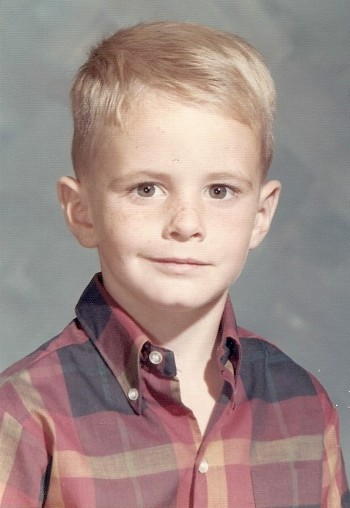 In this original BTB Investigation, we unveil the tragic story of Kirk Murphy, a four-year-old boy who was treated for “cross-gender disturbance” in 1970 by a young grad student by the name of George Rekers. This story is a stark reminder that there are severe and damaging consequences when therapists try to ensure that boys will be boys.
When we first reported on three American anti-gay activists traveling to Kampala for a three-day conference, we had no idea that it would be the first report of a long string of events leading to a proposal to institute the death penalty for LGBT people. But that is exactly what happened. In this report, we review our collection of more than 500 posts to tell the story of one nation’s embrace of hatred toward gay people. This report will be updated continuously as events continue to unfold. Check here for the latest updates.
In 2005, the Southern Poverty Law Center wrote that “[Paul] Cameron’s ‘science’ echoes Nazi Germany.” What the SPLC didn”t know was Cameron doesn’t just “echo” Nazi Germany. He quoted extensively from one of the Final Solution’s architects. This puts his fascination with quarantines, mandatory tattoos, and extermination being a “plausible idea” in a whole new and deeply disturbing light.
On February 10, I attended an all-day “Love Won Out” ex-gay conference in Phoenix, put on by Focus on the Family and Exodus International. In this series of reports, I talk about what I learned there: the people who go to these conferences, the things that they hear, and what this all means for them, their families and for the rest of us.
Prologue: Why I Went To “Love Won Out”
Part 1: What’s Love Got To Do With It?
Part 2: Parents Struggle With “No Exceptions”
Part 3: A Whole New Dialect
Part 4: It Depends On How The Meaning of the Word "Change" Changes
Part 5: A Candid Explanation For "Change"
 At last, the truth can now be told.
Using the same research methods employed by most anti-gay political pressure groups, we examine the statistics and the case studies that dispel many of the myths about heterosexuality. Download your copy today!
And don‘t miss our companion report, How To Write An Anti-Gay Tract In Fifteen Easy Steps.
 Anti-gay activists often charge that gay men and women pose a threat to children. In this report, we explore the supposed connection between homosexuality and child sexual abuse, the conclusions reached by the most knowledgeable professionals in the field, and how anti-gay activists continue to ignore their findings. This has tremendous consequences, not just for gay men and women, but more importantly for the safety of all our children.
Anti-gay activists often cite the “Dutch Study” to claim that gay unions last only about 1½ years and that the these men have an average of eight additional partners per year outside of their steady relationship. In this report, we will take you step by step into the study to see whether the claims are true.
Tony Perkins’ Family Research Council submitted an Amicus Brief to the Maryland Court of Appeals as that court prepared to consider the issue of gay marriage. We examine just one small section of that brief to reveal the junk science and fraudulent claims of the Family “Research” Council.
 The FBI’s annual Hate Crime Statistics aren’t as complete as they ought to be, and their report for 2004 was no exception. In fact, their most recent report has quite a few glaring holes. Holes big enough for Daniel Fetty to fall through.
“Google” is a trademark of Google Inc.
© Box Turtle Bulletin. All Rights Reserved.
 Posts
Posts  Posts via daily email: